
Finding a cooking oil that delivers exceptional heat tolerance without introducing unwanted flavors or compromising on health claims has become a genuine kitchen challenge. Algae oil has emerged as a category-defining alternative, offering a fatty acid profile that outperforms traditional options while maintaining a neutral, buttery taste that lets your ingredients speak for themselves.
I’m Min — the co-founder and writer behind Gadgets Feed. I’ve spent countless hours analyzing the technical specifications, smoke point data, and fatty acid breakdowns across the current algae oil market to separate the genuine performers from the marketing claims.
This guide is designed to help you navigate the emerging world of high-heat, heart-healthy cooking fats, and ultimately find the absolute best algae cooking oil for your kitchen and lifestyle.
How To Choose The Best Algae Cooking Oil
Not all algae oils are created equal. The core differentiators are the smoke point, the fatty acid composition, and whether the oil is pure algae or a blend. Understanding these three factors will immediately separate a smart purchase from a regrettable one.
Smoke Point and Oxidative Stability
The smoke point is the temperature at which an oil begins to break down and release smoke, which also creates harmful free radicals. Algae oils typically boast smoke points between 450°F and 535°F, which is significantly higher than standard olive oil (around 375°F) or even avocado oil (500°F). Equally critical is oxidative stability — how long the oil resists going rancid. The best algae oils offer 3–5 times the oxidative stability of avocado oil, meaning they stay fresh longer and perform better during prolonged high-heat cooking sessions like deep frying.
Omega-9 Content and Fatty Acid Profile
The health value of an algae oil is largely defined by its ratio of monounsaturated fats (Omega-9) to saturated fats. Premium algae oils can deliver 90% or more monounsaturated fat content with very low saturated fat levels — offering a heart-healthier profile than even olive oil. When comparing products, look for the Omega-9 percentage on the label and check that the saturated fat per serving is minimal. This directly impacts both cholesterol management and the inflammatory response in your body.
Purity: 100% Algae vs. Blended Formulations
Some products labeled as algae cooking oil are actually blends of algae oil with high oleic sunflower oil or other neutral carriers. While these blends can still offer a good smoke point and a favorable fatty acid profile, they are not the same as 100% pure algae oil. For the highest heat tolerance and the most pronounced health benefits (like very low Omega-6 levels), seek out oils explicitly stating they contain only algae oil. Blends are often more affordable, but a pure algae oil is the top choice for uncompromising performance.
Quick Comparison
On smaller screens, swipe sideways to see the full table.
| Model | Category | Best For | Key Spec | Amazon |
|---|---|---|---|---|
| Algae Cooking Club Chef-Grade | 100% Pure Algae | Best Overall / High Heat | 535°F Smoke Point | Amazon |
| Thrive Reserve Culinary Algae Oil | Premium Pure Algae | Versatile / Baking | 485°F Smoke Point | Amazon |
| Chosen Foods Avocado Oil | Premium Avocado | Neutral All-Purpose | 500°F Smoke Point | Amazon |
| Kosterina Organic EVOO | Premium Olive Oil | Flavor / Polyphenols | 425°F Smoke Point | Amazon |
| Thrive Algae Cooking Oil (Premier) | Algae Blend | Heart Health / Low Omega-6 | 500°F Smoke Point | Amazon |
| SULU ORGANICS Avocado Oil | Organic Avocado | Bulk Value / Baking | 64 Fl Oz (1/2 Gal) | Amazon |
| P.J. KABOS Organic EVOO | Ultra-Premium Olive | Polyphenol Dose / Flavor | 900+ mg/kg Phenols | Amazon |
In‑Depth Reviews
1. Algae Cooking Club Chef-Grade 100% Algae Oil
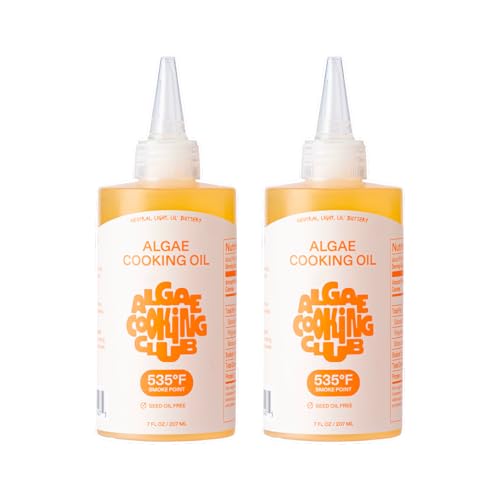
The Algae Cooking Club oil currently holds the highest verified smoke point in the category at 535°F, which is at least 35 degrees higher than most avocado oils. This directly translates to cleaner sears on cast iron and no burnt residue when stir-frying at maximum burner output. The oil is 100% pure algae with no blending, delivering neutral flavor with a very subtle buttery note that doesn’t compete with your ingredients.
Its fatty acid profile is exceptional: 25% more Omega-9 monounsaturated fat than olive oil or avocado oil, with 75% less saturated fat per serving. The oxidative stability is rated 3–5 times higher than avocado oil, meaning the bottle stays fresh far longer after opening. The squeeze bottle format also allows precise dispensing without drips, which is a practical upgrade for daily use.
Users consistently praise its clean cooking behavior — no smoke, no aftertaste, and measurable improvements in cholesterol markers when replacing seed oils. The 2-pack of 7-ounce bottles is a fair starting size to test the category, though your cooking frequency will determine how quickly you cycle through them.
Why it’s great
- Highest verified smoke point at 535°F
- 75% less saturated fat than avocado oil, rich in Omega-9
- 3–5x superior oxidative stability for longer shelf life
Good to know
- Smaller 7oz bottles mean more frequent repurchasing
- Premium per-ounce cost compared to blended alternatives
2. Thrive Reserve Culinary Algae Oil
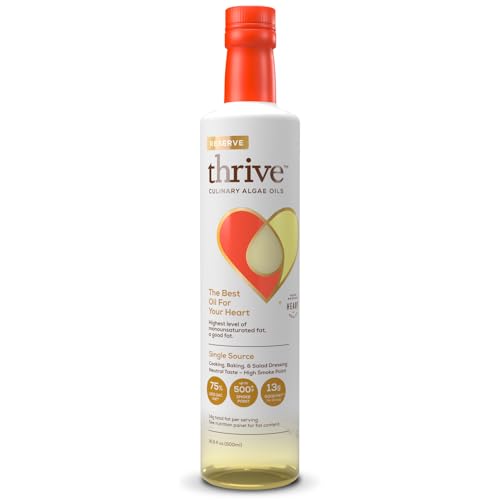
Thrive Reserve is one of the earlier entrants in the algae oil space and has built a reputation for consistent quality and a clean, nearly flavorless taste that works across all cooking methods. Its smoke point exceeds 450°F and is often measured by users around 485°F, which puts it firmly in the high-heat camp — suitable for stir-frying, grilling, and even air frying without triggering the smoke alarm.
The nutritional profile is anchored by approximately 90% Omega-9 monounsaturated fat, with very low Omega-6 content. This makes it an excellent swap for those looking to reduce inflammatory seed oils from their diet. The 16.9-ounce bottle format offers a better cost-per-ounce value than the smaller squeeze bottles, making it a practical choice for regular, high-volume cooking.
Users appreciate its neutral character for salad dressings and baking, where you don’t want the oil to assert itself. It also handles deep frying zucchini or chicken without imparting any unwanted flavors, and the bottle design allows for controlled pouring. If you need one oil that does everything from mayonnaise to searing, this is a strong candidate.
Why it’s great
- Reliable high smoke point above 485°F
- Nearly flavorless for versatile culinary use
- Large 16.9oz bottle delivers better value
Good to know
- Not as high a smoke point as Algae Cooking Club’s 535°F
- Bottle size may be less convenient for precise dispensing
3. Chosen Foods Avocado Oil
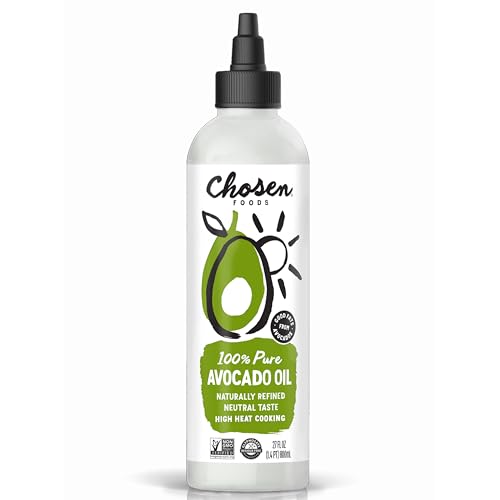
While this is an avocado oil rather than an algae oil, it frequently appears alongside algae oils in the high-heat, neutral-oil conversation. Chosen Foods is America’s #1 avocado oil brand for a reason: independent testing by UC Davis confirmed its purity, and its 500°F smoke point is genuinely high enough for any cooking application short of extreme wok hei. The 27-ounce squeeze bottle is a standout for practical kitchen use.
Each serving delivers 10 grams of monounsaturated fat with zero soy or canola contamination. The flavor is neutral enough to use for baking, frying, and roasting without tasting the oil. The squeeze bottle’s twist top prevents cap loss and allows one-handed dispensing — a detail that matters when you’re mid-stir.
Users report excellent results on stainless steel pans with proper preheating, and the oil performs flawlessly in cast iron searing without burning or leaving residue. If you are looking for a pure algae oil, this is not it, but as a high-performing neutral oil benchmark, it remains a top contender for value.
Why it’s great
- UC Davis purity-tested and verified
- 500°F smoke point for high heat cooking
- Large 27oz squeeze bottle with clean dispensing
Good to know
- It is avocado oil, not algae oil
- Less Omega-9 per serving than algae oil
4. Kosterina Organic Extra Virgin Olive Oil
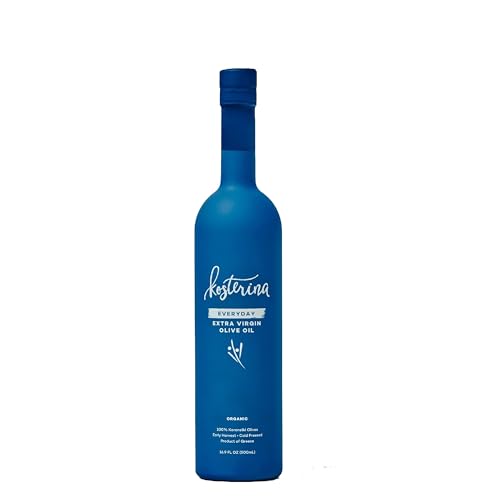
Kosterina is an early harvest Koroneiki olive oil from southern Greece that offers a smooth, balanced flavor profile — not too peppery, not too grassy. Its smoke point is above 425°F, which is high for an EVOO and means it can handle sautéing and roasting without breaking down, though you should keep it below the temperatures suitable for searing steak in cast iron.
The polyphenol content is over 350 mg/kg, which is strong for an everyday olive oil and offers genuine anti-inflammatory and heart health benefits. The oil comes in an opaque glass bottle that protects it from light degradation, and the plastic cork seal prevents leaks and spoilage between uses. This is a premium EVOO that can serve as both a finishing oil and a cooking fat.
Users consistently mention its fresh, fragrant quality for bread dipping, salad dressings, and medium-heat roasting. If you need an oil for flavor-forward applications and are willing to accept a lower smoke point than algae or avocado oil, Kosterina is an outstanding choice among organic Greek EVOOs.
Why it’s great
- Single-origin Greek Koroneiki olives, cold-pressed
- High polyphenol content (350+ mg/kg) for health
- Smooth flavor ideal for raw and cooked use
Good to know
- Lower smoke point than algae or avocado oil
- Strong flavor may not suit all dishes
5. Thrive Algae Cooking Oil (Premier Culinary Blend)
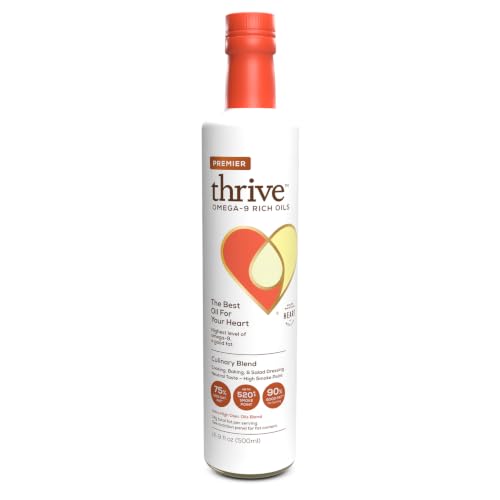
Thrive Premier is a blended oil specifically formulated to reduce Omega-6 content by 85% compared to regular cooking oils, while maintaining a useful 500°F smoke point. The blend combines algae oil with high oleic sunflower oil to achieve a very high monounsaturated fat profile (90% Omega-9), making it a targeted choice for those managing inflammation or cholesterol through diet.
The flavor is nearly water-like — completely neutral — so it works invisibly in any application from searing to vinaigrettes. One point of confusion is that this oil is derived from the sap of the German chestnut tree rather than marine algae, which is unusual but does not affect its performance. It is a sustainable, non-GMO source of high-oleic fat.
Users report clean frying performance with no smoke at high temperatures and a month-long bottle life with regular use. If you are looking for the absolute lowest Omega-6 content possible in a cooking oil, this blend delivers, though purists may prefer a 100% pure algae oil like the Algae Cooking Club option.
Why it’s great
- 85% less Omega-6 than standard oils
- 500°F smoke point for versatile cooking
- Completely neutral flavor for all dishes
Good to know
- It is a blend, not 100% algae oil
- Sourced from chestnut tree sap, not marine algae
6. SULU ORGANICS Organic Unrefined Avocado Oil
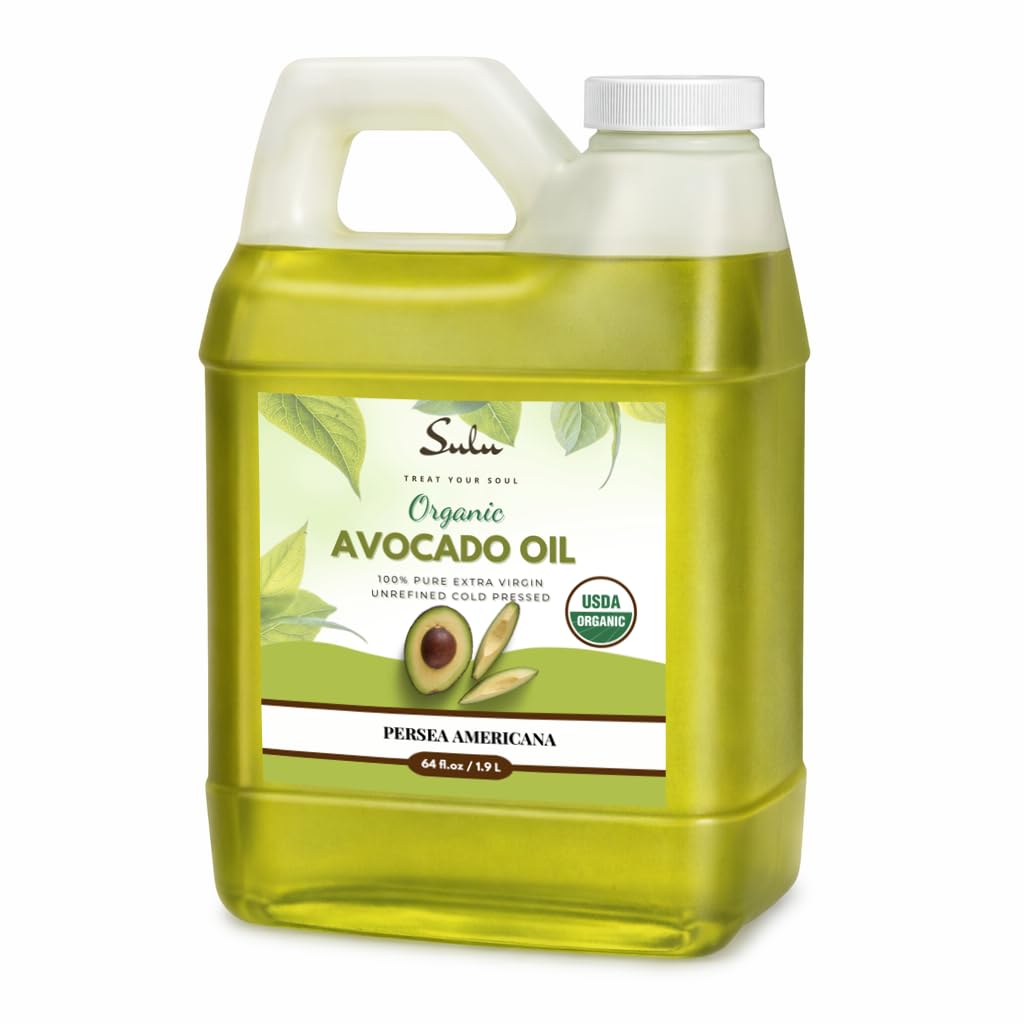
SULU ORGANICS offers an unrefined, organic, extra virgin avocado oil in a massive 64-fluid-ounce container (half a gallon). This is a bulk option designed for heavy-use kitchens, and it is USDA Organic and Kosher certified. The flavor is fresh and clean, with a noticeable avocado character that works well for baking and medium-heat roasting.
The smoke point is lower than refined avocado oils because this is an unrefined, extra virgin product. It is best suited for baking, roasting, sautéing, and salad dressings — not for searing at the highest temperatures. The primary drawback is the container design; users report the bottle lacks a proper spout, which can lead to messy pouring and waste.
At this volume, the cost per ounce is the lowest in this list, making it an excellent choice for families or anyone who goes through oil quickly. If you prioritize cost and organic certification over absolute smoke point and refined purity, this is a very strong value play.
Why it’s great
- Half-gallon size for best bulk value
- USDA Organic and Kosher certified
- Good fresh avocado flavor for baking and roasting
Good to know
- Lower smoke point than refined oils
- Container design lacks a proper spout for clean pouring
7. P.J. KABOS Family Reserve Organic EVOO
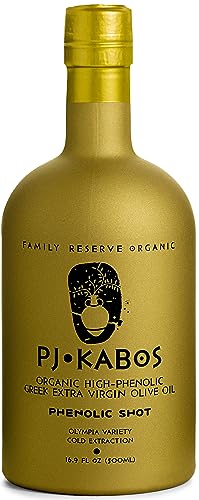
P.J. KABOS produces one of the highest phenolic content extra virgin olive oils available commercially, with verified HPLC results above 900 mg/kg and NMR results above 1400 mg/kg. This is not a cooking oil for searing — its smoke point is lower than any algae or avocado oil — but it is a potent daily supplement for those seeking the anti-inflammatory benefits of high-dose olive polyphenols.
The taste is intensely bitter and peppery, which is a direct marker of high oleuropein and biophenol content. This is best taken by the spoonful as a morning health shot or drizzled over finished dishes where its bold flavor is an asset. The 2025/26 harvest ensures peak freshness, and the oil has shelf stability through December 2027.
Users report measurable reductions in joint pain and inflammation within days of taking 2 tablespoons daily. If your primary goal with an oil is therapeutic phenolic intake rather than high-heat cooking, P.J. KABOS is the definitive choice in this lineup.
Why it’s great
- Extremely high phenol content (900+ mg/kg)
- Fresh 2025/26 harvest with long shelf life
- Gold medal award winner for taste and quality
Good to know
- Low smoke point not suitable for high-heat cooking
- Intensely bitter flavor; best taken as a supplement
FAQ
Does algae cooking oil taste like fish or seaweed?
How does algae oil compare to avocado oil for high-heat cooking?
Can I use algae oil for baking and salad dressings?
Final Thoughts: The Verdict
For most users, the best algae cooking oil winner is the Algae Cooking Club Chef-Grade because it offers the highest smoke point at 535°F, a pure 100% algae composition, and the best oxidative stability in the category. If you want a more affordable, neutral oil for everyday versatility, grab the Chosen Foods Avocado Oil in the large squeeze bottle. And for a heart-health-focused blend that minimizes Omega-6, nothing beats the Thrive Premier Algae Blend.