
Our readers keep the lights on and my morning glass full of iced black tea. As an Amazon Associate, I earn from qualifying purchases.
The single biggest threat to a pristine aquarium view isn’t the fish — it’s the persistent film of green, brown, and black algae that clings to the glass. Choosing the wrong scraper can turn a two-minute swipe into a scratched-up regret, or worse, a tool that sinks to the bottom and grinds sand against your hard-earned acrylic. This guide breaks down the actual mechanics of algae removal for glass tanks, from floating magnets that never hit the substrate to razor-equipped poles that handle deep tanks without dunking your arm.
I’m Min — the co-founder and writer behind Gadgets Feed. I’ve analyzed hundreds of hours of user feedback and technical specs across this specific aquarium maintenance niche to separate the tools that clean efficiently from those that just push algae around.
Whether you maintain a nano reef or a 120-gallon community tank, the right algae scrubber for aquarium comes down to three variables: glass thickness, tank depth, and whether you prioritize speed over scratch safety.
How To Choose The Best Algae Scrubber For Aquarium
The perfect scrubber disappears into your weekly routine — you swipe, it cleans, and you never think about it again. But choosing wrong means either fighting weak magnets that fall off mid-stroke or risking shattered glass from magnets that snap together too fast. Understanding three core specifications eliminates guesswork.
Glass Thickness Determines Magnet Strength
Every magnetic cleaner is engineered for a specific glass range, usually printed on the packaging. A floating magnet designed for 4mm nano tanks will barely hold traction on a 12mm thick glass reef tank, while a heavy-duty unit on thin glass may be impossible to slide without pinching. Measure your tank wall thickness before buying — a caliper reading in millimeters is the only reliable data point.
Blade Material Versus Tank Material
Stainless steel blades are the gold standard for glass tanks — they slice through crusted coraline or black beard algae with minimal effort. But on acrylic or plastic aquariums, even a single scratch is permanent and irreparable. If your tank is acrylic, only use plastic blades, and ensure the scraper you choose explicitly lists acrylic compatibility. Razor-style scrapers with replaceable stainless blades offer the most aggression but demand careful handling.
Floating Versus Sinking Design
If the inner magnet loses contact with the outer handle, a floating unit rises to the water surface. A sinking unit drops straight to the bottom, where it can scoop up sand or gravel. Once abrasive particles get trapped between the pad and glass, every subsequent pass leaves micro-scratches. Floating designs are the safer choice for any tank with a sand substrate or fine gravel.
Quick Comparison
On smaller screens, swipe sideways to see the full table.
| Model | Category | Best For | Key Spec | Amazon |
|---|---|---|---|---|
| AQQA Magnetic Aquarium Cleaner | Magnetic Floater | Versatile mid-range cleaning | Supports 0.2-0.6 inch glass | Amazon |
| Gulfstream Mag-Float Large | Magnetic Floater | Large tanks and thick glass | 185 gauss magnet rating | Amazon |
| TUNZE Care Magnet Long | Premium Magnetic Scraper | Thick glass and curved panels | Suitable for 10-15 mm glass | Amazon |
| Flipper Cleaner Float Nano | 2-in-1 Magnetic | Nano and small tanks | Supports glass up to 1/4 inch | Amazon |
| SEAOURA Mini Magnet Brush | Magnet + Thermometer | Small glass tanks under 30 gallons | Fits 4-10 mm thick glass | Amazon |
| Segarty Stainless Steel Scraper | Razor Pole Scraper | Deep tanks and stubborn crust | Extends up to 26.5 inches | Amazon |
| Evergreen Pet Supplies Sponge Pack | Handheld Scrub Pad | Gentle daily maintenance | 4-pack, 3.25 x 3.25 inch | Amazon |
In‑Depth Reviews
1. AQQA Magnetic Aquarium Fish Tank Glass Cleaner

The AQQA cleaner delivers the strongest magnetic pull in the mid-range category, using a high-quality rare earth magnet that holds firmly even during aggressive scrubbing strokes. The size L variant supports glass up to 0.6 inches thick, covering the vast majority of standard framed and rimless aquariums without the magnet slipping or lagging behind the handle. Dual blades — one stainless steel for glass and one plastic for acrylic — are included in the foam board, giving you both aggressive and scratch-safe options from the start.
The floating design is the standout safety feature. If the inner unit loses contact with the outer handle, it rises to the water surface instead of dropping to the substrate. This single detail prevents sand from embedding into the scrubber pad, which is the root cause of permanent glass scratching on non-floating cleaners. The fabric side and mini hooks handle light daily film nicely, while the stainless steel blade tackles crusted coraline that a standard sponge would smear.
Several users noted that the hook-and-loop scrubber side can detach if used aggressively, and the magnet strength varies depending on exact glass thickness — the size recommendation chart should be followed precisely. For most mid-size tanks, this is the most balanced option combining floating safety, dual-blade versatility, and strong magnetic hold.
Why it’s great
- Floats immediately if contact is lost, preventing sand scratches
- Includes both stainless steel and plastic blades for glass and acrylic
- Rare earth magnet provides secure grip on standard glass up to 0.6 inch
Good to know
- Hook-and-loop scrubber side may detach during heavy use
- Magnet strength varies with glass thickness — size selection is critical
2. Gulfstream Tropical Mag-Float Glass Aquarium Cleaner, Large

The magnet is powerful enough to maintain smooth traction on 1/2-inch thick glass panels common in 120-gallon and larger tanks, while still gliding across the surface without requiring excessive force. It floats by design, which eliminates the risk of it sinking to the bottom and dragging sand across the glass — a critical advantage for reef tanks with deep sand beds.
The included metal scraper blade is a newer addition that sets this version apart from older models. It removes coraline algae with far fewer passes than the sponge side, which tends to smear hard crust rather than lift it. Replacement blades are inexpensive and widely available, and the outer scrubber pad can be swapped when it wears down — typically after a year of regular use. The unit comes without a string, which means one less thing to snag on rockwork or driftwood.
Some users with very thick glass — above 1/2 inch — reported the magnet is almost too strong, making it difficult to slide across the pane and risky if the inner and outer halves snap together unexpectedly. The sponge pad is adequate for light film but will struggle against mature green spot algae without the blade. For large freshwater or saltwater tanks where speed matters, this remains one of the most durable choices available.
Why it’s great
- Extremely powerful magnet holds on thick 1/2-inch glass reliably
- Floating design prevents sand pickup and accidental scratching
- Replaceable scraper blade removes coraline algae efficiently
Good to know
- Magnet can be too strong for thinner glass, making sliding difficult
- Outer sponge pad wears after extended use and must be replaced
3. TUNZE Care Magnet Long, 10-15 mm Glass
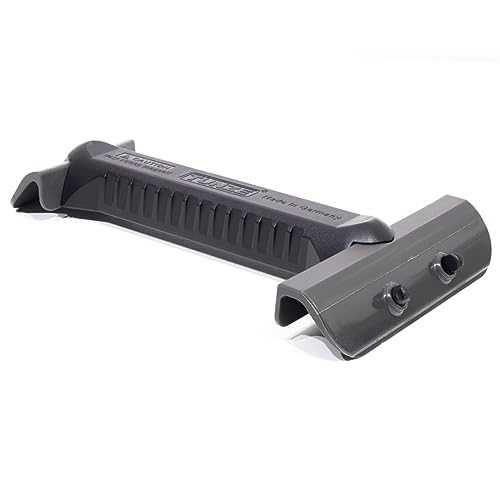
The TUNZE Care Magnet Long is engineered for the specific pain point of thick glass aquariums — those with panels between 10 and 15 millimeters thick where most magnetic cleaners lose traction. The slim internal magnet maintains a 3 mm gap from the glass surface, which dramatically reduces the risk of tiny particles getting trapped between the magnet and pane, thus preventing micro-scratches. This gap also lets the unit glide over curved and rounded glass panels that would stall a flat-faced cleaner.
The rounded stainless steel blade is designed to slice through black beard algae and crusty coraline without digging into the glass edge. Two replacement plastic blades are included for users who prefer a non-metallic cleaning surface, and the care boosters help extend the pad life. The unit is built with the same German engineering ethos that TUNZE has carried since 1960 — every edge is smoothed, every seam is flush, and there is no sharp metal that could catch on silicone seals.
Despite its vertical name, the scraper length is compact and fits easily in one hand, which makes it less cumbersome than a full-blade razor pole. The magnet is strong enough that users must learn to separate the two halves away from the tank — letting them snap together near the glass can risk cracking thin panels. For aquarists with high-end rimless or curved tanks who prioritize scratch safety above all else, this is the most carefully engineered option available.
Why it’s great
- 3 mm glass gap drastically lowers micro-scratch risk from trapped particles
- Rounded stainless blade handles curved panels and removes tough algae
- Two plastic blades included for acrylic-safe cleaning
Good to know
- Strong magnets can crack thin glass if halves snap together near the pane
- Scraper blade does not reach the extreme edges, leaving corner residue
4. Flipper Cleaner Float Nano, 2-in-1 Magnetic

The Flipper Cleaner Float Nano earns its name from the patented flip mechanism — a single rotation converts the internal unit from a scrubber pad to a stainless steel scraper without removing it from the water. This 2-in-1 approach halves the time spent switching tools during a cleaning session, which is a tangible benefit for nano tanks under 25 gallons where every inch of workspace is precious. The dual-sided design means the scrubber side handles the daily film while the scraper side attacks crusted deposits from high-output LED lighting.
Rare earth magnets provide enough pull for glass up to 1/4 inch thick — the standard for nano reef tanks — and the floating feature ensures the inner piece rises to the surface if accidentally dropped. The build quality feels dense and the mechanism stays tight after repeated flipping, which prevents wobbling during the scrape stroke. Freshwater and saltwater users alike report that it handles green film algae efficiently, and the scraper tip is precise enough to work around tight rockwork placements.
The magnet strength, while adequate for 5-6 mm glass, feels slightly underpowered for thicker panes — users with true 1/4-inch glass at the upper limit sometimes wish for additional pull. The scraper edge is narrower than full-size cleaners, so cleaning the back wall of a deeper 20-gallon tank requires more passes. For the nano and pico tank crowd, this is the most thoughtfully designed tool available at this size range.
Why it’s great
- Flip mechanism swaps from scrubber to scraper without leaving the water
- Floats to the surface if dropped, protecting substrate from scratching
- Compact design fits small tanks and works well around rockwork
Good to know
- Magnet strength is borderline for the maximum 1/4-inch glass spec
- Narrow scraper requires more passes on deeper nano tanks
5. SEAOURA Aquarium Magnetic Cleaner with Thermometer

The SEAOURA cleaner is essentially a digital thermometer with a magnetic scrubber attachment, making it a dual-function tool for betta tanks and small desktop aquariums under 30 gallons. The temperature sensor is activated by pressing and holding for three seconds, reading from 0°F to 99°F with a reported accuracy of ±0.9°F. The large digital display is readable from several feet away, which saves reaching behind the tank to check a traditional strip thermometer.
The magnetic strength is adequate for glass thicknesses between 4 mm and 10 mm, and the compact design glides easily across small panels without catching on silicone edges. It floats when released, keeping the inner unit away from sand and gravel. Users with 10-gallon and 20-gallon tanks report that daily swipes keep green film under control, though the pad is small and will take longer on a heavily neglected tank.
The cleaning function itself is secondary to the thermometer — the pad is more of a bonus feature than a primary scraper. The temperature gauge battery (CR2032) powers the display, and some users reported the thermometer does not stay in constant-read mode, requiring periodic button presses to check the reading. For someone who needs both temperature monitoring and light algae maintenance in one gadget, this is a space-saving option. For dedicated algae removal on larger tanks, a dedicated scraper is necessary.
Why it’s great
- Built-in digital thermometer saves buying a separate temperature gauge
- Compact design ideal for small betta tanks and nano aquariums
- Floating design prevents sand scratches on substrate
Good to know
- Scrubber pad is too small for heavy algae buildup
- Thermometer display requires periodic button pressing to activate
6. Segarty Aquarium Algae Scraper, 26.5″ Stainless Steel

The Segarty scraper is the most practical solution for deep tanks where reaching the bottom glass with a magnetic cleaner is impossible. The handle extends to 26.5 inches using two bonus extension rods, giving you enough length to reach the front bottom edge of a 24-inch tall tank without submerging your forearm. The stainless steel material is corrosion-resistant and anti-rust, which is critical for a tool that lives in a humid aquarium environment and can be rinsed and dried quickly.
The detachable head accepts standard stainless blades, and the package includes ten replacements — enough for years of weekly cleaning if swapped monthly. The blades are sharp enough to cut through crusty green spot algae and black beard algae with a single pass, and the soft edge won’t scratch glass when used at the correct angle. The drawstring storage bag keeps everything organized and prevents accidental cuts when reaching into a drawer.
The clear drawback is the lack of a blade cover or guard. Once the blade is attached, the exposed razor edge is a genuine hazard — you must disassemble the head after every use or risk a serious cut reaching for the tool later. Additionally, the blade does not pivot, so cleaning curved panels or the inside corners requires adjusting your wrist angle. For hobbyists with tall standard tanks who prioritize reach over convenience, this is a capable and affordable razor tool.
Why it’s great
- 26.5-inch reach cleans the bottom glass of deep tanks without wet arms
- Included 10 blades provide long-term replacement value
- Stainless steel construction resists rust and corrosion
Good to know
- No blade cover — exposed razor is a safety risk during storage
- Fixed blade angle makes corner and curved panel cleaning awkward
7. Evergreen Pet Supplies Aquarium Glass Cleaner Sponge 4-Pack

The Evergreen sponge pack strips away every mechanical complexity and delivers a simple handheld foam block that cleans aquarium glass by hand. The 3.25-inch square pad is soft enough to never scratch glass, yet dense enough to break the surface tension of green film algae when used with moderate pressure. Each pack contains four pads, and each pad survives multiple cleaning sessions before the foam begins to degrade — the replacement cycle is months, not weeks.
The ergonomic shape fits comfortably in one hand, and the lack of magnets or blades means there is no risk of the tool dropping to the bottom and stirring up debris. Proudly made in the USA, the foam material holds up against frequent rinsing and can be used on glass and acrylic alike without any scratch risk. For turtle tanks where the glass is coated with a tougher protein film, some users found the sponge effective after a few extra passes and a bit of elbow grease.
It requires full arm submersion for deep tanks, and the pad provides minimal scrubbing power against crusted coraline or black beard algae — those deposits will require a razor or magnetic scraper to remove. For daily maintenance against light film algae, this is a set-and-forget solution that costs very little and works every time. Good for low-energy users who just want a quick weekly wipe without managing magnets and blades.
Why it’s great
- Completely scratch-safe on both glass and acrylic tanks
- Four pads in the pack replace a year’s worth of sponges
- Simple hand-held design that is impossible to break or misplace
Good to know
- Requires full arm submersion and significant manual pressure
- Ineffective against hard crusted coraline and black beard algae
FAQ
Can I use a stainless steel blade on my acrylic aquarium?
Why does my magnetic cleaner keep falling off the glass?
What is the best algae scrubber for a curved or bow-front aquarium?
How often should I replace the blade on my aquarium scraper?
Can a magnetic algae scraper crack my aquarium glass?
Final Thoughts: The Verdict
For most users, the algae scrubber for aquarium winner is the AQQA Magnetic Aquarium Cleaner because it combines a rare earth magnet strong enough for standard glass with a float-up safety design that prevents sand scratches, and it includes both stainless and plastic blades for versatility. If you have a large or thick-glass tank, the Gulfstream Mag-Float Large delivers unmatched magnetic hold for heavy-duty cleaning on panels up to 1/2 inch. And for deep tanks where reach is the primary constraint, the Segarty Stainless Steel Scraper is the most affordable way to clean the bottom glass without wetting your arm.