
The moment you see that first slick of green clinging to your pool steps, you know the battle has begun. An effective algaecide isn’t about reacting to a bloom—it’s about maintaining a chemical shield that makes your sanitizer’s job easier every single day.
I’m Min — the co-founder and writer behind Gadgets Feed. After analyzing dozens of formulations and cross-referencing hundreds of real-world usage reports for inground pool algae control, I’ve broken down exactly which active ingredients excel in which scenarios.
This guide focuses on liquid algaecides that keep your inground pool crystal clear without foaming or staining. You’ll find my category-specific picks for the best algaecide for inground pools based on active compound, application frequency, and water compatibility.
How To Choose The Best Algaecide For Inground Pools
Inground pools hold significantly more water volume than above-ground models, which means your algaecide needs a higher concentration of active ingredients to maintain uniform distribution. The two dominant active chemistries—quaternary ammonium compounds (polyquats) and copper-based solutions—operate through different mechanisms, and the right choice depends on your pool’s specific algae history.
Active Ingredient: Polyquat vs. Copper
Polyquat algaecides are non-metallic, meaning they will never stain your pool’s plaster or vinyl liner. They are excellent for weekly maintenance and pair well with any sanitizer. Copper-based algaecides are more aggressive against stubborn black and mustard algae, and some formulations offer long-lasting protection up to three months. The trade-off is staining risk—unless the copper is chelated with a stabilizing agent, which binds the copper ions and keeps them from precipitating onto pool surfaces.
Foaming and Clouding Behavior
A low-quality algaecide can turn your water into a bubble bath after running the pump. Non-foaming formulas use surfactants that do not create foam when aerated by returns or fountains. Clouding happens when the algaecide reacts with minerals in the water—chelated formulas and certain polyquat blends prevent this, keeping your water optically clear.
Application Frequency and Dosage Precision
Some products require a maintenance dose every two weeks, while others claim 90-day protection. The longer interval usually comes from a higher copper concentration, but you must verify the dosage per 10,000 gallons. Overdosing copper can cause green-tinted water, while underdosing polyquat leaves you vulnerable to rapid regrowth. Stick to the manufacturer’s recommended ounces per volume for balanced protection.
Quick Comparison
On smaller screens, swipe sideways to see the full table.
| Model | Category | Best For | Key Spec | Amazon |
|---|---|---|---|---|
| Doheny’s Super Algaecide Plus | Chelated Copper | Stain-sensitive pools needing long-lasting power | 7.1% Chelated Copper | Amazon |
| HTH Algae Guard Ultra | Polyquat Blend | 3-month protection with no staining | 3-Month Non-Foaming | Amazon |
| AquaDoc Double Whammy | Copper Polyquat | Quick knockdown plus extended control | 90-Day Dual Action | Amazon |
| In The Swim Algaecide 50 | Polyquat | All-type algae control in one bottle | 50% Quaternary Ammonium | Amazon |
| Rx Clear 7% Copper Algaecide | Copper Sulfate | Budget-friendly broad-spectrum treatment | 7% Triethanolamine Copper | Amazon |
| In The Swim Algaecide Original | Polyquat | Well-water pools and daily swimmers | 10% Quaternary Compound | Amazon |
In‑Depth Reviews
1. Doheny’s Super Algaecide Plus
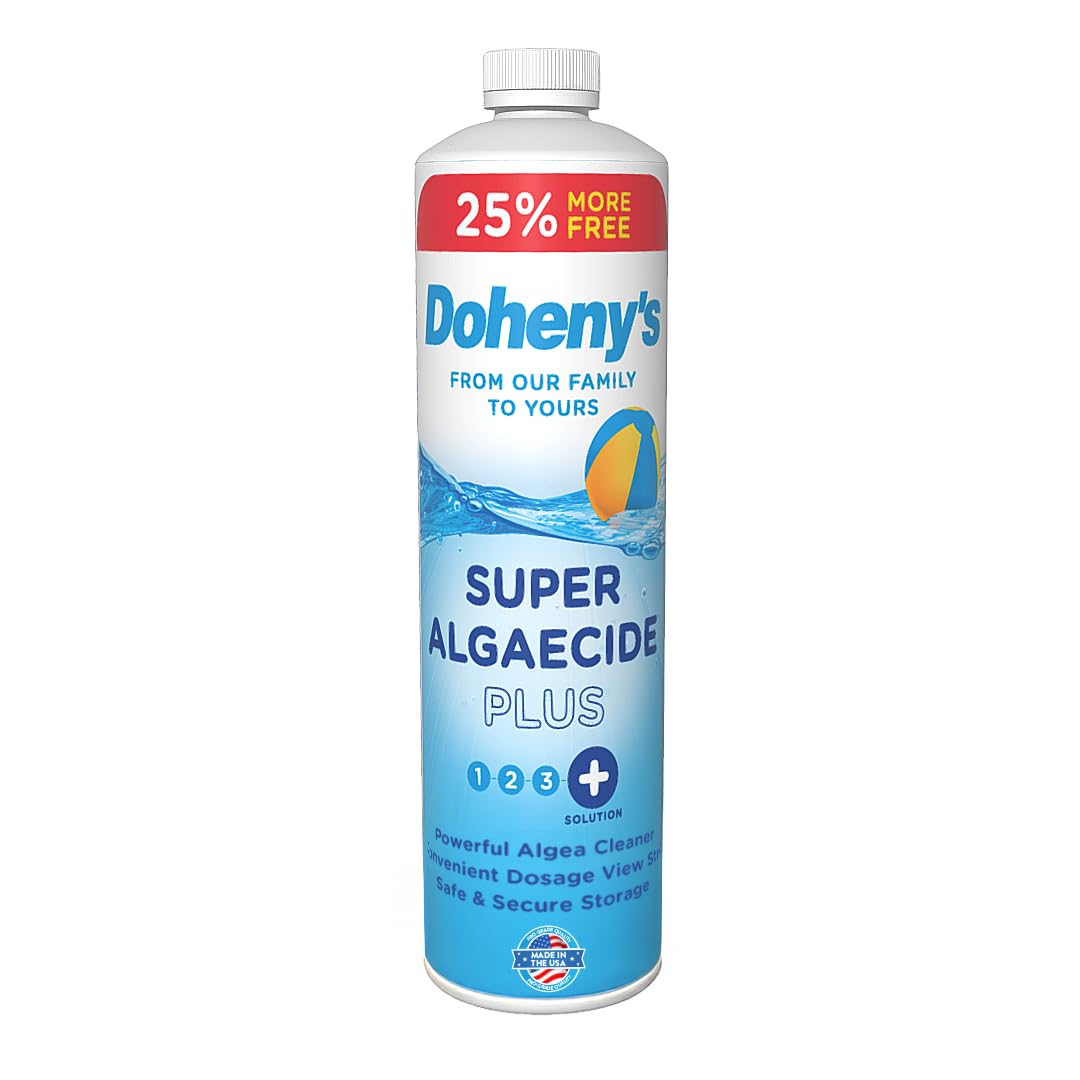
Doheny’s uses 7.1% chelated copper, which is a critical spec because the chelation process surrounds copper ions with a stabilizing agent that prevents them from bonding with carbonates and staining your plaster. You get aggressive algae-killing power—especially against mustard and black algae—without the green-tinted water or surface blotching that plagues cheap copper sulfate products. The 40-ounce bottle gives you more volume than the standard quart, and the maintenance dose is just 2 ounces per 10,000 gallons every two weeks, making it one of the most economical premium options on a per-treatment basis.
Long-term users specifically report that this formula solved persistent mustard algae problems that recurred every hot season. The non-foaming, non-clouding formulation means you can pour it directly into the skimmer or along the pool perimeter without waiting for the pump to mix it in. It works well across vinyl, fiberglass, and gunite surfaces, and it is safe to swim immediately after dosing.
The only real limitation is that copper-based algaecides should not be used immediately after shocking with high chlorine levels, as the chlorine can oxidize the copper and reduce efficacy. Wait about 24 hours after shocking before adding Doheny’s. Otherwise, this is the most refined copper algaecide in the category for stain-conscious pool owners who refuse to compromise on algae suppression.
Why it’s great
- Chelated copper eliminates staining risk while providing strong algae kill
- Low 2-ounce maintenance dose extends bottle life significantly
Good to know
- Should not be added immediately after shocking with high chlorine levels
2. HTH Swimming Pool Care Algae Guard Ultra
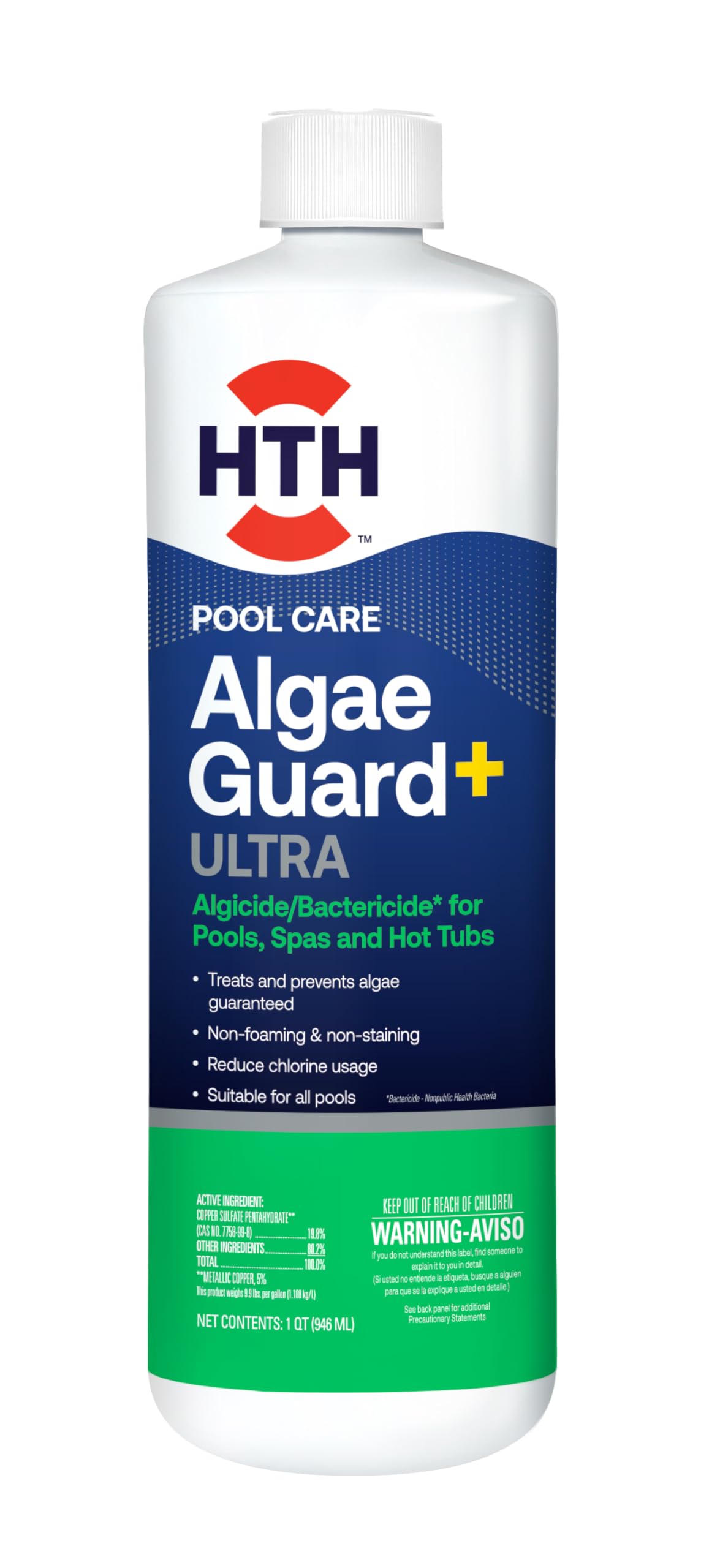
HTH Algae Guard Ultra is a polyquat-based formula that delivers up to three months of continuous algae protection from a single application. That is a standout spec in this category because most polyquat products require biweekly top-ups. The non-staining, non-foaming chemistry works on all pool types, including vinyl liners and saltwater systems, which eliminates the compatibility concerns that sometimes arise with copper treatments. Users report that one bottle cleared a heavy green bloom overnight and kept the water crystal clear for the remainder of the season.
The formula targets green, black, and mustard algae across a single dosing schedule. Because it is a polyquat, there is zero risk of metal staining, and it does not produce foam even when aerated by pool returns or water features. The clear liquid formula also does not turn the water white or cloudy during application, which is a common complaint with some lower-grade polymers. Compatibility with HTH shock products is seamless—you can treat and continue your regular chlorine routine without interaction issues.
The trade-off is that polyquat algaecides are generally milder than copper on existing heavy blooms. If your pool already has a severe black algae outbreak, you may need a targeted copper algaecide first, then switch to HTH for maintenance. However, for preventative care and light-to-moderate treatment, the 90-day window is unmatched in convenience.
Why it’s great
- Single dose protects for up to 3 months, drastically reducing maintenance
- Completely non-staining and safe for all liner types including saltwater
Good to know
- Not as aggressive on existing heavy black algae blooms as copper alternatives
3. AquaDoc Double Whammy Algaecide

AquaDoc’s “Double Whammy” label refers to its hybrid formulation that combines copper ions with a polyquat booster. This dual-chemistry approach attacks algae through two mechanisms simultaneously: copper disrupts photosynthesis and cell wall integrity, while the polyquat coagulates and filters out dead algae particles. In practice, this means you get the fast knockdown power of copper with the clarifier benefits of a polymer, all in a non-foaming, non-staining liquid that is safe for immediate swimming.
The 90-day protection claim is supported by the copper concentration level, but user feedback highlights that it works best when you maintain proper chlorine levels. Several verified buyers reported that a single application turned a dark green 20,000-gallon pool bright blue overnight when combined with a shock treatment. The straightforward dosing—4 ounces per 10,000 gallons for initial treatment, 2 ounces for monthly maintenance—makes it easy to incorporate into any routine.
The main consideration is that this is a copper-containing product, so users with metal-sensitive pools or those who have had staining issues in the past should do a small test application first. AquaDoc uses chelated copper to minimize staining, but no copper algaecide carries zero risk in extreme water conditions. For most pool owners, the combination of speed and longevity justifies the position.
Why it’s great
- Hybrid copper-and-polyquat formula provides rapid kill plus water clarity
- Works overnight against green algae when paired with pool shock
Good to know
- Copper component may still pose staining risk in poorly balanced water
4. In The Swim Algaecide 50

In The Swim Algaecide 50 carries a 50% quaternary ammonium concentration, making it one of the most potent polyquat-only formulations in the sub- range. That high active percentage means you need less product per dose, and it effectively targets green, black, and yellow mustard algae without introducing any metal into your water. The low-foam surfactant package ensures it won’t create suds even in pools with strong return jets or water features.
Users in warm climates like Texas report that a single four-bottle pack covers a full swim season for a 30,000-gallon pool when applied at 1 ounce per 5,000 gallons weekly. The formula is stain-free and residue-free, so it won’t leave rings on tile or discoloration on light-colored liners. It is also compatible with salt systems, which is a relief for owners who have had bad experiences with copper buildup in salt cells.
The catch is that some experienced pool owners note that this product works best as a maintenance algaecide rather than a standalone killer for a severe outbreak. If you already have a thick green mat forming, you will need to pair it with a copper-based shock or a higher-concentration initial treatment. For regular preventative care, however, the 50% quat strength is more than sufficient and gives you the cleanest chemical profile possible.
Why it’s great
- 50% quat concentration allows small doses for large pool volumes
- Zero staining risk, ideal for vinyl liners and saltwater systems
Good to know
- Not designed for heavy outbreak eradication without shock assistance
5. Rx Clear 7% Copper Algaecide
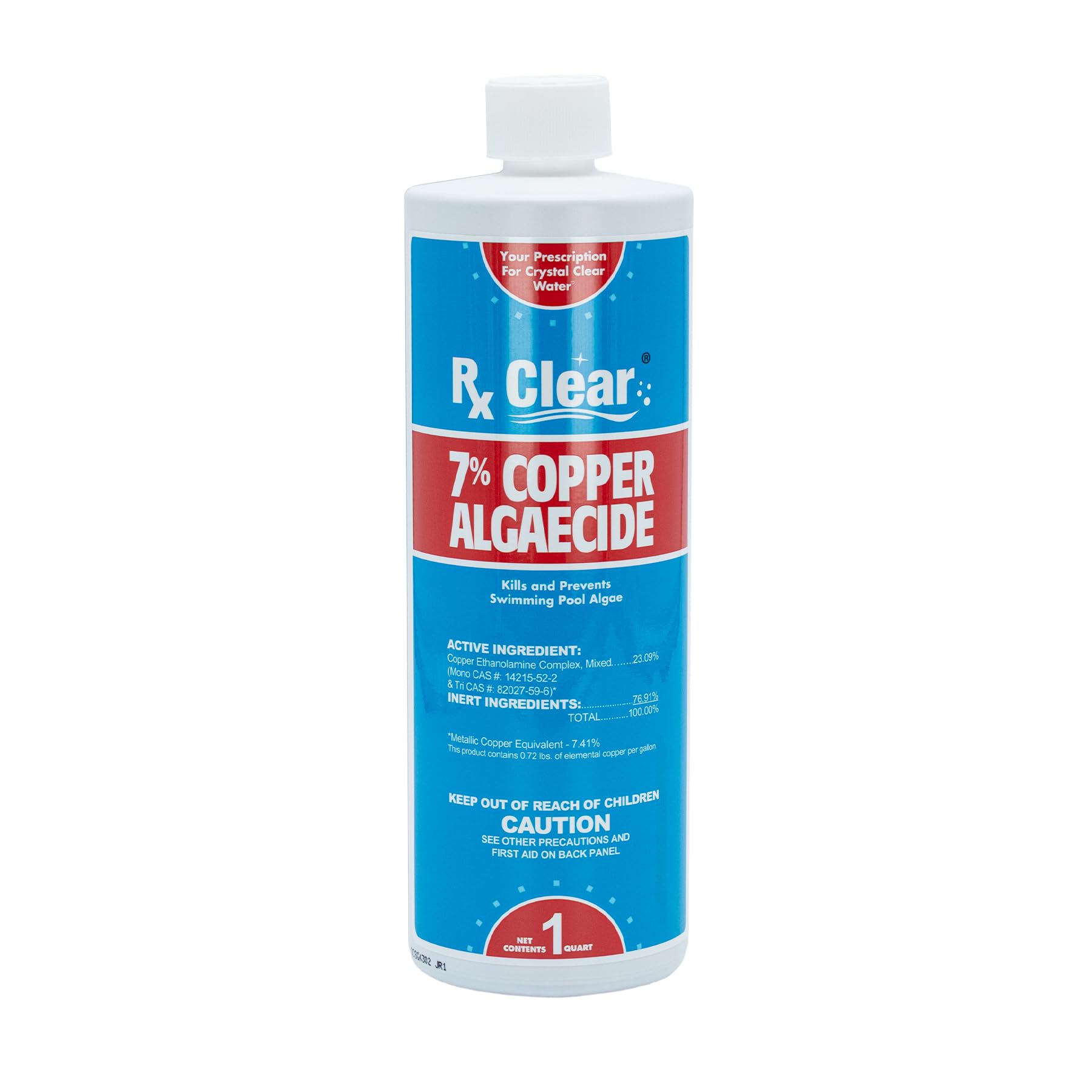
Rx Clear uses triethanolamine copper rather than chelated copper, which is a meaningful distinction. The triethanolamine acts as a surfactant that helps the copper coat pool walls and keeps algae in suspension rather than settling on the floor. This formula is specifically effective against filamentous algae types like Spirogyra and Cladophora, which are common in inground pools that don’t get consistent brushing. The 7% copper concentration is moderate—enough to kill existing growth but low enough to reduce—though not eliminate—staining potential.
Budget-conscious buyers will appreciate the 4-ounce biweekly dose per 10,000 gallons, making a single 32-ounce bottle last four months on a standard 20,000-gallon pool. Several verified users confirm that it cuts the amount of chlorine needed during peak season because the copper handles the algae burden. It is safe to swim immediately after dosing, and the non-foaming formulation does not interfere with skimmer operation.
The main compromise is staining risk. Because the copper is stabilized with triethanolamine rather than fully chelated, pools with high carbonate hardness or improper pH balance may experience greenish water tint or light surface deposits. This product is best for owners who maintain strict water chemistry and want a cost-effective copper solution, not for those who want a worry-free pour-and-forget treatment.
Why it’s great
- Cost-effective with a low 4-oz maintenance dose per 10K gallons
- Effective against tough filamentous algae species
Good to know
- Triethanolamine copper carries higher staining risk than fully chelated copper
6. In The Swim Algaecide Original
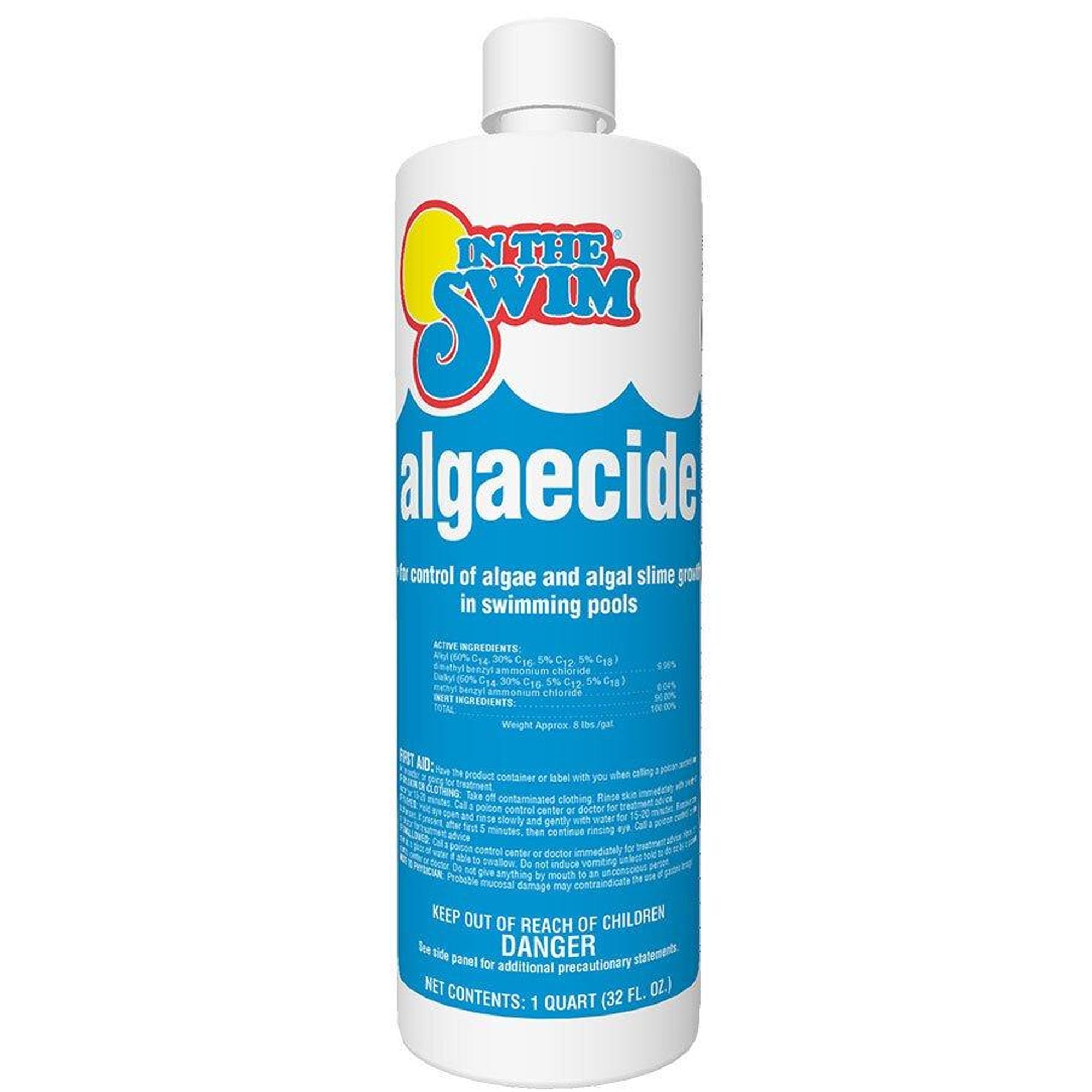
In The Swim’s original algaecide uses a lower 10% quaternary ammonium concentration, but it earns its place for a specific reason: it is recommended for pools filled with well water. Well water often contains iron, manganese, and other minerals that react aggressively with copper algaecides, causing dark staining. This polyquat formula avoids that reaction entirely while still providing reliable green and yellow algae control. The non-clouding, non-foaming chemistry means it won’t haze up hard water either.
The initial dosage is 26 ounces per 10,000 gallons for active algae treatment, which is higher than some competitors, but the maintenance dose drops to 16 ounces every other week. Users consistently highlight that it is “less expensive than pool store brands but works the same,” and several long-term customers report years of clear water with no staining incidents. It is safe to swim immediately after application, and the liquid mixes easily without leaving residue.
The lower quat concentration means it is not the most potent option for black algae or severe mustard blooms. If your well-water pool is prone to those tougher algae types, you may need a higher-strength polyquat or a carefully managed copper product with a metal sequestrant. For standard maintenance and peace of mind with mineral-heavy source water, this is the safest recommendation in the lineup.
Why it’s great
- Specifically safe for well-water pools prone to metal staining
- Established track record with years of positive repeat customer feedback
Good to know
- 12% quat requires higher dosage volume than 50% quat alternatives
FAQ
Can I use a copper algaecide if my pool has a vinyl liner?
Why does my algaecide foam when I run the pump?
How often should I add algaecide to a 20,000-gallon inground pool?
Final Thoughts: The Verdict
For most users, the algaecide for inground pools winner is the Doheny’s Super Algaecide Plus because chelated copper delivers aggressive algae kill without the staining headaches that plague other metal-based products. If you want zero metal in your water and a 3-month maintenance window, grab the HTH Algae Guard Ultra. And for well-water pools where mineral reactions are a constant concern, nothing beats the In The Swim Algaecide Original.