
Our readers keep the lights on and my morning glass full of iced black tea. As an Amazon Associate, I earn from qualifying purchases.
Specs are compiled from manufacturer listings and verified buyer reviews and can change over time — please confirm the key details on the product page before buying.
If your hens are eating but stalling on eggs, or the shells keep cracking, the feed is the first place to look. This guide sorts through the top layer feeds on the market, comparing protein levels, added calcium, and the ingredients that actually drive daily laying. You will see which formulas win on yolk color, which on shell strength, and which picky flocks will actually eat without wasting a single pellet.
I’m Min — the founder and writer behind Gadgets Feed. This guide is built by comparing the manufacturers’ published specifications and the patterns across verified customer reviews, so you get each pick’s real strengths and trade-offs instead of marketing spin.
The top pick here is the feed most backyard flocks gobble up without hesitation, and the rest of the list covers every budget and flock size. Here is our breakdown of the best alimento para gallinas ponedoras on the market today.
Our Picks at a Glance


How To Choose The Best Alimento Para Gallinas Ponedoras
Layer feed is the single biggest factor in how many eggs you collect each week. The right bag keeps hens laying steadily, shells thick, and flocks healthy through molts and cold snaps.. The wrong one gets picked over, wasted, or yields runny yolks..
Match the protein to your flock
Most complete layer feeds land at 16% protein, which is the standard for adult laying hens. Some premium blends push to 18%, which can help maintain egg size in heavy producers or during stress. If your hens free-range a lot and eat insects, a 16% feed is plenty; if they are confined, the higher protein ends up mattering more.
Calcium is the shell-maker
Eggshells are almost pure calcium carbonate, so a layer feed needs a serious calcium source built in. Many premium bags add oyster shell right into the mix. If your feed does not include it, you will need to offer oyster shell on the side so hens can self-regulate their intake.
Pellets vs crumbles vs mash
The form changes how much ends up on the coop floor. Pellets are dense and hard for birds to fling, so they create the least waste. Crumbles are smaller and easier for younger hens to eat, but picky eaters can sort through them and leave the bits they dislike. Whole-grain blends look appetizing but sometimes get scratched out of the bowl.
Quick Comparison
| Model | Best For | Protein | Form | Bag Size | Amazon |
|---|---|---|---|---|---|
| Purina Layena Pellets★ Best Overall | Strong eggshells | 16% | Pellet | 25 lb | Amazon |
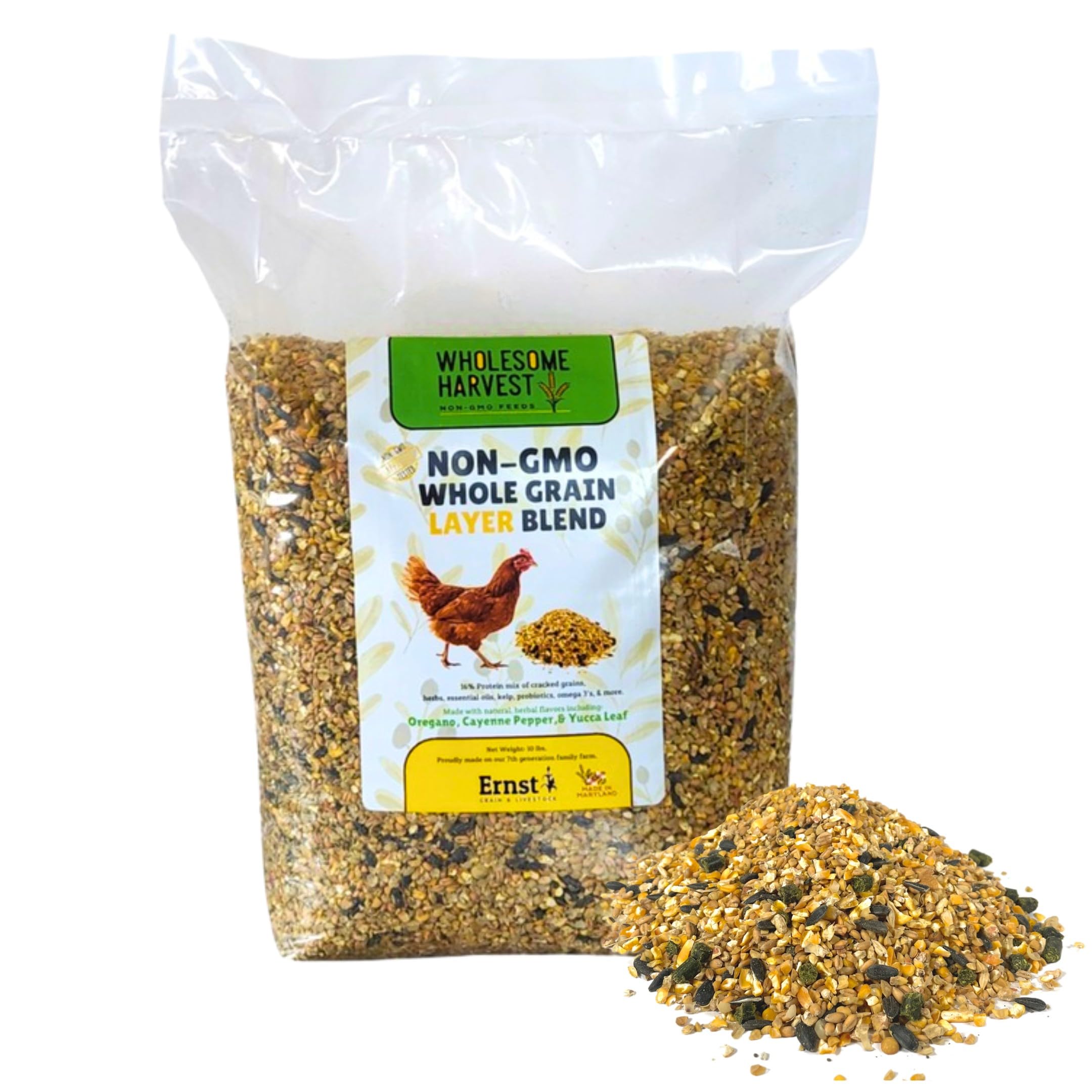
| Wholesome Harvest Layer BlendBest Whole Grain | Non-GMO whole grains | 16% | Granule | 10 lb | Amazon |
| Small Pet Select Layer PelletsBest Filler-Free | Filler-free nutrition | 18% | Pellet | 20 lb | Amazon |
| Prairie’s Choice Layer Crumble | Antibiotic-free flocks | 16% | Crumble | 25 lb | Amazon |
| Country Heritage Layer Pellets | Large flocks on a budget | 16% | Pellet | 50 lb | Amazon |
| Premium Poultry Layer Pellets | Less coop floor waste | 16% | Pellet | 40 lb | Amazon |
| Kalmbach Henhouse Reserve | Vibrant yolks | 18% | Textured | 50 lb | Amazon |
| Scratch and Peck Layer Mash | Organic certification | 16% | Whole Grain Mash | 40 lb | Amazon |
In‑Depth Reviews
1. Purina Layena Layer Pellets
Our pick — over 4.5★ from 750+ verified ratings; the strongest balance of quality and price.
The pellet formula that gets gobbled down first and builds tougher shells.
What wins people over here is taste — owners consistently report hens that normally peck and sort will clean the bowl completely. The pellets are dense enough that birds eat them instead of flinging them, which means less swept-up waste on the coop floor at the end of the week.
The shell-strength story is the deeper reason to pick this bag.. Purina builds in its exclusive Oyster Strong System, a calcium boost aimed squarely at thick, crack-free eggshells. For a small backyard flock this is a complete ration, so you are not juggling extra supplements to get good shells.
The honest trade-off is that value draws mixed opinions. Some owners find the price fair for what the flock eats, while others feel it runs high for a 25 lb bag. It is also a 25-pound bag, so if you have a big flock, you will be reordering more often than with the 50-pound options here.
What the flock loves
- Hens eat it readily — the palatability feedback is the strongest in this lineup
- Oyster Strong System supports thick eggshells without extra supplements
- Pellet form cuts down on feed scattered across the run
Before you order
- Value for money gets mixed reviews — some owners call it pricey for 25 lb
- Egg output varies; a few report modest production, not a dramatic jump
Reach for this if: you want a complete pellet that picky hens actually eat and that strengthens shells on its own.
Look elsewhere if: you run a very large flock and need the lowest cost per pound from a bigger bag.
2. Wholesome Harvest Non-GMO Layer Blend
A non-GMO mash so appetizing that hens go crazy for the bowl.
The defining trait here is how eagerly hens eat it. Taste is the single biggest reason owners reorder, and the blend of cracked corn, soybeans, wheat, and barley keeps even finicky birds interested. There is also very little dust in the bag, which owners appreciate when filling feeders.
This is a complete feed, so the 16% protein plus included oyster shell means you do not need to add a separate calcium supplement. It also carries omega 3 from linseed (flax) oil and a probiotic for digestive health, which makes it a genuinely premium ration for a small flock.
The catch is the bag size and the price. At 10 lb, this goes fast if you have more than ten hens, and the cost per pound is on the high side — several owners describe it as a treat-quality feed rather than an everyday bulk buy. For bantams or a small backyard group, it lasts and performs beautifully.
Why owners stay loyal: the hens genuinely prefer it over other brands, and the shells and yolks look noticeably better on this ration.
The real limitation: a 10-pound bag is small for bigger flocks, and the premium price means it suits smaller groups best.
3. Small Pet Select High Protein Layer Pellets
A corn-free, soy-free 18% pellet that turns yolks bright orange.
Quality is the word owners come back to again and again with this one. The 18% protein formula packs sunflower, pumpkin, and flax seeds plus added calcium, and skips corn, soy, and filler entirely. The visible whole grains, herbs, and seeds make it look like real food rather than uniform kibble.
The results show up in the egg basket.. Buyers report bright orange yolks, thick shells, and healthier feathers.. It also includes probiotics and botanics for gut health, so it is as much about digestion as it is about output.
Two honest notes. First, palatability is genuinely split — some hens eat every pellet while others refuse it, so it is a gamble with a very picky flock. Second, it is a 20 lb bag at a premium price, and one delivery issue saw a box arrive opened with about a quarter of the feed lost in transit.
Owners swear by it: hens that eat it consistently produce bigger, brighter eggs with stronger shells.
Think twice if: your birds are ultra-picky eaters — acceptance is split, not universal.
4. Prairie’s Choice 16% Layer Crumble

A USA-grown crumble that hens treat like a favorite treat.
This feed wins on trust and simplicity. It is non-GMO, all-natural, antibiotic-free, non-medicated, and gluten-free, and it is grown, milled, and packaged in the USA. Owners feel good about what they are offering their birds, and the hens respond by cleaning the feeder.
Egg results are the reason it earns loyalty. Keepers report bigger eggs and better shells, even during a hot January.. The crumble form at 16% protein is aimed at hens 16-18 weeks and older, so it suits a mature laying flock out of the gate.
The crumble texture draws the most mixed feedback. Some owners describe it as mini crumbles that hens eat eagerly, while others find the texture less appealing. One flock also picked around the corn and left it behind, which is worth knowing if your birds are selective eaters.
The strengths
- Clean label: non-GMO, antibiotic-free, non-medicated, and gluten-free
- Hens eat it readily and produce bigger eggs with better shells
- Heavy bag that stores well and holds up in the coop
The fit notes
- Crumble texture is divisive — some find it too fine or dusty
- Selective hens may pick out the corn and leave the rest
Choose this if: you want a clean, non-GMO, USA-made ration with proven egg results.
skip it if: your hens are known to pick out individual grains from crumble feeds.
5. Country Heritage 50LB Layer Pellet
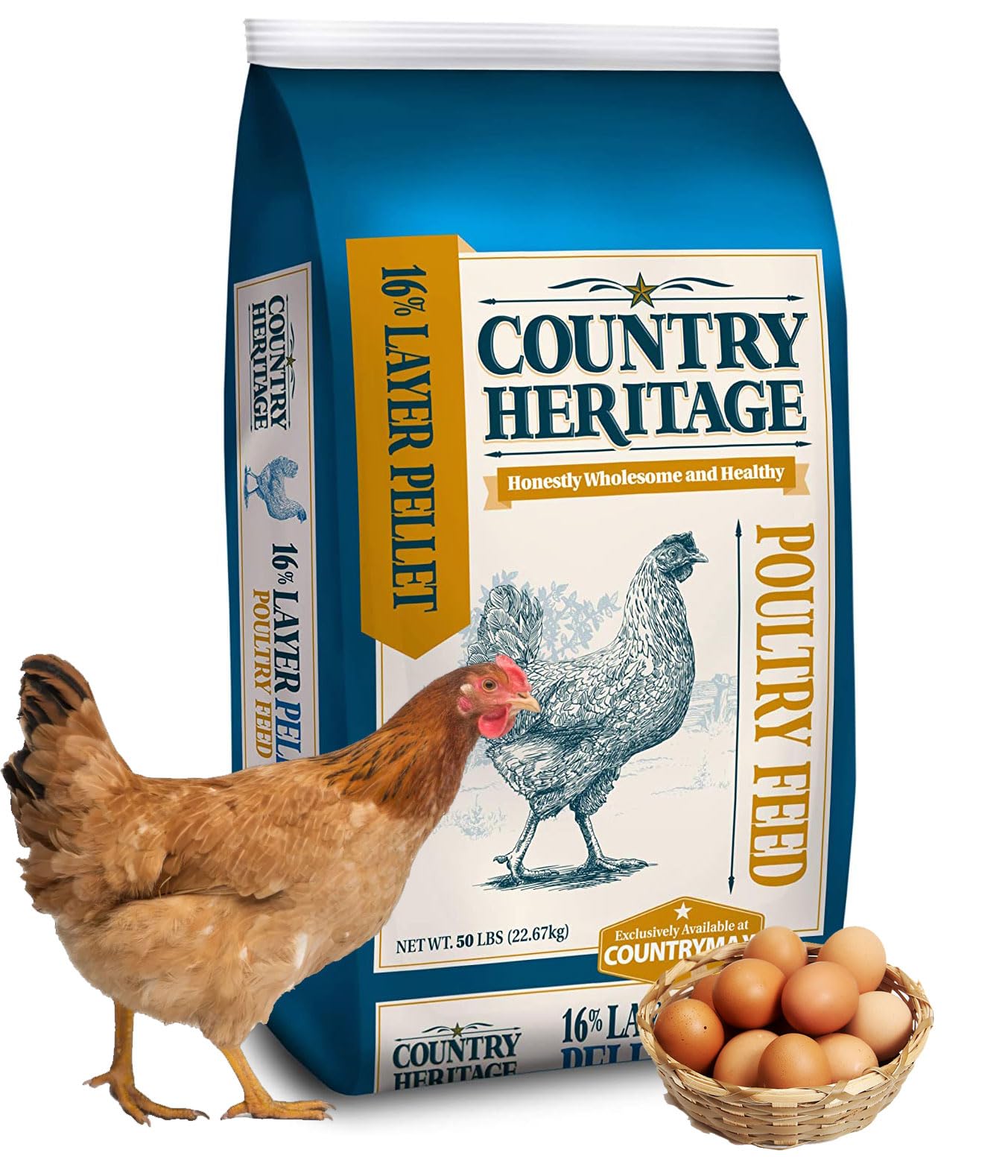
The 50-pound workhorse that keeps big flocks laying every day.
The headline here is pure arithmetic for large flocks: a 50 lb bag of complete pelleted feed at 16% protein, 2.5% fat, and 8% fiber. Because pellets are dense and hard to fling, this form reduces waste compared to mash, so more of what you pay for actually ends up inside the hens.
Owners with multi-species flocks rave about reach — the nutrition is designed to support chickens, ducks, and geese through their productive life from 16 weeks on. Several report hens that eat every pellet daily and keep laying consistently, with the bag lasting a good long stretch.
The recurring gripe is pellets versus picky hens. A few owners found their birds initially rejected the pellets, and one had to add water to make them palatable, then still faced refusal. If your flock has never eaten pellets before, expect a transition period rather than instant acceptance.
The everyday verdict: the best cost-per-pound math in this lineup for a multi-bird coop.
One caution: hens used to crumble or mash may need time to accept pellet texture.
6. Premium Poultry 16% Layer Pellets
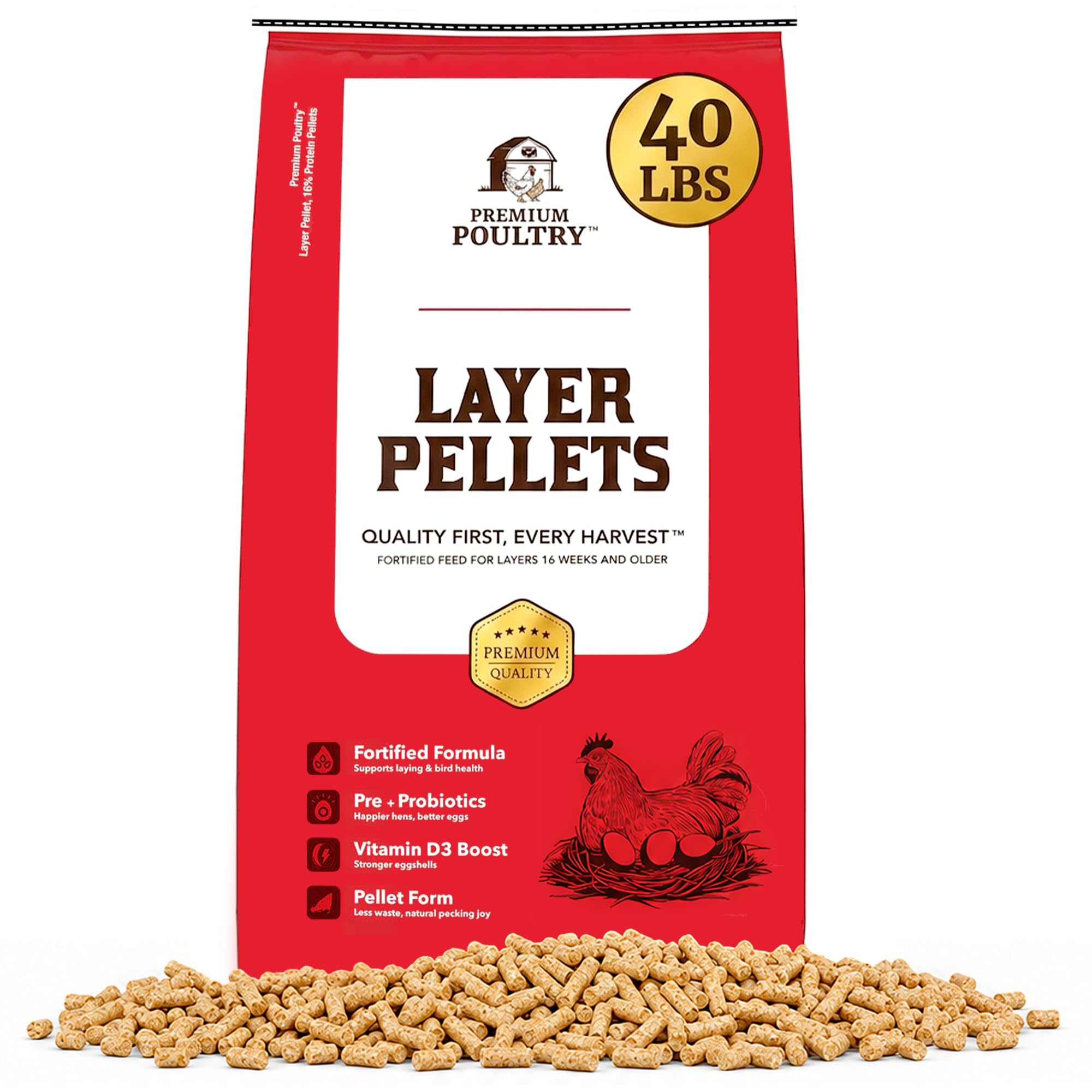
Uniform pellets that keep the coop floor clean and shells sturdy.
This feed solves a specific daily annoyance: crumbles piling up on the coop floor. The uniform pellet form minimizes feed loss while encouraging natural pecking behavior, so owners mention a noticeably cleaner run and less wasted food at the end of each week.
The shell story is built around calcium absorption. It is fortified with Vitamin D3 to help hens pull calcium from their diet more effectively, which reduces weak or cracked eggs and improves shell durability. The 16% protein also supports consistent egg laying and better yolk quality.
The trade-off is convenience versus cost. Several owners note it is pricier online than a feed-store bag, and the main reason to order is the ease of having a 40 lb bag delivered. One Spanish-language review sums up the payoff: hens are laying more eggs on this ration.
The standout benefit: far less feed scattered on the floor means you pay for eggs, not for sweepings.
The honest catch: you will likely find a cheaper price at a local feed store, so value depends on how much you prize delivery convenience.
7. Kalmbach Henhouse Reserve 18% Layer Feed
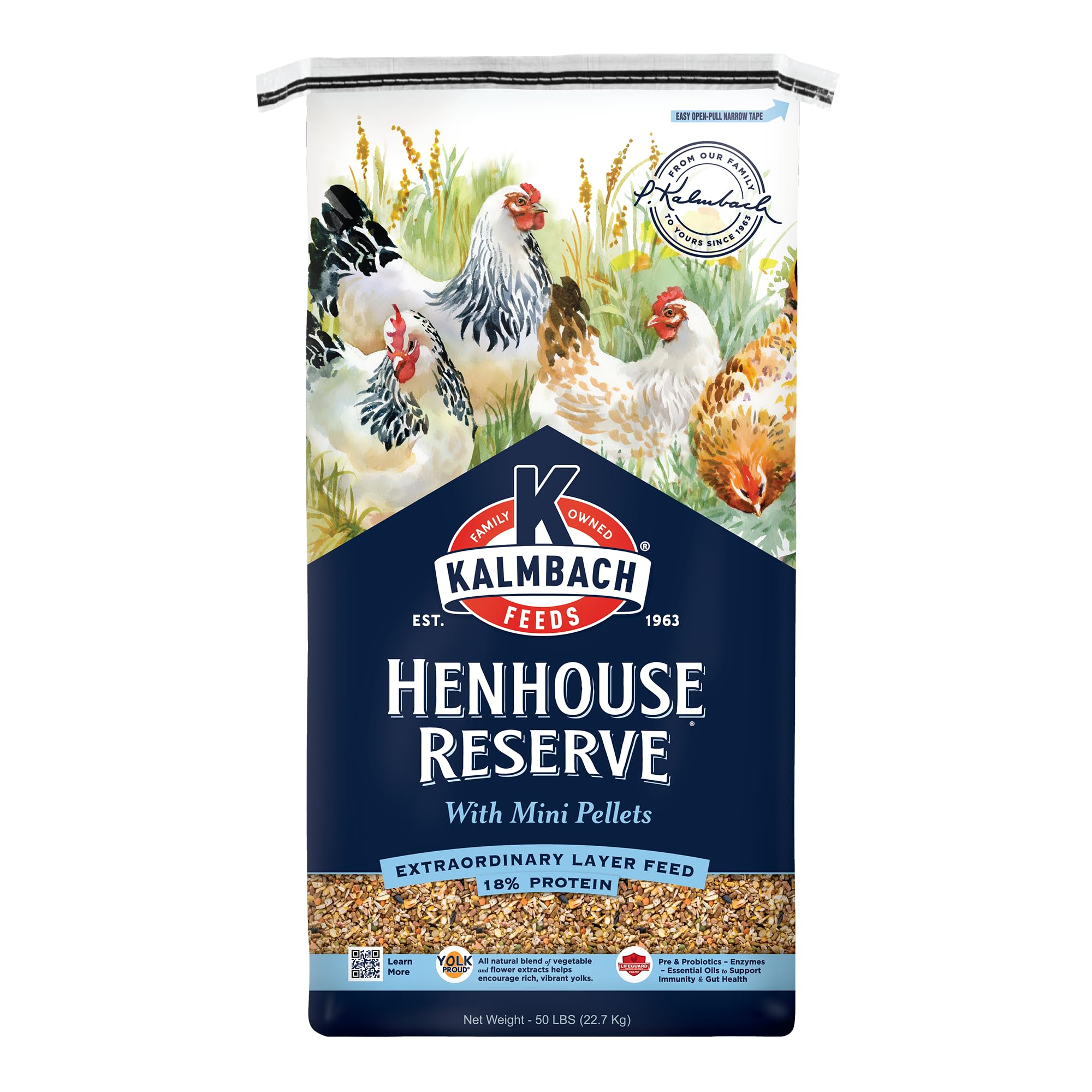
The scratch-grain look with complete nutrition that hens refuse to trade.
The clever trick of this feed is that it looks like a treat but works like a complete ration. It has all the appeal of scratch grain — visible whole grains that hens scratch for eagerly — plus full layer nutrition, so you get the fun of a grain mix without losing egg production.
Two proprietary touches set it apart. Yolk Proud adds all-natural ingredients to promote vibrant egg yolks, and LifeGuard blends prebiotics, probiotics, essential oils, and enzymes for digestive and immune support. Owners see the payoff in strong-shelled clean eggs with vivid yolks laid daily.
The loyalty is real but not universal. Many hens refuse to eat anything else once they taste this, which is a compliment — and a trap, because it is premium-priced. A few owners also note their birds pick out the pellets in the textured mix and leave them for last, which is a minor waste quirk.
Why it commands loyalty: strong daily laying, vibrant yolks, and hens that genuinely prefer it over cheaper brands.
Who should pass: budget-conscious keepers with large flocks, since the premium price adds up fast.
8. Scratch and Peck Layer Mash + Corn

The USDA Organic whole-grain mash that revived a stalled flock.
This is the most credential-heavy option in the lineup, carrying both USDA Organic and Non-GMO Project certifications with no fillers and no medications. It is a 16% protein whole-grain mash that is also fermentable and soy-free, grown and milled in North America.
The real-world results are hard to argue with. Hens that stopped laying on cheaper feed return to abundant laying within two months, even in freezing weather.. The visible whole grains and kelp-based mix look like food, not dust, and hens respond to it.
The honest caveat is dust and cost. The bag is largely powdery — a mix of grain leavings, kelp, and calcium — which owners manage by soaking it so the powder sticks to the grains. It is also the priciest of the 40 lb options here, and the ingredient list is not the easiest to find on the bag.
The organic edge
- Dual-certified USDA Organic and Non-GMO with no fillers
- Revives laying and feather condition in flocks that stalled on cheaper feed.
- Fermentable mash that can be soaked to eliminate dust waste
The trade-offs
- Highest cost per bag in this list — value is genuinely mixed
- Powdery texture demands soaking or fermenting to avoid waste
- A local feed store may carry the same bag for less
Pick this if: you want certified organic, soy-free nutrition and will ferment or soak the mash to cut dust.
Pass if: you want a dry, dust-free pellet you can pour straight into the feeder.
Understanding the Specs
Protein percentage
The protein level tells you how much building material the hen gets for eggs and feathers. 16% is the standard for adult layers and works for most backyard flocks. An 18% feed (like the Small Pet Select or Kalmbach) can help maintain egg size in heavy producers. If your hens free-range and eat insects, they may not need the higher number.
Added calcium and oyster shell
Eggshells are mostly calcium carbonate, so a layer feed needs real calcium built in. Some blends add oyster shell directly, which means you skip a separate supplement. Feeds with Vitamin D3 help hens absorb that calcium more effectively. If your feed lacks it, offer oyster shell on the side so birds can self-regulate.
Pellet vs crumble vs mash
The form changes how much ends up on the coop floor. Pellets are dense and hard to fling, so they waste the least. Crumbles are smaller and easier for younger hens to eat but invite sorting. Whole-grain mash looks appetizing but can be powdery and may need soaking or fermenting to avoid waste.
Non-GMO and organic labels
These labels tell you how the grains were grown and processed. Non-GMO means the corn, soy, and wheat are not genetically modified. USDA Organic is a stricter certification covering the whole supply chain. They matter most if you want a cleaner diet for your flock or are avoiding soy for allergy reasons.
FAQ
At what age should I switch pullets to layer feed?
Do I still need to give oyster shell if the feed has calcium?
Is 16% or 18% protein better for laying hens?
Why are my hens not eating the pellets?
What is the difference between mash, crumble, and pellet feed?
Will a 10 lb bag be enough for my flock?
Can I feed this to ducks and geese too?
Why are my hens laying fewer eggs even on good feed?
Final Thoughts: The Verdict
For most backyard keepers, the best alimento para gallinas ponedoras is the Purina Layena Pellets, because hens eat it readily and the Oyster Strong System builds tougher shells without extra supplements. If you want filler-free 18% nutrition and brighter yolks, grab the Small Pet Select Pellets. And for a certified organic, soy-free whole-grain mash, the Scratch and Peck Layer Mash is the one to reach for.
How We Picked
We do not accept paid placement. Every pick is matched to a real buyer and a real use-case; we do not hands-on test units.
Sources & Methodology
Specifications: manufacturer listings and product documentation. Review insights: verified customer reviews, as of August 2026. Pricing: not shown on this page (it changes often); check the current price via the retailer link.
As an Amazon Associate, Gadgets Feed earns from qualifying purchases. This does not affect which products we feature.