
Our readers keep the lights on and my morning glass full of iced black tea. As an Amazon Associate, I earn from qualifying purchases.
Specs are compiled from manufacturer listings and verified buyer reviews and can change over time — please confirm the key details on the product page before buying.
All-leather hiking boots are a long-term investment in trail comfort. Full-grain leather breathes better than synthetics, molds to your foot, and outlasts three pairs of mesh-and-foam boots. The wrong cut, sole, or break-in period can turn that investment into a painful mistake.
I’m Min — the founder and writer behind Gadgets Feed. This guide is built by comparing the manufacturers’ published specifications and the patterns across verified customer reviews, so you get each pick’s real strengths and trade-offs instead of marketing spin.
These eleven all-leather hiking boots range from the crowd-favorite Timberland White Ledge to the expedition-grade Kenetrek Mountain Extreme, each proven by thousands of trail miles.
Our Picks at a Glance


How To Choose The Best All-Leather Hiking Boots
The leather itself determines weight, durability, and how the boot feels after five miles. These three specs separate a smart buy from a regret.
Leather thickness and grain type
Full-grain leather is the strongest cut — you want 2.2mm or thicker for real off-trail abuse. Thinner leather (around 1.6mm) is lighter and breaks in faster but won’t protect your foot from rock edges or a heavy pack. 2.6mm to 2.8mm leather, like you see on the Asolo TPS 520 or Kenetrek Desert Guide, is expedition territory: stiff, protective, and built for years of hard use.
Waterproofing: membrane vs. leather-only
A Gore-Tex or similar membrane guarantees dry feet in wet brush and rain, but it also traps heat — your feet will sweat more in summer. Leather-only boots (like the Asolo TPS 535 LTH) breathe better and are more comfortable in dry climates or desert hiking. The catch: you need to treat them with wax or oil regularly to keep water beading off the leather.
Sole construction and resoleability
A boot with a Goodyear welt or a stitched-on Vibram sole can be resoled when the tread wears down — that makes it a buy-it-for-life item. Cemented soles (common on budget boots) are cheaper to make but end up in a landfill once the rubber goes flat. Every Jim Green and Kenetrek boot in this guide is resoleable; some Timberlands are not. If you want ten years out of a boot, check the welt before you buy.
Quick Comparison
| Model | Best For | Leather Thickness | Resoleable | Weight (pair) | Amazon |
|---|---|---|---|---|---|
| Asolo TPS 520 GV Evo★ Best Overall | Best Overall, heavy backpacking | 2.6–2.8mm | Yes | — | Amazon |
| Timberland White LedgeBest Value | Best value, day hikes | — | No | — | Amazon |
| Brütting Mount BonaClassic Buildup | Budget-friendly, moderate terrain | — | — | — | Amazon |
| Rocky Outback Gore-Tex | Wide feet, all-day comfort | — | — | 4.5 lbs | Amazon |
| Jim Green Razorback | Work and rugged trails | 2.2mm | Yes | — | Amazon |
| Jim Green African Ranger | Versatile all-rounder | — | Yes | — | Amazon |
| Vivobarefoot Tracker Leather | Barefoot-style hikers | — | — | — | Amazon |
| Asolo TPS 535 LTH V Evo | Premium comfort, heavy loads | 2.2–2.4mm | Yes | — | Amazon |
| La Sportiva Karakorum | Mountaineering and heavy hiking | 2.8mm | Yes | 4.1 lbs | Amazon |
| Kenetrek Desert Guide | Off-trail and extreme durability | 2.8mm | Yes | — | Amazon |
| Kenetrek Mountain Extreme Insulated | Women’s cold-weather trekking | — | Yes | — | Amazon |
In‑Depth Reviews
1. ASOLO Men’s TPS 520 GV Evo Wide Boots
Our pick — over 4.5★ from 650+ verified ratings; the strongest balance of quality and price.
The backpacking legend built from a single piece of 2.6–2.8mm full-grain leather.
This is the boot that shows up again and again in long-term owner reviews — one owner wore his pair daily for 2–3 years before the soles wore out, another reports a decade of Rocky Mountain backpacking with zero blisters. The Triple Power Structure (T.P.S.) sole from Asolo and Vibram uses three shock absorbers placed exactly where your foot lands hardest, so each step feels less jarring on packed dirt or scree. The Gore-Tex Extended Comfort lining keeps water out while letting heat escape, meaning your feet stay dry in a creek crossing and less sweaty on a warm climb.
Quality is the single most-praised aspect across reviews, followed by durability and comfort — the lite 2 footbed and dual-density PU midsole make standing all day feel easier than the boot’s weight suggests. The crowd favorites — 4.7 stars across 600+ ratings — and owners are blunt about the value: “expensive but high quality,” one says. The leather upper is a one-piece design, so there are fewer seams to fail over years of abuse, and the rubber toe cap protects against rock stubs that would shred thinner boots.
The catch: these boots run narrow and about half a size large, according to experienced owners. Sizing up in width or down in length is common advice. The PU midsole also ages chemically regardless of use — one owner had the sole detach after six years, calling it an “expiration date” baked into the materials. If you plan on keeping a boot for longer than a typical synthetic hiker, budget for a resole around year six.
Sturdy wide leather
- One-piece full-grain leather with 2.6–2.8mm thickness — the toughest upper on this list
- Gore-Tex lining is durably waterproof and more breathable than full membrane boots
- Re-soleable Vibram T.P.S. outsole with self-cleaning lugs
Heavy for speed
- Runs narrow — owners consistently say to order wide or size up
- PU midsole has a known lifespan of roughly 6 years before it can detach
- Stiff from the start; needs a proper break-in period
Best for rugged terrain: you carry a heavy pack on technical trails and want a boot that survives a decade of abuse.
Skip if weight matters: you need a wide or EE fit — Asolo’s wide is still snug for some — or you prefer a lightweight, flexible shoe.
2. Timberland Men’s White Ledge Mid Waterproof Hiking Boots
The entry-level icon that delivers exceptional comfort and water resistance for its price.
With over 67,000 ratings, the White Ledge is the best-selling boot in this guide for a reason: it hits a balance of comfort, looks, and waterproofing that most boots at twice the price miss. The 100% premium waterproof leather comes from an LWG Silver-rated tannery — a sustainability badge that matters if you care about where your leather comes from. Buyers report the boots keep feet dry even after five years of use, with one review noting they stayed waterproof “even after seams ripped.” The seam-sealed construction and fully gusseted tongue keep debris out, while the solid rubber outsole with multi-directional lugs grips grass, gravel, snow, and ice.
Comfort and quality are the top aspects owners mention — more than 5,500 people praise each. The EVA footbed and midsole make the boot noticeably lighter than full-grain all-leather competitors, and many owners with high arches say they wear them without orthotics. The price fluctuates, but even at full retail, the feedback is clear: “worth full price” is a common verdict. One buyer used them for Harley riding and found them comfortable enough to skip custom insoles.
The honesty moment: durability gets mixed reviews. Some owners get 3–5 years of heavy use before the waterproof seal breaks or the sole separates, while others have the sole fail earlier. The boot is not resoleable — when the tread goes, the boot goes. And the ankle support is minimal; this is a boot for maintained trails and light backpacking, not a mountaineering tool with a heavy pack.
Affordable waterproof: the value-to-performance ratio is class-leading — you get genuine waterproof leather construction at a price that leaves room in the budget for good socks and a wax treatment.
Grab for wet trails: day hikes, light backpacking, or everyday winter wear where you want waterproof leather without the break-in pain.
Skip if need support: you need a boot for hauling 40+ pound loads over steep talus — look at the Jim Green or Asolo options instead.
3. Brütting Unisex Adults’ Mount Bona High Classic Rise Hiking Shoes
A no-frills buffalo leather boot that proves old-school construction still works.
Brütting keeps it simple: buffalo leather upper, a water-repellent Comfortex climate membrane, and a non-slip Vibram outsole. There is no marketing jargon about “shock absorber zones” or “triple-density foams” — just a stable, high-ankle boot that feels solid on uneven ground. Owners note the footbed is replaceable, so you can drop in your own orthotic and dial in the fit. The Vibram sole uses the same rubber compound found on boots costing three times as much.
The durability reviews split hard. One owner calls them “as durable as old-school Doc Martens but more comfortable” with almost no break-in needed. Another review reports leather separating from the sole after just a week of walking — “décollement du cuir avec la semelle après une semaine de marche” — a make-or-break warning for quality control. The good news: most owners mention dry feet even in wet grass, and the replaceable textile insole means you can swap in a better footbed immediately.
The fit runs tight at first; owners say the initial wear feels snug but improves as the buffalo leather molds to your foot. There is no Gore-Tex here — the Comfortex membrane is water-repellent rather than fully waterproof — so standing in deep puddles will eventually wet you out. This is a budget-conscious pick for moderate terrain and short-to-medium day hikes where you value leather durability over synthetic lightness.
Best for ankle protection: walkers on a budget who want a Vibram-soled leather boot and understand the occasional QC risk.
Not for light hikes: wet-weather backpackers or anyone who needs guaranteed durability from the first wear — the mixed reviews on sole adhesion make that clear.
4. ROCKY Outback Gore-Tex Waterproof Boot
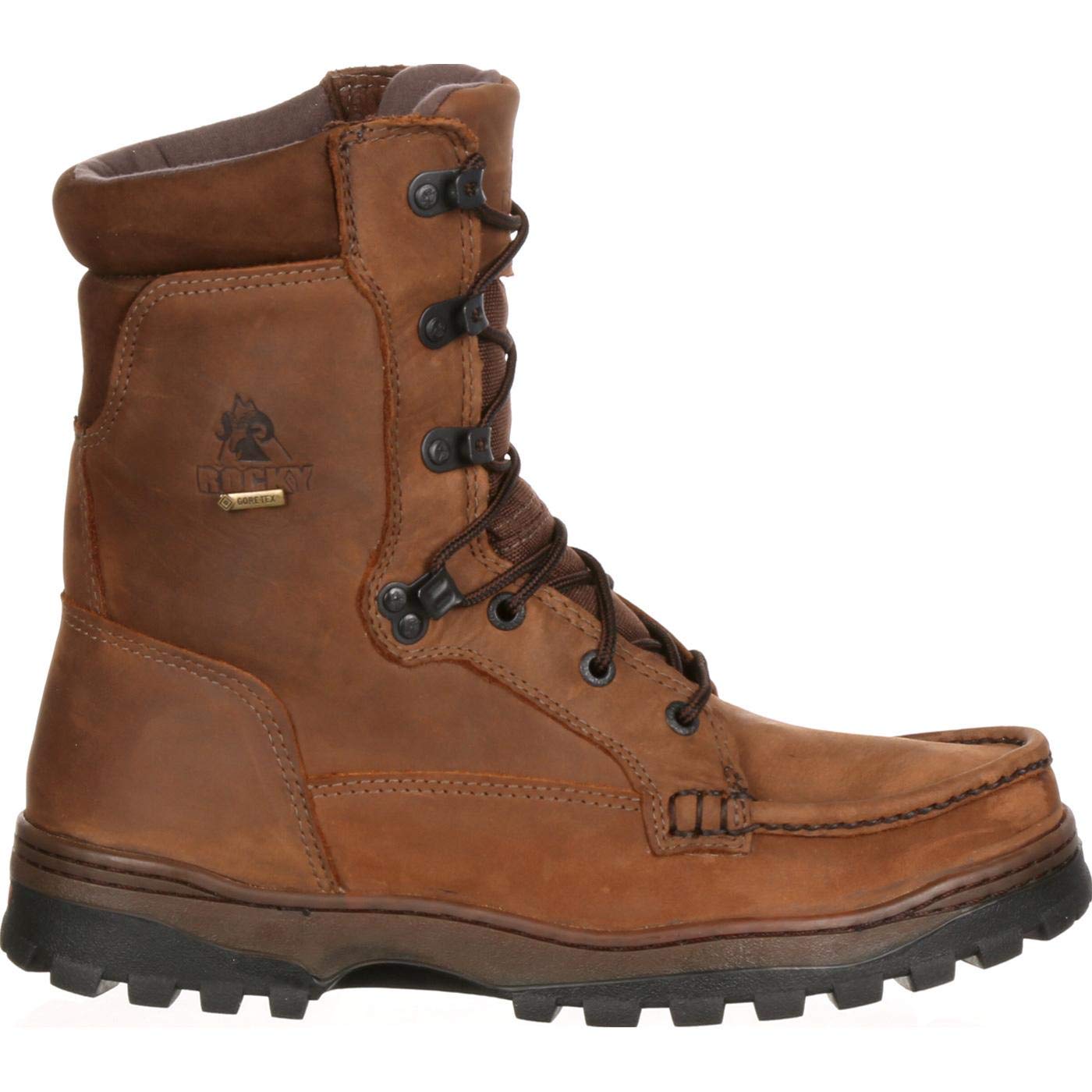
The comfort-first leather boot that genuinely fits wide feet straight from the start.
Rocky uses premium full-grain leather that is noticeably soft and pliable — not the stiff, board-heavy feel of mountaineering boots. The result is a zero break-in experience that owners rave about: “most comfortable boots I’ve ever owned” is a recurring line, and the air-port footbed (a polyurethane insert) adds immediate cushioning under the heel and ball of your foot. The Gore-Tex fabric layer makes the boot durably waterproof and breathable, and the fully padded collar and tongue prevent debris from sneaking in on loose trails. The outback rubber outsole provides solid traction across rugged terrain, and the moc-toe styling gives it a work-boot look that trans itions easily from trail to town.
Comfort is the top praise by a wide margin — owners highlight it 134 times across reviews. Quality and fit follow closely. The boot is designed around wider foot shapes: the “order wide if you have average feet” advice shows up in multiple reviews, and owners with EE widths find the fit perfect. One reviewer put 60 miles and two hurricanes on a single pair and calls them “extremely durable.” The leather holds up well against water, rocks, and tools, and the Gore-Tex seal stays intact through repeated wetting. The Rocky air-port footbed absorbs shock on hard-packed trails better than most stock insoles.
The drawbacks: the Gore-Tex lining is fully waterproof, but customers note it causes sweat buildup — you will need good merino socks and may want to swap the stock footbed for a moisture-wicking insole. Ankle support is moderate, not mountaineering-level: one owner who hikes on steep, wet downhills notes the heel definition is poor for that use pattern. Quality control can slip — a single review mentions misaligned stitching on the leather upper and a fabric tongue instead of a leather one, which is unusual for a boot in this price bracket. Stick with wide sizing and check the fit carefully on delivery.
Go for wet cold: you have wide feet or want a leather boot you can wear comfortably on day one without blisters.
Look elsewhere if hot: you need top-tier ankle support for technical descents or you run hot and are prone to sweaty feet in Gore-Tex liners.
5. Jim Green Men’s Razorback Boots

South African hand-crafted resilience packed into a resoleable, full-grain leather boot for work and trail.
Jim Green builds the Razorback from 2.2mm full-grain leather with a calf-hide inner lining — a double-layer construction that guards against brush and rock impact while staying comfortable. The boot is hand-stitched in South Africa using a Goodyear welt, which means it can be resoleable repeatedly. The steel shank between the insole and sole adds torsional stability when carrying heavy loads on uneven ground. Owners who use the Razorback for construction and hunting report the boots handle concrete, gravel, and mountain scree equally well.
Quality is the single most-discussed strength here — 167 owners praise it, and for good reason: the 2.2mm leather, reinforced metal eyelets, and bellows tongue (which keeps debris out) are built to outlast the typical cemented boot. The wide toe box is another consistent positive, giving your toes room to splay on descents. One owner bought a second pair after rejecting other brands. Another calls them “best value for trades” after replacing the stock insole with Superfeet insoles.
The reality check: the break-in is serious. Reviewers point out heel blisters for the first two weeks unless you use athletic tape. The stock insole is thin and poorly glued — virtually every review recommends replacing it immediately. The boot is heavy (around 2 lbs per boot), so it is not a lightweight weekend hiker. Some units show creasing along the welt or grain break on the vamp; the high-quality leather has cosmetic inconsistencies. And the midsole is not leather — it is a non-leather layer, which matters to purists who want a fully traditional construction.
Pick for durability: you want a resoleable, Goodyear-welted leather boot for heavy work or rugged hiking, and you are willing to push through a two-week break-in.
Pass if wide feet: you need a boot that is comfortable from the first step, or you prefer lightweight hiking with minimal hassle — the razorback demands commitment upfront.
6. JIM GREEN Men’s African Ranger Boots

The boot designed by African wildlife rangers, reworked for everyone who wants a wide, wedge-soled leather hiker.
Jim Green designed the African Ranger after surveying rangers across Africa — the result is a full-grain leather boot with a wedge sole that is softer and quieter on the trail than a lugged outsole. The double-layer construction (full-grain exterior with a calf-hide inner layer) offers the same rock protection as the Razorback but in a more walking-friendly profile. The steel shank runs through the midsole for stability on uneven ground, and the Goodyear welt makes resoling straightforward. Owners consistently praise the fit for wide feet: 150 comments highlight comfort and fit, and the consensus is that these accommodate “duck feet” better than most boots. One owner wore them for 10-kilometer walks with zero discomfort after the initial break-in.
Quality is the top praised aspect (167 mentions), and comfort ties at 150 — the wedge sole absorbs shock well on packed trails and pavement, making the Ranger a genuine crossover for daily wear. Shoppers say that a few wears with a conditioner like Howard’s salve eliminates hot spots. The leather is stiff at first but molds to your foot over a week or two. The boot is built without a waterproof membrane, so it breathes better than Gore-Tex boots — a real advantage in dry or warm climates. One owner who hikes regularly says the boot is “not waterproof” but handles wet grass and light rain well with regular waxing.
The weak spots: the stock insole is thin and lacks arch support — plan to swap it for a quality orthotic. Some buyers report lacing hooks rusting after two months, and the tongue has a tacky coating that can feel odd against the shin. The wedge sole is softer than a lugged Vibram, so aggressive off-trail use may wear it faster. And the lack of a waterproof membrane means standing in a creek will soak you — condition the leather frequently if you face wet conditions. For a boot that feels as at home on the pavement as the trail, the trade-offs are fair.
Reach for natural feel: you have wide feet and want a Goodyear-welted leather boot that works for both daily walks and weekend hikes without a hardcore break-in.
Consider if need support: you need deep waterproofing for wet climates or you plan to pound technical off-trail terrain — a Gore-Tex boot with a lugged outsole fits that better.
7. Vivobarefoot Men’s Tracker Leather All Terrain Hiking Boot
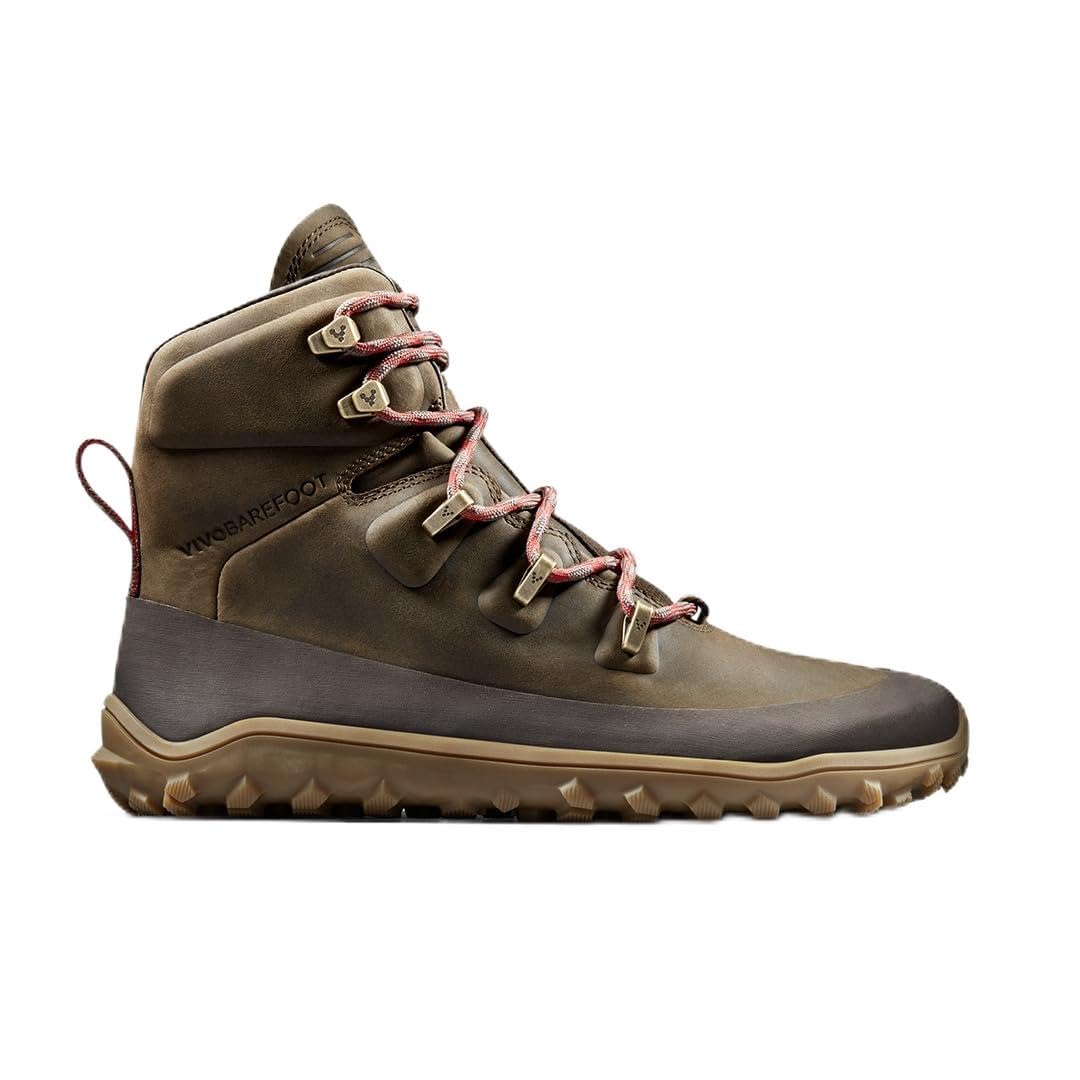
A barefoot-style leather boot that gives your toes room to breathe and feel the trail under you.
Vivobarefoot’s Tracker Leather replaces the waterproof membrane found on previous models, making the boot more breathable and comfortable while keeping the leather itself water-resistant. The All Terrain sole is designed for grip on wet rock and loose dirt, and the zero-drop platform keeps your heel level with your toes — the opposite of a traditional hiking boot’s improve heel. Owners who switch from conventional boots report reduced knee pain and better balance, especially on uneven ground. The wide toe box lets your toes spread naturally, which helps with stability when side-hilling. One reviewer sums up the benefit: “my feet have achieved sentience.”
Quality and comfort are the top praise. Owners with wide feet say the boot feels less cramped than any conventional leather hiker they have tried, and the ground feel is genuinely noticeable — you can sense the contour of a rock underfoot without it hurting. The boot works well for desert hiking and cross-country camping, with one owner wearing them for two months straight with no issues. The 20-degree warmth rating means they handle cold weather better than most zero-drop options. A forestry worker calls them a “great lightweight alternative” for landscaping.
The durability reports are split. One owner had the entire interior disintegrate in under two weeks: the padding, leather, and lining tore apart. That is an outlier, but it is a worrying one for a boot. The boot relies on the leather itself for waterproofing — step in a deep puddle and you will feel it. And the barefoot transition is real: if your feet are used to cushioned, improve boots, the Tracker will stress your calves and Achilles for the first few hikes. The price is high for a boot with some QC concerns, but for the right foot and use case, owners say “the price is worth the quality.”
Ideal for ground feel: barefoot enthusiasts, desert hikers, or anyone with foot pain who wants a wide, zero-drop leather boot with real ground feel.
Not for rocky trails: traditional hikers who want ankle support or waterproof membranes — or anyone who cannot risk a boot failing quickly on a long trip.
8. ASOLO Men’s TPS 535 LTH V Evo Boots
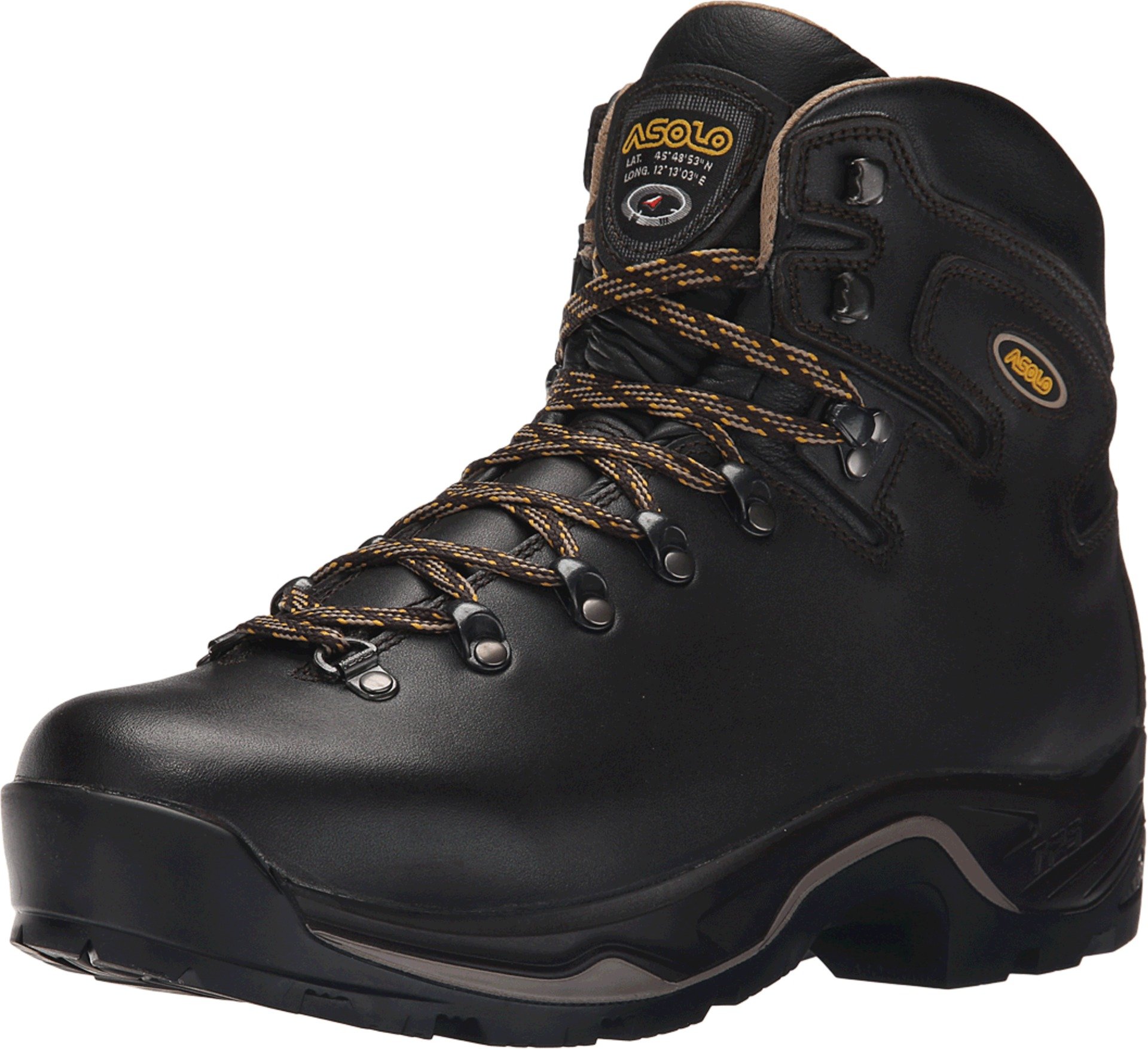
The leather-only Asolo that trades a Gore-Tex membrane for better breathability and faster drying.
The TPS 535 LTH V Evo is the sibling of the 520 GV, but it swaps Gore-Tex for a Cambrelle lining — a dense, moisture-wicking textile that dries faster than a membrane boot and breathes significantly better. The upper is water-resistant 2.2–2.4mm full-grain leather, slightly thinner than the 520’s 2.8mm, which makes the 535 more flexible and quicker to break in. The Triple Power Structure (T.P.S.) outsole from Vibram still uses three shock absorbers at the heel, midfoot, and forefoot for smooth, cushioned strides. Owners mention the boot is ideal for heavy loads and technical terrain: “makes the difference when carrying a heavy pack,” one says. The self-cleaning lugs shed mud well, and the rubber toe cap protects against rock strikes.
Quality and durability lead the praise — 53 and 31 mentions respectively. Owners value the long lifespan: one reviewer wore his pair for five years of backpacking, search-and-rescue, and contracting work, and reports no sole separation issues. The Cambrelle lining is a deliberate choice for users who run hot or hike in dry climates, as it lets trapped moisture escape faster than a Gore-Tex boot. One owner says the boot actually helped with plantar fasciitis thanks to the supportive T.P.S. sole and anatomical Lite 2 footbed. The boot is re-soleable, and the outsole alone lasts 1,000 to 1,500 miles before needing replacement.
The stiffness splits opinion. Some owners call it “super stiff” and warn that it requires break-in time, especially if you wear thin socks. Sizing runs short and narrow — even the wide version is not truly wide; one owner returned his pair because the fit was painful. There is no EE size option. And if you hike in consistently wet environments (frequent creek crossings, Pacific Northwest drizzle), the leather-only construction means you must treat the boot with wax or oil more often than a Gore-Tex model to keep water out.
Choose for craftsmanship: you hike in dry or mixed conditions, carry heavy loads, and want a boot that breathes better than a membrane-equipped competitor.
Look elsewhere if budget: you have wide feet past D-width, or you hike in consistently wet climates where a membrane boot is safer.
9. La Sportiva Men’s Karakorum Leather Boots
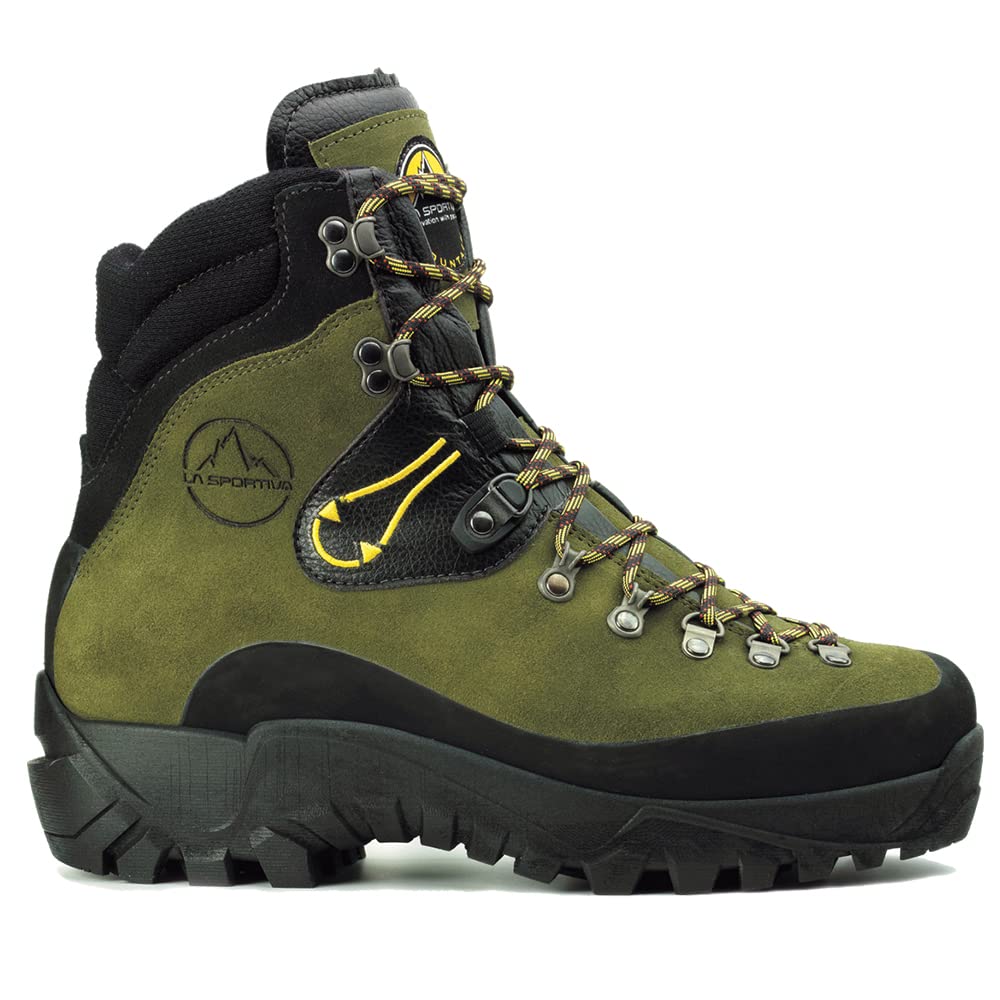
The mountain boot that begs for abuse, built from 2.8mm Idro-Perwanger leather for extreme durability.
La Sportiva builds the Karakorum for the line where hiking meets light mountaineering: the 2.8mm roughout leather upper shrugs off scree and ice, the 8mm high-density Nylon insole provides a consistent flex that is stiff enough for crampons but not board-like for walking, and the Vibram Couloir outsole bites into snow, mud, and rock. The SBR Aircushion midsole insulates both from cold ground and hot surfaces, making it a four-season boot. At 30.97 oz per boot (878 g), it is heavy — but owners say the weight is worth it for the protection under a heavy pack or on technical terrain. One owner who used them for two years of tree work in the Pacific Northwest reports “my feet have never been wet.”
Quality and comfort are the top aspects owners praise. The boot is comfortable straight from the start for most — “didn’t feel like they needed to be broken in,” one says. The fit runs slightly small; owners consistently recommend sizing up half a size from your usual. The leather is stiff enough for crampon compatibility, yet flexible enough for a full day of hiking. One pair lasted two years of mountain contracting work and still looks solid.
The fair warnings: the boot is not fully waterproof. It has a Dry-Best lining rather than Gore-Tex, and one owner who compared it to a Zamberland boot says water ingress is a concern at this price. Waxing the leather helps, but wax darkens the color and changes the appearance. Sizing is tricky — multiple customers note needing a full size up for a comfortable fit, especially on long hikes where feet swell. And the outsole may separate earlier than expected for some; durability gets mixed feedback (7 mentions). For a boot that costs entry-level mountaineering money, the QC variation is a real consideration.
Buy for technical hikes: mixed hiking and light mountaineering where you want a leather boot that can take a crampon and heavy loads in stride.
Skip if wide feet: you need guaranteed waterproofing for wet climates or you want a boot that fits true to size — size up and budget for leather wax.
10. Kenetrek Desert Guide Non-Insulated Hiking Boot

The American-made backcountry boot built for serious hunting and off-trail abuse at the highest price point.
Kenetrek’s Desert Guide is 2.8mm premium leather with a single-piece vamp (no sewn tongue seam — fewer places for water to sneak in), a Windtex waterproof membrane, and a double- and triple-stitch pattern across high-stress areas. The rubber sole guard wraps around the boot to protect the leather from rock abrasion and thorn damage, and the heavy-duty forged alloy lace hardware swivels under stress instead of snapping. The K-73 outsole uses deep, open lugs that bite into snow, mud, and rock, with side bars for stability when traversing slopes. One owner who hunts and works in the military says these are “the best boots I’ve ever owned” and reports zero foot fatigue even after long days.
Quality and comfort are the top aspects owners praise. The wide fit is generous — one owner with a 10.5 EE foot found the size perfect, and multiple reviews confirm the extra width. The leather is thick enough to handle sharp rock and hot desert surfaces without flinching. The Windtex membrane is flexible and breathable, allowing vapor out while keeping water from getting in. The double and triple stitching patterns are visible signs of over-engineering: Kenetrek places triple stitching on high-stress zones like the heel and ball-of-foot areas where failure is most common.
The price sits at the top of this list, and the drawbacks match the investment. The boot is heavy and stiff — one owner calls it “unyielding” and reports the hard heel support rubbing raw on inclines. The leather is so thick that break-in, while possible, takes deliberate effort. Some owners find the wide size too large and need to size down. The K-73 outsole, while very durable, does not offer the same grip on wet, smooth rock as a softer rubber compound. Durability gets only a mixed signal from the smaller sample size (5 mentions), which is a risk on a near- boot. If you do not hunt, hike off-trail in the desert, or need a boot that survives years of heavy use, this is overkill.
Worth for dry terrain: dedicated hunters, backcountry guides, or anyone who needs a heavy-duty, resoleable leather boot for extreme off-trail use.
Not for wet conditions: casual day hikers, lighter-footed backpackers, or anyone not ready for the weight and stiffness — the Merrell Moabs or Timberland White Ledges serve that role better.
11. Kenetrek Womens Mountain Extreme Insulated Hiking Boot with 400 gram Thinsulate

The warmest leather hiking boot for women who want to hunt, hike, or work outdoors in cold climates.
Kenetrek’s Women’s Mountain Extreme packs 400 grams of Thinsulate insulation into a premium leather upper, making it the most cold-weather-focused boot on this list. Women who wear it for big-game hunting and winter treks report staying warm in the single digits without resorting to bulky socks. The 10-inch height provides excellent ankle support — owners with a history of rolling ankles say this boot stops it cold. The construction is fully resoleable, and the outsole offers serious grip on snow-covered rocks and wet leaves. One wildlife biologist who works outdoors year-round says, “These were so comfortable right from the start and have kept my feet warm into the single digits.” Quality and comfort lead the praise — every review highlights how supportive and well-constructed the boot feels.
The insulation and leather thickness make the boot stiff at first; reviewers point out a break-in period is necessary, especially through the ankle area. The fit runs slightly small — one owner wearing a 7.5 bought an 8 and still wishes she had a half-size more room. And despite the “Mountain Extreme” name, one owner reports her feet felt frostbitten after hours in snow, calling the warmth inadequate for extreme cold. The boot is expensive, but the consensus among those who use it hardest is clear: “significantly better than my old boots” and “worth it” for serious outdoor work.
Best for cold hikes: women who hunt, hike, or work in cold conditions and want a supportive, warm, and resoleable leather boot.
Consider if need agility: you need a truly extreme cold rating or want a boot that fits true to size — expect to size up, and treat this as a cold-weather tool rather than a three-season hiker.
Understanding the Specs
Leather Grain and Thickness
Full-grain leather comes from the top layer of the hide — it retains the natural grain and is the strongest cut available. Thickness matters: 1.6mm is light and fast to break in but offers less protection, while 2.6mm to 2.8mm is expedition territory and can take a lifetime of abuse. A boot’s leather weight directly impacts how long it takes to break in and how much rock protection you get.
Resoleable vs. Cemented Construction
A Goodyear welt or similar stitched construction means a cobbler can remove the worn outsole and attach a new one. Cemented boots glue the sole on — when the tread is gone, the whole boot is trash. Every boot in this guide with a stitched welt can be resoled for roughly to, turning a boot into a pair over ten years. Cemented boots cut initial cost but lock in a shorter lifespan.
FAQ
How long do all-leather hiking boots last?
Are all-leather boots waterproof without a membrane?
How much break-in time should I expect?
Can I wear all-leather boots in summer heat?
Are all-leather hiking boots heavier than synthetic boots?
Should I size up or down in all-leather boots?
How do I care for all-leather hiking boots?
Can I wear all-leather boots for mountaineering?
Are all-leather boots vegan-friendly?
What is the difference between full-grain and top-grain leather?
Final Thoughts: The Verdict
For most buyers, the all-leather hiking boots winner is the Asolo TPS 520 GV Evo because it combines a 2.6–2.8mm full-grain leather upper (among the thickest on this list) with a re-soleable Vibram sole and a Gore-Tex liner that actually breathes. If you want the best value for day hikes, grab the Timberland White Ledge — it is the best-selling boot here and the comfort-to-price ratio is class-leading. And for off-trail hunters or heavy-duty users, the Kenetrek Desert Guide is the boot to reach for, even at its premium price point.
How We Picked
We do not accept paid placement. Every pick is matched to a real buyer and a real use-case; we do not hands-on test units.
Sources & Methodology
Specifications: manufacturer listings and product documentation. Review insights: verified customer reviews, as of July 2026. Pricing: not shown on this page (it changes often); check the current price via the retailer link.
As an Amazon Associate, Gadgets Feed earns from qualifying purchases. This does not affect which products we feature.