
The single link between you and the mountain is the binding. A sloppy fit, a flex that misreads the snow, or a release that hesitates at the wrong moment turns every run into a fight against your own gear. The right all-mountain binding removes that friction, translating every edge shift and pressure change into instantaneous board or ski response.
I’m Min — the co-founder and writer behind Gadgets Feed. I’ve spent countless hours cross-referencing DIN ranges, flex ratings, highback materials, and baseplate stiffness to build this guide around the real-world metrics that separate a binding that holds from one that holds you back.
Whether you are arcing a carve on firm groomers, slashing through moguls, or floating in soft chop, the best all-mountain ski bindings deliver the precise blend of responsiveness and vibration damping required for unpredictable terrain.
How To Choose The Best All-Mountain Ski Bindings
All-mountain bindings must span a wider performance envelope than any other category. You need enough stiffness for aggressive carving on corduroy, yet enough forgiveness to absorb chatter in crud and deflections on uneven snow. The balance starts with three pillars: the DIN or flex rating that matches your weight and ability, the baseplate construction that dictates power transfer, and the retention system that balances convenience with security.
Matching Flex and DIN to Your Riding Style
A binding that is too stiff magnifies every irregularity, fatiguing your legs in variable snow. A binding that is too soft washes out under hard edge pressure. For snowboard bindings, look for a medium-stiff flex rating between 5 and 7 on the standard 1–10 scale. For alpine ski bindings, the DIN setting must sit near the middle of your boot sole length and skier weight — a DIN range of 4–11 or 4–13 covers most intermediate to advanced all-mountain riders without over-ranging the spring.
Baseplate and Highback Materials
Glass-filled nylon provides the best blend of lateral stiffness and vibration damping without the weight penalty of full aluminum. Full aluminum heelcups add durability and secure heel hold but transmit more chatter into the boot. The highback material dictates how much leverage you have over the board’s tail — stiffer polycarbonate or carbon-infused highbacks offer quicker edge-to-edge response, while nylon-based highbacks save weight and provide a more forgiving flex that suits bumpy terrain.
Step-In Speed vs. Strap Security
The convenience of rear-entry or step-in bindings saves seconds per chairlift but introduces a trade-off in heel hold and strap tension granularity. Traditional two-strap bindings allow micro-adjustments for toe and ankle separately, which matters when the boot packs out or the snow compresses the straps. Advanced riders who charge variable terrain generally prefer the independent adjustability of a conventional strap system, while intermediate riders who value lap count over absolute edge feel can benefit from step-in systems.
Quick Comparison
On smaller screens, swipe sideways to see the full table.
| Model | Category | Best For | Key Spec | Amazon |
|---|---|---|---|---|
| Union Force | Premium Snowboard | Expert all-mountain carving | Full aluminum chassis, medium-stiff flex | Amazon |
| Marker Griffon 13 | Premium Ski | Advanced freeride & powder | DIN 4–13 Triple Pivot Elite toe | Amazon |
| Union Strata | Mid-Range Snowboard | Park-to-mountain versatility | Mini-disc, upgraded bushing material | Amazon |
| Nidecker Flow Nexus | Mid-Range Snowboard | Quick step-in for lap efficiency | Locking Slap Ratchets, glass-filled nylon base | Amazon |
| Marker Squire 11 | Mid-Range Ski | Lightweight intermediate performance | DIN 3–11, 30% reduction step-in force | Amazon |
| Union Flite Pro | Budget-Friendly Snowboard | Entry-level progression | Soft flex 4/10, aluminum heelcup | Amazon |
| HEAD RX ONE | Budget-Friendly Snowboard | Beginner-intermediate all-mountain | Flexy baseplate, adjustable toe ramps | Amazon |
| XCMAN Rear Step-In | Budget-Friendly Snowboard | Quick entry for all-mountain cruising | Hybrid nylon fiber baseplate, 360° turntable | Amazon |
| XCMAN All-Mountain | Budget-Friendly Snowboard | Budget-conscious all-mountain | Aluminum heelcup, fiberglass base scaffolding | Amazon |
In‑Depth Reviews
1. Union Force Men’s Snowboard Bindings
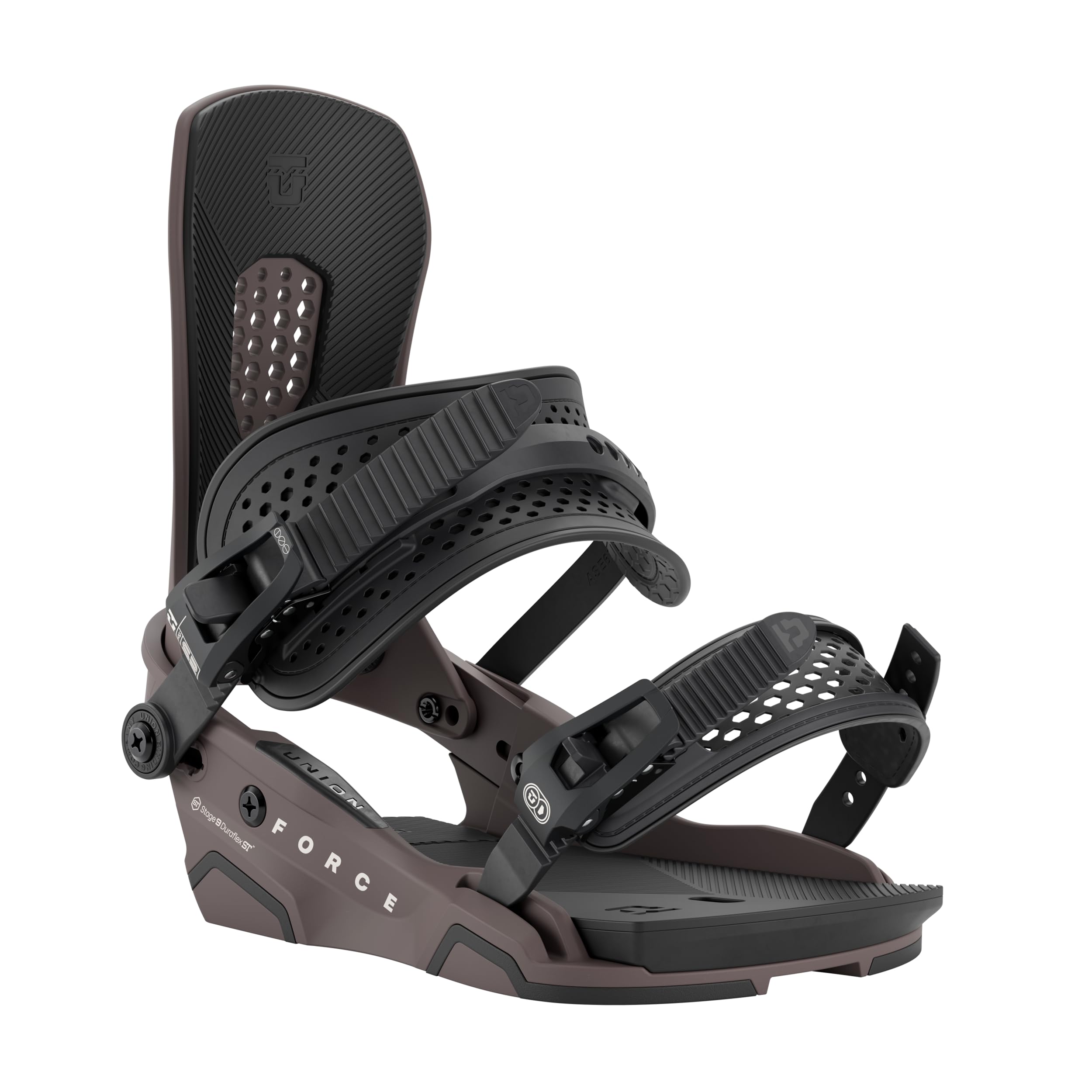
The Union Force has earned its reputation as a universal benchmark in all-mountain performance. The full aluminum chassis delivers lateral stiffness that translates into precise edge engagement on hardpack, while the medium-stiff flex rating (roughly a 7 on the Union scale) absorbs chatter in crud without feeling dead underfoot. Ratchets are smooth, tool-less adjustability covers forward lean and strap positioning, and the mini-disc is compatible with all modern mounting patterns except vintage Burton 3D boards.
On the mountain, the Forces reward an aggressive stance. Every shift in weight produces an immediate, predictable response — no slop, no delayed rebound. The EVA-dampened footbed does a solid job of filtering out high-frequency vibration, so you feel the snow texture without the bone-jarring chatter. Riders who spend equal time carving groomers and slashing through soft chop will appreciate the balance between power and forgiveness.
The true strength of the Force is its build longevity. Union uses a limited manufacture warranty, and real-world reports confirm these bindings survive multiple seasons of hard use without the baseplate cracking or ratchets losing their bite. For intermediate to expert riders who want a single binding that does not compromise on any terrain, the Force is the most complete package available in this price tier.
Why it’s great
- Full aluminum chassis provides unmatched edge-to-edge response for hardpack carving.
- Tool-less adjustability on straps and highback streamlines stance dial-in on the hill.
- Durable construction proven across multiple aggressive seasons.
Good to know
- Mini-disc system is not compatible with vintage Burton 3D mounting patterns.
- Price reflects a premium build — budget-focused riders may find better value elsewhere.
2. Marker Griffon 13 Ski Bindings
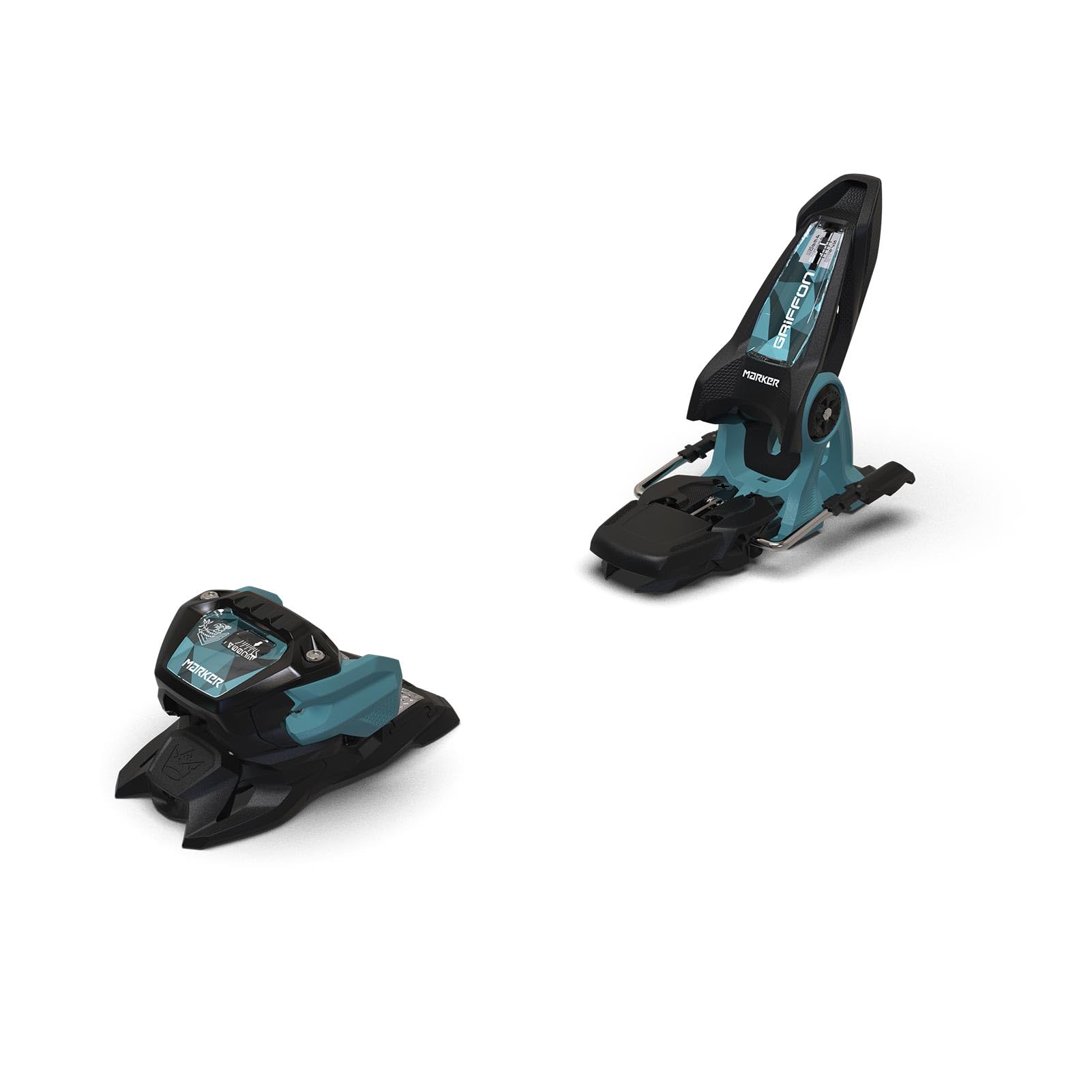
The Griffon 13 sits in Marker’s mid-weight freeride line and represents the sweet spot for advanced all-mountain skiers who want reliable retention without the heft of a full-metal demo binding. The Triple Pivot Elite toe offers a massive support surface that reduces pre-release in variable snow, while the Inter Pivot 3 Heel delivers vertical elasticity for a damp ride through chopped-up terrain. The DIN range of 4 to 13 covers intermediate to expert skier weights comfortably.
One of the Griffon’s standout features is the Multinorm (SOLE.ID) compatibility — it accepts Alpine, GripWalk, and Touring boot soles out of the box without needing an adapter plate. The stainless steel Gliding AFD ensures consistent release values regardless of snow buildup or ice on the sole. Centralized swing weight is apparent during spins and quick direction changes; the binding feels balanced on the ski rather than dragging the tip or tail.
Several customers report that the Griffon is the most popular all-mountain binding ever made, and the Black/Powder Blue finish keeps the aesthetic clean. Professional installation is still essential for correct forward pressure and release calibration, but once set, the Griffon provides the kind of confidence that lets you focus on line choice rather than worrying about your gear.
Why it’s great
- Triple Pivot Elite toe delivers massive power transmission and reduced pre-release in variable snow.
- Multinorm sole compatibility works with Alpine, GripWalk, and Touring boots without adapters.
- Centralized swing weight enhances maneuverability for freeride and freestyle use.
Good to know
- Professional mounting is mandatory to ensure correct forward pressure and release values.
- Silver Gliding AFD can accumulate ice if not wiped before each step-in.
3. Union Strata Men’s Snowboard Bindings
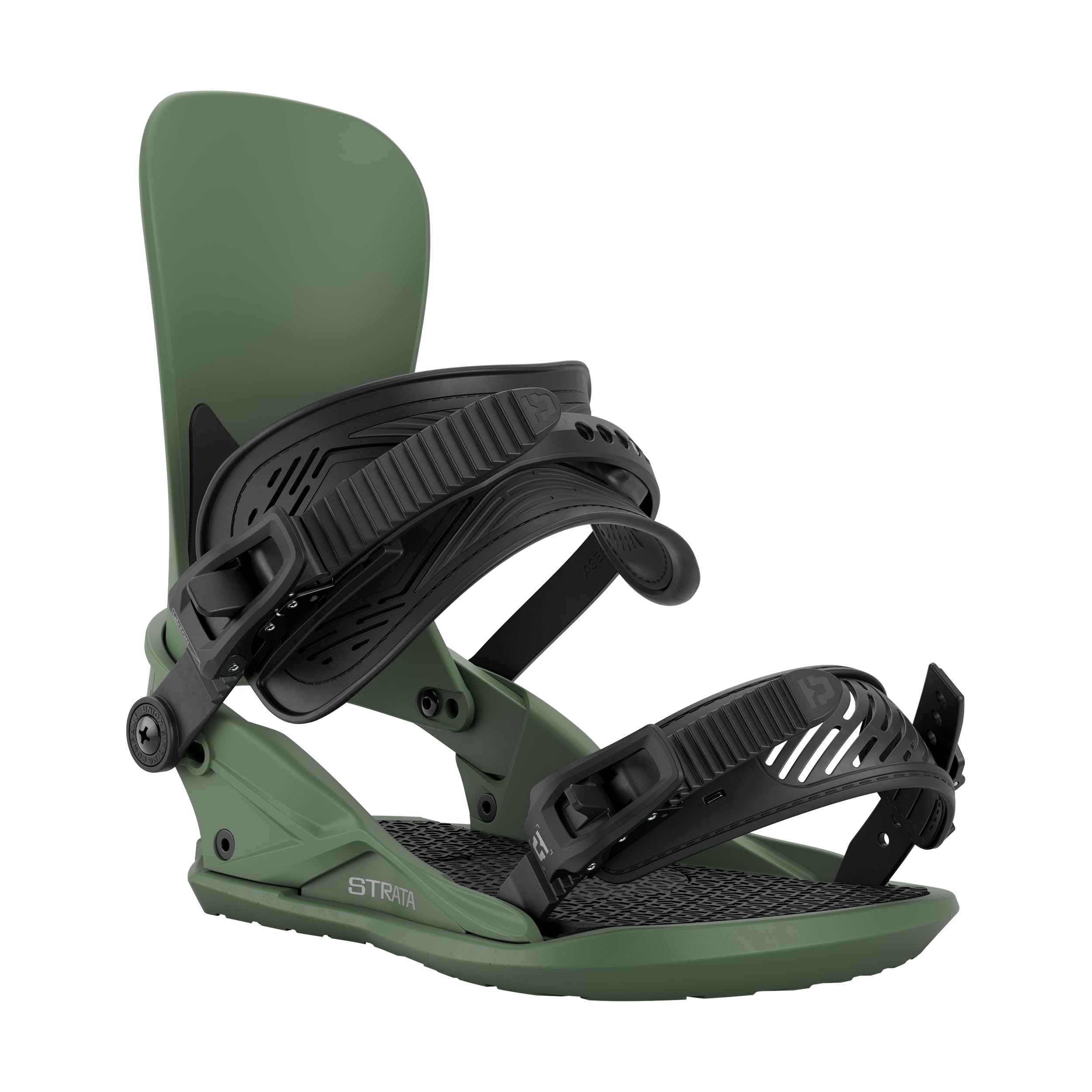
The Union Strata is engineered for riders who split their time between the park and the rest of the mountain. The upgraded bushing material under the footbed increases vibration absorption without adding weight, which makes a real difference when landing jumps or riding through chattery afternoon chop. The mini-disc reduces hardware and lowers the overall stack height, improving board feel and leverage over the edge.
Ankle straps on the current generation have been redesigned for a more anatomical wrap that eliminates pressure points on the top of the foot. The over-toe strap remains functional but requires some patience to dial in — once set, it provides solid retention without cutting off circulation. The highback is medium-stiff, responsive enough for aggressive carving but forgiving enough that you can still butter and press when conditions soften up.
Ridden by Brandon Cocard and Austin Vizz, the Strata is built for progression. It is not as burly as the Force, but it offers a broader sweet spot for riders who want one binding that handles jumps, rails, and all-mountain cruising equally well. The olive green colorway is subtle enough to match most board graphics without clashing.
Why it’s great
- Upgraded bushings provide excellent vibration damping for park and variable snow landings.
- Mini-disc reduces stack height for improved board feel and edge leverage.
- Redesigned ankle strap eliminates pressure points for all-day comfort.
Good to know
- Over-toe strap can be finicky to dial in compared to other Union models.
- Not compatible with vintage Burton 3D mounting patterns.
4. Nidecker Flow Nexus Snowboard Bindings

Flow bindings have always been about eliminating the chairlift fumble, and the Nexus refines that concept with the Locking Slap Ratchet system. Once you set your preferred strap tension, a single push of the button locks it in place — subsequent entries require no re-tightening. The glass-filled nylon baseplate provides enough stiffness for directional carving, though the overall flex is on the softer side, making this a forgiving option for progressing riders.
The Comfort-Fit Fusion strap is one piece that spreads support across the entire top of the foot, eliminating the pressure points you get with traditional two-strap designs. Because the strap covers more surface area, you can run it looser without sacrificing heel hold. This translates to reduced foot fatigue halfway through the day, especially for riders who are still building their leg strength.
One caveat with the Nexus is that the softer flex limits its effectiveness in high-speed carving on firm corduroy — the binding will wash out before the board loses its edge. Advanced riders looking for hardpack performance should look toward the Union Force or a stiffer Flow model. But for intermediate all-mountain riders who value lap count and comfort, the Nexus delivers a genuinely easier day on the hill.
Why it’s great
- Locking Slap Ratchets maintain consistent strap tension without re-tightening each run.
- Fusion one-piece strap eliminates pressure points for all-day comfort.
- Glass-filled nylon baseplate offers a good blend of dampening and response.
Good to know
- Softer flex is not ideal for aggressive hardpack carving at high speed.
- Some users found boot removal excessively tight before break-in.
5. Marker Squire 11 Alpine Ski Bindings
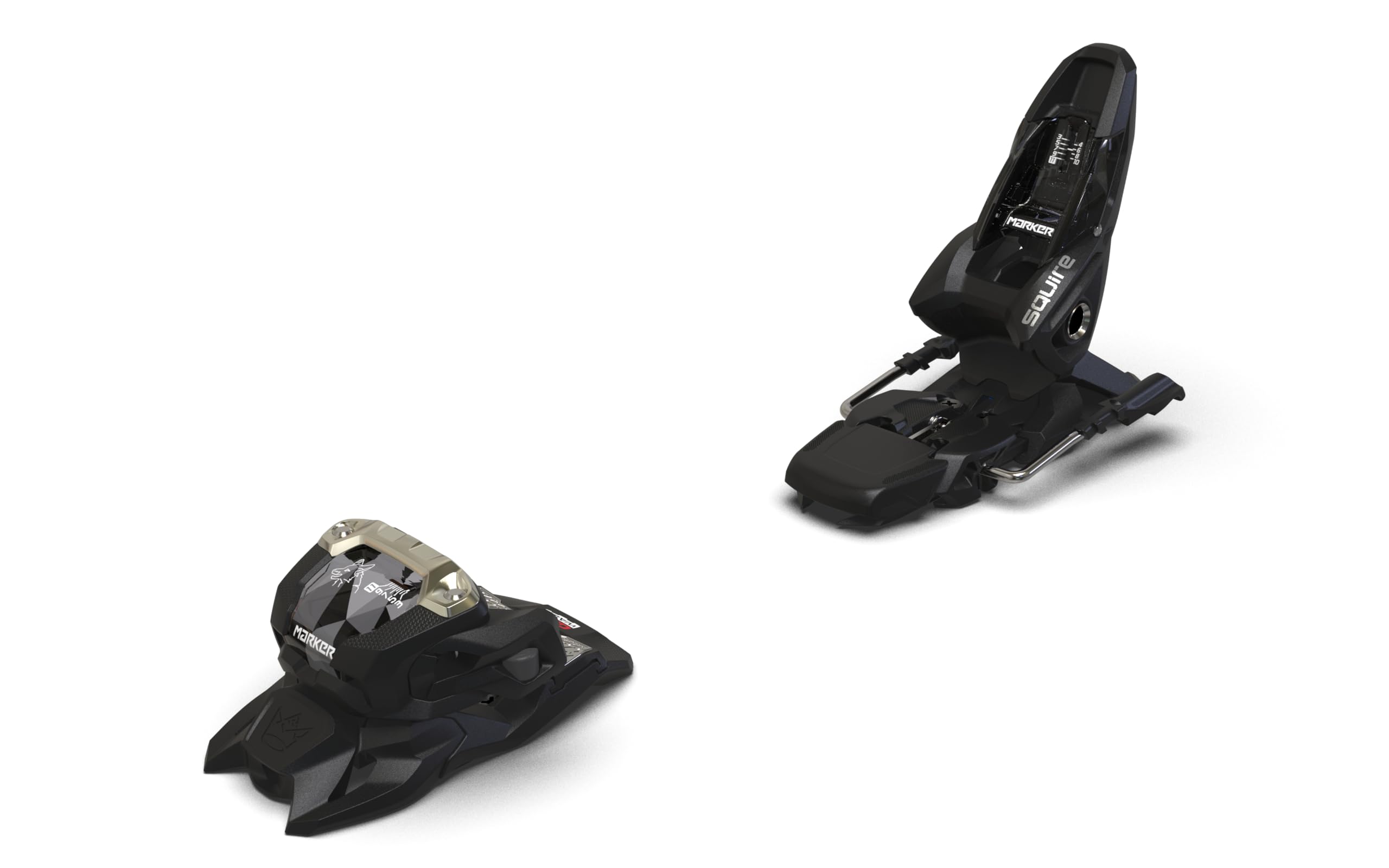
The Marker Squire 11 is a lightweight alpine binding designed for intermediate to advanced skiers who do not need the DIN ceiling of a Griffon. At just 820 grams per binding, it shaves noticeable weight from the setup, reducing swing mass during quick turns and bumps. The Triple Pivot Light 2 toe uses an Anti Ice Rail that effectively scrapes snow from boot soles before engagement, preventing the false clicks and inconsistent retention that plague other budget bindings on sticky days.
Step-in force reduction is a real differentiator here — Marker claims a 30 percent reduction compared to the previous generation, and user reports confirm that GripWalk soles engage with less stomping effort. The stainless steel AFD plate maintains a consistent low-friction surface even after repeated exposure to road salt and packed snow. DIN range of 3 to 11 covers light youths up to solid intermediate adults without over-springing the heel.
The Squire 11 is compatible with both Alpine (ISO 5355) and GripWalk (ISO 23223) soles, making it a future-proof choice for skiers who may switch boot brands down the line. Professional mounting is non-negotiable to ensure the AFD height and forward pressure are correctly set. Once dialed in, these bindings provide reliable release characteristics that inspire confidence through variable terrain.
Why it’s great
- Very lightweight at 820 grams — reduces swing mass for nimble bump performance.
- Anti Ice Rail on the toe ensures consistent step-in even with icy boot soles.
- GripWalk compatible out of the box, covering both modern and traditional boots.
Good to know
- DIN cap of 11 limits use for heavier advanced skiers who push higher release settings.
- Professional mounting and AFD calibration are mandatory for safe operation.
6. Union Flite Pro Men’s Snowboard Bindings
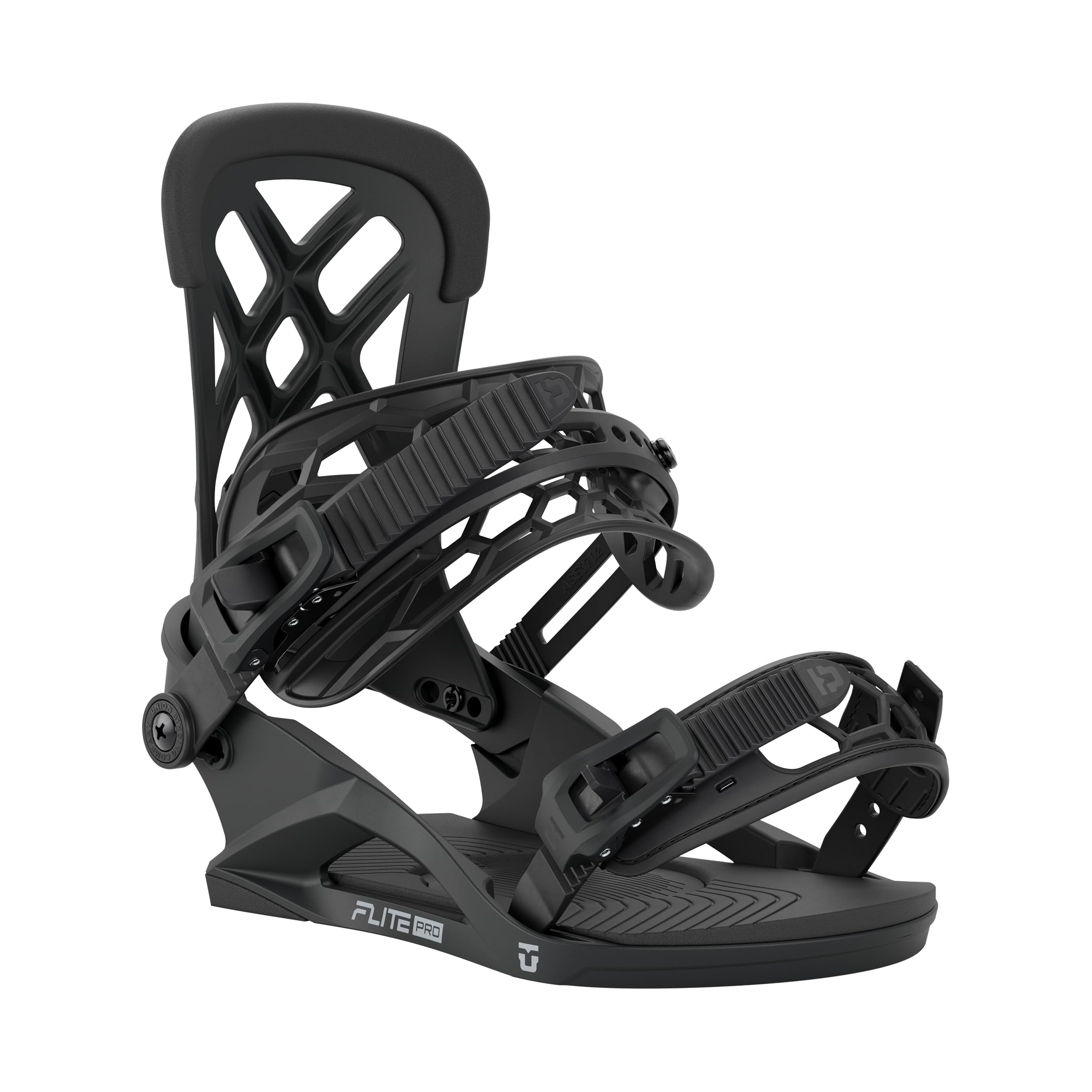
The Union Flite Pro is built around a simple premise: deliver a durable, lightweight binding at a price that does not punish beginners who are still learning what they like. The soft flex rating of 4 out of 10 makes these bindings forgiving during skidded turns and slow-speed edge changes. The aluminum heelcup punches above its weight class — it is the same material used in Union’s premium line, ensuring the heel pocket stays secure and does not deform over time.
Ratchets on the Flite Pro are smooth and responsive, without the gritty feel of many entry-level bindings. The straps are upgraded from the previous generation, offering a wider foot wrap that reduces hotspots. These bindings are compatible with all mounting systems, including 2×4, 4×4, and Burton’s Channel, so they fit virtually any board a beginner might pick up. The tool-less adjustability extends to forward lean and toe ramp height.
The main limitation is the plastic baseplate, which raises durability questions for riders who progress quickly into aggressive freeride or park jumping. Several users reported that after a single season of hard riding, the flex felt too noodly for blacks and bigger landings. For light riders or those making their first turns, however, the Flite Pro offers a comfortable and confidence-boosting platform that will not hold back progression.
Why it’s great
- Aluminum heelcup provides reliable heel hold and long-term durability.
- Soft 4/10 flex is forgiving for beginner turn learning and slow-speed control.
- Universal mounting compatibility fits 2×4, 4×4, and Burton Channel boards.
Good to know
- Plastic baseplate may develop flex issues for heavier advanced riders after a season.
- Soft flex limits stability at high speed on firm snow.
7. HEAD RX ONE Snowboard Bindings

The HEAD RX ONE sits in the beginner-to-intermediate category with a flex that leans noticeably softer than the all-mountain average. Riders moving from rental gear to their first personal setup will find the RX ONE easy to engage — no heavy stomp required to initiate a turn. The plastic baseplate and strap system are designed for light duty in resort conditions rather than hardpack charging or backcountry exploration.
Customer feedback highlights the quick strapping speed compared to traditional bindings. One reviewer noted that the step-in process took about a quarter of the time of their previous bindings, which translated to an extra eight runs per day. That efficiency matters for weekend warriors trying to maximize vertical feet. The toe ramps are adjustable, allowing some dial-in for different boot sole lengths.
Durability is the primary concern with the RX ONE. Multiple reports detail toe strap breakage on the first day of use, and the plastic heelcup raises questions about long-term retention in cold conditions. HEAD offers a two-year warranty if you keep the receipt, but the inconvenience of a mid-day breakage is a real risk for anyone riding more than 20 days a season. Budget buyers should weigh the low entry price against the potential need for early replacement.
Why it’s great
- Very fast entry and exit — users report cutting strapping time by 75 percent.
- Toe ramps are adjustable to fit different boot sole lengths.
- Two-year warranty from HEAD covers manufacturing defects.
Good to know
- Toe strap has a reported tendency to break on day one even without hard falls.
- Plastic heelcup and baseplate limit durability for aggressive or frequent use.
8. XCMAN Rear Step In Style Snowboard Bindings
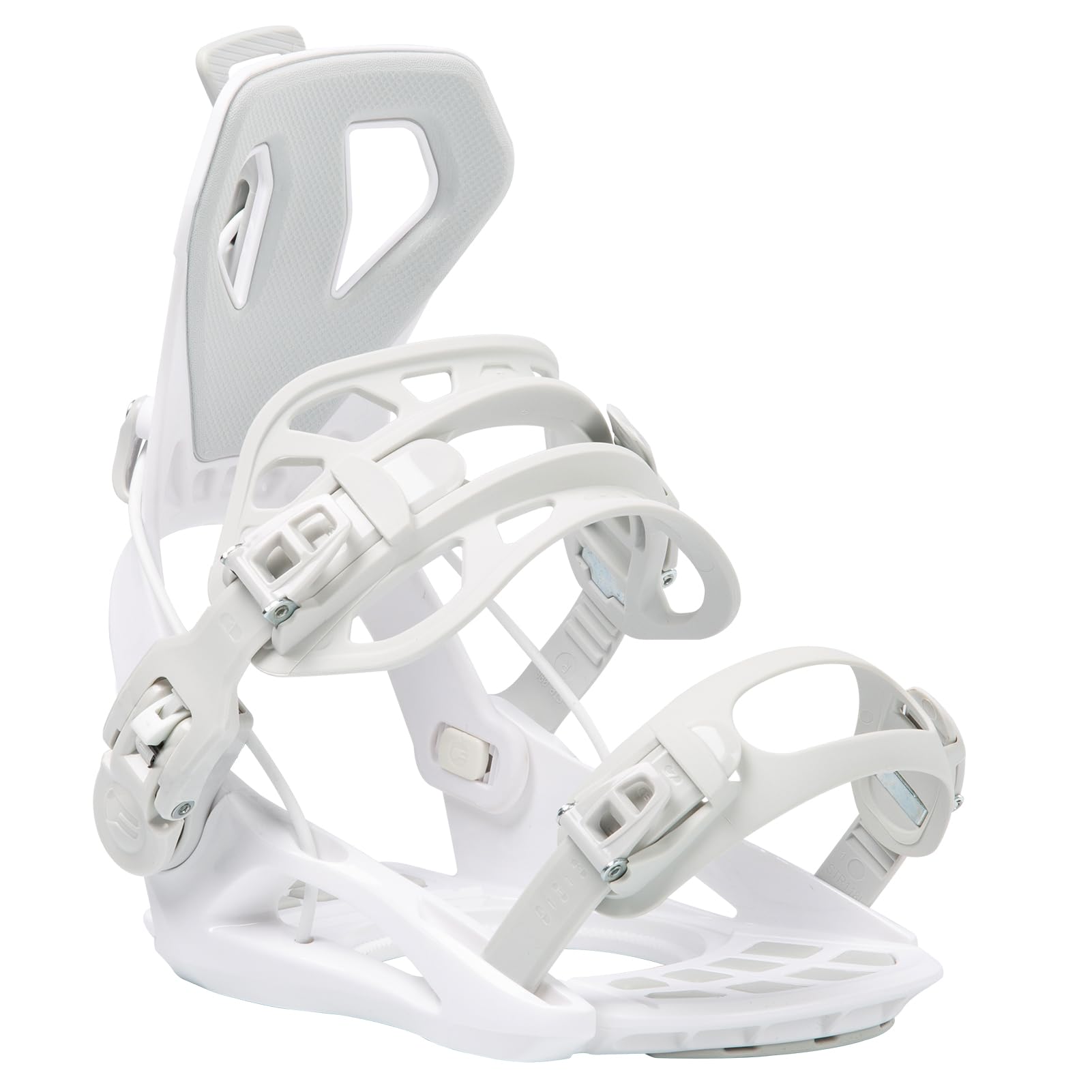
XCMAN’s rear-entry design targets a specific pain point: the hassle of sitting down in the snow to strap in. The hybrid nylon fiber baseplate uses cutouts to reduce weight and prevent snow buildup underfoot, which should enhance glide in sticky conditions. The rear cable locks the hi-back in place and actually tightens under pressure, making the binding more responsive the harder you ride.
The Fusion one-piece Power Straps cover a larger area of the foot than traditional two-strap designs, improving comfort and reducing the need to cinch down hard. EVA padding on the hi-back and footbed adds cushioning that reduces leg fatigue on long days. The turntable allows angle adjustments across multiple positions, so you can find a stance that matches your natural alignment.
Build quality is mixed. Some users received a pair with only two screws aligning on the mounting disc instead of four, which raises concerns about security. There is also a report of a missing left binding entirely, replaced by a wireless keyboard — an extreme outlier, but indicative of inconsistent quality control. For intermediate riders who prioritize convenience and do not push bindings to their limit, the step-in speed is a real benefit. Advanced riders seeking precise heel hold should look elsewhere.
Why it’s great
- Rear entry design eliminates the need to sit down for quick run-to-run transitions.
- Fusion one-piece Power Straps distribute pressure over a larger foot area.
- EVA padding on hi-back and footbed reduces leg fatigue for all-day riding.
Good to know
- Inconsistent mounting disc alignment reported — some units only allow two of four screws.
- Quality control has produced a small number of missing or incorrect parts.
9. XCMAN Outdoors All-Mountain Snowboard Binding
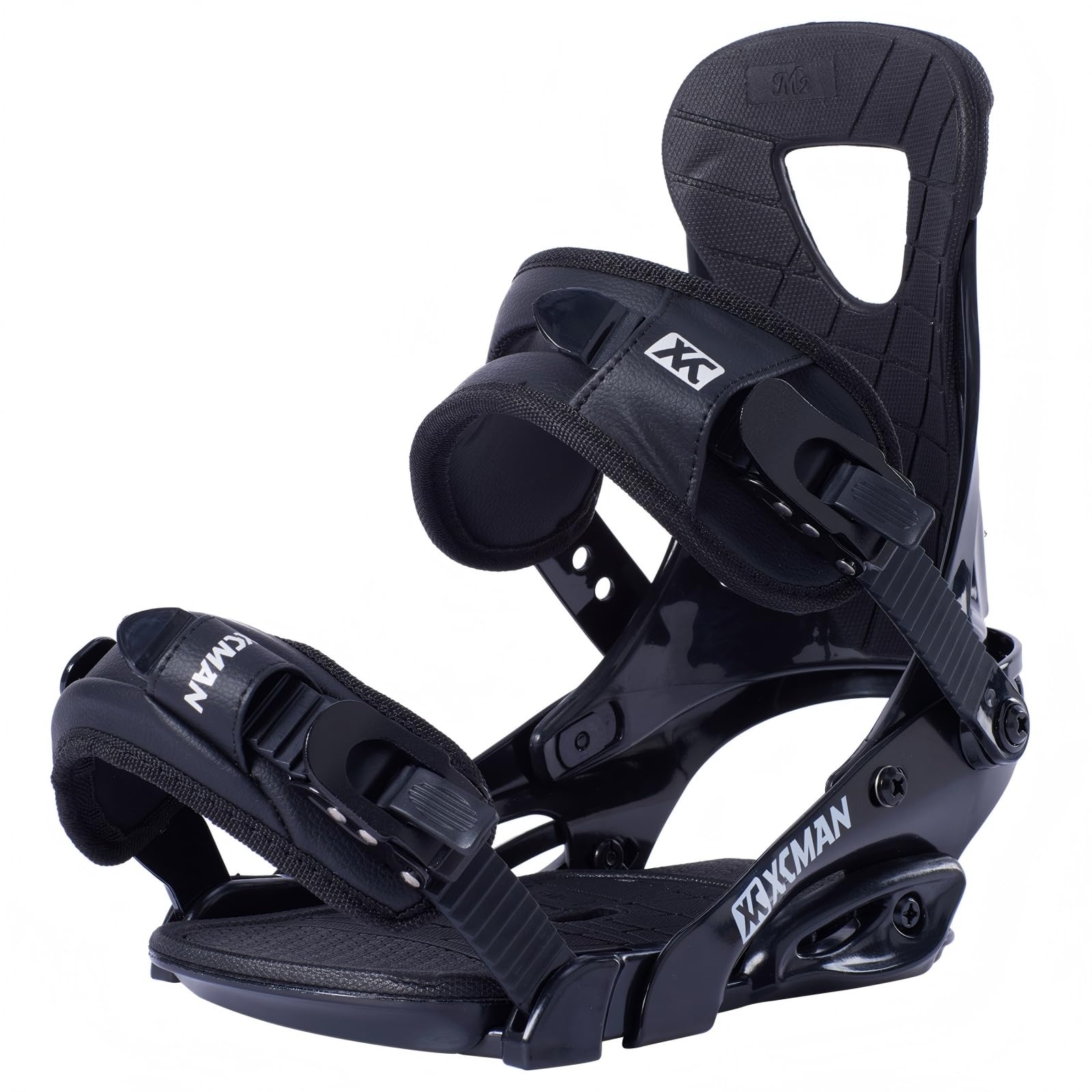
The XCMAN All-Mountain Binding is a budget-conscious option that incorporates aluminum heelcups and fiberglass scaffolding inside the baseplate. At roughly 4.6 pounds per pair, these bindings sit on the lighter end of the spectrum, which helps reduce leg fatigue during long chairlift days. The medium-rigid flex plants them in the all-mountain range — stiff enough for carving but forgiving enough for skidded turns.
Adjustability is a strong point at this price. The tool-free highback allows quick forward lean changes, and the ankle and toe caps are adjustable without tools. The universal 4×4 mounting disc includes the necessary hardware, though some users noted a lack of installation instructions. The EVA padded baseplate adds a layer of vibration damping that is unusual at this price tier, smoothing out chatter on icy runouts.
The primary trade-off is in refinement. Ratchets feel less crisp than premium models, and the plastic components raise durability questions for aggressive riders. Sizing is split into Medium (US 6–9) and Large (US 9–12), and customers report that the Large fits a size 12 boot well. For entry-level and casual riders who want a light, functional binding that covers the basics, this XCMAN does the job without breaking the bank.
Why it’s great
- Aluminum heelcup and fiberglass base scaffolding provide surprising structural rigidity.
- EVA padded baseplate dampens vibration on icy and variable terrain.
- Tool-free adjustability on highback, ankle, and toe allows quick stance changes.
Good to know
- Ratches feel less smooth compared to mid-range and premium bindings.
- No printed instructions included, which may complicate first-time installation.
FAQ
Can I use all-mountain bindings for park riding?
What does the DIN range on a ski binding actually mean?
Do I need GripWalk compatible bindings?
How often should I replace snowboard bindings?
What determines whether a binding is all-mountain versus freestyle or freeride?
Final Thoughts: The Verdict
For most users, the best all-mountain ski bindings winner is the Union Force because it delivers the stiffest, most responsive chassis in this roundup without sacrificing the vibration damping that makes all-mountain riding comfortable across varied terrain. If you want a step-in system that saves minutes per chairlift run, grab the Nidecker Flow Nexus. And for alpine skiers who need precise retention across park and powder, nothing beats the Marker Griffon 13.