
The difference between a great day on the mountain and a frustrating one often starts at your feet. All-mountain snowboard boots need to deliver a precise balance of response for carving groomers and enough forgiveness for off-piste chatter, all while keeping your heel locked in place run after run. A boot that fits poorly or flexes incorrectly will ruin your edge control and drain your energy before lunch.
I’m Min — the co-founder and writer behind Gadgets Feed. I’ve spent hundreds of hours dissecting BOA mechanisms, liner materials, outsole compounds, and flex ratings across dozens of models to understand what actually separates a boot that holds up from one that breaks down mid-season.
Whether you are charging hard or lapping the mountain with friends, finding the right pair of best all-mountain snowboard boots starts with understanding how flex, fit, and closure systems work together for your specific foot shape and riding style.
How To Choose The Best All-Mountain Snowboard Boots
All-mountain boots live in a performance sweet spot — they need to be responsive enough for high-speed carving but forgiving enough for tree runs and uneven terrain. The wrong flex or fit will sabotage your riding more than any board or binding upgrade ever could. Focus on three pillars: flex rating, closure system, and liner construction.
Flex Rating — The Stiffness Sweet Spot
Flex is rated on a 1-to-10 scale, with 1 being ultra-soft and 10 being race-stiff. For all-mountain riding, a 5/10 to 7/10 flex is the goldilocks zone. A 5 gives you enough play for butters and jibbing while still holding an edge at moderate speed. A 7 locks in for aggressive carving and freeride charging but can feel punishing in the park. Beginners should lean toward 4-5; experienced riders can comfortably ride a 6-7.
Closure System — BOA Zones vs Traditional Laces
Dual-zone BOA systems use two independent dials to tighten the lower foot and upper cuff separately, giving you micro-adjustable precision without fumbling with wet laces. Single-zone BOA is simpler but applies equal tension across the whole boot, which can compromise heel hold. Traditional laces offer the most customization for oddly shaped feet but take longer to adjust. For all-mountain versatility, a dual-zone BOA with a dedicated heel harness is the strongest configuration.
Liner and Heel Hold Technology
A heat-moldable liner like Intuition or Imprint conforms to your foot’s exact shape, eliminating pressure points and locking your heel in place — this is non-negotiable for all-day comfort and response. Look for features like internal ankle harnesses, J-bars, or SuperLock heel systems that physically cinch the heel pocket. A boot that lets your heel lift even 5mm will cause blisters and kill edge control on every run.
Quick Comparison
On smaller screens, swipe sideways to see the full table.
| Model | Category | Best For | Key Spec | Amazon |
|---|---|---|---|---|
| K2 Maysis | Premium | Aggressive all-mountain & freeride | Intuition Control Foam 3D liner; Flex 7/10 | Amazon |
| Burton Ruler BOA | Premium | All-mountain carving & resort laps | Dual-zone BOA; Imprint 2 heat-moldable liner | Amazon |
| ThirtyTwo Lashed Double BOA | Premium | Versatile all-mountain with speed | Dual-zone lacing; Double BOA system | Amazon |
| ThirtyTwo Lashed ’24 | Mid-Range | Park & resort all-mountain | Traditional lacing; performance liner | Amazon |
| DC Control BOA | Mid-Range | Precise all-mountain fit | Dual BOA H4 Coiler; Response Liner II | Amazon |
| Burton Moto BOA | Mid-Range | Entry-level all-mountain comfort | Single-zone BOA; DynoLITE outsole | Amazon |
| DC Phase BOA Pro | Mid-Range | All-mountain with skate-style feel | Dual Zone BOA H4 Coiler; Response Liner III | Amazon |
| Ride Rook | Budget-Friendly | Beginner all-mountain value | H4 BOA Fit System; Flex 4/10 | Amazon |
| Nidecker Altai | Budget-Friendly | Affordable all-mountain durability | 3D molded toe box; Dual BOA | Amazon |
In‑Depth Reviews
1. K2 Maysis Mens Snowboard Boots
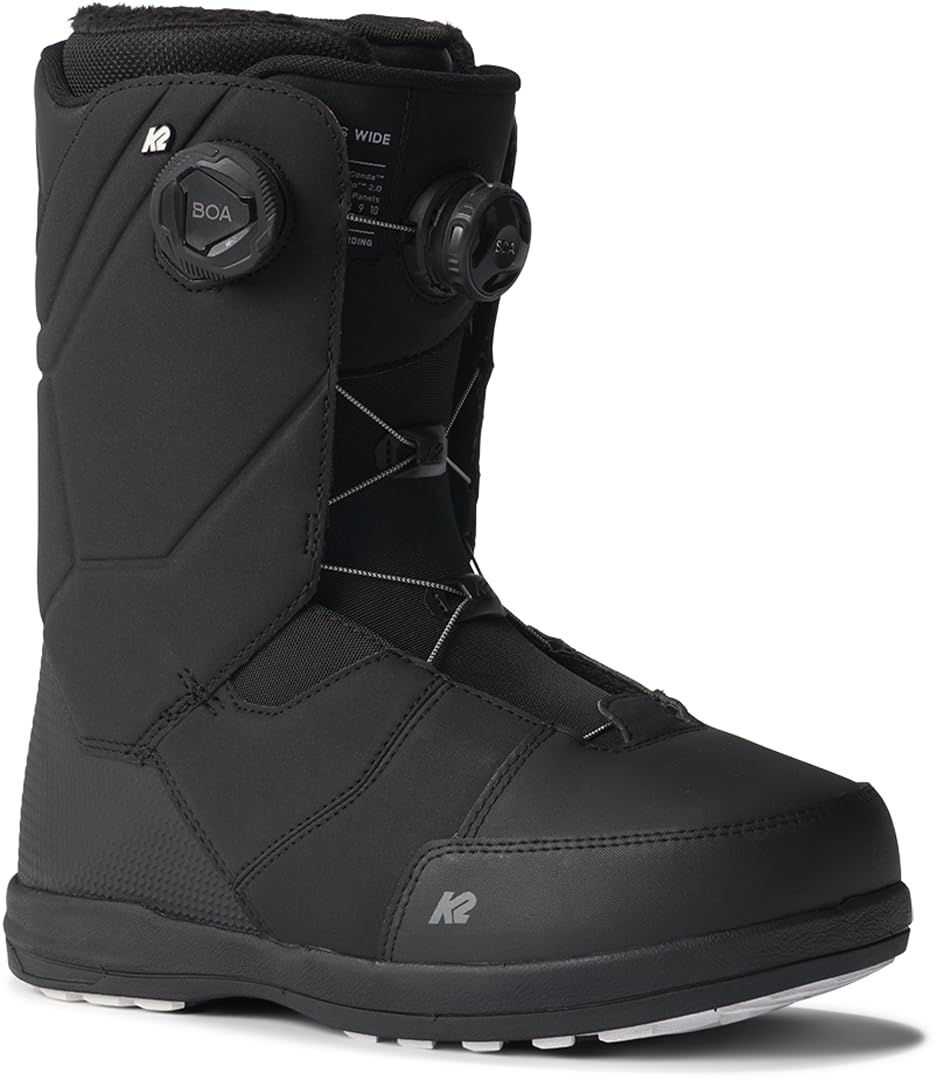
The K2 Maysis sits at the top of the all-mountain hierarchy for a clear reason: the Intuition Control Foam 3D liner delivers a custom-molded fit that locks your heel down without creating pressure points, and the 7/10 flex provides the stiffness needed for aggressive carving and freeride lines while retaining enough give for natural terrain absorption. The H4 Coiler BOA system offers micro-adjustable dual-zone tension — the lower zone cinches the footbed while the upper dial secures the cuff independently, which is critical for maintaining heel hold through variable snow conditions.
The premium rubber outsole features Harshmellow damping technology, which absorbs impact from hard landings and choppy runouts without sacrificing board feel. Riders with wide feet will appreciate the dedicated wide sizing option — a rarity in performance boots that typically only come in standard D widths. The slimmer profile compared to older Burton models also means less toe jam when paired with channel or Flow bindings.
After multiple days at resorts like Breckenridge, users report zero break-in pain and consistent comfort straight out of the box. The only trade-off is the premium cost, but the Intuition liner and durable outsole construction justify the investment for riders who put in 20+ days a season. This is the boot to buy if you want one quiver-killer that handles everything from corduroy to chunder.
Why it’s great
- Intuition Control Foam liner heat-molds for a precise, locked-in fit
- Wide sizing available for larger or broader feet
- Harshmellow rubber outsole dampens chatter without losing sensitivity
Good to know
- Premium price point — aimed at frequent riders
- 7/10 flex may feel too stiff for park-focused beginners
2. DC Shoes Men’s Control BOA Snowboard Boots
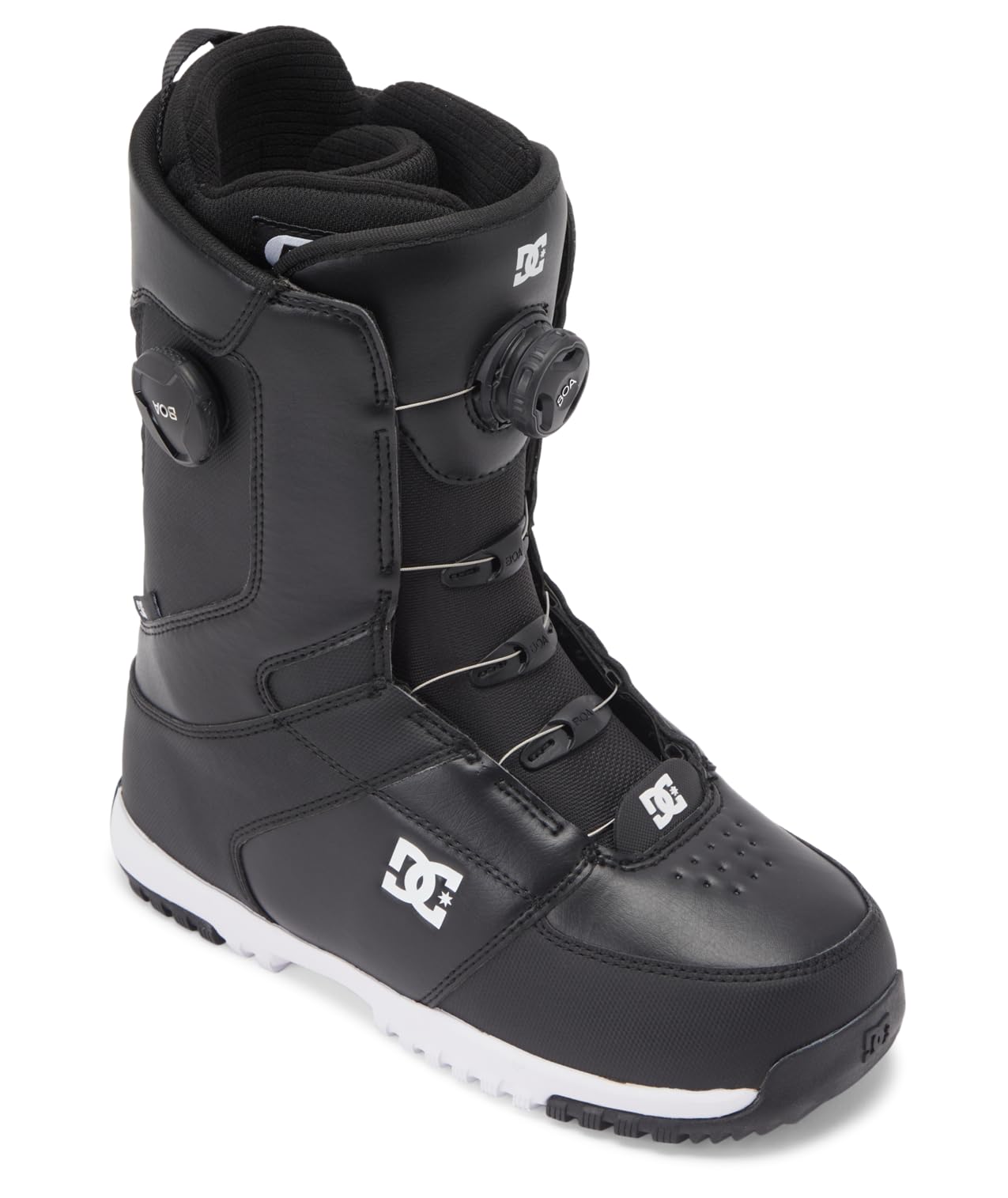
The DC Control BOA hits a rare intersection of performance features and mid-range cost. The dual-zone BOA Fit System with H4 Coiler dials allows you to independently tension the forefoot and calf, which is essential for all-mountain riders who want a snug heel pocket without crushing the toes. The Response Liner II adds latex J-bars and a 360-degree power strap that reinforces lateral stability when you’re driving the board edge-to-edge on groomers.
The UniLite outsole is intentionally lighter than traditional full-rubber designs, which reduces swing weight during spins and quick edge transitions. At a 4/10 flex, this boot sits on the softer end of the all-mountain spectrum — ideal for intermediate riders who value maneuverability in trees and moguls over raw carving power. The molded IMPACT-ALG insole provides arch support that many budget boots omit entirely.
Some users report that the boot runs about half a size small, so ordering a half-size up from your street shoe is recommended. The articulated construction also improves durability at the flex points, which is a common failure area on cheaper boots. For riders graduating from rental gear, this boot offers a genuine performance upgrade without the premium price.
Why it’s great
- Dual-zone H4 Coiler gives precise, independent foot and calf adjustment
- Lightweight UniLite outsole reduces fatigue during long days
- Response Liner II with J-bars locks the heel effectively
Good to know
- Runs small — order half to one full size up
- 4/10 flex is on the softer side for aggressive carving
3. Burton Men’s Ruler BOA Snowboard Boots
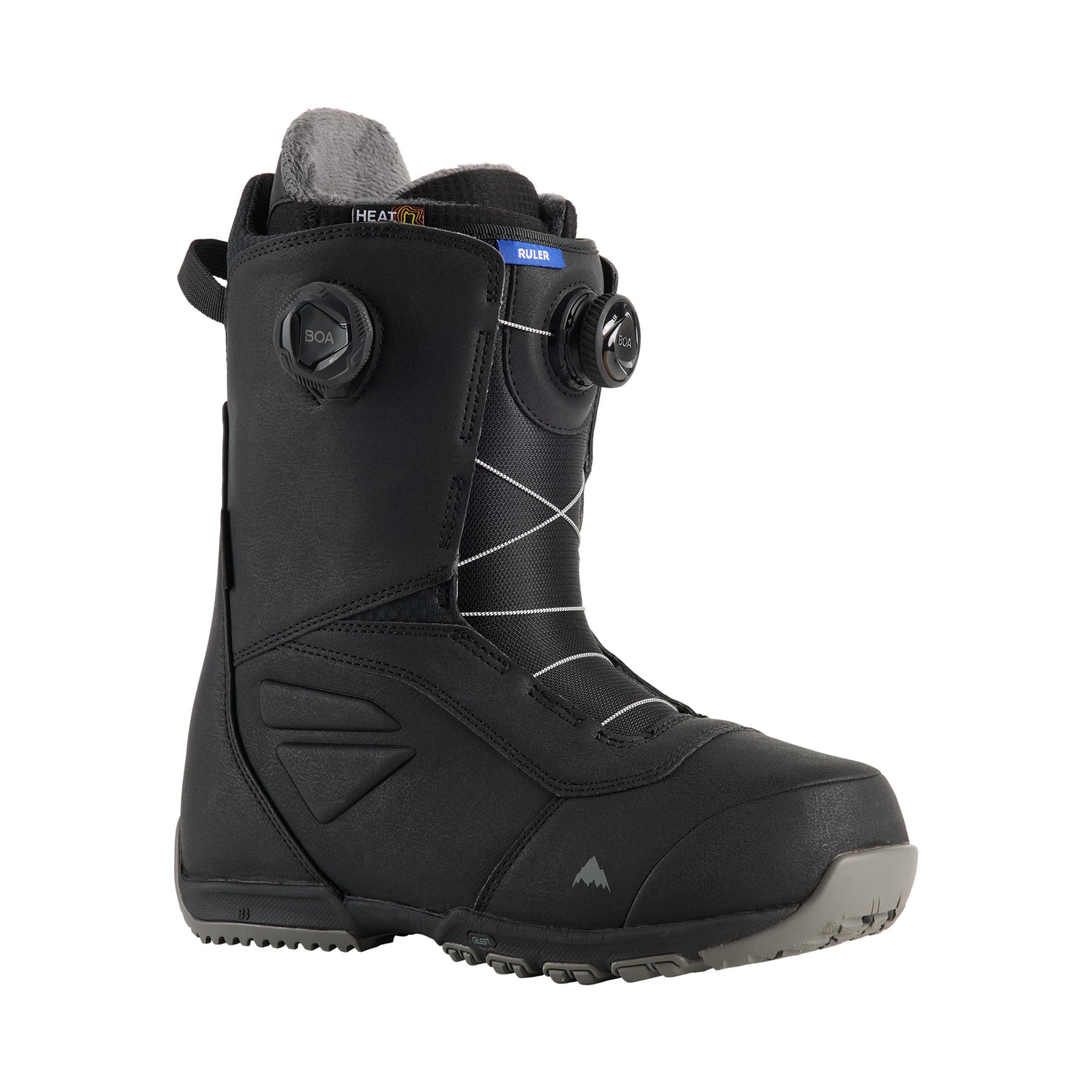
The Burton Ruler BOA has been a benchmark in the all-mountain category for years, and the current version refines the formula with a dual-zone BOA Fit System and the Imprint 2 heat-moldable liner. The medium 1:1 flex PowerUp tongue creates a snug interface between boot and tongue, reducing the dead zone that sometimes plagues traditional overlap designs. The lock-up cuff — a super low-profile inner cuff — maximizes heel hold while making entry and exit noticeably easier than older Burton models.
The Total Comfort Construction means these boots feel broken-in from the first session, with the snow-proof internal gusset sealing the lower zone against moisture ingress during slushy spring days. The B3 Gel cushioning in the heel and forefoot provides damping that remains effective even in sub-zero temperatures — gel compounds that stiffen up in the cold are a known issue in competitor boots. The sleeping bag reflective foil underfoot also reflects heat back toward your toes, a tangible difference on chairlift rides in single-digit weather.
Longevity is a strong suit here: riders report a full season of 30+ days with no degradation in liner density or BOA cable tension. The EST-optimized midsole lowers your center of gravity for improved board feel, which translates to better feedback through the bindings. If you want a proven, durable boot that handles everything from morning corduroy to afternoon chop, the Ruler remains a top-tier choice.
Why it’s great
- Imprint 2 liner heat-molds for a custom, blister-free fit
- Lock-up cuff provides exceptional heel hold without pressure points
- B3 Gel cushioning maintains damping performance in cold weather
Good to know
- Runs slightly large — consider sizing down half a size
- Mid-range flex may not satisfy freeride purists seeking a stiffer boot
4. ThirtyTwo Lashed Double Boa Snowboard Boots
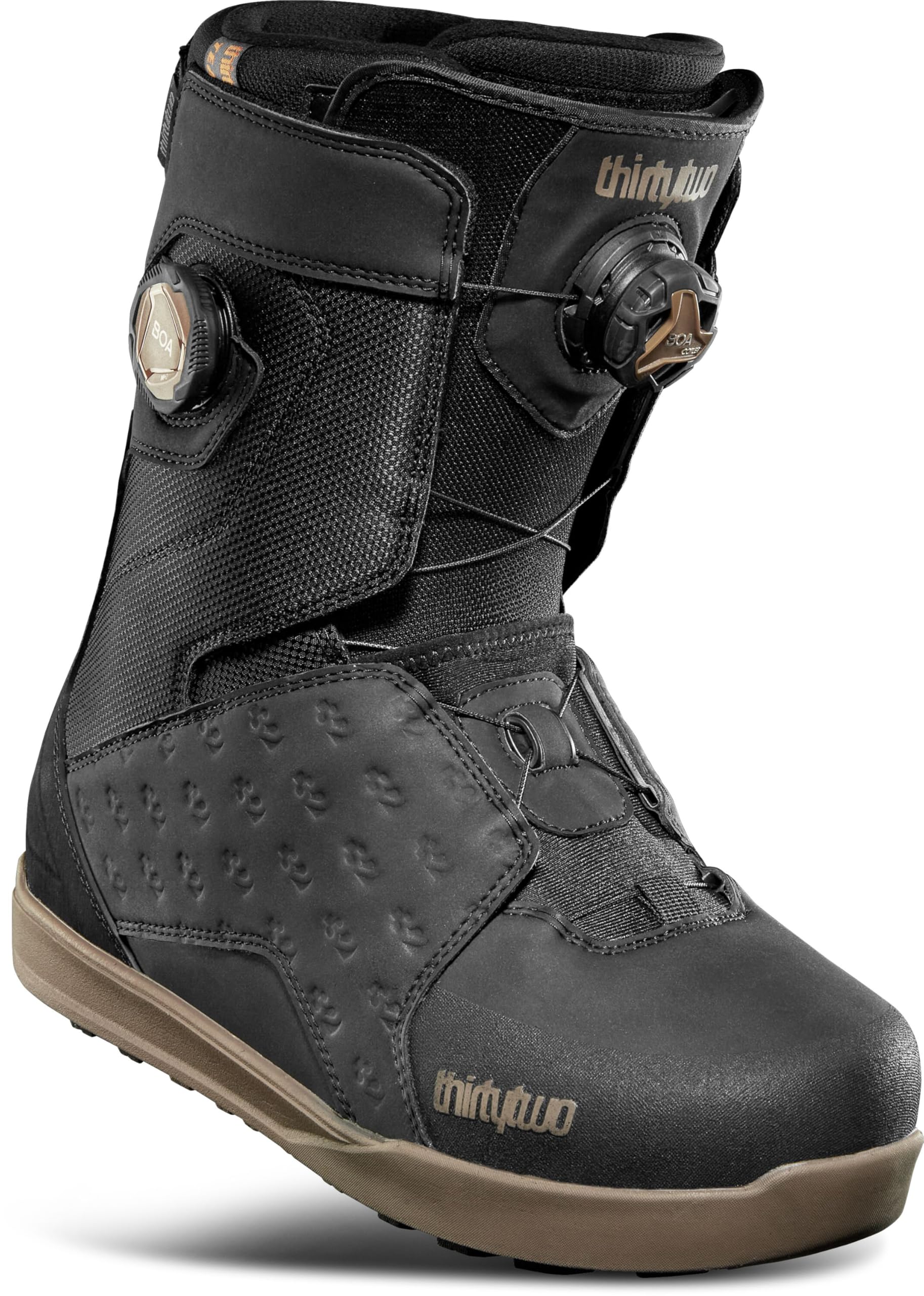
The ThirtyTwo Lashed Double BOA brings a dual-zone lacing system to a boot that has traditionally been known for its soft, playful flex profile. The double BOA setup allows you to tighten the lower footbed independently from the upper cuff, giving you the ability to run a looser calf tension for park landings while keeping the forefoot locked down for rail precision. The performance liner includes extra shin and calf padding, which adds warmth and comfort during long sessions in the terrain park.
The grippy rubber outsole provides solid traction during boot packs and hike-to features, and the overall weight is comparable to previous traditional-lace versions — the BOA mechanism doesn’t add meaningful bulk. Riders with duck feet or high arches report that the boot packs out to a perfect fit after about two weeks of regular riding, and the double BOA speeds up adjustments significantly compared to fumbling with wet laces in the cold.
One note: the boot runs slightly snug, and some users with wider feet needed to go up a full size and a half. The left boot also tends to fit tighter than the right for some riders, so trying them on with your intended sock thickness is advisable. If you prioritize quick, precise adjustability and a playful flex, this is a strong contender for a do-it-all park-and-resort boot.
Why it’s great
- Dual BOA allows independent foot and calf tension for park-specific tuning
- Extra shin padding improves comfort for landing impact
- Packs out nicely for a custom fit after break-in
Good to know
- Runs narrow — wide-footed riders should size up significantly
- Left boot may fit tighter than right for some users
5. DC Shoes Phase BOA Pro
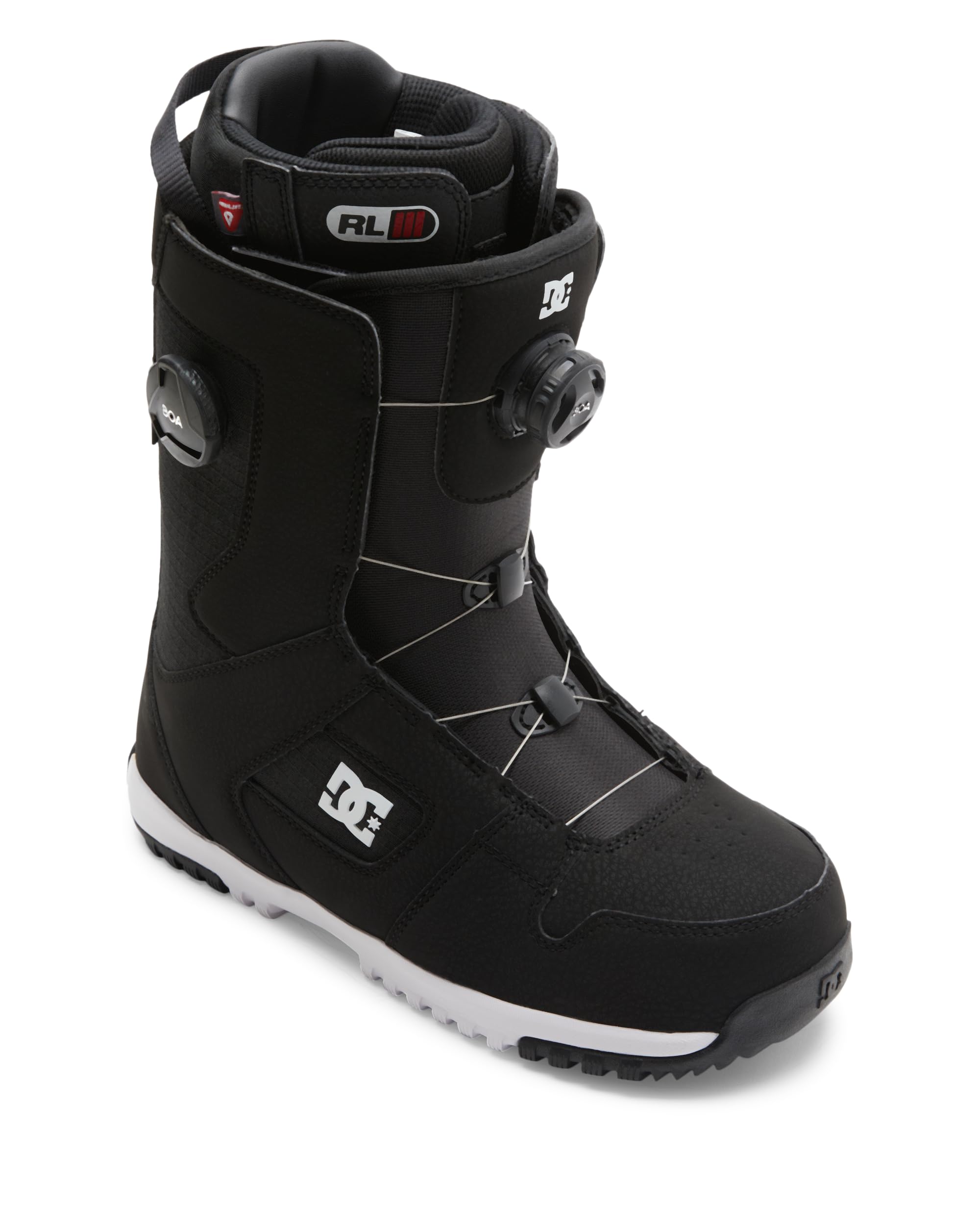
The DC Phase BOA Pro is engineered around one critical goal: eliminating heel lift. The SuperLock heel harness physically cinches the heel pocket, and when paired with the Dual Zone BOA Fit System’s H4 Coiler, you can independently dial the lower foot tight while keeping the cuff comfortable. The Response Liner III features Primaloft insulation that holds warmth even when wet, and the Aerotech ventilation ports prevent the sweaty-foot problem common in fully sealed liners.
The Contact UniLite outsole borrows construction cues from skate shoes — it’s lighter than traditional snowboard boot soles and provides a more direct board feel for buttering and press maneuvers. The 5/10 flex is the sweet spot for all-mountain versatility: stiff enough to drive a camber board at speed but soft enough for jibbing and natural terrain play. Riders with narrow ankles and wider calves specifically praise the dedicated ankle harness, which solves the common problem of boots that lock the foot but pinch the shin.
The molded Impact-ALG insole delivers shock absorption that reduces fatigue on hard-packed resort days. Some users found the saddle bone area slightly tight initially, but this loosens up after a few sessions. If heel lift has been your persistent nemesis, the Phase BOA Pro’s harness system is the most effective solution at this price tier.
Why it’s great
- SuperLock heel harness virtually eliminates heel lift
- Primaloft insulation keeps feet warm in wet conditions
- 5/10 flex is versatile for all-mountain riding
Good to know
- Saddle bone area may feel tight before break-in
- Best for riders with narrow to medium-width feet
6. ThirtyTwo Mens Lashed ’24
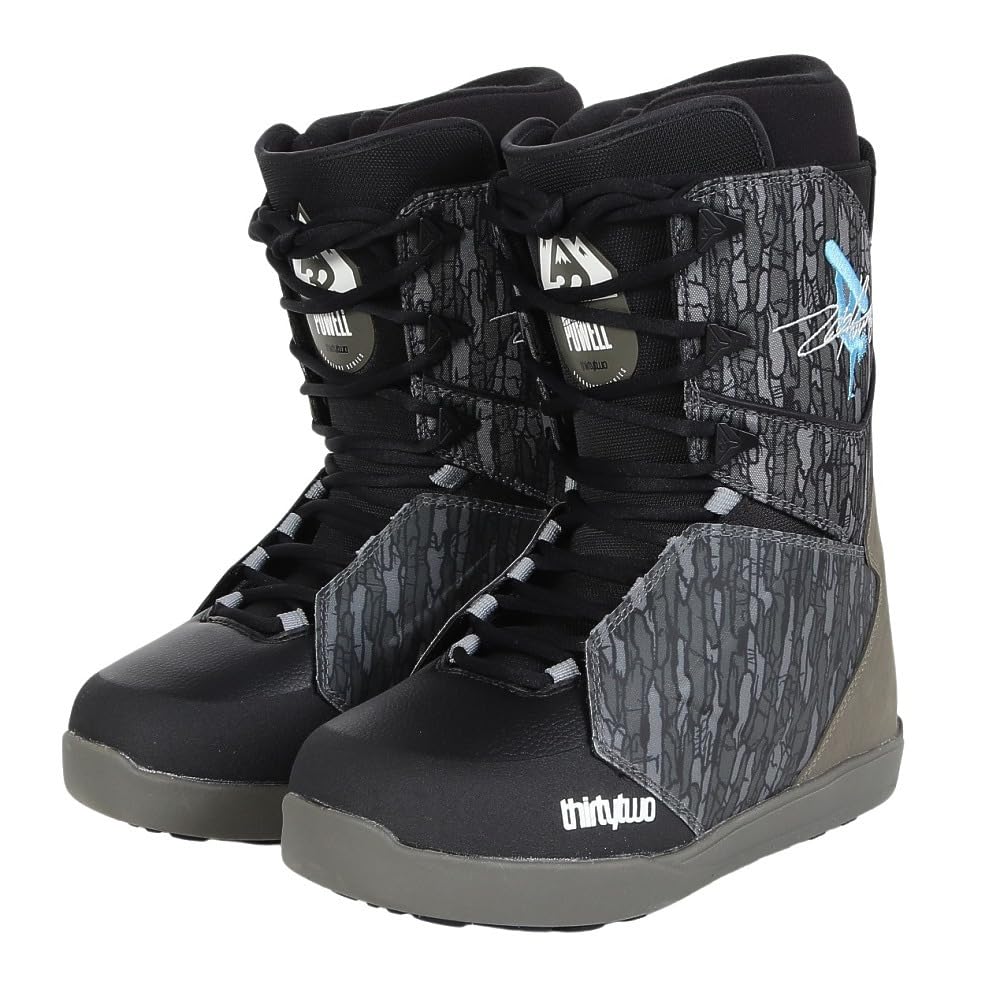
The ThirtyTwo Lashed ’24 sticks with traditional laces, and for riders who value adjustability and repairability, that’s a feature, not a drawback. The performance liner includes a dedicated heel hold system that improves significantly over older ThirtyTwo models, providing better ankle support and less heel lift out of the box. The soft flex profile makes this boot ideal for park laps, casual resort riding, and riders who prefer a skate-style feel over a stiff race boot.
Traditional laces let you micro-zone tension in ways BOA systems can’t replicate — you can run a loose forefoot, tight mid-foot, and loose upper cuff by varying lace tension at each eyelet. The liner is heat-moldable for additional customization, and riders report that the fit improves notably after a single session in a boot oven. The outsole grippy rubber provides solid traction for boot packs.
This is a relatively soft boot, so it won’t satisfy riders looking for maximum response at speed. It’s also best suited for park and resort use rather than backcountry touring. At its mid-range price point, especially when found on sale, the Lashed ’24 offers good value for riders who want a proven, comfortable boot without BOA complexity.
Why it’s great
- Traditional laces allow zone-specific tension customization
- Heat-moldable liner improves fit after break-in
- Proven comfort and reliability for park riding
Good to know
- Soft flex limits high-speed carving performance
- Not ideal for backcountry or aggressive freeride
7. Burton Moto BOA Mens Snowboard Boots
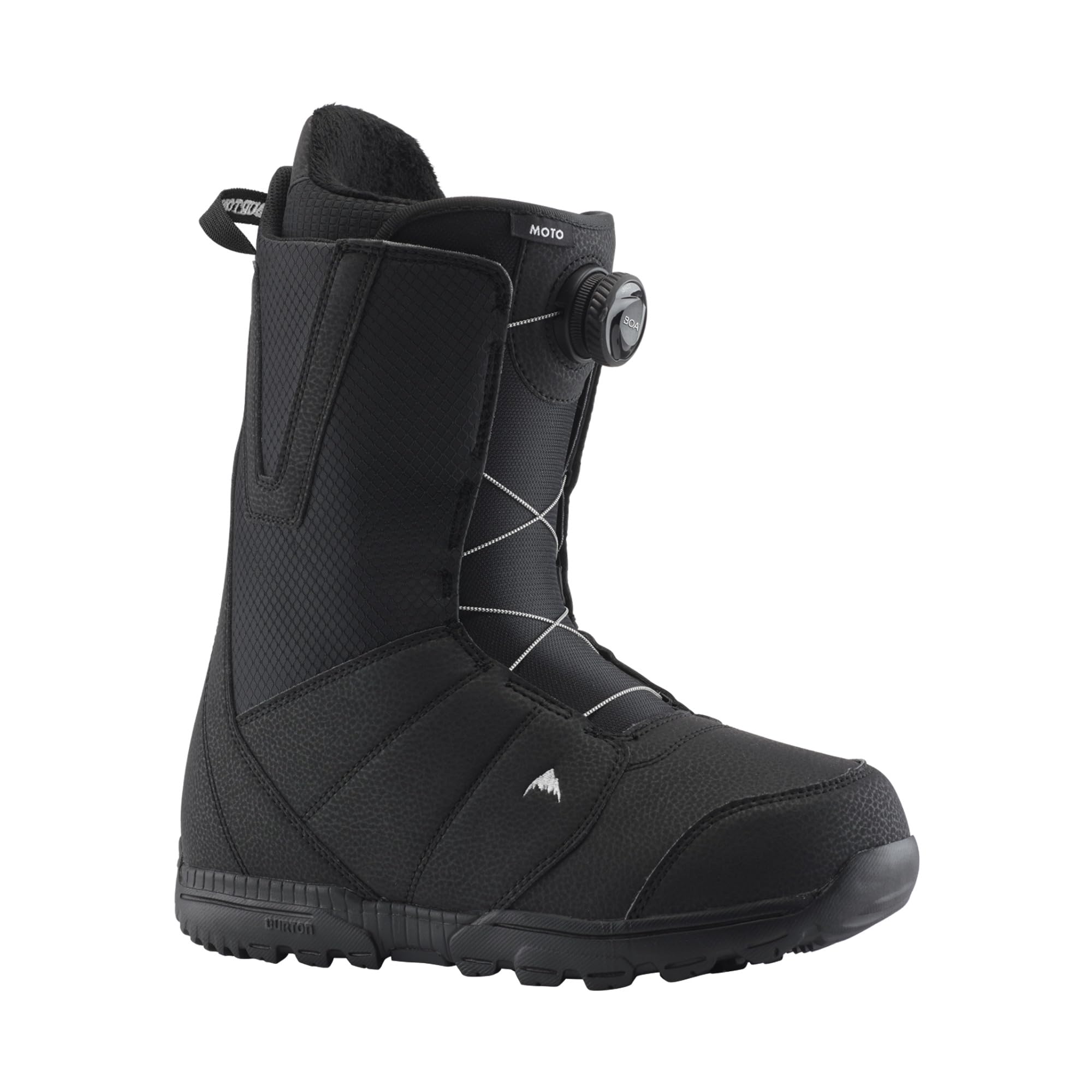
The Burton Moto BOA is the entry-level all-mountain boot that gets the fundamentals right. The single-zone BOA Fit System simplifies lacing to a single dial — twist to tighten, pull to release — which is a massive upgrade over traditional laces for beginners who struggle with even tension distribution. The Imprint 1+ liner is heat-moldable and features sleeping bag reflective foil underfoot to retain warmth, a meaningful detail for cold-weather resorts.
The DynoLITE outsole offers superior cushioning compared to hard plastic budget soles, and the Shrinkage footbed reduction reduces toe drag — a common complaint from riders moving up from smaller boots. The soft flex (approximately 3/10) makes this boot forgiving for learning edge transitions and park basics, but it lacks the backbone for aggressive carving.
Riders with wide feet should note that these boots run narrow and may require sizing up. The single-zone BOA also applies uniform tension, which means you can’t independently tighten the heel pocket — a trade-off at this price. For first-time buyers or casual riders hitting the mountain 5-10 days a season, the Moto BOA delivers reliable comfort without breaking the bank.
Why it’s great
- Single-zone BOA is fast and easy for beginners
- Heat-moldable liner and reflective foil improve warmth
- DynoLITE outsole provides good cushioning for the price
Good to know
- Single-zone BOA limits independent heel vs calf adjustment
- Runs narrow — wide-footed riders may need to size up
8. Ride Rook Men’s Snowboard Boots

The Ride Rook is purpose-built as a budget-friendly entry point that doesn’t skip the BOA convenience. It uses an H4 BOA Fit System — the same coiler dial found on much more expensive boots — giving you tool-free adjustment with a simple twist. The 4/10 flex is soft enough for beginners to learn turns comfortably while providing enough structure for intermediate progression on groomers.
The Grip Lite sole combined with the +Slime midsole provides decent traction and shock absorption for the price tier. The plush foam liner with secure lacing offers a snug fit around the mid-calf without restricting circulation. Multiple riders in the same family have repurchased this model, which speaks to its consistent sizing and comfort out of the box.
The major caveat is sizing: the Rook runs significantly small, with multiple reports of ordered sizes being too tight even when going a full size up. Ride’s return policy has also drawn criticism for high restocking fees, so ordering from a retailer with free returns is strongly advised. If you get the fit right, this is an excellent value proposition for casual all-mountain riding.
Why it’s great
- H4 BOA dial provides premium convenience at a budget price
- +Slime midsole adds cushioning for park and resort landings
- Consistent sizing across multiple purchases
Good to know
- Runs very small — order at least one full size up
- Restocking fees on returns can be high
9. Nidecker Altai Men’s Snowboard Boots
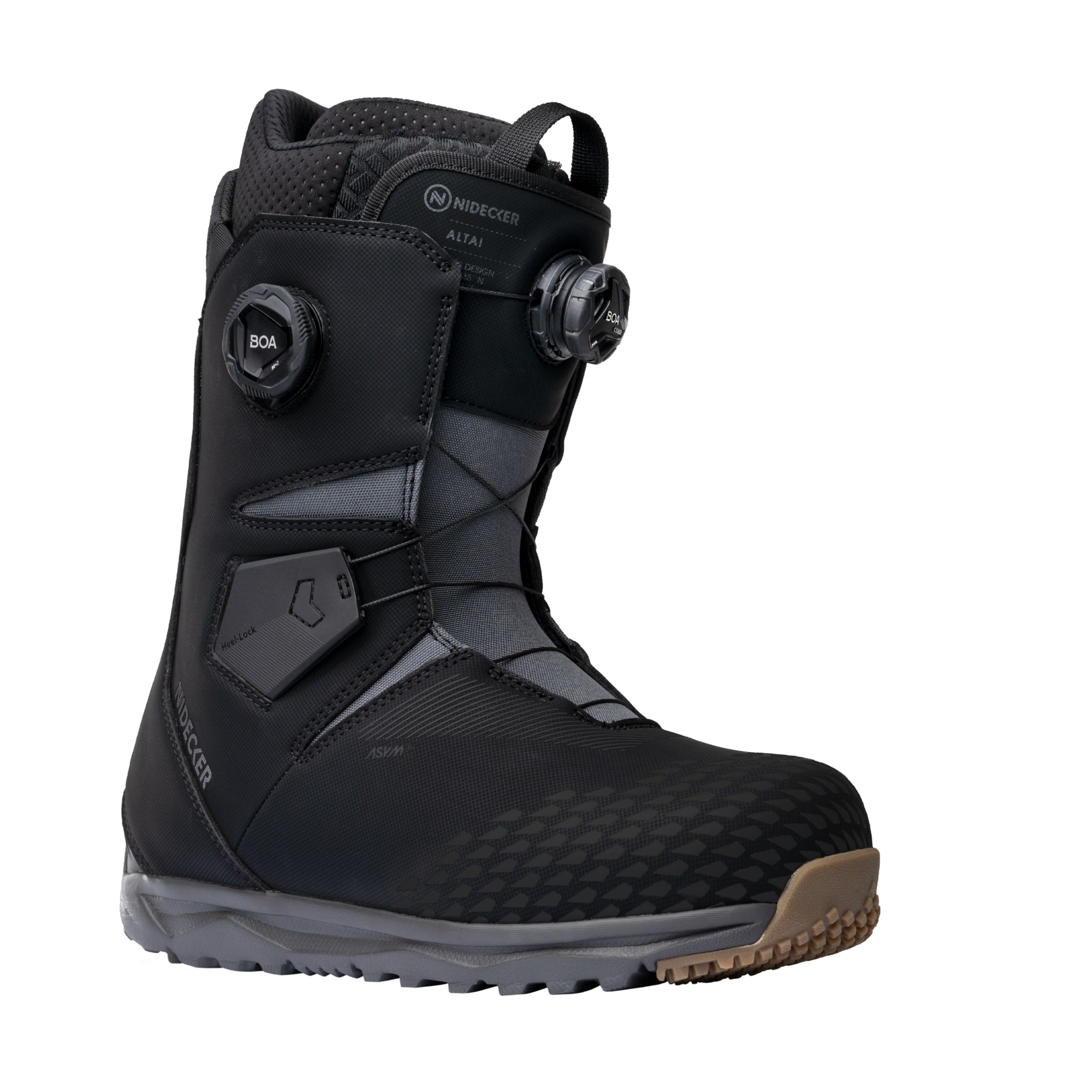
The Nidecker Altai punches well above its weight class by offering a dual-zone BOA system and a Vibram rubber outsole at a price typically reserved for single-zone or lace-up boots. The 3D molded lasted toe box and tongue reduce bulk around the forefoot, which improves board feel and prevents the dreaded “dead toe” sensation when leaning into toe-side turns. The articulating flex zone allows the boot to move naturally with your ankle during flexion and extension.
The ASYM3F construction — asymmetrical flex and fit — is designed to mirror the natural shape of the foot and the biomechanics of snowboarding, providing more support on the medial side where you drive edges. The rubber backstay adds durability in the heel area, which is a common wear point on budget boots. Riders report that the boots are stiff enough for responsive carving but still flex naturally for jumps and natural terrain.
The main compromise is in the liner: while comfortable and heat-moldable, it doesn’t have the same density or longevity as premium Intuition or Imprint liners. The sizing runs true to standard US shoe sizes, which is a relief compared to many boots in this tier that run small. If you want dual-zone BOA adjustability and a Vibram sole without paying for a premium brand name, the Altai is a smart buy.
Why it’s great
- Dual-zone BOA at a budget-friendly price point
- Vibram rubber outsole offers excellent traction and durability
- Asymmetrical construction improves natural edge response
Good to know
- Stock liner lacks density for high-frequency riders
- Limited colorway options compared to competitors
FAQ
Should I size up or down for all-mountain snowboard boots?
Do I need dual-zone BOA for all-mountain riding?
How do I know if a boot flex is right for my weight and ability?
Final Thoughts: The Verdict
For most riders, the best all-mountain snowboard boots winner is the K2 Maysis because the Intuition liner and 7/10 flex deliver a locked-in, responsive ride that handles everything from groomers to chunder without compromise. If you want precise heel hold and dual-zone BOA at a better value, grab the DC Control BOA. And for the best budget-friendly entry with dual BOA, nothing beats the Nidecker Altai.