
Choosing the wrong set of all-season passenger tires means accepting a compromise you didn’t have to make — either you get confident grip on wet pavement and sacrifice tread life, or you get a long-wearing compound that feels like ice skates in a light drizzle. Drivers in moderate climates who lean on a single set of tires year-round need a compound that balances silica content and tread pattern depth to handle rain, dry highways, and the occasional dusting of snow without forcing a trade-off on noise or ride comfort. The real challenge isn’t finding a tire — it’s sorting through treadwear warranties, load indices, and speed ratings to match the specific demands of your daily commute and local weather patterns.
I’m Min — the co-founder and writer behind Gadgets Feed. I’ve spent hundreds of hours analyzing tire specifications, comparing UTQG ratings, deciphering siping patterns, and cross-referencing real-world owner feedback to separate marketing claims from actual performance in this category.
This guide zeroes in on the top nine models that deliver genuine all-season capability without inflating the cost of entry, helping you find the best all-season passenger tires that match the specific weight, horsepower, and driving habits of your everyday vehicle.
How To Choose The Best All-Season Passenger Tires
Buying the right set of all-season tires starts with understanding how your specific driving environment interacts with three core specs: treadwear warranty, speed rating, and load index. A tire that excels on a compact sedan may feel unstable on a heavier crossover, and a compound tuned for max tread life often lacks the micro-siping needed for confident wet braking. Focus on matching the tire’s design intent to your vehicle’s weight, typical highway speeds, and local rainfall intensity.
Decoding the UTQG Treadwear Grade
The Uniform Tire Quality Grading (UTQG) system gives you a factory-backed estimate of tread longevity. A rating of 300 means the tire is expected to last roughly 30,000 miles under controlled conditions, while a 700-grade compound can push beyond 70,000 miles. The trade-off is grip — high-mileage compounds use harder rubber that sacrifices cornering bite and wet-road friction. For daily drivers clocking 15,000 miles per year, aim for a minimum 500 treadwear grade if you want the set to last four years without becoming dangerously shallow.
Speed Rating and Load Range Compatibility
Tires carry a letter code — H (130 mph), V (149 mph), W (168 mph), Y (186 mph) — that indicates the maximum safe sustained speed. Fitting a lower rating than your vehicle’s factory spec can cause overheating and tread separation at highway speeds. Load range (SL for standard, XL for extra load) dictates how much weight each tire can carry. A crossover like a Honda CR-V or Toyota RAV4 typically requires SL or XL with a load index of 100 or higher. Ignoring this spec risks sidewall flex, poor handling, and accelerated wear on the outer tread blocks.
Siping Pattern and Snow Capability
True all-season tires rely on hundreds of tiny slits called sipes cut into the tread blocks. These sipes bite into snow and expel water film from the contact patch. Look for tires with 3D or interlocking sipe technology — these stay open when cornering (for grip) but lock together under braking load (for stability). A tire with wide circumferential grooves and angled lateral slots also reduces hydroplaning risk by channeling water away faster. If you experience more than four inches of snowfall annually, consider a tire with the Three-Peak Mountain Snowflake (3PMSF) rating, though most standard all-season tires lack this certification.
Quick Comparison
On smaller screens, swipe sideways to see the full table.
| Model | Category | Best For | Key Spec | Amazon |
|---|---|---|---|---|
| Continental ExtremeContact DWS06 PLUS | Premium UHP | Performance sedans and sport coupes | 50,000 mi tread warranty | Amazon |
| Goodyear Eagle Touring (235/55R20) | Premium Touring | Full-size SUVs and crossovers | 80,000 mi tread warranty | Amazon |
| Goodyear Eagle Touring (285/45R22) | Premium Touring | Large light trucks and luxury SUVs | 114 XL load capacity | Amazon |
| Michelin CrossClimate2 | Premium All-Weather | Severe weather and snow traction | 60,000 mi tread warranty | Amazon |
| Continental ContiProContact | Mid-Range Touring | Quiet highway cruising | 80,000 mi tread warranty | Amazon |
| Pirelli Scorpion All Season Plus 3 | Premium Crossover | SUVs and CUVs (CR-V, RAV4, Q5) | 70,000 mi tread warranty | Amazon |
| Pirelli P Zero All Season | Mid-Range Performance | Sport sedans and grand tourers | 94V speed rating | Amazon |
| Falken Ziex ZE950 | Budget Performance | Compact sedans and economy cars | 3D Canyon sipe technology | Amazon |
| Fullway HP108 (Set of 2) | Budget Entry | High-mileage commuters | 380AA UTQG rating | Amazon |
In‑Depth Reviews
1. Continental ExtremeContact DWS06 PLUS (255/35ZR19)

The ExtremeContact DWS06 PLUS stands out in the UHP all-season segment because Continental engineered the tread compound to deliver genuine winter bite without sacrificing dry-road steering precision. Owners report that the tire sheds snow and ice noticeably better than previous-generation performance rubber, thanks to the SportPlus Technology that stiffens the shoulder blocks during cornering while keeping the central sipes flexible for snow compaction. The 96Y XL load rating supports heavy sedans and coupes without sidewall rollover, and the 50,000-mile warranty provides realistic coverage for a tire in this category.
Real-world reviews from Jaguar XF and widebody Challenger drivers highlight the DWS06 PLUS as a notable improvement over factory Goodyear RS-A2 and even the Pirelli P Zero in wet-road confidence. The tire is roughly five pounds lighter per corner than some competitors, which reduces unsprung mass and improves ride compliance over broken pavement. The tuned performance indicators — small D, W, and S markings in the tread that wear away when the tire loses peak capability — give you a visual cue for replacement timing that most brands omit entirely.
The trade-off comes in absolute dry grip at the track limit: the DWS06 PLUS trades a few tenths of lateral G for all-weather versatility, so dedicated summer tire fanatics may find the limit slightly lower than a pure three-season tire. For daily drivers who want one set to handle rain, frost, and the occasional highway blast, this Continental is the benchmark for the category.
Why it’s great
- Wet and light snow grip that rivals dedicated winter tires
- 50,000-mile warranty with visual wear indicators for timely replacement
- Lighter construction improves ride quality and steering response
Good to know
- Dry grip limit is slightly below premium summer tires
- Tread life may fall short of warranty under aggressive driving
2. Goodyear Eagle Touring All-Season (235/55R20)

The Goodyear Eagle Touring in 235/55R20 fills a critical gap for owners of modern crossovers and full-size sedans who want a quiet, long-wearing tire that doesn’t break the bank. The 80,000-mile limited treadwear coverage is among the highest in this category, reflecting a compound that prioritizes longevity without completely ignoring wet-road capability. The optimized contact patch reduces irregular wear patterns — a common complaint on vehicles with staggered wheel setups or aggressive alignment specs.
Drivers of Dodge Charger RT and Challenger RT models report that this tire matches or exceeds the ride comfort of the factory Firestone tires while costing considerably less per corner. The black sidewall design keeps the aesthetic clean, and the tire takes weights easily during balancing — a small detail that saves shop time and reduces vibration issues. Wet traction is rated as decent by owner feedback, with no hydroplaning incidents reported at highway speeds in moderate rain.
The main limitation is snow performance: the Eagle Touring uses a dense tread pattern with moderate siping depth, so it struggles on packed snow or ice compared to a purpose-built all-weather tire. For drivers in mild climates who rack up high mileage, this Goodyear delivers the lowest cost-per-mile of any tire in this review.
Why it’s great
- 80,000-mile warranty offers industry-leading tread life coverage
- Quiet, compliant ride suitable for long highway commutes
- Strong dry and wet traction for daily driving conditions
Good to know
- Snow and ice performance is average for an all-season tire
- Not designed for sporty driving or aggressive cornering
3. Goodyear Eagle Touring (285/45R22)
The larger 285/45R22 variant of the Goodyear Eagle Touring brings the same touring-compound philosophy to heavy SUVs like the Chevrolet Tahoe and GMC Yukon, where load capacity and highway stability matter more than ultimate cornering grip. The 114 XL load rating supports up to 2,601 pounds per tire, giving full-size SUVs a comfortable margin when hauling passengers and cargo. Owners of 2017-era Tahoes report that the tire delivers a distinctly quieter ride than the OEM BF Goodrich Alenza Duelers, with reduced road noise on coarse asphalt surfaces.
The real-world feedback over two years and 30,000 miles shows good wear characteristics when proper alignment and rotation schedules are followed. Some users noted edge wear developing after 20,000 miles despite regular rotations — a common issue on heavy vehicles with aggressive camber settings, but worth monitoring if you carry heavy loads frequently. The 800-series treadwear compound balances longevity with acceptable wet traction, though the tire does not carry a Three-Peak Mountain Snowflake rating.
Mounting and balancing are straightforward, and the current date codes on Amazon shipments suggest fresh production stock. If you drive a heavy luxury SUV or light truck and need a tire that keeps the cabin quiet over long distances while offering enough tread life to justify the investment, this Goodyear variant earns its place as a premium touring option.
Why it’s great
- Massive load capacity supports heavy SUVs and light trucks safely
- Much quieter than many OEM tires on coarse pavement
- Strong tread life with proper rotation and alignment
Good to know
- Edge wear may appear earlier on vehicles with aggressive camber
- Not rated for severe snow conditions
4. Michelin CrossClimate2 (215/55R17)
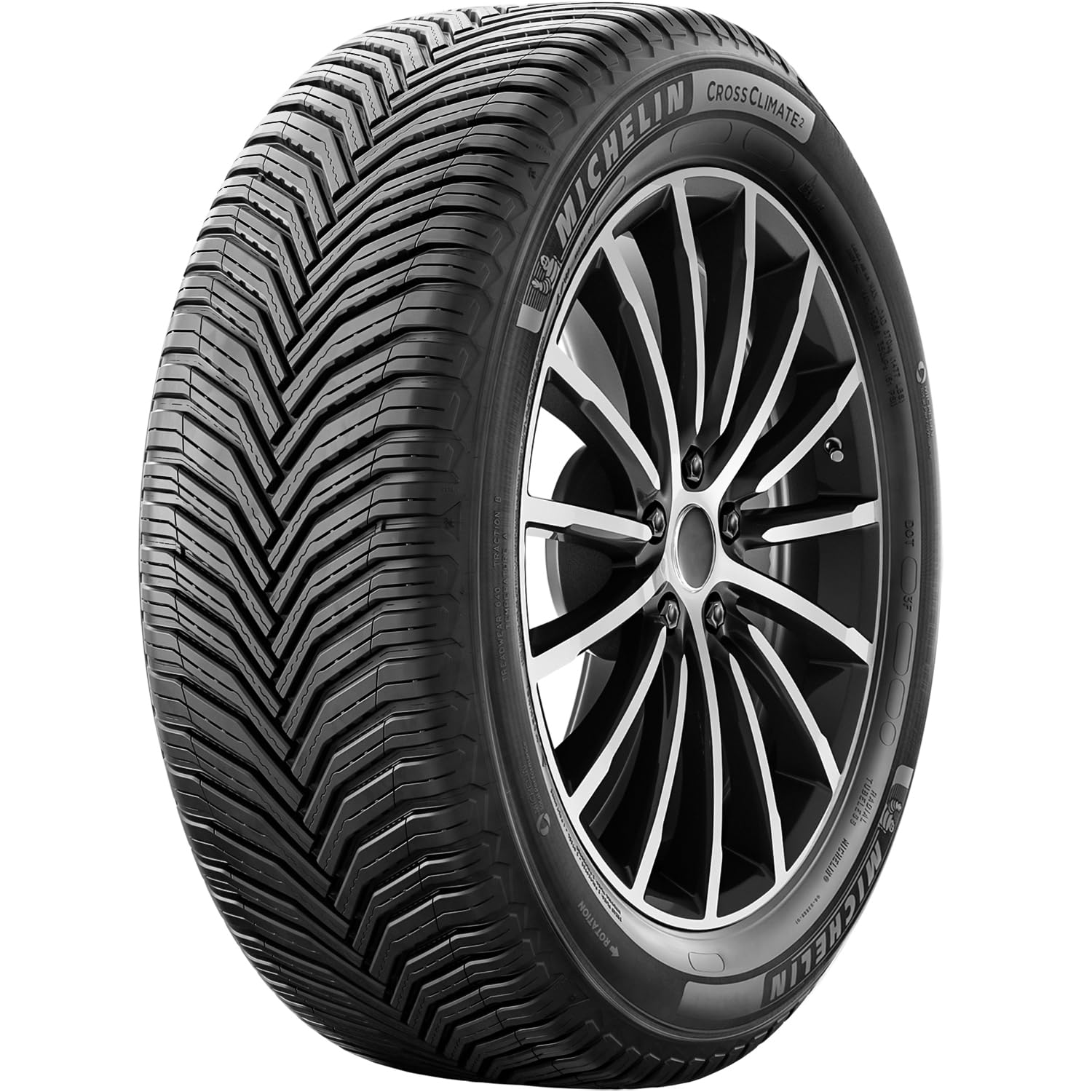
The Michelin CrossClimate2 breaks the traditional all-season mold by earning the Three-Peak Mountain Snowflake certification while maintaining a 60,000-mile treadwear warranty — a rare combination that makes it a legitimate all-weather tire rather than a fair-weather compromise. The V-shaped directional tread pattern with deep lateral grooves aggressively evacuates slush and standing water, while the silica-infused compound remains pliable in freezing temperatures without sacrificing dry-road stability at highway speeds. Owners report that the tire stops shorter than competitors in both wet and dry conditions, a claim backed by Michelin’s internal testing against four leading competitive tires.
Real-world longevity feedback is impressive: one owner logged 30,000 miles across 25 states in all seasons and reported that the tread depth still looked new. Another user kept a set from December 2021 through March 2026, covering multiple winters and summer road trips without premature wear. The ride quality is smooth and quiet for an all-weather tire, with none of the drone or vibration that often accompanies aggressive directional tread patterns.
The premium price tag is the main hurdle — the CrossClimate2 costs more than many standard all-season tires in the same size. But when you factor in the elimination of winter tire changeover costs and the extended tread life that Michelin’s compound delivers, the total cost of ownership often favors this tire over cheaper alternatives. If you live in a region that sees regular snow and ice but doesn’t justify a dedicated winter set, this Michelin is the single most capable option.
Why it’s great
- Three-Peak Mountain Snowflake certified for severe snow service
- 60,000-mile warranty with excellent real-world tread life
- Superior wet and dry braking compared to leading competitors
Good to know
- Higher upfront cost than most all-season tires
- Directional tread requires careful mounting and rotation management
5. Continental ContiProContact (235/40R18)

The Continental ContiProContact is engineered specifically for original equipment applications, which means the tread pattern and compound are tuned to match the acoustic and vibration characteristics of popular sedans and coupes. The 80,000-mile treadwear warranty signals that this tire is built for longevity, and the asymmetric tread design reduces pattern noise at highway speeds — a feature that becomes noticeable on long road trips where tire drone can cause fatigue. The silica-reinforced compound provides reliable traction in light snow and standing water without the hard, skatey feel that some high-mileage tires exhibit in cold weather.
Owner feedback consistently praises the smooth ride and low road noise levels, with several drivers noting that the ContiProContact feels noticeably quieter than the factory tires they replaced. The M+S (mud and snow) rating gives it basic all-season credibility, though it lacks the aggressive sipe density needed for serious winter conditions. The 91W speed rating is generous for this touring tire, providing a safety margin for sustained highway driving at legal speeds.
The key limitation is wet-road cornering grip: the high-treadwear compound trades ultimate adhesion for longevity, so enthusiastic drivers may find the front end pushing wide in sharp curves during rain. For commuters who prioritize a quiet cabin and minimal tire replacement costs over lap times, this Continental is an excellent mid-range choice.
Why it’s great
- OEM-tuned for minimal road noise and vibration
- 80,000-mile warranty covers the entire expected tire lifecycle
- Strong wet and dry traction for daily commuting conditions
Good to know
- Wet cornering grip is conservative compared to performance tires
- Not suitable for moderate to heavy snow conditions
6. Pirelli Scorpion All Season Plus 3 (225/65R17)

The Scorpion All Season Plus 3 is Pirelli’s answer to the crossover tire segment, and it arrives with a 70,000-mile treadwear warranty and full-depth siping that maintains wet and snow performance as the tread wears down. The 3D sipe technology interlocks the tread blocks under braking loads, giving the tire a confident, planted feel during emergency stops on wet pavement. Owners of Audi Q7 and Toyota Highlander vehicles report that this tire is significantly quieter and more comfortable than the original equipment Scorpion Zero, which tended to develop noise issues after 12,000 miles.
The 102H load rating supports up to 1,874 pounds per tire, making it suitable for mid-size crossovers and even light-duty trucks like the Ford F-150 and Ram 1500. The tread compound shows excellent resistance to irregular wear, with multiple owners noting even wear across the contact patch after 30,000 miles. Snow and ice performance is notably better than the outgoing Scorpion model, thanks to the deeper sipe depth and silica-infused rubber that stays flexible in sub-freezing temperatures.
The price sits at the upper end of the mid-range category, but Amazon pricing often undercuts local tire shops by a significant margin — one owner reported saving hundreds of dollars compared to a wholesaler quote. If you drive a crossover or SUV and want a quiet, long-wearing all-season tire with genuine snow capability, the Scorpion AS Plus 3 is a top-tier pick.
Why it’s great
- Full-depth siping maintains wet and snow performance as tire wears
- Much quieter than OEM Pirelli tires on Audi and Toyota platforms
- 70,000-mile warranty with strong real-world wear resistance
Good to know
- Premium pricing compared to standard all-season tires
- Not designed for high-performance driving or track use
7. Pirelli P Zero All Season (215/55R17)

The P Zero All Season brings Pirelli’s motorsport heritage to the everyday commuter, using lateral siping on the outer tread blocks to maximize cornering grip in hydroplaning situations while winter siping on the inner blocks improves snow traction. This split-sipe strategy means the tire doesn’t force a single compromise — the outer shoulder remains stiff for dry-road turn-in while the inner section stays flexible for snow bite. The variable-size tread elements are arranged in a specific pitch sequence that cancels out harmonic noise, keeping the cabin quiet even on coarse highway surfaces.
Owner feedback on Toyota Camry and VW Passat applications highlights the tire’s excellent ride quality and low noise levels, with several drivers reporting that the P Zero All Season rides more smoothly than the Goodyear tires they replaced. The 94V rating provides a safe margin for sustained highway speeds, and the load capacity of 1,477 pounds is adequate for mid-size sedans. Wear rates are reasonable for a performance-oriented all-season tire, with one owner reporting even wear across 30,000 miles with regular rotations.
Gas mileage impact is a potential factor — the sticky silica compound that gives the P Zero its wet grip can increase rolling resistance, costing 1-2 MPG compared to low-rolling-resistance touring tires. For drivers who prioritize handling and all-weather confidence over fuel economy, this tire is a strong mid-range performer.
Why it’s great
- Split-sipe design optimizes dry cornering and snow traction separately
- Pitch-sequence tread pattern minimizes cabin road noise
- Strong wet grip with excellent hydroplaning resistance
Good to know
- Sticky compound may reduce fuel economy by 1-2 MPG
- Tread life may fall short of touring-class tires
8. Falken Ziex ZE950 (215/55R17)

The Falken Ziex ZE950 punches well above its price point by incorporating 3D Canyon sipe technology that increases the number of biting edges for ice braking while locking the sipes together under cornering loads for improved handling stability. The wide angled tread slots allow snow to compact into the center of the tire, generating the snow-on-snow friction that provides grip in light winter conditions. Wide circumferential grooves effectively evacuate water and boost hydroplaning resistance, giving this budget-friendly tire wet-road performance that rivals some mid-range options.
Owner reports consistently praise the ZE950 for its quiet operation on both asphalt and gravel, with several drivers noting that the tire matches or exceeds the performance of tires costing significantly more. The 22-pound weight per corner reduces unsprung mass, improving ride compliance over rough roads. The 94W load rating supports 1,477 pounds per tire, making it suitable for heavy sedans and small crossovers without sidewall flex.
The main caveat is tread life: some owners report accelerated wear on the outer edges after 30,000 miles, particularly on vehicles with aggressive alignment settings or heavy front bias. The UTQG rating is not explicitly listed on all retail listings, but real-world feedback suggests the compound prioritizes grip over mileage. For budget-conscious drivers who want genuine all-season capability without spending premium money, the ZE950 is the best value in this lineup.
Why it’s great
- 3D Canyon sipe technology provides excellent snow and ice bite
- Remarkably quiet ride for a budget-tier tire
- Strong wet-weather grip through wide circumferential grooves
Good to know
- Tread life may be shorter than touring-class tires on heavy vehicles
- Aggressive cornering can accelerate outer edge wear
9. Fullway HP108 (Set of 2, 195/65R15)
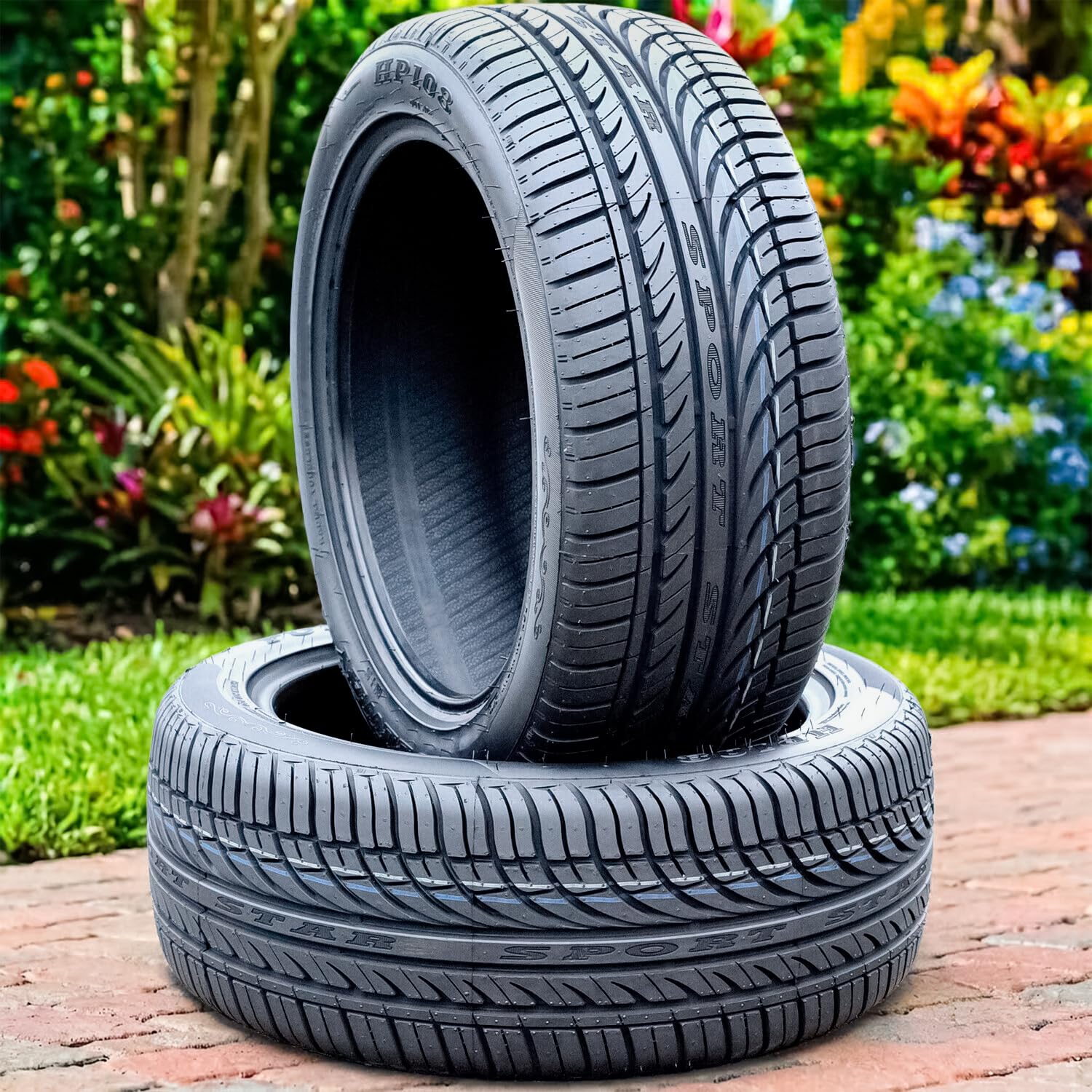
The Fullway HP108 is a budget-oriented all-season tire that delivers acceptable performance for commuters who drive high mileage on a strict budget. The 380AA UTQG rating indicates a treadwear grade of 380 — below the 500-600 range of most mid-range touring tires — so expecting 40,000 miles of life is optimistic. However, the 91H speed rating and SL load range mean the tire is perfectly safe for compact cars and small sedans like the Honda Civic that see mostly highway and city driving. The 4-ply construction keeps the tire light and responsive for its size class.
Owner reviews highlight a smooth ride and good fitment on popular economy cars, with one driver logging 100 miles per day for a year on the front pair before needing replacement. The tires balance easily and hold air well, and the set-of-two packaging is convenient for drivers who only need to replace one axle. Wet traction is acceptable in light rain but the tire lacks the aggressive sipe pattern needed for standing water or snow — treat this as a fair-weather tire with light-all-season capability at best.
The trade-off is clear: you give up snow performance and tread life to hit a budget price point that makes tire replacement affordable on a tight timeline. For drivers who need a short-term solution or maintain two sets of vehicles, the HP108 serves its purpose without hidden surprises. Just rotate them regularly and monitor tread depth every 10,000 miles.
Why it’s great
- Extremely affordable entry point for budget-conscious drivers
- Smooth ride quality for a budget tire in this size
- Set-of-two packaging ideal for axle replacement
Good to know
- Tread life is limited compared to mid-range touring tires
- Snow and standing water traction are below average
FAQ
What does the Three-Peak Mountain Snowflake (3PMSF) rating mean on all-season tires?
How often should I rotate all-season tires to maximize tread life?
Can I mix all-season tires from different brands on the same axle?
Final Thoughts: The Verdict
For most users, the best all-season passenger tires winner is the Continental ExtremeContact DWS06 PLUS because it delivers ultra-high-performance grip with genuine snow capability and a 50,000-mile warranty that backs its durability. If you want maximum tread life and quiet highway comfort, grab the Goodyear Eagle Touring All-Season. And for drivers who face regular snow and ice without wanting dedicated winter tires, nothing beats the Michelin CrossClimate2 and its Three-Peak Mountain Snowflake certification.