
A tarp that shreds in the first windstorm or pools water until it collapses isn’t a shelter — it’s a liability. The difference between a cover that lasts a season and one that holds its seal through snow loads, UV bombardment, and gale-force gusts comes down to weave density, mil thickness, and grommet placement. These aren’t marketing abstractions; they determine whether your gear stays dry or gets soaked.
I’m Min — the co-founder and writer behind Gadgets Feed. After hundreds of hours analyzing polyethylene formulations, weave counts, and real-world customer abuse reports across budget, mid-range, and premium tarps, I’ve narrowed the field to the specimens that actually deliver on their waterproof claims.
Choosing the right cover starts with knowing exactly where it will live — on a roof, over a camper, or on the trail. This guide breaks down the top contenders for the best all-weather tarp based on measurable durability, tested waterproofing, and long-term UV resistance.
How To Choose The Best All-Weather Tarp
Tarps are a commodity category, but not all polyethylene sheets are equal. A 12-mil tarp from one brand may rip under moderate tension while a 16-mil from another holds a snow load. The difference lies in three core specs: mil thickness, weave density, and grommet reinforcement. Understanding these will prevent you from buying a disposable cover that fails after one season.
Mil Thickness vs. Actual Durability
Mil thickness (thousandths of an inch) is the most cited spec, but it only tells part of the story. A 20-mil tarp made from recycled polyethylene can still tear at the grommets because the base material lacks tensile strength. Look for tarps using 100% virgin HDPE — the material resists UV degradation and maintains flexibility in freezing temperatures. Premium options start at 16 mil and go up to 22 mil for extreme weather.
Weave Count and Grommet Spacing
Weave count is measured in strands per square inch — 15×17 or 16×16 is standard for heavy-duty tarps. A higher weave count means tighter waterproofing and better tear resistance. Grommet spacing is equally critical: tarps with grommets every 18 inches handle high wind loads far better than those spaced 24 inches apart. Always check the center-to-center measurement before buying if you plan to stake or tie the tarp down in storm conditions.
Quick Comparison
On smaller screens, swipe sideways to see the full table.
| Model | Category | Best For | Key Spec | Amazon |
|---|---|---|---|---|
| PROTARP 22 Mil | Premium | Maximum storm protection | 22 Mil / 16×16 weave | Amazon |
| TARPAL 20 Mil | Premium | Luxury finish + heavy duty | 20 Mil / 17.7″ grommets | Amazon |
| Pattiumo 16 Mil | Mid-Range | Versatile covered storage | 16 Mil / 15×17 weave | Amazon |
| SpacEver 16 Mil | Mid-Range | Year-round outdoor coverage | 16 Mil / 16×16 weave | Amazon |
| Kesfitt 16 Mil | Mid-Range | Farm and paddock use | 16 Mil / 15×17 weave | Amazon |
| MVPNET 12 Mil | Budget | Large area pool covers | 12 Mil / 240″x120″ | Amazon |
| AquaQuest Guide Tarp | Premium | Ultralight backpacking | 40D ripstop nylon / 1.3 lbs | Amazon |
In‑Depth Reviews
1. PROTARP Extreme Heavy Duty 22 Mil Tarp Cover
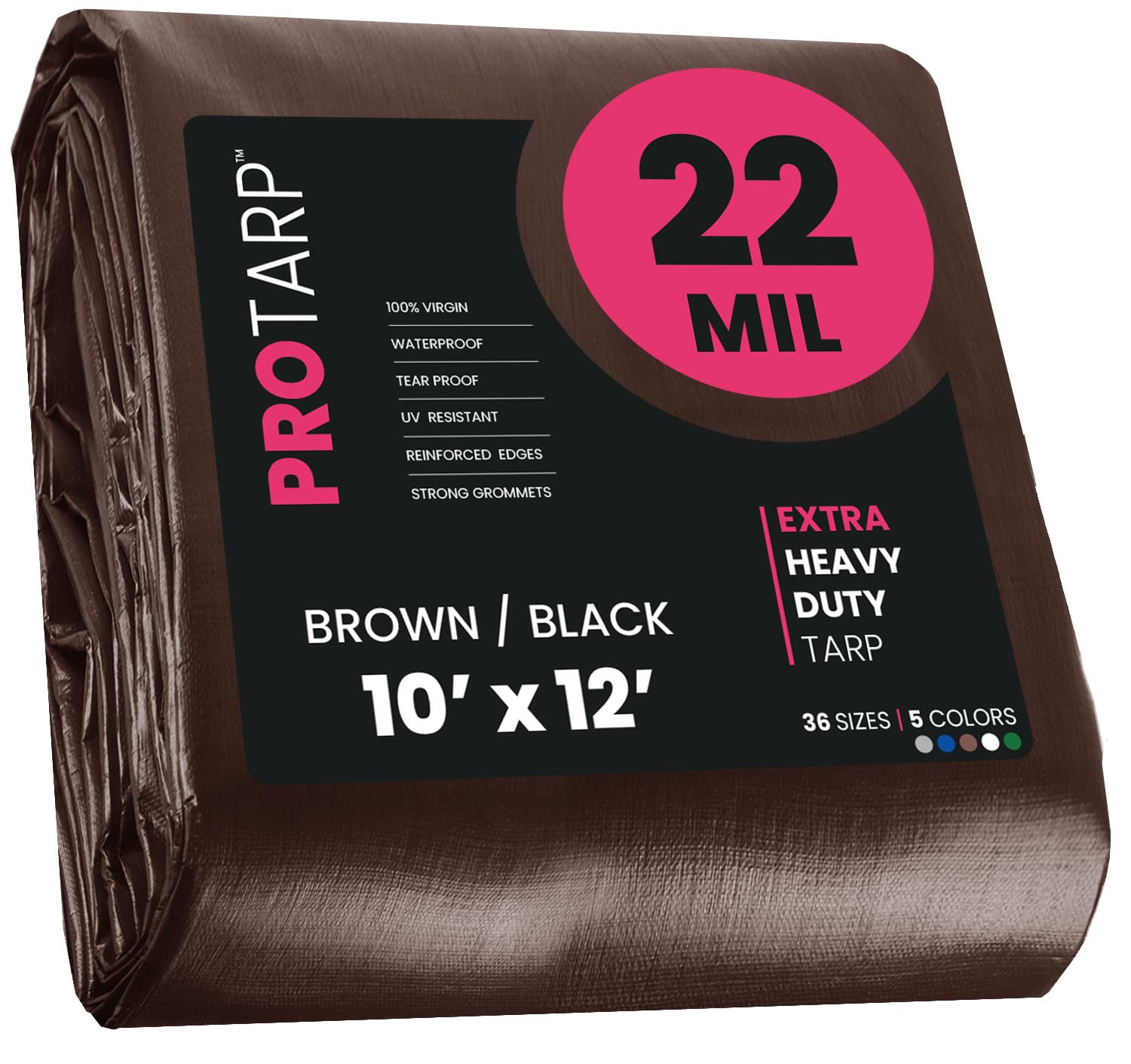
The PROTARP 22 Mil Tarp sits at the apex of polyethylene cover durability. Its 16×16 weave count and 100% virgin polyethylene construction eliminate the weak spots common in recycled-material tarps. The 18-inch grommet spacing is tighter than the industry standard 24-inch pitch, giving you more tie-down points to distribute wind load across the entire surface. This tarp isn’t for light duty — it’s built for roofs, heavy equipment, and long-term outdoor storage where a single tear means replacing the whole cover.
Customer reports confirm its ability to withstand two-foot snow loads without ripping, and the reinforced edges hold tension even when lashed down in 40-mph winds. The 22-mil thickness makes it noticeably heavier than 16-mil options, but that mass translates directly to puncture resistance against branches and sharp debris. Users note that the material is thick enough to resist puddling — water beads on the surface rather than causing sagging and pooling.
The only real trade-off is installation difficulty: the weight and stiffness of the 22-mil material require at least two people to drape and secure properly, especially on larger sizes. But if your priority is absolute storm security for seasonal or permanent coverage, this tarp justifies its premium positioning with measurable thickness and weave quality that budget options simply cannot match.
Why it’s great
- Thickest mil rating in this comparison at 22 mil
- 100% virgin HDPE avoids premature UV cracking
- Grommets every 18 inches for superior wind resistance
Good to know
- Heavy and stiff — requires two people for large installations
- Premium price reflects the material quality
2. TARPAL Super Heavy Duty 20 Mil Tarp
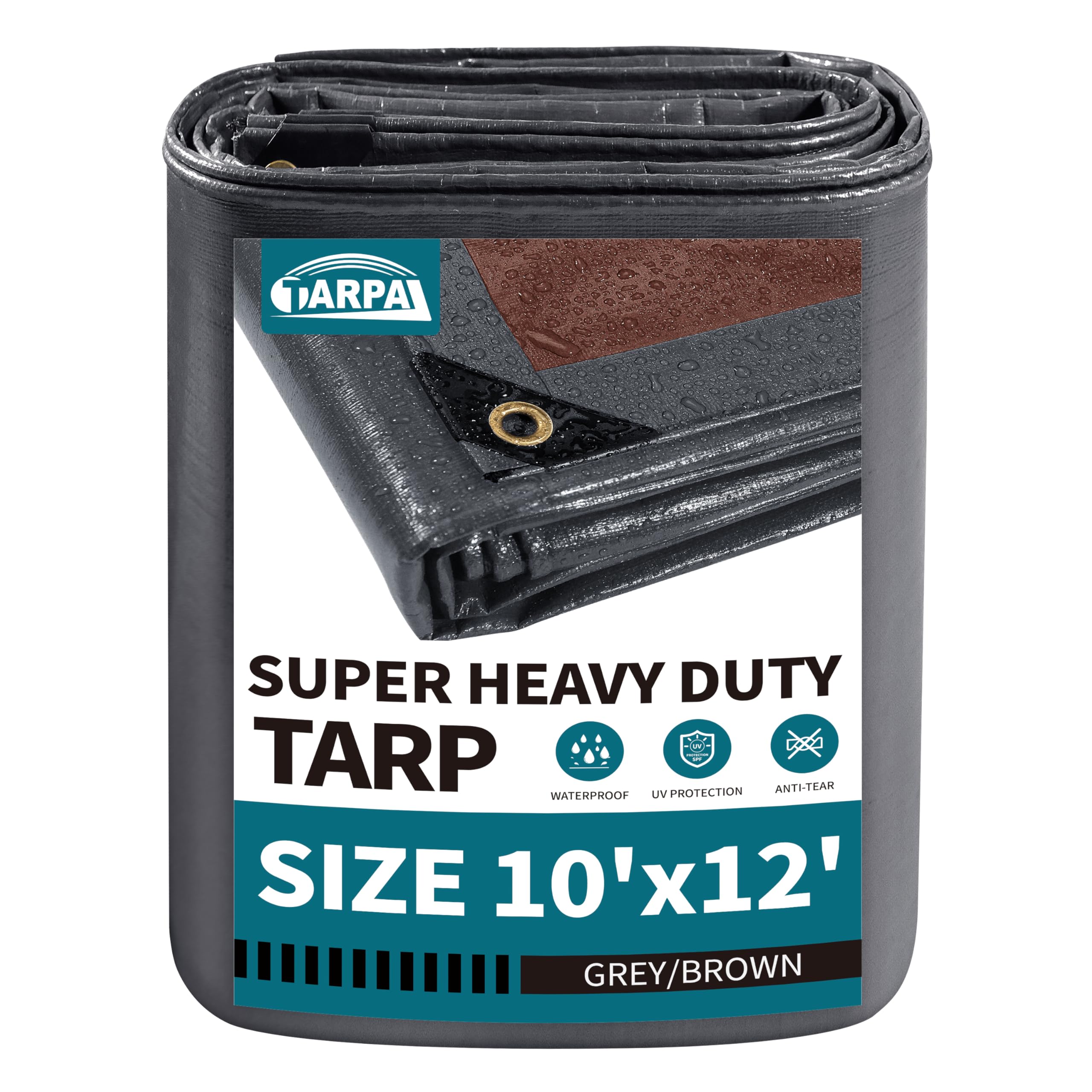
TARPAL’s 20-mil tarp offers a compelling middle ground between the extreme mass of a 22-mil sheet and the lighter feel of a 16-mil cover. The selenite grey finish adds a visual polish that matters if you’re covering a vehicle or using the tarp as a visible shelter element. But the real engineering is in the 17.7-inch grommet spacing — the closest pitch on this list — which allows for very precise tensioning when securing against gusty conditions.
The 16×16 fabric density delivers consistent waterproofing, and the reinforced corner shims prevent the grommets from pulling through under heavy strain. Users report using this tarp as a permanent chicken coop roof, a car cover in direct sun, and a temporary roof patch during storm season — all without edge fraying or seam separation. The 20-mil thickness also provides enough rigidity that the tarp doesn’t flap violently in moderate wind, reducing noise and wear at the tie-down points.
At this thickness, the tarp remains more pliable than the 22-mil PROTARP, making single-person installation feasible on smaller sizes like 8×10 or 10×12. The trade-off is that extreme abuse — like heavy hail or sharp corner impacts — may penetrate more easily than the 22-mil option. For most heavy-duty seasonal applications, the TARPAL hits the sweet spot between weight, durability, and ease of handling.
Why it’s great
- Tighter 17.7-inch grommet spacing for high-wind security
- 20-mil thickness resists flapping and puddling
- Premium grey finish looks clean on vehicles and shelters
Good to know
- Not as puncture-resistant as 22-mil options
- Premium tier pricing limits budget appeal
3. Pattiumo 16 Mil Heavy Duty Tarp 10×20

The Pattiumo 16-mil tarp punches above its price category by using a 15×17 weave count that rivals more expensive competitors. The double-folded edges contain a PP nylon rope inside the hem — a detail usually reserved for premium-tier tarps — which prevents the edge from snapping when the tarp is tensioned over a sharp frame or stud. This internal rope reinforcement directly addresses the most common failure point in polyethylene tarps: edge tearing under stress.
The heat-sealed construction eliminates needle holes that can become water ingress points, and the 23.6-inch grommet spacing is standard but adequate for medium-wind applications. Users who deployed this tarp as a roof cover for a steel kennel reported it survived storms and mild hail without grommet separation or material puncture. The dual-color reversible design (silver/black) also provides flexibility for heat reflection or camouflage depending on the application.
At 16 mil, this tarp is considerably lighter than the 20-mil or 22-mil options, making it easier to handle solo on 10×20 installations. The trade-off is that prolonged exposure to direct UV in desert climates may accelerate degradation compared to thicker alternatives. For standard outdoor storage, pool covers, and temporary shelter applications, the Pattiumo delivers the best blend of durability and low weight in the mid-range segment.
Why it’s great
- PP nylon rope inside the hem prevents edge tearing
- Heat-sealed seams for zero water ingress
- Reversible colors for heat reflection versatility
Good to know
- Standard 23.6-inch grommet spacing limits extreme wind performance
- Weave count good but not burst-proof under heavy snow
4. SpacEver 16 Mil Waterproof Tarp 10×12
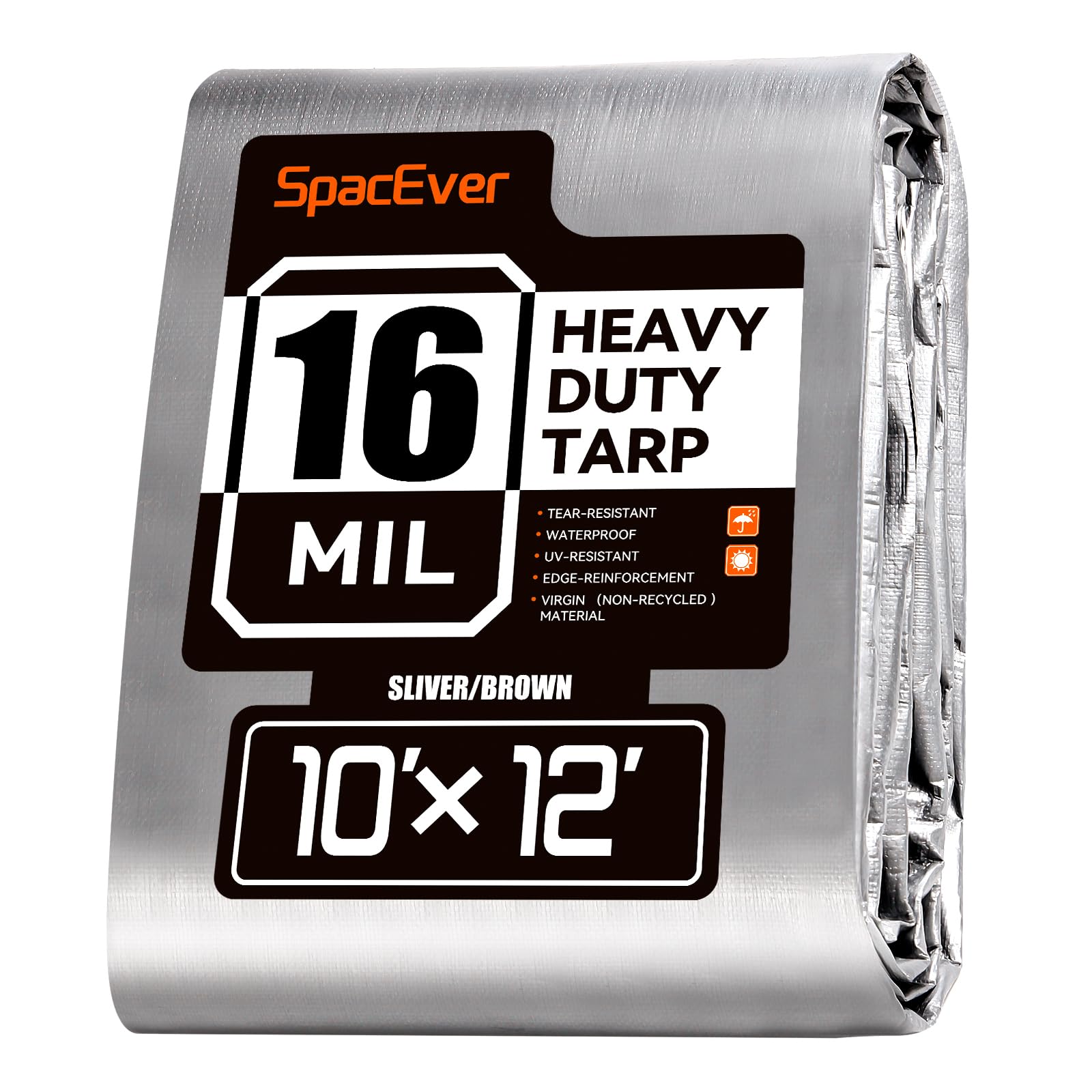
The SpacEver 16-mil tarp uses a 16×16 weave count that matches the premium PROTARP in fabric density, even though the thickness is lower. This tight weave directly impacts waterproofing — the closely packed polyethylene fibers create a more effective moisture barrier than looser weaves at the same mil rating. Customers report it kept a riding lawnmower dry through an entire winter of rain and snow without developing leaks or surface cracks after a year of use.
The reversible silver/brown color scheme adds versatility, and the rust-proof grommets resisted corrosion in wet environments where cheaper zinc grommets would have degraded. The 3-kilogram weight for the 10×12 size is reasonable for a solo installer, though multiple users noted the bulk requires careful handling when unfurling in wind. The polymer wear-resistant layer added to the surface reduces abrasion damage from rough surfaces like concrete or gravel.
Where this tarp falls slightly short is in grommet spacing — the layout is standard but not as dense as the TARPAL or PROTARP offerings, meaning wind uplift may be a concern in exposed ridge-line installations. For ground-level coverage, boat storage, and construction material protection, the SpacEver provides reliable mid-range performance with a weave quality that outclasses its price tier.
Why it’s great
- 16×16 weave density matches premium tarps
- Polymer wear-resistant layer protects against abrasion
- Proven one-year durability in full sun and snow
Good to know
- Grommet spacing not optimized for high-wind ridges
- Requires careful folding to prevent crease damage
5. Kesfitt 16 Mil Heavy Duty Waterproof Tarp
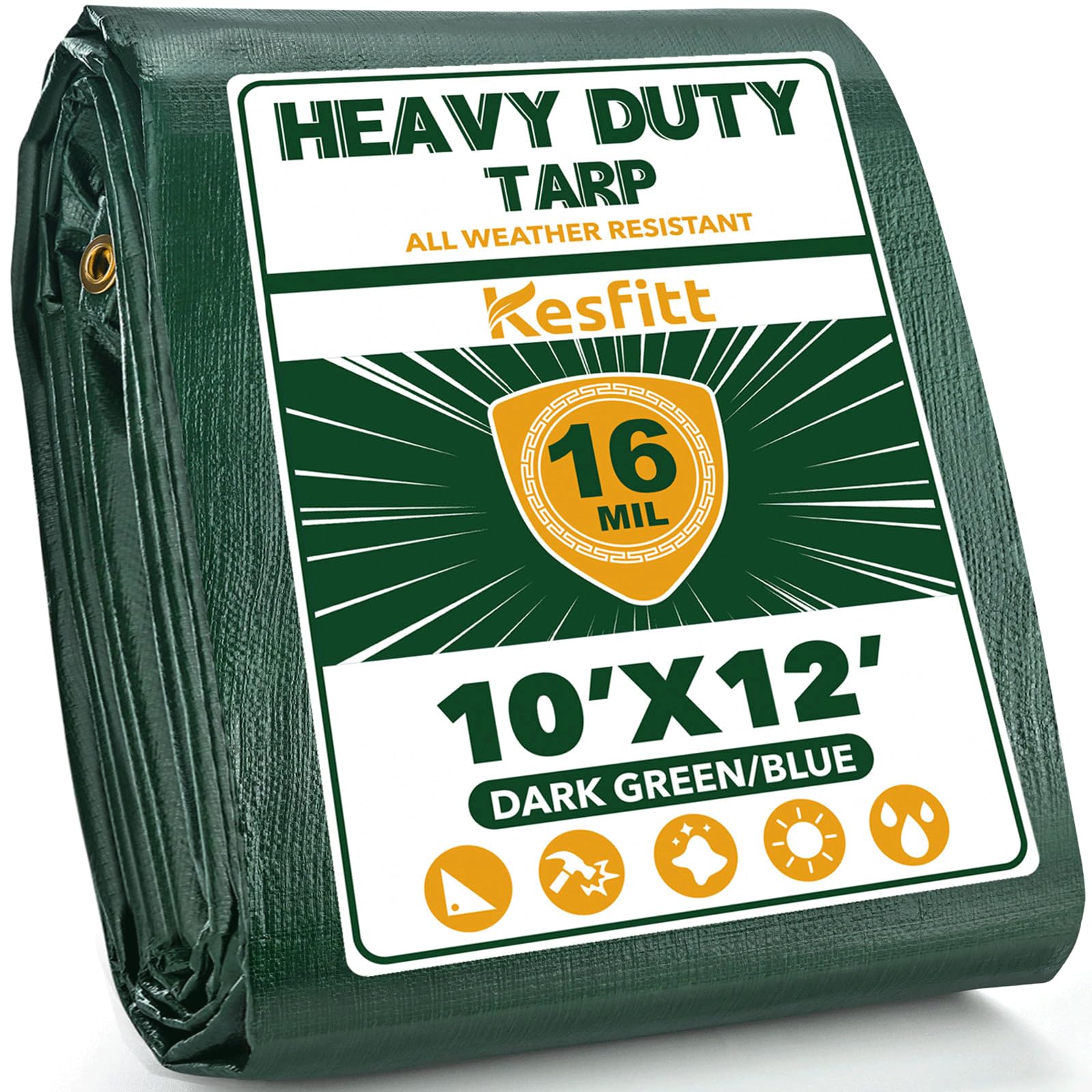
Kesfitt’s 16-mil tarp distinguishes itself through rubber-coated plastic corners — a detail that prevents the grommet from ripping through when the tarp is cinched tight around angular structures like hay bales or horse paddocks. The 15×17 weave count is slightly denser than the standard 14×14 found in many entry-level tarps, resulting in better tear resistance per mil. The dark green and blue reversible side also reduces visual glare in pastoral settings.
Customer feedback highlights its performance under heavy abuse: one user reported horses walking directly over the tarp without causing rips, and another noted it survived an entire winter covering a 20-foot carport storing hay. The grommets every 23.6 inches are reinforced with an extra fabric layer at each point, reducing the elongation that typically causes grommet pull-out over time. The HDPE material adds UV protection that prevents the tarp from becoming brittle after a season of direct sun exposure.
The primary limitation is the 16-mil ceiling — this tarp isn’t built for heavy snow loads or sharp construction debris. For agricultural use, equipment coverage, and seasonal storm protection, the rubber-corner reinforcement gives it a durability advantage over other mid-range tarps. Users should oversize their selection by at least 12 inches on each side to allow for proper tensioning without stressing the grommets.
Why it’s great
- Rubber-coated corners resist grommet tear-out under tension
- 15×17 weave density improves tear resistance
- Proven durability in agricultural settings with animal traffic
Good to know
- 16-mil thickness limits heavy snow load capability
- Grommet spacing standard rather than tight pitch
6. MVPNET 12 Mil Heavy Duty Tarp 10×20
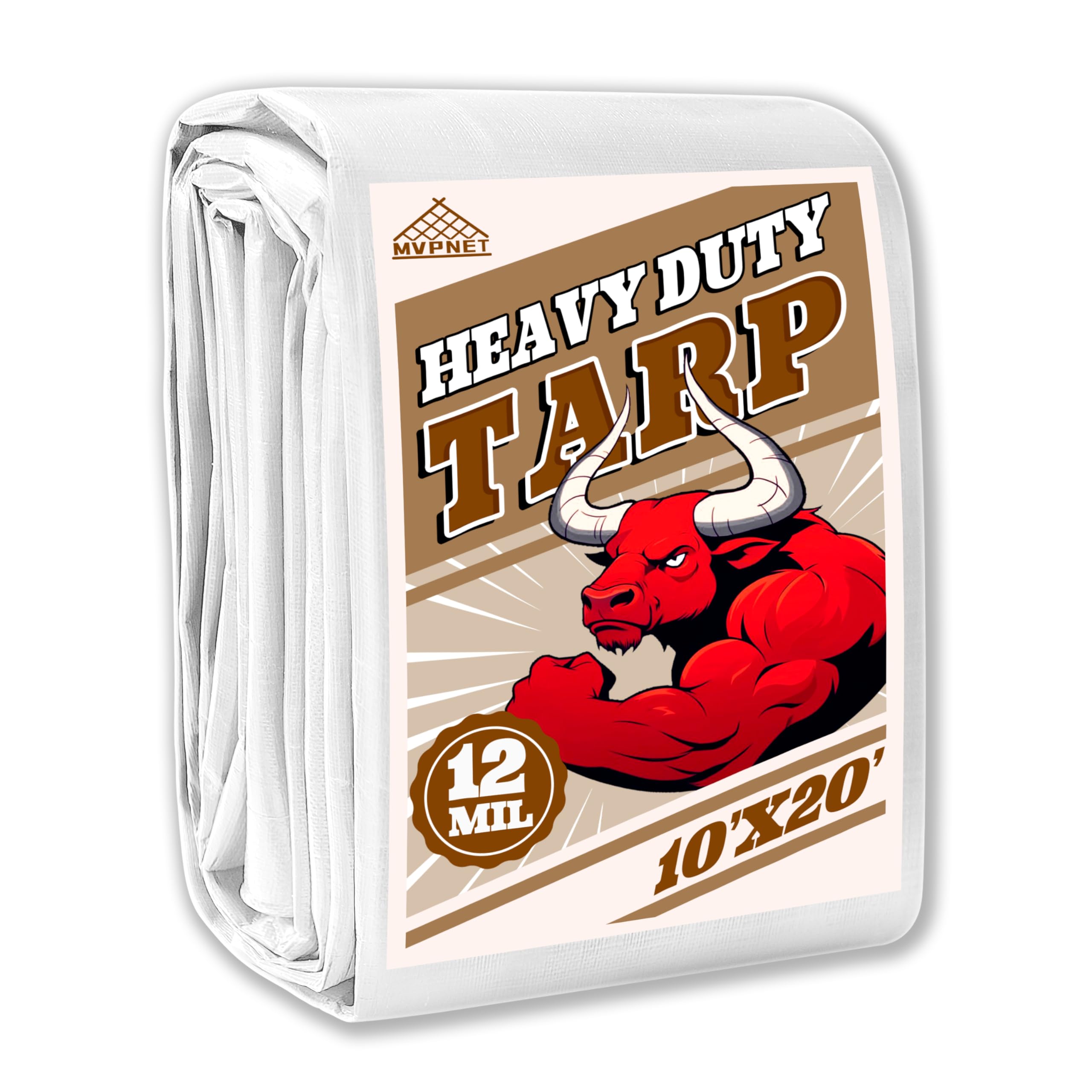
The MVPNET 12-mil tarp fills a specific niche: large-area coverage at a low entry point. The 10×20 foot size provides 200 square feet of protection for pools, construction material piles, or emergency roof patches without the cost penalty of thicker material. The HDPE construction includes UV protection to slow degradation, and the aluminum-zinc grommets resist rust better than the bare steel grommets found on ultra-budget tarps.
The 12-mil thickness is noticeably lighter than the 16-mil options — a single person can handle the 10×20 size without assistance. Customers using it as a pool cover in high-heat Nevada reported it held up through intense sun exposure without cracking or becoming brittle. The smooth surface also makes debris removal simple compared to textured tarps that trap dirt and leaves. For short-term seasonal use where a single season of coverage is acceptable, the MVPNET delivers adequate performance.
The clear limitation is longevity: at 12 mil, this tarp will degrade faster under UV exposure than thicker alternatives, and the weave density isn’t sufficient to prevent water seepage in prolonged heavy rain. It also lacks the edge reinforcement rope found on the Pattiumo tarp, making it more prone to tearing when tensioned over sharp edges. For pool covers, temporary ground protection, or one-season construction site use, it offers good value — just don’t expect multi-year durability.
Why it’s great
- Large 10×20 coverage at an accessible entry point
- Aluminum-zinc grommets resist rust in wet conditions
- Light enough for single-person installation
Good to know
- 12-mil thickness limits long-term UV and tear resistance
- No internal edge rope for high-tension applications
7. AquaQuest Guide Tarp – Ultralight 40D Ripstop Nylon
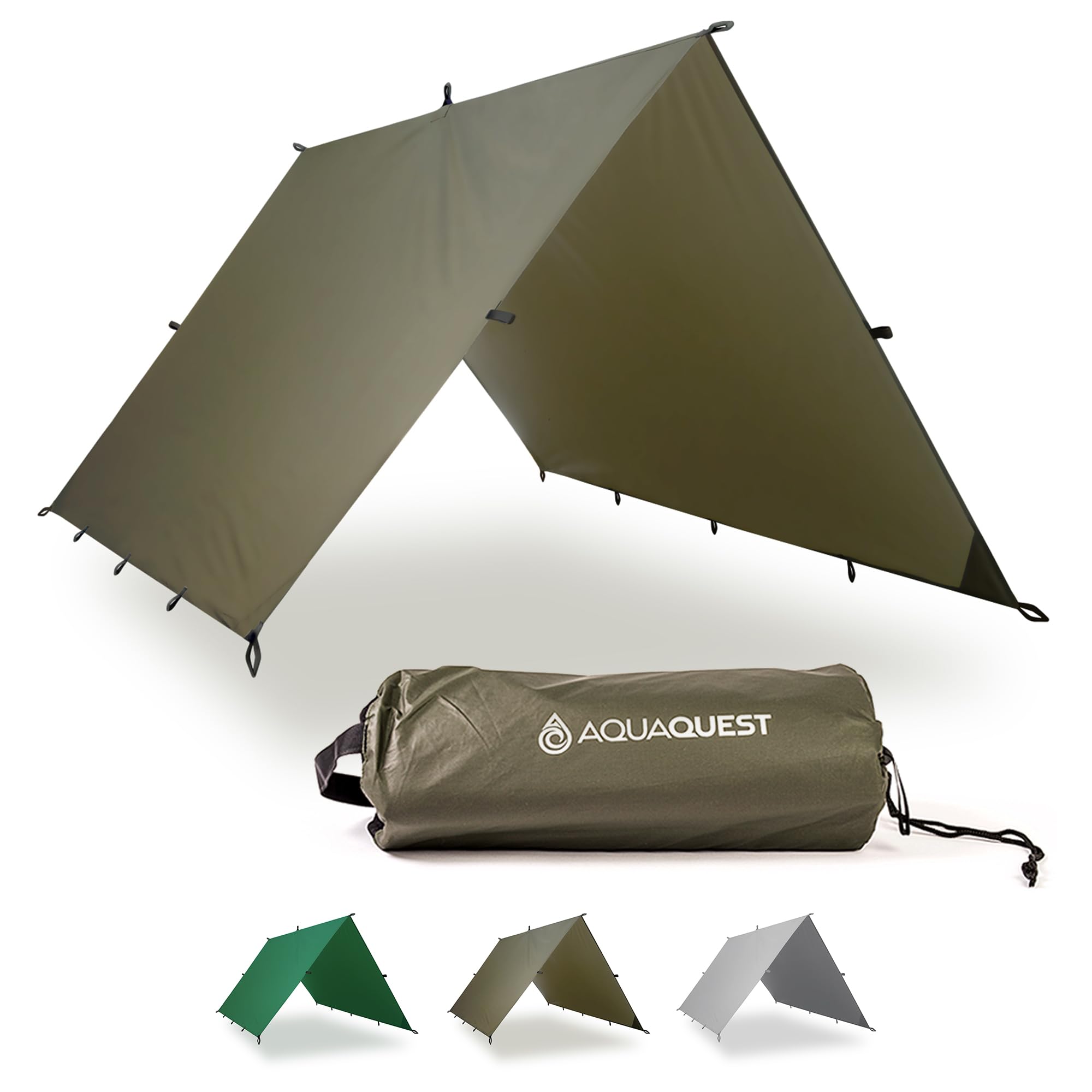
The AquaQuest Guide Tarp occupies a completely different category from the polyethylene tarps above. Constructed from dual-coated 40D ripstop nylon with a 5,000-millimeter hydrostatic head rating, it’s designed for backpackers and thru-hikers who need a waterproof shelter that packs smaller than a water bottle. The 1.3-pound weight for a 9’7″ x 9’7″ finished size (92 square feet of coverage) makes it viable for ultralight shelters where every gram matters.
The 17 tie-out points allow for multiple pitch configurations including A-frame, lean-to, and hammock setups. Heat-taped seams eliminate stitch holes as water entry points, and the grosgrain ridgeline braces distribute tension evenly across the nylon fabric. Users report it held up in 20-mph winds as a rain fly over a cabin tent and survived a full day of simulated sprinkler test without any moisture ingress through the fabric or seams.
The key distinction from heavy-duty polyethylene tarps is the intended use case: this is not a tarp for covering firewood, boats, or construction equipment. The 40D nylon can puncture if dragged across sharp objects, and the material is inherently more expensive due to the ripstop weaving technique and DWR coating. For its target application — lightweight backpacking, stealth camping, and emergency shelter — it offers a lifetime warranty and proven field durability that no polyethylene tarp can match in terms of packability.
Why it’s great
- Ultralight 1.3 lbs with 92 sq ft of coverage
- 5000mm hydrostatic head rating ensures true waterproofing
- 17 tie-outs with heat-taped seams for versatile pitching
Good to know
- Not suitable for sharp debris or heavy abrasion use
- Premium cost reflects nylon construction and lifetime warranty
FAQ
What mil thickness do I need for a roof tarp during hurricane season?
Can I use a polyethylene tarp year-round in direct sunlight?
Why do my grommets keep pulling out of cheaper tarps?
Final Thoughts: The Verdict
For most users, the best all-weather tarp winner is the PROTARP 22 Mil Tarp because its 22-mil thickness, 16×16 weave density, and 18-inch grommet spacing provide unmatched storm protection for permanent outdoor coverage. If you want a lighter cover with tighter grommet placement for easier tensioning, grab the TARPAL 20 Mil Tarp. And for ultralight backpacking where every ounce matters, the AquaQuest Guide Tarp sets the standard with 5,000mm waterproofing and a lifetime warranty.