
Our readers keep the lights on and my morning glass full of iced black tea. As an Amazon Associate, I earn from qualifying purchases.
Specs are compiled from manufacturer listings and verified buyer reviews and can change over time — please confirm the key details on the product page before buying.
That dark crust on your wheels is not just road dirt — it is tiny iron shavings from your brake pads, and regular car soap will not touch it. A dedicated all-wheel cleaner uses special chemistry to dissolve those metal particles so a simple hose rinse leaves your rims clean. The trick is finding a formula strong enough to cut through weeks of buildup yet gentle enough not to damage your wheel’s clear coat (the protective layer of clear paint on the wheel) or finish.
I’m Min — the founder and writer behind Gadgets Feed. This guide is built by comparing the manufacturers’ published specifications and the patterns across verified customer reviews, so you get each pick’s real strengths and trade-offs instead of marketing spin.
If you are a weekend detailer or just want to stop scrubbing caked-on brake dust by hand, the best cleaner for your garage balances reactivity (how fast it dissolves iron), safety for your specific wheel type, and value for the volume you actually get.
Our Picks at a Glance

How To Choose The Best All-Wheel Cleaner
You do not need a chemistry degree to pick the right bottle — but a few key terms make the difference between a wheel that gleams and a finish that fades. Focus on the chemistry type, the reaction color, and the volume relative to your cleaning routine.
Chemistry: Acid vs. pH-Neutral vs. Alkaline
Acid-based cleaners (like the MAD Acid formula) dissolve heavy brake dust and water spots fast, making them ideal for chrome or neglected wheels — but they can damage painted or clear-coated alloys if left on too long. pH-neutral formulas (like the Carfidant Rim Reactor and P&S Iron Buster) are safer for sensitive finishes and ceramic coatings (a glass-like protective layer), but they often require a bit more dwell time or light agitation to work. Alkaline cleaners (like Adam’s Wheel & Tire Cleaner, which has a pH of 13.5) are aggressive on tire browning and baked-on grime, so you want to use them sparingly and not as a weekly wash.
The Color-Change Cue (Purple or Red)
Most modern wheel cleaners include an iron-reacting dye that shifts color when it hits brake dust. This is your visual timer: when the spray turns from clear to deep purple (or red), the chemistry is actively dissolving the iron particles. Rinse at that point for maximum effect. If you see no color change, either the wheel is already clean or the formula has evaporated — reapply. This feature is not a gimmick; it stops you from scrubbing a wheel that is already clean or rinsing a wheel that still has active chemistry on it.
Volume and Concentration per Dollar
A 16-ounce bottle might look cheap at first glance, but if you are cleaning four large truck wheels every week, you will run out fast. Compare the actual fluid ounces (or milliliters) in the spec: a 33.8-ounce jug like the SONAX Beast costs more upfront but can last two to three times longer than a smaller 16-ounce bottle. Some formulas, like the KOCHCHEMIE Magic Wheel Cleaner, are highly concentrated — a few sprays per wheel — so a 500-milliliter bottle goes further than a 16-ounce spray that requires a heavy coating every time.
Quick Comparison
| Model | Best For | Volume | Weight | Reaction Color | Amazon |
|---|---|---|---|---|---|
| SONAX Beast★ Best Overall | Heavy brake dust melt | 33.8 oz | 2.54 lbs | Red/Purple | $20.79$25.99Amazon |
| Griot’s GarageValue Champion | Gentle classic finish care | 35 oz | 35 oz | None | $14.99$15.99Amazon |
| Carfidant Rim Reactor | No-scrub maintenance | 16 oz | 1 lb | Purple | $16.97$19.97Amazon |
| P&S Iron Buster | Prepping wheels for sealant | 16 oz | — | Color-changing | $21.99Amazon |
| Adam’s Wheel & Tire | Brown tire restore | 16 oz (2-pack) | 2.45 lbs | None | $22.40$29.98Amazon |
| MAD Acid | Chrome & forgotten rigs | 16 oz | — | None | $24.97Amazon |
| KOCHCHEMIE Magic | High-end alloy preservation | 500 ml | — | Red | $24.99Amazon |
In‑Depth Reviews
1. SONAX Beast Wheel Cleaner
Our pick — over 4.5★ from 750+ verified ratings; the strongest balance of quality and price.
The color-switching German chemistry that melts winter’s crust off your rims.
Your eyes tell you exactly when this cleaner is working — it sprays on clear, then shifts to a deep red or purple as it dissolves the iron in brake dust. That color-change feedback (a visual cue for the chemical reaction) makes it hard to mess up: you simply spray, watch, and rinse. At 33.8 fluid ounces versus typical 16-ounce competitors — buyers report that it “melted all of the dirt and grime off” after a rough winter, and many say it is the easiest wheel cleaner they have ever used.
One reviewer noted they “Saw this on a YouTube channel and had to try it out,” and the reviews back up the hype — it earns a 4.6 out of 5 from over 775 ratings. The formula is acid-free and pH-balanced (meaning it is chemically neutral and safe on surfaces), so it is safe on chrome, aluminum, steel, clear-coated, and painted wheels. The trade-off is that caked-on deposits may still need a light scrub or second pass, but for routine heavy dust, this is the most hands-off option in the list.
It weighs 2.54 pounds in the bottle — versus the Carfidant Rim Reactor’s 1 pound — which reflects the 33.8-ounce capacity. If you clean multiple vehicles or let dust build up between washes, that extra volume saves you from buying a new bottle every month.
Why it wins
- Color-changing reaction tells you when to rinse — no guesswork
- 33.8 oz bottle versus 16-oz competitors
- Acid-free formula is safe for all factory and aftermarket finishes
The fine print
- Heavy buildup may need a second application or gentle agitation
- Strong chemical smell — gloves recommended
Reach for this if: you want a pro-grade iron remover that works fast, comes in a generous bottle, and leaves even neglected wheels looking fresh with minimal scrubbing.
Look elsewhere if: you clean your wheels every week and prefer a smaller, budget-friendly bottle you can use up quickly.
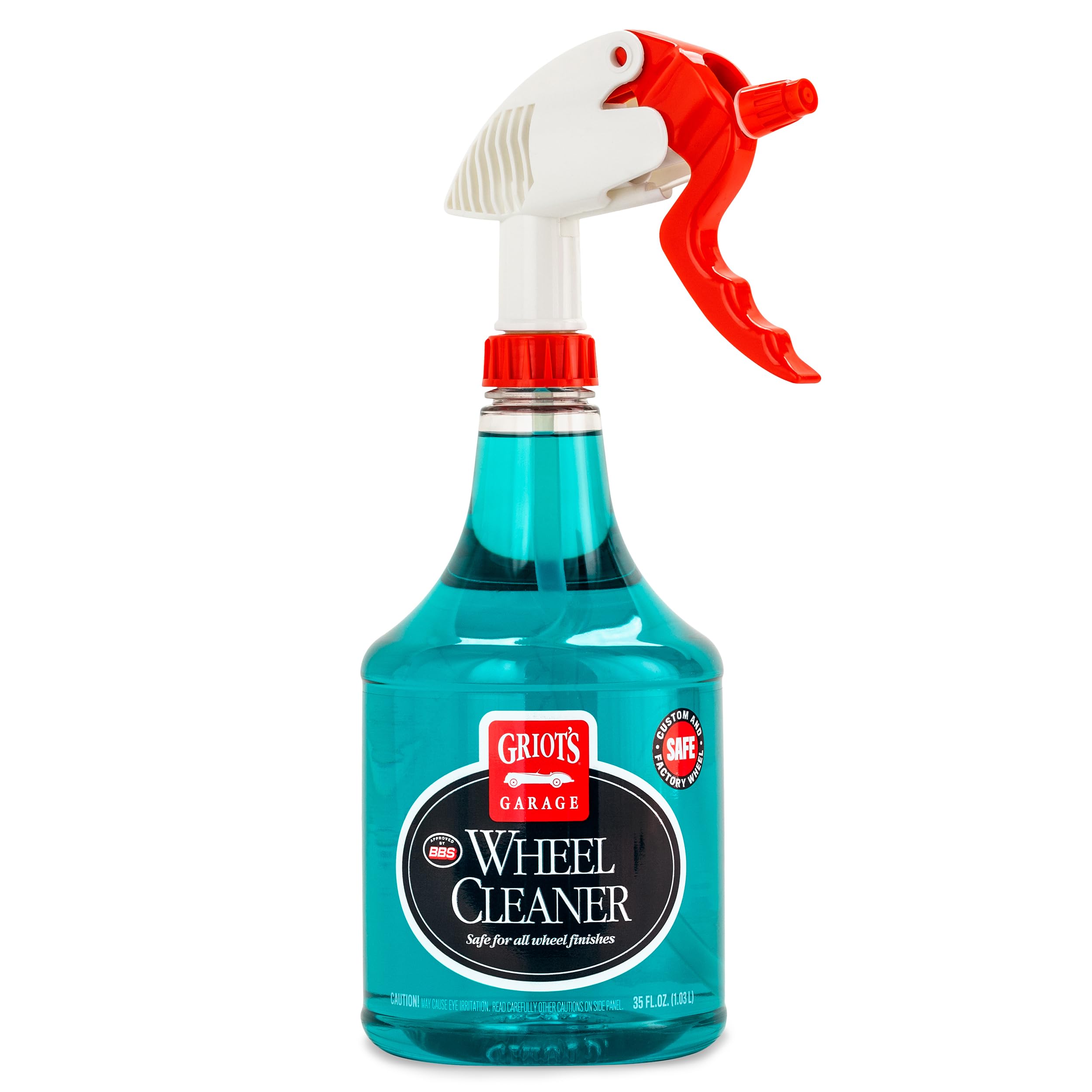
2. Griot’s Garage Wheel Cleaner
The pH-balanced workhorse that treats delicate rims like a gentle hand.
Not every wheel needs an aggressive iron-melting reaction — and if you are cleaning classic car rims, polished chrome, or powder-coated surfaces (a durable painted finish applied as a dry powder), a harsh formula can do more harm than good. Griot’s Garage uses a pH-balanced blend that lifts brake dust and tar without attacking the finish underneath. Owners mention it is “gentle on classic motorcycle rims” and removes hard off-road dirt while staying safe for all vehicles. It comes in a 35-ounce bottle, which is one of the largest volumes in this lineup, and weighs 35 ounces — about the same as its volume.
One reviewer called it the “best wheel cleaner on the market” for its versatility. The formula is also unscented, which is a relief if you are sensitive to the rotten-egg smell many iron removers produce. The trade-off is that it does not contain iron-reacting dyes, so you do not get the purple or red visual cue that tells you the chemistry is active. You will need to let it dwell for at least thirty seconds and agitate gently with a sponge — as one buyer mentioned, “requires sponge wiping for grime removal” — but the sponge rinses completely clean, unlike some brands that leave residue.
Compared to the SONAX Beast above, this is a weaker cleaner by design: it is pH-neutral (chemically neutral, gentle on surfaces) and lacks strong iron dissolvers. That makes it a better weekly maintenance spray than a first-pass sludge cutter for heavily neglected wheels.
Where it shines
- pH-balanced formula is safe for chrome, polished, powder-coated, aluminum, and steel finishes
- 35-ounce bottle offers excellent volume per dollar for frequent washes
- Unscented — no harsh chemical odor during use
Where it holds back
- No iron-reacting color change — you have to judge dwell time by eye
- Weaker on heavy, baked-on brake dust; agitation is required
Grab this for: light weekly maintenance on sensitive finishes, especially if you have ceramic-coated wheels that should not see harsh acids or alkalis.
Pass if: you let brake dust pile up for weeks and need a heavy-duty iron remover that does the work for you.
3. Carfidant Rim Reactor
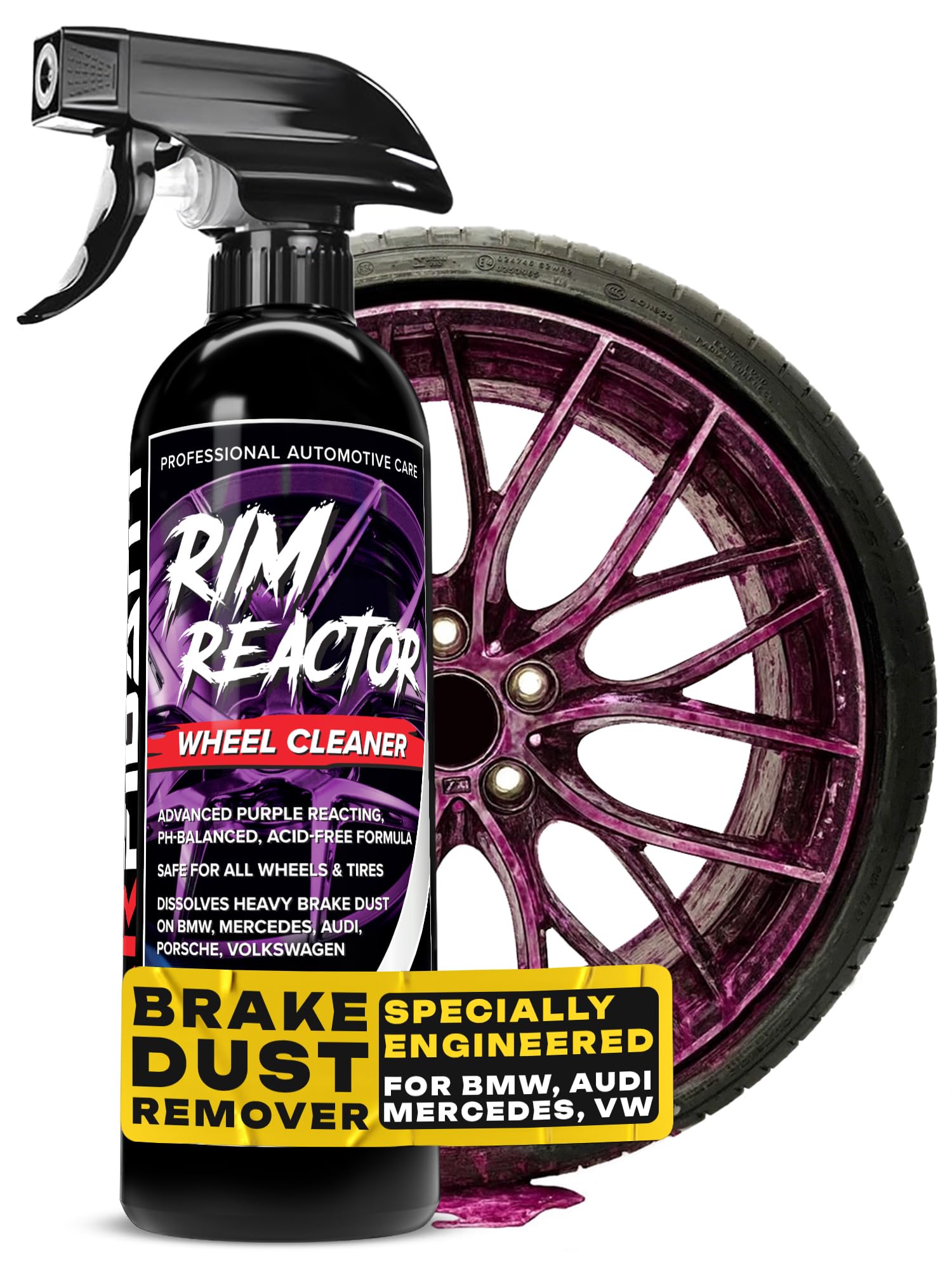
The no-scrub formula that turns purple so you know exactly where the brake dust went.
Carfidant pitches this as a “no scrub” cleaner, and for most wheels, it delivers — you spray it on, wait two to four minutes, and rinse off. The formula reacts with iron particles by turning a distinct purple color, giving you a clear signal that the chemistry is active. Customers note that you “spray on, scrub, rinse off and the wheel is spotless” — though “scrub” is a light pass with a brush, not a heavy workout. This is a concentrated 16-ounce bottle that weighs just one pound, making it 1 lb and 16 oz versus the SONAX Beast’s 2.54 lbs and 33.8 oz.
The pH-neutral, non-acidic formula is safe on aluminum, chrome, painted, black, and alloy wheels (wheels made from a metal mix like aluminum alloy), and you can even dilute it for lighter maintenance washes to stretch the bottle further. Several owners say it left their Audi rims “shinning bright” and found it “exactly as advertised.” One word of caution: a small number of recent buyers reported quality-control issues with watery batches, so check the consistency when your bottle arrives.
Compared to the SONAX Beast, the Rim Reactor weighs 1 lb and has 16 oz, while the Beast weighs 2.54 lbs and has 33.8 oz. It is a better pick for a single-car household that cleans wheels every couple of weeks, while the Beast suits heavy-duty or multi-vehicle use.
Why it gets attention
- True no-scrub performance on moderately dirty wheels — spray, dwell, rinse
- Purple color change tells you when the iron reaction is complete
- pH-neutral and non-acidic, safe for coated and sensitive finishes
What to watch for
- Neglected wheels still need light agitation
- Some recent batches reported watery consistency
Best for: anyone who hates scrubbing wheels and wants a visible color cue that tells them when the cleaner is working — a true set-it-and-rinse option for most drivers.
skip it if: you have months of baked-on brake dust or prefer a larger bottle that does not need to be replaced as often.
4. P & S Professional Detail Products Iron Buster

The iron-melting pre-treatment that detailers reach for before they touch a clay bar.
This cleaner is part of the Renny Doyle Double Black Collection — a professional detailing line trusted by car enthusiasts who do paint correction. It is not just for wheels; its main purpose is to dissolve embedded iron fallout (microscopic metal particles that bond to paint) from painted surfaces before a clay bar (a tool used to remove contaminants) or polish. The color-changing formula shows you where the iron reaction happens, and reviewers point out it reacts “very fast” even on neglected wheels and painted panels. One owner reported it “removed ~75% brake dust after washing” but needed 000 steel wool to finish the rest, meaning it is excellent for initial breakdown but may not eliminate every speck without manual help.
At 16 ounces, this is a small bottle — 16 oz versus the SONAX Beast’s 33.8 oz — so it is priced for targeted use rather than weekly all-wheel soaking. The smell is strong (one review called it “the odor of business”), though less offensive than many straight metal cleaners. It works well on exhaust tips and light dust, and is safe on chrome, aluminum, steel, alloy, and painted wheels. The key is it is a specialist tool: use it as a pre-spray before a full wheel-cleaning routine or as the first step in paint decontamination.
Compared to the Carfidant Rim Reactor, the Iron Buster is more aggressive and better at penetrating deep into the wheel’s pores to release embedded iron particles. It does not market itself as “no-scrub,” so expect to do some light agitation.
Professional strengths
- Color-changing reaction shows iron deactivation in real time
- Versatile — works on wheels, painted panels, and exhaust tips
- Part of a pro detailer line (Renny Doyle Double Black Collection)
Homeowner limits
- Small 16-ounce bottle runs out fast under heavy use
- Strong smell — wear a mask or work in a ventilated area
Pick this for: prepping wheels or paint before sealant or wax — the iron deactivation is thorough and the visual cue helps you know when to rinse.
Stick with another option if: you want a one-step, no-elbow-grease cleaner for everyday brake dust and do not do paint correction.
5. Adam’s Polishes Wheel & Tire Cleaner

The alkaline powerhouse that nukes tire browning and leaves rubber looking factory fresh.
Most wheel cleaners ignore the tires — but if your sidewalls have turned brown from old dressing residue and road film, this formula from Adam’s Polishes goes after them hard. It is an alkaline-concentrated blend (pH 13.5, as one customer observed), which means it dissolves greases, wax buildup, polymers (the ingredients in tire dressings), and any previously applied tire dressings. This is not a gentle weekly wash — it is the heavy artillery for when your tires look neglected and your wheels are caked with baked-on grime. One first-time user on a 2013 F150 reported the wheels and tires “much better than Dawn dish soap” after a single dwell-and-scrub session.
The cleaner comes as a two-pack of 16-ounce bottles, giving you 32 ounces total. It is safe on clear-coated, powder-coated, chrome, alloy, and painted wheels, but its high pH means you should not use it every wash — buyers warn that it is “very strong” and recommend using it sparingly on neglected wheels only. The spray nozzle on the bottles drew complaints; swapping with a better nozzle improves the experience significantly. You will want a stiff tire brush and a good rinse to ensure no alkaline residue remains on the rims.
Unlike the pH-neutral Griot’s Garage formula above, the Adam’s cleaner is an alkaline assault — it targets organic grime (tire browning) as aggressively as it targets brake dust. If your tires are already clean and you only need iron removal from the wheels, the SONAX Beast or P&S Iron Buster is a more targeted choice.
Unique edge
- Cleans tires and wheels in one step — removes old dressings and browning
- High-sudsing alkaline formula dissolves greases and silicones
- Two-pack gives 32 oz total for multiple deep cleans
Notes of caution
- pH 13.5 is aggressive — not for weekly use on clean wheels
- Spray nozzles are poor; plan to swap with a better one
Choose this when: your tires look brown and your wheels have months of neglected buildup — it is the best one-step solution for the whole wheel-and-tire area.
Avoid if: you have ceramic-coated wheels or want a gentle pH-neutral formula for routine maintenance washes.
6. MAD Acid Heavy Duty Wheel Cleaner

The acid spray that brings chrome truck wheels back from the dead in under two minutes.
If you drive a truck or SUV with chrome wheels that have turned dull from hard water spots and road grime, this acid-based formula is built for you. It uses a carefully balanced acid to dissolve calcium deposits, fluoride stains, and mineral buildup that ordinary cleaners leave behind. Shoppers say it “removed all brake dust without scrubbing” after just two minutes of dwell — just spray, wait, and rinse. One F150 owner said it “works perfect” on chrome custom wheels, restoring them to a mirror-like shine.
The cleaner is also safe on clear-coated, painted, glass, and plastic surfaces, but it is specifically tune for chrome and unpainted alloy surfaces. The 16-ounce bottle is small, so if you have four large truck wheels with heavy scaling, you may need to use a generous amount each time. The formula works on glass and painted surfaces too, but avoid letting it dry on the panel to prevent spotting. One user highlighted it outperformed a well-known Meguiar’s product on severe brake dust, calling it “worth the wait” despite slow shipping.
Compared to the pH-neutral Griot’s Garage or Carfidant options, the MAD Acid cleaner is a specialist tool — great for a deep seasonal restore, not a gentle weekly spray. If your wheels have aftermarket paint or a ceramic coating, test it on an inconspicuous area first.
Where it dominates
- Acid formulation removes hard water spots and calcium deposits that iron removers cannot touch
- Works in 15-20 seconds on moderate grime; two minutes for heavy buildup
- Safe on chrome, painted, clear-coated, glass, and plastic with proper dwell times
Where to be careful
- Acid-based — not ideal for ceramic-coated or delicate factory-painted alloys for regular use
- Small 16-ounce bottle goes fast on four large truck wheels
Grab this for: chrome wheels that look foggy or have white water-spot residue — it is one of the few cleaners that restores the bright finish without heavy polishing.
Look elsewhere if: your wheels are painted black or have a ceramic coating that could be stripped by acid.
7. KOCHCHEMIE Magic Wheel Cleaner

The acid-free, high-viscosity cleaner that clings to wheels and turns red on contact with iron.
KOCHCHEMIE has been making professional cleaning chemistry since 1968, and this 500ml (16.9-fluid-ounce) bottle shows why detailers respect the brand. The formula is thick — it has a high viscosity (meaning it is syrupy and sticky) — so it clings to the wheel face instead of dripping off. When it hits brake dust, it turns red, giving you a visual read on the iron reaction. The formula is completely acid-free, so it is safe on painted alloy wheels, high-quality chromed wheels, and steel rims. One shopper added it “restores black rims to like-new deep gloss shine” and that it is “very concentrated (few sprays needed).”
Because it is thick, you get a longer working time — the cleaner stays wet on the wheel rather than evaporating or running off. This is especially useful on vertical wheel faces where thinner liquids just dribble away. The catch is twofold: the smell is harsh (described as “rotten eggs/industrial cleaner” by one reviewer), and the price is higher per ounce than most competitors. Several buyers report it is worth it for the performance, and you can dilute it 2:1 with water to stretch the bottle without sacrificing too much reactivity. It is also a great tire and wheel-well cleaner if you want one product for the whole corner of the car.
Compared to the SONAX Beast (33.8 oz), this is a smaller bottle (500 ml / 16.9 oz) at a higher price point — but the concentrated nature means a little goes a long way. On an ounce-for-ounce basis, the Beast gives you more volume, but the KOCHCHEMIE Magic gives you more adhesion and control on intricate wheel designs.
What makes it special
- Thick, high-viscosity formula clings to wheels without dripping — excellent working time
- Acid-free and safe on painted alloys, chrome, and steel rims
- Highly concentrated — a few sprays per wheel are enough
Where it asks more from you
- Expensive per ounce compared to larger competitors
- Strong rotten-egg odor — a mask is advisable for indoor use
Ideal for: enthusiasts with multi-spoke or intricate alloy wheels where a thinner liquid would run off before reacting. The cling and concentration justify the cost for directed, precise cleaning.
Not the right fit if: you clean large wheels weekly and want a bigger, more economical jug you can spray generously without worrying about cost.
Understanding the Specs
Iron-Removing Reactivity (Color Change)
This is the single most useful feature in a modern wheel cleaner. The chemistry uses a special agent that bonds with iron particles (brake dust is mostly iron) and changes color — usually to purple or red — as the bond happens. When you see that color appear, the cleaner is actively dissolving the contamination. Rinse after the color fully develops but before the spray dries. Cleaners that lack this feature (like Griot’s Garage) rely on dwell time alone, which means you are guessing when the chemistry is done. For most people, the color-change cue makes wheel cleaning simple to use.
pH Level: Acid, Neutral, or Alkaline
The pH scale tells you how aggressive the cleaner is on surfaces. Acidic formulas (low pH) are excellent for dissolving hard water spots, calcium deposits, and heavy mineral buildup — but they can etch painted wheels or strip ceramic coatings if left on too long. Alkaline formulas (high pH, like Adam’s at pH 13.5) are great on tire browning and grease but can dull clear coats with repeated use. pH-neutral cleaners (around 7) are the gentlest option, making them safe for all finishes, but they require more dwell time or agitation to remove heavy dust. Match the pH to your wheel type and cleaning frequency.
FAQ
Can I use an all-wheel cleaner on my car’s painted body panels?
How often should I clean my wheels with a dedicated cleaner?
Will the purple or red color stain my wheels or driveway?
What is the difference between a “wheel cleaner” and an “iron remover”?
Can I dilute a wheel cleaner to make it last longer?
Does a wheel cleaner work on ceramic-coated wheels?
Why do some wheel cleaners smell like rotten eggs?
Can I use a wheel cleaner on chrome wheels that are peeling or pitted?
Final Thoughts: The Verdict
If you want one dependable pick, the best all-wheel cleaner is the SONAX Beast because it pairs the largest bottle (33.8 oz) with a reliable color-changing reaction and an acid-free formula safe on all finishes. If you want a no-scrub routine for weekly maintenance, grab the Carfidant Rim Reactor. And for chrome truck wheels or neglected tires that need a deep restore, the standout is the MAD Acid Heavy Duty Cleaner for dissolving water spots and heavy mineral deposits.
How We Picked
We do not accept paid placement. Every pick is matched to a real buyer and a real use-case; we do not hands-on test units.
Sources & Methodology
Specifications: manufacturer listings and product documentation. Review insights: verified customer reviews, as of July 2026. Pricing: not shown on this page (it changes often); check the current price via the retailer link.
As an Amazon Associate, Gadgets Feed earns from qualifying purchases. This does not affect which products we feature.
Related Guides
Product prices and availability are accurate as of the date/time indicated and are subject to change. Any price and availability information displayed on Amazon at the time of purchase will apply to the purchase of this product. As an Amazon Associate I earn from qualifying purchases.
CERTAIN CONTENT THAT APPEARS ON THIS SITE COMES FROM AMAZON. THIS CONTENT IS PROVIDED "AS IS" AND IS SUBJECT TO CHANGE OR REMOVAL AT ANY TIME.
Amazon and the Amazon logo are trademarks of Amazon.com, Inc. or its affiliates.