
Your cat’s constant scratching, hair loss, and recurring upset stomach aren’t just unpleasant for them—they are clear signals that their food is triggering an immune response. Identifying the right protein source and eliminating common fillers is the single most effective way to break this cycle and restore your cat’s comfort.
I’m Min — the co-founder and writer behind Gadgets Feed. After spending countless hours cross-referencing ingredient panels, hydrolyzed protein sources, and real-world consumer feedback for cats with confirmed food allergies, I’ve assembled this guide to help you cut through the marketing noise.
Whether you are dealing with a new diagnosis or a chronic condition that has failed multiple diets, this deep-dive on the best allergy cat food will walk you through the exact ingredients, protein sources, and food forms that matter most for sensitive felines.
How To Choose The Best Allergy Cat Food
Selecting a diet for a cat with allergies is about systematically eliminating triggers while still providing complete nutrition. The most common culprits are beef, dairy, fish, and chicken, so the first step is usually switching to a single novel protein source like turkey or rabbit. You must also assess the food form—dry kibble is convenient, while wet or canned food provides additional moisture and often has fewer carbohydrate binders that can cause issues.
Protein Source: Novel vs. Hydrolyzed
A novel protein—one your cat has never eaten before—is the foundation of most over-the-counter allergy diets. Turkey, duck, venison, and rabbit are common options. For cats with extreme sensitivities, hydrolyzed protein is the gold standard: the protein molecules are broken down into such small pieces that the immune system cannot recognize them as a threat. Prescription diets from brands like Hill’s and Purina Pro Plan Veterinary Diets almost exclusively use this technology.
Decoding the Guaranteed Analysis
Don’t just look at crude protein and fat percentages. For allergy management, you need to check the crude fiber level—higher fiber can help move allergens through the digestive tract faster. Omega-3 fatty acid content (listed as min. 0.5% or higher) is also crucial for reducing skin inflammation and supporting a healthy coat. An ideal allergy food will have a single carbohydrate source (like potato or pea) and zero “animal fat” (an unlisted mixture that could contain your cat’s allergen).
Quick Comparison
On smaller screens, swipe sideways to see the full table.
| Model | Category | Best For | Key Spec | Amazon |
|---|---|---|---|---|
| Purina Pro Plan LIVECLEAR | Allergen Reducing | Reducing allergen in dander for owner | 47% avg reduction in Fel d 1 | Amazon |
| Hill’s Prescription Diet z/d | Veterinary Diet | Severe food sensitivities | Hydrolyzed chicken protein | Amazon |
| Pro Plan Veterinary HA | Veterinary Diet | Hydrolyzed protein for severe allergy | Hydrolyzed single protein source | Amazon |
| Instinct LID Turkey | Limited Ingredient | Single animal protein simplicity | One animal protein, one vegetable | Amazon |
| Blue Buffalo Basics | Limited Ingredient | Senior cats with chicken allergy | Turkey & Potato, no chicken | Amazon |
| Purina Cat Chow Gentle | Sensitive Stomach | Budget-friendly digestive support | Real turkey, Omega-6 for skin | Amazon |
| Reveal Tuna Fillet | Limited Ingredient Wet | Hydration & single-protein wet food | 100% tuna fillet in broth | Amazon |
In‑Depth Reviews
1. Purina Pro Plan LIVECLEAR Turkey and Oatmeal
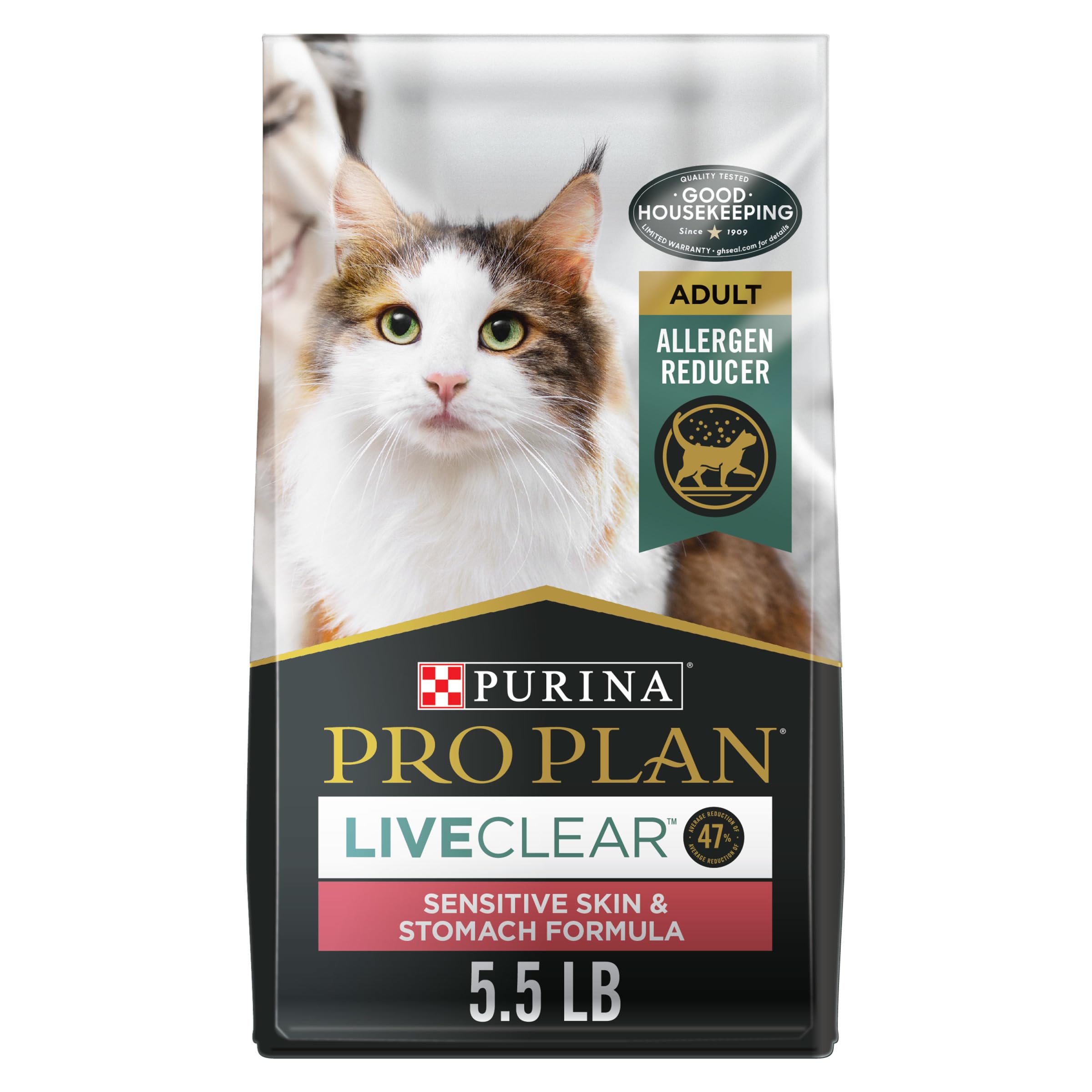
Purina Pro Plan LIVECLEAR is a category-defining product because it tackles the root cause of human allergic reactions—the Fel d 1 protein in cat saliva—without requiring the cat to avoid any ingredient. The formula contains a specific egg protein ingredient that binds to Fel d 1 and neutralizes it, reducing the allergen in dander by an average of 47% starting from the third week of consistent feeding. This makes it a dual-purpose solution: it supports a cat with sensitive skin and stomach via prebiotic fiber and omega-6 fatty acids, while simultaneously making the cat less allergenic to its owner.
The turkey and oatmeal recipe provides 100% complete and balanced nutrition for adult cats, and the high-protein content—backed by over a decade of research at Purina—supports lean muscle maintenance. Multiple verified buyers report that their cats’ fur grew back after stopping overgrooming, and that loose stools firmed up within the first month. The kibble size is small and uniform, optimized for automatic feeders and picky eaters alike.
For households where both the human and the cat have allergies, this is the single most effective non-prescription option available. The cost per pound is at the upper end of the mid-range tier, but the dual benefit of reducing your own allergic response while managing your cat’s digestive and skin issues makes it a value that cheaper alternatives cannot match.
Why it’s great
- Reduces Fel d 1 allergen in dander by an average of 47%
- Prebiotic fiber formula supports sensitive stomachs
- High-protein turkey recipe builds lean muscle
Good to know
- May cause increased stool volume as noted by some users
- Premium pricing for the LIVECLEAR technology
2. Hill’s Prescription Diet z/d Skin/Food Sensitivities

Hill’s Prescription Diet z/d is the most clinically proven hydrolyzed protein cat food on the market, and it is the food that veterinarians reach for first when faced with a cat suffering from adverse food reactions. The chicken protein is hydrolyzed into fragments so small that the immune system cannot recognize them, effectively eliminating the allergic response. This formula also features Hill’s proprietary ActivBiome+ Digestion blend of prebiotic fibers, which rapidly activates the gut microbiome to further support digestive health and improve stool quality.
Real-world reports from owners confirm what the science suggests: senior cats that had been vomiting 2-3 times per week for years stopped entirely after a two-week transition to z/d. The kibble has a distinct, natural smell that appeals to cats accustomed to higher-protein diets, and the small, uniform pieces make it easy for older cats with dental issues to chew. The formula is rich in omega-3 and omega-6 fatty acids, which directly support skin barrier regeneration and reduce the itching that drives overgrooming.
This is a prescription diet, which means you need a veterinary authorization to purchase it. The cost is high—this is the most expensive food per pound on this list—but for a cat that has failed every over-the-counter elimination diet, the therapeutic results are unmatched. If your vet has diagnosed a food allergy and recommended a hydrolyzed protein diet, stop shopping around and start with this.
Why it’s great
- Hydrolyzed protein prevents any immune detection
- ActivBiome+ prebiotic fibers improve gut health rapidly
- #1 vet-recommended therapeutic brand—most clinical data
Good to know
- Requires a prescription—cannot buy without vet approval
- Very expensive per pound compared to any OTC option
3. Pro Plan Veterinary Diets HA Hydrolyzed Feline Formula

Purina’s veterinary line, Pro Plan Veterinary Diets HA Hydrolyzed Feline Formula, is a hydrolyzed protein diet that uses a single, highly digestible protein source and a single carbohydrate source to minimize any potential allergens. The hydrolyzed protein molecules are broken down into peptide chains too small for the feline immune system to identify as foreign, making this a true elimination diet that can be used for both diagnosis and long-term management of food allergies. The formula also includes St/Ox Defense technology, which promotes a urinary environment that discourages the formation of both struvite and calcium oxalate crystals—a common secondary concern in cats on strict diets.
Owner feedback consistently highlights that this food stops chronic vomiting in cats that had been diagnosed with “idiopathic” (unknown cause) vomiting for years. One reviewer noted that their two senior cats with loose stools and excessive grooming saw a complete resolution within three weeks of switching. The kibble is unflavored—essentially tasteless by human standards—but cats on strict elimination diets rarely reject it because they have no memory of a more palatable option. Some owners of Sphynx cats reported it did not control ear wax production, indicating that a small subset of skin conditions may require a different approach.
For cats that have adverse reactions to chicken specifically, this is the safer bet than Hill’s z/d because the protein source in HA is a generic hydrolyzed protein that is universally non-reactive. It is also slightly less expensive than Hill’s z/d per pound, making it a strong value in the prescription diet category. The bag is smaller at 4 lbs, so budget accordingly for a monthly cost of about -70 depending on your cat’s weight.
Why it’s great
- Single protein and single carb—true elimination diet
- St/Ox Defense supports urinary health
- Often cheaper than Hill’s z/d per pound
Good to know
- Bland taste—some very picky cats may refuse initially
- Requires vet approval as it is a prescription formula
4. Instinct Limited Ingredient Diet Grain-Free Turkey

Instinct’s Limited Ingredient Diet takes the “less is more” philosophy to its logical endpoint: one animal protein (cage-free turkey) and one vegetable (peas) as the primary ingredients, with no grains, dairy, eggs, or chicken fat. This is the most accessible OTC limited-ingredient diet for owners who want to avoid the prescription route but still need a clean, traceable ingredient panel. The kibble is coated in freeze-dried raw turkey for enhanced flavor, which helps bridge the gap between a strict elimination diet and the palatability most cats demand.
Customer reviews are remarkably consistent: sores from overgrooming cleared up completely after 8 months, red itchy dots on ears vanished, and cats that had chronic soft stools transitioned to firm, regular bowel movements. The 11 lb. bag offers excellent cost-per-serving value compared to prescription hydrolyzed diets, making this a strong choice for long-term maintenance after an initial diagnosis. The small kibble size is gentle on sensitive gums and easy for seniors to manage.
This is an excellent first-line choice for owners whose cats have mild to moderate skin issues but no vomiting or diarrhea. If your cat has been on a mixed-protein diet (multiple meat sources), switching directly to this single-source turkey recipe can stabilize the gut within 2-3 weeks. The only downside is that peas are a moderate glycemic carbohydrate—if your cat is diabetic or prone to weight gain, the higher carbohydrate load compared to some wet foods is worth noting.
Why it’s great
- Single animal protein and single vegetable—extremely clean label
- Freeze-dried raw coating makes it very palatable for picky cats
- Best cost-per-pound value among limited-ingredient dry foods
Good to know
- Carbohydrate from peas may not suit diabetic cats
- Some cats experienced only moderate improvement, not complete resolution
5. Blue Buffalo Basics Grain-Free Turkey & Potato

Blue Buffalo Basics is specifically formulated for mature indoor cats, using a turkey and potato recipe that eliminates chicken, beef, dairy, and eggs—the four most common feline allergens. The formula includes Blue Buffalo’s exclusive LifeSource Bits, a cold-processed blend of antioxidants, vitamins, and minerals designed to support the immune system. The crude fiber content is slightly higher than average at 4.5%, which helps move any allergens through the digestive tract faster and reduces the chance of a food reaction.
Owners of cats with confirmed chicken allergies report zero reactions on this food, with one reviewer noting their cat’s constant scratching and fur loss stopped completely after two weeks. The kibble is very small—about 5mm in diameter—which senior cats and those with dental issues find easy to eat. The 5 lb. bag size is good for trial runs, though the cost per pound is about 30% higher than Purina Cat Chow Gentle, making it a premium-tier limited-ingredient option.
This is the best choice for senior cats who need a gentle, fiber-rich diet that also supports joint and kidney health (the formula includes glucosamine and controlled phosphorus levels). For younger adult cats with simple chicken allergies, the cheaper Instinct LID offers a similar ingredient philosophy with a larger bag size. The limited 5 lb. size means you will reorder frequently unless you commit to the larger 8 lb. format available at some retailers.
Why it’s great
- Excludes chicken, beef, dairy, eggs—covers all top 4 allergens
- LifeSource Bits provide targeted immune support for seniors
- Higher fiber content helps clear allergens from the digestive tract
Good to know
- Smaller bag size requires more frequent repurchasing
- Premium pricing—over 30% more per pound than budget LID options
6. Purina Cat Chow Gentle Sensitive Stomach
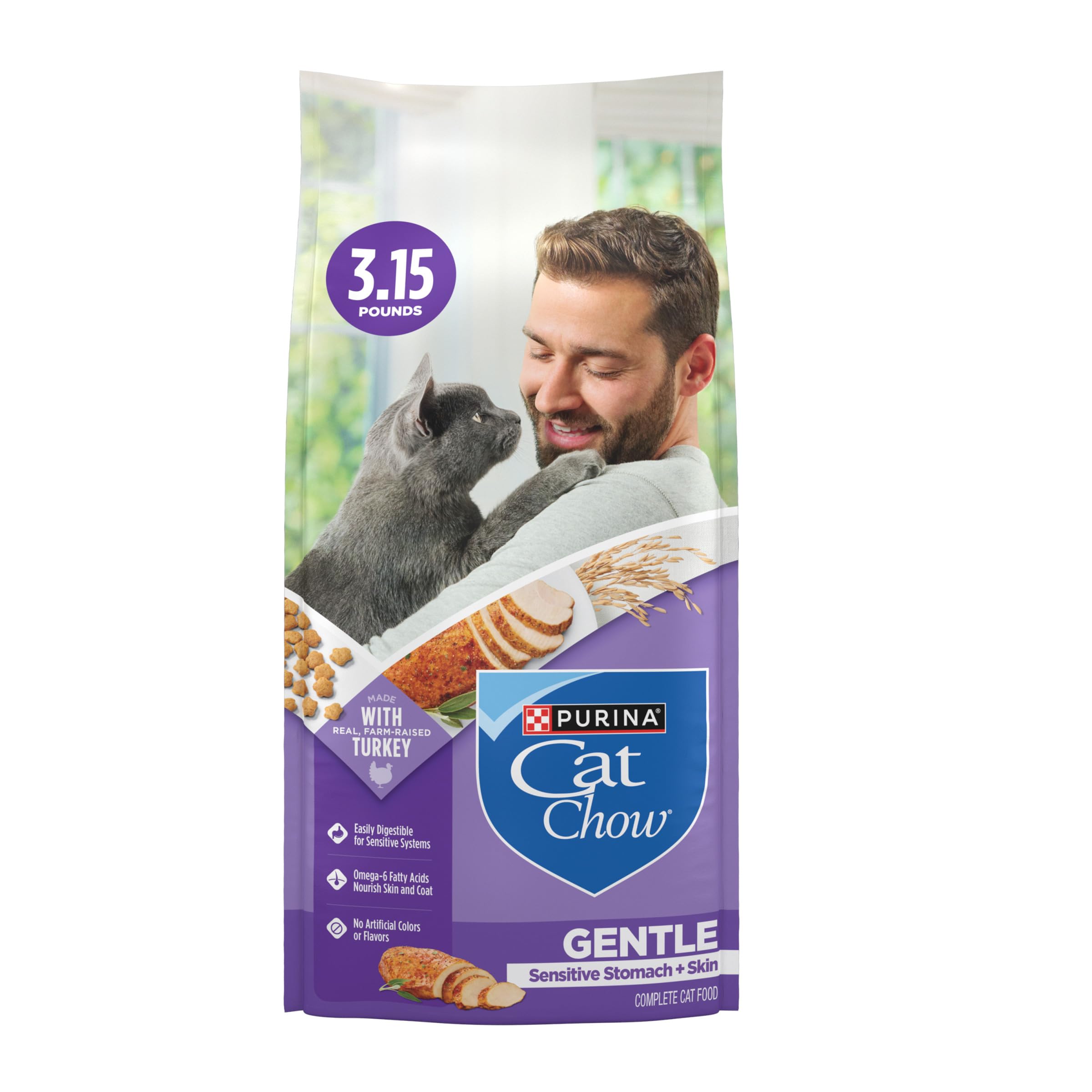
Purina Cat Chow Gentle is the most accessible entry-level option for cats with mild digestive sensitivity rather than true food allergies. The formula uses real farm-raised turkey as the primary protein and adds omega-6 fatty acids to support skin and coat health. It does not eliminate common allergens like chicken (which appears lower on the ingredient list), nor does it feature a single-source protein—so it is not suitable for cats with diagnosed allergies to poultry. What it does well is manage the occasional vomiting and loose stool that can come from a standard adult diet by providing a prebiotic fiber blend and easily digestible grains.
Customer feedback overwhelmingly confirms that this food resolves vomiting in cats that were throwing up their standard Purina Indoor formula. The pack of 4 bags makes it very economical: you get 12.6 lbs of food for roughly the cost of a single bag of Hill’s z/d. The kibble is crunchy and helps reduce plaque, though the smaller 3.15 lb. bags mean more frequent bag-opening for multi-cat households.
This is the right choice for owners on a strict budget whose cat has intermittent vomiting but no skin symptoms or confirmed allergy diagnosis. If your cat is scratching bald spots or has chronic diarrhea, you need to move up to a proper limited-ingredient or hydrolyzed diet. But for the “sour tummy” cat that keeps down most food but occasionally rejects meals, this is a near-perfect low-cost fix.
Why it’s great
- Very low cost—excellent value for the pack of 4
- Real turkey helps soothe sensitive stomachs quickly
- Omega-6 fatty acids support healthy skin and coat
Good to know
- Contains chicken—not safe for poultry-allergic cats
- Not a limited-ingredient diet; longer ingredient list than LIDs
7. Reveal Natural Wet Cat Food Tuna Fillet

Reveal Natural Wet Cat Food is a single-ingredient product: real tuna fillet in natural broth. It contains no grains, no binders, no artificial colors or flavors, and no ash (a key factor in preventing urinary tract issues). For the allergy cat, this is an ideal complementary food—it provides 100% hydration and a completely clean protein source that can be mixed with a hydrolyzed or limited-ingredient dry diet to increase moisture intake and palatability. The 24-pack of 2.47 oz. cans offers a long shelf life and individual portions that never go stale.
Reviews highlight that even the pickiest cats clean the bowl instantly, and owners of senior cats (ages 15-22) report that the broth texture encourages eating in cats that had begun to show reduced appetite. The lack of any “functional” nutrients (it is a complementary food, not a complete diet) means you must pair it with a nutritionally complete base food—but for cats on hydrolyzed diets that are notoriously bland, the tuna broth is often the only thing that keeps them eating.
This is not a complete meal on its own, but as a topper or hydration source for a cat on a strict allergy diet, it is indispensable. The tuna format means it is not suitable for cats with fish allergies, and the can pull-tab is notoriously difficult to open (most users resort to a can opener). For a cat that needs extra moisture and a flavor boost to tolerate a prescription kibble, this is the perfect companion.
Why it’s great
- Single ingredient—no hidden grains or allergens
- No ash content reduces risk of urinary crystal formation
- High moisture content supports kidney health
Good to know
- Complementary food only—does not provide complete nutrition alone
- Cans are notoriously hard to open; keep a manual can opener nearby
FAQ
How long does it take for an allergy cat food to show results?
Can I buy Hill’s z/d or Pro Plan HA without a vet prescription?
Is grain-free cat food better for allergies?
Final Thoughts: The Verdict
For most households, the best allergy cat food winner is the Purina Pro Plan LIVECLEAR Turkey and Oatmeal because it balances a proven allergen-reducing technology with high-quality protein and digestive support at a price point far below prescription diets. If your cat has been formally diagnosed with a severe food allergy and needs a complete immune bypass, the Hill’s Prescription Diet z/d is the clinical gold standard. And for a budget-friendly first step that resolves mild vomiting and loose stool, the Purina Cat Chow Gentle pack of four bags offers the best raw value for the money.