
A stuffy nose on a baby who can’t blow it is a special kind of parenting nightmare. Between the disrupted sleep, the fussy feedings, and the helpless feeling of watching them struggle to breathe, finding a solution that is both safe and effective becomes an urgent mission. The problem is that infants require a completely different approach to allergy relief than older children or adults, and the wrong choice can mean either no relief at all or unnecessary exposure to active ingredients they simply don’t need.
I’m Min — the co-founder and writer behind Gadgets Feed. After spending countless hours analyzing pediatric dosing guidelines, antihistamine mechanisms, and the real-world feedback from dozens of clinical studies and thousands of parent reviews, I’ve mapped out exactly which options actually work for the smallest patients.
This guide cuts through the noise to deliver a clear, evidence-based ranking of the safest and most effective products. It is the definitive resource for any parent searching for the right allergy medicine for infants.
How To Choose The Best Allergy Medicine For Infants
Selecting allergy medicine for an infant is not the same as picking a bottle off the shelf for yourself. The stakes are higher, the dosing windows are narrower, and the active ingredients that are safe for a 60-pound child may be entirely inappropriate for a 15-pound baby. You need to weigh the specific symptoms, the baby’s age, and the duration of relief required.
Age and Weight Approvals
The single most important factor is the minimum age requirement listed on the label. Some antihistamine liquids, like Allegra Children’s, are approved from 2 years old, while non-medicated solutions like Boogie Baby Saline Spray are safe from birth. Never guess based on weight alone—always check the manufacturer’s age guidance first. For infants under 6 months, only saline drops are appropriate without a pediatrician’s express direction.
Drowsiness Profile
First-generation antihistamines (like diphenhydramine or chlorpheniramine) cause significant drowsiness in most children. This can be dangerous if it masks other symptoms or interferes with feeding. Second-generation drugs like fexofenadine (Allegra) and levocetirizine (Xyzal) are non-drowsy, making them better for daytime use. However, a pediatrician might still recommend a sedating antihistamine at bedtime to help a child with severe nighttime congestion rest.
Quick Comparison
On smaller screens, swipe sideways to see the full table.
| Model | Category | Best For | Key Spec | Amazon |
|---|---|---|---|---|
| Allegra Children’s 12-Hour | Non-Drowsy Antihistamine | Daytime symptom relief for toddlers | 30 mg fexofenadine per dose | Amazon |
| Xyzal Children’s 24 Hour | Non-Drowsy Antihistamine | Round-the-clock allergy control | 1.25 mg levocetirizine per 5 mL | Amazon |
| Boiron ColdCalm Baby | Homeopathic Liquid Doses | Natural multi-symptom cold relief | 40 single-use liquid doses | Amazon |
| Leader Children’s 24 Hour | Cetirizine Liquid | Budget-friendly 24-hour relief | 1 mg/mL cetirizine HCl | Amazon |
| Dimetapp Cold & Allergy | Multi-Symptom Antihistamine | Cold plus allergy combo relief | Brompheniramine maleate 4 mg | Amazon |
| Boogie Baby Saline Spray | Natural Saline | Drug-free newborn congestion | 0.9% sodium chloride solution | Amazon |
| Boogie Drops Twin Pack | Natural Saline | Value pack for frequent use | 2 x 1 oz dropper bottles | Amazon |
In‑Depth Reviews
1. Allegra Children’s 12-Hour Allergy Relief Liquid

Allegra Children’s delivers a precise 30 mg dose of fexofenadine HCl per serving, a second-generation antihistamine that does not cross the blood-brain barrier reliably, which is why it earns its non-drowsy reputation. Parents report that their toddlers tolerate the grape liquid well and show measurable improvement in sneezing and watery eyes within an hour of administration.
Approved for children as young as 2 years, this 8-ounce bottle provides 12-hour coverage, making it ideal for a single morning dose that gets a child through daycare or preschool without the brain fog associated with older antihistamines. The formula is alcohol-free and dye-free, reducing the risk of adverse reactions in sensitive kids.
Allegra is the number one allergist-recommended non-drowsy brand among OTC oral antihistamines, which adds a layer of clinical credibility. For parents who want a fast-acting, non-sedating option that covers both indoor and outdoor allergens, this is the clear frontrunner among medicated liquids.
Why it’s great
- Non-drowsy fexofenadine is safe for daytime use
- Starts working in one hour with 12-hour duration
- Pediatrician- and allergist-recommended brand
Good to know
- Not approved for infants under 2 years old
- Grape flavor may not appeal to every toddler
2. Xyzal Children’s 24 Hour Allergy Relief

Xyzal Children’s contains levocetirizine dihydrochloride, the active enantiomer of cetirizine (Zyrtec), which means it offers the same potent antihistamine effect but at a lower dose—just 1.25 mg per 5 mL. This makes it one of the most concentrated 24-hour liquids on the market, requiring only a single daily administration for full coverage.
Parents consistently note that the formula is sugar-free, alcohol-free, and dye-free, which eliminates several common triggers for behavioral side effects. The grape flavor is well-received, and many reviewers say their children actually ask for it, which is a minor miracle for any liquid medicine.
Clinical data shows levocetirizine is as effective at hour 24 as it is at hour one, providing continuous relief from itchy, watery eyes and nasal symptoms for a full day. For families dealing with persistent seasonal allergies, this 24-hour coverage reduces the mental load of remembering multiple doses and keeps symptoms suppressed around the clock.
Why it’s great
- Full 24-hour coverage from a single daily dose
- Dye-free, sugar-free, and alcohol-free formula
- Prescription-strength active ingredient at safe pediatric dose
Good to know
- Approved only for children age 2 and older
- Requires refrigeration after opening for some batches
3. Leader Children’s 24 Hour All Day Allergy Relief
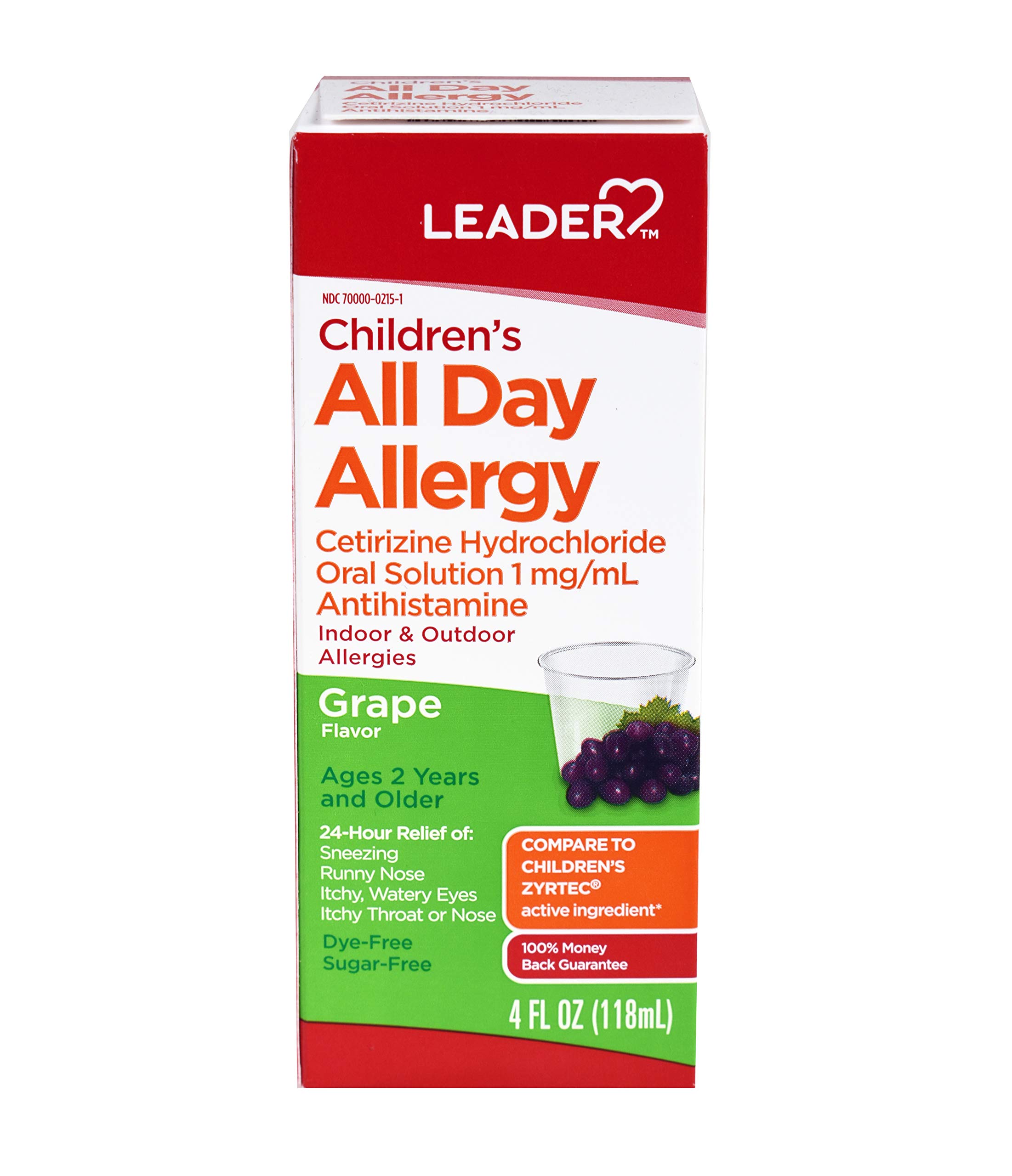
The Leader brand delivers a store-brand alternative to name-brand cetirizine liquids, offering the same 1 mg/mL concentration of the active ingredient at a significantly lower cost per ounce. For families managing allergy seasons that stretch for months, this translates to real savings without compromising on the drug’s mechanism of action.
Cetirizine is a second-generation antihistamine that is more sedating than fexofenadine but less sedating than diphenhydramine. Many parents report that the 24-hour formula provides reliable symptom relief, though a subset of children may experience mild drowsiness. The grape flavor is consistent with other children’s allergy liquids and is generally accepted without complaint.
The 4-ounce bottle contains about 24 doses for a toddler, and the bottle includes a dosage cup that aligns with age-weight recommendations. For cost-conscious parents who need a dependable 24-hour antihistamine and don’t mind the potential for slight sedation, this is the most economical medicated option available.
Why it’s great
- Same active ingredient as Zyrtec at a fraction of the cost
- 24-hour dosing simplifies daily routine
- Widely available and easy to find
Good to know
- May cause drowsiness in some children
- Not suitable for infants under 2 years
4. Boiron ColdCalm Baby 40 Count

Boiron ColdCalm Baby takes a completely different approach by using micro-diluted active ingredients in a homeopathic formulation. Each packet contains five pre-measured liquid doses that are administered sublingually, meaning they absorb directly into the bloodstream through the mouth’s mucous membranes for rapid onset—often within 15 to 20 minutes according to parent reports.
The biggest advantage here is the age approval: the product is safe for children as young as 6 months, which is younger than any medicated antihistamine liquid on the market. The single-use packets are mess-free and eliminate the need for syringes or dosing cups, making them ideal for diaper bags and travel. The solution is tasteless, colorless, and contains no dyes, lactose, sugar, or artificial sweeteners.
While homeopathic remedies are not subject to FDA efficacy review for drug claims, the anecdotal feedback from thousands of parents is overwhelmingly positive, with many noting faster recovery from cold symptoms and reduced coughing. For parents seeking a non-pharmaceutical option for babies under 2, this is the most practical alternative available.
Why it’s great
- Safe for infants as young as 6 months old
- Pre-measured, mess-free single-use packets
- Fast sublingual absorption and tasteless formula
Good to know
- Homeopathic mechanism not clinically proven
- Each packet contains only 5 doses; packs run out quickly
5. Children’s Dimetapp Cold & Allergy Liquid
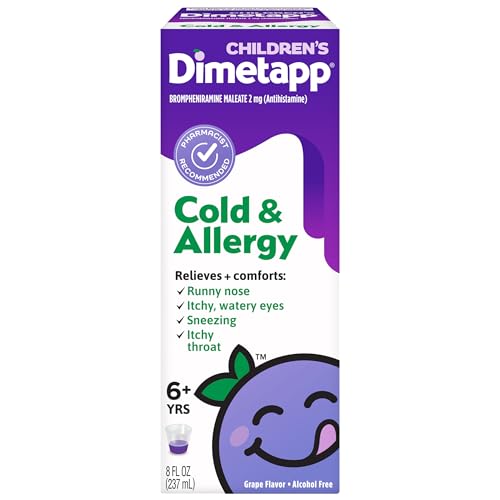
Dimetapp Cold & Allergy is formulated with brompheniramine maleate, a first-generation antihistamine that is effective against the full spectrum of cold and allergy symptoms—sneezing, runny nose, itchy throat, and watery eyes—all in a single 8-ounce bottle. Because it contains an antihistamine but is phenylephrine-free, it avoids the cardiovascular side effects associated with decongestants.
The trade-off with brompheniramine is that it causes drowsiness in a significant portion of children. Many parents use this intentionally at bedtime to help a child with severe congestion sleep through the night. The grape flavor is widely praised, and Dimetapp remains the number one most trusted children’s cold relief brand by pharmacists, which speaks to its long-standing safety record.
For children ages 6 and older, this formula covers both allergy-driven and virus-driven symptoms, making it a versatile tool for the winter season. However, the age cutoff of 6 years means it is not an option for toddlers, limiting its utility for the youngest allergy sufferers.
Why it’s great
- Treats both cold and allergy symptoms simultaneously
- Phenylephrine-free formula reduces cardiac risk
- Pharmacist-trusted brand with decades of use
Good to know
- Only approved for children 6 years and older
- First-generation antihistamine causes drowsiness
6. Boogie Baby Saline Nasal Spray and Drops
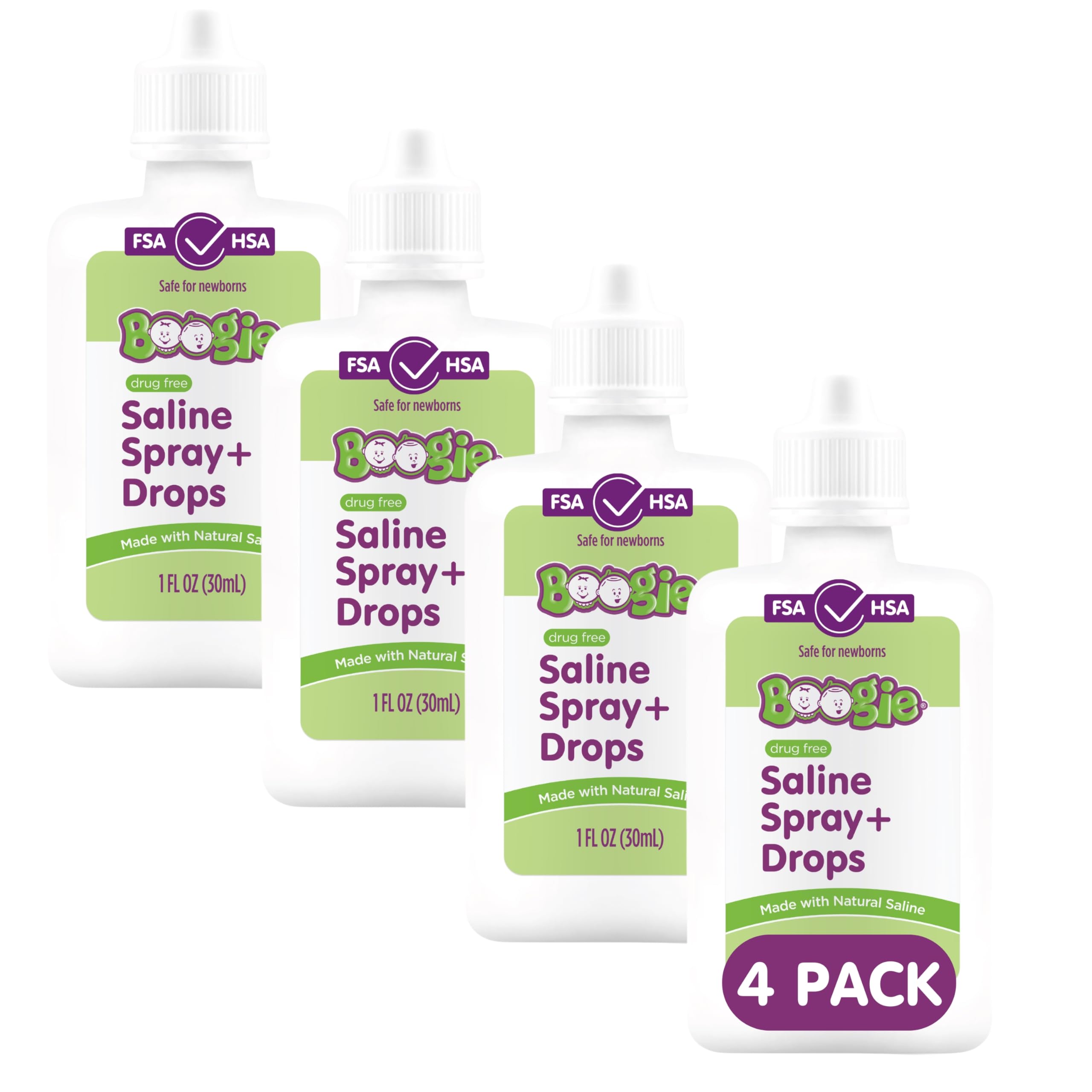
Boogie Baby Saline Spray is a non-medicated 0.9% sodium chloride solution that is safe for newborns and infants of any age. The dual-action tip allows you to either spray a fine mist for general moisturizing or dispense controlled drops for targeted loosening of dried mucus, giving parents flexibility depending on the severity of congestion.
Because there are no active drug ingredients, there is zero risk of drug interactions, drowsiness, or overdose. It can be used as often as needed, making it the safest first-line defense against nasal congestion caused by dry air, mild allergies, or the beginnings of a cold. Pediatricians commonly recommend saline sprays as the initial intervention before any oral medication.
The 1-ounce bottle is compact enough for a diaper bag, and the formula is free from fragrances, dyes, and parabens. For parents who want a drug-free option that clears nasal passages and makes suctioning easier, this is the most practical and cost-effective choice on the market.
Why it’s great
- Safe for newborns and infants of any age
- Drug-free formula with no side effects
- Dual-action tip for spray or drops
Good to know
- Provides only mechanical relief, not anti-inflammatory
- Requires a bulb syringe or aspirator for best results
7. Boogie Drops Twin Pack

The Boogie Drops Twin Pack takes the same natural saline formulation and packages it as two separate 1-ounce dropper bottles, effectively doubling the volume for roughly the same price as a single bottle from competitors. The extra-gentle dropper tip is specially designed for newborns, with a controlled dispensing mechanism that prevents accidental over-application.
Parent reviewers consistently highlight that 1 to 2 drops per nostril is sufficient to loosen stubborn mucus, making each bottle last significantly longer than expected. The saline solution helps prevent nasal dryness in arid climates or heated homes during winter, and it works in concert with aspirators like the Frida Snot Sucker for thorough nasal clearing.
For families with multiple children or those dealing with prolonged allergy seasons, the twin pack provides better value than single-bottle options. The product is pediatrician-recommended, fragrance-free, dye-free, and paraben-free, maintaining the same safety profile as the single spray bottle but in a format that is easier to control on a squirming infant.
Why it’s great
- Two bottles provide twice the value of single packs
- Extra-gentle dropper tip is perfect for newborns
- Highly effective at loosening mucus before suctioning
Good to know
- Dropper format requires more effort than spray
- Small bottle size may be lost easily in a diaper bag
FAQ
Can I give allergy medicine to a 6-month-old baby?
What is the difference between Zyrtec and Xyzal for toddlers?
Final Thoughts: The Verdict
For most users, the allergy medicine for infants winner is the Allegra Children’s 12-Hour Allergy Relief Liquid because its non-drowsy fexofenadine formula provides safe, fast-acting relief starting at age 2 with minimal side effects. If you want a full 24-hour coverage with a sugar-free, dye-free formulation, grab the Xyzal Children’s 24 Hour Allergy Relief. And for drug-free congestion relief starting from birth, nothing beats the Boogie Baby Saline Nasal Spray.