
When seasonal pollen or year-round dust triggers an allergic cascade, the result is often a sinus headache — that deep, pounding pressure behind your eyes and across your forehead. The right antihistamine or nasal spray can stop the histamine reaction before it creates that painful congestion, but choosing between tablets, dissolving strips, and sprays requires understanding how each active ingredient targets your specific symptoms.
I’m Min — the co-founder and writer behind Gadgets Feed. I’ve spent countless hours analyzing clinical data, active ingredient profiles, and user relief patterns to separate the truly effective allergy medicines from the also-rans.
Whether you need fast-acting relief from sinus pressure or a non-drowsy formula for daily symptom control, this guide breaks down the top options for the best allergy medicine for sinus headache based on actual ingredient performance and real-world results.
How To Choose The Best Allergy Medicine For Sinus Headache
Selecting an effective allergy medicine for sinus headaches comes down to matching the active ingredient to your symptom profile. Oral antihistamines like fexofenadine and cetirizine block histamine systemically, while nasal sprays like triamcinolone reduce inflammation directly in the sinus passages. Here are the key factors to weigh before deciding.
Active Ingredient: Antihistamine vs. Corticosteroid
First-generation antihistamines (like diphenhydramine) cause drowsiness. Second-generation options — fexofenadine (Allegra), cetirizine (Zyrtec), and loratadine (Claritin) — are non-drowsy and provide 24-hour coverage. For sinus headaches specifically, a nasal corticosteroid spray like triamcinolone (Nasacort) reduces inflammation at the tissue level, often providing better relief for sinus pressure than oral pills alone.
Decongestant Content and Blood Pressure Safety
Many sinus headache formulas contain pseudoephedrine or phenylephrine to shrink swollen nasal passages. These decongestants can raise blood pressure, making them unsafe for individuals with hypertension. Decongestant-free options like Coricidin HBP are specifically formulated for people with high blood pressure, using acetaminophen for pain and an antihistamine for congestion without vasoconstrictors.
Onset and Duration of Relief
Cetirizine (Zyrtec) begins working within one hour and offers strong, consistent relief. Fexofenadine (Allegra) also starts at hour one but is less sedating than cetirizine for some users. Loratadine (Claritin) is the mildest antihistamine, effective for mild-to-moderate symptoms but may not sufficiently tackle severe sinus pressure. Nasal sprays require 1–2 days of consistent use to reach full anti-inflammatory effect.
Quick Comparison
On smaller screens, swipe sideways to see the full table.
| Model | Category | Best For | Key Spec | Amazon |
|---|---|---|---|---|
| Allegra 24-Hour Tablets | Oral Antihistamine | Non-drowsy all-day relief | 180 mg Fexofenadine HCl | Amazon |
| Nasacort 24HR Spray | Nasal Corticosteroid | Sinus congestion & pressure | 55 mcg Triamcinolone/Spray | Amazon |
| Zyrtec Dissolve Tablets | Oral Antihistamine | Fast-acting dissolve tablets | 10 mg Cetirizine HCl | Amazon |
| Claritin 24-Hour Tablets | Oral Antihistamine | Gentle daily allergy control | 10 mg Loratadine | Amazon |
| Coricidin HBP | Cold & Flu Formula | High blood pressure safety | Decongestant-free formula | Amazon |
| HealthCareAisle Allergy Relief | Oral Antihistamine | Budget-friendly generic | 180 mg Fexofenadine HCl | Amazon |
| Nature’s Sunshine Sinus Support | Herbal Supplement | Herbal sinus & respiratory support | Ephedra-free blend | Amazon |
In‑Depth Reviews
1. Allegra Adult 24-Hour Allergy Relief Tablets

The 180 mg fexofenadine HCl per tablet is the hallmark of Allegra — it’s the highest available single-dose second-generation antihistamine strength, providing 24-hour coverage without the sedative effects that some users report with cetirizine. For sinus headache sufferers, this means the histamine-triggered inflammation that leads to sinus pressure is blocked at the receptor level within one hour of taking the pill.
Allegra is the #1 allergist-recommended non-drowsy OTC oral antihistamine, and its formula targets both indoor allergens (dust, mold, pet dander) and outdoor triggers (pollen, ragweed, grass). Users consistently report that it relieves sneezing, runny nose, and itchy eyes effectively, making it a strong option for sinus headaches that stem from seasonal allergies.
The 70-count bottle provides over two months of daily use at one tablet per day, and the pills are easy to swallow with water. Some users note that generic fexofenadine (like HealthCareAisle) works equally well, but Allegra’s coating and consistent release profile make it the more reliable choice for predictable 24-hour relief.
Why it’s great
- Non-drowsy formula with no brain fog, suitable for daytime use
- Starts working in one hour and lasts a full 24 hours
- Targets a broad range of indoor and outdoor allergens
Good to know
- Not a decongestant — may not relieve sinus pressure from severe congestion alone
- Some users find generic fexofenadine identical in effect
2. Nasacort 24HR Allergy Nasal Spray
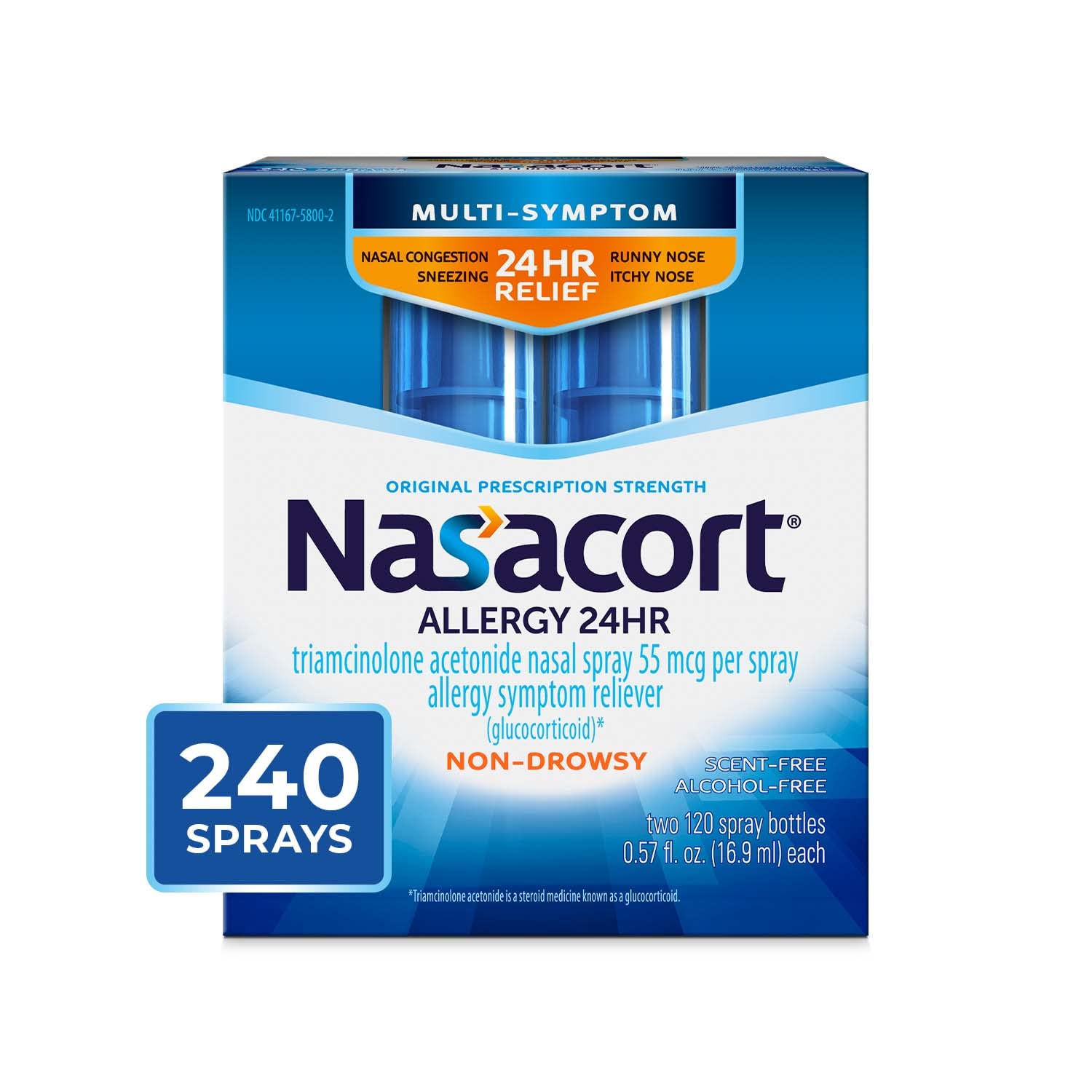
Unlike oral antihistamines that block histamine systemically, Nasacort delivers a corticosteroid (triamcinolone acetonide) directly to the nasal lining, reducing inflammation at the tissue level. For sinus headaches that result from swollen nasal passages and trapped mucus, this localized anti-inflammatory action is often more effective than a pill at relieving actual congestion pressure.
Each spray delivers 55 mcg of triamcinolone, and the recommended dose is two sprays per nostril once daily for adults. Users report noticeable relief from sinus congestion, sneezing, and runny nose within 24 to 48 hours of consistent use, with full benefit typically achieved after several days. The fine mist is alcohol-free, scent-free, and does not cause the stinging or bleeding that some experience with other nasal sprays.
The two-pack includes 240 total sprays (120 per bottle), providing a two-month supply at the standard dose. This is a premium option best suited for those whose primary sinus headache trigger is chronic nasal inflammation rather than systemic histamine release.
Why it’s great
- Directly reduces sinus inflammation at the source for congestion relief
- Non-drowsy, alcohol-free, and no harsh taste or odor
- Doctor-recommended for nasal allergy congestion specifically
Good to know
- Requires daily use for 1-2 days to reach full effectiveness
- Does not treat systemic allergy symptoms like itchy eyes or hives
3. Zyrtec 24 Hour Dye-Free Allergy Relief Dissolve Tablets
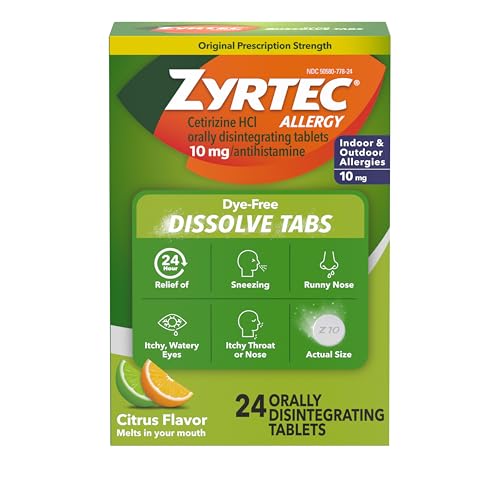
Cetirizine HCl at 10 mg is the active ingredient in Zyrtec, and it is known to be the most potent non-drowsy antihistamine among the three major second-generation options — stronger than loratadine and slightly more sedating than fexofenadine for some users. For sinus headaches, cetirizine’s high binding affinity for histamine receptors translates to fast, reliable symptom suppression, often within one hour.
The dissolve tablet format eliminates the need for water, making this an excellent travel-friendly option for sinus headache relief on the go. The citrus flavor masks much of the bitterness common in oral antihistamines, though some users note a mild aftertaste. Each tablet melts on the tongue within seconds and is suitable for adults and children aged six years and older.
Zyrtec is the #1 allergist-recommended brand among OTC oral antihistamines, and its 24-hour duration means one tablet per day covers morning pollen spikes and evening dust exposure alike. Users with severe sinus headache symptoms often prefer cetirizine over loratadine because its stronger effect handles more stubborn congestion and sinus pressure.
Why it’s great
- Works fast — starts providing relief within one hour
- Dissolve tablets are convenient and require no water
- Effective against severe allergy symptoms including sinus pressure
Good to know
- Some users report mild drowsiness compared to fexofenadine
- Citrus flavor leaves a noticeable aftertaste for some
4. Claritin 24 Hour Allergy Medicine Tablets

Loratadine 10 mg is the mildest of the three major second-generation antihistamines, making Claritin the preferred option for users who want gentle, non-drowsy daily allergy control without the potential sedation of cetirizine or the stronger receptor binding of fexofenadine. For sinus headaches triggered by mild-to-moderate allergies, this provides sufficient symptom management without side effects.
The 70-count blister pack offers over two months of daily coverage, and each tablet is unflavored and easy to swallow. Claritin is approved for adults and children aged six and older, and its safety profile makes it a common first-line recommendation for those who need to maintain focus and energy throughout the day while controlling sneezing, runny nose, and itchy eyes.
Some users with pronounced sinus congestion or drainage find Claritin less effective than cetirizine or fexofenadine — a known trade-off of loratadine’s gentler mechanism. For those whose sinus headaches are primarily driven by histamine release (itchy eyes, sneezing), Claritin works well; for those with heavy sinus pressure, a stronger option or a nasal spray may be required.
Why it’s great
- Very low incidence of drowsiness — one of the gentlest antihistamines
- Suitable for daily long-term use for both adults and kids 6+
- Relieves over 200 different allergen types including pet dander and pollen
Good to know
- Less effective for severe sinus congestion or pressure compared to Zyrtec or Allegra
- Some users find generic loratadine equally effective at a lower cost
5. HealthCareAisle Allergy Relief – Fexofenadine Tablets

HealthCareAisle’s generic fexofenadine HCl 180 mg tablets offer the exact same active ingredient and dosage as Allegra 24-Hour at a significantly lower per-tablet cost. This is a compelling option for budget-conscious buyers who need reliable, non-drowsy 24-hour allergy relief without paying for brand marketing.
Each 90-count bottle provides a three-month supply, making it one of the most economical choices for daily allergy management. The tablets are HSA/FSA eligible and contain no artificial dyes in the coating, which is a benefit for users sensitive to common pill colorings. Customer reviews confirm that the efficacy is comparable to Allegra for most users, with the same one-hour onset and 24-hour duration.
A small subset of reviewers note that this generic may be slightly less effective than brand-name Claritin for hives and congestion, but this is an individual response variation. For the vast majority of sinus headache sufferers, this generic delivers equivalent histamine blockade at a fraction of the brand cost, making it a smart entry-level choice.
Why it’s great
- Same active ingredient as Allegra at a much lower cost per dose
- Large 90-count bottle lasts three full months at one per day
- HSA/FSA eligible and dye-free tablet coating
Good to know
- Some users find brand-name Allegra has slightly more consistent absorption
- Pink coating on tablets may cause a reaction in rare individuals with dye sensitivity
6. Coricidin HBP Cold & Flu Tablets
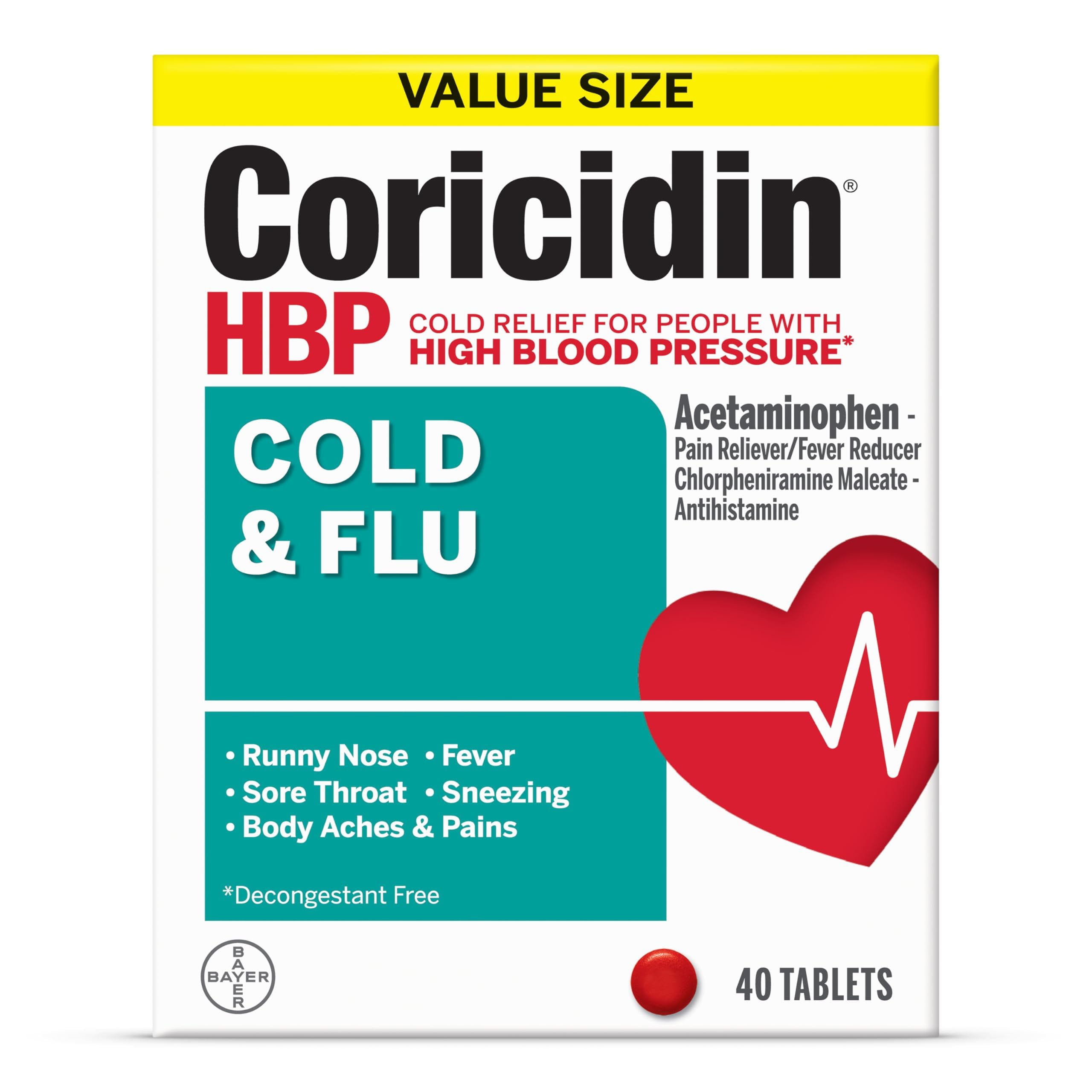
Coricidin HBP is specifically formulated for individuals with high blood pressure — it contains no decongestants (pseudoephedrine or phenylephrine) that can raise blood pressure or heart rate. Instead, it uses acetaminophen for headache pain and fever relief, plus an antihistamine to address runny nose and sneezing, making it a safer alternative for hypertensive users who need sinus headache relief.
The maximum-strength liquid gel formula targets fever, minor aches and pains, headache, sore throat, and chest congestion by helping loosen phlegm and thin bronchial secretions. For sinus headaches that come with cold or flu symptoms, this combination approach provides more comprehensive relief than a straight antihistamine, especially when body aches and fever accompany sinus pressure.
The 40-count box provides roughly 13 days of relief (one tablet every four to six hours). This medication is intended for short-term symptom management during a cold or flu episode, not for daily allergy control. Users with chronic sinusitis or perennial allergies should pair this with a daily antihistamine for complete coverage.
Why it’s great
- Specifically safe for people with high blood pressure — no decongestants
- Treats multiple symptoms: headache, fever, congestion, and body aches
- Decongestant-free formula in maximum-strength liquid gels
Good to know
- Not designed for daily allergy management — cold/flu use only
- Contains acetaminophen; do not combine with other acetaminophen products
7. Nature’s Sunshine Sinus Support EF

Nature’s Sunshine Sinus Support EF takes a completely different approach — rather than blocking histamine or reducing inflammation with corticosteroids, this herbal supplement uses a blend of burdock root, goldenseal root, marshmallow root, and yerba santa leaf to support nasal passages and respiratory tissue health. The formula contains synephrine from immature orange peel, which provides mild respiratory support without the cardiovascular effects of ephedrine.
Customers with chronic sinusitis and seasonal sinus pressure report that taking one capsule with meals helps prevent sinus infections and reduces headache frequency over several days of consistent use. The effects are gradual — not the immediate relief of an oral antihistamine — but users appreciate the gentler, non-drug approach that supports the body’s natural respiratory cleansing processes.
The 100-vegetarian-capsule bottle provides a three-month supply at the recommended dose of one capsule twice daily. This ephedra-free formula has a 50-year heritage from Nature’s Sunshine and is best suited for users who prefer botanical supplements over pharmaceutical antihistamines, or those looking for a daily support regimen to complement mainstream allergy medicines during peak seasons.
Why it’s great
- Herbal, ephedra-free formula with centuries of traditional use
- Supports respiratory tissue health and healthy nasal passages
- Users report reduction in sinus infection frequency over time
Good to know
- Slow-acting — requires consistent daily use for noticeable benefit
- Does not replace antihistamines for immediate allergy symptom relief
FAQ
Which antihistamine is best for sinus headache pressure?
Can I take allergy medicine every day for sinus headaches?
Is Allegra or Claritin better for sinus headaches?
Final Thoughts: The Verdict
For most users, the best allergy medicine for sinus headache winner is the Allegra Adult 24-Hour Tablets because its 180 mg fexofenadine dose delivers strong, non-drowsy, 24-hour histamine blockade with a fast one-hour onset, ideal for daily sinus headache prevention. If you want targeted relief for sinus congestion and pressure, grab the Nasacort 24HR Allergy Nasal Spray. And for an affordable generic at three months’ supply, nothing beats the HealthCareAisle Allergy Relief Tablets.