
Our readers keep the lights on and my morning glass full of iced black tea. As an Amazon Associate, I earn from qualifying purchases.
Specs are compiled from manufacturer listings and verified buyer reviews and can change over time — please confirm the key details on the product page before buying.
Aloe is famously tough — you can forget to water it for weeks and it barely blinks. But the one thing it absolutely cannot tolerate is too little light. A pale, stretched, or floppy aloe is an aloe begging for more hours under a strong, full-spectrum source. The best aloe grow light delivers the intensity and spectrum your plant craves without turning your living room into a laboratory. This guide cuts through the options to find the handful that actually keep aloe leaves thick, compact, and vibrantly green.
I’m Min — the founder and writer behind Gadgets Feed. This guide is built by comparing the manufacturers’ published specifications and the patterns across verified customer reviews, so you get each pick’s real strengths and trade-offs instead of marketing spin.
Whether you are rescuing a sun-starved succulent from a dim corner or setting up a dedicated shelf for your collection, the right light makes the difference between a plant that just survives and one that thrives. Down below, you will find the top contenders for the best aloe grow light, each one chosen to match a different setup and budget.
Our Picks at a Glance

How To Choose The Best Aloe Grow Light
Picking a light for your aloe is different from picking one for a flowering orchid or a tray of seedlings. Aloe is a succulent that stores water in its leaves and needs strong, direct light to stay compact. Here are the key factors that matter most.
Full Spectrum With Strong Cool White
Aloe vera grown indoors needs light that mimics the sun at noon. Look for a grow light that mentions 6000K to 6500K cool white LEDs alongside some red (660nm) for deeper photosynthesis. A balanced full spectrum keeps aloe leaves from stretching out (etiolation) and encourages healthy root development.
Brightness And Distance Matter
The light needs to be powerful enough to reach your aloe. A light rated at 2000 lumens or more can sit a foot or two away and still deliver enough energy. Lights with a PPFD (photosynthetic photon flux density) measurement, like the SANSI’s 169.7 μmol/s/㎡ at 6 inches, give you a direct read on how much usable light is hitting the leaves. The closer the light, the more intense it is.
Timer And Automation
Aloe needs a consistent 8 to 12 hours of light per day, then a complete dark period to rest. A built-in timer that automatically turns the light on and off saves you from remembering to do it yourself. Look for options with 6, 8, 12, or 16-hour settings. The auto on/off memory feature means you can set it once and forget it.
Quick Comparison
| Model | Best For | Wattage | Light Spectrum | Timer Modes | Amazon |
|---|---|---|---|---|---|
| FECiDA Floor Lamp★ Best Overall | Tall aloe plants | 25W | Full Spectrum | 4/8/12/16/20 Hrs | Amazon |
| LBW Halo LampSleek & Simple | Single pots | — | 380-800nm Full Spectrum | 6/8/12/16 Hrs | Amazon |
| SDOVUERC 6-Bar StripShelf Specialist | Shelves with multiple aloes | — | 380-800nm including 660nm Red | 6/12/18 Hrs | Amazon |
| Yiyehu Tripod Stand | Tabletop & floor flexibility | — | 380-800nm Full Spectrum | 8/12/16 Hrs | Amazon |
| Wiaxulay Clip-on Halo | Small aloe on desks | — | 6000K + 660nm Red | 6/12/16 Hrs | Amazon |
| wolezek 2-Head Clip | Budget-friendly 2-pack | — | 660nm Red + 6000K Cool White | 6/12/16 Hrs | Amazon |
| SANSI 10W Clip-on | High intensity for one pot | 10W | Full Spectrum | 3/6/12 Hrs | Amazon |
| SANSI 5W 2-Pack Clip | Low-light desks & shelves | 5W each | 4000K Full Spectrum | 3/6/12 Hrs | Amazon |
| SDOVUERC 4-Panel | Daisy-chain setups | 36W total | 3000K/5000K/660nm Full Spectrum | 4/8/12/16/20 Hrs | Amazon |
In‑Depth Reviews
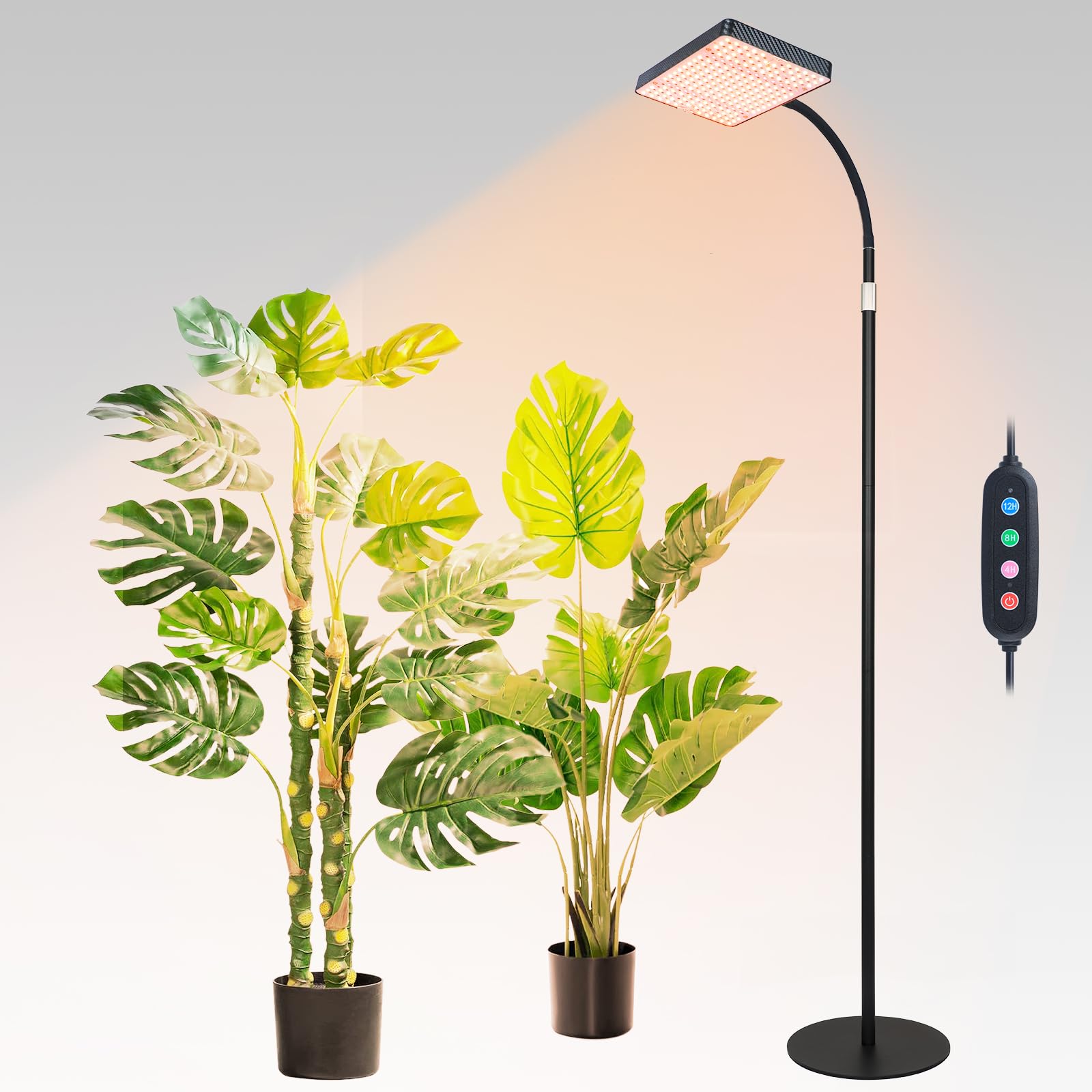
1. FECiDA 2026 Floor Lamp Grow Light
Our pick — over 4.5★ from 500+ verified ratings; the strongest balance of quality and price.
The floor-standing giant built for aloes that have outgrown the windowsill.
When your aloe has grown into a tall, top-heavy specimen, a clip-on light just won’t cut it anymore. This FECiDA floor lamp extends from 40 inches to 76 inches, meaning you can raise the light head as your plant grows. It puts out 2000 lumens of brightness from 208 LEDs, which is the kind of punch that keeps aloe leaves thick and upright. The 25-watt power draw is roughly equivalent to a 200-watt incandescent bulb, so you get serious intensity without a spike on your electricity bill.
You get five timer options — 4, 8, 12, 16, and 20 hours — and you can combine buttons for custom durations, so your aloe gets exactly the light cycle it needs. Buyers praise the build quality and easy assembly, and the daisy-chain function lets you link up to three units from a single outlet for larger collections. With 4.7 stars from hundreds of buyers, it is the one people consistently call a “standout” for their indoor plants.
What owners celebrate
- Functionality is the most-praised aspect — the auto timer and brightness make it a set-and-forget system.
- Height range (40″ to 76″) covers everything from a young aloe to a mature specimen.
- Daisy-chain capability expands your grow setup without needing extra outlets.
The honest trade-off
- The light is bright enough to be harsh on your eyes if you sit near it — not ideal for a living room reading lamp.
- The 8-foot power cable can be short if your floor outlet is far away.
Reach for this if: you have a tall aloe or a group of large floor plants that need consistent, powerful light from above.
Look elsewhere if: you only have a small desk aloe — this lamp is oversized for a single 4-inch pot.
2. LBW Halo Grow Light
The halo ring that hugs a single aloe pot with customizable brightness.
If your aloe sits alone on a desk or a small shelf, the LBW halo light is a clean and effective match. Its ring-shaped head with 48 LEDs wraps the plant in light from all angles, and the adjustable pole telescopes from 7.8 inches up to 26 inches. That range means you can raise the light as a baby aloe grows taller, keeping the intensity just right. The full spectrum covers 380nm to 800nm, and you get three color modes — white, warm, and full spectrum — so you can pick the light that looks best in your room.
The five brightness levels (from 20% all the way up to 100%) give you fine control, which matters because aloe can handle high light but needs a gradual introduction if it has been living in shade. Owners praise the quality and reliability (81 and 73 counts, respectively), and the timer options of 6, 8, 12, and 16 hours cover every daylight schedule. A key detail: the base needs a pot sitting on it to stay planted, so it is best for potted plants rather than as a standalone floor lamp.
Perfect single-plant solution: the adjustable height and ring design provide uniform coverage without the harsh spot of a single-direction bar. The 78-inch cord gives you plenty of placement flexibility.
Best for: the minimalist who wants one light for one pot, with no clips or stands cluttering the desk.
Think twice if: you need a light that stands on its own — the base is designed to be weighed down by the plant pot itself.
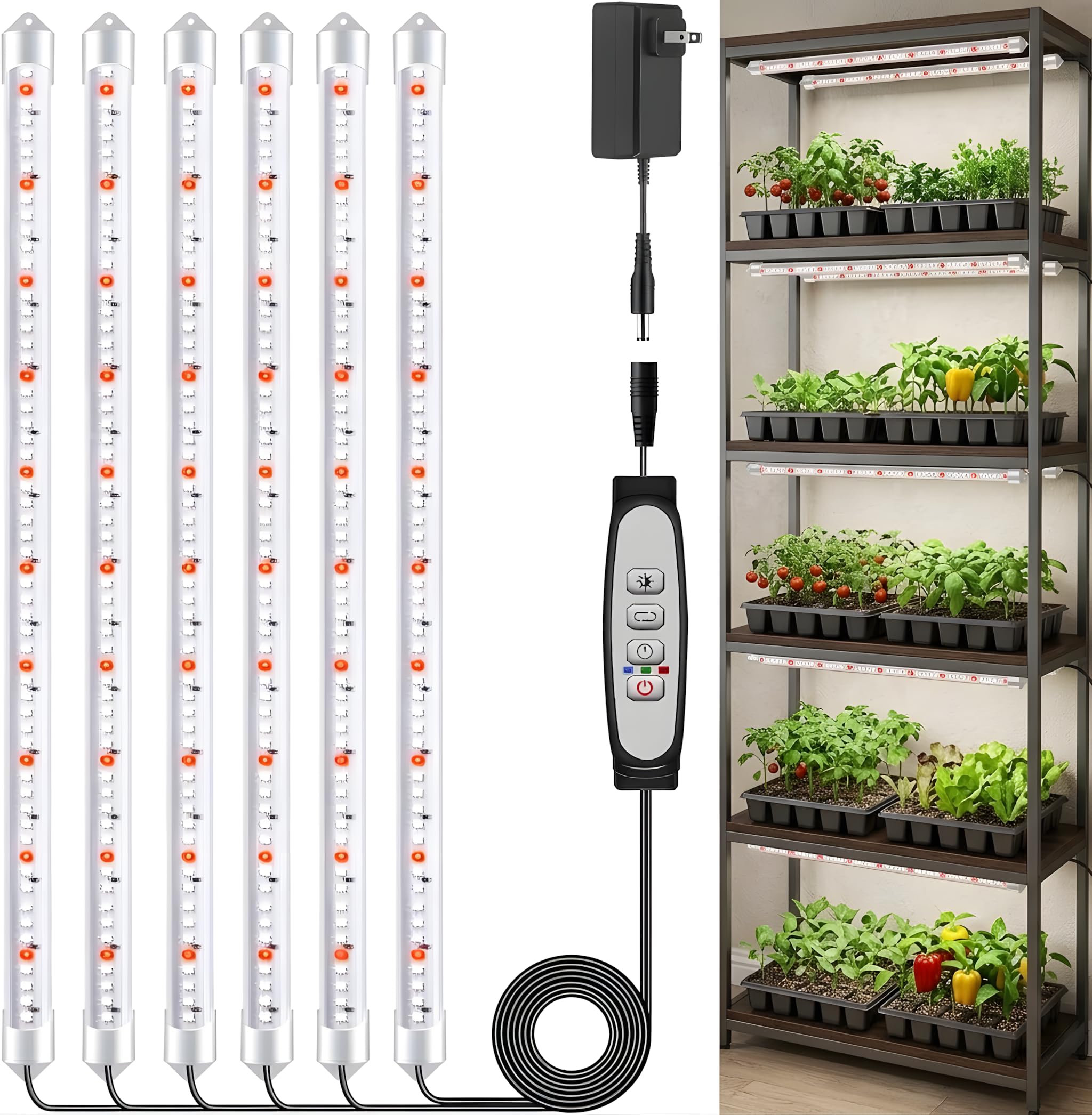
3. SDOVUERC 6-Bar Grow Light Strips
Six slim strips that turn any wire shelf into a full-spectrum sunbed.
When you have multiple aloe plants on a shelf, a single spotlight leaves the edge plants in the dark. These SDOVUERC strips solve that with six individual bars that you can zip-tie or tape to any shelf, spreading the 360 LEDs across your whole plant collection. At 16 inches each, they fit standard wire shelving perfectly, and the total output of 3,600 lumens is enough to sustain succulents even in a room with no natural light. The spectrum includes warm white, cool white, and 660nm red LEDs, covering the 380nm to 800nm range that aloe needs.
The timer options are 6, 12, or 18 hours, and the memory function means the light will turn on and off at the same time every day without you touching it again. Owners highlight the brightness and the cool-running design — no risk of overheating your plants. One buyer described them as “surprisingly bright despite small size,” perfect for dark corners on orchid shelves or your aloe propagation station.
What makes it stand out: The three installation methods (double-sided tape, zip ties, or screws) make it adaptable to nearly any surface. The 95-inch power cord is generous for reaching distant outlets.
Grab these if: you have a multi-shelf plant rack or want to light a row of aloe pots evenly.
Skip if: you only have a single plant — the six strips are overkill for one pot.
4. Yiyehu Tripod Stand Grow Light
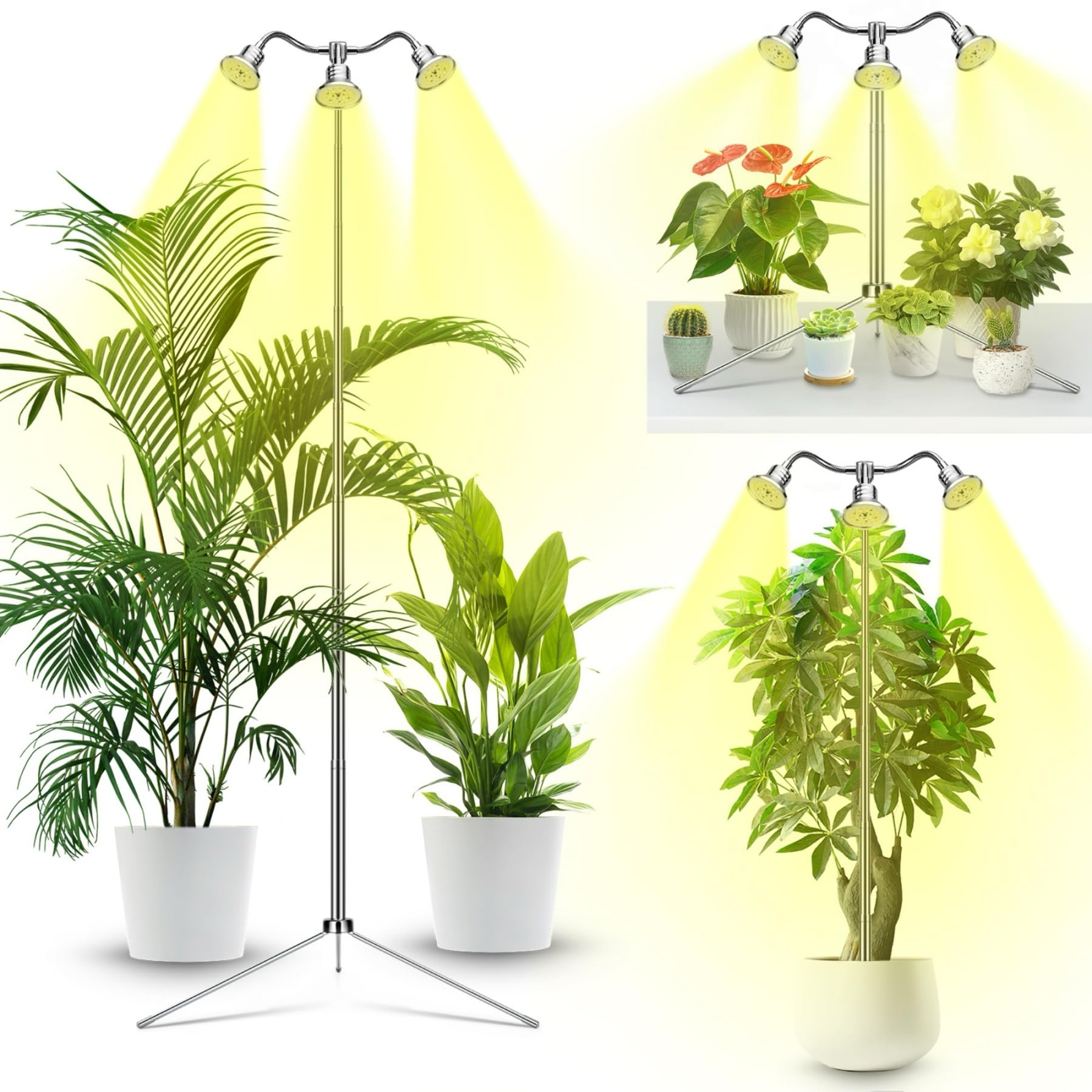
A tripod light with three heads that bend to surround your aloe from every side.
This Yiyehu light uses a detachable tripod base that you can either insert directly into a pot using a pointed nut or set up on the floor or desktop. The three light heads are each individually adjustable, so you can angle one directly above your aloe and point the other two at the sides for even coverage. The height extends from a compact 15 inches all the way to 62 inches, making it as useful for a tiny aloe pup as for a mature plant that has nearly hit the ceiling. The spectrum covers 380nm to 800nm, mimicking natural sunlight to drive photosynthesis.
With four brightness levels and timer options of 8, 12, or 16 hours, you have solid control over your aloe’s light diet. Owners appreciate that each head can be switched on or off independently, so you are not blasting a small plant with all three lights at once. The aluminum alloy construction feels premium in hand, and the tripod base, while a bit tippy at full extension, is stable enough for most desk and floor setups. Buyers rave about the sturdiness and ease of assembly, calling it “super easy to put together.”
Head-to-head advantage: Unlike the FECiDA floor lamp (single light head), this one gives you three independent light sources. For a large aloe, that means fewer shadows.
Pick this for: an aloe collection spread across a desk or floor area — the three heads let you light multiple pots at once.
Be aware: the tripod base is lightweight, and the light can lean when fully extended, so it is best on a stable surface away from traffic.
5. Wiaxulay Clip-on Halo Grow Light
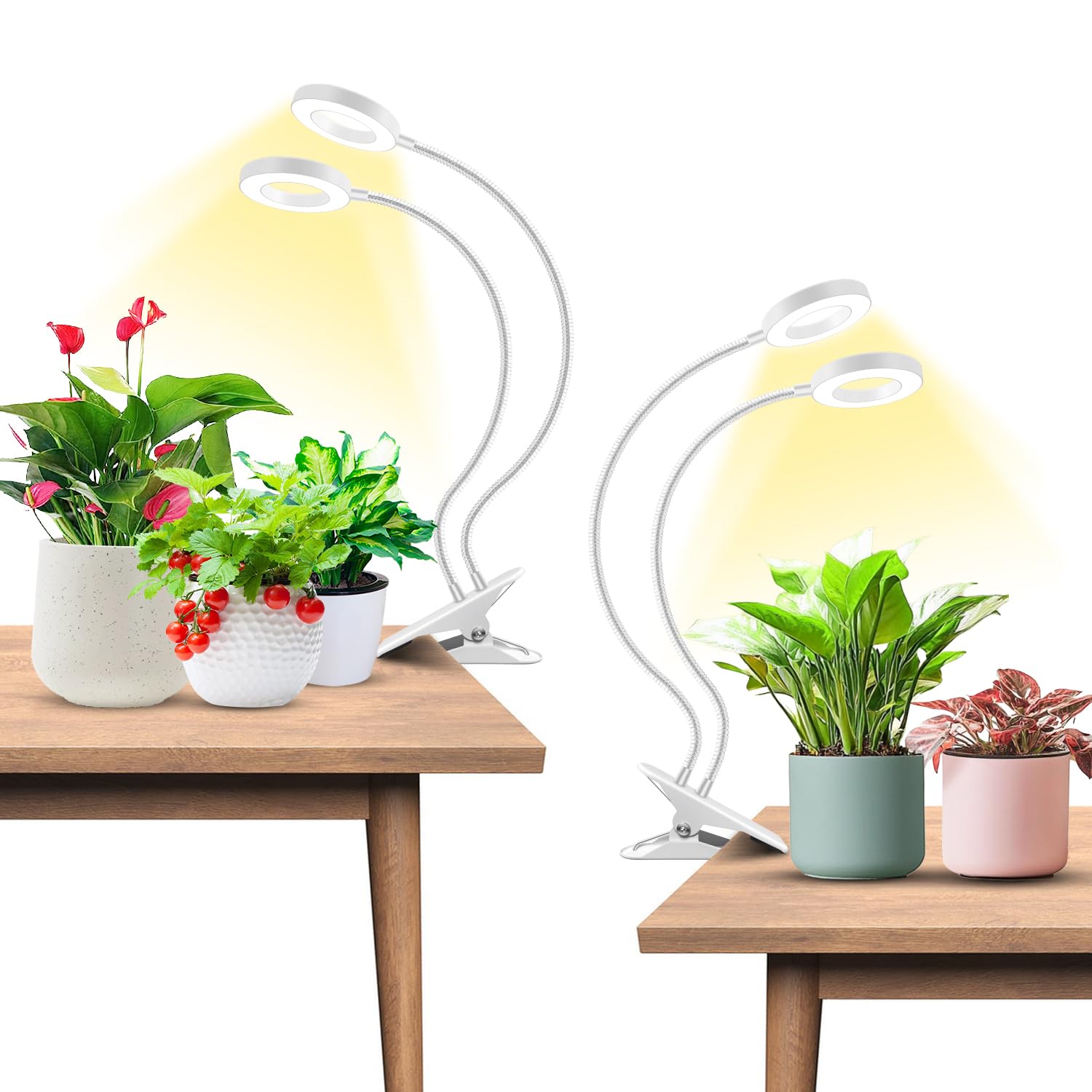
A white halo clip that disappears into your decor while feeding your aloe.
Most grow lights are black plastic, but this Wiaxulay model comes in a sleek white finish that blends into light-colored walls and shelves. The ring itself is only 3.5 inches in diameter, so it does not dominate your desk, but it packs 192 LEDs into that small frame. The full spectrum combines 6000K cool white with 660nm red light, which is exactly the formula aloe responds to. The 360-degree gooseneck lets you position the ring directly over the center of your plant, ensuring the leaves all receive equal intensity.
You get three spectrum modes (white, warm white, red, or mixed) and five brightness settings, plus a timer with 6, 12, or 16-hour cycles. Owners love how easy it is to set up — the anti-slip clamp attaches firmly to shelves or desks without wobbling. One buyer summed it up: “very nice against light colored walls. Timer function works well and plants are happy.” The compact size and modern look make it one of the least intrusive options for a home office or bedroom.
Why it beats the competition: At 6.4 ounces, it is one of the lightest clip-ons here, yet the 192 LEDs deliver strong output for a single small aloe. The white finish is a rare aesthetic bonus.
Choose this if: you care about how the light looks in your room and need something discreet for a small aloe on a desk.
It is not for: a tall or multi-stemmed aloe that needs light from above — the clip mount works best for plants at or below eye level.
6. wolezek 2-Head Clip Grow Light
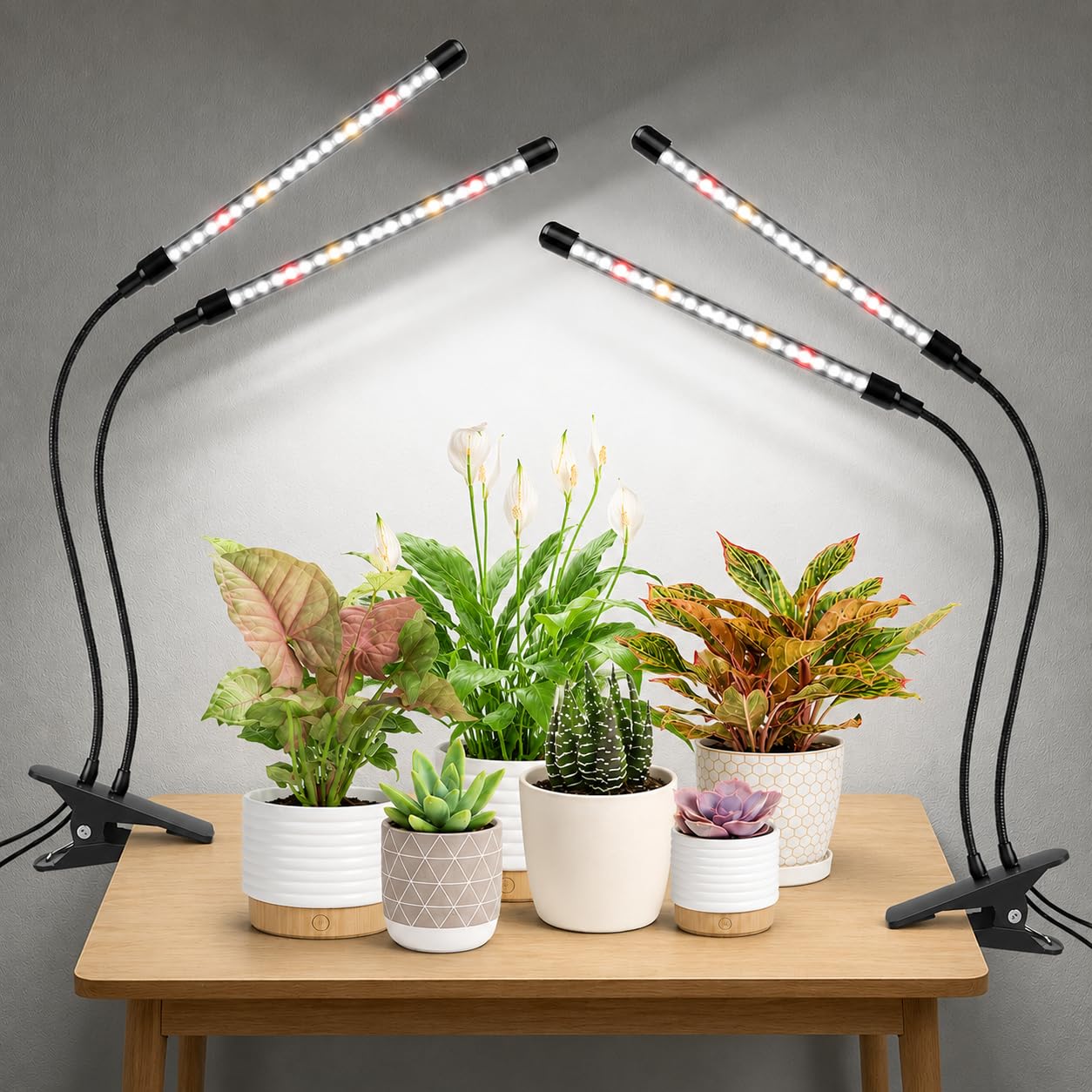
Two lights for the price of one, with a timer that won’t test your patience.
If you are new to grow lights or just need a cheap way to keep a couple of aloes happy, this wolezek two-pack delivers surprising depth for the price. Each light has two heads on a gooseneck, giving you four adjustable points of light total. The LEDs are a mix of 660nm red and 6000K cool white, providing a true full-spectrum effect. The clip is non-slip and the neck rotates 360 degrees, so you can point each head exactly where it needs to go. The 2-pack means you get two complete units — one for your aloe and one for a friend or a second plant.
The timer is simple: 6, 12, or 16-hour cycles with auto on/off memory. The five dimming levels let you start a newly purchased aloe on a lower setting to avoid shock. Owners confirm that “great for vegetable seedlings; clips securely; adjustable light; timer works perfectly.” The 98-inch USB cable is extra long, giving you plenty of slack to reach a power strip. At nearly 1,000 ratings and 4.6 stars, it is the most-reviewed budget option here and a proven performer.
What stands out
- Two complete lights for one low price — unbeatable for the cost-conscious shopper.
- Adjustable gooseneck holds position well, unlike some flimsy budget clips.
What to keep in mind
- USB-powered, so you need a power adapter (not included in some cases).
- Light output is lower than the FECiDA floor lamp — better for small aloe pups than large specimens.
Buy this for: the best bang-per-buck for lighting two small aloes on a shelf or desk.
Pass if: you need higher intensity for a large, established aloe — this works best for young or small plants.
7. SANSI 10W Clip-on Grow Light

The clip-on that packs ceramic-core technology for dense, even light.
SANSI is known in the grow-light community for its ceramic technology, which converts power into light more efficiently than standard LEDs. This 10-watt model delivers a PPFD of 169.7 μmol/s/㎡ at just six inches, which is a serious amount of usable light for a single aloe pot. The clip attaches to the rim of the pot itself, so the light stays centered directly above your plant without taking up any desk space. The gooseneck is flexible but firm enough to hold position, and the 4-level dimmer goes from 25% to 100%.
The timer runs 3, 6, or 12-hour cycles. That shorter 3-hour option can be useful for giving an aloe a quick top-up on a cloudy day without running the light all afternoon. Brightness is the most frequently praised aspect (120 counts), with owners calling it “simple grow light that actually works” and noting that their plants show new growth quickly. The 2-year warranty backs up the quality claim, and the ETL listing means it has passed safety testing.
Key advantage over the wolezek: the SANSI’s ceramic tech provides more uniform light distribution — your aloe gets even coverage across its entire leaf surface, reducing the chance of leggy growth on one side.
Ideal for: a serious plant owner who wants the highest possible light output from a compact clip-on fixture.
Consider the downsides: some owners find the gooseneck struggles to hold the light head in certain angles, and the cord length is adequate but not generous.
8. SANSI 5W 2-Pack Clip-on Light

Low-voltage power with a neutral 4000K light that is easy on the eyes.
Not everyone wants a bright purple or stark white grow light in their living space. This SANSI twin-pack uses 4000K natural white LEDs that look more like regular ambient light, which makes them far less intrusive in a kitchen or home office. Each light draws only 5 watts and runs on USB power (5V), so you can plug them into a laptop, power bank, or a standard USB wall brick. At 35.78 μmol/s/㎡ at six inches, the intensity is modest, but it is enough to prevent a small aloe from stretching in a low-light corner. The kit comes in an “exquisite color box” — a nice touch if it is a gift.
The clip goes onto the pot rim, and the gooseneck lets you aim the light precisely at your aloe. You get the same 3/6/12-hour timer and 4-level dimmer from the bigger SANSI, just scaled down for a single plant. Buyers describe the build as lightweight and the clips as strong, though a few note the arms are short. One buyer summed up the pack’s appeal: “I love these grow lights and I have bought them several times as my indoor plants grow.” For a new aloe owner or someone just testing the waters, this is a safe bet.
Difference from the 10W SANSI: The 5W version uses 4000K (less blue) and has lower intensity — better for very small aloe pups or as supplemental light rather than a primary source.
Get this for: a small aloe on your work desk where you want the light to blend in with the room’s decor.
It is not for: an aloe that is already showing signs of light starvation — you need the 10W version or a stronger stand light for that.
9. SDOVUERC 4-Panel Grow Light Set
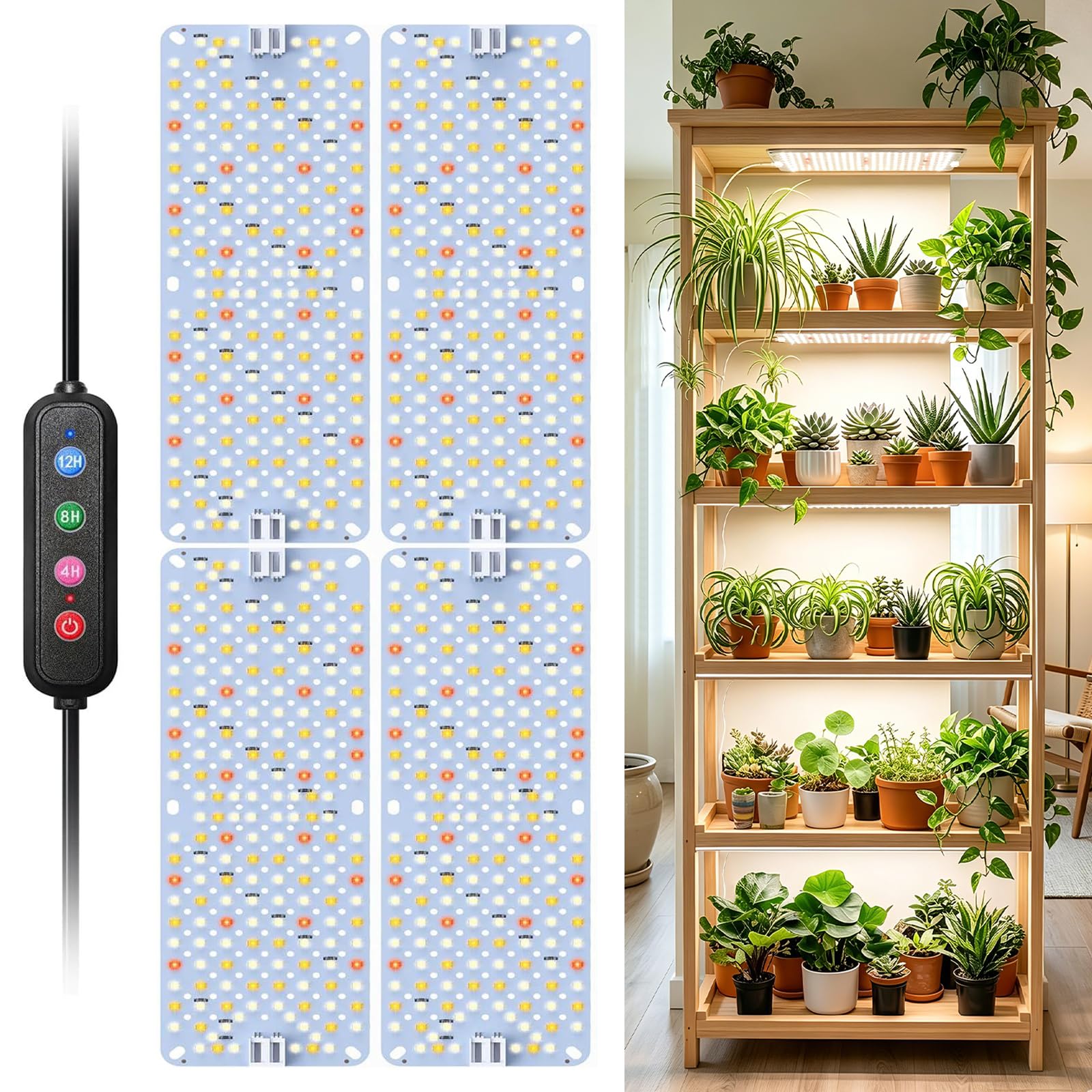
A modular four-panel system that grows with your indoor garden.
If you are building a dedicated grow shelf for multiple aloe plants, this four-panel kit from SDOVUERC is the most scalable option. Each panel measures 11.8 by 3.7 inches and houses 192 LEDs, for a total of 768 LEDs across all four panels. The combined output is 36 watts and 4,000 lumens, which is enough to sustain a whole row of succulents. The panels can be linked in a daisy chain — up to ten panels total — so you do not have to crowd outlets. The spectrum combines 3000K warm white, 5000K cool white, and 660nm deep red for a true sun-like profile. Buyers report that the “white glow mimics sunlight.”
Installation uses zip ties or 3M adhesive tape, and the panels are slim enough to fit under cabinets or shelves. The timer offers 4, 8, 12, 16, and 20-hour options — the 20-hour setting is unusually long and is really meant for seedlings, but it is there if you want it. One experienced user noted the 8W per panel runs cool enough for germination. The aluminum vented design helps with heat dissipation, so the panels stay safe to touch even after hours of use. At 1.3 pounds for the whole kit, it is light enough to mount on any surface.
How it compares to the SDOVUERC 6-Bar strips: The 4-panel kit gives higher total brightness (4,000 vs 3,600 lumens) and a broader spectrum range, but the 6-bar kit is better for spacing across individual shelves.
Choose this for: a serious indoor garden setup where you need uniform light across a multi-plant shelf.
Watch for: the timer maxes at 12 hours in some modes (not all timers support the full 20 hours listed), so double-check the manual if you need an 18-hour cycle.
Understanding the Specs
Full Spectrum vs. Basic White
Aloe responds best to light that includes both cool white (around 6000K) and red wavelengths (around 660nm). A full-spectrum light covers the 380-800nm range, which mimics natural sunlight and supports photosynthesis across all stages of growth. A basic warm-white lamp lacks the blue wavelengths that keep aloe leaves compact and prevent them from stretching.
PPFD and Lumens
Lumens measure total light output visible to the human eye. PPFD (photosynthetic photon flux density) measures how much of that light is actually usable by the plant for photosynthesis. For aloe, a PPFD of 100-200 μmol/s/㎡ at the leaf surface is a good target. A light rated at 2,000 lumens or more can typically hit that range from 6-12 inches away. Higher is better, but too close and you risk burning the leaves.
FAQ
How many hours per day should I run a grow light for my aloe?
Can aloe get too much light from a grow light?
Will any LED bulb work as a grow light for aloe?
Is a clip-on light or a floor lamp better for aloe?
What does “full spectrum” mean in a grow light?
How close should I place the grow light to my aloe?
Will a grow light prevent my aloe from getting leggy?
How long do LED grow lights last?
Can I daisy chain multiple grow lights together?
Are USB-powered grow lights strong enough for aloe?
Final Thoughts: The Verdict
Across the board, the best aloe grow light is the FECiDA floor lamp because it combines the highest brightness (2,000 lumens), the most versatile timer, and a height range that accommodates everything from a small pot to a tall specimen — all backed by outstanding owner reviews. If you prefer a compact single-plant solution, the LBW halo light offers clean adjustable light that sits right on top of your pot. And for anyone building a multi-shelf succulent collection, the SDOVUERC 6-bar strip kit delivers even coverage across your entire setup at a price that is tough to top.
How We Picked
We do not accept paid placement. Every pick is matched to a real buyer and a real use-case; we do not hands-on test units.
Sources & Methodology
Specifications: manufacturer listings and product documentation. Review insights: verified customer reviews, as of July 2026. Pricing: not shown on this page (it changes often); check the current price via the retailer link.
As an Amazon Associate, Gadgets Feed earns from qualifying purchases. This does not affect which products we feature.