
Teaching letter sounds is the single most critical step in early literacy, but the gap between recognizing a letter’s shape and understanding its phonetic value challenges every educator and parent. Generic flashcards fail because they lack the tactile, sorting, and multi-sensory feedback that young brains need to cement the connection between a squiggle on a page and a spoken sound.
I’m Min — the co-founder and writer behind Gadgets Feed. I’ve spent hundreds of hours cross-referencing educational research, analyzing material durability, and comparing the scope of included word cards and manipulatives to identify which tubs, cans, and tile sets actually deliver on their phonics promise.
After reviewing dozens of options across material quality, card count, and classroom-versus-home suitability, I’ve narrowed the field to the sets that truly support phonemic awareness. This guide is your definitive resource for finding the best alphabet sounds teaching tubs for your learning environment.
How To Choose The Best Alphabet Sounds Teaching Tubs
Not all alphabet sorting sets are created equal. The difference between a set that collects dust and one that becomes a daily literacy center favorite comes down to a few core design and content decisions. Here’s what to watch for before you click “add to cart.”
Picture Card Quality and Relevance
The images on the sorting cards must be instantly recognizable to a young child. A card showing an “onion” for the short ‘o’ sound or a “kaleidoscope” for the letter ‘k’ introduces vocabulary confusion that derails the phonics lesson. Look for sets that use concrete, high-frequency nouns — like “apple,” “bear,” and “cat” — on every card.
Durability and Storage Design
Consider how the pieces are stored. Cardboard soup cans are charming but can crush under daily use. Plastic tubs with secure lids handle stacking and storage far better over a school year. Magnetic tiles require a tray or board with raised edges to prevent scattering. The storage solution directly impacts how long the set survives in a classroom or active home.
Quick Comparison
On smaller screens, swipe sideways to see the full table.
| Model | Category | Best For | Key Spec | Amazon |
|---|---|---|---|---|
| Learning Resources Alphabet Soup Sorters (LER6801) | Premium | Comprehensive sound sorting with photo cards | 5 photo cards per can | Amazon |
| Edulok Phonics Magnetic Letter Tiles (6 Sets) | Premium | Small-group word building | 672 grapheme tiles total | Amazon |
| Learning Resources Soup Sorters (LER6791) | Premium | Imaginative play + phonics | 130 sorting cards total | Amazon |
| Constructive Playthings Alphabet Bean Bags | Mid-Range | Active, gross-motor letter games | 4.5-inch vinyl bean bags | Amazon |
| Fun Express Alphabet Sound Pocket Chart Cards | Mid-Range | Pocket chart alphabet introduction | 313 cardstock pieces | Amazon |
| JoyCat 265 Phonics Magnetic Letter Tiles | Mid-Range | Homeschool phonics with folders | 3 word-building folders | Amazon |
| hand2mind Rainbow Magnetic Letters | Budget | Color-coded letter recognition | 252 plastic letters | Amazon |
In‑Depth Reviews
1. Learning Resources Alphabet Soup Sorters (LER6801)

This set remains the gold standard for alphabet sound sorting because each of the 26 durable cardboard cans comes with 5 die-cut photo cards, 52 letter cards (uppercase and lowercase), and an activity guide. The cans measure 4¼ inches tall — large enough to hold cards without jamming — and the plastic lids are easy for small fingers to remove. The photo cards feature real images of concrete objects like “apple” and “bear,” which reinforces the initial sound without vocabulary confusion.
Teachers report that children as young as 3 stay engaged with these cans for extended periods, and the sorting activity naturally builds fine motor skills alongside phonemic awareness. The variety of cards per letter means a child can practice the same sound multiple times with different images, strengthening the neural connection between the letter and its phonetic value. Long vowel sounds are also represented, making this a set that grows with the learner through early reading stages.
Storage is straightforward — each can fits its cards snugly, and the entire set can be arranged alphabetically on a shelf. The cardboard construction holds up well to normal use, though it is not waterproof. The only minor design note is that some images, like “ape” for the Aa can, may require a vocabulary check before use with very young children. Overall, this is the most complete and pedagogically sound alphabet sorting system available.
Why it’s great
- Five photo cards per letter provide deep sound repetition and varied vocabulary exposure
- Realistic, recognizable images support initial sound isolation without confusing abstract concepts
- Durable cardboard cans with secure plastic lids are sized perfectly for small hands
Good to know
- Cardboard construction is not spill-proof or waterproof
- A few images (ape, gift) may require adult clarification for very young learners
2. Edulok Phonics Magnetic Letter Tiles (6 Sets)

This is the ultimate classroom small-group solution, packing 672 magnetic grapheme tiles across 6 individual sets. Each set includes 83 tiles and 29 blank tiles for custom sounds or sight words, plus a magnetic dry-erase tray with raised edges that keep the letters from sliding off. The trays are 2″ x 3″ — compact enough for a desk but large enough for building CVC words and simple digraphs.
What sets this apart is the inclusion of double consonants, digraphs (sh, ch, th), and heart word tiles that align directly with the Science of Reading and UFLI lesson structures. Users note that the color-coded system — consonants in one color, vowels in another — helps kids visually segment words during blending and segmenting practice. The 30 double-sided dry-erase activity mats provide structured word-building prompts that guide independent practice.
Storage is a strong point: all 6 trays and tile sets nest into a single box, making distribution and cleanup fast. The magnets are strong enough to hold the tiles in place during active use. One caveat: there is only one of each consonant tile per set, so you may need to supplement with the star tiles for longer words. For a classroom running 6 literacy centers simultaneously, this is the most efficient and comprehensive option.
Why it’s great
- Includes digraph, double consonant, and heart word tiles that align with Science of Reading frameworks
- Magnetic trays with raised edges prevent tile scatter and double as dry-erase boards
- Six complete sets allow simultaneous small-group work without sharing delays
Good to know
- Only one of each consonant tile per set limits longer word-building without using star tiles
- No instruction booklet included — teachers must design their own word-building prompts
3. Learning Resources Soup Sorters (LER6791)
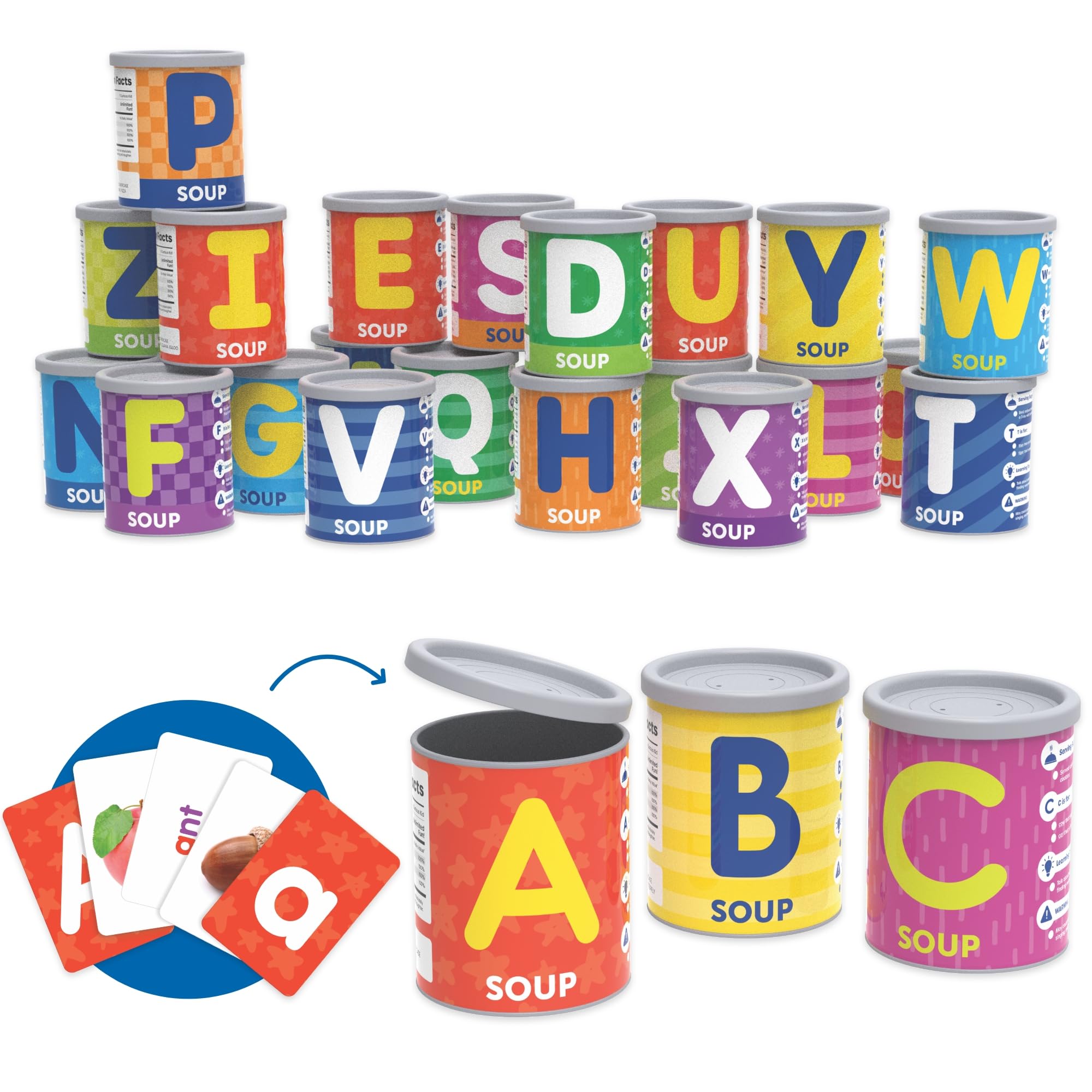
This updated version of the classic soup sorter streamlines the experience with 5 cards per can (26 uppercase, 26 lowercase, and 78 vocabulary pictures), making a total of 130 sorting cards. The cans feature silly labels that spark imaginative play — children naturally turn sound sorting into a pretend cooking activity, which dramatically increases engagement time. Each can measures roughly 3 inches in diameter and is made from lightweight cardboard with easy-lift plastic lids.
The vocabulary pictures include three distinct images per letter, offering enough variety to avoid memorization fatigue. For example, the Bb can includes images like “book,” “ball,” and “bear” — all concrete nouns that a preschooler can identify independently. The set also supports uppercase-to-lowercase matching by including separate letter cards for both cases, which helps children transition from letter recognition to letter formation readiness.
Storage is efficient — all cards fit back inside their respective cans, and the 26 cans pack into the original box for shelf storage. The lids are easier for small fingers to open than the LER6801 version, though they are not child-proof tight. One user note: the cardboard is durable but not indestructible, and the cans do not stack securely for tower-building play. This set excels as a phonics center that doubles as a dramatic play prop.
Why it’s great
- Imaginative soup-can theme boosts engagement by turning phonics into pretend cooking
- Three distinct vocabulary pictures per letter provide solid repetition without boredom
- Includes both uppercase and lowercase letter cards for comprehensive case recognition
Good to know
- Cardboard construction may dent or crush under heavy classroom use
- Lids are not child-proof — cards can spill if the set is knocked over
4. Constructive Playthings Alphabet Bean Bag Set
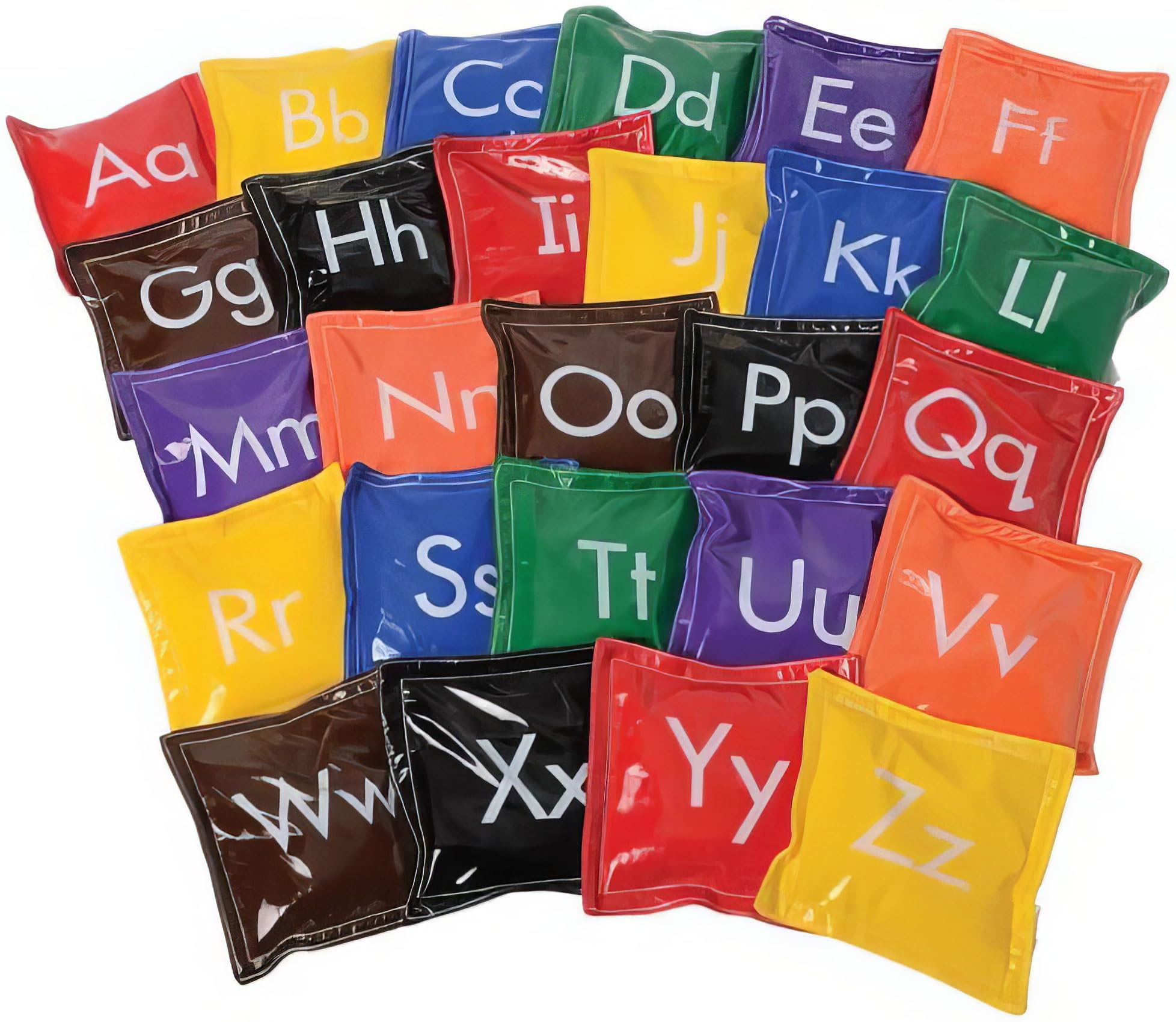
When your phonics lesson needs to get kids moving, this 26-piece bean bag set delivers. Each 4.5-inch square bag is made from sturdy vinyl and filled with non-toxic pellets, featuring both uppercase and lowercase letters printed on each side. The size is ideal for small hands to grip, toss, and catch during games like “toss and name” or “letter scavenger hunt.”
The dual-letter design is a key feature — each bean bag shows both the capital and lowercase version of the letter, so children build familiarity with both forms simultaneously. This is particularly valuable for kindergarteners and first graders who are learning to read books that mix cases. The vinyl surface is wipe-clean, which makes the set suitable for outdoor use and easy to sanitize between groups.
Teachers report these bean bags hold up to daily tossing and throwing without leaking pellets or splitting seams. The bright colors help with visual discrimination, and the tactile nature of the bags supports kinesthetic learners who struggle with seated activities. The only limitation is the lack of printed words or images on the bags — this is strictly a letter-identification tool, not a sound-sorting set with picture support.
Why it’s great
- Wipe-clean vinyl surface allows outdoor and high-sanitation classroom use
- Each bean bag displays both uppercase and lowercase for dual-case recognition
- Perfectly weighted for small hands to grip, toss, and catch during active phonics games
Good to know
- No picture cards or word support — purely a letter-identification and gross-motor tool
- Pellets may migrate within the bag over time, though seams hold well
5. Fun Express Alphabet Sound Pocket Chart Cards
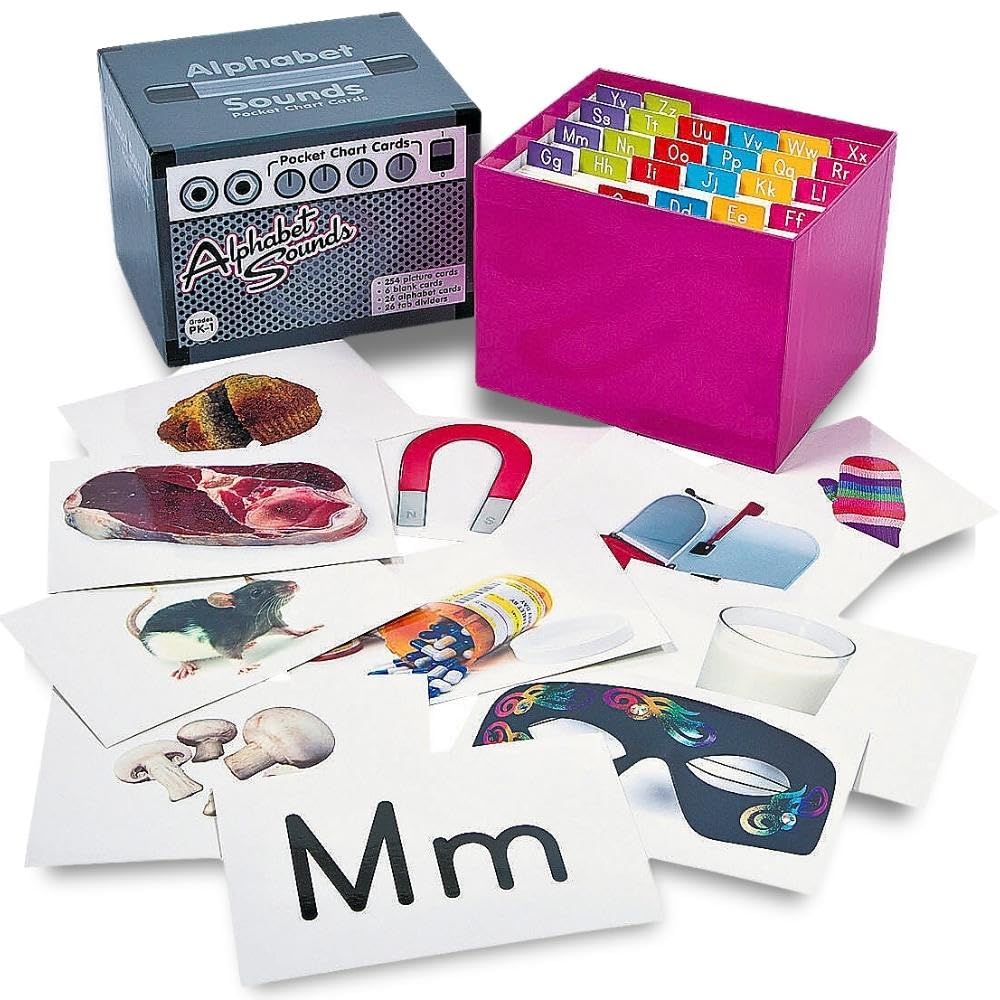
This 313-piece cardstock set is designed specifically for pocket chart use, making it a versatile addition to any preschool or kindergarten literacy center. Each card measures 6″ x 4″ and features a real photograph on the front — such as “eggs” for Ee or “jeans” for Jj — with the letter (uppercase and lowercase) and the item name printed on the back. This front/back design allows for multiple teaching formats: show the picture and ask for the initial sound, or show the letter and ask for a matching word.
The sheer number of cards — 312 plus 6 blanks — means you can run multiple activities simultaneously: sorting by first sound, alphabetizing, playing “what’s missing,” or matching uppercase to lowercase. The cardstock is thick enough to hold up to regular pocket chart insertion and removal, though laminating would extend its lifespan considerably. The included dividers help keep the set organized, though the cards arrive unsorted.
The main caveat is the picture selection. Educators note that several images — “onion,” “oil,” “orca,” “kaleidoscope,” “UFO” — do not represent the pure initial sound typically taught in preschool. The short ‘o’ in “onion” sounds like “uh,” not the /o/ in “octopus.” This means the set requires pre-screening before use. Despite this, the majority of cards are excellent, and the value for the price per card is outstanding for budget-conscious classrooms.
Why it’s great
- 313 pieces offer a massive variety of images and letters for diverse sorting activities
- Front/back design with photos on one side and letters plus word labels on the reverse
- Works with any standard pocket chart for flexible classroom setup
Good to know
- Several picture selections (onion, orca, UFO) do not teach pure initial letter sounds
- Cards arrive unsorted — expect a 1-2 hour organization session before first use
6. JoyCat 265 Phonics Magnetic Letter Tiles
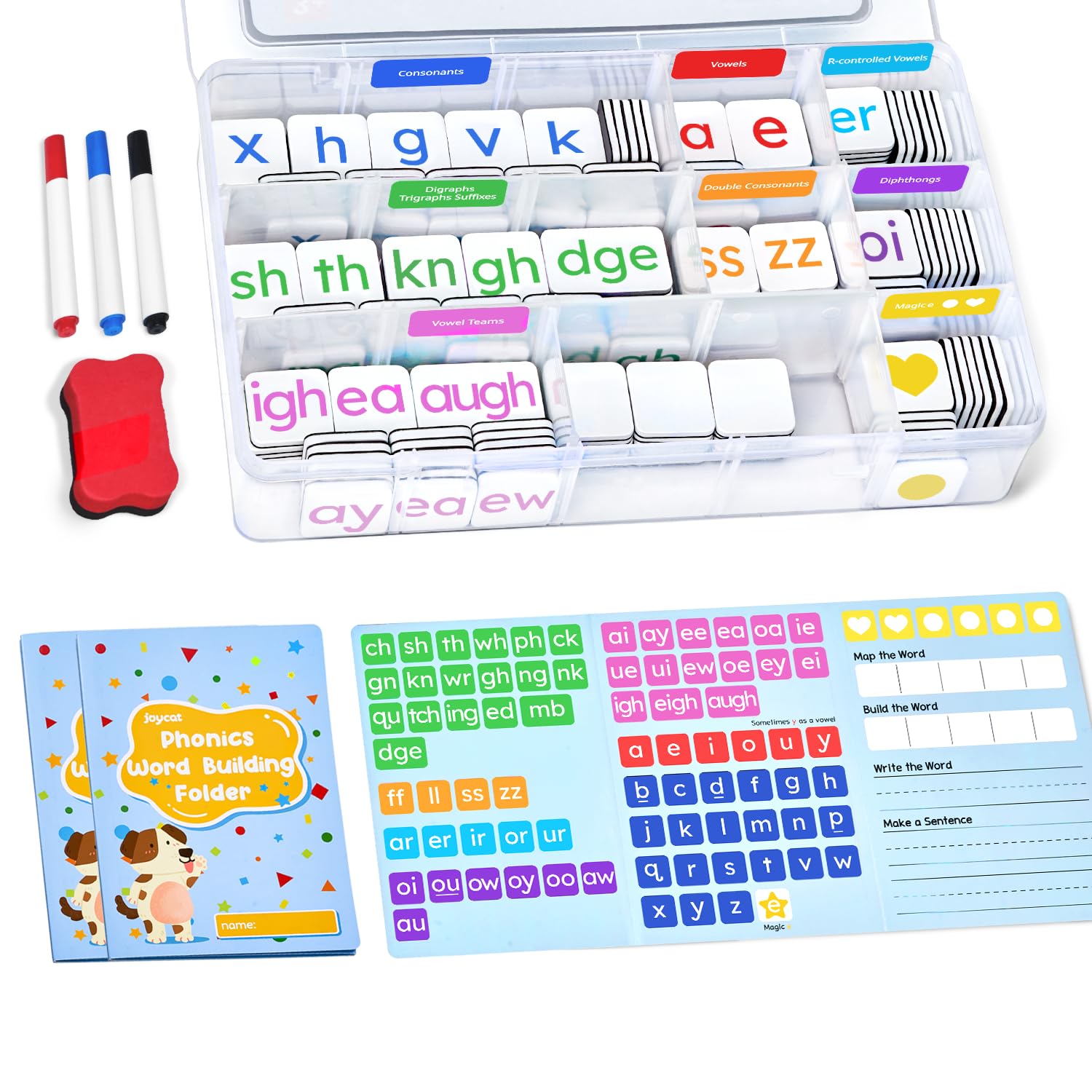
This set is built for homeschoolers and small co-ops who need portability without sacrificing organization. It includes 249 pre-printed grapheme tiles and 16 blank tiles, all made from soft EVA foam with magnetic backing, plus 3 tri-fold word-building folders. Each folder has a magnetic dry-erase surface on one side and a plain dry-erase side for writing, giving three children simultaneous access to the materials.
The color-coding system is intuitive: vowels are one color, consonants another, and special tiles (digraphs, blanks) a third. This visual segmentation helps children see the structure of words during blending and segmenting practice. The tiles are quiet and soft, which reduces noise in a classroom setting. The 3.7-pound total weight and compact 10.83″ x 6.81″ x 2.2″ case make it easy to carry between home and school.
Users report the magnets are strong enough to hold tiles during folder movement, and the EVA material does not peel or flake like some paper-backed magnets. The blank tiles are a thoughtful addition, allowing teachers to customize sounds or add numbers for multi-subject use. The main limitation is the small work surface of each folder — building longer words or sentences requires careful tile placement, and only three children can work at once.
Why it’s great
- EVA tiles with strong magnets stay put during use and are quiet on the work surface
- Three tri-fold folders allow three children to work simultaneously with minimal setup
- 16 blank tiles enable custom sound creation for differentiated instruction
Good to know
- Folders have limited surface area for building longer words or sentences
- Only three workstations limit group size in larger classrooms
7. hand2mind Rainbow Lowercase Magnetic Letters

If your primary need is a massive volume of lowercase magnetic letters for word-building centers, this is your most economical option. The set contains 252 plastic lowercase letters divided into 6 single-color sets of 42 letters each, with high-frequency letters duplicated to support common word-building patterns. Each color set comes in a matching drawstring bag, making distribution and cleanup straightforward.
The plastic letters are thick and sturdy — they won’t bend or tear like foam alternatives — and the magnetic backing is strong enough to stick to standard whiteboards and magnetic trays. Teachers love the color-coding because it prevents letter mix-ups between students working in the same area. Each set of 42 letters includes enough vowels and common consonants to build most CVC words without digging into another color set.
The key limitation is the lack of picture cards, sorting trays, or any sound-support material. This is purely a letter-manipulation set — you must supply your own word-building prompts and phonemic awareness activities. The lowercase-only format is excellent for early readers but does not support uppercase recognition. For classrooms that already have a phonics curriculum and just need robust magnetic letters, this delivers unbeatable value.
Why it’s great
- 252 durable plastic letters with strong magnets for whiteboard or magnetic tray use
- Color-coded sets with drawstring bags prevent student-to-student letter mixing
- High-frequency letters duplicated in each set for smoother word-building practice
Good to know
- No picture cards, trays, or phonics instruction materials included
- Lowercase only — does not support uppercase letter recognition or matching activities
FAQ
How many picture cards per letter do I need for effective phonics teaching?
Are plastic magnetic letters better than foam magnetic letters for teaching tubs?
Can I use alphabet soup cans for both uppercase and lowercase letter sorting?
Final Thoughts: The Verdict
For most users, the best alphabet sounds teaching tubs winner is the Learning Resources Alphabet Soup Sorters (LER6801) because it offers 5 photo cards per letter, a durable can storage system, and a comprehensive mix of uppercase, lowercase, and picture cards that supports both phonemic awareness and letter recognition. If you need a collaborative small-group phonics tool with Science of Reading alignment, grab the Edulok Phonics Magnetic Letter Tiles. And for active, gross-motor learning that gets kids out of their seats, nothing beats the Constructive Playthings Alphabet Bean Bag Set.