
The gap between a confident descent and a painful DNF often comes down to what’s wrapped around your feet. Alpine bike boots must simultaneously protect against crushing impacts and let you feel the shifter through a toe box that’s thick enough to survive a rock strike. For anyone hitting technical singletrack or hard enduro, the choice is never between comfort and protection alone — it’s about finding the boot that balances stiffness for support with enough articulation to actually ride.
I’m Min — the co-founder and writer behind Gadgets Feed. I’ve spent countless hours analyzing stiffness ratings, sole compounds, closure systems, and real-world break-in data to separate the boots that truly protect from those that just look the part in this guide.
After digging through hundreds of verified rider reports on fit, durability, and crash performance, these are the models that earned a spot on my list of the best alpine bike boots for different riding styles and budgets.
How To Choose The Best Alpine Bike Boots
Alpine bike boots live in a world of trade-offs: a sole that lets you feel the brake pedal won’t protect your foot from a rock the same way a thick, stiff chassis will. The right pair depends on your terrain, riding frequency, and whether you prioritize walking comfort or max-impact protection.
Stiffness and Protection Levels
Stiffness isn’t a marketing gimmick — it’s the primary mechanism that prevents ankle hyperextension in a crash. Boots rated for motocross or hard enduro use a reinforced shank and thick thermoplastic shin plates that resist twisting. Entry-level boots use softer materials that break in faster but offer less torsional rigidity. Look for CE-certified models (Level 2 is the standard for off-road protection) and check whether the ankle hinge is articulated or purely flexible foam.
Closure Systems and Fit Adjustability
Buckles matter more than many riders realize. Plastic buckles on budget boots snap under repeated stress, while aluminum or composite buckles from Fox and Gaerne last seasons. The closure range also determines how well the boot accommodates different calf sizes — a common pain point among riders who find that a great boot simply won’t close around their shin guard.
Sole Construction and Terrain Matching
Enduro soles with molded tread patterns grip loose soil and wet rocks better than flat motocross soles. But aggressive tread wears faster on pavement and can be annoying under the shift lever. If you ride mixed terrain — gravel roads connecting single-track trails — prioritize a sole that balances grip with a thin enough toe box for precise shifting.
Quick Comparison
On smaller screens, swipe sideways to see the full table.
| Model | Category | Best For | Key Spec | Amazon |
|---|---|---|---|---|
| Alpinestars Tech 7 Enduro | Premium | Hard enduro | CE level 2 certified | Amazon |
| Gaerne Fastback (White) | Premium | Max protection | 4.0 lb / pair | Amazon |
| Gaerne Fastback Mens Boot | Premium | Wide feet | 4E wide friendly | Amazon |
| Fox Racing Comp X Boot | Premium | Trail/enduro | Patented 4-buckle system | Amazon |
| Fox Racing Comp Motocross | Mid-Range | All-around off-road | 8.4 lb / pair | Amazon |
| O’Neal Sierra PRO WP | Mid-Range | ADV/moto camping | Waterproof mid-calf | Amazon |
| Alpinestars Nc Motorcycle Shoes | Mid-Range | Commuting + twisties | CE-certified low-top | Amazon |
| Fly Racing Maverik LT Enduro | Budget | Entry-level off-road | CE level 2 rated | Amazon |
| O’Neal New Logo Rider Boot | Budget | Beginner MX/ADV | Adjustable quick-lock buckles | Amazon |
In‑Depth Reviews
1. Alpinestars Tech 7 Enduro Boots

The Tech 7 Enduro is the benchmark for hard enduro protection. Riders report surviving 25 mph low-sides and leg-wedging crashes with zero foot or ankle damage, which tells you the thermoplastic shin plate and reinforced heel cup are doing their job. At just over 2.2 kg per boot, it’s not the lightest option, but the weight is distributed well, and the articulated ankle hinge allows surprisingly natural movement for shifting.
Fit runs slightly generous — a size 11 works for a true 10.5 foot, and the toe box accommodates wide-front feet better than Forma or Sidi models. The waterproofing holds up through shallow creek crossings, though some riders noted that tucking pants inside the boot compromises the seal. Break-in is minimal compared to stiffer race boots; most users report comfort after two rides.
The main trade-off is the bulky shin guard, which can feel intrusive under slim riding pants, and the top buckle alignment varies between units. For aggressive trail riders who prioritize tested crash protection over walking comfort, this is the boot to beat.
Why it’s great
- Proven impact protection in real crashes
- Articulated ankle for natural shifting
- Minimal break-in time
Good to know
- Bulky shin guard under slim pants
- Top buckle alignment inconsistency
- Waterproof seal compromised with pants tucked in
2. Gaerne Fastback Boots (White)

Gaerne’s Fastback delivers the premium construction that Italian boot design is known for: full-grain leather upper, foam insole, and a flat heel that works well on peg feel. Riders consistently note the ankle hinge allows excellent forward flex for shifting right out of the box — no painful break-in required. The four-buckle closure system uses replaceable components, a detail that matters when you’re crashing in rocky terrain season after season.
Sizing is the critical factor here. The Fastback runs large — a tagged US 9 actually fits closer to a 9.5, and multiple riders recommend sizing down by one full step. For width, the boot runs slightly generous, so narrow-footed riders may need a thicker insole to lock the heel. The flat sole lacks aggressive tread, which limits grip on loose climbs but makes walking on hardpack comfortable.
Protection is top-tier, though some riders find the boot uncomfortable for all-day standing due to minimal arch support. This is a dedicated off-road boot for riders who want proven protection and are willing to dial in sizing carefully.
Why it’s great
- Articulated ankle hinge shifts immediately
- Replaceable buckle components
- Premium full-grain leather durability
Good to know
- Runs large — size down one step
- Flat sole lacks aggressive tread
- Minimal arch support for standing
3. Gaerne Fastback Mens Boot
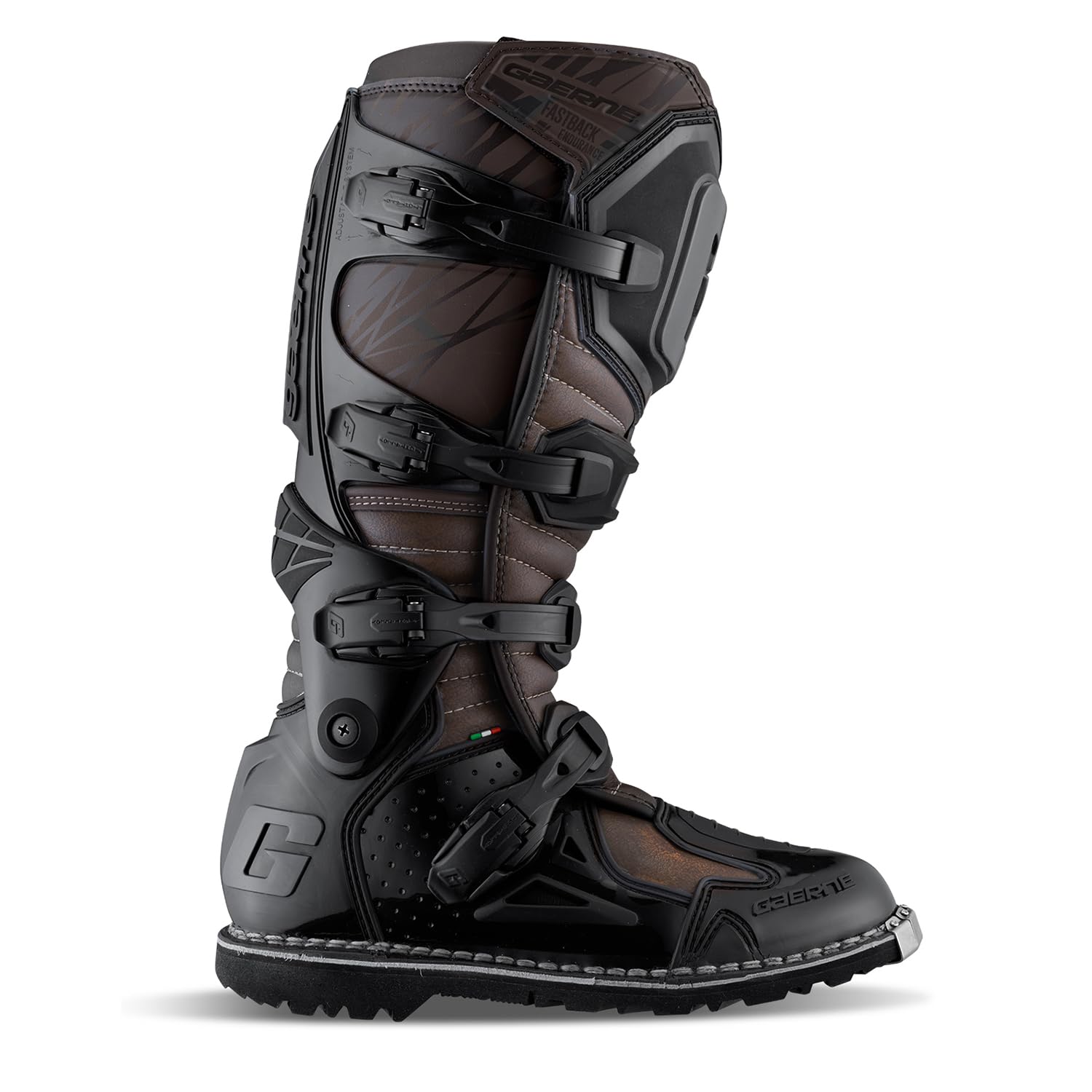
This updated Fastback variant is a rare find for riders with 4E wide feet who have struggled to squeeze into standard D-width motocross boots. The large toe box eliminates the pinky-toe pinch that plagues many premium boots, and the full-grain leather upper stretches slightly over time to match the foot shape. One rider reported a direct fall where the bike landed on their heel — the sole and shank absorbed the impact completely with zero injury.
The boot also addresses a common complaint in the off-road community: accommodating large calves. The calf opening is generous enough to fit riders who previously couldn’t close the top strap on other models, even with Leatt knee guards underneath. The adjustable locking snaps use a one-handed mechanism that’s faster than traditional buckles, which matters when you’re stripping gear between stages.
On the downside, the tread sole is adequate for walking but lacks the grip pattern of dedicated enduro outsoles. The boot also runs wide in the midfoot, so riders with narrow feet may find excessive lateral movement without thick socks. For wide-footed enduro riders, this is the most accommodating high-protection boot available.
Why it’s great
- Large toe box fits 4E wide feet
- Generous calf opening with knee guards
- One-handed quick-lock buckle system
Good to know
- Wide midfoot — narrow feet may shift
- Tread sole average for walking grip
- Runs large; double-check sizing
4. Fox Racing COMP X Boot

The COMP X represents Fox’s commitment to enduro-specific design with its patented four-buckle system that provides a secure, rattle-free closure across the calf. The Positac rubber outsole compound is engineered for maximum durability on rocky terrain, and riders confirm it holds up well through hard enduro sessions without chunking. The boot weighs 8.9 pounds for the pair, which is reasonable for a mid-to-high protection profile with a full synthetic leather upper.
On the trail, the boot offers good torsional support without feeling like a cast. The articulated rear ankle allows enough flexion for standing climbs, and the toe box is slim enough that most riders don’t need to raise their shift lever. Breathable air-mesh lining helps manage heat during summer rides, though it does compromise waterproofing — this is not a boot for wet conditions.
The main concern raised by enduro riders is the high toe box, which can interfere with brake feel and require shift lever adjustment. Additionally, the boot is not waterproof; one rider reported water ingress in 3-inch puddles. For dry, technical terrain where you need dependable closure and outsole grip, the COMP X delivers.
Why it’s great
- Patented 4-buckle system for secure fit
- Positac rubber sole resists chunking
- Articulated ankle for climbing stance
Good to know
- High toe box requires shift lever adjustment
- Not waterproof — liner fills in puddles
- Less brake pedal feedback
5. Fox Racing Comp Motocross Dirt Bike Boots

The standard Comp boot is a straightforward no-frills option for riders who want Fox quality without stepping up to the COMP X price point. It weighs 8.4 pounds for the pair — slightly lighter than the COMP X — and fits true to size, with multiple riders confirming that a size 11 accommodates thick socks comfortably. The synthetic leather upper breaks in progressively over about three rides, and the buckle system, while not patented, holds adjustment well without loosening on rough trails.
Protection is adequate for trail riding and light motocross, with a reinforced toe cap and shin plate that handle low-speed tip-overs. The boot is noticeably softer in the ankle than the COMP X, which makes it easier to shift and walk right away but offers less torsional rigidity for high-speed crashes. The sole provides decent grip on flat pedals but lacks the aggressive lug pattern needed for loose climbs.
The biggest limitation is the stiffness out of the box — several riders noted the boot felt rigid initially, though it loosens up quickly with wear. Overall, this is a well-fitting mid-range boot for riders who value immediate comfort and Fox’s reputation over max-impact protection.
Why it’s great
- True-to-size fit with thick sock room
- Lighter weight than COMP X
- Quick break-in period
Good to know
- Softer ankle — less torsional protection
- Sole lacks aggressive enduro tread
- Stiff initially before break-in
6. O’Neal Sierra PRO WP Boot

The Sierra PRO WP fills the gap between hard-core motocross boots and casual riding shoes. It’s a waterproof mid-calf boot with a hiking-boot-like sole that offers genuine walking comfort — a rare feature in protective off-road footwear. Riders with flat, wide feet praised the fit, noting the toe box accommodates their foot shape without pinching, and the thick sole provides enough height for tall adventure bikes. The boot uses a quick-lock buckle system that adjusts easily with gloves on.
Protection is adequate for adventure riding and light off-road use. The boot has a reinforced toe cap and shin panel, but lacks the hard ankle armor found in dedicated motocross boots. O’Neal prioritizes flexibility over extreme stiffness, making the Sierra PRO WP a good choice for moto camping where you’ll be walking around camp. The waterproof membrane keeps feet dry through stream crossings and wet grass, though it’s warm in hot climates.
The main drawback is the calf fit — riders with smaller calves reported the upper cuff is too large and digs in painfully, even with thick socks. Also, the toe box’s bulk can cause mis-shifts until you adjust your foot position. For dual-sport and ADV riders who want one boot for the road and the trail, this is a versatile pick.
Why it’s great
- Waterproof membrane for wet conditions
- Hiking-style sole for walking comfort
- Good fit for flat, wide feet
Good to know
- Large calf opening — not for thin legs
- Bulkier toe box affects shifting precision
- Warm in hot weather
7. Alpinestars Nc Motorcycle Shoes

The Nc shoe blurs the line between a riding boot and a sneaker, offering CE-certified protection in a low-top package that you can wear off the bike without looking like a power ranger. It’s lightweight, ventilated, and features a grippy sole that doesn’t slip at stops — a detail that matters for urban commuting. Riders in hot climates praise the airflow, which keeps feet cool even in Texas summer heat, and the ankle cuff allows full flexion for walking.
Protection comes from reinforced toe and heel areas plus internal armor around the ankle, but it’s not a substitute for a full motocross boot. The fabric upper is not abrasion-resistant; one rider reported tearing after minor contact with a footpeg. The sole has a slight heel rise that feels unnatural for extended walking. Sizing runs small, especially for half sizes — riders recommend going up a full size if you’re between sizes.
For daily street riding and weekend twisty roads, the Nc provides the right balance of protection and usability. For any off-road use beyond smooth gravel, you’ll want a proper boot with ankle support and a stiffer chassis.
Why it’s great
- CE-certified protection in a low-top design
- Excellent airflow for hot climates
- Grippy sole for confident stops
Good to know
- Fabric upper tears easily
- Runs small — size up for half sizes
- Not suitable for off-road riding
8. Fly Racing Maverik LT Enduro Riding Boots

The Maverik LT punches above its weight class by offering CE Level 2 certification at an entry-level price point. This is rare — most budget boots cap out at CE Level 1, if they’re certified at all. The boot uses a molded enduro outsole that keeps weight down while providing solid grip on loose terrain, and the elastic gaiter seals the calf opening from debris. The adjustable quick-lock buckles use an open design that doesn’t clog with mud — a thoughtful detail for wet rides.
Sizing runs true to the boot’s chart, though multiple riders recommend sizing up if you plan to wear thick socks. The boot is stiff out of the box, requiring about 2-3 hours of break-in time over a couple of evenings to loosen the ankle and shin area. Once broken in, riders report good confidence in shifting and braking. The boot weighs 10 pounds for the pair, making it one of the heavier options in this range, but the protection and build quality justify the weight.
The biggest compromise is in sole feedback — the thick plastic and rubber construction dulls brake pedal and shift lever feel compared to more expensive boots. Also, the buckles can feel tight initially and may require silicone lubrication to operate smoothly. For the rider looking to step into proper protective gear without overspending, the Maverik LT is a compelling choice.
Why it’s great
- CE Level 2 certification at entry-level price
- Mud-resistant open buckle design
- Elastic gaiter keeps debris out
Good to know
- Stiff break-in period
- Dulled brake/shift feel
- 10 lb pair — on the heavier side
9. O’Neal New Logo Rider Boot Black

The O’Neal Rider boot is the classic entry-level choice for new off-road riders. It’s built like a tank in terms of durability — the side snaps are robust and easy to operate, and the synthetic leather upper resists tearing from minor crashes. The boot offers good ankle and foot protection for its price tier, with a solid shin plate and reinforced toe. Multiple riders with wide feet reported the boot fits comfortably without excessive pinching, which is unusual at this level.
The main trade-off is stiffness. The boot is extremely rigid out of the box, requiring several rides before the ankle loosens enough for confident shifting. Even after break-in, the toe box remains thick, requiring exaggerated foot movements to find the shift lever and brake pedal. This is not a boot for precise control — it’s a boot for protection. The buckles offer plenty of adjustment range, though some riders noted they feel slightly flimsy compared to premium models.
For new riders who need affordable protection while learning to ride off-road, the O’Neal Rider boot delivers exactly what it promises: a tough, protective shell at a low entry point. Experienced riders will outgrow the stiffness and lack of feel quickly, but for the first season of riding, it’s a solid and safe choice.
Why it’s great
- Excellent foot and ankle protection
- Comfortable fit for wide feet
- Durable side snaps and construction
Good to know
- Extremely stiff — long break-in required
- Thick toe box reduces shift feel
- Buckles feel budget-level
FAQ
How should alpine bike boots fit compared to regular shoes?
Can I use motocross boots for adventure touring?
How long does it take to break in new alpine bike boots?
Final Thoughts: The Verdict
For most riders, the best alpine bike boots overall is the Alpinestars Tech 7 Enduro because it proves its protection in real crashes while breaking in faster than stiffer race boots. If you need a boot that accommodates wide feet without sacrificing protection, grab the Gaerne Fastback Mens Boot. And for entry-level riders who want CE Level 2 certification without overspending, nothing beats the Fly Racing Maverik LT Enduro.