
Finding ski boots that actually fit your foot shape without crushing your instep or leaving your shins battered after two runs is the single biggest hurdle in alpine gear. The wrong pair turns a bluebird powder day into a misery of pressure points, cold toes, and early trips to the lodge. The right pair—matched to your flex preference, foot volume, and skill level—lets you ski longer, carve harder, and actually enjoy the climb back to the chair.
I’m Min — the co-founder and writer behind Gadgets Feed. This guide is the result of dozens of hours spent cross-referencing shell lasts, flex ratings, liner technologies, and real skier feedback across the mid-range and premium alpine boot market to separate genuine fit innovations from marketing fluff.
Whether you are a beginner looking for a forgiving flex or an advanced skier demanding precise power transmission, these are the top contenders for the best alpine ski boots you can buy right now across comfort, value, and performance.
How To Choose The Best Alpine Ski Boots
Choosing alpine ski boots is less about brand loyalty and more about matching three variables: your foot’s volume and width, your skiing ability and preferred flex, and the boot’s liner and shell adjustability. A boot that fits perfectly out of the box is rare; the best models allow you to fine-tune both the shell and liner for a near-custom fit.
The Last Width and Foot Volume
The last is the width of the boot at the ball of the foot, measured in millimeters. A 98mm last is narrow, suited for slim, low-volume feet. A 100-102mm last is considered medium, while a 104mm last is high-volume or wide-fit. Skiers with broader forefeet or high insteps should gravitate toward boots with a 104mm last and features like Instep Volume Control (IVC) to avoid pressure points on the top of the foot.
Flex Index and Skill Level
The flex index (often a number like 70, 80, or 90) indicates how stiff the boot is. A softer flex (60-80) is ideal for beginner to intermediate skiers who want forgiveness and easier turn initiation. A medium flex (80-90) suits progressing intermediates who need both comfort and enough resistance for carving. Advanced skiers typically prefer flex ratings of 100 or higher for maximum energy transfer at speed.
Liner Technology and Shell Customization
A heat-moldable liner allows the inner foam to conform to the unique contours of your foot when heated by a boot fitter. Shell customization, such as infrared heating technology used by Nordica, lets a technician spot-mold the outer plastic at pressure points. Boots that offer both options provide the best path to a truly pain-free fit without the need for aftermarket punching.
Walkability and Sole Type
Alpine ski boots with GripWalk soles feature a rubber tread and a slightly rockered toe, making them significantly more comfortable to walk in across icy parking lots or lodge floors. Standard Alpine soles (ISO 5355) are flat and harder, which is preferred for maximum power transfer but less practical for any walking. Check your binding compatibility before switching sole types.
Quick Comparison
On smaller screens, swipe sideways to see the full table.
| Model | Category | Best For | Key Spec | Amazon |
|---|---|---|---|---|
| Fischer RC One 8.5 | Premium | Advanced skiers seeking precision | Flex index 85, high-volume fit | Amazon |
| Nordica Cruise 80 (29.5) | Mid-Range | Wider calves and instep control | 104mm last, IVC system | Amazon |
| Nordica Cruise 80 (28.5) | Mid-Range | Wider calves and instep control | 104mm last, IVC system | Amazon |
| K2 BFC 80 | Premium | Hands-free entry & heat-moldable shell | Fully heat-moldable shell & cuff | Amazon |
| Rossignol Evo 70 | Mid-Range | All-day comfort with relaxed fit | 104mm last, Sensor Matrix shell | Amazon |
| Atomic HAWX Magna 75 | Mid-Range | Women’s wide-fit with Memory Fit | Memory Fit heat-moldable liner | Amazon |
| DALBELLO Veloce 90 MV | Mid-Range | Entry-level with medium volume fit | Flex index 90, medium last | Amazon |
| Nordica Cruise S W | Value | Women’s beginner/intermediate comfort | 104mm last, heat-moldable liner | Amazon |
| NORDICA Men’s The Cruise | Value | Budget-friendly wide-fit for beginners | 104mm last, micro-adjustable buckles | Amazon |
In‑Depth Reviews
1. FISCHER Rc One 8.5 Alpine Skis Boots
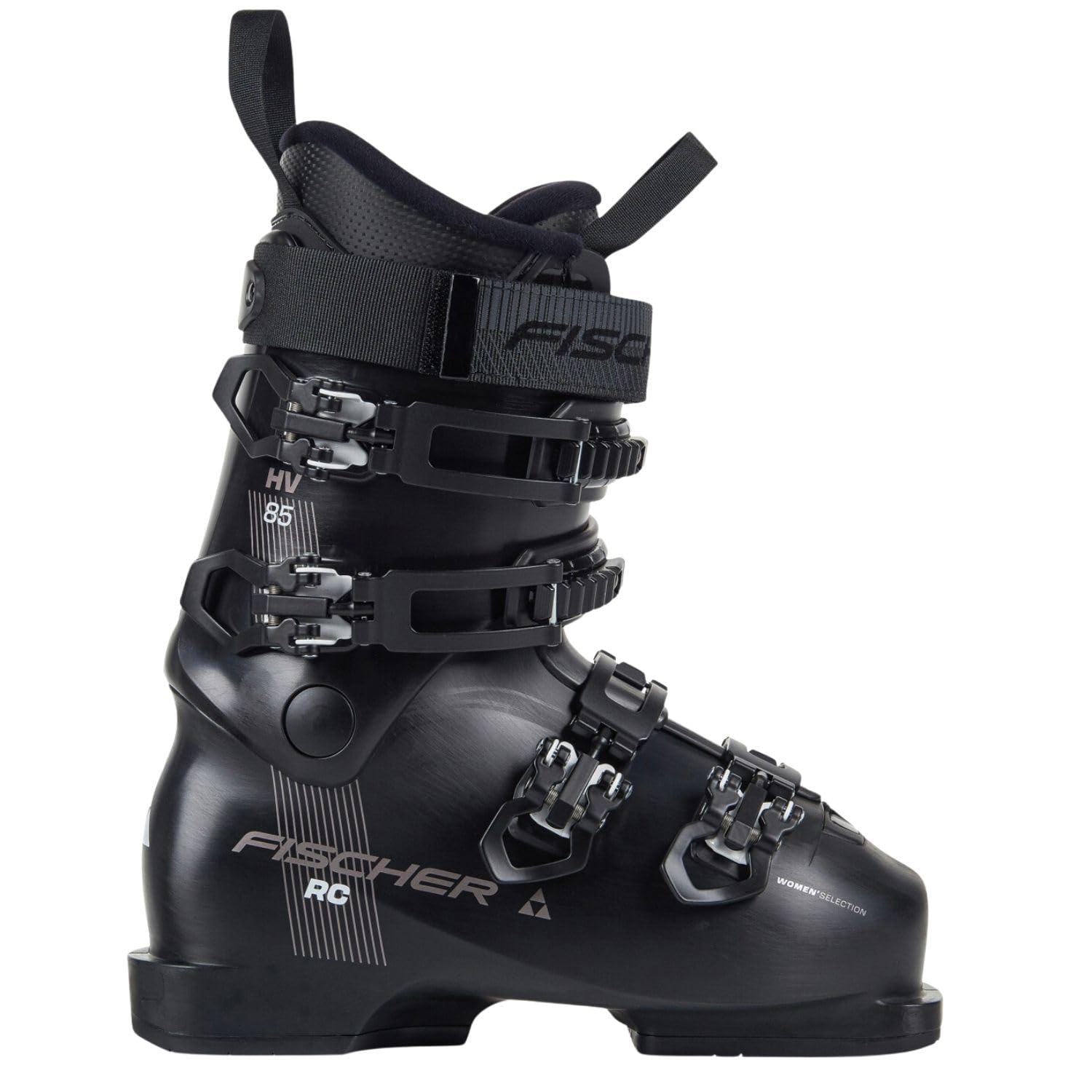
The Fischer RC One 8.5 is a precision-oriented boot for advanced to expert skiers who refuse to sacrifice comfort for performance. With an 8.5 hardness rating (equivalent to a flex index around 85) and a high-volume (HV) last, it delivers a snug fit that accommodates wider feet without slop. The polyurethane shell and customizable liner work together to optimize power transfer straight to the ski edge, making it ideal for aggressive carving and variable terrain.
Reviewers with wide calves and broader forefeet consistently report that the initial tightness molds away after a few days of use, resulting in a blister-free, all-day fit. The build quality feels substantial, and the boot’s ability to hold a precise line at speed sets it apart from softer recreational models. It is a boot that rewards strong technique without punishing foot shapes that fall outside the narrow norm.
This boot is unisex and available in sizes like 26.5, which corresponds well to a US men’s 8.5 or women’s 10. While it leans toward the performance end of the spectrum, the heat-moldable liner provides enough forgiveness for skiers transitioning from intermediate to advanced levels. It is the choice for anyone who values edge grip and long-term comfort over walkability features.
Why it’s great
- Excellent power transfer for aggressive carving
- High-volume fit works well for wider feet and calves
- Heat-moldable liner molds to foot shape over time
Good to know
- Not the best for walking without GripWalk soles
- May feel tight initially before break-in
2. K2 BFC 80 Men’s All-Mountain Ski Boots
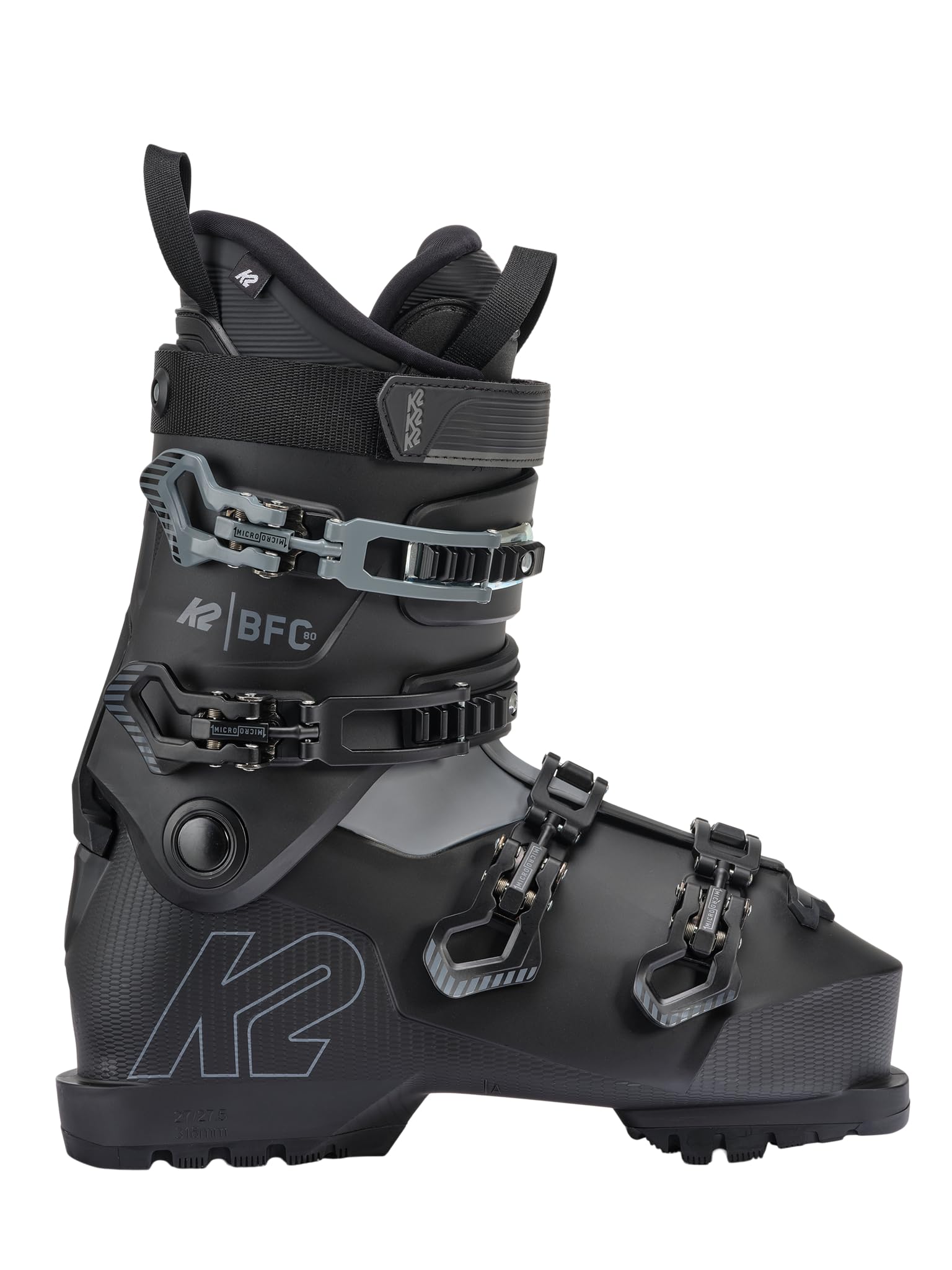
The K2 BFC 80 (Big Foot Cushfit) is engineered from the ground up for skiers with wide feet and high-volume insteps who crave a truly custom fit. The standout feature is its fully heat-moldable shell and cuff, meaning a professional boot fitter can shape the entire plastic structure to match the exact contours of your foot—something only a handful of boots on the market offer. The Cushfit Comfort liner adds extra foam in key areas for a plush out-of-the-box feel.
On the slopes, the BFC 80’s soft flex (around 80) makes it forgiving and easy to flex, perfect for beginners and intermediates working on their technique. The Hands-Free Entry system uses a dual-material overlap that lets you step in and out without wrestling with the tongue. Skiers who previously struggled with foot pain report being able to ski six days straight without issues, which is remarkable for any boot in this class.
GripWalk soles come standard, improving walking comfort in the parking lot and on lodge stairs. The only trade-off is that the soft flex limits high-speed carving potential for advanced skiers, but for the intermediate cruiser and comfort-seeker, the BFC 80 sets a new standard for all-day wearability.
Why it’s great
- Fully heat-moldable shell and cuff for a custom fit
- Hands-Free Entry makes on/off effortless
- GripWalk soles provide real walking comfort
Good to know
- Soft flex limits precision for aggressive skiers
- Some reports of color mismatch in orders
3. Rossignol Evo 70 – Ski Boots for Men
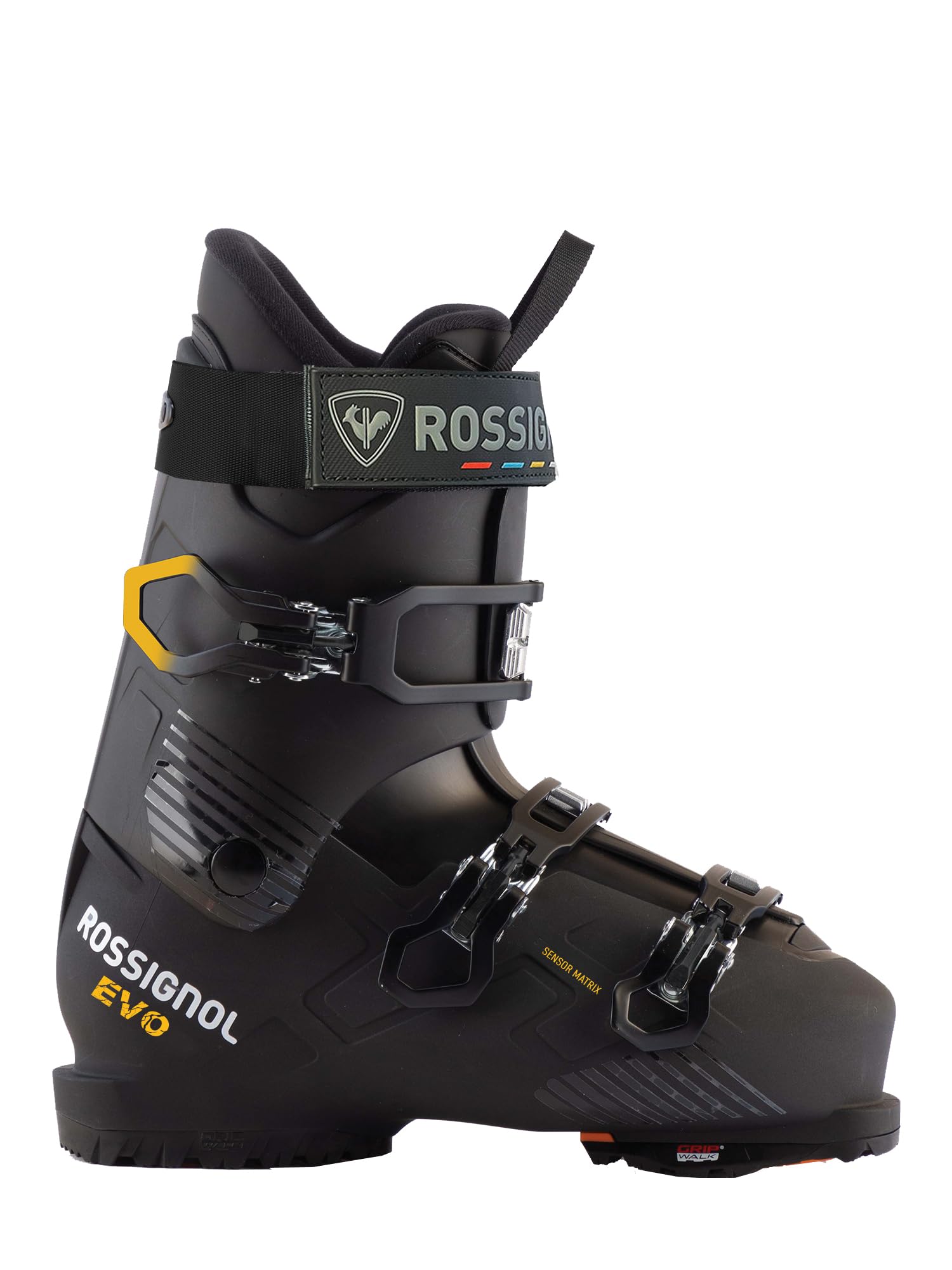
The Rossignol Evo 70 offers a relaxed 104mm last with a wider forefoot, toe box, and ankle area, making it one of the most accommodating boots in the mid-range for skiers with wider feet or those who prioritize comfort above all else. The Sensor Matrix shell design reduces overall boot weight without compromising stiffness where it matters, delivering a lively, direct-to-ski energy transfer that feels more responsive than its 70 flex rating suggests.
Users consistently praise the Evo 70 for its easy entry and exit, thanks to a wide-opening overlap that doesn’t require brute force. Skiers with foot issues or past shin pain report zero discomfort after full days on the mountain. The boot is GripWalk compatible (soles sold separately), giving you the option to improve walking traction later.
This boot is best suited for beginner to intermediate skiers who plan to spend full days on groomers and want a forgiving flex that won’t tire out their legs. The value proposition is strong: you get a modern, lightweight design with a comfort-oriented fit at a price that undercuts many competitors with similar last widths.
Why it’s great
- Relaxed 104mm last for wide forefoot comfort
- Lightweight Sensor Matrix shell improves energy transfer
- Easy on/off with wide-opening overlap
Good to know
- GripWalk soles sold separately
- Soft flex limits high-speed carving performance
4. Nordica The Cruise 80 (Size 29.5)

The Nordica Cruise 80 is a dedicated comfort boot built around a 104mm last and an Instep Volume Control (IVC) system that lets you adjust the boot board height by +/- 4mm to relieve pressure on the top of the foot. This feature is a game-changer for skiers with high insteps who normally experience numbness or pain after a few runs. The dual soft flap instep design opens wide for effortless entry and exit, saving energy at the start and end of the day.
Reviewers with larger calves specifically note that the Cruise 80 accommodates them without pinching, and the boot’s 80 flex index provides enough support for intermediate skiers to carve confidently without feeling locked into position. The infrared technology allows a boot fitter to spot-mold the shell at sensitive points, adding another layer of customizability.
This size 29.5 version is one of two Cruise 80 variants we evaluated, and it follows the same design philosophy: wide comfort, easy entry, and adjustable volume. It is not the lightest boot on the list, but for skiers who prioritize a roomy fit with real adjustability, the Cruise 80 delivers a strong balance of comfort and control.
Why it’s great
- IVC system provides +/- 4mm instep adjustment
- 104mm last for generous forefoot room
- Soft flap design makes entry and exit easy
Good to know
- Not ideal for advanced skiers needing high flex
- Some users report ankle pressure before break-in
5. Nordica The Cruise 80 (Size 28.5)
This second Cruise 80 variant in size 28.5 offers the exact same high-volume comfort fit and IVC system but in a slightly smaller shell length. For skiers who need a 28.5 mondo size, this version matches the same 104mm last and infrared customization technology as its larger sibling, meaning you get the same generous forefoot room and instep relief without sizing up.
Customer feedback mirrors the 29.5 version: skiers with wide calves and high-volume feet find the boot comfortable all day, and the easy-entry soft flap system is appreciated by those who struggle with traditional overlap boots. The 80 flex is forgiving enough for intermediates but still provides enough structure for controlled carving on groomed runs.
One notable difference reported by users is that the ankle fit can feel very snug initially, and the IVC adjustment may not entirely eliminate pressure for every foot shape. A professional boot fitting session is recommended to dial in the shell and liner for optimal comfort. If you need the smaller mondo size and want the same wide-fit architecture, this is the direct match.
Why it’s great
- Same 104mm last and IVC as 29.5 version
- Infrared moldable shell for spot adjustments
- Ideal for intermediate skiers with high-volume feet
Good to know
- Ankle fit can be tight before molding
- IVC adjustment may not fix all instep issues
6. Atomic HAWX Magna 75 Women’s Ski Boots

The Atomic HAWX Magna 75 is purpose-built for women with wider feet and higher volume insteps who need a boot that doesn’t sacrifice performance for comfort. Its Memory Fit technology allows both the shell and the Select Bronze liner to be heat-molded to the individual shape of your foot, providing a near-custom fit that drastically reduces pressure points. The 75 flex is soft enough for beginner and intermediate female skiers to flex comfortably while still providing enough support for controlled turns.
The Prolite design reinforces key structural zones with less material, resulting in a lightweight boot that doesn’t feel clunky when walking or lifting. The removable spoiler on the cuff allows skiers with larger calves to fine-tune the fit further. The HAWX Magna series has a well-earned reputation among female skiers who previously struggled to find boots that didn’t pinch or cause numbness in the forefoot.
While most feedback praises the comfort and adjustability, some international customers reported delivery issues with damaged packaging. The boot’s flex is best suited for progressing skiers rather than experts; advanced women looking for a stiffer boot should look at the HAWX Magna 85 or 95. For the price, however, the fit customization at this level is hard to beat.
Why it’s great
- Memory Fit heat-moldable shell and liner
- Lightweight Prolite construction
- Removable cuff spoiler for calf fit adjustment
Good to know
- Soft flex not suitable for expert skiers
- Delivery packaging issues reported occasionally
7. DALBELLO Men’s Veloce 90 MV Polar/Black Ski Boots

The Dalbello Veloce 90 MV sits at the higher end of the intermediate flex range with a stiffness index of 90, offering more resistance and better edge-to-edge response than softer 70-80 flex boots. Its medium-volume (MV) last provides a balanced fit that works well for skiers with average foot width who want a performance-oriented boot without stepping into a full-on expert category. The plastic construction is rugged and designed to handle regular use across multiple seasons.
Users sizing up from older, worn-out boots report that the Veloce 90 fits true to mondo size, with a 27.5 fitting a US size 10 shoe perfectly. Comfort out of the box is solid, though a brief break-in period is expected. The boot delivers good power transmission for intermediate skiers venturing into steeper terrain or carving at moderate speed.
At its price point, the Veloce 90 MV represents a solid entry-level-to-intermediate boot with a flex that allows room to grow as your skills improve. It does not include advanced liner molding or walk-mode features, but for skiers focused on piste performance without complexity, it gets the job done efficiently.
Why it’s great
- Flex 90 provides good responsiveness for intermediates
- Accurate sizing matches standard mondo-to-US conversion
- Durable build for multi-season use
Good to know
- Requires break-in period for optimal comfort
- No heat-moldable liner or walk mode
8. Nordica Women’s Cruise S W Ski Boots

The Nordica Cruise S W is a women’s-specific boot built on a 104mm last, providing a generous wide fit that accommodates broader forefeet and higher insteps common among female skiers who struggle with narrow boots. Its soft shell construction is engineered for forgiveness, making it ideal for beginners and intermediates who are still building leg strength and technique. The Dual Soft Flap Instep design allows the throat to open wide for easy entry and exit—a genuinely useful feature after a long day of skiing.
Real-world feedback from skiers with shoe sizes up to 11 (women’s) confirms the boot runs comfortable and warm out of the box, with no aching after full days on the slopes. The heat-moldable liner adds an extra layer of fit customization that is rare at this price tier. Several users called it the most comfortable boot they had ever owned, despite being significantly less expensive than premium alternatives.
The trade-offs are minor: the buckles lack the premium feel of higher-end models, and the boot does not include rubber toe or heel protectors. However, for a beginner or intermediate female skier looking for a comfortable, confidence-inspiring boot that won’t break the bank, the Cruise S W is an outstanding value.
Why it’s great
- Wide 104mm last for all-day comfort
- Heat-moldable liner at a budget-friendly price
- Easy-entry Dual Soft Flap Instep design
Good to know
- Buckle quality feels less premium
- No rubber toe or heel protectors
9. NORDICA Men’s The Cruise Boots

The NORDICA Men’s The Cruise boot delivers the same 104mm high-volume comfort fit and Dual Soft Flap Instep as the women’s version but in a men’s-specific build with micro-adjustable aluminum buckles. The 104mm last provides generous forefoot space, and the streamlined anatomical shape improves control response compared to older boxy recreational boots. It is marketed squarely at beginner and intermediate male skiers who want a forgiving flex and easy on/off convenience.
Customer reports consistently mention that the boot fits true to size and works well for skiers with medium to wide feet. Several users bought these for teenage sons who outgrew previous boots and found them comfortable for multiple days of skiing. The polyurethane shell is durable enough to last several seasons of weekend use.
Where this boot saves money is in liner sophistication—it lacks a heat-moldable liner and relies on a simpler foam construction that may require a break-in period. The flex is soft, which is fine for learning but will limit progression for skiers who quickly outgrow the beginner stage. For the entry-level buyer on a strict budget, however, it checks the essential boxes: wide fit, easy entry, and dependable construction.
Why it’s great
- 104mm last offers generous wide fit at a low cost
- Micro-adjustable aluminum buckles for fine tuning
- Easy entry with wide-opening instep
Good to know
- Basic liner lacks heat-moldable tech
- Soft flex may limit advanced progression
FAQ
What does a 104mm last actually mean for my foot?
Can I use GripWalk soles with any alpine binding?
How much break-in time should I expect for new alpine boots?
Is a softer flex better for a beginner skier?
Final Thoughts: The Verdict
For most skiers looking for the best alpine ski boots, the Fischer RC One 8.5 is the winner because it pairs a high-volume fit with a performance flex and heat-moldable liner that bridges comfort and carving precision. If you want a fully heat-moldable shell and effortless hands-free entry, the K2 BFC 80 is your pick. And for budget-conscious beginners who need a wide, forgiving fit, the Nordica Cruise S W (women’s) or NORDICA Men’s The Cruise deliver excellent value without cutting corners on the fit fundamentals.