
On technical alpine terrain, a poor load transfer means wasted energy on every switchback. An alpinist backpack must do more than hold gear — it needs to lock the load to your center of gravity, shed snow on an ice traverse, and let you reach an ice axe or crampon pouch without unclipping your shoulder harness. A generic daypack fails on all three counts.
I’m Min — the co-founder and writer behind Gadgets Feed. This guide is the result of many hours spent comparing suspension systems, frame architectures, weight-to-volume ratios, and alpine-specific attachment points across every pack analyzed here.
After comparing dozens of models, reviewing load capacities, back-panel venting, and ice-axe compatibility, I’ve distilled the field into a tight selection that defines the alpinist backpack standard worth trusting on rock, snow, and long approaches.
How To Choose The Best Alpinist Backpack
An alpinist backpack lives in a different world from a hiking pack. The frame must resist torsion under a rope coil, the back panel must not absorb moisture on a frozen ridge, and every strap must be operable with gloves on. Here are the five decisions that separate a solid alpine tool from a liability.
Frame Architecture: Internal Wire vs. Frameless vs. Hybrid
A perimeter wire frame or a spring-steel stay transfers the load from the shoulder straps to the hipbelt, which is critical when climbing with a 35–50 lb carry. Frameless packs shed weight but collapse under heavy loads — they work only for fast-and-light missions under 20 lbs. Hybrid designs use a removable frame sheet that can be stripped for summit pushes.
Tool Attachment Systems: Dual ToolLock vs. Loop-and-Bungee
Dual ToolLock systems secure two ice axes in a single motion with a reinforced plastic cam. Less expensive packs use a daisy chain and bungee cord — functional but slower to release with cold fingers. A proper alpine pack should also have a reinforced A-frame ski carry if you mix skis and crampons.
Back Panel Ventilation vs. Snowshed Ability
Mesh trampoline backs (like Osprey’s Airspeed) keep sweat off your base layer on warm approaches but can clog with wet snow. A snowshed backpanel is a smooth, non-absorbent surface that snow slides off — ideal for winter alpine routes. Decide based on your primary season.
Volume-to-Weight Ratio: Liter per Gram
An efficient alpine pack delivers at least 12–14 liters of volume per pound of pack weight. Packs over 3.5 lbs for a 38L carry are losing the weight game. Every extra ounce on your back compounds over a 12-hour approach.
Hipbelt Pocket Accessibility
You need quick access to snacks, lip balm, and a headlamp while moving. The best alpine packs offer two zippered hipbelt pockets large enough for a smartphone or a sandwich. Shallow pockets that force you to stop and dig are a design failure for alpine efficiency.
Quick Comparison
On smaller screens, swipe sideways to see the full table.
| Model | Category | Best For | Key Spec | Amazon |
|---|---|---|---|---|
| Osprey Mutant 38L | Technical Alpine | Ice & alpine climbing | Dual ToolLocks, 2.69 lb | Amazon |
| Osprey Exos 38 | Ultralight | Fast-and-light missions | 2.83 lb, Airspeed suspension | Amazon |
| Deuter Futura Air Trek 60+10 | Multi-Day | Long expeditions | 60+10L, Aircomfort back | Amazon |
| Deuter Aircontact Lite 40+10 | Versatile Hybrid | Backpacking & alpine travel | 40+10L, 3.5 lb, Vari Quick | Amazon |
| Mammut Ducan 32L | Lightweight Allrounder | Day hikes & via ferrata | 32L, 2.4 lb, Bluesign | Amazon |
| The North Face Terra 40 | Entry-Level Overnight | Budget-conscious backpackers | 40L, removable frame sheet | Amazon |
| Mammut Ducan 22L | Summit Pack | Fast summit bids | 22L, 900g, integrated rain cover | Amazon |
| MT Military ALICE Pack | Rugged Classic | Heavy carry survival gear | 50L external frame, 2.76 kg | Amazon |
| NOMATIC 20L Travel Pack | Urban-Travel | Tech travel & commute | 20-30L expandable, TSA-ready | Amazon |
In‑Depth Reviews
6. Osprey Mutant 38L
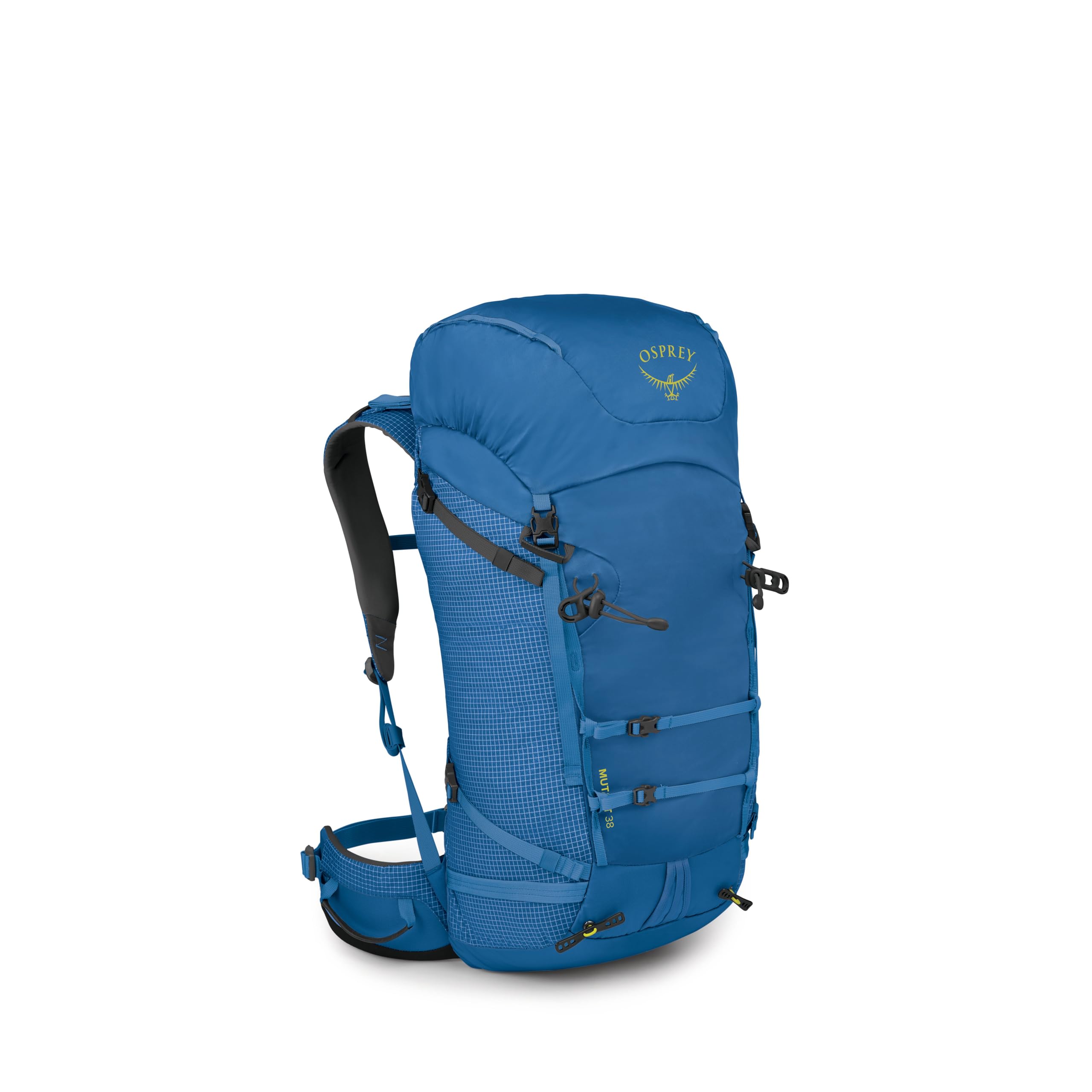
The Osprey Mutant 38L is the closest thing to a dedicated alpine tool that still weighs under 2.7 lb. Its dual ToolLocks secure two ice axes with a single cam motion, and the reverse-wrap hipbelt keeps the load locked even when you lean back on steep snow. The snowshed backpanel is smooth and non-absorbent — wet snow slides off instead of turning into an ice sheet on your lumbar.
Reviewers consistently praise the comfortable hipbelt after 11-hour carries fully loaded, with no pressure points on the shoulders. The removable top lid and strip-pable frame sheet let you drop 200g for summit pushes. The only real complaint is the lack of an external water bottle pocket — you’ll rely on the hydration sleeve or a bottle inside the main compartment.
At 38L, this pack fits a rope, helmet, harness, boots, crampons, and a day’s food for winter routes. For mixed climbing and alpine objectives where every gram matters, the Mutant earns the top spot.
Why it’s great
- Dual ToolLocks are fast and glove-friendly
- Snowshed panel prevents ice buildup on approach
- Strippable design drops pack weight for summit dashes
Good to know
- No external water bottle pocket
- Helmet holder feels undersized for large helmets
7. Osprey Exos 38
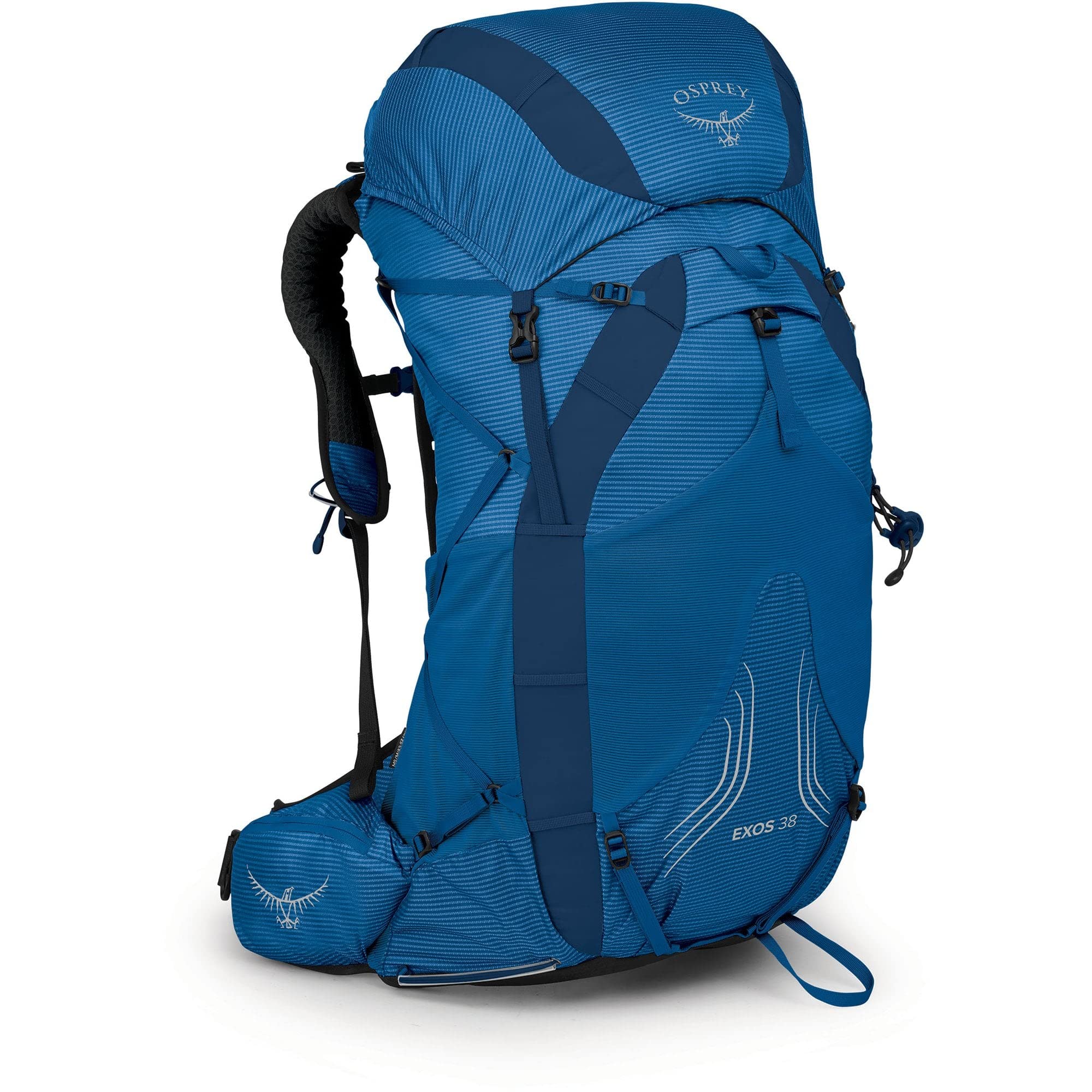
The Osprey Exos 38 shaves weight without sacrificing the frame rigidity that alpinists need. At just 2.83 lb, it uses an injection-molded ladder adjustment system that gives 4 inches of torso adjustability — critical when you loan a pack to a partner or layer thermal gear underneath. The Airspeed mesh trampoline back keeps your spine dry on hot approaches, though the mesh is less ideal for deep winter snow that can clog the trampoline gap.
Users on the Camino de Santiago and Appalachian Trail report the pack handles 6-week trips with zero frame failure. The hipbelt pockets are deep enough for a phone and a protein bar, and the removable floating lid adds 7L of overflow volume. Some ultralight specialists note the Exos handles heavier loads better than true DYI frameless packs — the internal frame transfers weight efficiently even at 25 lbs.
For fast-and-light alpine missions where speed is the currency, the Exos 38 delivers a rare combo of low weight and real suspension support.
Why it’s great
- 4-inch torso adjustability for layered fits
- Deep hipbelt pockets for on-the-move snacks
- Excellent weight transfer at 20–25 lbs load
Good to know
- Trampoline mesh can clog with wet snow
- Side pockets are tight with 1L bottles
8. Deuter Futura Air Trek 60+10

The Deuter Futura Air Trek 60+10 is built for multi-day alpine expeditions where a 38L pack is too small. Its Aircomfort back system uses a spring-steel frame and a mesh panel that keeps the pack off your spine, creating a ventilation channel even under a 50-lb load. The VariSlide system lets you dial in the back length to match your torso, and the pivoting shoulder straps adapt to the natural slant of your shoulders.
Reviewers who have used the pack daily for three years report zero stitch failures or zipper jams — the 210D polyamide recycled fabric and 600D polyester bottom are built for abuse. The separate bottom compartment isolates a sleeping bag or puffy jacket from wet gear, and the front stash pocket swallows a shell jacket or climbing rope. At roughly 4.2 lb, this is a heavy pack, but for week-long alpine traverses the load transfer and durability justify every gram.
If your objective requires carrying a tent, stove, food for five days, and a full rack of gear, the Futura Air Trek is the expedition-grade choice.
Why it’s great
- Aircomfort back panel provides unmatched ventilation under heavy loads
- Separate bottom compartment isolates wet gear
- Proven durability over years of daily use
Good to know
- Heavy at over 4 lb for its class
- No back-length index marks for fine-tuning
4. Deuter Aircontact Lite 40+10
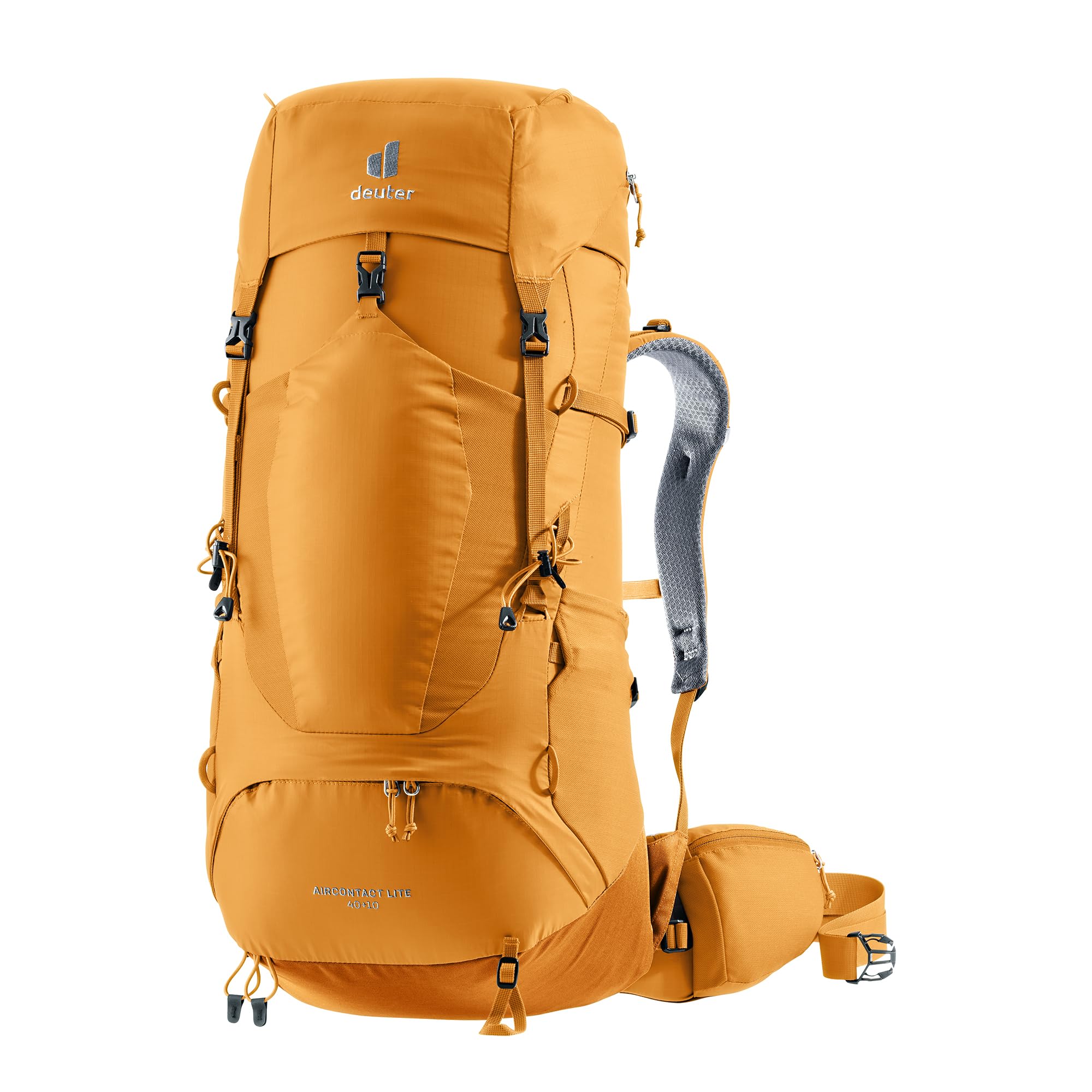
The Deuter Aircontact Lite 40+10 splits the difference between a lightweight daypack and a full expedition pack. It uses a lightweight X-frame for load transfer, a height-adjustable lid that adds 10L when fully extended, and a Vari Quick back system that adjusts the torso length on the fly. The hip fins are ergonomically padded and pull forward for a snug fit that eliminates bounce on technical terrain.
Users who hiked the 100+ km Beara Way in Ireland report no pressure points even fully loaded — the Aircontact cushions use hollow-chamber foam that pumps air with every step. The side pockets fit any thermos securely, and the ice-axe and trekking-pole attachments are robust. At about 3.5 lb, it’s heavier than the Exos but offers more volume flexibility and a detachable lid.
For alpinists who want one pack for day missions and short overnights, the Aircontact Lite offers the most adaptable volume range in this list.
Why it’s great
- Expandable lid adds 10L for overflow gear
- Hollow-chamber foam back provides excellent ventilation
- Vari Quick torso adjustment for fit precision
Good to know
- Chest strap has non-adjustable height
- Heavier than dedicated ultralight packs
5. Mammut Ducan 32L
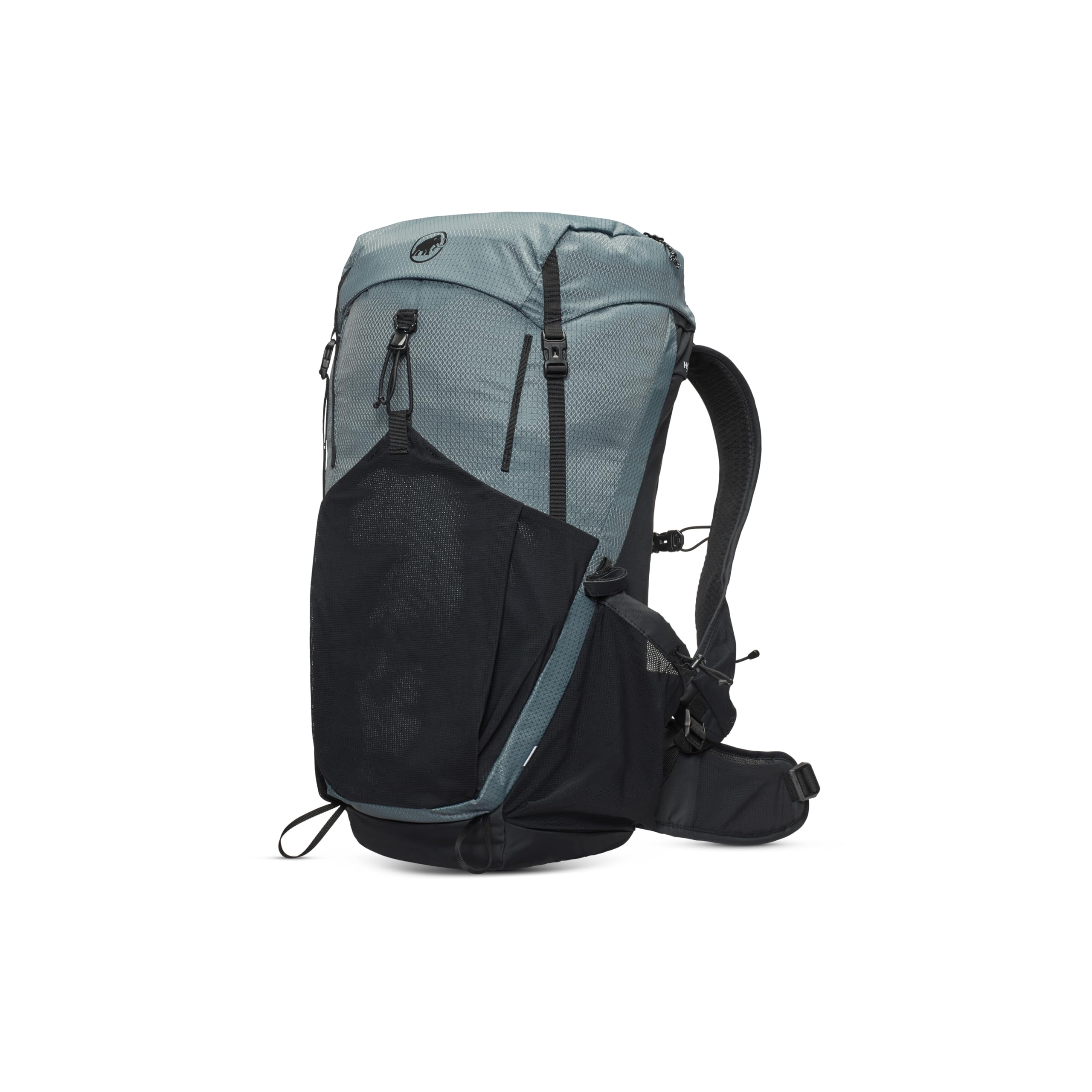
The Mammut Ducan 32L is a lightweight alpine pack that excels in mixed conditions. It uses a PFC-free water-repellent finish backed by an integrated, detachable rain cover — meaning you can strip the cover for weight savings when conditions are dry. The back panel is a full mesh trampoline that creates airflow and reduces sweat, and the ergonomic shoulder straps are shaped for natural arm movement while scrambling.
Reviewers note the side pockets feature drawstrings that secure 1.5L bottles securely — no bottle ejection on a steep traverse. The external mesh center pocket swallows a wet shell or climbing rope, while the hipbelt pockets are large enough for a smartphone. At 1.09 kg (2.4 lb), the Ducan 32L is among the lightest framed packs here, making it ideal for via ferrata and single-day alpine routes.
If you want a 32L pack that can handle an ice axe, a rope, and a day’s worth of layers without weighing you down, the Ducan is the sweet spot.
Why it’s great
- Very lightweight at 2.4 lb with a framed suspension
- Drawstring-secured side pockets hold 1.5L bottles
- Bluesign certified fabric with eco-friendly DWR
Good to know
- Color on listing can differ slightly from actual
- No integrated frame sheet for ultra-heavy loads
3. The North Face Terra 40
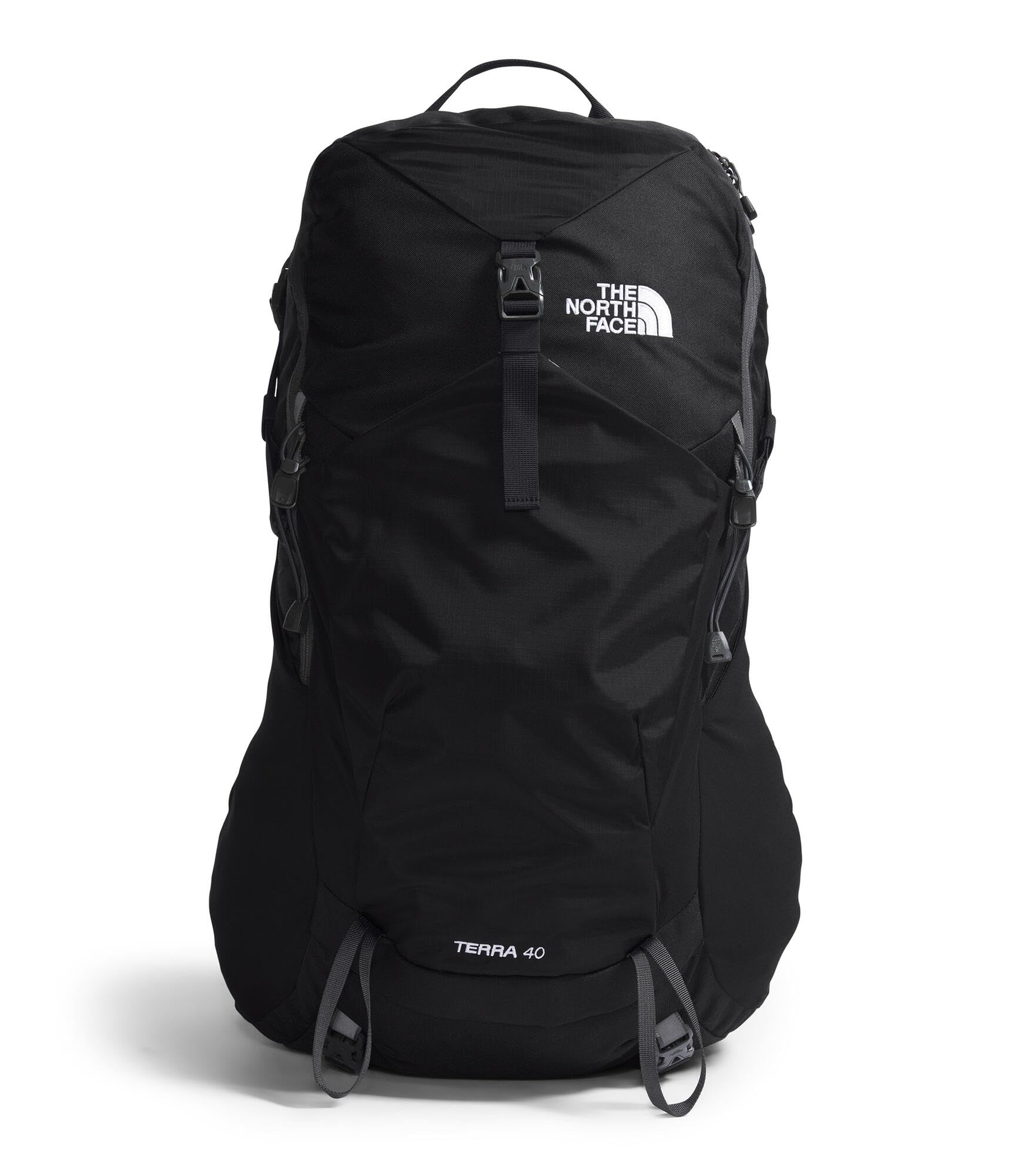
The North Face Terra 40 is a solid entry point for backpackers who need alpine-ready features without a premium price tag. It includes trekking-pole and ice-axe attachments, a removable frame sheet that you can strip to save weight, and a padded hipbelt with load lifter straps for fine-tuned weight distribution. The internal hydration sleeve and two stretch mesh bottle pockets keep water accessible without slowing the pace.
Users praise the Terra 40 for its comfortable carry at full capacity — the padded back panel and shoulder straps distribute load effectively for a pack in this tier. The main compartment swallows a weekend’s worth of gear, and the bottom compression straps cinch down a sleeping pad. The biggest drawback is the lack of an included rain cover; you’ll need to buy one separately if you’re heading into wet alpine conditions.
For new alpinists building their gear kit, the Terra 40 delivers a functional frame and real ice-axe loops at a price that leaves budget for other essentials.
Why it’s great
- Removable frame sheet for weight savings
- Ice-axe and trekking-pole attachments included
- Load lifter straps improve weight transfer
Good to know
- No rain cover included
- Some units arrive with cosmetic imperfections
1. Mammut Ducan 22L
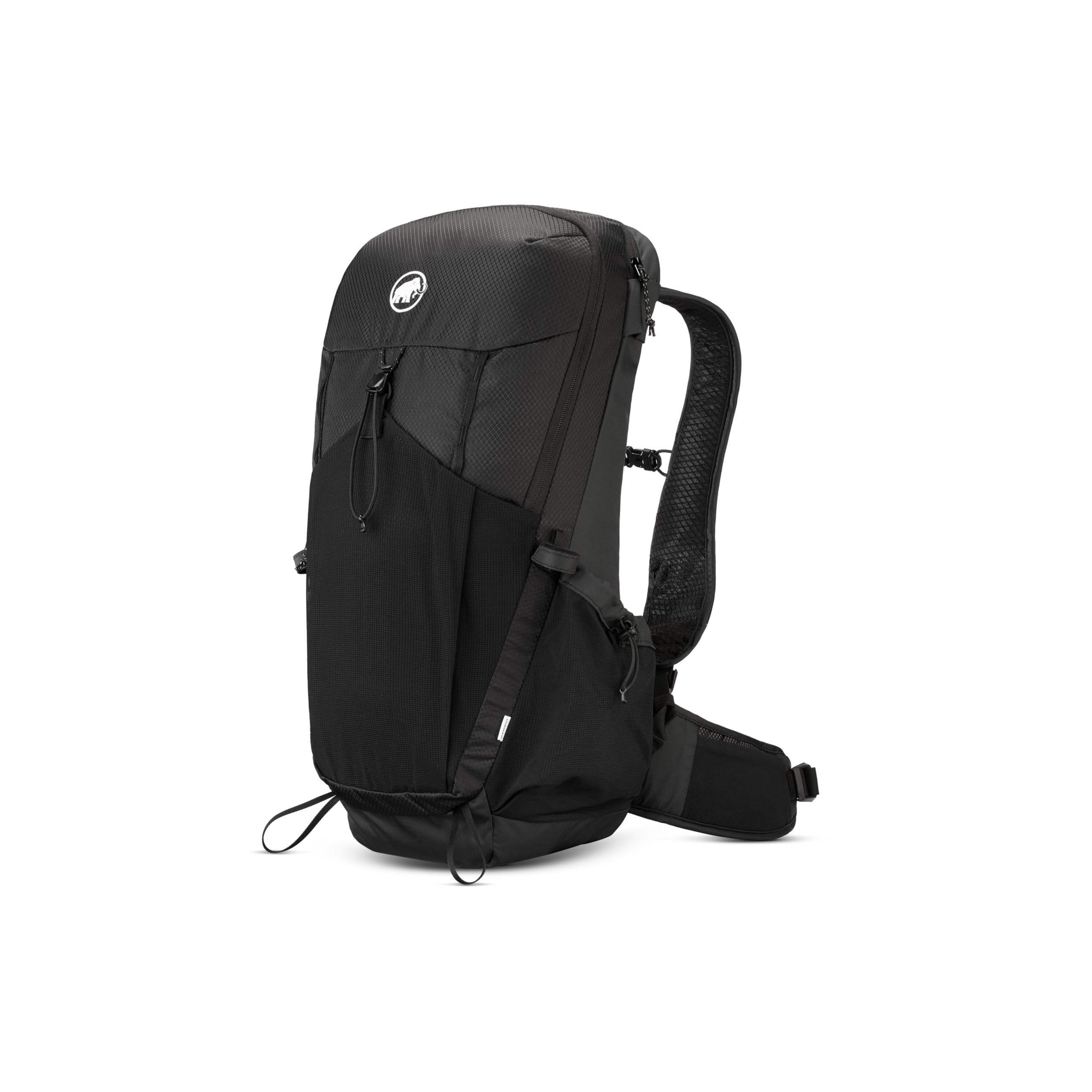
The Mammut Ducan 22L is a stripped-down summit pack built for speed. At just 900g (2 lb), it’s the lightest pack in this roundup, yet it still includes an anatomically shaped hipbelt and shoulder straps that transfer the load efficiently for a pack its size. The integrated rain cover is detachable — you can leave it behind on bluebird days to save another 80g.
Reviewers highlight the mesh trampoline back that keeps the spine ventilated even on steep ascents, and the angled side pockets that make bottle access possible while running. The hydration system compatibility is a plus for long ridge traverses where stopping to dig for a bottle wastes time. Some users remove the internal frame sheet for an ultralight setup, though doing so sacrifices load stability above 15 lb.
For alpinists who need a pack for summit pushes, via ferrata, or fast-and-light missions where every gram matters, the Ducan 22L delivers a capable framed platform in a sub-2-lb package.
Why it’s great
- Ultralight 900g base weight with frame
- Integrated rain cover is detachable
- Angled side pockets for bottle access on the move
Good to know
- Internal frame can bulge into Laptop compartment
- No external gear loops for extra gear
2. MT Military ALICE Pack
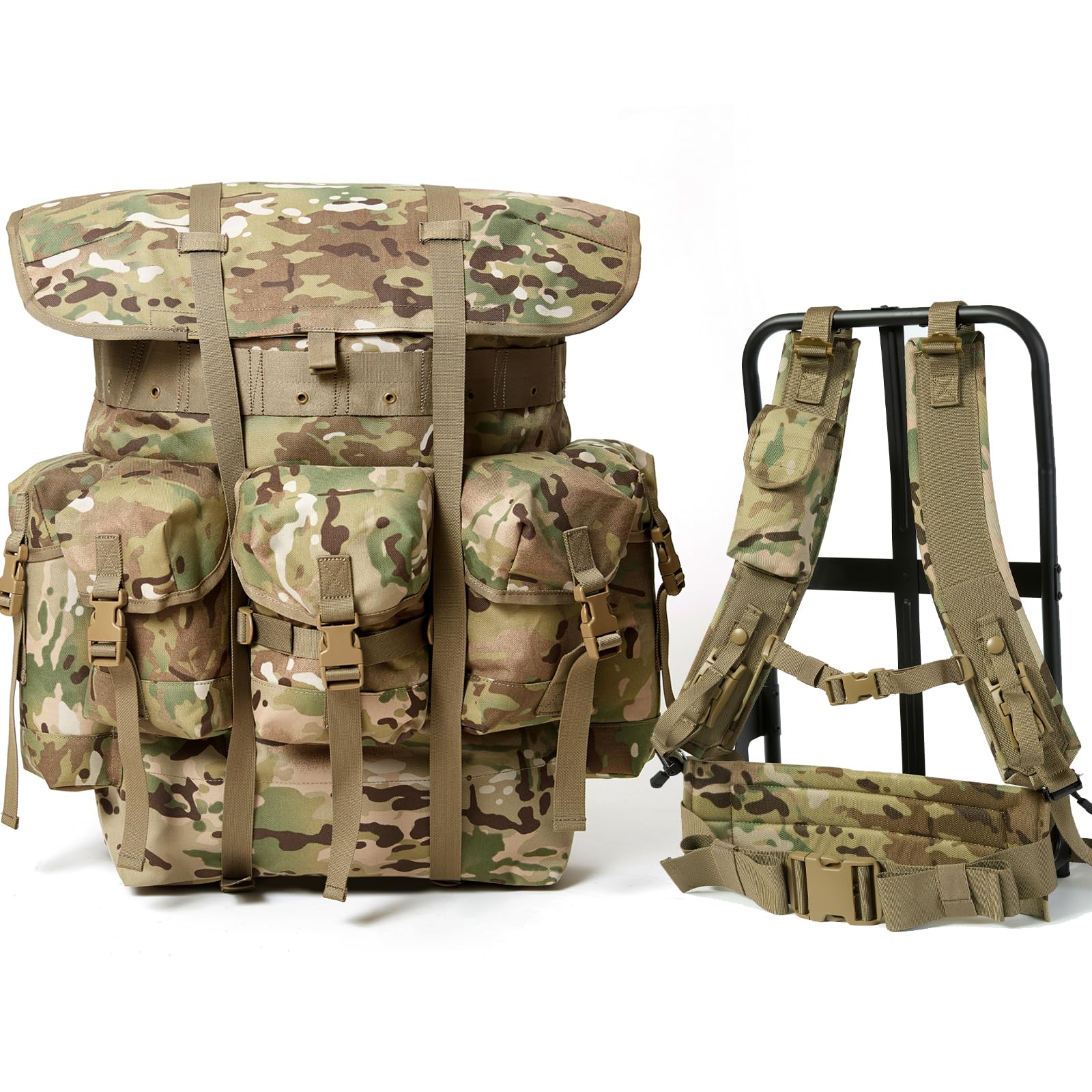
The MT Military ALICE Pack modernizes the classic US military load carriage system with 1000D waterproof Oxford fabric and UTX heavy-duty buckles. Its external frame separates the pack from your back entirely — this creates a natural ventilation channel that no internal-frame pack can match, and the 50L capacity can handle 50 lb loads without sagging. The kidney pad on the frame distributes weight to the hips effectively.
Reviewers who compared it to cheap knockoffs note the MT version is significantly tougher, with a sturdier aluminum frame and more water-resistant fabric. The draw-cord closure on the main compartment plus five external pockets provides old-school organization, and the quick-release buckle allows you to drop the pack instantly in an emergency. The drawbacks are the weight (2.76 kg / 6.1 lb) and the lack of modern features like a hydration sleeve or hipbelt pockets.
For bushcraft-style alpinism, survival kits, or heavy load carries on established routes, the ALICE external frame is a proven workhorse.
Why it’s great
- External frame creates unmatched back ventilation
- 1000D fabric and UTX buckles are extremely durable
- 50L capacity handles 50 lb loads easily
Good to know
- Heavy at 6.1 lb before packing any gear
- No hydration sleeve or modern pocket layout
9. NOMATIC 20L Travel Pack

The NOMATIC 20L Travel Pack is not an alpine technical pack — it earns a place here as a versatile travel companion for alpinists who also need a carry-on bag for flights to trailheads. It expands from 20L to 30L via a hidden zipper, and the padded 16-inch laptop compartment and RFID pocket make airport transitions smooth. The water-resistant fabric and TSA-friendly layout are practical for gear transport.
Reviewers praise the build quality — stiff zippers that loosen over time, a sleek waterproof exterior, and an organized main compartment that keeps cables and chargers separate from clothing. The water bottle pockets use magnets that can open under vigorous movement, and the sloped top fits under airplane seats without sacrificing capacity. It’s not a pack you’d take up a couloir, but for the approach flight and the commute home, it’s exceptional.
If your alpine kit needs a crossover bag that does duty as both a travel pack and a weekend daypack off the mountain, the NOMATIC is the right choice.
Why it’s great
- Expandable volume adapts to trip length
- TSA-ready laptop compartment streamlines airport flow
- Water-resistant fabric protects gear on tarmac
Good to know
- Magnetic bottle closures can fail during movement
- Not suitable for technical alpine climbing loads
FAQ
Can I use a hiking daypack for alpine climbing?
How many ice-axe loops does a proper alpine pack need?
What is the ideal volume for a single-day alpine mission?
Should I choose a frameless or framed alpine pack?
Does a hydration sleeve matter in alpine conditions?
Final Thoughts: The Verdict
For most alpinists, the alpinist backpack winner is the Osprey Mutant 38L because it balances low weight, alpine-specific features, and a snowshed backpanel that performs in real winter conditions. If you prioritize ultralight efficiency for fast summer ascents, grab the Osprey Exos 38. And for multi-day expeditions where volume and load transfer are non-negotiable, nothing beats the Deuter Futura Air Trek 60+10.