
An alternating pressure mattress for bedsores isn’t luxury bedding—it’s a clinical tool. For anyone confined to a bed or recliner for long hours, the constant pressure on bony areas like the sacrum, hips, and heels restricts blood flow, leading to tissue breakdown that can escalate from a red spot to a deep stage 4 ulcer in days. The therapy works through a pump and pad system that cyclically inflates and deflates individual air cells, shifting the patient’s weight load every 5 to 10 minutes to restore capillary circulation and prevent that damage from starting or worsening.
I’m Min — the co-founder and writer behind Gadgets Feed. I’ve spent hundreds of hours analyzing medical-grade pressure redistribution technology, comparing pump noise ratings, cell depths, static mode capabilities, and patient weight limits across dozens of models to identify the systems that actually deliver on their clinical promise for home caregivers and healthcare professionals.
This guide evaluates nine distinct systems to help you match the right support depth, pump quietness, and cycle timing to your specific care situation. The goal is to find the best alternating pressure mattress for bedsores that fits your patient’s needs and your budget.
How To Choose The Best Alternating Pressure Mattress For Bedsores
Selecting the wrong system can waste money, delay healing, or even accelerate skin breakdown if the patient bottoms out against the bed frame. Three critical specs separate an effective therapy from a failed one: air cell depth, cycle time, and pump noise. Here’s how to evaluate each one for your specific care scenario.
Air Cell Depth: Overlay vs. Replacement
Overlays (2 to 5 inches thick) sit on top of an existing mattress and are the most common and affordable option. They work well for prevention and stage 1 or 2 ulcers, provided the underlying mattress is firm and not sagging. Replacement mattresses (6 to 8 inches thick) replace the entire bed mattress and are essential for patients at high risk of bottoming out—typically those over 250 lbs or with advanced stage 3 or 4 ulcers. The extra depth guarantees the cells can fully inflate without the patient’s hips or sacrum contacting the bed frame during deflation.
Cycle Time and Pump Control
The standard therapeutic cycle alternates every 5 to 10 minutes. A cycle that is too short (under 5 minutes) can be disruptive and prevent proper tissue perfusion; one that is too long (over 10 minutes) may leave pressure on one area for too long. Look for pumps that offer adjustable cycle times or at least a fixed cycle within that optimal window. A static mode, which keeps all cells inflated, is useful for repositioning or brief breaks but should not be the primary mode of operation for a bedridden patient.
Pump Noise (dBA) and Placement
A pump rated at 32 dBA is considered library-quiet, but anything above 40 dBA can disturb light sleepers and create stress for caregivers who sleep in the same room. Check whether the pump can be hung on the bed’s footboard to reduce vibration transfer through the floor. Some premium units operate below 20 dBA, which is nearly silent. Also consider the length of the air hose—a longer hose (over 4 feet) allows the pump to be placed further from the patient’s head.
Quick Comparison
On smaller screens, swipe sideways to see the full table.
| Model | Category | Best For | Key Spec | Amazon |
|---|---|---|---|---|
| Drive Medical Med Aire 14001EFD | Overlay | Budget-conscious prevention | 2.5-inch cells, 4 LPM pump | Amazon |
| Lunderg Flocking Pad (Twin) | Overlay | Comfort & sweat prevention | 23 dBA pump, flocking fabric | Amazon |
| Lunderg Queen Size | Overlay | Larger users / queen beds | 320 lb capacity, 23 dBA pump | Amazon |
| Kekoy Recliner Pad | Chair Pad | Recliner / wheelchair use | 128 cells, anti-slip base | Amazon |
| Vive 5″ Overlay | Overlay | Deep cell overlay therapy | 5-inch depth, 16 chambers | Amazon |
| MedVance Comfort | Replacement | Silent hospital-grade care | <20 dBA pump, CPR tag | Amazon |
| Vive 8″ Replacement | Replacement | Full mattress replacement | 8-inch cells, 350 lb capacity | Amazon |
| Drive Medical Med-Aire Low Air Loss | Replacement | Low air loss therapy | 20 replaceable 8-inch bladders | Amazon |
| MedVance Low Air Loss Digital | Replacement | Digital precision & backup | 24-hour battery backup, 450 lb cap | Amazon |
In‑Depth Reviews
1. MedVance Comfort Alternating Air Pressure Mattress Pad

The MedVance Comfort delivers hospital-grade alternating pressure therapy with a pump that operates below 20 decibels—quiet enough to sit beside a patient’s bed without waking them. The 8-inch full replacement design prevents bottoming out for users up to 300 lbs, and the individual sealed air cells are replaceable, extending the system’s useful life beyond cheaper overlay models. The quilted polyurethane cover is water-resistant and machine-washable, which is critical for maintaining hygiene during long-term care.
A standout safety feature is the emergency CPR deflation tag: pulling it drains the mattress in under a second, allowing instant flat access for resuscitation. The digital pump offers adjustable firmness and includes diagnostic alarms for low pressure or system faults. Inflating to full pressure takes about 15 minutes, and the 6-minute alternating cycle falls within the clinically recommended window for effective pressure redistribution.
Some users report that the control knob’s position makes it easy to accidentally change settings; a piece of tape over the dial is a common caregiver workaround. The included instructions reference an older model, but the company’s support team is responsive for clarification. For a system that approaches the performance of + rental units at a fraction of the cost, this is the strongest contender for home care.
Why it’s great
- Near-silent pump under 20 dBA is genuinely sleep-friendly
- Replaceable individual cells extend the mattress lifespan
- CPR tag provides critical emergency access
Good to know
- Instructions mismatch the actual hardware version
- Control knob prone to accidental adjustment
2. Lunderg Alternating Air Pressure Mattress Pad with Flocking
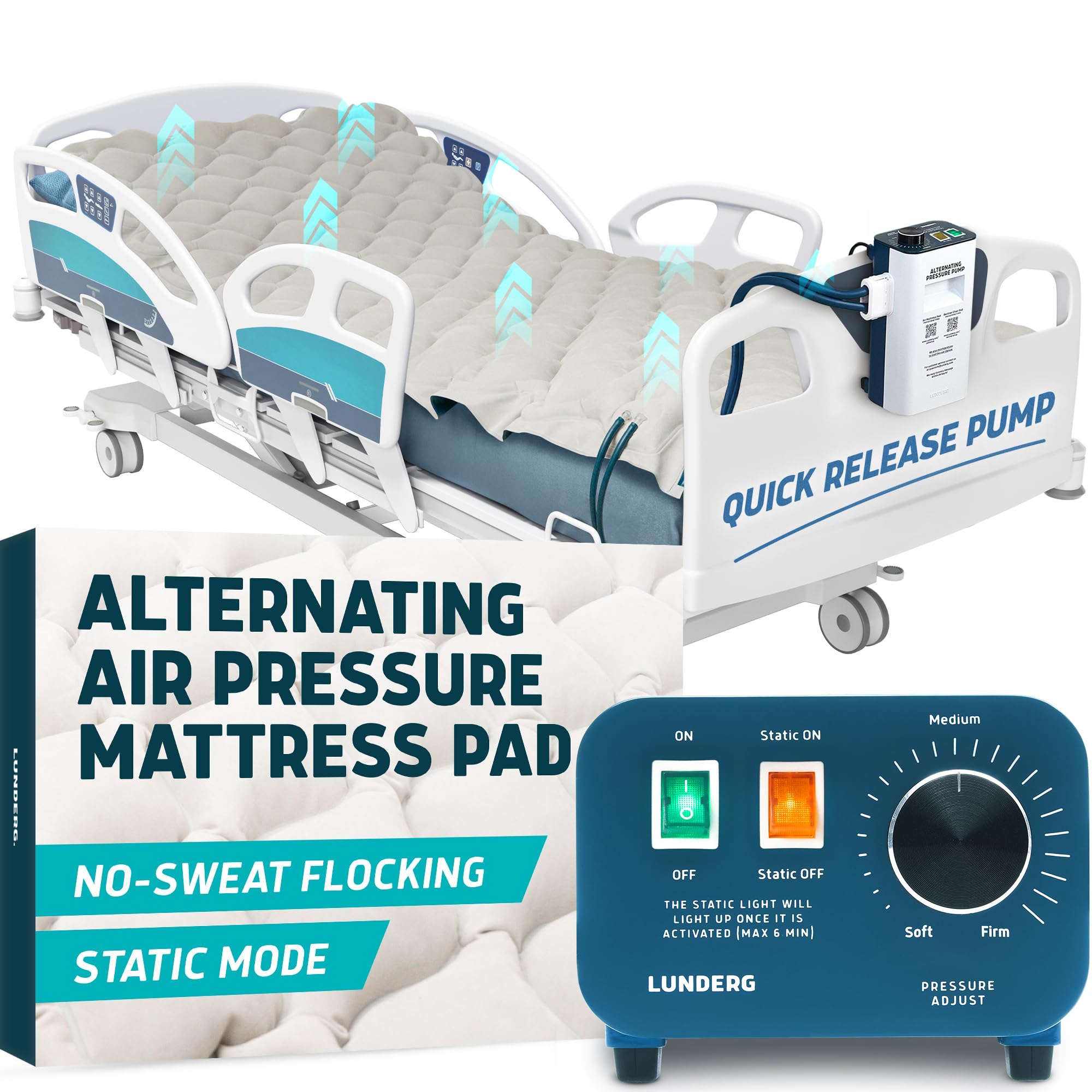
The Lunderg Flocking pad solves the most common complaint about alternating pressure overlays: the hot, sticky, vinyl-on-skin feeling that makes patients reject the therapy. Its patented flocking technology creates a soft, fabric-like surface that breathes, reducing moisture buildup and improving comfort for users who spend 12+ hours in bed. The pump is rated at 23 dBA—barely audible in a quiet room—and includes both alternating and static modes.
Setup is straightforward: unroll the pad, connect the quick-disconnect air hose, and inflate to firm over 20 minutes (three full cycles). The static mode is useful for sitting up during meals or watching TV, while the alternating mode cycles every 6 minutes for pressure relief during sleep. The pad supports up to 300 lbs and fits standard twin or hospital beds. A patch kit is included for minor cell punctures.
Some users initially think the pad isn’t working because the cell movement is so gentle; pressing the static button confirms the alternation is active. The pad may flatten slightly under the buttocks when the user sits upright, but it returns to full support when lying flat. For patients who find traditional plastic-coated pads intolerable, this flocking version makes therapy comfortable enough to stick with long-term.
Why it’s great
- Flocking fabric eliminates the sweaty vinyl problem entirely
- Very quiet 23 dBA pump won’t disturb roommates
- Quick-disconnect hose and patch kit simplify maintenance
Good to know
- Not suitable for users over 300 lbs
- Cell support flattens slightly when sitting upright
3. MedVance Low Air Loss Mattress Replacement System with Alarm

The MedVance Low Air Loss system is the most technologically advanced unit on this list, featuring a fully digital pump with an LED screen that displays patient weight and current pressure. The 8-inch cell-on-cell design provides up to 24 hours of power outage protection—a critical safety net for patients who cannot be turned manually during an electricity loss. The weight capacity of 450 lbs makes it suitable for bariatric patients who often bottom out on standard 300-lb overlays.
The pump operates below 20 dBA and includes a wireless remote control for adjusting pressure from across the room, though the remote requires direct line-of-sight to the IR receiver and has a cheap feel. The quilted nylon cover is machine-washable and water-resistant, and the system includes a sitting mode that inflates the cells to firm for 20 minutes during meals. The CPR red tag allows immediate deflation for emergencies.
Users report dramatic improvement in pressure sore healing, often within the first month. The individual air cells are replaceable, and the dual-pump core ensures continuous operation even if one core fails. The pump does produce a consistent hum; some users find it soothing, while others prefer to place it on a soft surface to dampen vibration. For home care teams managing high-risk, high-weight patients, this system provides the closest thing to hospital-grade assurance available for home purchase.
Why it’s great
- 24-hour battery backup prevents therapy interruption during outages
- 450 lb weight capacity accommodates bariatric patients
- Digital display and remote enable precise pressure tuning
Good to know
- IR remote has limited range and cheap build quality
- Pump hum may need dampening on some floor types
4. Vive 8″ Alternating Pressure Mattress Replacement

The Vive 8″ replacement mattress provides maximum cell depth to prevent bottoming out for patients up to 350 lbs. The 16 individual air chambers alternate in pairs, with the three head-end cells remaining static to create a pillow area that keeps the patient’s head stable during cycling. The variable pressure pump allows you to adjust both the inflation firmness and the alternating frequency, giving caregivers fine control over the therapy intensity.
The pump is ultra-quiet and hangs on non-marking hooks at the foot of the bed, keeping it out of the way and reducing vibration. The waterproof vinyl cover is breathable to dissipate heat, though it still retains the typical plastic feel that some patients dislike. The cover can be wiped clean easily, but the manufacturer recommends covering it with a sheet for comfort. The unit comes with a 1-year warranty on the pump and 60 days on the mattress pad.
Some users report a constant squeaking or rubbing noise from the air cells inflating and deflating against each other, especially as the mattress settles over weeks of use. A long-term fix involves applying a silicone-based lubricant to the cell surfaces—not ideal, but manageable. The mattress has a proven track record for healing stage 1 and 2 pressure ulcers, with most users seeing improvement within two weeks. For a full replacement system at a mid-range price point, the Vive 8″ offers solid depth and adjustability.
Why it’s great
- 8-inch cells prevent bottoming out for heavier patients
- Static head pillow area keeps head comfortable during cycling
- Adjustable cycle frequency for customized therapy
Good to know
- Cells may develop squeaking noise over time
- Vinyl cover retains plastic feel despite being breathable
5. Drive Medical Med-Aire Low Air Loss Replacement System
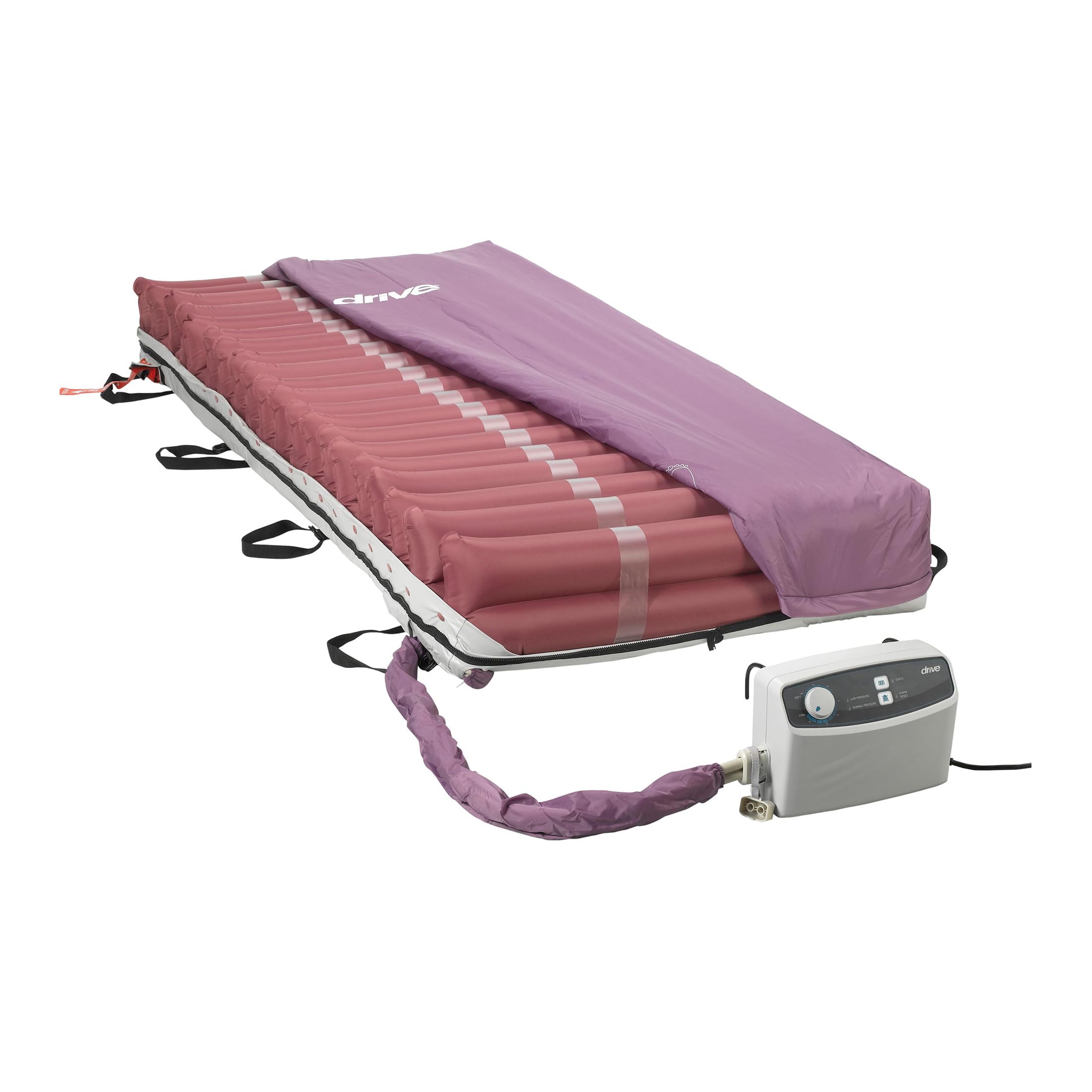
Drive Medical’s Med-Aire system goes beyond simple alternating pressure by adding low air loss technology, where microscopic amounts of air continuously escape through the cover to wick away moisture and reduce heat buildup. This is a significant advantage for incontinent patients or those in hot climates where skin maceration accelerates breakdown. The mattress contains 20 individual 8-inch bladders that are fully replaceable, meaning a puncture doesn’t require replacing the entire unit.
The cover is vapor-permeable with shear friction reduction properties, making it easier to reposition the patient without dragging their skin—a key factor in preventing friction-induced sores. The pump includes an audio/visual alarm that alerts caregivers if pressure drops too low, which is reassuring for overnight monitoring. The system fits standard hospital bed frames and supports the patient with continuous pressure monitoring that auto-adjusts to maintain consistent support.
A few users note that the pump produces a noticeable hum and some vibration through the bed frame, which can be mitigated by placing a folded towel under the pump. The low air loss feature means the mattress will gradually deflate if the power goes out—a backup generator is strongly recommended for bedridden patients. At a price point comparable to high-end alternatives, the Med-Aire’s low air loss capability makes it the top choice for patients where moisture management is as critical as pressure relief.
Why it’s great
- Low air loss cover actively wicks moisture and reduces heat
- 20 replaceable individual bladders for long-term durability
- Auto pressure monitoring with caregiver alarms
Good to know
- Requires backup power to maintain therapy during outages
- Pump vibration may transfer through bed frame
6. Vive 5″ Alternating Pressure Mattress Overlay
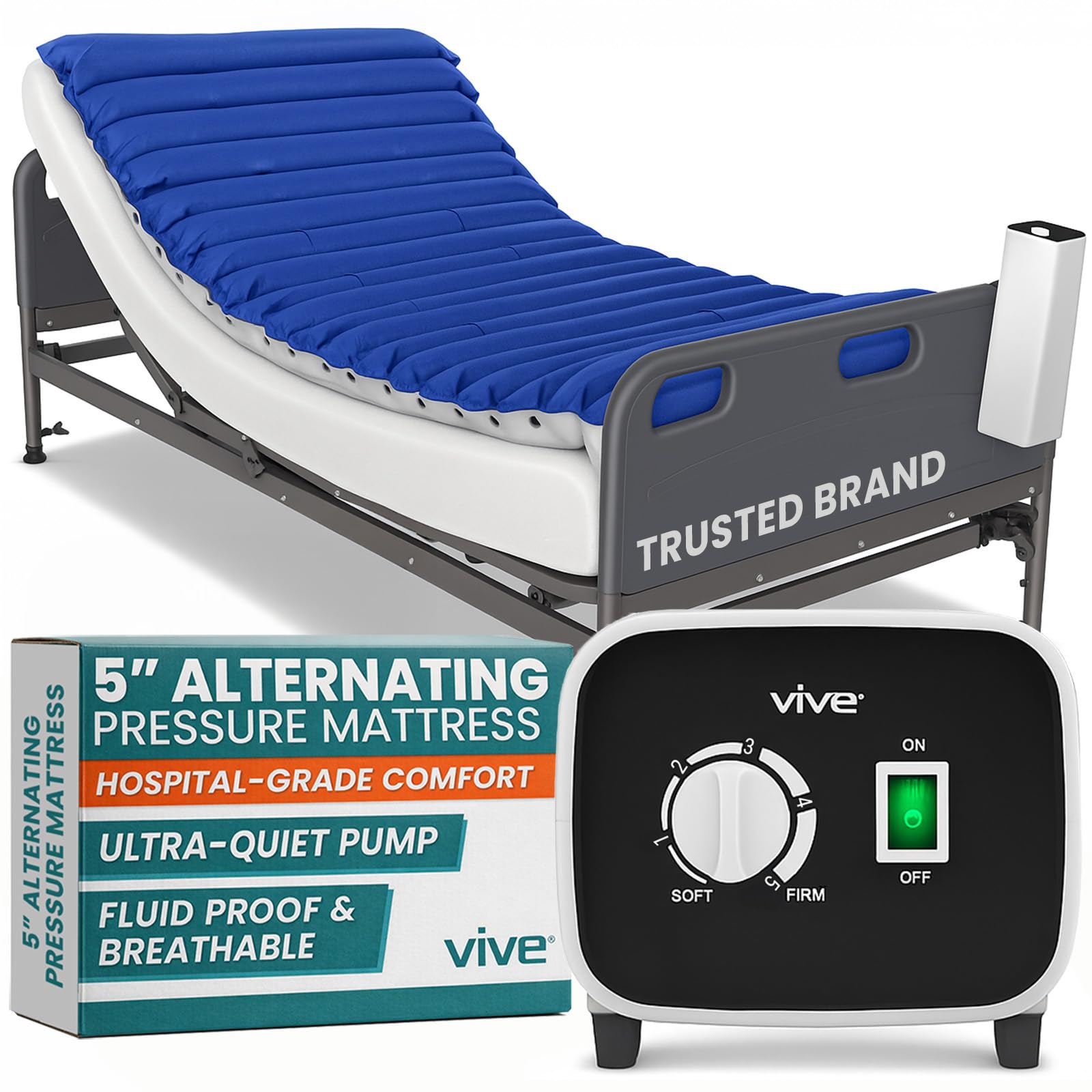
The Vive 5″ overlay strikes a solid balance between affordability and therapeutic depth. At 5 inches, it provides enough cell height to prevent most patients from bottoming out on a firm underlying mattress, while still fitting under standard fitted sheets. The 16 sealed air chambers alternate on a variable pressure cycle controlled by a dial on the pump, allowing adjustments from soft to firm. The pump is ultra-quiet and hangs on the bed’s footboard with non-marking hooks.
The waterproof vinyl cover is latex-free and machine-washable, which is convenient for home caregivers. The unit supports up to 300 lbs, and users report excellent results in preventing new bedsores and healing existing stage 1 and 2 ulcers. The setup is simple: place the overlay on the mattress, connect the hose, and inflate. A CPR valve is included for emergency deflation.
Some users report that the mattress tends to shift on the bed because the included straps are not very effective for standard mattresses—hospital bed frames with side rails provide a more secure fit. A few units have arrived with defective pumps that maintain full pressure without alternating, though these are generally replaced under the 1-year warranty. Overall, the Vive 5″ is a reliable entry-level overlay that doesn’t compromise on the essential alternating therapy function.
Why it’s great
- 5-inch depth offers good protection against bottoming out
- FSA/HSA eligible for tax-advantaged purchase
- Quiet pump with simple dial adjustment
Good to know
- Straps struggle to keep overlay secure on standard mattresses
- Occasional pump defects reported, but covered by warranty
7. Kekoy Alternating Air Pressure Pad for Recliner Chairs
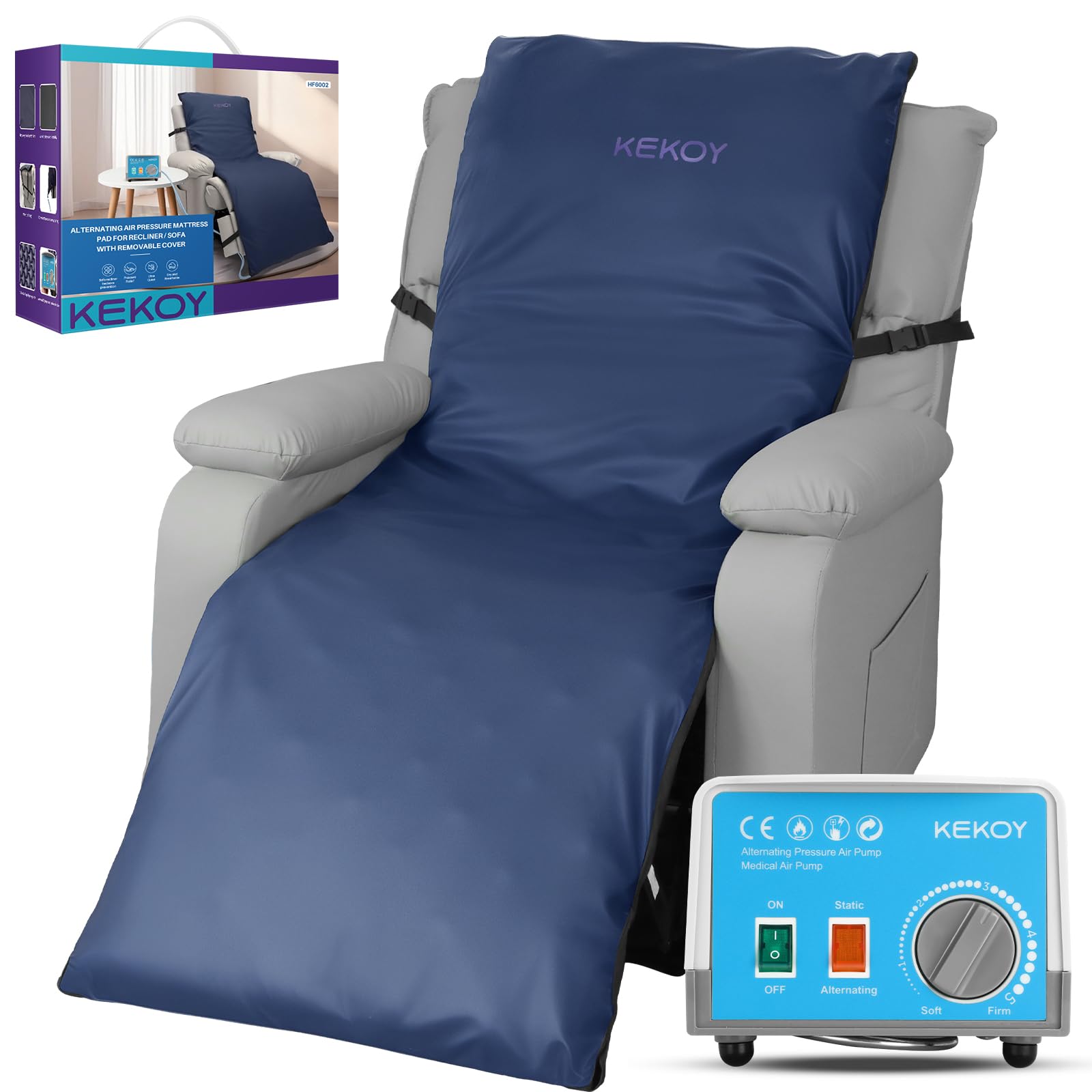
The Kekoy pad is specifically designed for recliner chairs, not beds—a critical distinction for elderly or post-surgery patients who spend most of their day in a recliner rather than lying flat. It features 128 enlarged air cells that target pressure on the tailbone, hips, and lower back, which are the primary contact points in a seated position. The anti-slip PVC base and dual shoulder straps are designed to keep the pad positioned during position changes, though the strap design has been a point of frustration for some users.
The pump operates at 32 dBA—quiet enough for a living room environment—and offers five adjustable pressure levels plus both alternating and static modes. The cover is made from four-way stretch fabric over a waterproof PVC base, which provides a more comfortable sitting surface than standard pad materials. Setup takes minutes: slip the cover on, partially insert the pad, inflate, and secure the straps.
A consistent complaint is that the pad shifts downward on the recliner over time, and the foot straps tend to come loose, requiring frequent readjustment. Some users also report that the individual air cells can be felt through the cover, which may be uncomfortable for lighter individuals. However, for patients who spend 8+ hours daily in a recliner and are at risk of sacral or coccyx pressure sores, this is the only product on this list purpose-built for that scenario.
Why it’s great
- Purpose-built for recliner chairs, not just repurposed bed pads
- 128 large cells provide deep, targeted pressure relief for seated posture
- Relatively quiet 32 dBA pump suitable for shared living spaces
Good to know
- Pad tends to slide down the recliner; straps are unreliable
- Air cells may be felt through the cover for some users
8. Lunderg Queen Size Alternating Air Pressure Pad
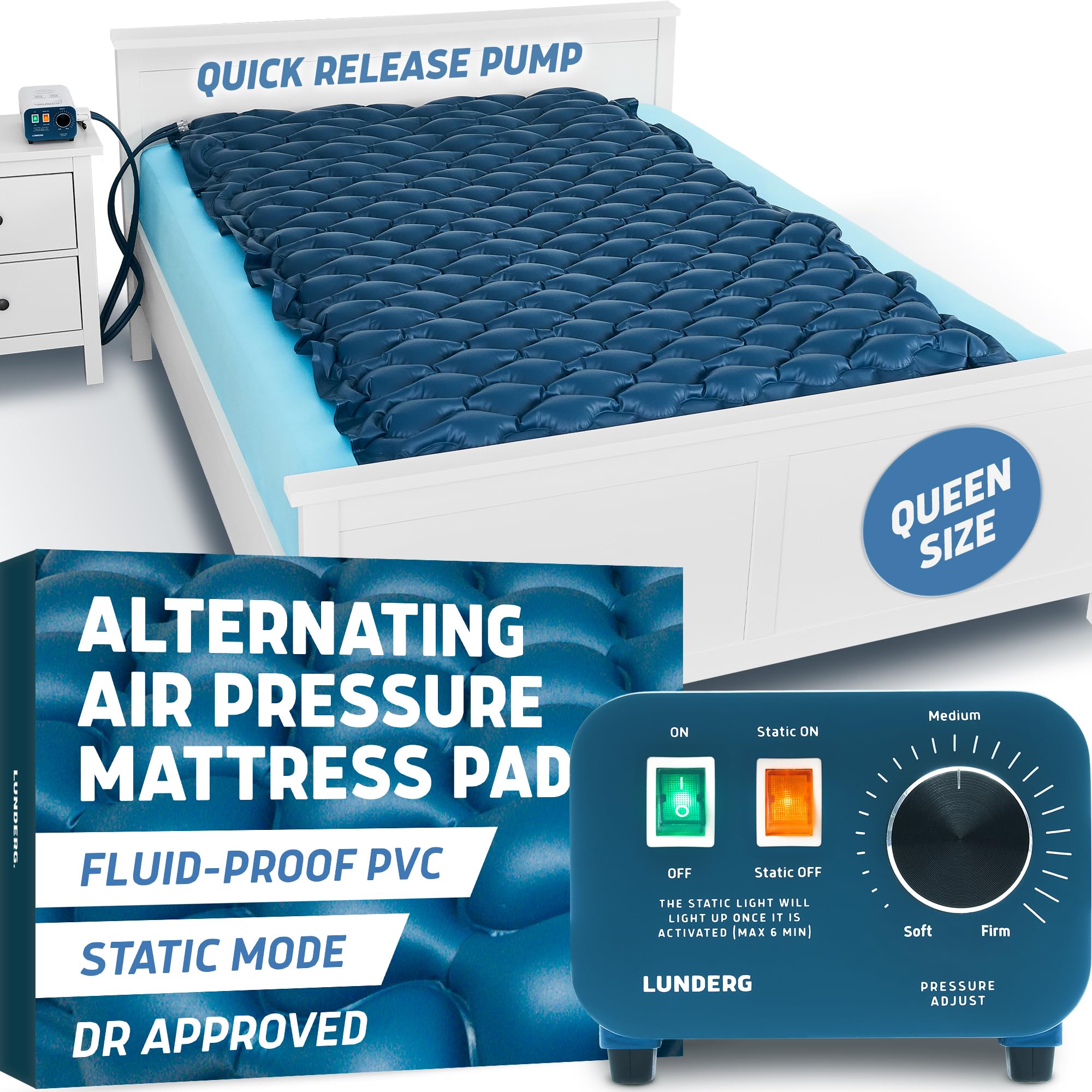
Lunderg offers this larger version of their therapy pad specifically sized for queen beds, measuring 53 by 77 inches and supporting up to 320 lbs. This is a practical choice for co-sleeping couples where one partner needs pressure relief therapy; the pad covers only one side of the queen bed, allowing the other partner to sleep on their own mattress surface. The pad shares the same 23 dBA pump and 6-minute alternating cycle as the twin Lunderg model, ensuring consistency in therapy.
The pump includes both alternating and static modes, with a quick-disconnect hose for easy setup. The pad is waterproof and designed to be covered with a sheet for moisture management. Inflating to firm takes about 20 minutes (three full cycles), after which you can dial back to the desired softness. The static mode is useful for sitting up during TV or meals.
Users report the same excellent pressure relief results as the smaller model, with no red marks or new sores developing even after a month of continuous use. The pad does flatten under the buttocks during sitting, but returns to full support when lying flat. The queen size means the hose connections need to be positioned carefully to avoid interfering with the sleeping partner. For couples where one person needs alternating therapy and the other doesn’t, this is the most convenient option available.
Why it’s great
- Fits queen beds for co-sleeping without disturbing the partner
- Same ultra-quiet 23 dBA pump as the popular twin model
- 320 lb capacity accommodates larger patients
Good to know
- Pad flattens under buttocks when sitting upright
- Hose may require careful routing to avoid partner interference
9. Drive Medical Med Aire Alternating Pressure Pad and Pump

The Drive Medical Med Aire is the most budget-friendly option here, and it has been a reliable entry-level overlay since 2009. The 2.5-inch cell height is sufficient for pressure prevention in lighter patients (up to 300 lbs) provided the underlying mattress is firm. The 4 LPM pump alternates every 5 minutes, which is within the therapeutic window, and offers both fixed and variable pressure settings. The vinyl pad includes end flaps that tuck under the mattress to keep it secure.
Setup takes less than 5 minutes, and the pad can be used on standard home mattresses, hospital beds, or adjustable beds. Users report that it effectively prevents new bedsores from forming and helps heal existing stage 1 ulcers when combined with proper wound care. The pump hangs on the bed frame using built-in brackets, keeping it off the floor. The unit is durable, with many users reporting years of reliable service.
The 2.5-inch depth means this is strictly a prevention tool—it will not provide adequate pressure relief for patients with stage 3 or 4 ulcers, nor for heavier patients who may bottom out quickly. The pump is audible, with some users describing it as “noisy at times,” especially in a quiet room. The pad’s vinyl surface can also feel hot and sticky, requiring a sheet or pad cover for comfort. For caregivers on a tight budget who need a simple, proven prevention overlay for a lighter patient, this is the most affordable entry point.
Why it’s great
- Proven track record since 2009 with thousands of positive reviews
- Very low entry cost for basic pressure prevention therapy
- End flaps keep pad securely in place on the mattress
Good to know
- 2.5-inch cells are too shallow for heavier patients or deep ulcers
- Pump noise may be disruptive in quiet rooms
FAQ
Can I use an alternating pressure overlay on any bed?
How often should I replace the alternating pressure pad?
Should I use static mode or alternating mode for sleeping?
Can the pump be placed on the floor for quieter operation?
Final Thoughts: The Verdict
For most users, the best alternating pressure mattress for bedsores winner is the MedVance Comfort because it combines hospital-grade 8-inch cell depth, a near-silent sub-20 dBA pump, and replaceable individual air cells at a price far below rental systems. If you want a flocking fabric surface that eliminates the hot vinyl feel, grab the Lunderg Flocking Pad. And for managing moisture in incontinent or high-heat scenarios, nothing beats the Drive Medical Med-Aire Low Air Loss system.