
Printing with aluminium-infused filaments is a different game entirely. The weight, the surface texture, and the thermal demands shift everything — if your hotend can’t reach the required temperature or your bed adhesion fails under the extra mass, you are left with a brittle, delaminated shell that cracks along the layer lines the moment you handle it. Getting it right means choosing a machine engineered for the abrasive, heat-hungry nature of metal-filled materials.
I’m Min — the co-founder and writer behind Gadgets Feed. Over the last several months, I’ve been deep inside the spec sheets, customer review patterns, and thermal performance data for every printer that claims to handle aluminium and other high-temperature composites.
This guide is built around verified thermal limits, real-world print reliability, and the structural integrity required to produce functional metal-like parts. My goal is to help you find the right aluminium 3d printer for your specific projects and budget.
How To Choose The Best Aluminium 3D Printer
Selecting a printer for aluminium or metal-filled filaments means looking past general specs and focusing on the hardware that enables reliable high-temperature printing. Standard PTFE-lined hotends break down above 260°C, and brass nozzles wear out in hours when pushing abrasive aluminum oxide particles. Every choice below is tied to those realities.
All-Metal Hotend and Nozzle Temperature
Aluminium-filled filaments typically require nozzle temperatures between 260°C and 320°C. A true all-metal hotend — where the heatbreak is metal all the way to the cold side — is required because PTFE tubing degrades and releases toxic fumes at those temps. Look for a printer with a listed maximum nozzle temperature of at least 300°C, ideally 320°C or more for high-load engineering composites like PPS-CF or PA-CF.
Hardened Nozzle vs. Brass
The aluminium oxide powder in metal-filled filaments is highly abrasive. A standard brass nozzle will wear out its orifice after a few hundred grams of material, causing under-extrusion and poor dimensional accuracy. A hardened steel nozzle — or at minimum a nozzle with a hardened steel tip — is mandatory. Some printers ship with a spare hardened nozzle; verify this before buying.
Chamber Heating and Ambient Control
Metal-filled filaments, especially those blended with polycarbonate or nylon bases, are prone to warping and layer separation if the ambient temperature drops. A heated chamber — ideally capable of maintaining 55–65°C — drastically improves interlayer adhesion. If the printer lacks a heated chamber, consider a budget model that can be enclosed aftermarket, but note that active chamber heating is far superior to passive enclosure for engineering materials.
Quick Comparison
On smaller screens, swipe sideways to see the full table.
| Model | Category | Best For | Key Spec | Amazon |
|---|---|---|---|---|
| ELEGOO Centauri Carbon | Premium CoreXY | Plug-and-play reliability | 320°C nozzle, die-cast frame | Amazon |
| QIDI PLUS4 | Engineering Specialist | High-temp composites | 370°C nozzle, 65°C chamber | Amazon |
| Creality K2 Combo | Multicolor Workhorse | Production & multicolor | 600 mm/s, 16-color CFS | Amazon |
| Bambu Lab A1 Combo | User-Friendly Premium | Instant multi-color prints | 10,000 mm/s² acceleration | Amazon |
| Prusa MK4S | Pro Workstation | Consistent professional parts | Input shaping, open-source | Amazon |
| FLASHFORGE AD5M Pro | Fast Enclosed | Quick prototyping | 600 mm/s, 280°C nozzle | Amazon |
| Anycubic Kobra X Multicolor | Entry Multicolor | Budget multicolor system | 600 mm/s, 19-color expand | Amazon |
| Creality Ender-3 V3 KE | Budget Speed | Learning & modding | 500 mm/s, 300°C extruder | Amazon |
| FLASHFORGE Adventurer 5M Pro | Compact Enclosed | School & home use | 600 mm/s, 280°C nozzle | Amazon |
In‑Depth Reviews
1. ELEGOO Centauri Carbon

The ELEGOO Centauri Carbon arrives fully assembled and pre-calibrated, which removes the most common variable for print failure among metal-filled filaments. Its 320°C brass-hardened steel nozzle handles aluminum-infused PLA and PETG right out of the box without needing an upgrade. The die-cast aluminum frame keeps vibrations minimal even at 500 mm/s travel speeds, which matters when you are pushing abrasive material that amplifies ringing in weaker structures.
The enclosed chamber with dual cooling fans stabilizes the ambient temperature around the print, reducing the warping that aluminium particles can cause as layers cool unevenly. The built-in camera and dual LED lights let you monitor first-layer adhesion remotely — a crucial check because metal-filled filaments are less forgiving of a bad start than standard PLA. The automatic vibration compensation and pressure advance algorithms further smooth out the high-speed layers.
Users report fast setup times and reliable WiFi connectivity with ElegooSlicer. The auto bed leveling uses 49 points and ensures consistent first layers, which is where most aluminium-composite prints succeed or fail. The all-metal hotend and direct-drive extruder provide the filament control needed for consistent extrusion when the material is heavier than standard thermoplastics.
Why it’s great
- Brass-hardened steel nozzle handles abrasive filaments immediately
- Pre-calibrated and fully assembled out of box
- Die-cast aluminum frame absorbs high-speed vibrations
Good to know
- Some users report intermittent quality control on early units
- Heated chamber is passive without active temperature control
2. QIDI PLUS4

If your primary material is aluminium-reinforced nylon or carbon-fibre composites, the QIDI PLUS4 is engineered specifically for that demand. Its 370°C all-metal hotend and active chamber heating system (400W, capable of maintaining 65°C) are not common in this price bracket — most printers in the premium-mid range top out around 320°C with passive chambers. The integrated multi-metal nozzle resists wear from aluminum oxide particles far longer than standard brass or even basic hardened steel.
The 12x12x11 inch build volume is larger than most competitors in the same tier, allowing you to print multiple engineering-grade parts in a single run. The dual motor-driven Z-axis and 6mm thickened aluminium bed provide the flatness required for metal-filled filaments that shrink more during cooling. The printer runs open-source Klipper firmware, so you have full control over acceleration, pressure advance, and resonance compensation without proprietary locks.
The PLUS4 comes with an integrated filament cutter and is compatible with the upcoming QIDI BOX multi-filament feeder for multi-color engineering parts. Users with over 4,000 print hours report minimal maintenance — the hotend, linear shafts, and lead screws hold up well under continuous abrasive use.
Why it’s great
- 370°C hotend supports PPS-CF and PPA-CF without modification
- Active 65°C chamber reduces warping on large nylon-aluminium parts
- Open-source Klipper firmware for deep tuning
Good to know
- Early units had SSR board issues (upgraded free by QIDI)
- Setup may require manual USB OTA update for some units
3. Creality K2 Combo
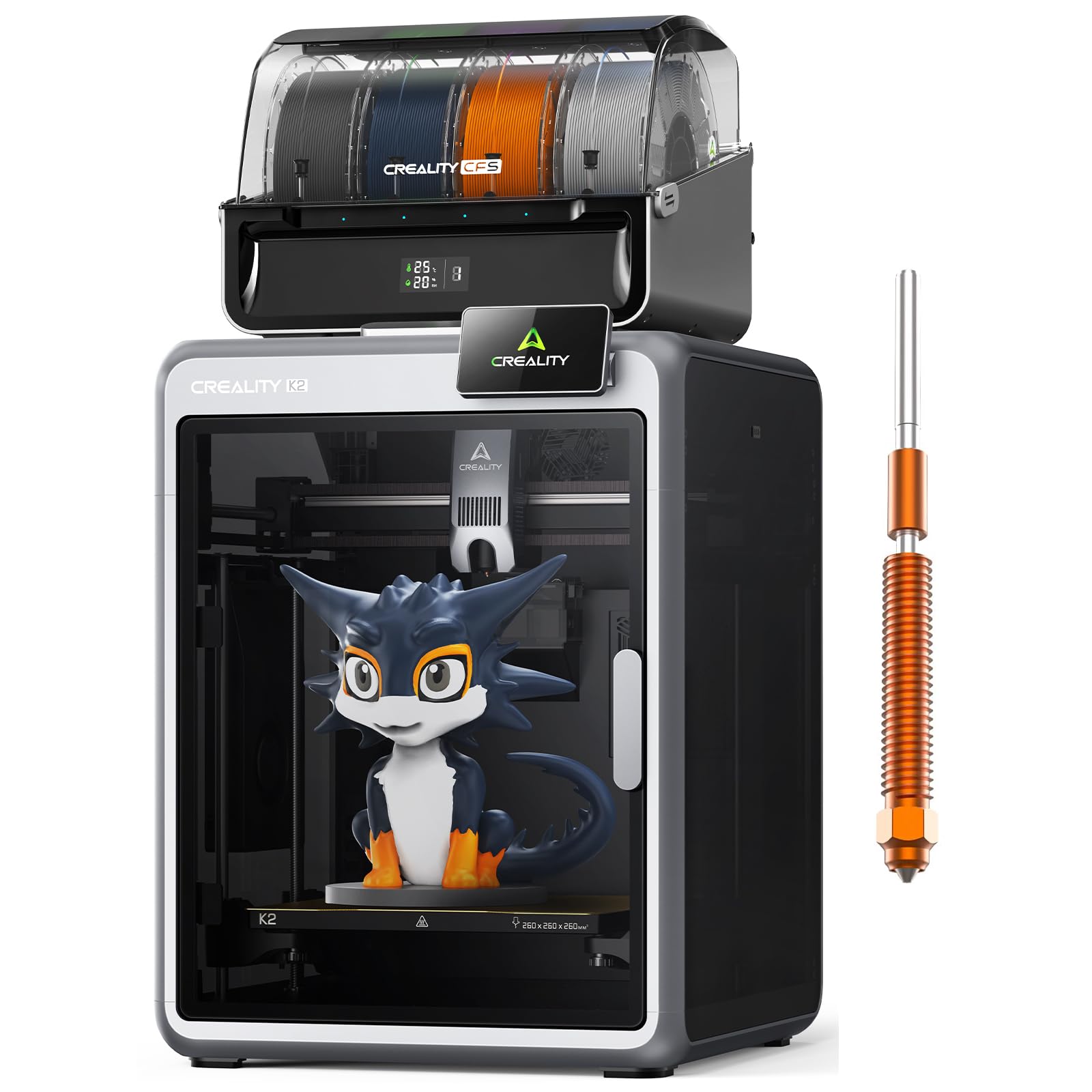
Creality K2 Combo is built for production volume and multicolor capability, but its engineering extends to high-temperature materials as well. The next-gen direct-drive extruder uses hardened steel drive gears, meaning it can push aluminium-filled filaments through the hotend without gear wear. The 260x260x260 mm build volume is generous for functional parts that benefit from metal-like weight and stiffness.
The dual-color CFS system automates filament changes and includes moisture-proof storage — a practical feature if you are switching between standard PLA and abrasive aluminium blends mid-print. The step-servo motors on the extruder and X/Y axes maintain extrusion consistency even at the full 600 mm/s speed, which prevents under-extrusion when pushing viscous metal-loaded materials. The AI camera detects print failures and notifies you via the app.
The K2’s frame uses die-cast aerospace-grade aluminum alloy top parts and a precise steel X-axis rail. The solid structure helps the printer handle the extra vibrational load that aluminium-filled filaments create at speed. The auto leveling only probes the area where the print will sit, which speeds up the setup for repeated production runs.
Why it’s great
- Hardened steel extruder gears resist abrasive aluminum particles
- CFS automates material changes and keeps filaments dry
- Aerospace-grade frame dampens high-speed vibrations
Good to know
- Createspace store direct pricing is often lower than Amazon
- Createspace app library is limited for advanced users
4. Bambu Lab A1 Combo + LED Lamp Kit
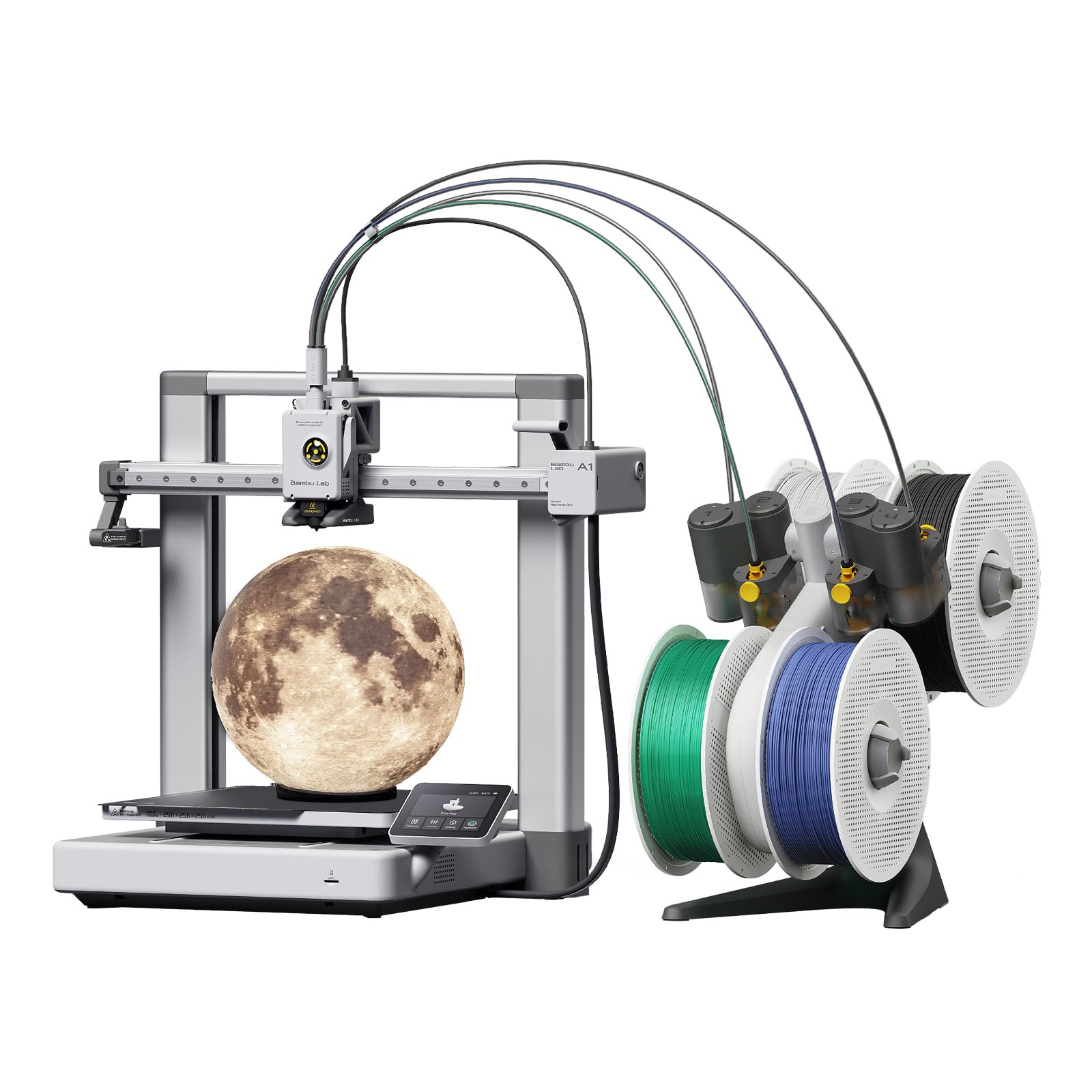
Bambu Lab A1 Combo brings the brand’s signature ease of use to the high-speed segment, but its suitability for aluminium filaments depends on the nozzle configuration. The printer ships with a standard brass nozzle, so you will need to swap in a hardened steel nozzle (available separately) before printing abrasive metal-filled materials. The full-auto calibration system handles Z-offset and bed leveling without any manual intervention, ensuring a consistent first layer every time — critical when using heavier filaments.
The AMS lite system supports four colors and works with most PLA-based filaments, including aluminium-infused PLA, provided you use the correct nozzle. Active flow rate compensation adjusts extrusion in real time based on sensor readings, which helps maintain layer consistency when material density varies. The 1-Clip quick-swap nozzle makes it trivial to switch between brass and hardened steel as your material changes.
The integrated LED Lamp Kit adds a unique bonus for functional lighting projects, but that peripheral does not affect core printing performance. The printer operates at ≤48 dB, which is noticeably quieter than other CoreXY machines pushing similar speeds. The mobile app provides real-time monitoring, camera feed, and time-lapse generation.
Why it’s great
- Full-auto calibration eliminates first-layer guesswork
- Active flow rate compensation smooths extrusion for metal-filled materials
- Quick-swap nozzle simplifies switching between filament types
Good to know
- Stock nozzle is brass — hardened steel required for aluminium filaments
- Instruction manual lacks depth on advanced settings
5. Original Prusa MK4S
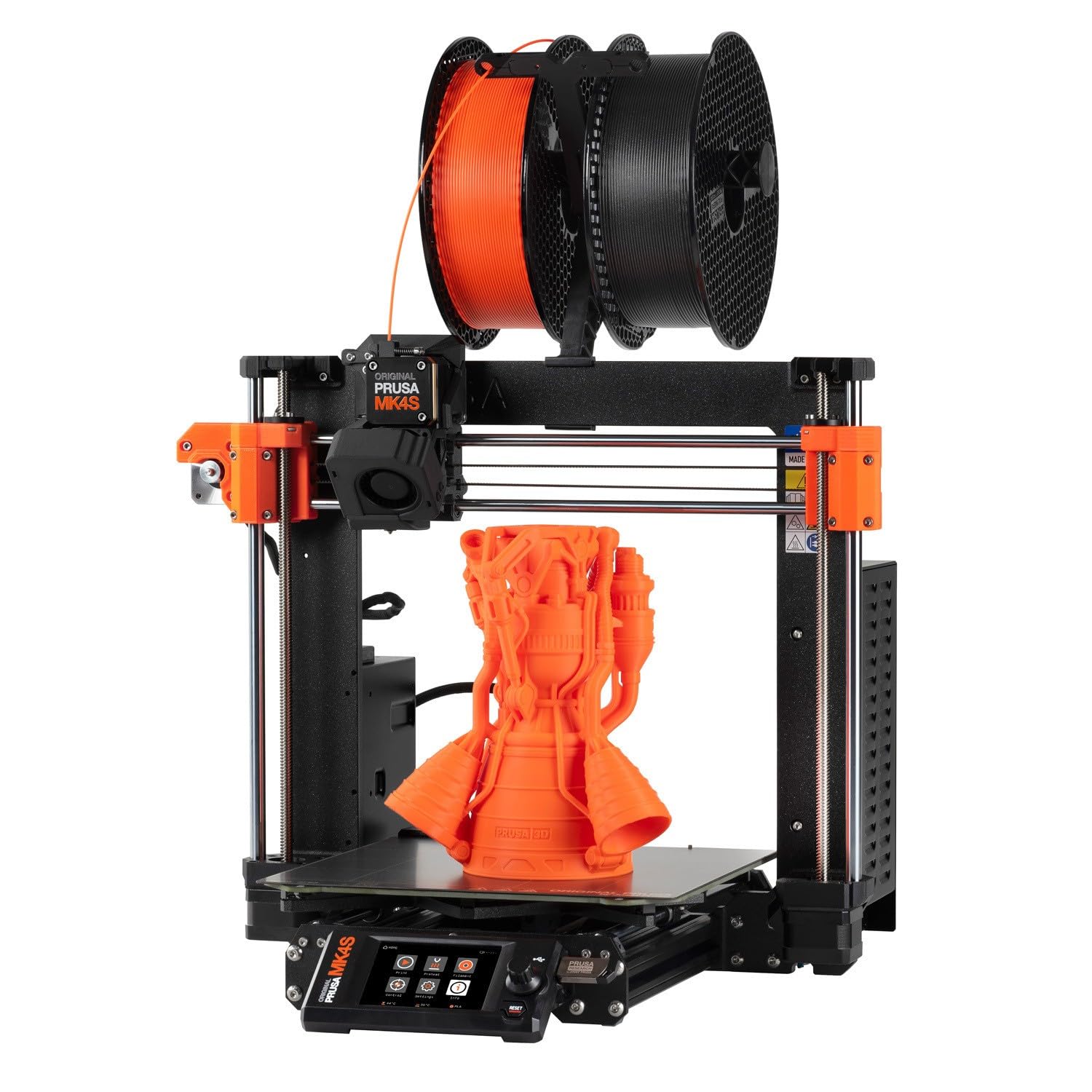
Prusa’s MK4S is the most mature platform for aluminium filament printing in terms of ecosystem support. The PrusaSlicer includes validated profiles for a wide range of metal-filled filaments, which means your parameters for retraction, temperature, and fan speed are pre-tuned. The all-metal hotend reaches 300°C, which covers the vast majority of aluminium-reinforced PLA and PETG blends.
Input shaping is implemented to filter out vibrations common at higher speeds, which directly improves surface finish on materials that tend to show every ringing artifact. The fully assembled version arrives tested and prints right away, eliminating the variable of user assembly errors that can sabotage results with abrasive filaments. The PEI spring steel sheet provides excellent adhesion for metal-filled materials, which are often heavier and more prone to shifting during the print.
The MK4S has a smaller build volume (9.84 x 8.3 x 8.6 inches) compared to competitors, but the print bed is precision-machined and stays flat across its entire surface. The open-source design means you can upgrade to a hardened nozzle and reconfigure firmware settings without voiding a warranty or relying on proprietary parts. Users report consistent, trouble-free printing over hundreds of hours.
Why it’s great
- PrusaSlicer profiles are pre-validated for metal-filled filaments
- 300°C all-metal hotend covers most aluminium-reinforced materials
- Open-source platform allows nozzle and firmware upgrades
Good to know
- Build volume is smaller than similarly priced competitors
- Premium price point for the hardware specs
6. FLASHFORGE AD5M Pro

FLASHFORGE AD5M Pro combines a rigid CoreXY structure with quick-swap nozzles, allowing you to move from a standard 0.4mm brass to a 0.6mm hardened steel nozzle in three seconds when you want to run aluminium-filled filaments. The all-metal frame provides stability at 600 mm/s, and the vibration compensation keeps layer lines consistent when using abrasive materials that can otherwise cause micro-movement in the print head.
The enclosed chamber with dual-layer filtration is beneficial for high-temperature printing, as it traps particles released during the processing of metal-filled composites. The 280°C hotend temperature supports PLA-CF and PETG-CF blends, which are common carriers for aluminum powder. The pressure-sensing auto leveling ensures the first layer is consistent across the 220x220mm bed.
The unit supports remote monitoring via the Maker app, including real-time video and print progress tracking. The auto-shutdown feature triggers when a print finishes, which is useful for overnight runs of large metal-filled parts that take many hours to complete. Users note that the HEPA filtration is effective but door gaps may reduce its efficiency.
Why it’s great
- 3-second quick-swap nozzle system for switching to hardened steel
- CoreXY all-metal frame minimizes vibrations at high speed
- HEPA and carbon filtration for safer high-temp printing
Good to know
- Software on included USB may be outdated for newer macOS versions
- Some units arrive with packaging damage affecting frame alignment
7. Anycubic Kobra X Multicolor
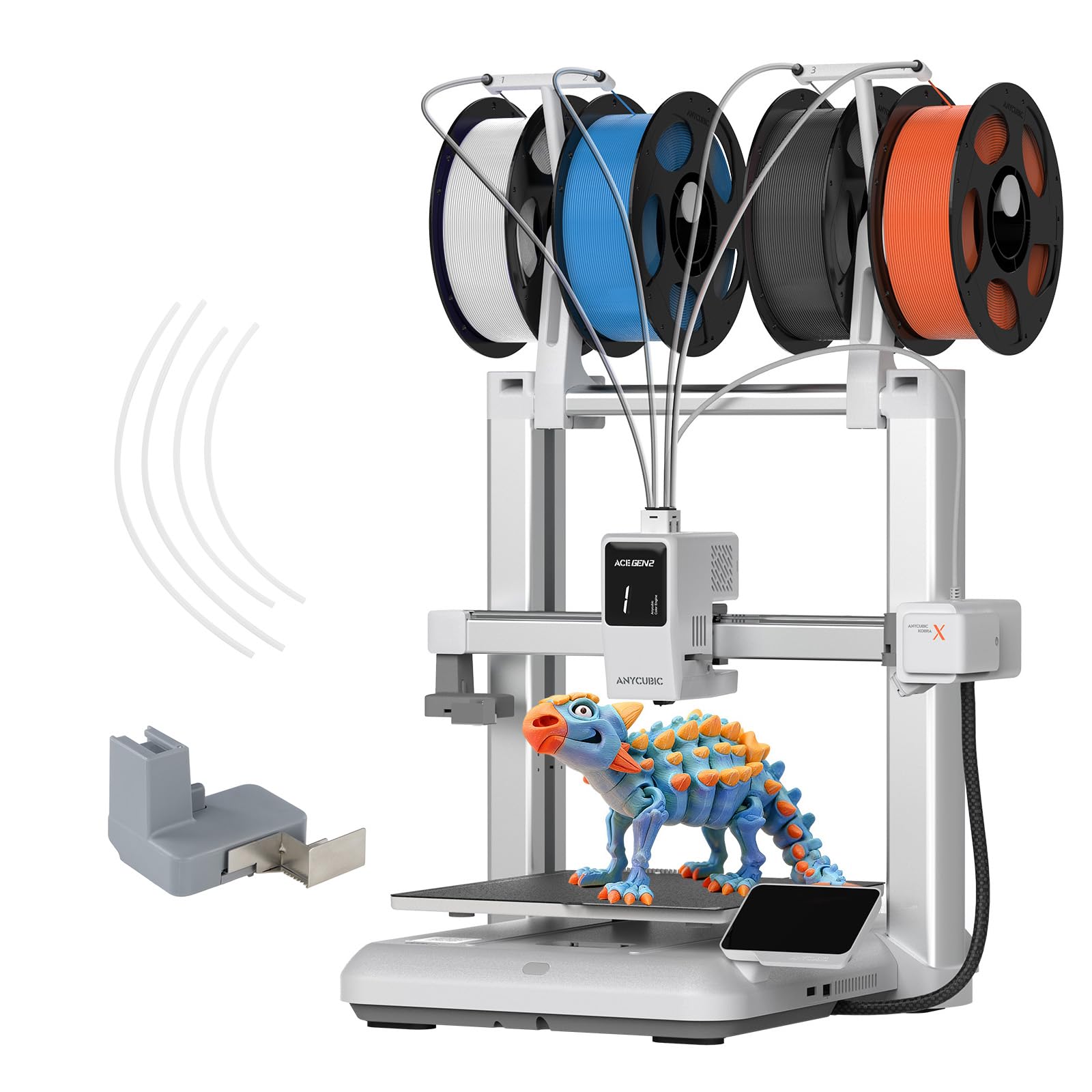
Anycubic Kobra X Multicolor brings multicolor capability to the budget segment, but its suitability for aluminium filaments depends on nozzle choice. The stock hardened steel nozzle is a positive for abrasive materials out of the box — you won’t need to swap it immediately. The 300°C nozzle temperature covers aluminium-reinforced PLA and PETG blends without modification, and the vibration compensation algorithm smooths layers at the full 600 mm/s travel speed.
The LeviQ 3.0 auto leveling uses 49 points and a refined algorithm to ensure bed flatness, which reduces the risk of first-layer failure with heavier metal-filled filaments. The ACE 2 Pro system supports up to 19 colors with four units, though the primary use case for aluminium builders is the ability to print a functional metal part in one color and add support interfaces in a different material without manual swaps.
The AI camera provides spaghetti detection and remote monitoring, which is valuable during long prints where a clog or shift would waste expensive aluminum filament. The top-mount spool holder frees desktop space, and the dual-band WiFi ensures stable connectivity for remote control. Users highlight the easy assembly and quiet 45dB operation as distinguishing features at this price point.
Why it’s great
- Hardened steel nozzle included for abrasive filaments
- 300°C hotend sufficient for PLA and PETG-based aluminium blends
- Multicolor system allows material-specific support interfaces
Good to know
- ACE 2 Pro and ACE Pro are not cross-compatible
- Some units arrive with defective filament sensors
8. Creality Ender-3 V3 KE

The Ender-3 V3 KE is the most accessible entry point for aluminium filament printing, but it comes with caveats. The Sprite direct extruder with 300°C maximum temperature and bi-metal heatbreak is a genuine all-metal setup that can handle aluminium-filled filaments, but the stock nozzle is brass. You will need to swap to a hardened steel nozzle before running any abrasive material, or the nozzle will wear out within a few hundred grams of printing.
The CR Touch sensor provides automatic bed leveling, and the 0.1 mm claimed accuracy is acceptable for functional parts. However, the open-frame design means you have no chamber heating, so aluminium-filled nylon or polycarbonate blends will warp on larger prints. The printer is suitable for aluminium-infused PLA, which has a lower thermal requirement and is less prone to warping. The dual fans cool the print quickly, which helps with bridging but can exacerbate warping on metal-filled materials.
At 500 mm/s and 8000 mm/s² acceleration, this is a fast bedslinger, but the motion system creates inherent limitations for heavy materials. The print quality is good for the price, and the community support is extensive — there are countless guides for upgrading to hardened components. Many users run this printer for years with modifications.
Why it’s great
- All-metal hotend with 300°C capability for metal-filled materials
- CR Touch auto leveling ensures consistent first layers
- Low entry price for learning aluminium printing
Good to know
- Stock brass nozzle must be replaced with hardened steel for abrasive use
- Open frame design causes warping with high-temp metal blends
9. FLASHFORGE Adventurer 5M Pro

The FLASHFORGE Adventurer 5M Pro is the most straightforward premium choice for users who want a fully enclosed, fast working printer without the need to mod or upgrade. Its 280°C all-metal hotend is adequate for aluminium-filled PLA and PETG, and the full-metal direct extruder maintains consistent feed pressure with the heavier material. The CoreXY structure and metal frame hold stability at 600 mm/s, and the quick-detachable nozzle system makes cleaning or swapping to a hardened nozzle simple.
The 1-click auto printing system manages the heat-up, calibration, and print start sequence automatically. The pressure sensing auto leveling handles bed height detection. The dual-sided PEI platform provides strong adhesion for metal-filled prints, which helps counteract the tendency of heavier parts to shift during printing. The enclosed design with HEPA and carbon filtration makes it suitable for classroom or office environments where smell and particles are concerns.
The Flash Maker mobile app provides real-time video monitoring and remote parameter adjustments. The auto shutdown and power-loss recovery functions are practical for long engineering prints. Users report that the first print quality is very good out of the box, with fast 35-second nozzle heat-up time to 200°C.
Why it’s great
- Fully enclosed with HEPA filtration for safer high-temp printing
- Quick-detachable nozzle system simplifies material changes
- 35-second heat-up to 200°C reduces wait time
Good to know
- Stock nozzle is brass — requires hardened steel for aluminium filaments
- Some units arrive with calibration errors or packaging damage
FAQ
Can I print aluminium-filled filament on a standard PLA printer?
How long does a hardened nozzle last with aluminium filament?
Do I need a heated chamber for aluminium PLA?
Will aluminium-filled filament clog my printer more often?
What is the best layer height for aluminium filament?
Final Thoughts: The Verdict
For most users, the aluminium 3d printer winner is the ELEGOO Centauri Carbon because it combines a 320°C hardened nozzle, fully assembled setup, and a die-cast aluminum frame at a price that undercuts competitors with similar specs. If you need the absolute highest nozzle temperature for engineering-grade aluminium composites, grab the QIDI PLUS4 with its 370°C hotend and active 65°C chamber. And for a production-oriented multicolor system that handles abrasive materials without hesitation, nothing beats the Creality K2 Combo.