
Our readers keep the lights on and my morning glass full of iced black tea. As an Amazon Associate, I earn from qualifying purchases.
Specs are compiled from manufacturer listings and verified buyer reviews and can change over time — please confirm the key details on the product page before buying.
The biggest letdown with metal-look 3D prints is that they usually just look like painted plastic. A true aluminum or metal-filled filament changes that — it carries real metal particles, so parts feel denser, take on a genuine patina, and can even hold a magnet. The trade-off is that abrasive metal dust wears down standard brass nozzles, so you need a hardened steel one.
I’m Min — the founder and writer behind Gadgets Feed. This guide is built by comparing the manufacturers’ published specifications and the patterns across verified customer reviews, so you get each pick’s real strengths and trade-offs instead of marketing spin.
Here is how the top metal-infused PLA spools compare, and what actually matters when you shop for the best aluminum 3d filament for your printer.
Our Picks at a Glance
How To Choose The Best Aluminum 3D Filament
A spool’s “metal” label hides a big difference between a real metal-filled composite and a simple metallic-colored filament. Real metal-filled PLA blends actual iron or copper powder into the plastic, giving you a heavier, sturdier part that you can sand, polish, and chemically patina. Metallic-colored PLA just imitates the look, so it stays light and plastic-soft.
Check the metal load and what it does
You get real metal behavior only when the metal powder load is high enough. With a 45% iron fill by weight, your printed part becomes twice as dense as standard PLA, and magnets will stick to it. Copper-filled spools with a much lower metal share mostly give you a sheen, not true metal behavior — so decide if you want the look alone or the physical metal effect.
Plan for the abrasive reality
Metal particles make the filament abrasive, so it grinds down a standard brass nozzle over time. A hardened steel nozzle solves this, and you will often need to print a bit hotter to keep the metal-rich melt flowing. Some users also find these spools brittle on the reel, so gentle feeding and a dry storage bag matter more than with plain PLA.
Quick Comparison
| Model | Best For | Metal Load | Spool Size | Signature Trait | Amazon |
|---|---|---|---|---|---|
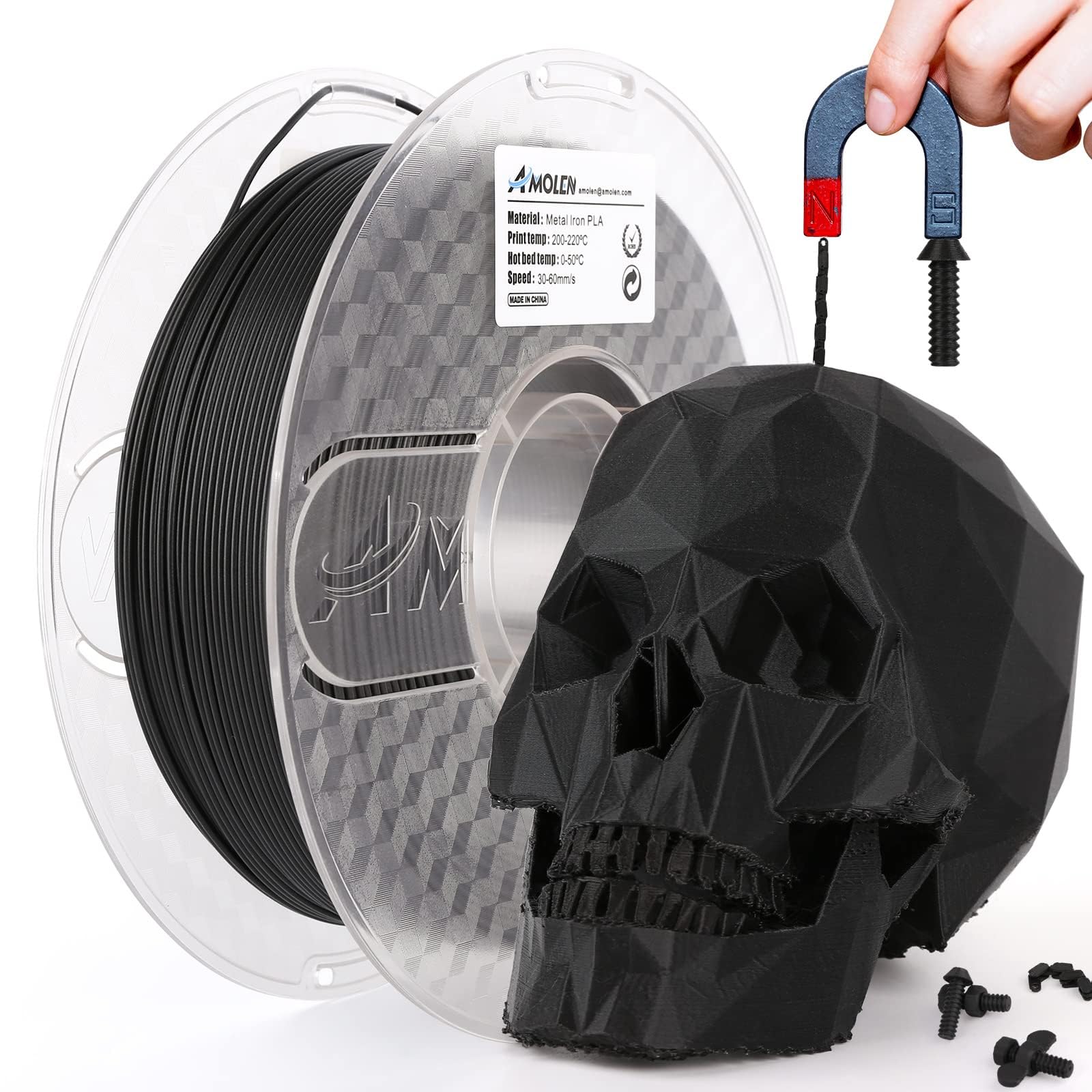
| AMOLEN Metal PLA★ Best Overall | Matte black builds | 20% iron powder | 1 kg | Magnetic + polishable | Amazon |
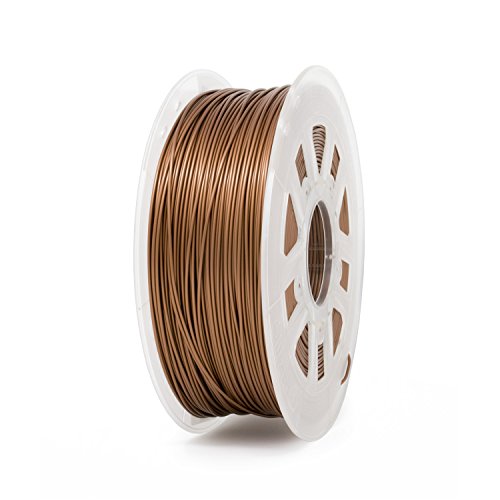
| Gizmo Dorks Copper Fill | Copper aesthetics | Copper blend | 1 kg | Old-penny sheen | Amazon |
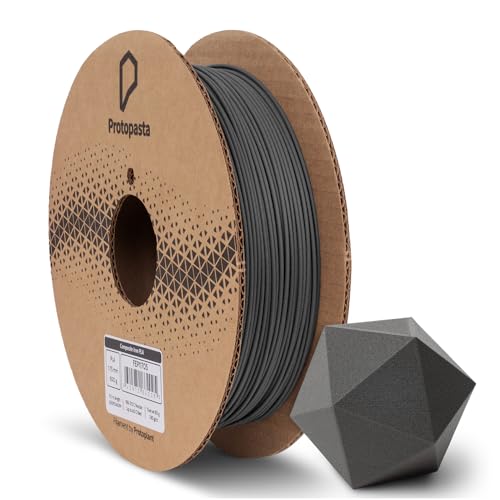
| ProtoPasta Iron PLA | Rust & magnet props | 45% iron powder | 500 g | Ferromagnetic + rusts | Amazon |
In‑Depth Reviews
1. AMOLEN Metal PLA Filament
Our pick — over 4★ from 6,500+ verified ratings; the strongest balance of quality and price.
Iron-laced matte black with a magnetic pull and a polishable face
This is the pick for anyone who wants a real metal effect without paying a premium. It packs 20% iron powder by weight into a matte black PLA, so finished parts take a magnet and can be polished because the actual metal sits on the surface. Printability is what wins people over — owners consistently report smooth, reliable layers across popular machines, including the Bambu X1 Carbon, which is a strong sign the 1.75mm diameter stays consistent at +/- 0.02mm.
The color draws almost as much praise as the printing behavior. Reviewers describe a marble-like surface that shifts and catches light, and the matte black finish hides layer lines better than glossy spools. Because the iron content is abrasive, use a hardened nozzle — a standard brass one wears down quickly with metal-filled material.
The honest downside is quality control. Some spools arrive brittle, and buyers report a bottom layer failing right at the start or a total absence of the advertised magnetism. That said, the vacuum-sealed bag and the 6-month warranty show the maker stands behind it, and for the price the printability and finish are hard to argue with.
What Owners Love
- Prints smoothly with reliable bed adhesion around 55°C
- Magnetic finish gives parts a genuine metal function
- Matte black marble look masks layer lines
- Polishable surface rewards post-print finishing
Watch Out For
- Occasional brittle spools that fail on the first layer
- Magnetism not guaranteed on every unit
- Requires a hardened nozzle due to iron abrasion
Reach for this if: you want the best all-around metal-filled PLA — magnetic, polishable, and a proven smooth printer.
Look elsewhere if: you cannot risk an off spool, since a small share of units arrive brittle with failed first layers.
2. Gizmo Dorks Copper Fill PLA
Copper sheen that mimics an old penny right off the spool
If your project lives or dies on color, this copper-filled spool delivers the look people notice first. Owners describe a natural copper tone with a sheen and glitter like an old penny, and the raw sculpted finish straight off the print bed takes post-processing well — sanding and buffing with steel wool brings up a brighter metallic luster. That appearance is the second-most-praised trait, right behind how easily it prints.
Printing is genuinely beginner-friendly. It behaves like standard PLA — you can run it around 200°C hotend and 50°C bed — with low warping and no need for a heated build chamber. The +/- 0.02mm tolerance keeps the 1.75mm filament feeding smoothly across Bambu Lab, Creality, Prusa, Elegoo, and Anycubic machines, so clogging and under-extrusion stay rare.
The catch is that this is a color-first filament, not a physics-first one. Owners mention the actual copper content is very low, which means the part does not patina and feels lighter than a true metal composite — unlike the AMOLEN above, which is magnetic. Brittleness is the other recurring gripe, with reports of the filament snapping on the spool during feeding, so handle the reel gently as you load it.
Best for: decorative and display pieces where the copper tone and easy printing matter more than true metal density or patina.
A fair warning: treat the spool carefully — a brittle reel that snaps mid-feed is the one consistent complaint.
3. ProtoPasta Ferromagnetic Iron PLA
Twice the density of PLA with magnets that stick and a real rust finish
This is the serious maker’s metal filament — the one that behaves like actual metal. It blends 45% iron powder by weight into PLA, giving prints twice the density of standard filament, so parts feel weighted and substantial in the hand. Because the iron is ferromagnetic, magnets stick to finished parts, which owners confirm works exactly as advertised.
What sets this apart is the patina. A light sanding and a spray of hydrogen peroxide, vinegar, and salt brings up a convincing rusted look, and model makers report soaking parts in saltwater for two days to get realistic corrosion on scale builds. The quality is the most-praised aspect across buyers, and the filament prints cleanly on consumer machines like the Prusa MK3S using standard PLA settings.
The trade-off is value and pickiness. The 500g spool costs more per gram than the 1kg options above, and value for money is the weakest-scored aspect. A small number of customers note inconsistent thickness that jams in PTFE tubing, and some Bambu AMS users find it will not work in that automated system. If your prints demand a real rusted or magnetic metal effect, this is the one — just budget for the smaller spool.
Why It Stands Out
- 45% iron makes prints genuinely ferromagnetic
- Twice the density of standard PLA for a weighted feel
- Rusts convincingly with a simple salt-and-vinegar treatment
- Prints smoothly on Prusa and similar consumer machines
Consider Before Buying
- 500g spool offers less material for the premium price
- Inconsistent thickness can jam PTFE tube setups
- Not reliable in Bambu AMS automatic feeders
Choose it if: you want real rust patinas and magnet-holding parts for models, props, or functional builds.
Think twice if: you print through a Bambu AMS or want maximum grams per dollar — the smaller spool and AMS issues push against it.
Understanding the Specs
Metal Load Percentage
This is the share of the filament’s weight that is actual metal powder. A 20% iron fill gives a polishable surface and some magnetism, while a 45% iron fill makes the part twice as dense as plain PLA and strongly magnetic. The higher the load, the more the part behaves like real metal — and the faster it wears down a brass nozzle, so switch to hardened steel.
Magnetic and Patina Behavior
Filaments with real iron respond to magnets, letting you build parts that attach to magnetic surfaces or hold a screwdriver bit. Iron also rusts, so you can force a patina with a mix of hydrogen peroxide, vinegar, and salt. Copper-filled spools with a low metal share only give a sheen — they cannot patina or hold magnets, so match the trait to your project.
FAQ
Do I need a hardened nozzle for metal-filled PLA?
Will magnets stick to every metal-filled filament?
Can I get a real rusted or patina finish on these prints?
What temperature do I print metal-filled PLA at?
Why is my metal-filled filament brittle on the spool?
Will metal-filled PLA work in a Bambu Lab printer?
What does the metal load number actually mean for my print?
Why is a 500g spool of iron PLA more expensive per gram?
Final Thoughts: The Verdict
For most people, the best aluminum 3d filament pick is the AMOLEN Metal PLA because it balances real iron content, magnetism, and polishability with proven smooth printing across popular machines. If you want the truest metal behavior — magnets that stick and a genuine rust patina — grab the ProtoPasta Iron PLA even though the 500g spool costs more per gram. And for pure copper aesthetics that print like standard PLA, the Gizmo Dorks Copper Fill delivers that old-penny sheen with the least fuss.
How We Picked
We do not accept paid placement. Every pick is matched to a real buyer and a real use-case; we do not hands-on test units.
Sources & Methodology
Specifications: manufacturer listings and product documentation. Review insights: verified customer reviews, as of August 2026. Pricing: not shown on this page (it changes often); check the current price via the retailer link.
As an Amazon Associate, Gadgets Feed earns from qualifying purchases. This does not affect which products we feature.