
Our readers keep the lights on and my morning glass full of iced black tea. As an Amazon Associate, I earn from qualifying purchases.
Specs are compiled from manufacturer listings and verified buyer reviews and can change over time — please confirm the key details on the product page before buying.
Here is the short answer: for most people, the strongest buy in this category is a 1/8″ panel with a real aluminum skin and a core you actually understand before you cut it. The biggest mistake is assuming every “aluminum composite” sheet is mostly aluminum — many are a plastic core wrapped in a thin metal face, and that changes how it paints, bends, and holds up outdoors.
I’m Min — the founder and writer behind Gadgets Feed. This guide is built by comparing the manufacturers’ published specifications and the patterns across verified customer reviews, so you get each pick’s real strengths and trade-offs instead of marketing spin.
For wall cladding, sign blanks, or a weatherproof access cover, the three picks below cover the sizes and cores that matter most. Here is what separates a good Aluminum Composite Material panel from a bendy, corner-bent disappointment.
Our Picks at a Glance

How To Choose The Best Aluminum Composite Material
The three things that actually decide whether you are happy with a panel are the core material, the skin, and how it arrives on your porch. Everything else — color, gloss, size — is a preference. Get the core, skin, and shipping condition wrong and no finish will save the project.
The core inside the sandwich is the whole story
A 1/8″ PE-core panel gives you a stiff, flat sheet that resists weather and cuts cleanly on a table saw. An aluminum composite panel is a sandwich: a thin aluminum face on each side bonded to a plastic core. The core is usually low-density polyethylene (PE) — a lightweight plastic honeycomb — and the front face is brushed or matte aluminum. A PVDF coating on top is a tougher paint layer designed to shrug off sun and moisture. If you plan to bend the panel, check first: the Blulu panels in this guide are explicitly marked “not suitable for bending.” If you plan to CNC-mill or cut to size, a PE core cuts cleanly and does not shatter the way acrylic can.
Skin thickness beats overall dimensions
A 48″ x 12″ sheet and a 36″ x 24″ sheet cover similar territory in square footage, but they are not interchangeable on the job site. Long, thin panels flex and need more mounting points; shorter, wider panels feel stiffer in the hand and are easier to brace. The single most useful measurement is the cladding thickness on the face — thin cladding dents and scratches more easily, and it also means the “aluminum” you paid for is mostly plastic. Read the bullet specs, not just the dimensions.
Plan for the corners before you plan for the surface
Every panel in this category ships as a flat, sharp-edged slab, and couriers treat flat slabs poorly. The pattern you will see again and again in buyer feedback is bent corners — sometimes all four — because the panel travels in a single cardboard sleeve with no corner protection. Budget time to inspect and, if needed, straighten the corners before you cut. If the panel is destined for a visible outdoor sign, order a slightly larger sheet than you need and trim the damaged edge off.
Quick Comparison
| Model | Best For | Panel Size | Thickness | Pieces | Amazon |
|---|---|---|---|---|---|
| Falken Design ACM Sign Panel★ Best Overall | Large outdoor signage | 44″ x 72″ | 1/8″ | 1 | Amazon |
| Blulu 48″ x 12″ Sheet (2 Pack) | Painting panels and long trim strips | 48″ x 12″ | 1/8″ | 2 | Amazon |
| Blulu 36″ x 24″ Panel (2 Pack) | Sign blanks and small cladding jobs | 36″ x 24″ | 1/8″ | 2 | Amazon |
In‑Depth Reviews
1. Falken Design ACM Aluminum Composite Sign Panel – 44″ x 72″ – 1/8″ Thick White Matte Aluminum Sheet
Our pick — over 4★ from 30+ verified ratings; the strongest balance of quality and price.
A 44″ x 72″ white matte slab light enough for one person to mount and tough enough to leave outdoors.
If your project needs real estate — a wall sign, a barn quilt, a promotional display — this is the only panel in the group that gives you a true billboard-sized face. At 44″ x 72″ you get a single continuous surface with no seams, which matters when the whole point is a clean graphic. That white matte finish is deliberately low-glare, so lettering stays readable in direct afternoon sun instead of washing out under a glossy sheen. It weighs 17.2 pounds, so one person can handle it, although a second set of hands helps when you are lining it up for wall mounting.
The 1/8″ thickness puts it in the same working class as the two Blulu panels below, but the surface behavior is different. This one arrives ready to print, paint, or take vinyl graphics without a surface prep fight — the smooth matte face holds media well. Falken designs it for moisture, UV, and temperature swings, which is why it suits year-round outdoor advertising rather than an indoor-only craft project. Owners who paint on it do note that oil paint wants a light sand first to give the surface tooth, so keep a fine-grit pad nearby if you are going the oil route rather than acrylic or vinyl.
Your panel can arrive with bent or gashed corners, so open the box the day it lands. Buyers report that these large panels arrive in a single cardboard sleeve with no corner protection, and the recurring complaint is bent or gashed corners — one buyer put it plainly: “The panel had gashes in one side that ruined the surface finish. Fortunately the other side was clean and I was still able to use it.” That is not a reason to skip the panel for a big signage job; it is a reason to check all four corners and trim off any soft edge before you commit to a layout. Order slightly larger than your final cut size and you will never lose a project to a bent corner.
Where It Earns Its Keep
- 44″ x 72″ of smooth surface for full-size signage and artistic pieces
- White matte face cuts glare so graphics read clearly in bright light
- 17.2 lb sheet that a single person can move and mount
- Built for moisture, UV, and temperature exposure outdoors
What To Expect In The Box
- Thin single-layer packaging means corners can arrive bent or dented
- Oil painters need to sand the surface first to give the paint tooth
- One sheet per order, so a multi-panel project needs repeat ordering
Buy this if: you need one large, weather-ready surface for a sign, mural, or full-size graphic and want the lowest-glare face available here.
Look elsewhere if: you want two smaller panels to experiment with, or you cannot inspect the shipment the day it arrives.
2. Blulu 2 Pcs Aluminum Composite Sheet, 1/8″ Thick Plate, Silver, 48″x12″
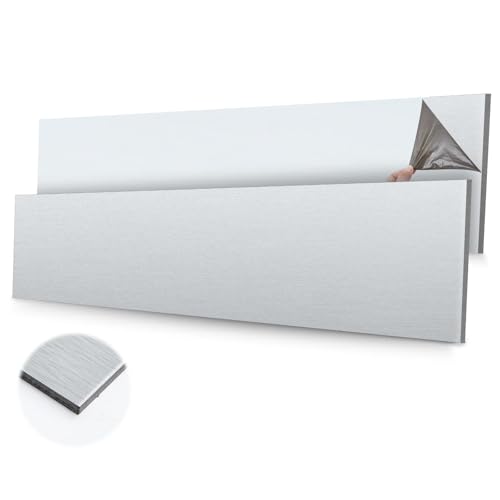
Two long brushed-silver strips that painters and crafters keep reordering because they arrive clean and cut easy.
At 48″ x 12″, each sheet is a long, narrow canvas for a single line of large text, a trim run, or a painting panel. You get two sheets measuring 48.03″ x 12.01″ x 0.12 inches, with an advertised thickness of 0.13 inches — longer and slightly thicker than the 36″ x 24″ Blulu panel, which measures 36.02″ x 24.21″ x 0.12 inches at 0.12 inches thick. That difference matters if your work is long and narrow; a 48″ strip makes a clean continuous painting panel, a trim run, or a shelf face, where the wider 36″ panel would force you to piece it together.
The core is the part to understand before you buy. Blulu builds these as a sandwich — brushed silver aluminum on the front face, low-density polyethylene (PE, a lightweight plastic) in the middle, finished with a polyester or PVDF coating. Blulu states the panel weighs half as much as solid aluminum of the same size and rates it for fire retardation, heat insulation, and moisture resistance. One important note in the listing: these are marked “not suitable for bending.” Plan flat applications and cut-to-size work, and they behave exactly as expected.
You can paint right on the brushed face without sanding first, and it cuts cleanly to your own dimensions. Buyers consistently praise the surface quality and how easily it takes paint and tools — the brushed face has enough grip for oil painting straight from the start without the sanding step the Falken panel sometimes needs. The recurring caution is worth knowing: the metal skin is thin. Some buyers expecting a mostly-aluminum slab are surprised to find a plastic core under a brushed face. If your project is decorative signage, painting, or furniture repair, that is a feature rather than a flaw — it is lighter on the wall and easier to hang. If you actually need structural aluminum, look at solid sheet metal instead.
What wins people over: the paint-ready brushed face and the cut-anywhere flexibility of two long panels — the kind of piece a hobbyist keeps buying in pairs because the offcuts still get used.
The honest caveat: these are a plastic core with an aluminum skin, and the listing says so plainly. Buy them for how they behave, not for how much aluminum is inside.
Reach for this if: you are a painter, crafter, or furniture repairer who wants two lightweight, flat-backed panels that take paint and take a saw without drama.
Think twice if: you need the panel to bend, or you are shopping specifically for structural solid aluminum.
3. Blulu 2 Pcs Aluminum Composite Panel, 1/8″ Thick Rectangle Silver, 36 x 24
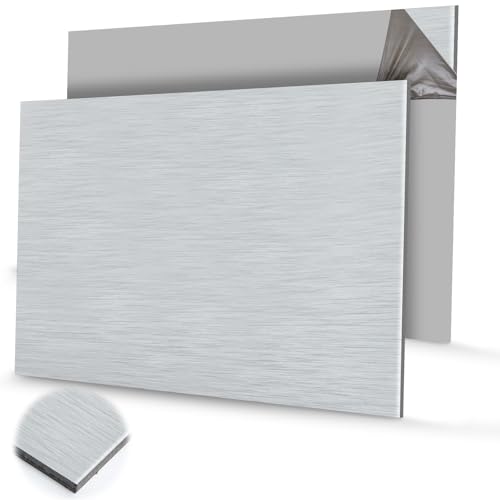
Two stubby 36″ x 24″ brushed panels—the balance for sign blanks and small cladding patches.
The most useful thing about this pair is the shape. Where the 48″ x 12″ Blulu strips run long and thin, these are 36.02″ x 24.21″ x 0.12 inches — a wider, squarer footprint that feels stiffer in the hand and needs fewer mounting points. For a crawl space access cover, a small sign, or a patch where you would rather not piece two strips together, the shorter, wider form factor wins outright.
The 36″ x 24″ footprint handles outdoor weather and intense sun, and cuts cleanly on a table saw to whatever size the job requires. The core recipe matches its sibling: brushed silver aluminum around a low-density polyethylene (PE) core, finished with a polyester or PVDF coating, rated for fire retardation, heat insulation, and moisture resistance. Note again that bending is explicitly off the table, so plan flat uses. The real-world feedback on this panel skews toward “tougher than expected” — buyers using it outdoors report it handles the exposure without complaint. Vinyl application, including standard cut vinyl, lays down cleanly on the brushed face.
You should think twice if your job is structural or needs a perfect visible edge. The cladding is thin, some buyers find the panels easier to bend or break than a solid sheet would be, and shipping is the weakest link — flat slabs in a doubled box still take a beating, and bent corners come up more than anyone would like. If your use is a patch, a blank, or a component that gets cut down anyway, the bendy margins never touch the finished piece.
Why It Works For Small Jobs
- 36″ x 24″ footprint is stiffer in hand and easier to brace than a long strip
- Two panels per order means a spare if one arrives imperfect
- Cuts cleanly on a table saw and accepts cut vinyl smoothly
- Rated for fire retardation, heat insulation, and moisture resistance
Know Before You Cut
- Thin cladding bends and can break under real force
- Not suitable for bending by design
- Corner damage in transit is a common point of frustration
The verdict: a solid choice for cut-to-size sign blanks, small wall patches, and weather-exposed covers where you plan to trim the edges anyway.
skip it if: your project demands structural rigidity or a pristine factory edge on every panel.
Understanding the Specs
Panel Thickness 1/8″
At 1/8″, the sheet is stiff enough for a flat sign or cladding patch, thick enough to hold screw or rivet fasteners, and light enough for one person to handle without a lift. Thickness is measured in inches, and 1/8″ is the working standard for this category. Falken lists its panel at 1/8″, the 48″ x 12″ Blulu sheet at 0.13 inches, and the 36″ x 24″ Blulu panel at 0.12 inches. In practice all three sit in the same class. Thicker often means heavier, and heavier means more mounting hardware — so for wall work, 1/8″ is the balance point most people land on.
Core Material — PE and PVDF Coating
The core of an aluminum composite panel is what sits between the two aluminum faces, and in this category it is usually low-density polyethylene (PE) — a lightweight plastic that keeps the panel light. The outer faces carry a polyester or polyvinylidene fluoride (PVDF) coating, which is a paint-like layer for weather and color stability. The maker states these panels weigh only half as much as solid aluminum of the same size and are rated for fire retardation, heat insulation, and moisture resistance. That combination is what makes them suitable for outdoor signage and interior wall decoration. It is also why these panels are marked not suitable for bending — the plastic core is not designed to take a radius.
FAQ
What is an aluminum composite panel actually made of?
Can I bend an aluminum composite panel around a curve?
Will 1/8″ aluminum composite hold up outdoors?
Can I paint on an aluminum composite panel?
How do I cut an aluminum composite panel to size?
Why do these panels arrive with bent corners?
Is a 48″ x 12″ strip or a 36″ x 24″ panel better for signage?
Can I mount a composite panel with screws or rivets?
What is the difference between brushed silver and matte white panels?
Final Thoughts: The Verdict
For the biggest single surface — a wall sign, a mural, a display panel — the Falken Design ACM Aluminum Composite Sign Panel gives you 44″ x 72″ of low-glare matte white with no seams. If your project lives on a workbench instead of a wall, the Blulu 48″ x 12″ two-pack is the panel painters and crafters reach for, with a brushed face that takes paint straight out of the sleeve. And for smaller patch jobs, sign blanks, and weather-exposed covers, the stubby Blulu 36″ x 24″ pair is the tidy fit. Whichever you choose, open the box the day it arrives and check the corners — that single habit is the difference between a smooth project and a return label.
How We Picked
We do not accept paid placement. Every pick is matched to a real buyer and a real use-case; we do not hands-on test units.
Sources & Methodology
Specifications: manufacturer listings and product documentation. Review insights: verified customer reviews, as of September 2026. Pricing: not shown on this page (it changes often); check the current price via the retailer link.
As an Amazon Associate, Gadgets Feed earns from qualifying purchases. This does not affect which products we feature.