
Our readers keep the lights on and my morning glass full of iced black tea. As an Amazon Associate, I earn from qualifying purchases.
Specs are compiled from manufacturer listings and verified buyer reviews and can change over time — please confirm the key details on the product page before buying.
If a chip, router, amplifier or LED driver in your project is running hot enough to worry you, the fix is usually simpler than you think: bolt on more metal. An aluminum heat sink is passive — no fan, no power, no noise — and it works by spreading heat across a wide finned surface so the surrounding air can carry it away. The trick is matching footprint, fin count and base thickness to the component, because a plate narrower than the chip leaves heat trapped and a 1.41 in block may not clear a lid.
I’m Min — the founder and writer behind Gadgets Feed. This guide is built by comparing the manufacturers’ published specifications and the patterns across verified customer reviews, so you get each pick’s real strengths and trade-offs instead of marketing spin.
Below you will find four aluminum blocks that cover the common jobs, from a router lid to a power transistor. Every one is bare metal, so read the dimensions closely before you commit. This breakdown of the aluminum heat sink market focuses on fin count, footprint and mounting so your chip stays cool.
Our Picks at a Glance

How To Choose The Best Aluminum Heat Sink
You are not shopping for a computer cooler here. You are shopping for a chunk of finned metal that has to sit on a specific hot surface, fit inside a specific space, and pull heat out of a component that was never designed with a cooler in mind. That makes three numbers the whole decision: the footprint that has to make contact, the height you can spare, and the fin count that decides how much surface the air can reach.
Start with the contact footprint, not the fin count
The base of the block must sit flat across the hot component or you are wasting metal. A power transistor or a MOSFET needs a small, thick pad; a router lid or a games console shell takes a wide plate. Measure the flat area you can actually cover, then pick the block that matches it. A block that hangs over the edge of a chip still works, but a block that only touches half the chip leaves heat trapped in the uncovered half.
Check the height before anything else
Height is the number that ruins projects. A 1.41 in block is tall enough to foul a case lid, a drive cage or a ribbon cable, while a 0.79 in block slides under far more. If your component sits in open air, go taller for more fin surface. If it lives under a cover, measure the gap and buy under it.
Read fin count and fin spacing together
Fins are the surface area that hands heat to the air, so more fins generally means more cooling — a 27-fin block moves more heat than a 22-fin one of similar size. But fins packed too tightly choke the natural air movement that passive cooling depends on. Fin spacing between roughly 1.99mm and 2.12mm leaves room for air to rise through the stack, which is why a dense block still works with no fan at all.
Decide if you need a finish
Bare aluminum is fine indoors. A black oxidized or anodized surface adds a harder skin that resists scuffs and light corrosion, which matters on anything that will sit in a damp workshop or a dusty enclosure. It does not change the size, so pick the finish that suits where the block lives.
Quick Comparison
| Model | Best For | Footprint (L x W x H) | Fins | Weight | Amazon |
|---|---|---|---|---|---|
| Awxlumv Large Heatsink 120x69x36mm★ Best Overall | All-round pick for amplifiers, FETs and LED drivers | 4.72″ x 2.71″ x 1.41″ | 27 | 10.47 oz | Amazon |
| Awxlumv 120mm Square Heatsink | Flat router and console lids | 4.72″ x 4.72″ x 0.79″ | — | 6.77 oz | Amazon |
| Awxlumv 150mm Heatsink 22 Fin | Long boards and charger plates | 5.91″ x 2.72″ x 1.06″ | 22 | 12.16 oz | Amazon |
| LiebeWH Heat Sink 150x120x20mm | Big PCB and motherboard chipset coverage | 5.91″ x 4.72″ x 0.79″ | — | — | Amazon |
In‑Depth Reviews
1. Awxlumv Large Heatsink Aluminum 120x69x36mm, 27 Fin Radiator
Our pick — 4.5+★ from 700+ verified ratings; the strongest balance of quality and price.
Twenty-seven fins on a thick 4.6mm base — the block that does the heavy lifting when a component runs genuinely hot.
This is the one to buy if you are cooling something that actually produces real wattage: a power amplifier, a voltage regulator, a MOSFET, an SCR, or an LED driver board. The 4.6mm base plate (the solid slab sitting directly on your component) is the hero here, because a thicker base spreads heat sideways across the whole block before it ever reaches a fin. Thin bases leave hot spots right above the chip; this one does not.
Then you get 27 fins standing 31.4mm tall with spacing of 1.99mm to 2.12mm between them. That combination gives the surrounding air plenty of vertical surface to climb through, which is exactly how passive cooling works — no fan required. Reviewers single out the heft of the 10.47 oz block, and it is rated 4.5+ stars across 700+ ratings.
Compare it to the 150mm Awxlumv block below and the trade-off is clear. That one is longer at 5.91 in against this block’s 4.72 in, but it carries 22 fins against this one’s 27, and weighs 12.16 ounces against 10.47 ounces here. If your hot surface is long and narrow, the 150mm wins on reach. If you want the most fin surface for the footprint, this block leads on fin count.
What earns its place
- 27 fins plus a 4.6mm base plate spread heat across the full block instead of pooling it at the chip
- 10.47 oz of anodized aluminum gives it enough mass to soak up heat spikes before the air catches up
- 1.41 in of height means tall fins and plenty of vertical surface for passive airflow
- Works across FETs, ICs, power transistors, amplifiers and LED modules, so one spare covers several jobs
Where it needs care
- The finish can oxidize over time on a block left in a damp or dusty spot
- At 1.41 in tall it will not slide under a tight case lid — measure your clearance first
- Ships as bare metal only; you supply your own thermal paste and mounting hardware
Reach for this if: your component puts out real heat and sits in open air where a 1.41 in block fits.
Look elsewhere if: you need something to slip under a low cover — go for a 0.79 in block instead.
2. Awxlumv 120mm Large Aluminum Heatsink 120x120x20mm, Black
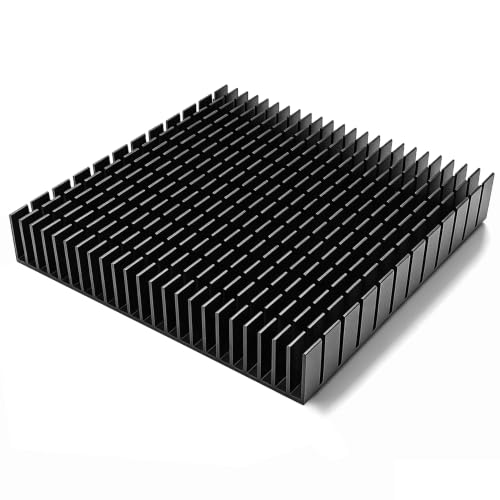
A wide, wafer-thin square that lays flat on a router lid and turns a hot plastic shell into a cool one.
Routers, modems, DVRs (digital video recorders), receivers and games consoles share the same problem: the manufacturer sealed a warm chip inside a plastic box with no airflow. This block solves it by simply giving that shell somewhere to dump heat. The square 4.72 x 4.72 inch face covers a broad flat area at once, so you can cool a wide chip without a bigger plate. And it is only 0.79 in tall, so it sits low enough to slide into a shelf, a cabinet or under a TV stand without fouling anything.
It is cut from 6063-T5 aluminum alloy, a grade chosen for thermal conductivity (how readily heat travels through the metal), structural stability and light weight. At 6.77 oz it is the lightest block in this group, so double-sided tape holds it happily without sagging. The black oxidized surface gives it a harder skin that resists scuffs where fingers and cables rub against it.
The honest trade-off is thickness. This is a spreading plate, not a deep-fin tower — 0.79 in of height against the 1.41 in Awxlumv above means roughly half the fin depth, so it relies more on contact area than on tall fins. Buyers report it drops router and set-top-box shell temperatures noticeably within an hour of taping it on. For a lid-mounted fix on consumer electronics, that is exactly what you want.
The smart use case: stick it to the top of a router or set-top box that runs warm to the touch and it turns the whole case into a radiator.
Know before you buy: the shallow 0.79 in profile suits flat shells, but it will not match a tall-fin block on a genuinely high-power component.
Best fit: anyone cooling a router, Mac mini base, power supply or console shell where a wide flat plate wins.
Not the one for: a power transistor that needs deep fins — that is a job for the 27-fin block above.
3. Awxlumv 150mm Aluminum Large Heatsink 150x69x27mm, 22 Fin
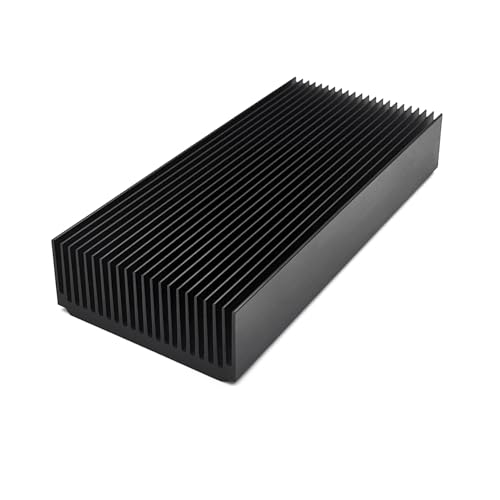
Long, narrow and built to run the full length of a charger board or an amplifier strip.
Some components are not square. A charger plate, an LED strip driver or a long amplifier board gives you a narrow strip of hot surface, and a square block wastes half its footprint hanging off the edge. This block is 5.91 in long against a 2.72 in width, so it follows that strip properly. That 5.91 in length beats the 4.72 in of the Best Overall pick by a clear margin when reach is what you need.
The 22 fins stand 1.06 in tall on a 12.16 oz body, which is a useful middle ground — taller than the flat plates but shorter than the 27-fin block, so it fits under more covers while still offering real fin depth. The black oxidation finish gives the aluminum a harder, more scuff-resistant surface for a part that will sit bolted inside a workshop enclosure.
Here is the catch worth knowing: it carries fewer fins than the 27-fin block above, so on a short and intensely hot component it gives up some surface area. It sits at 4.5+ stars, though from a smaller pool of buyers than the top pick. If your heat source is long rather than concentrated, none of that matters — the shape does the work.
Why the shape wins: a 5.91 in x 2.72 in footprint follows a long board or charger plate instead of overhanging it.
The honest limit: 22 fins on a 1.06 in stack is less fin surface than the 27-fin block offers, so short hot spots cool better on the taller block.
Pick this one when: your hot surface is a long strip and a square block would waste half its contact area.
Pass on it when: you need maximum fin density on a small, fiercely hot chip instead.
4. LiebeWH Heat Sink Aluminum 150x120x20mm Passive Cooling Radiator
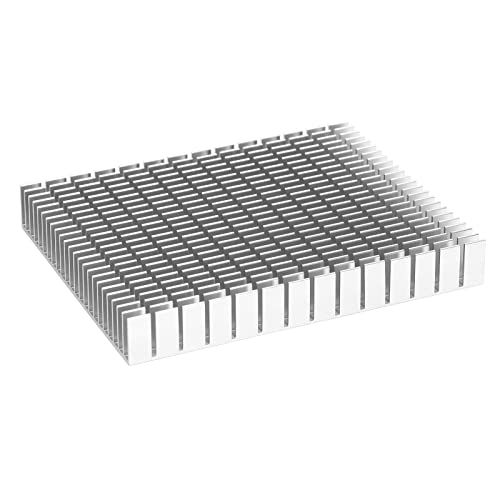
The biggest face in the group — 150x120mm of finned aluminum for boards that need coverage, not height.
When you are laying a plate across a PCB, a motherboard chipset or a cluster of electronic components, coverage beats depth. This block measures 5.91 in long by 4.72 in wide, which is the widest footprint here. Set it beside the Best Overall block and the difference is stark: this one is 4.72 in wide against that block’s 2.71 in, and 5.91 in long against its 4.72 in. That extra reach lets one plate sit across several components at once.
The aluminum carries an anodized surface treatment (a hard oxide layer grown into the metal itself) for wear resistance and long-term reliability in demanding electronic cooling jobs. The fin arrangement is shaped to keep air moving around the block, so heat transfers from high-power devices into the surrounding air without a fan pushing it. It is also thin at 0.79 in, so it slips onto a board without towering over neighboring components.
What you trade for that footprint is height and depth of fin. This is a spreading plate — 0.79 in against the 1.41 in of the tall 27-fin block — so it works best spread across a wide, moderately warm surface rather than bolted to one small scorching chip. It is rated 4.5+ stars from a modest pool of buyers, and the 150x120mm face makes the intent clear: coverage first.
Where it pulls ahead
- The widest plate here at 5.91 in x 4.72 in covers multiple components in one mount
- Anodized surface resists wear for long-term use on a working board
- Just 0.79 in tall, so it fits tight board clearances without fouling neighbors
- Fin structure is arranged to keep air moving for steady passive heat transfer
The honest caveats
- The shallow 0.79 in profile gives up fin depth compared with taller blocks
- Best spread across a wide warm area, not concentrated on one small hot chip
- Ships as a bare plate — you supply thermal compound and mounting hardware
Made for: board-level work where one wide plate needs to sit over a chipset or a row of components.
Wrong tool for: a single high-wattage component that needs tall fins — pick the 27-fin block there.
Understanding the Specs
Fin Count and Fin Spacing
Fins are the surface area that hands heat to the air. More fins generally means more cooling — a 27-fin block carries more surface than a 22-fin one. Fin spacing is the gap between them, and it needs to stay wide enough for air to rise through the stack on its own. Spacing between roughly 1.99mm and 2.12mm leaves that room, which is why a dense block still cools with no fan at all.
Base Plate Thickness
The base is the solid slab sitting directly on your component. A thicker base — like the 4.6mm plate on the Best Overall pick — spreads heat sideways across the whole block before it reaches a fin. A thin base concentrates heat right above the chip, leaving the outer fins doing little. If your component is small but genuinely hot, base thickness matters more than overall size.
Footprint and Height
Footprint is the length and width of the contact face, and it must match the hot surface you can cover. Height is the clearance you must live with. A 1.41 in block needs open air; a 0.79 in block slides under covers. Measure the gap before you buy, because a 1.41 in block under a 0.79 in clearance cools nothing.
Surface Finish
Bare aluminum is fine indoors. A black oxidized or anodized finish grows a hard oxide layer into the metal, which resists scuffs and light corrosion on a part that sits in a workshop or a dusty enclosure. The finish does not change the size or the contact face, so pick it based on where the block will live.
FAQ
How do I attach an aluminum heat sink to a router or console shell?
Does a passive heat sink work without a fan?
Is 27 fins better than 22 fins?
Will a 1.41 inch heat sink fit inside my case?
What is the difference between anodized and oxidized aluminum?
Can one heat sink cool a motherboard chipset and nearby components at once?
Does a heat sink need thermal paste to work?
Will an aluminum heat sink corrode outdoors?
What should I use to stick a heat sink to a games console or set-top box?
Can I cut or drill an aluminum heat sink to fit?
Final Thoughts: The Verdict
For most projects, the aluminum heat sink winner is the Awxlumv Large Heatsink 120x69x36mm because its 4.6mm base plate spreads heat properly and its 27 fins give you the most cooling surface for the footprint. Its 4.5+ stars across 700+ ratings is the largest review pool in this group. If you want to cool a flat router lid or console shell, reach for the Awxlumv 120mm square block, where the wide 4.72 x 4.72 inch face and 0.79 in height do the job. And when your hot surface runs long rather than concentrated, the 150mm 22-fin radiator follows that strip properly. Whichever you pick, measure the clearance above your component first — a 1.41 in block that fouls a lid cools nothing.
How We Picked
We do not accept paid placement. Every pick is matched to a real buyer and a real use-case; we do not hands-on test units.
Sources & Methodology
Specifications: manufacturer listings and product documentation. Review insights: verified customer reviews, as of November 2026. Pricing: not shown on this page (it changes often); check the current price via the retailer link.
As an Amazon Associate, Gadgets Feed earns from qualifying purchases. This does not affect which products we feature.