
A leaking roof joint or gap at a flashing transition can turn a minor drip into rot and costly structural damage within a single rainy season. Aluminum metal flashing is the passive barrier that diverts water away from these vulnerable seams, but the right gauge, width, and adhesive backing separate a permanent fix from a recurring headache.
I’m Min — the co-founder and writer behind Gadgets Feed. This guide is built from hundreds of hours cross-referencing technical specs, sorting through verified buyer reports, and mapping common application failures to the material properties that cause them.
The goal is to identify the single best roll or tape for each real-world scenario, so you walk away knowing exactly which aluminum metal flashing product deserves a spot in your cart.
How To Choose The Best Aluminum Metal Flashing
The wrong flashing choice leads to gaps that channel water behind the barrier, defeating its purpose entirely. Nail down these three factors before you buy.
Thickness vs. Formability
Bare aluminum rolls range from approximately 0.3 mm (light duty) up to 26-gauge steel (roughly 0.5 mm). Thinner material bends easily around corners and conforms to irregular roof profiles, but it lacks the rigidity to hold a straight drip edge under high wind or heavy snow. Thicker material resists denting and stays flat, but you will need a sheet metal brake or specialized snips to shape it cleanly.
Width Selection
A 4-inch roll works for narrow window trim and small gutter gaps, but 6 inches is the standard for roof-to-wall transitions because it provides a 2-inch overlap on each side of a typical seam. Going wider than 6 inches adds unnecessary material cost and is harder to manage on pitched roofs.
Adhesive or Bare Metal
Bare aluminum rolls require mechanical fasteners — roofing nails, gasketed screws, or construction adhesive — to stay in place. Self-adhesive flashing tapes (rubberized asphalt or acrylic) offer a peel-and-stick application that seals around fasteners and conforms to curves, making them ideal for skylights, RV roofs, and metal seam repairs where nails are undesirable.
Quick Comparison
On smaller screens, swipe sideways to see the full table.
| Model | Category | Best For | Key Spec | Amazon |
|---|---|---|---|---|
| EAGLE 1 26 Gauge | Heavy Steel | Permanent roof edges | 26-gauge steel, 0.02 in thick | Amazon |
| ZIP System Stretch Tape | Acrylic Membrane | Curved corner sealing | 42-mil acrylic adhesive | Amazon |
| BXI Flashing Tape | Asphalt Tape | Flat roof seam patches | 0.06 in SBS rubber asphalt | Amazon |
| Cofair Quick Roof Pro | Self-Stick Aluminum | RV roof patch repair | 5-layer, self-sealing | Amazon |
| Amerimax 68006 (6×50) | Bare Aluminum | Straight roof joints | 6 in x 50 ft, heavy gauge | Amazon |
| Amerimax 66004 (4×50) | Bare Aluminum | Narrow gutter gaps | 4 in x 50 ft, light duty | Amazon |
| WIVZKAO 4×50 Roll | Bare Aluminum | Budget-friendly overhangs | 0.3 mm thickness | Amazon |
In‑Depth Reviews
1. EAGLE 1 26 Gauge Flashing Roll
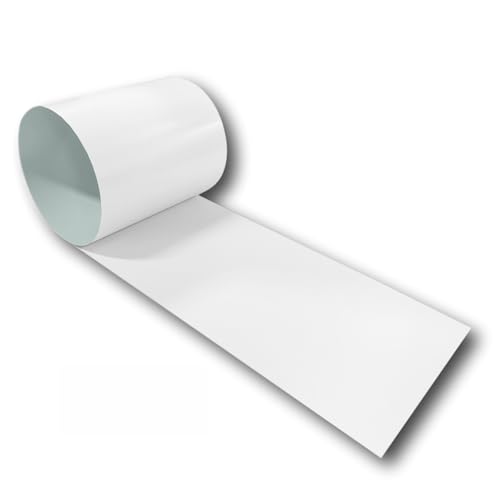
The EAGLE 1 roll is a 26-gauge steel sheet with a 40-year Valspar paint finish and removable protective film — a clear step above standard aluminum in both impact resistance and weather longevity. DIYers and contractors alike report that it cuts cleanly with hand snips and bends without cracking, yet it holds a rigid shape after forming, making it ideal for drip edges and roof-to-wall transitions that demand structural stiffness over flexibility. At 0.02 inches thick, this is not a material you can fold with your fingers; a 3-foot brake delivers professional results.
Buyers consistently praise the thickness and paint quality, noting that six months of outdoor exposure left zero rust and the white finish remained glossy. The protective film prevents scratches during handling and installation, a detail often missing from commodity rolls. Several customers mention the packaging is sturdy — the roll ships in a reinforced box with documentation — which reflects the manufacturer’s care in fulfilling orders.
The only catch: the roll does not include screws, despite some older reviews stating otherwise. You will need to order compatible fasteners separately, preferably gasketed sheet metal screws to match the commercial-grade build. If you are flashing a new roof edge or building a permanent cap over a deck ledger, this is the most durable choice in the sub- bracket.
Why it’s great
- True 26-gauge steel thickness resists dents and holds shape
- Removable protective film prevents scratches during installation
Good to know
- No screws or fasteners included in the package
- Heavier gauge requires a sheet metal brake for clean bends
2. ZIP System Stretch Tape
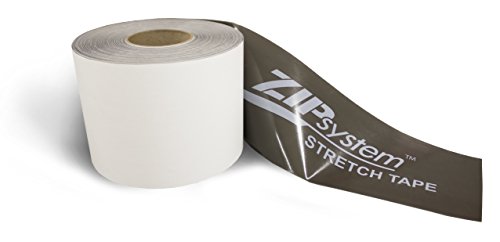
ZIP System Stretch Tape is not bare metal — it is a 42-mil stretchable acrylic membrane designed specifically for flashing curves, corners, and irregular surfaces where rigid aluminum rolls cannot conform. The advanced acrylic formulation sticks aggressively to wood, OSB, and ZIP System panels, and it stretches without necking down, so you can wrap complex window sill details in a single continuous piece. This is the professional gold standard for new construction housewrap transitions.
Verified buyers emphasize the adhesion strength: the tape sticks to HDPE pond liner for waterfall corners, seals around uneven siding gaps, and remains waterproof even after years of UV exposure. The 180-day exposure guarantee and 30-year limited warranty back the durability claims. Several customers switched to Zip Tape from DuPont Flexwrap and report it is thicker, easier to apply with minimal corner bulge, and holds to the substrate more reliably.
Price is the single barrier here — at roughly double the cost of a basic aluminum roll, this tape is best reserved for the most vulnerable detail areas: window sills, curved roof valleys, and corner transitions where a puncture or gap would be catastrophic. Use cheaper tape on straight runs and save the Zip Tape for the complex geometry that defines a weather-tight envelope.
Why it’s great
- Exceptional adhesion with 30-year limited warranty
- Stretches around corners without puckering or folding
Good to know
- Premium price — best used sparingly on critical details
- Not suitable as a stand-alone roof edge; needs mechanical support
3. BXI Flashing Roll Tape Membrane

The BXI tape is an SBS polymer-modified rubberized asphalt membrane with a silver aluminum foil backing and polyethylene film, measuring 6 inches by 32 feet at a thick 0.06 inches. Unlike bare aluminum rolls that require nails or screws, this tape installs by peel-and-stick alone — no primer, no torching — and the bitumen component gradually penetrates existing cracks to create a permanent seal. Its thickness and puncture resistance make it a superior choice for flat roof repairs, deck joist seams, and RV roof patches.
Buyers report outstanding real-world results: one fixed a 14-inch crack on a 35-year-old flat roof with a investment in Flex Seal and BXI tape, and the repair held completely through multiple multi-day storms over two years. Another used the 6-inch tape to replace curling 4-inch flashing on an alumawood patio cover, overlapping 2 inches on each side for a seamless fix that matched the original look. The tape is paintable and UV-resistant, so the foil surface can be coated to blend with surrounding materials.
Some users noted that the thin foil backing occasionally separated during unrolling on the first-generation rolls, though later batches appear to use a sturdier clear backing. The tape adheres best to clean, smooth, and dry surfaces; textured or dusty substrates will compromise the bond. For the price, this tape delivers an exceptional blend of thickness, stickiness, and versatility for anyone who wants waterproofing without the need for fasteners.
Why it’s great
- Thick 0.06-inch SBS rubberized asphalt for puncture resistance
- Self-adhesive, no primer or torching required
Good to know
- Thin foil backing may separate on early production rolls
- Requires clean, dry, smooth surface for optimal adhesion
4. Cofair Quick Roof Pro QR625

The Cofair Quick Roof Pro is a 5-layer, self-stick laminate that combines an aluminum surface with a rubberized asphalt core, all reinforced for puncture and UV resistance. It measures 6 inches by 25 feet and is specifically engineered for instant waterproof repair — press it into place over metal roofs, RV panels, gutters, skylights, and mobile home seams. The aluminum top layer reflects heat while the asphalt bottom layer self-seals around screws and fasteners, making it one of the most forgiving repair materials for non-structural patches.
Customer feedback is overwhelmingly positive: a Florida lanai owner fixed two leaking roof seams with Quick Roof and saved roughly on a roof replacement. Another user applied it to a metal roof in extreme South Texas heat and reported zero leakage after application, with the tape holding firm through summer peaks. The 10-year material warranty adds peace of mind for permanent repairs. Some RV owners have also used the tape for sound deadening on classic VW panels, noting it dampens vibration effectively.
The adhesive does have limitations on heavily weathered asphalt shingles — one reviewer noted gaps in the bond and recommended a secondary seal of silicone caulk on the edges plus a liquid rubber spray. Applying on a warm day and using a roller to bed the tape firmly solves most adhesion problems. At this price point, the Quick Roof Pro is the best self-stick option for anyone who needs a quick, durable patch without removing old flashing.
Why it’s great
- 5-layer construction with UV-stable aluminum surface
- Self-seals around screws and fasteners for leak-proof penetration
Good to know
- Adhesive may gap on old asphalt shingles without extra sealant
- Best installed on a warm day with firm roller pressure
5. Amerimax 68006 Roll Flashing (6×50)

The Amerimax 68006 delivers 50 feet of 6-inch-wide aluminum flashing in a noticeably heavier gauge than the standard 0.3 mm rolls. This material does not bend easily — it holds flat with a rigid, straight edge, which is exactly what you want when flashing a roof-to-wall joint where a drip edge must stay straight without buckles. The weight (2.72 pounds for the roll) and stiffness make it suitable for porch roof repairs, flat roof seams between overlapping panels, and any application where a wavy flashing line would look amateurish.
Buyers who used it to fix a leaky porch roof joint tucked the flashing under shingles by 1.5 inches and secured it with gasketed sheet metal screws every two feet — an effective repair that stopped leaks immediately. Another user employed it as a rigid backing for radiator covers, noting that it accepts staples and brad nails easily while providing a smooth surface. The material cuts cleanly with heavy-duty snips, but reviewers warn that it scratches and dents if handled roughly.
The stiffness is the double-edged sword: if you need to flash over a curved roof valley or wrap a corner, this roll will fight you. Several customers explicitly caution that this is not a bendable product — it is designed for straight runs where a rigid, flat barrier is required. Stick with the Amerimax 68006 for long, linear sections of roof or wall flashing, and use a more flexible option for compound curves or tight corners.
Why it’s great
- Heavy-gauge aluminum holds a rigid, flat shape without waviness
- 50-foot length covers a full wall or roof edge in one piece
Good to know
- Too stiff to bend around curves or compound corners
- Scratches and dents easily during handling and transport
6. Amerimax 66004 Roll Flashing (4×50)
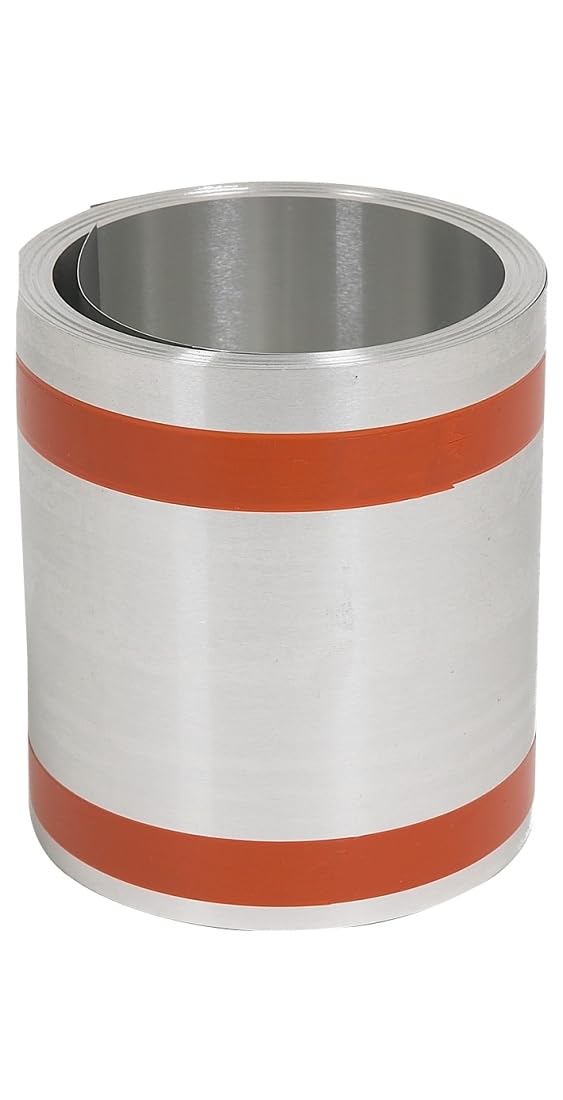
The Amerimax 66004 is a 4-inch-wide by 50-foot-long aluminum flashing roll designed for light-duty applications: tucking under shingles with a 2-inch overhang, sealing the gap between drip edge and gutter, and flashing narrow window trim. At approximately 1.94 pounds for the full roll, it is thin enough to cut with ordinary heavy-duty scissors and flexible enough to conform to a right angle without cracking. The material holds its shape once bent but lacks the rigidity to stand up as a free-standing drip edge in high-wind areas.
Verified buyers have used it for deck flashing, underfloor heating clips, and carport gap covers. Several noted that the roll has no adhesive — it is bare aluminum, so you will need construction adhesive or mechanical fasteners to keep it in place. One clever DIYer fashioned the material into clips for a radiator-based heating system, finding the 4-inch width perfect for the application. The thinness is an asset for working with tight spaces under existing shingles, where thicker material would be impossible to slide into place.
The primary limitation is the thickness: multiple reviewers describe it as similar to heavy-duty kitchen foil, which understates its durability but reflects the reality that this is not a material for structural flashing. It is also rolled very tightly from the factory, making it difficult to lay perfectly flat without creasing. For simple, temporary, or low-exposure jobs where cost per foot is the priority, the Amerimax 66004 is a reliable commodity choice.
Why it’s great
- Thin and flexible enough to slide under existing shingles easily
- Good value per foot for light-duty gutter and trim gaps
Good to know
- Bare metal — no adhesive backing for peel-and-stick application
- Rolled very tightly, making it hard to fully flatten without creasing
7. WIVZKAO Aluminum Flashing Roll (4×50)
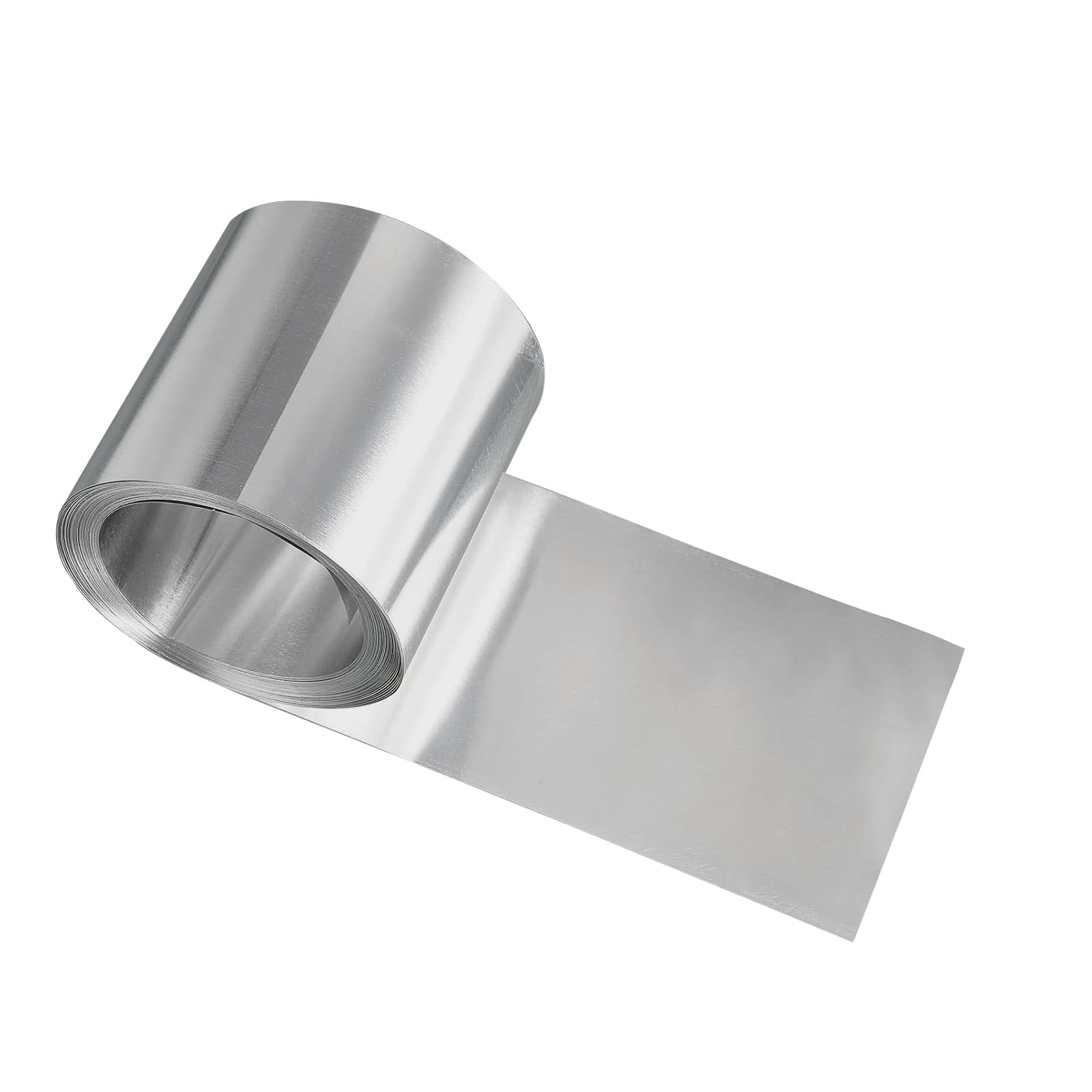
The WIVZKAO roll matches the 4-inch by 50-foot form factor of the Amerimax 66004 but at an even lower entry point, making it the most budget-friendly bare aluminum flashing in this lineup. The 0.3 mm (0.0118-inch) thickness is comparable to mid-weight utility flashing — strong enough to withstand wind and rain without tearing, but flexible enough to cut with standard scissors. Users report using it for carport overhangs, drip edges, and covering open seams on garden structures, with many praising the rust-resistant aluminum alloy for long-term outdoor performance.
Customer reviews are consistently positive at a near-perfect average: one buyer used it to add a 46-foot gutter line to a detached garage, finding the material flexible enough to shape into a drip edge while remaining sturdy enough to hold the gutter in place. Another created a custom cover for open spots in a carport, cutting the flashing easily with scissors and securing it with minimal effort. Several buyers specifically noted that the quality exceeded expectations given the low cost.
The most persistent complaint is that the roll ships very tightly wound — removing the curl so the flashing lies flat is described as nearly impossible without weighting the edges for a day or two. This is a common issue with thin-gauge rolls and manageable if you plan ahead. For budget-oriented DIYers flashing a single roof edge or sealing a narrow gap, the WIVZKAO roll delivers functional performance at the lowest cost per foot in this guide.
Why it’s great
- Excellent cost per foot for budget-limited repairs
- Rust-resistant aluminum cuts easily with standard scissors
Good to know
- Rolled extremely tightly — difficult to flatten without weighting or unrolling early
- Thin gauge lacks rigidity for free-standing drip edges
FAQ
Can I install aluminum flashing without removing the existing shingles?
Will self-adhesive flashing tape fail in direct sunlight over time?
Final Thoughts: The Verdict
For most users, the aluminum metal flashing winner is the EAGLE 1 26 Gauge because its steel thickness and painted finish deliver permanent structural protection for roof edges and wall transitions. If you need a peel-and-stick repair for a curved or irregular surface, grab the ZIP System Stretch Tape for its unmatched adhesion and warranty. And for a budget-friendly bare metal roll that handles standard gap sealing, nothing beats the WIVZKAO 4×50 roll.