
Our readers keep the lights on and my morning glass full of iced black tea. As an Amazon Associate, I earn from qualifying purchases.
Specs are compiled from manufacturer listings and verified buyer reviews and can change over time — please confirm the key details on the product page before buying.
That rust-colored film on your aluminum rims isn’t dirt—it’s metallic brake dust that’s literally embedded into the surface. Ordinary car soap can’t touch it, which is why you’ve probably scrubbed until your arm went numb. The right acid-free or acid-based chemical dissolves that bond, so you can spray, wait, and rinse clean without scrubbing.
I’m Min — the founder and writer behind Gadgets Feed. This guide is built by comparing the manufacturers’ published specifications and the patterns across verified customer reviews, so you get each pick’s real strengths and trade-offs instead of marketing spin.
We break down the 9 best formulas for tackling stubborn buildup on your wheels, from gentle pH-neutral options to heavy-duty acid solutions. Trust our deep dive into the best aluminum rim cleaner to match the right chemistry to your specific wheels and grime level.
Our Picks at a Glance


How To Choose The Best Aluminum Rim Cleaner
You want a cleaner that cuts through brake dust without harming your aluminum rims. The real choice is between gentle, soap-like formulas that need regular upkeep and aggressive acids that melt away years of neglect but demand careful handling.
Acid vs. Non-Acid: The Core Chemistry
Non-acid (often called pH-neutral) cleaners use a chemical reaction to dissolve iron particles, turning red or purple as they work. These are safest for clear coats, painted surfaces, and coated aluminum—ideal for routine washes. Acid-based cleaners (often labeled “brighteners”) are stronger, dissolving oxidation and water spots, but they can etch aluminum if left on too long or used full-strength on sensitive finishes. Match the chemistry to the condition: gentle for maintenance, acid for restoration.
Dwell Time and the Color-Change Signal
The “let it sit” step is where the magic happens. Most reactive cleaners need 1 to 4 minutes to break down the bond between the brake dust and the metal. A color change—typically to red or purple—is your visual cue that the reaction is happening. If you rinse too early, you waste the product; if you let a strong acid dry on the wheel, you risk permanent etching. Always work on a cool wheel and rinse thoroughly with a strong stream of water.
Concentration and Dilution
The most common mistake is using a concentrated product straight out of the bottle when it’s designed to be diluted. A gallon of concentrate at a 3:1 water-to-chemical ratio gives you far more cleaning power per dollar than a small spray bottle of ready-to-use formula. Check whether the label says “pre-diluted” or if it expects you to mix it—this single detail changes both the cost per use and the risk of damage.
Quick Comparison
| Model | Best For | Chemistry Type | Volume | Color Change | Amazon |
|---|---|---|---|---|---|
| KOCHCHEMIE Prosumer Reactive★ Best Overall | Best Overall (Iron Removal) | Acid-Free | 750 ml | Yes (Red) | Amazon |
| Griot’s Garage Wheel CleanerGentle Power | Gentle Maintenance | pH-Balanced | 1 Gallon | No | Amazon |
| KOCHCHEMIE Magic Wheel CleanerSticky Power | High-Viscosity Action | Acid-Free | 500 ml | Yes (Red) | Amazon |
| SONAX The Beast | Heavy Road Grime | Non-Acid | 1 Liter | Yes (Red) | Amazon |
| Carfidant Rim Reactor | Budget No-Scrub Pick | pH Neutral | 16 oz | Yes (Purple) | Amazon |
| MAD Acid Heavy Duty | Chrome & Water Spots | Acid | — | No | Amazon |
| Quality Chemical Mag Brite | Commercial-Grade Value | Acid | 128 oz | No | Amazon |
| Quality Chemical Aluminum Combo | Boats & Trailers | Aluminum Brightener | 128 oz | No | Amazon |
| Bosh Chemical Alumabright | Fleet & Pontoons | Acid Brightener | 2 Gallons | No | Amazon |
In‑Depth Reviews
1. KOCHCHEMIE Prosumer Line Reactive Wheel Cleaner
Our pick — over 4.5★ from 450+ verified ratings; the strongest balance of quality and price.
The reactive gel that visibly works its magic before you touch a brush.
KOCHCHEMIE’s Prosumer formula is the crowd favorite for good reason: it holds a 4.7-star average across 450 owner reviews., and the consensus is that it just works. The acid-free nature means it’s safe across the board—steel, chrome, powder-coated, painted, and your aluminum rims—so you don’t need to mentally catalog which wheels you can risk it on.
Its signature feature is the red color-change indicator. It turns red as it dissolves brake dust, fallout, and corrosion, giving you real-time proof the chemistry is working. You spray it on, let it sit for 1–3 minutes, agitate with a brush, and rinse. Buyers report that it’s shockingly effective—even those who previously relied on OEM BMW cleaner for their M3 wheels found this outperformed it. The gloss additives leave a shine with a lotus effect (water beads off), so the wheels stay cleaner longer between washes.
It comes pre-diluted and ready to use, which is convenient but means it disappears faster than concentrated options. The bottle holds 750 ml, giving you 50% more product per bottle than KOCHCHEMIE’s own Magic Wheel Cleaner at 500 ml. Its taller 10.63-inch profile contrasts sharply with the Carfidant’s squat 2.64-inch package, a reminder that you’re getting serious volume here. The chemistry is undeniably potent, and the recurring trade-off is that it carries a strong odor that some describe as a perm in the garage.
What Wins Owners Over
- Visible red color change confirms the cleaning reaction is active.
- Safe for every wheel type including aluminum and chrome, so no guesswork.
- Adds a gloss finish that helps repel future grime.
Before You Spray
- Strong chemical odor demands a well-ventilated garage.
- Owners mention occasional delivery damage due to packaging, so inspect on arrival.
Reach for this if: you want a proven, acid-free iron remover that gives visible feedback and won’t damage clear coats or sensitive aluminum finishes.
Look elsewhere if: you’re sensitive to strong chemical smells or need maximum value per gallon for heavy fleet use.
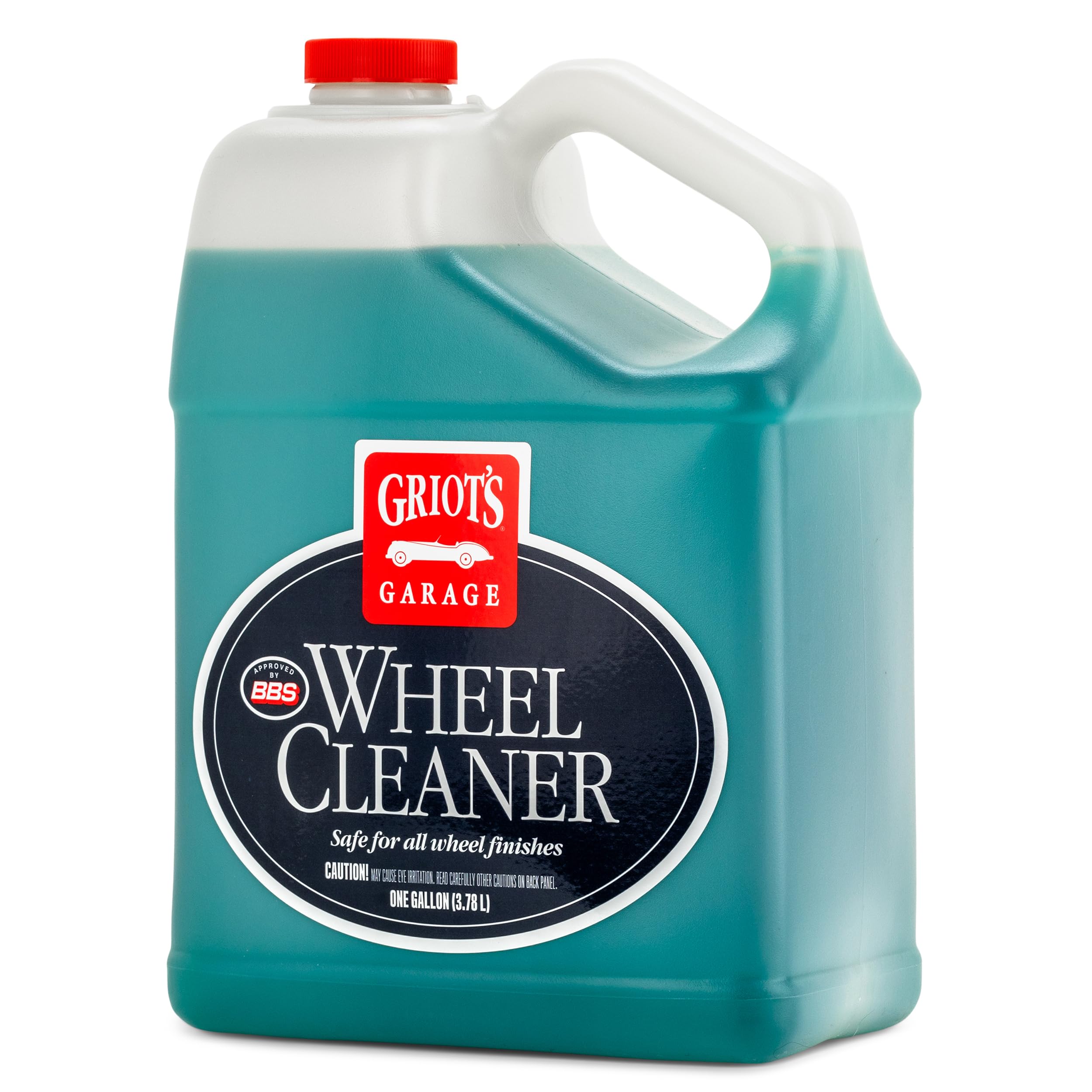
2. Griot’s Garage Wheel Cleaner
The pH-balanced gallon that treats your fancy finishes with kid gloves.
If you run ceramic-coated wheels or own a car you actually care about, Griot’s is the safety-first pick that still cleans thoroughly. It’s a pH-balanced formula, meaning it’s neither acidic nor alkaline, so it won’t strip your protective coatings or harm chromed, polished, powder-coated, aluminum, or steel surfaces. This is a weekly maintenance cleaner, not a rescue acid.
The gallon jug (128 fluid ounces) is the standout value here—this isn’t a 16-ounce novelty spray. The maker’s directions are simple: spray on a cool damp wheel, let it dwell for at least thirty seconds (longer if it’s cool out), agitate gently, and rinse. Owners with BMW motorcycles and off-road 4Runners praise how it lifts hard-packed dirt without harshness, and it rinses completely clean, leaving no residue behind—a complaint they’ve had with other brands.
The trade-off is cleaning strength. Because it skips iron removers entirely, it won’t melt through heavy caked-on brake dust the way a reactive formula will. Owners find it’s on the weaker side for deep buildup and requires real agitation with a sponge or brush. That makes it a poor choice for neglected wheels but an excellent choice for keeping already-clean wheels that way.
Its niche: the gentlest effective cleaner here, loved for its pleasant scent and safe touch on coated rims.
The limitation: it’s a maintenance tool, not a restoration tool—heavy buildup demands a reactive or acid cleaner.
3. KOCHCHEMIE Magic Wheel Cleaner
A thick, clingy foam that hugs vertical wheel faces while it dissolves iron.
KOCHCHEMIE’s Magic Wheel Cleaner is the brand’s answer for wheels that need the product to stay put. It’s engineered with high viscosity, meaning it’s thick enough to stick to the wheel and wheel well instead of running off instantly. This gives it a long working time, which is exactly what you need when tackling caked-on grime on contoured aluminum spokes.
The acid-free formula is safe for painted alloy wheels, high-quality chromed wheels, and steel rims, and it doubles as a tire cleaner. Like its Prosumer sibling, it turns red as it dissolves iron particles. Customers note it cuts wash time by 15–20 minutes per car., and one owner describes removing 27-year-old caked-on brake dust with a simple spray and light brush work. It’s notable for leaving almost no residue, which is the aspect owners praise most.
This 500 ml bottle is the smaller sibling to the Prosumer’s 750 ml—you’re getting a third less product for around the same price point, so cost-per-use is higher. The potent chemistry carries that signature strong odor, which some owners describe as the worst-smelling wheel cleaner they’ve used, even while calling it one of the best performing. Owners also caution that it can rust exposed, unpainted metal and paint nicks, so keep it away from bare metal surfaces.
The Big Wins
- Thick formula clings to wheels for a longer, more effective dwell time.
- Turns red to confirm it’s dissolving iron particles.
- Saves significant time on tough brake dust, per owner reports.
Heads Up
- Strong, unpleasant odor requires ventilation.
- Can rust exposed metal or paint chips—keep it on coated surfaces.
- Smaller 500 ml bottle means less value per dollar than the Prosumer’s 750 ml.
Choose it for: stubborn vertical surfaces and wheel wells where a runny spray would just slide off before working.
skip it if: smell sensitivity is a dealbreaker or you want maximum volume for your money—the Prosumer gives you more.
4. SONAX The Beast Wheel Cleaner

The color-changing giant that makes winter’s grime melt away.
SONAX The Beast is built for the “after winter” moment when your wheels look like they’ve been through a war. This non-acid formula attacks stubborn brake dust, road grime, and iron-containing contamination. It turns red as it reacts, giving you that satisfying visual confirmation across the entire wheel surface. Owners describe how it practically melted all the dirt and grime off after a rough winter, with one noting it “made my life way” easier.
The application window is straightforward: spray onto cool, dry wheels and allow 2 to 4 minutes of working time. The formula is safe across steel and light-alloy rims plus painted, chrome, metal-plated, polished, and matte finishes, and it’s suitable around wheels equipped with TPMS sensors (your tire pressure monitors). This 1-liter bottle is the largest of the color-changing group, edging out the 750 ml KOCHCHEMIE Prosumer.
Owners consistently report it’s effective but often needs a second coat or a stiff brush for truly neglected wheels. It can dry fast in hot weather, so work in the shade. The big caveat is cost-per-use: it’s on the pricier side and runs out faster than you’d hope, especially on large SUV wheels. As with most iron removers, the smell is unpleasant, though the cleaning results tend to override that complaint.
Why it stands out: the visible red reaction and broad finish compatibility make it a safe, effective pick for daily drivers and show cars alike.
Realistic expectations: plan for a second application on heavy buildup, and don’t let it dry on the wheel in direct sun.
5. Carfidant Rim Reactor Wheel Cleaner
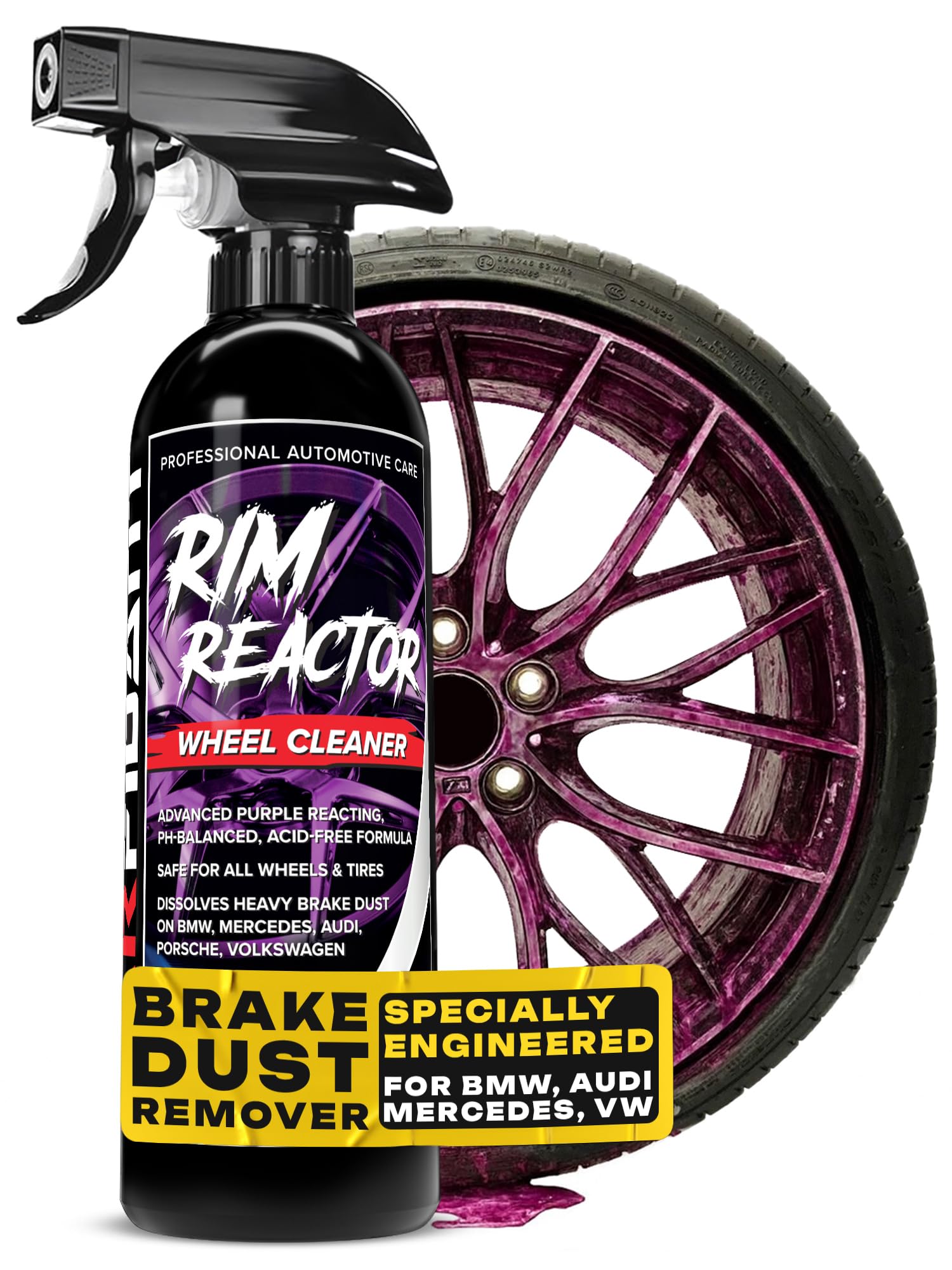
The entry-priced purple reactor that beats imported rivals on cost.
Carfidant’s Rim Reactor is the value play that doesn’t feel cheap. This pH-neutral, non-acidic formula turns purple as it reacts with iron, giving you that “watch it work” moment at a friendlier price than most imported brands. The maker’s no-scrub promise holds up in practice: reviewers point out that on 2-year-old dirty rims, a quick spray, a 1-minute wait, a re-spray, and a light rinse was enough—no heavy scrubbing needed.
The formula is safe for aluminum, chrome, painted, black, and alloy wheels, so it won’t harm clear coats or sensitive finishes. A standout feature is its versatility: use it undiluted for deep cleaning, or dilute it for maintenance washes to stretch the bottle further. This 16-ounce size is compact—its squat 2.64-inch package dimension contrasts with KOCHCHEMIE’s tall 10.63-inch bottle—so it’s easy to store but runs out faster than gallon options.
The catch is consistency. While many owners call it the best iron remover they’ve used, some recent batches reportedly arrived watery rather than gel-like, raising quality-control questions. Others note the color-change didn’t activate reliably and the smell is strong. At this budget tier, you accept some variability in exchange for the price.
Best value angle: does the same job as pricier foreign brands at a lower cost, per owner comparisons.
The honest caveat: batch quality has been inconsistent recently, and the strong odor is a real factor in a closed garage.
6. MAD Acid Heavy Duty Wheel Cleaner

Acid strength aimed at chrome, rust, and mineral-laden water spots.
MAD Acid is a different animal—an actual acid-based cleaner built for the worst cases: heavy brake dust, rust, and hard water spots. Its specific claim to fame is eliminating stubborn calcium, mineral, and fluoride deposits that cause those white, etched-looking water spots on chrome and clear-coated wheels. Shoppers say it removes mineral deposits from chrome-clad wheels with minimal effort, making rims look new again.
The maker’s process is fast and aggressive: let it dwell for just 15–20 seconds, then spray it off. This short dwell time is the key—this isn’t a formula you walk away from. Use a rim brush for maximum results, and note that it’s safe on clear-coated, chrome, alloy, and painted wheels, making it a versatile option in a detailing arsenal. Owners describe dramatic results where years of stains and discoloration vanished, with friends assuming the rims were brand new.
The warnings are significant. Effectiveness gets genuinely mixed feedback, with some reporting it ruined their wheels—likely from leaving it on too long. The sprayer is leaky, the tube fits poorly, and the smell is pungently acidic. This is a tool for experienced detailers who respect acid chemistry, not a first-time buy for a casual car owner.
Where It Excels
- Removes mineral deposits and hard water spots that neutral cleaners can’t touch.
- Fast 15–20 second dwell time makes quick work of chrome wheels.
Handle With Care
- Mixed feedback on safety—misuse can ruin wheels, so test on a small area first.
- Leaky sprayer and pungent acidic smell are common complaints.
Best fit: chrome-clad or clear-coated wheels with mineral buildup that neutral cleaners have failed on.
Think twice if: you want a safe, grab-and-go spray—this demands precise dwell timing and gloves.
7. Quality Chemical Mag Brite/Acid Wheel Cleaner

A full gallon of commercial-grade acid that must be diluted to shine.
Quality Chemical’s Mag Brite is the workhorse pick for serious car owners or small shops. This is a 128-ounce (1 gallon) jug of concentrated acid-based cleaner designed to remove brake dust, dirt, grime, and road film from all wheel types including aluminum, chrome, painted steel, and clear-coated surfaces. It’s a “spray and rinse” product, but with a critical twist: it must be diluted.
The number one message from owners is dilution discipline. The recommended ratio is 3:1—three parts water to one part acid. Owners who dilute it correctly call it amazing, with one describing wheels black from brake dust turning new-looking with no scrubbing. The gallon size provides enough cleaner for months of regular use, making the per-wash cost dramatically lower than buying small bottles. Owners describe it as commercial grade and great value.
Skip the dilution step and you risk damage. The formula is genuinely strong—owners stress to use it on cool wheels (first thing in the morning, before driving) and warn that it will etch or haze if left on too long. It also has that pungent acid smell. This is a capable product that rewards careful users and punishes careless ones.
The value story: a gallon of concentrate at 3:1 dilution outlasts a shelf of spray bottles at a fraction of the cost-per-use.
The requirement: you must commit to the dilution ratio and cool-wheel rule, or you risk your finish.
8. Quality Chemical Aluminum Cleaner & Brightener

The aluminum specialist that restores boat pontoons, trailers, and truck rims alike.
This Quality Chemical combo is built for more than just car wheels—it’s a dedicated aluminum cleaner, brightener, and restorer. The kit includes a 128-ounce (1 gallon) jug of concentrate plus two empty chemically resistant sprayers and two refill quarts. That’s a complete system for tackling oxidation, stains, discoloration, and even road salt corrosion on aluminum boat pontoons, RVs, and trailers.
Buyers report spectacular results on neglected surfaces. One Pacific Northwest owner describes an aluminum trailer that had sat outside for years turning green with mold—this cleaner restored it with ease. A truck owner reports it made his rims look great with no streaks. The maker’s claim is simple: spray, wait a minute, and rinse with a garden hose, eliminating the need to polish.
Two caveats temper the praise. First, the included spray bottles are the weak link—owners mention the acid eats the pumps in the spray heads, so plan on using your own heavy-duty sprayer. Second, the product is genuinely strong; used full-strength it can leave aluminum looking a little chalky and will take your breath away with fumes. Gloves and ventilation are mandatory.
The specialty: purpose-built for large aluminum surfaces like pontoons and trailers, where car-specific cleaners fall short.
Plan around: the bundled sprayers fail under acid exposure—buy a quality sprayer separately.
9. Bosh Chemical Alumabright Aluminum Cleaner
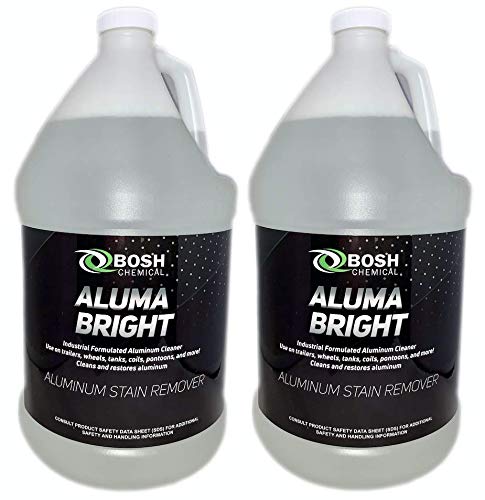
Two gallons of concentrated aluminum acid for the biggest restoration jobs.
Bosh Chemical’s Alumabright is the heavyweight champion for serious restoration projects. This 2-gallon case (two 128-ounce containers) is a highly concentrated, non-fuming acid brightener that removes aluminum stains, carbon, diesel exhaust smoke, grease, and oils. It’s the pick for fleets, boat owners, and anyone who maintains a lot of aluminum. The two-gallon case cuts per-gallon cost versus buying single gallons.
The process is straightforward: spray on with a pump sprayer, let it sit and foam up, then rinse with cold pressurized water. Owners with Alcoa aluminum wheels on a Ford F450 report it removed heavy buildup after three treatments plus a nylon brush—after other products had failed. Pontoon owners describe tubes that hadn’t been this shiny since the day they bought the boat.
The warnings are serious and consistent. This is a caustic acid—owners stress gloves and eye protection, note it can etch aluminum if left on too long, and report it can streak the wheel face and discolor rubber and driveway surfaces. One owner speculates it’s likely muriatic acid based. This is not a casual consumer product; it’s a professional-grade chemical that demands respect and careful timing.
The Heavy Hitter
- Two-gallon case provides immense value for large or repeated jobs.
- Removes stubborn oxidation and buildup that other products fail on.
Respect the Chemistry
- Caustic acid—requires gloves, eye protection, and careful rinse timing.
- Can etch aluminum and streak surfaces if left on too long.
Built for: large-scale restoration of pontoons, trailers, and fleet wheels where concentrated power per dollar matters most.
Not for: casual weekend detailers who want a safe, grab-and-go spray for routine washes.
Understanding the Specs
Acid-Free vs. Acid-Based
Acid-free formulas (often labeled pH-neutral, non-acidic, or reactive) work by chemically dissolving iron particles through a color-change reaction. They’re the safest bet for clear coats, painted surfaces, and coated aluminum—perfect for regular maintenance washes. Acid-based formulas (often labeled as brighteners or heavy-duty) are stronger, dissolving oxidation and mineral deposits, but they can etch aluminum or strip coatings if left on too long or used at full strength. Match the chemistry to the wheel’s condition, not the marketing hype.
Color-Change Verification
When a cleaner turns red or purple upon contact, it’s not a gimmick—it’s a chemical reaction indicating the formula is actively breaking down iron-based brake dust. A full, deep color change across the wheel means the product has bonded with the contamination and is working. If the color doesn’t activate, the surface may be coated or sealed, and the reactive chemistry can’t reach the metal. This visual cue also tells you when to rinse, preventing over-dwelling and potential damage.
FAQ
What is the difference between an aluminum rim cleaner and a regular wheel cleaner?
Why does my wheel cleaner turn red or purple?
Will an acid-based cleaner damage my aluminum rims?
How long should I let a wheel cleaner sit before rinsing?
Can I use an aluminum brightener on chrome or painted wheels?
What does pH-neutral or pH-balanced mean for a wheel cleaner?
Is it better to buy a concentrated cleaner and dilute it myself?
Why do wheel cleaners smell so strong?
Can I use an aluminum rim cleaner on my boat’s pontoons or trailer?
How often should I clean my aluminum rims?
Final Thoughts: The Verdict
Across the board, the best aluminum rim cleaner winner is the KOCHCHEMIE Prosumer because it pairs a visible red color change with acid-free safety across every wheel type, earning its status as the crowd favorite. If you want a gentle, pH-balanced option for coated rims and weekly maintenance, grab the Griot’s Garage gallon. And for restoring neglected aluminum on boats or trailers where nothing else has worked, the Bosh Chemical Alumabright is the heavy-duty acid to reach for.
How We Picked
We do not accept paid placement. Every pick is matched to a real buyer and a real use-case; we do not hands-on test units.
Sources & Methodology
Specifications: manufacturer listings and product documentation. Review insights: verified customer reviews, as of September 2026. Pricing: not shown on this page (it changes often); check the current price via the retailer link.
As an Amazon Associate, Gadgets Feed earns from qualifying purchases. This does not affect which products we feature.