
Our readers keep the lights on and my morning glass full of iced black tea. As an Amazon Associate, I earn from qualifying purchases.
Specs are compiled from manufacturer listings and verified buyer reviews and can change over time — please confirm the key details on the product page before buying.
Pink hydrangeas turn blue only when the soil is acidic enough for the plant to take up aluminum — and the fastest, most direct way to force that shift is a dedicated aluminum sulfate soil treatment. The real question isn’t which bag is cheapest, but which formula is gentle enough to shift the color without scorching the very blooms you’re trying to save.
I’m Min — the founder and writer behind Gadgets Feed. This guide is built by comparing the manufacturers’ published specifications and the patterns across verified customer reviews, so you get each pick’s real strengths and trade-offs instead of marketing spin.
If you’re searching for the right aluminum sulfate for blue hydrangeas, the winner balances fast color change with a forgiving dose that won’t burn your plants or ruin your soil.
Our Picks at a Glance

How To Choose The Best Aluminum Sulfate For Blue Hydrangeas
Aluminum sulfate does one job: it drops soil pH fast and dumps a dose of aluminum into the root zone. Your hydrangea only turns blue when it can actually absorb that aluminum, which happens only in acidic soil. So the real buying decision is about delivery method and tolerance — how quickly the product acts, and how likely it is to singe new growth.
Match the Form to Your Watering Habits
Powders dissolve quickly into a drench you can pour straight onto the root zone, which makes them the fastest fix if you’re happy to mix a jug every couple of weeks. Granules sit on the surface and break down more slowly with watering, which suits anyone who wants a set-and-forget approach but demands patience. Check the product’s item form before you order — it tells you exactly which routine you’re signing up for.
Measure Before You Sprinkle
Nearly every complaint about burned petals traces back to an over-generous handful. A teaspoon dissolved in a gallon of water is a far safer starting point than dry broadcasting, and several formulas in this list literally instruct you to wash any stray granules off the foliage. If you dislike measuring, look for a label that spells out a per-gallon ratio rather than a vague “sprinkle liberally.”
Quick Comparison
| Model | Best For | Form | Weight | Plant Coverage | Amazon |
|---|---|---|---|---|---|
| Ferti-lome 32175★ Best Overall | Fast, proven color change | Powder | 4 lb | Azaleas, gardenias, blueberries | Amazon |
| Grow More Blueing | Potted plants & easy mixing | Powder | 2 lb | Hydrangeas, azaleas, fuchsias | Amazon |
| Hoffman Blue Magic | Gentle granules for beds | Granules | 4 L | Hydrangeas, holly, magnolias | Amazon |
| Southern Ag 5 LB | Big gardens on a budget | Solid | 5 lb | Rhododendrons, dogwoods, camellias | Amazon |
In‑Depth Reviews
1. Ferti-lome 32175 Aluminum Sulfate Soil Conditioner
Our pick — over 4.5★ from 700+ verified ratings; the strongest balance of quality and price.
The fast-acting powder that turns pink blooms blue in two to three weeks.
You want blue hydrangeas fast, and the Ferti-lome 4-pound powder delivers. Buyers report that mixing it half-and-half with dirt and water for two to three weeks produces dramatic color change — “you will see magic!” Even on stubborn alkaline soil reading 8.5 pH from the tap, a measured dose pulled the runoff down to 6 pH in just a couple of days. That is noticeably faster than straight sulfur.
The label targets far more than hydrangeas, making this a one-bag solution for azaleas, gardenias, camellias, rhododendrons, and blueberries. That breadth is why it earned the Best Overall spot: you’re not buying a single-purpose product when a whole acid-loving bed needs the same treatment.
The honest catch is dose discipline. Applying 1.5 tablespoons to a 3-gallon pot was too much — the runoff hit 5 pH — and dry application to the soil caused a smaller plant to shed its leaves while the stems stayed alive. This is a concentrated powder, so start small and always water it in.
What Wins People Over
- Visible color change in as little as two to three weeks
- One bag covers hydrangeas, blueberries, gardenias, and more
- Fast pH drop reported in two to three days
Who Should Be Careful
- Too much can burn foliage and drop leaves
- No pre-measured scoop — you must measure yourself
Reach for this if: you want the most proven, fastest-acting path to blue blooms and you’re confident measuring small doses.
Look elsewhere if: you’d rather not fuss with mixing ratios — the label gives no room for a heavy hand.
2. Grow More Hydrangea Blueing Formula
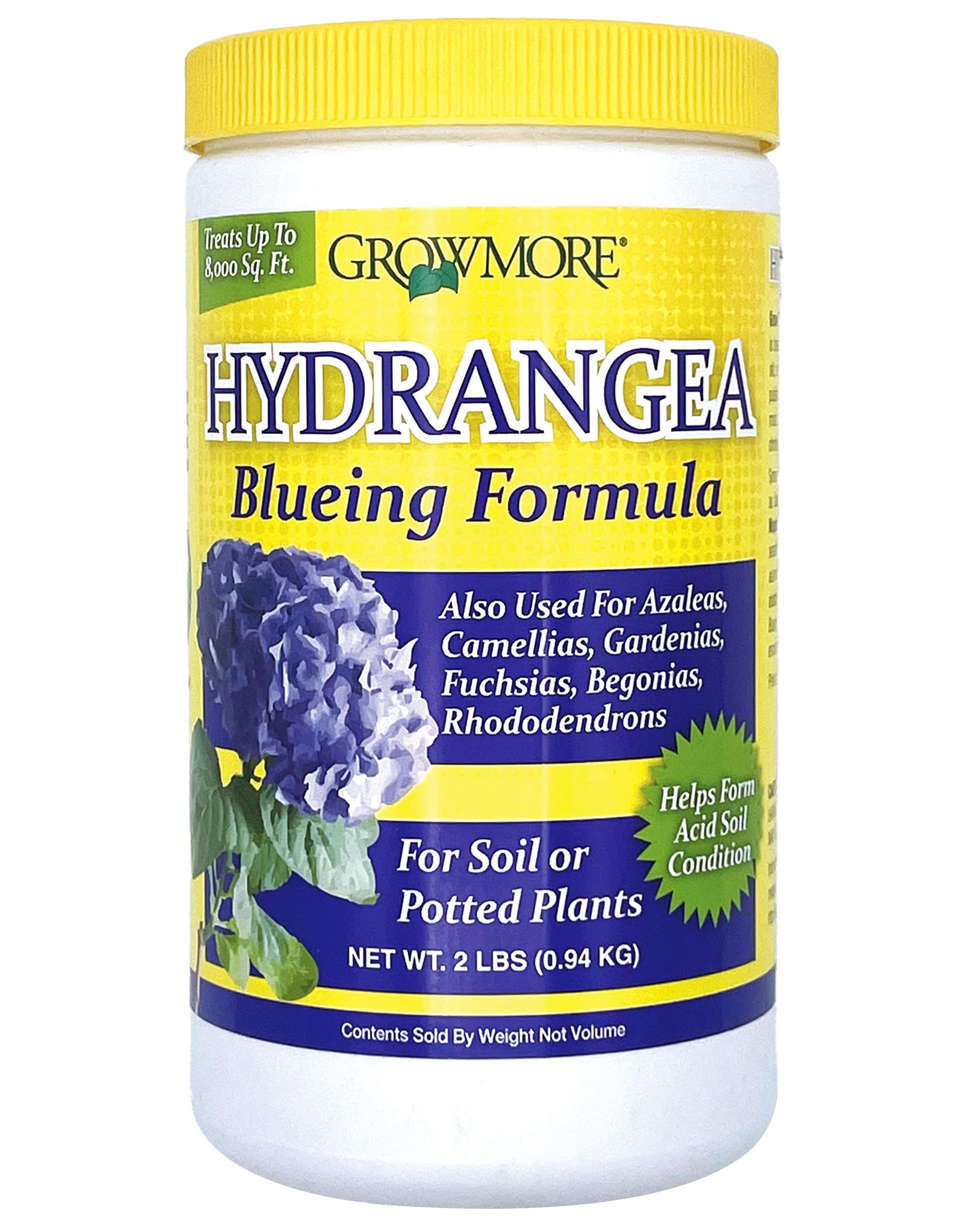
A USA-made powder built for potted plants and repeated reapplications.
Grow More pitches this 2-pound powder squarely at container gardeners, and the reviews show why: it dissolves easily and works after a few passes. One method that kept coming up — dissolving a tablespoon in warm water, adding it to a gallon, and watering every two weeks — delivered the blue color people were chasing. The manufacturer’s claim of effects lasting beyond a single season lines up with the “apply several times” advice that ran through owner experiences.
Unlike the Ferti-lome bag above, this one is marketed as a deliberately broad acidifier for hydrangeas, azaleas, gardenias, and fuchsias, and it’s the lighter option at 2 pounds. That makes it a better fit when you’re treating pots on a patio rather than a long hedge row.
The honest trade-off is that color results are genuinely mixed — some hydrangeas turned a beautiful blue, while others stayed stubbornly pale pink.
Who it suits: potted-plant owners who want a fast-dissolving, USA-made formula and are okay with repeat applications for a full blue.
Best for: container hydrangeas where you can control the dose per gallon and reapply through the season.
Think twice if: you want one-shot, guaranteed-blue results on the first pass — the color payoff varies here.
3. Hoffman Blue Magic Aluminum Sulfate

Granules that lower pH fast while giving you time to correct your hand.
Hoffman’s Blue Magic stands apart from the powders above because it arrives as granules, not a fine dust you have to mix. The payoff is flexibility: you can dissolve it in water or simply sprinkle it before rain, and both routes produced vibrant blue results at multiple homes. Pink flowers deepened to purple within two weeks, with buds following to blue after a month.
That slower, more forgiving curve is the defining trait here — unlike the Ferti-lome powder that can scorch a small plant on contact, the granular form gives a slightly wider margin for error. It still demands respect, though. One owner admitted, “actually turned my hydrangeas blue, but burned the older flowers in the pot,” and chalked it up to not measuring against recently-fed soil.
The recurring gripe is dissolvability — the granules are dusty and don’t break down completely in water, which makes them awkward if you prefer a clean liquid drench. For bedding plants and sprinkle-and-let-rain gardens, that’s a non-issue; for a strict container watering routine, it’s a real annoyance.
The Strong Points
- Works sprinkled dry or dissolved in water
- Fast pH drop, with results in two weeks
- Deep purple-to-blue progression reported
Points to Weigh
- Granules are dusty and dissolve poorly in water
- Over-application can burn older flowers
Go with this if: you garden in beds and prefer sprinkling before rain over mixing liquid jugs.
Pass it up if: you need a clean, fully-dissolving drench for indoor or patio pots.
4. Southern Ag Aluminum Sulfate
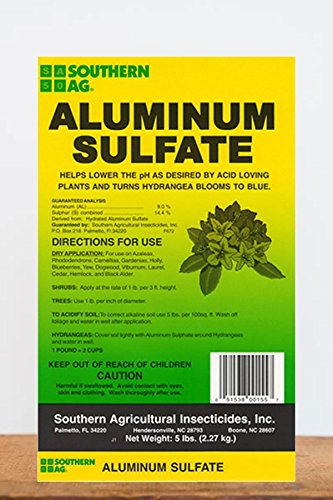
The biggest bag of fertilizer-grade aluminum sulfate for sprawling acid-loving beds.
Southern Ag delivers the most product for your money at 5 pounds of fertilizer-grade aluminum sulfate, with the metallic content listed at 9.0%. That sheer volume makes it the sensible pick when you’re treating a whole landscape — rhododendrons, hydrangeas, blueberries, dogwoods, holly, gardenias, camellias, and azaleas are all named on the label.
Buyers consistently call it a “great soil acidifier” for blue hydrangeas, with leaves starting to green up within days of application. It’s a slower-acting solid form, so don’t expect the two-week drama of the powder above — one owner applying a single dose confirmed “this is slowly turning my hydrangeas from pink to blue.”
The honest trade-off is packaging. The bag isn’t resealable, which matters for a chemical you’ll use gradually across a season. Reviewers flagged the lack of a closure as their main packaging complaint; a cheap clip or transferring to a jar solves it. The label also warns it’s not for spray application and tells you to wash any residue off the foliage.
Best value call: the most pounds per dollar, with the slow, steady shift that suits anyone treating multiple shrubs at once.
Choose this for: large gardens where you need maximum coverage at a minimum cost per treatment.
Keep scrolling if: you want fast, visible color change soon — the effects here build slowly.
Understanding the Specs
Form: Powder vs Granules vs Solid
The form decides your whole routine. A powder dissolves into a fast-acting drench you pour at the roots, which gives you quick color shifts but punishes a heavy hand. Granules sit on the soil and break down with watering — slower, more forgiving, but dusty and prone to poor dissolvability. A solid like the Southern Ag bag is the slowest and simplest to broadcast, which suits a whole bed but tests your patience.
Weight and Coverage
Weight tells you how far one purchase stretches. A 2-pound bag suits potted plants and patio treatments, while a 4- or 5-pound bag covers a landscape of acid-loving shrubs. Pair that with the target-species list on the label — if it names your exact plants, the formula was built for them, and you won’t be guessing whether it’s safe.
FAQ
How often should I apply aluminum sulfate to my hydrangeas?
Will aluminum sulfate burn my hydrangea plants?
What is the difference between aluminum sulfate and sulfur for blueing hydrangeas?
Does aluminum sulfate work on potted hydrangeas?
How long does it take for hydrangeas to turn blue after applying aluminum sulfate?
Can I use the same aluminum sulfate on my azaleas and blueberries?
Why are my hydrangeas still pink after I applied aluminum sulfate?
Should I dissolve aluminum sulfate in water or sprinkle it dry?
Is aluminum sulfate safe for my other garden plants nearby?
How much aluminum sulfate should I use per hydrangea plant?
Final Thoughts: The Verdict
For most gardeners, the aluminum sulfate for blue hydrangeas decision depends on one thing: how much control you want over the dose. The Ferti-lome 4-pound powder is the proven pick for fast, dramatic color change if you’re careful with measuring. If you garden in pots and want a USA-made formula built for repeated applications, grab the Grow More Blueing Formula. And for a whole landscape of acid-loving shrubs on a budget, the Southern Ag 5-pound bag is the one to reach for — just pack a resealable clip with it.
How We Picked
We do not accept paid placement. Every pick is matched to a real buyer and a real use-case; we do not hands-on test units.
Sources & Methodology
Specifications: manufacturer listings and product documentation. Review insights: verified customer reviews, as of August 2026. Pricing: not shown on this page (it changes often); check the current price via the retailer link.
As an Amazon Associate, Gadgets Feed earns from qualifying purchases. This does not affect which products we feature.