
A raw tile edge isn’t just unfinished—it’s a chipping hazard, a dust magnet, and the fastest way to ruin an otherwise flawless floor. The right aluminum trim turns that raw, brittle edge into a durable, polished transition that protects your work and unifies your room.
I’m Min — the co-founder and writer behind Gadgets Feed. I’ve spent countless hours analyzing the material grades, anodizing processes, and profile designs that separate a trim that lasts from one that bends or discolors within a year.
After comparing seven specific models on alloy strength, surface finish, and installation flexibility, I’ve assembled a clear guide to help you find the very best aluminum tile trim for your next flooring project.
How To Choose The Best Aluminum Tile Trim
Choosing the right aluminum tile trim comes down to three factors: the alloy and finish, the profile shape, and the installation method. Prioritize these before you buy, and you’ll avoid the most common mistakes that lead to bent trims, peeling finishes, or mismatched transitions.
Alloy Grade & Surface Finish
Not all aluminum is equal. Grade 6063 aluminum alloy offers superior corrosion resistance and structural rigidity compared to cheaper blends. Anodized finishes go a step further, bonding a protective layer into the metal surface rather than just painting it. That means it won’t flake or fade even in high-moisture areas like bathrooms or kitchens.
Profile Type & Height Match
Your trim needs to physically bridge the height difference between two flooring surfaces. A T-molding works for floors at the same level, a reducer handles a drop of 0.2 to 1.6 inches, and a flat threshold strip sits flush for doorways. Measure your gap height first—then pick the profile that matches it exactly.
Installation Hardware
Some trims come with pre-drilled holes and screws for a mechanical anchor. Others rely on adhesive backing or require you to supply glue. If you’re installing over concrete or high-traffic areas, a screw-down installation is significantly more secure than peel-and-stick alone. For light-duty wall corners or cabinet edges, adhesive-backed L-moldings work perfectly.
Quick Comparison
On smaller screens, swipe sideways to see the full table.
| Model | Category | Best For | Key Spec | Amazon |
|---|---|---|---|---|
| Gaahing Threshold Strip | Reducer | Bridging 0.2–0.5″ height gaps | Grade 6063, 0.8mm thick | Amazon |
| QEP TileTrim Square | Cutting Tool | 45° miter cuts on metal trims | Durable ABS plastic jig | Amazon |
| Orechic 36″ Flat Threshold | Flat Threshold | Ultra-low profile doorways | 0.1″ height, 1.5mm thick | Amazon |
| Trimold Floor Reducer | T-Molding Reducer | Floors at similar height | Grade 6063, 1.6″ height | Amazon |
| Trimold L Molding Corner Guards | L-Molding | Shower tile edges & 90° corners | 3-pack, 35.4″ length each | Amazon |
| Heainaiyoo 36″ Flat Threshold | Flat Threshold | High foot-traffic doorways | 4″ wide, non-slip grooves | Amazon |
| Orechic 48″ Stair Nosing | Stair Nosing | Step edges & outdoor decks | 48″ L, non-slip textured surface | Amazon |
In‑Depth Reviews
1. Gaahing Aluminum Floor Transition Threshold Strip

The Gaahing strip uses high-strength Grade 6063 aluminum alloy at a slim 0.8mm thickness. Its oxidized surface resists corrosion and rust, making it suitable for both interior and exterior transitions where moisture is present. The 35.4-inch length and 1.7-inch width cover standard doorways, while the 0.5-inch ramp height bridges gaps from 0.2 up to 0.5 inches.
Installation requires you to supply your own adhesive or fasteners—there are no screw holes or adhesive strips included. That gives you the flexibility to choose between construction adhesive, double-sided tape, or flooring nails depending on your subfloor. The lightweight profile cuts cleanly with a miter saw or hacksaw, and the matte black finish hides dirt well.
Reviews confirm it supports wheelchairs and walkers without bending, and the polished surface is easy to wipe clean. One note: because the strip is bare (no pre-applied tape or screws), measure your gap height and plan your attachment method before you cut the trim.
Why it’s great
- Grade 6063 alloy offers structural rigidity
- Matte black oxidized finish resists corrosion
- Bridges up to 0.5″ height difference cleanly
Good to know
- No adhesive or screws included
- DIY installation requires planning
2. QEP 10715-6 TileTrim Square

This isn’t a trim piece—it’s a professional cutting jig that holds aluminum tile edging and Schluter-style trims steady while you cut precise 45-degree miters on a wet saw or chop saw. The ABS plastic body features dedicated slots and V-grooves that grip both flat trims and quarter-round profiles, preventing the metal from shifting mid-cut.
The square also includes a valley designed for pencil trim, so you get consistent, repeatable miters on every corner. Experienced tilers report that this tool has cut their trim waste nearly to zero because the snug fit eliminates the most common error—an angled or wandering cut. It works with roughly 95% of tile trims sold today.
If you’re using any of the aluminum trims in this guide and want professional-looking inside and outside corners, this jig pays for itself in material saved. It does require a wet saw or chop saw to function—it’s not a standalone cutter.
Why it’s great
- Locks metal trims securely for straight miter cuts
- V-groove handles quarter-round profiles
- Works with 95% of available tile trims
Good to know
- Requires a wet saw or chop saw
- ABS plastic, not metal construction
3. Orechic 36″ x 4″ Flat Aluminum Threshold
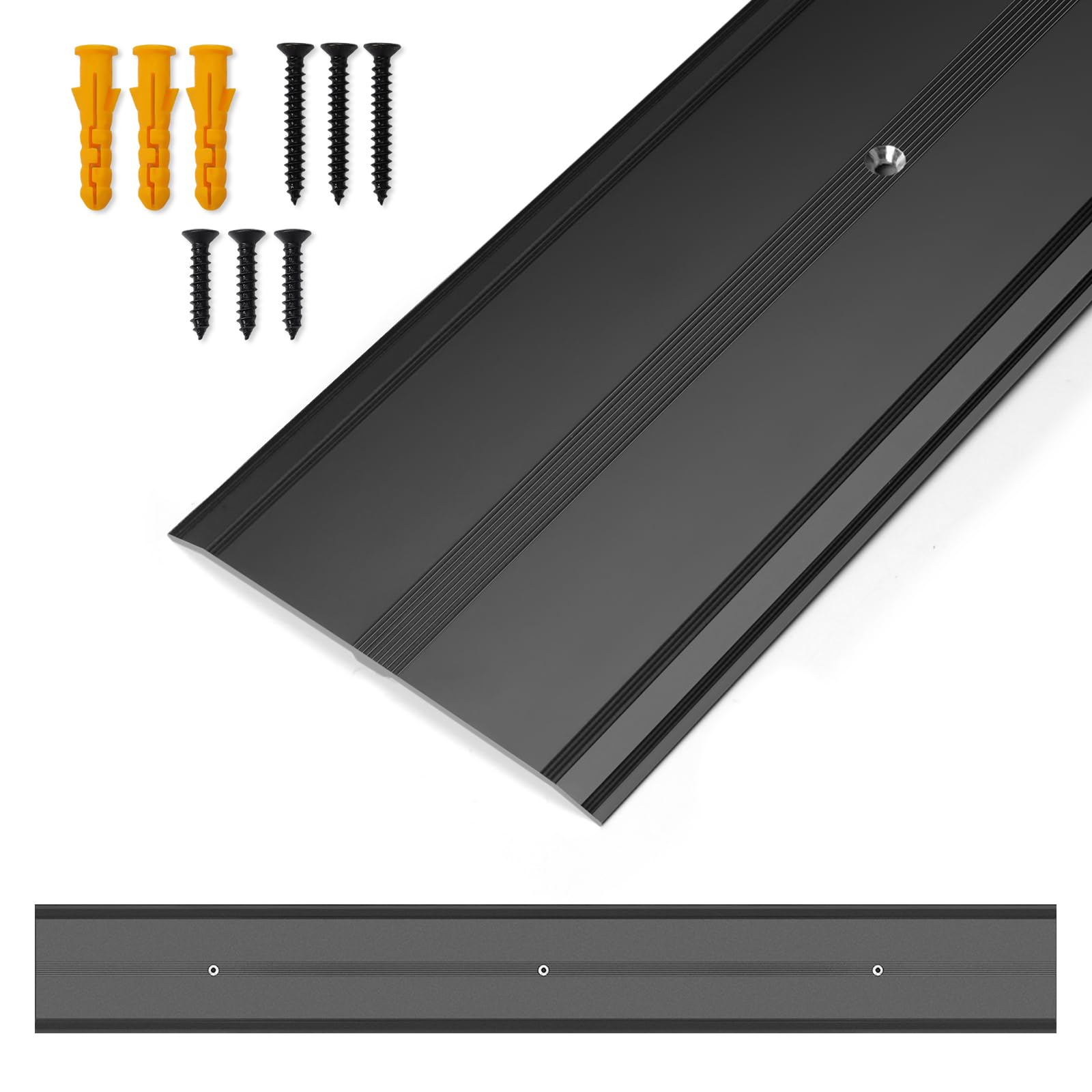
At just 0.1 inches tall and 1.5mm thick, this Orechic threshold strip is one of the flattest profiles available for bridging two nearly level flooring surfaces. The heavy-duty aluminum alloy construction resists bending, and the pre-drilled countersunk holes let you screw it down securely to concrete, wood, or tile subfloors.
The low profile makes it ideal for wheelchair and walker access—there’s no lip to trip over. It also seals the gap at the bottom of doors against drafts, dust, and pests. The brushed black finish has a subtle texture that blends with modern decor and doesn’t show scuffs easily.
One reviewer specifically called it the flattest threshold they could find for bridging floating linoleum to hardwood without shaving the door. The included screws are rust-proof, and the 36-inch length suits standard single-door openings. Just note that the flat profile only works when both floors are nearly the same height—it won’t handle a significant drop.
Why it’s great
- Ultra-flat 0.1″ profile for wheelchair access
- Pre-drilled holes with rust-proof screws
- Seals drafts and blocks pests
Good to know
- Not suitable for height differences over 0.2″
- Flat design only
4. Trimold Aluminum Floor Transition Strip Reducer

Trimold’s floor reducer is built from the same Grade 6063 aluminum alloy as the Gaahing strip, with an identical 0.8mm thickness and an oxidized surface that resists moisture. The key difference is its taller 1.6-inch (40mm) height, which allows it to bridge a wider range of floor-level transitions—from nearly flush up to a 1.6-inch drop.
The matte silver finish blends with most flooring tones, and the slim profile keeps the transition barely noticeable. Like the Gaahing, it requires you to supply your own adhesive or fasteners—no glue or screws are included. The 2.9-foot length per strip works well for standard door openings, and the lightweight alloy cuts easily.
Customer reviews consistently mention solid construction and easy cutting. The trade-off: for the same alloy quality as the Gaahing, you get a taller profile at a similar price point. If your height gap is larger than 0.5 inches, this is a strong alternative to the Gaahing.
Why it’s great
- Taller 1.6″ height bridges larger gaps
- Grade 6063 alloy with oxidized finish
- Lightweight and easy to cut
Good to know
- No adhesive included
- Shorter 2.9ft length per strip
5. Trimold L Molding Corner Guards (3-Pack)

These L-shaped aluminum guards protect 90-degree wall and cabinet corners from dings and dents. Each piece measures 35.4 inches long by 0.8 inches wide, and the pack includes three strips. The matte silver aluminum alloy finish is sleek enough for bathrooms and kitchens, and a protective film on the surface prevents scratches during installation.
Installation is the easiest in this roundup: peel off the pre-applied adhesive strip, press onto the corner, and you’re done. For high-traffic areas or cabinets that get handled frequently, reviewers recommend adding a dab of strong construction glue because the adhesive alone may not withstand repeated impacts. The L-molding can also be painted to match your wall color.
These are best suited for tile shower edges, baseboard corners, or cabinet faces where you want a clean metal edge. They cut easily with tin snips. The peel-and-stick approach is convenient, but expect to supplement the adhesive if the corner sees regular contact.
Why it’s great
- Easy peel-and-stick installation
- 3-pack covers multiple corners
- Sleek aluminum finish, paintable
Good to know
- Pre-applied adhesive may need reinforcement
- Not for height-gap transitions
6. Heainaiyoo 36″ x 4″ Flat Aluminum Threshold
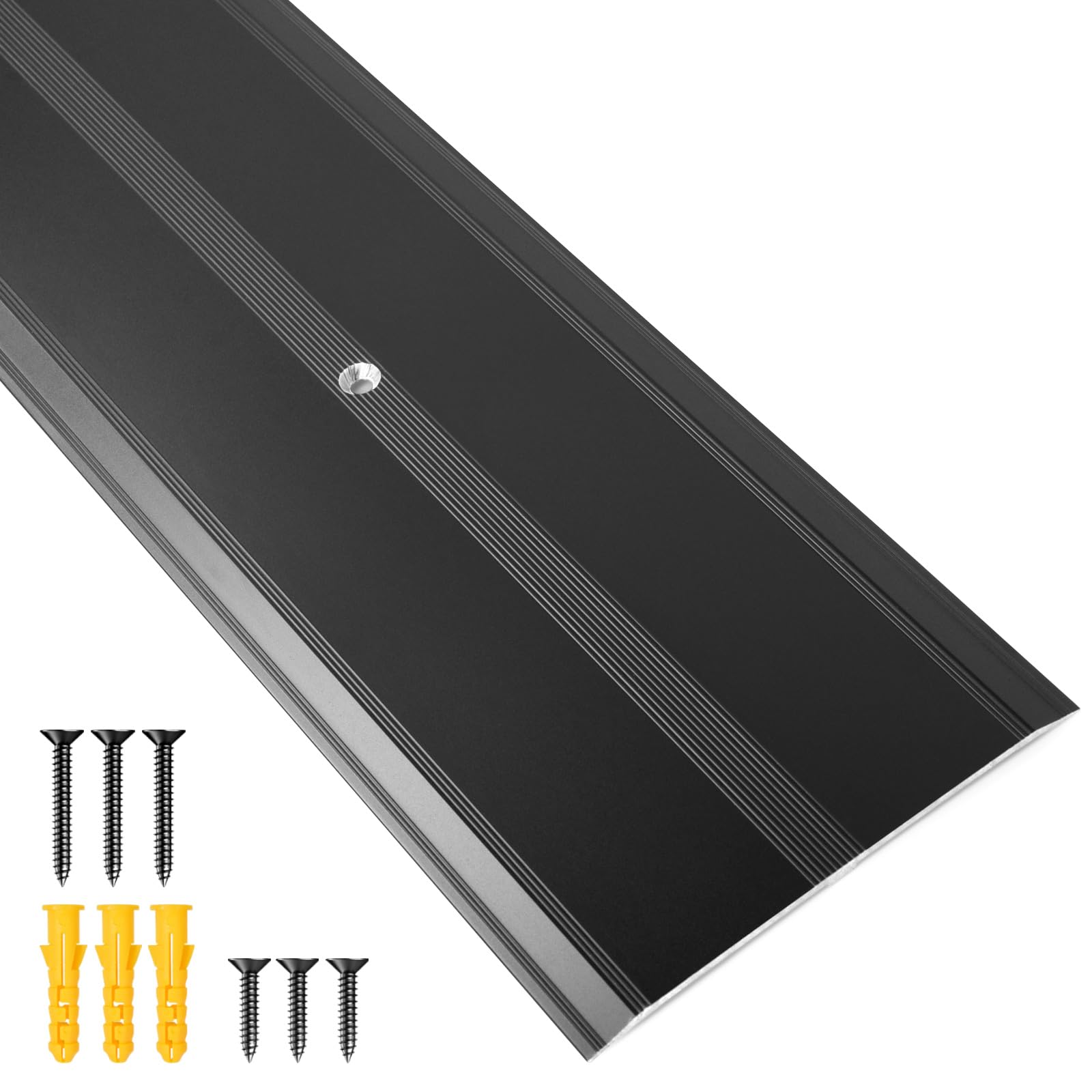
This 36-inch by 4-inch flat threshold from Heainaiyoo features a 1.5mm thick aluminum plate with non-slip grooves running along the surface. At 0.1 inches tall, it offers the same low-profile benefit as the Orechic, but with a wider 4-inch span that covers larger door openings. The grooves increase foot traction in wet zones like entryways or bathroom doors.
The strip comes with pre-drilled and countersunk mounting holes, plus screws for installation. The black finish looks clean on dark flooring but may show wear over time—one reviewer noted concerns about the finish durability and suggested refinishing with a durable spray paint if needed. It’s rated for both commercial and industrial use, meaning it can handle heavy foot traffic.
For the price, it delivers a functional flat threshold that bridges similar-height floors. The trade-off is a less robust finish compared to the anodized Orechic. It works best in areas where the threshold will be covered by a door most of the time.
Why it’s great
- Wide 4″ size suits larger door openings
- Non-slip grooves for wet areas
- Pre-drilled with screws included
Good to know
- Finish may scuff with heavy use
- Flat profile only, no height adjustment
7. Orechic 48″ Metal Stair Nosing (2-Pack)
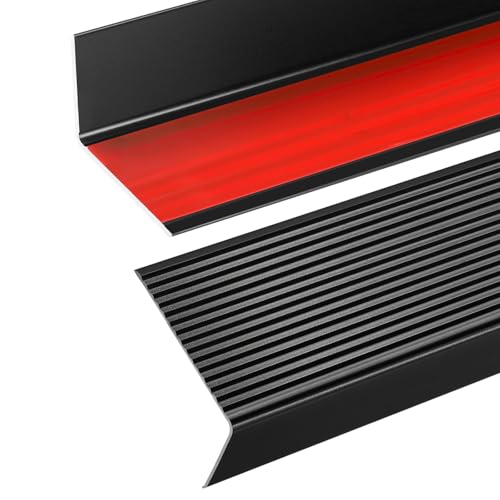
This stair nosing from Orechic is designed specifically for step edges. Each piece is 48 inches long, 2 inches wide, and 1.2 inches tall in an L-shape that wraps over the stair tread. The textured, non-slip surface increases foot traction, and the anodized aluminum construction resists rust and sun exposure for outdoor use on decks or porches.
Installation relies on a pre-applied industrial-strength adhesive backing—just clean the surface, peel, and press. For concrete stairs, reviewers recommend supplementing with construction adhesive because the tape bond is weaker on porous surfaces. The 2-pack covers two standard steps, and the black color blends with most stair materials.
One creative use: a reviewer used it to protect a wood deck edge from squirrels, drilling through the metal to screw it down. The nosing is rigid enough to hold its shape under foot traffic but requires a strong adhesive bond for reliable long-term attachment, especially for outdoor installations exposed to temperature swings.
Why it’s great
- Textured non-slip surface for safety
- Rust-resistant anodized aluminum
- 48″ length covers wide stairs
Good to know
- Adhesive struggles on porous concrete
- Mostly for stair edges, not floor transitions
FAQ
Can I use aluminum tile trim outdoors?
What is the difference between a reducer and a T-molding?
How do I cut aluminum tile trim cleanly?
Is peel-and-stick adhesive strong enough for floor trims?
Final Thoughts: The Verdict
For most users, the best aluminum tile trim winner is the Gaahing Aluminum Floor Transition Threshold Strip because its Grade 6063 alloy and corrosion-resistant finish deliver professional durability at a mid-range price. If you need the flattest profile for wheelchair-friendly doorways, grab the Orechic 36″ Flat Threshold. And for cutting perfect 45-degree miters on any premium trim, the QEP TileTrim Square is the only tool that belongs in your bag.