
Our readers keep the lights on and my morning glass full of iced black tea. As an Amazon Associate, I earn from qualifying purchases.
Specs are compiled from manufacturer listings and verified buyer reviews and can change over time — please confirm the key details on the product page before buying.
Stopping water from sneaking behind your gutters, under your siding, or around a window frame depends on one simple thing: the right strip of metal. Pick one too thin and it flops; too thick and you fight every bend. The trick is knowing which gauge, width, and length actually fit the job you are doing today.
I’m Min — the founder and writer behind Gadgets Feed. This guide is built by comparing the manufacturers’ published specifications and the patterns across verified customer reviews, so you get each pick’s real strengths and trade-offs instead of marketing spin.
For this roundup, we weighed thickness, width, and rolled length across seven different aluminum z flashing options to see which ones actually hold their shape and seal tight without turning a simple repair into a wrestling match.
Our Picks at a Glance
How To Choose The Best Aluminum Z Flashing
Z flashing directs water away from the joint where two building surfaces meet, like where a roof meets a wall. The three specs that determine whether it works or just bends out of shape are the metal thickness, the roll width, and the overall length you need for your project.
Thickness: The Gauge That Determines Grip
Thickness is measured in inches or gauge number. A thicker sheet, like 0.02 inches, holds its shape under wind and rain but takes more muscle to cut and bend. A thinner sheet, around 0.0078 inches, cuts easily with household scissors but may not stand up as firmly against heavy weather over time.
Width: Matching the Gap You Need to Cover
Standard Z flashing rolls come in widths from 2 inches up to 14 inches or more. A 4-inch roll works for most gutter-edge jobs and window sills. A 14-inch roll is for wider gaps, like where a roof meets a vertical wall, where you need more metal to tuck under siding and overlap the roofing below.
Length: How Much Ground One Roll Covers
Flashing rolls range from 10-foot repairs up to 50-foot runs. A short 10-foot roll is ideal for a single window or a small patch. A 50-foot roll covers an entire roof edge or a long section of gutter line without needing a splice.
Quick Comparison
| Model | Best For | Thickness | Width | Length | Amazon |
|---|---|---|---|---|---|
| EAGLE 1 4 in x 10 FT★ Best Overall | Commercial-grade strength | 0.02 Inches | 4 Inches | 10 Feet | $39.95Amazon |
| Aluminum Flashing Roll 0.3mm (WIVZKAO)Smart Value | Mid-thickness all-rounder | 0.0118 Inches | 4 Inches | 50 Feet | $24.99Amazon |
| Amerimax 66004 4″ x 50′ | Trusted brand, long run | — | 4 Inches | 50 Feet | $27.48Amazon |
| Lounsweer 4” x 50′ | Moss and mildew prevention | 0.0078 Inches | 4 Inches | 50 Feet | $22.99Amazon |
| 4 in x 50 ft Aluminum Flashing (Yantuo) | Long budget run | 0.01 Inches | 4 Inches | 50 Feet | from $24.60Amazon |
| AMERIMAX 66314 14-Inch x 10-Feet | Wide coverage, short run | — | 14 Inches | 10 Feet | $17.48Amazon |
| Therwen 4″ x 20′ | Entry-level budget buy | 0.0078 Inches | 4 Inches | 20 Feet | $14.99Amazon |
In‑Depth Reviews
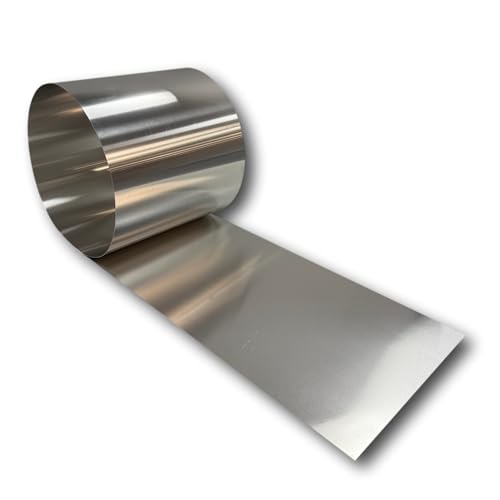
1. EAGLE 1: 26 Gauge General Use or Roofing Flashing Rolls (4 in x 10 FT)
Our pick — over 4.5★ from 650+ verified ratings; the strongest balance of quality and price.
The thickest roll in this lineup, built for roofs and repairs that need to stay put for years.
If you are flashing a roof-to-wall joint or a chimney base, you want sheet metal that does not crinkle the second you squeeze a brake. At 0.02 inches thick, this EAGLE 1 roll is 2.6 times thicker than the budget Therwen option — a gap you feel the moment you pick it up. Buyers report it is a “10 ft stainless steel sheet, great quality, shiny polish.”
The commercial-grade mill finish works with hand snips or a brake, and the 4-inch width handles standard Z-flashing duty on gutter lines and window sills. The trade-off is reach: at 10 feet long, this roll covers about one third the length of the 50-foot runner rolls. It is the right call for a focused commercial-quality repair, not a whole-roof perimeter.
One reviewer noted the material is “strong yet easy to cut with tin snips and bend with 3 ft brake,” and that it stays rust-free even after months outdoors. That kind of longevity is exactly why you pay more per foot here than on thinner rolls.
What you get
- 0.02-inch thickness provides stiff, lasting support
- Commercial-grade rating holds up to heavy weather
- 10-foot length is manageable for precise cuts
What to weigh
- Short 10-foot roll means you will need multiple rolls for a full roof edge
- Harder to cut with scissors than thinner rolls; tin snips are a must
Reach for this if: your project demands maximum rigidity and weatherproofness — think chimney flashing, roof-to-wall intersections, or any joint that gets direct rain.
The catch: for the price of one 10-foot roll you could almost buy a full 50-foot roll of thinner material, so only buy this if you actually need the thickness.
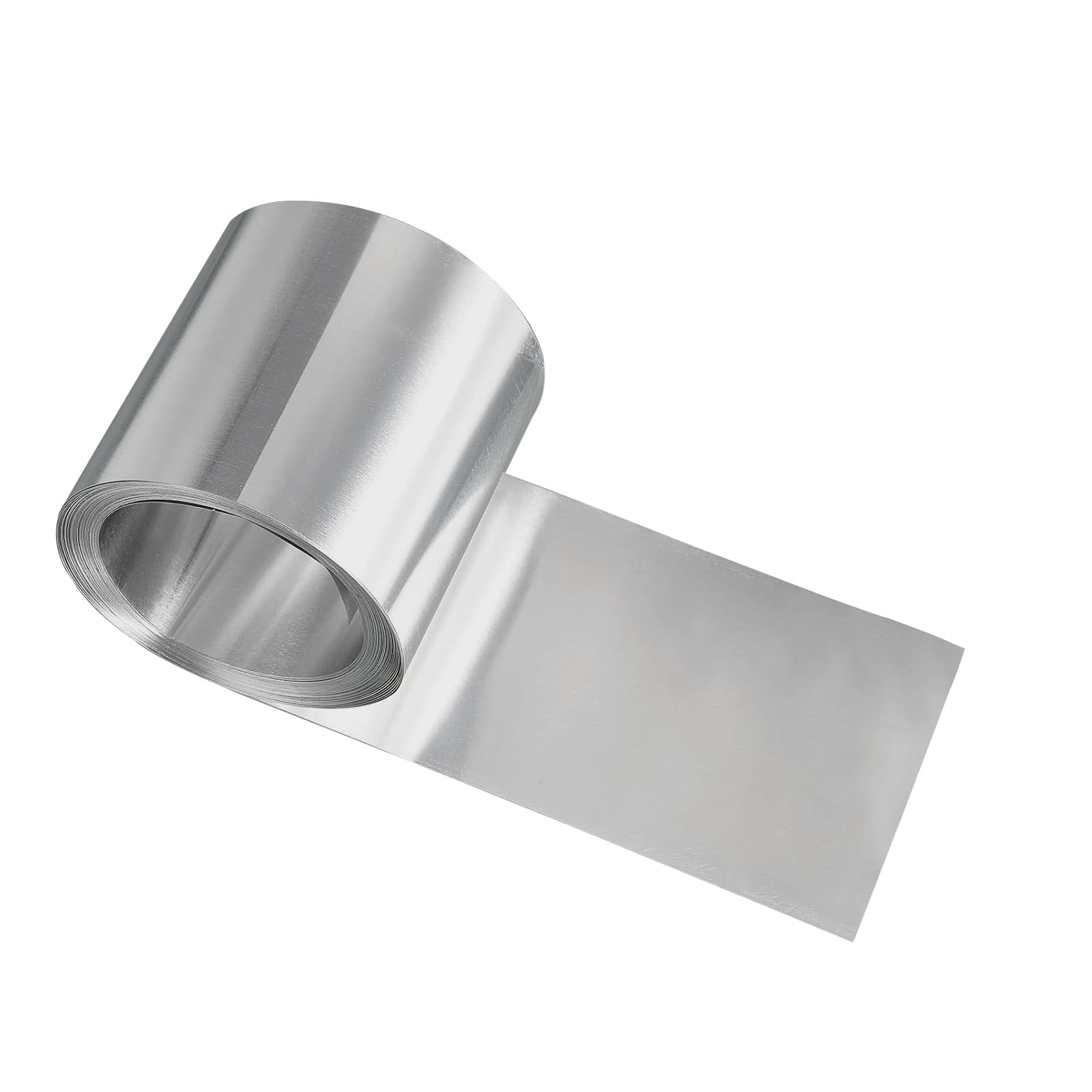
2. Aluminum Flashing Roll Roof Flashing (WIVZKAO) 4 in x 50 ft, 0.0118 Inches
A middle-ground thickness that is stiff enough for gutters yet bendable by hand.
If the EAGLE 1 at 0.02 inches feels like overkill for a simple drip-edge fix, this WIVZKAO roll lands at 0.0118 inches — roughly midway between the thinnest 0.0078-inch rolls and the thickest commercial grade. One reviewer called it “a little thicker than most,” which translates to a roll that holds its shape when you bend it into a Z profile but still cuts easily with scissors.
The 50-foot length lets you run a continuous strip along most standard garage or patio roof edges without splicing. A couple of buyers mentioned the flashing is “rolled very very tightly,” making it tough to get the curl out so it lies flat. Plan to weigh down the strip for a few minutes after unrolling or pass it backward over a table edge to break the coil memory.
At this thickness and length, you get a balance — more coverage than the premium EAGLE 1 and more rigidity than the cheapest budget rolls — for a mid-range price that feels fair.
Why it works
- 0.0118-inch thickness offers a good balance of stiffness and workability
- 50-foot roll covers a full gutter run in one go
- High gloss retention and color stability, per the manufacturer
The trade-off
- Rolled very tightly, which makes flattening the curl a chore
- Not thick enough for heavy commercial roofing applications
Pick this for: a long gutter edge or patio roof where you want one continuous piece of aluminum that stays rigid without being a pain to cut.
Just know: you will need to spend a few minutes flattening the coil memory before installation, not a dealbreaker but a real step.
3. Amerimax 66004 Aluminum Roll Flashing, 4″ x 50′
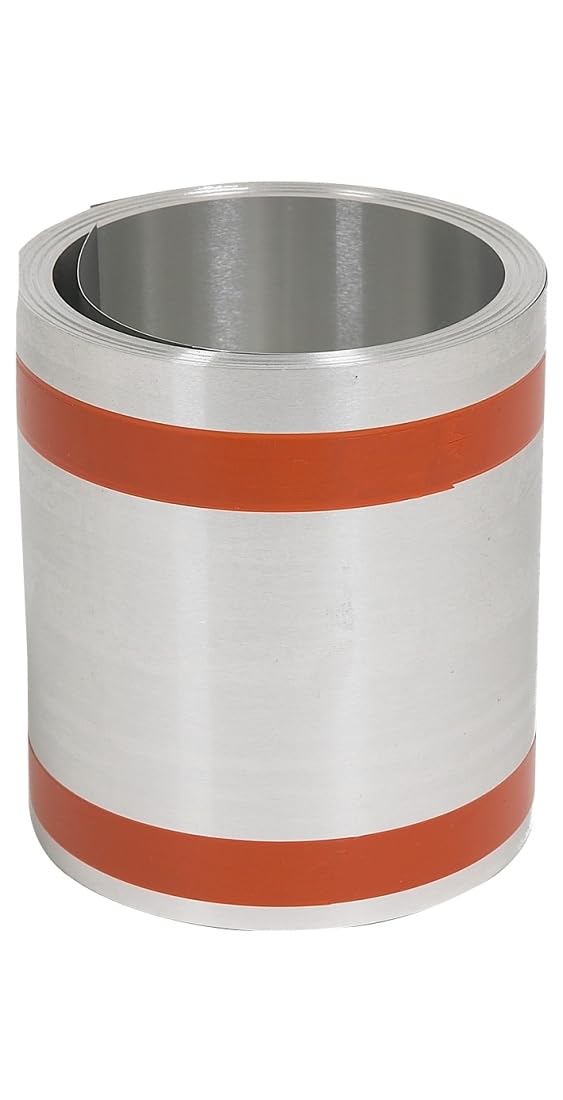
An American-made 50-foot roll from a name that has been on hardware store shelves since 2007.
Amerimax is the brand most DIYers recognize from the home center aisle, and this 66004 model brings that same consistent quality in a plain aluminum roll. It weighs 1.94 pounds against the EAGLE 1’s 1-pound short roll, which tells you the material density is reasonable for a general-purpose flashing. One buyer summed it up: “much thicker than heavy-duty kitchen foil; bends and holds shape well.”
The 50-foot length gives you a lot of coverage, but some buyers warn it is “thin enough to easily conform to a right angle” — and not stiff enough for applications where you need the metal to stand rigid on its own without support. Another reviewer mentioned using it to “seal gap between roofline and patio roof” and noted it needed construction adhesive to stay put. Factor in a little backing if your job demands stiffness the Amerimax cannot provide on its own.
Reviewers report it works great for tucking under shingles, trimming garage door gaps, and even for underfloor heating clips. It is a versatile length of metal at a proven price point.
What stands out
- 50-foot continuous run means fewer splices on long edges
- Made in the USA with a long track record of reliability
- Cuts and bends easily for tight spots
Where it falls short
- Not rigid enough on its own for unsupported flashing runs
- Thinner gauge than some competing rolls at a similar price
Grab this if: you want a long, affordable run of aluminum for standard gutter and drip-edge work where the flashing is nailed or adhered in place.
skip it if: your job requires a stiff, self-supporting Z-flashing that stands upright without fasteners.
4. Lounsweer 4” x 50′ Aluminum Roll Flashing for Roof and Garden

A thin 0.0078-inch roll that solves water problems behind gutters without demanding heavy tools.
At 0.0078 inches, Lounsweer is on the thinner side — 2.6 times thinner than the EAGLE 1 — but that is not necessarily a flaw for this use case. Owners mention it is “sturdy, great value, easy to cut and screw,” and one used it as “flashing behind drip edge to gutters” where it “solved water getting behind fascia.” The thin profile lets it slide into tight gaps between shingles and gutter backs without fighting you.
The 50-foot roll gives you the same coverage as the Amerimax and WIVZKAO options, but at a lower entry cost. The spec sheet says it resists rust and corrosion, and the high gloss retention keeps it looking decent for a visible area under a soffit. One reviewer used a 3-inch-long piece to trim a garage door gap and noted it was “thick enough to hold its’ shape” — a surprising outcome for such a thin roll, but the Z-bend adds stiffness.
Because it is thin, it will not stand up to heavy impact or large unsupported spans. Stick to jobs where the flashing is tucked behind something or nailed every few inches.
Good points
- 50-foot roll offers lots of coverage for the cost
- Easy to cut with scissors, no power tools needed
- Thin enough to slide into tight gaps behind drip edges
Limitations
- 0.0078-inch gauge will not hold up in unsupported spans
- Not suitable for heavy-duty commercial applications
Best for: a quick fix on gutter drip edges or sealing behind fascia where you want a long continuous strip without spending premium money.
Not for: roof-to-wall transitions or chimney flashings where the metal needs to stand rigid without backing.
5. 4 in x 50 ft Aluminum Flashing Roll (Yantuo) for Sealing Windows Doors, Shed Weatherproofing
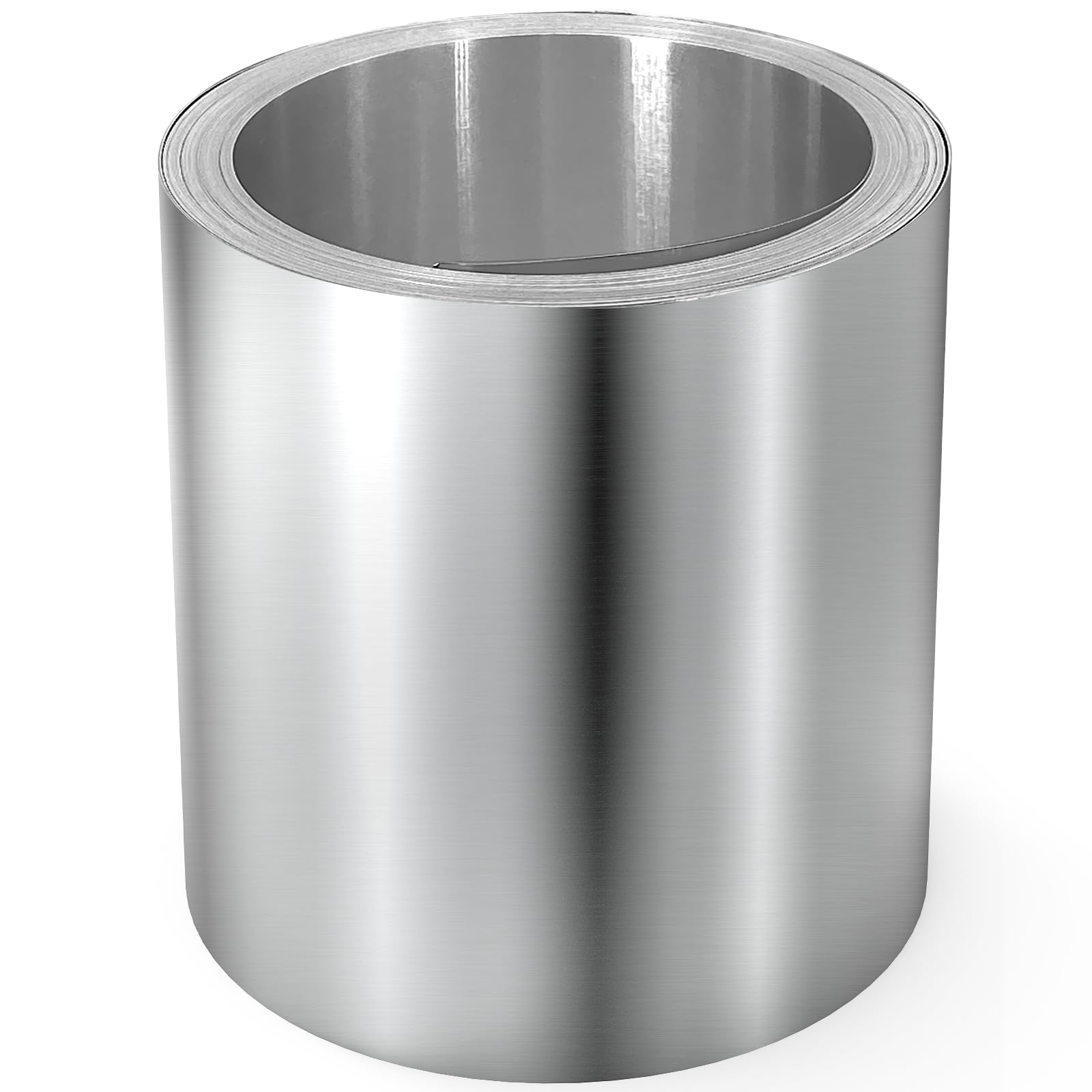
Thicker than the entry-level rolls and still long enough to wrap an entire shed base in one go.
At 0.01 inches, this Yantuo roll splits the difference between the 0.0078-inch budget rolls and the 0.0118-inch WIVZKAO. It is thin enough to cut with household shears yet thick enough that one buyer mentioned it was “the perfect thickness, making it easy to handle” when wrapping a storage building’s base. The 1.83-pound weight is 83% heavier than the AMERIMAX 66314 1-pound roll, which makes sense given the 50-foot length.
Buyers also note the edges are “smooth, easy to bend and nail,” though one pointed out it is “slightly thinner than some alternatives but functional for most flashing jobs.” That is fair: if you need a rigid Z-profile standing in the open, step up to the WIVZKAO at 0.0118 inches. But for tucked-in jobs behind siding, under windows, or at shed bases, this gets the seal done without wasting money on thickness you will not use.
One unexpected use reported by a reviewer: “deters squirrels from window bird feeders” — the aluminum strip blocked their grip on casement windows. Not the intended purpose, but it speaks to the material’s versatility.
What works
- 0.01-inch thickness is a step up from the thinnest budget options
- 50-foot length handles large perimeter projects
- Smooth edges reduce the risk of cutting yourself during installation
The downside
- Still thinner than premium commercial rolls, so not ideal for open unsupported flashing
- Some customers note it is slightly thinner than advertised specs
Reach for this if: you need 50 feet of flashing for a shed, window, or door seal and want a middle ground between ultra-thin and premium pricing.
Consider something else for: roof-to-wall transitions where the flashing bears direct rain and wind without fasteners every few inches.
6. AMERIMAX HOME PRODUCTS 66314 14-Inch x 10-Feet Aluminum Flashing

The widest roll here, giving you 14 inches to cover big gaps where a 4-inch strip simply will not reach.
All the other rolls in this list top out at 4 inches wide, which is fine for drip edges and window sills. But when you need to bridge the gap between roofing and a tall wall, 14 inches of width is what saves you from having to overlap two strips. This AMERIMAX 66314 covers 3.5 times the width of the standard 4-inch rolls — a decisive advantage for large transitions. A buyer mentioned “sometimes you need a wider flashing patch. This is it.”
The trade-off is length: at 10 feet, this roll is short. One reviewer called it “on the thin side” and noted “some will not be happy with it.” That tracks — the material is composed of refurbished aluminum, so it is lighter than virgin sheet metal and can feel flimsy if you expect commercial rigidity. But for stopping leaks behind gutters or flashing a roof valley where the width is the priority, the thinness lets you shape it easily with your hands.
Keep in mind the weight is just 1 pound for the whole 10-foot x 14-inch sheet — that is lighter than many 50-foot rolls of 4-inch flashing, so treat it gently during installation to avoid creasing.
The big plus
- 14-inch width is 3.5x wider than standard 4-inch rolls — perfect for roof-to-wall gaps
- Lightweight and easy to shape by hand
- Made from durable refurbished aluminum
What to note
- 10-foot length is short, so you will need multiple rolls for a long run
- Thin gauge, so not ideal for applications needing high rigidity
Get this when: you are bridging a wide gap, like where a roofline meets a wall, and the 4-inch standard rolls leave you short.
Hold off if: you need a long continuous run — the 10-foot length will force a splice every 10 feet.
7. Therwen 1 Roll Aluminum Flashing Roll, 4″ x 20′

An entry-level roll that is easy on the wallet and even easier to cut with everyday scissors.
If you are flashing a single window, a small garden shed, or a DIY project that needs a little aluminum sheeting, the Therwen at 0.0078 inches is the most affordable way in. At only 12.2 ounces for the full 20-foot roll, it is light enough to toss in a tool bag and forget about until you need it. One owner reported it is “strong, lightweight, easy to work with” and used it for a plumbing pressure sleeve, noting it “holds shape” even after tight bends.
Of course, the thin gauge means it is 2.6 times thinner than the premium EAGLE 1 roll. It will not stand up to heavy use or large unsupported spans where wind could flap the metal. Another buyer mentioned it “worked perfectly for my purpose” when attached to the bottom of a fence to block critters. The aluminum is sturdy enough for its thickness, but you need to fasten it securely to keep it from pulling loose.
At 20 feet, it gives you more coverage than the 10-foot rolls but less than the 50-foot options — a decent middle length for a project or two without having a big coil taking up shelf space.
What you like
- Very affordable entry point for small jobs
- Lightweight at only 12.2 ounces for the full roll
- Cuts easily with scissors, not just tin snips
The catch
- 0.0078-inch thickness is the thinnest in this lineup
- Not stiff enough for open structural flashing
- 20-foot roll may be too short for a full roof line
Best for: a single window, a small shed base, or a one-off DIY repair where the cost needs to stay low.
Pass on this for: any job where the flashing will be exposed to direct weather without being fastened down every few inches.
Understanding the Specs
Thickness and Gauge
Thickness is measured in inches or fractions of an inch. A thicker sheet, such as 0.02 inches (around 26 gauge), provides rigidity and long-term durability for exposed flashing but requires tin snips to cut. A thinner sheet, like 0.0078 inches, feels almost like heavy-duty foil and can be cut with standard household scissors — convenient, but it will not hold its shape in an unsupported span. The right thickness depends entirely on whether your flashing is tucked behind siding or left standing in the open.
Width and Coverage
Width determines how much of the gap your flashing bridges. Standard Z-flashing for drip edges and windows is 4 inches wide. That is enough to tuck 2 inches under the siding and leave 2 inches overlapping the roofing. For wider gaps where a roof meets a vertical wall, a 14-inch roll like the AMERIMAX 66314 gives you the extra reach without needing a splice. Always measure the gap you need to bridge and add a couple inches on each side for the overlap.
FAQ
What is the difference between Z flashing and drip edge flashing?
How do I cut aluminum Z flashing cleanly?
Will a 4-inch wide flashing work for a roof-to-wall gap?
How long does aluminum Z flashing last outdoors?
Can I bend aluminum flashing by hand or do I need a brake?
Is aluminum Z flashing compatible with all roofing materials?
What does “mill finish” mean on an aluminum flashing roll?
How do I fasten aluminum Z flashing to wood or brick?
Can I paint aluminum Z flashing after installation?
How do I calculate how much flashing I need for a project?
Final Thoughts: The Verdict
For the majority of shoppers, the aluminum z flashing winner is the EAGLE 1 4 in x 10 FT because its 0.02-inch commercial-grade thickness gives you a rigid, lasting seal on exposed joints. If you want a long 50-foot run that balances stiffness and workability, grab the WIVZKAO 0.0118-Inch Roll. And for an extra-wide 14-inch reach when bridging roof-to-wall gaps, the standout is the AMERIMAX 66314 14-Inch x 10-Feet Flashing.
How We Picked
We do not accept paid placement. Every pick is matched to a real buyer and a real use-case; we do not hands-on test units.
Sources & Methodology
Specifications: manufacturer listings and product documentation. Review insights: verified customer reviews, as of July 2026. Pricing: not shown on this page (it changes often); check the current price via the retailer link.
As an Amazon Associate, Gadgets Feed earns from qualifying purchases. This does not affect which products we feature.
Related Guides
Product prices and availability are accurate as of the date/time indicated and are subject to change. Any price and availability information displayed on Amazon at the time of purchase will apply to the purchase of this product. As an Amazon Associate I earn from qualifying purchases.
CERTAIN CONTENT THAT APPEARS ON THIS SITE COMES FROM AMAZON. THIS CONTENT IS PROVIDED "AS IS" AND IS SUBJECT TO CHANGE OR REMOVAL AT ANY TIME.
Amazon and the Amazon logo are trademarks of Amazon.com, Inc. or its affiliates.