
That rotten egg smell from your hot water tap isn’t a plumbing mystery — it’s a clear signal your sacrificial anode rod has stopped doing its job. Whether you own an RV, a suburban home on well water, or a standard 50-gallon electric heater, the aluminum-zinc alloy inside your tank determines whether you get clean, odorless hot water or a sulfurous mess that makes you dread showering. The category debate comes down to material science: pure aluminum rods handle hard water well, but the alloyed aluminum-zinc variant actively neutralizes the sulfate-reducing bacteria responsible for that eggy stench.
I’m Min — the co-founder and writer behind Gadgets Feed. After analyzing hundreds of hours of customer installation reports, spec sheets, and water chemistry feedback across a wide price range of these sacrificial rods, I can tell you which variables actually change your tank’s lifespan versus which are marketing noise.
I’ve sorted through 7 top-selling rods — from budget-friendly multi-packs for seasonal RVers to premium flexible designs for tight crawl spaces — to bring you a focused, spec-driven guide to the best aluminum zinc anode rod for your water heater, whether you’re fighting sulfur odors or just performing regular maintenance.
How To Choose The Best Aluminum Zinc Anode Rod
Your water heater’s tank is steel, and hot water is naturally corrosive. The aluminum-zinc anode rod is the sacrificial component that corrodes instead of your tank walls. Choosing the wrong rod means either persistent sulfur odors or premature tank failure. Here are the three decisions that matter most.
Solid vs. Flexible Rod – It’s All About Headroom
Most residential water heaters are installed in basements or closets with limited overhead clearance. A solid 42-inch rod requires you to tilt or remove the heater entirely if you don’t have 4 feet of vertical space above the tank. Flexible rods — usually a segmented steel cable with individual aluminum-zinc slugs — can be installed with as little as 12 inches of clearance. If your water heater is tucked under a low ceiling, always opt for a flexible design. For RV water heaters or units with ample headroom, a solid rod is simpler and less expensive.
Aluminum-Zinc vs. Pure Aluminum vs. Magnesium – The Sulfur Factor
Pure aluminum rods work well with hard water but don’t stop the “rotten egg” smell. Magnesium rods actually worsen the sulfur odor because they provide an ideal environment for sulfate-reducing bacteria. Aluminum-zinc alloy rods are the only sacrificial material that actively neutralizes the bacterial activity causing that eggy stench. If you’re on well water or have ever smelled sulfur from your hot tap, the aluminum-zinc formulation is non-negotiable.
Thread Size and Tank Compatibility
The vast majority of water heaters — AO Smith, Rheem, Reliance, Kenmore, Bradford White, GE, State, Richmond — use a 3/4-inch NPT (National Pipe Thread) connection. However, older units and some Suburban RV heaters use a 1/2-inch NPT. Before ordering, confirm your tank’s current rod thread diameter. Suburban’s SW10DE and similar models use 3/4″ NPT, while Atwood RV heaters take 1/2″. Mismatching the thread means the rod won’t seal and you’ll have a leak the moment you pressurize the system.
Quick Comparison
On smaller screens, swipe sideways to see the full table.
| Model | Category | Best For | Key Spec | Amazon |
|---|---|---|---|---|
| Eau 44″ Aluminum Zinc Anode Rod | Premium | Sulfur odor elimination | 44″ flexible, 4 segments | Amazon |
| Kelaro 44″ Flexible Anode Rod | Mid-Range | Tight-space installations | 44″ flexible, aluminum-zinc | Amazon |
| Camco 42″ Aluminum Anode Rod (11582) | Mid-Range | Standard residential heaters | 42″ solid, 3/4″ NPT | Amazon |
| Eastman 42″ Flexible Aluminum/Zinc Rod (60288) | Premium | Bradford White & tight spaces | 42″ flexible, 4-section cable | Amazon |
| Reliance 100108260 Aluminum Anode Rod | Budget | Budget-friendly AO Smith replacement | 39″ solid, 3/4″ NPT | Amazon |
| Suburban 232768 Anode Rod | Mid-Range | Suburban RV heaters (SW10DE) | 9″ solid, 3/4″ NPT | Amazon |
| Jixsloft 5-Pack RV Anode Rod Kit | Budget | RV seasonal replacement kits | 9.25″ solid, 3/4″ NPT | Amazon |
In‑Depth Reviews
1. Eau 44″ Aluminum Zinc Anode Rod

The Eau 44″ anode rod is the single most effective solution for homeowners combating persistent sulfur odors. Its four-segment flexible design requires just 12 inches of overhead clearance for installation, making it the top choice for water heaters in basements and utility closets where a solid rod simply won’t fit without disconnecting the entire unit. The specially formulated aluminum-zinc alloy targets the sulfate-reducing bacteria that produce hydrogen sulfide gas — the root cause of that rotten egg smell.
Users report immediate odor elimination after replacing magnesium or pure aluminum rods. The kit includes a 27mm chrome-finished socket (which matches 1-1/16″ hex heads perfectly) and a roll of Teflon sealing tape, so you don’t need to buy extra tools. The segmented design allows you to cut individual sections with a hacksaw if your tank is shallow, though most 40- and 50-gallon heaters accept the full 44-inch length without modification.
Customer reviews consistently note that this rod ends sulfur problems that temporary fixes like peroxide flushes failed to solve. The threaded 3/4″ NPT connection fits AO Smith, Rheem, Reliance, Kenmore, State, and GE water heaters. A few users mention using pipe dope instead of the included Teflon tape for a more reliable seal on older threads. Overall, the Eau rod delivers the broadest compatibility and most reliable odor elimination in this category.
Why it’s great
- Eliminates sulfur odor at the bacterial level with aluminum-zinc alloy
- Flexible 4-segment design fits tight spaces with only 12″ clearance needed
- Complete kit with 27mm socket and Teflon tape saves a separate tool purchase
Good to know
- Some users prefer pipe dope over the included Teflon tape for a better seal
- At 44″, may be too long for very short or custom tanks without cutting
2. Kelaro 44″ Flexible Aluminum Zinc Anode Rod

The Kelaro 44″ flexible anode rod is engineered specifically for homes where overhead space is at a premium. Like the Eau rod, it uses a segmented cable design to snake into the tank with just over a foot of clearance, but its formulation leans slightly more toward general corrosion protection than aggressive sulfur neutralization. That said, it still removes the rotten egg smell for most users on well water — buyers consistently report immediate odor relief after swapping out a depleted or magnesium rod.
Installation requires a 1-1/16″ deep socket and an impact gun rather than a breaker bar, because the old rod is often seized in place after years of sacrificial corrosion. The rod fits 40- and 50-gallon electric water heaters from Whirlpool, Rheem, Kenmore, GE, Reliance, Richmond, State, and AO Smith. Multiple buyers noted that the instructions are clear and that the rod solved odor problems that had plagued them for months.
One practical consideration: the Kelaro rod does not include a socket or Teflon tape in the box, so you’ll need to have those tools ready. However, at this price point in the mid-range, it offers excellent value. Customers with Whirlpool 50-gallon units report a lifespan of 3–5 years depending on water hardness, and the rod cuts easily with a hacksaw if you need a shorter length for a smaller tank.
Why it’s great
- Segmented flexible design for tight headroom with just 12″ clearance required
- Aluminum-zinc alloy removes sulfur smell and prevents tank corrosion
- Universal 3/4″ NPT thread fits most major water heater brands
Good to know
- No installation socket or Teflon tape included — requires separate purchase
- Some users needed an impact gun to remove the seized old rod
3. Camco 42″ Aluminum Anode Rod (11582)

The Camco 11582 is a classic solid-aluminum anode rod — no flexible segments, no zinc alloy for sulfur control, just pure aluminum protection at a reasonable mid-range price. It’s best suited for homeowners with sufficient overhead clearance above their water heater and water that doesn’t produce rotten egg odor. The 42-inch length covers the full interior of most standard residential tanks, and the 3/4″ NPT threads fit any standard port.
Installation is straightforward with common plumbing tools. The 1-1/16″ hex head requires a deep socket or a 27mm socket for exact fit. Multiple customers report cutting the rod down to 29 inches with a hacksaw for smaller tanks, noting that aluminum is soft and easy to cut. The rod’s primary strength is its simplicity and Camco’s reputation for consistent manufacturing quality — it’s been a SKU since 2011 for good reason.
On the downside, this is a pure aluminum rod, not an aluminum-zinc alloy. If you have well water or any history of sulfur odors, you’ll want to choose the Eau or Kelaro rod instead. Users with hard water report the rod lasts 4–6 years before significant depletion, and the standard advice is to inspect it annually and replace when 50–75% corroded. The Camco is a solid, no-frills option for simple maintenance.
Why it’s great
- Proven pure aluminum design with decades of reliable performance
- Easy to cut to custom length with a basic hacksaw
- Standard 3/4″ NPT and 1-1/16″ hex head for universal fit
Good to know
- Pure aluminum does not neutralize sulfur odors like aluminum-zinc alloys do
- Requires at least 48″ of overhead clearance for full-length installation
4. Eastman 42″ Flexible Aluminum/Zinc Anode Rod (60288)
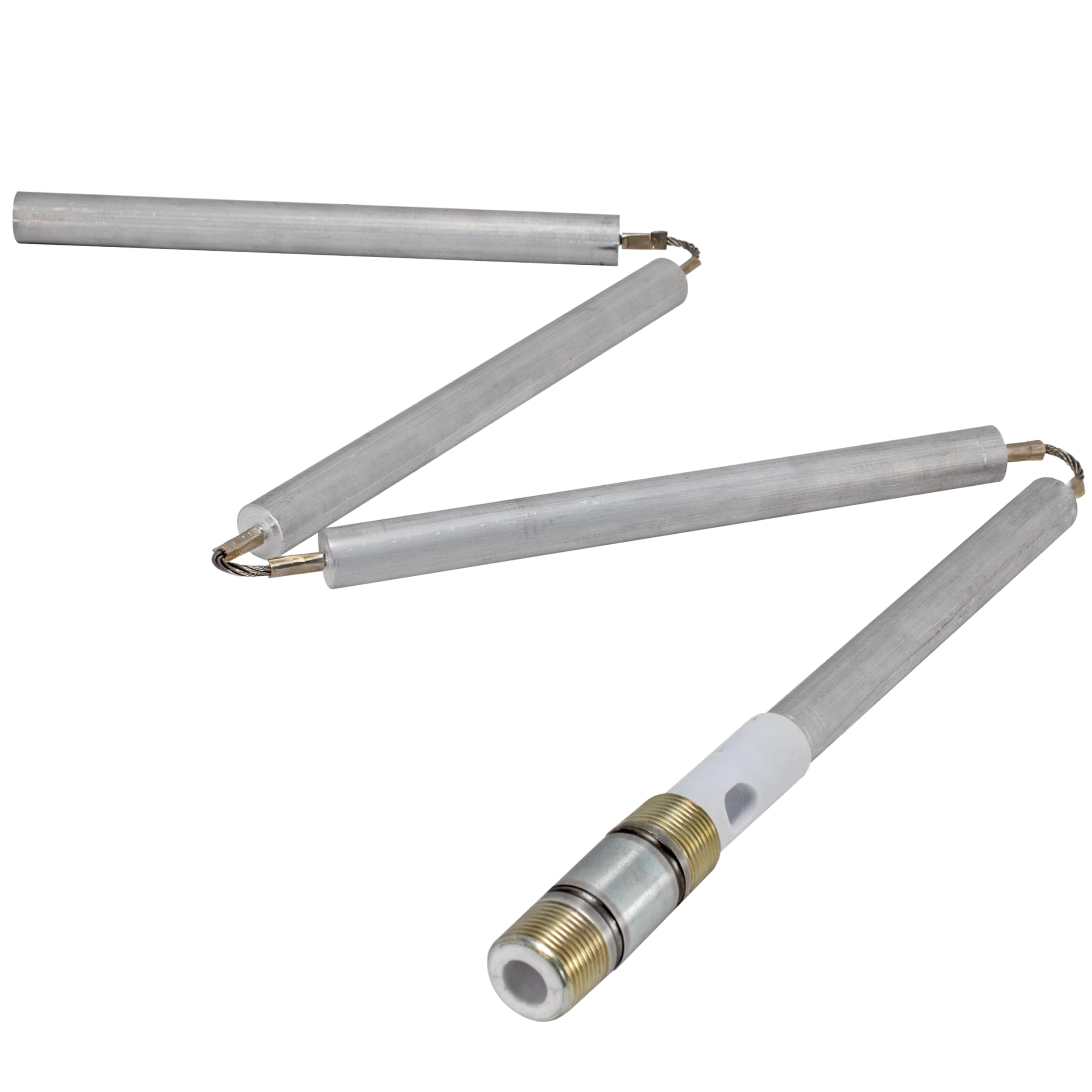
Eastman’s 60288 flexible anode rod uses a carbon steel cable wrapped in four individual aluminum-zinc segments — a design that combines the corrosion protection of the alloy with the maneuverability needed for tight installations. The 42-inch overall length and 3/4″ NPT nipple make it compatible with most residential water heaters, but it’s particularly well-reviewed by owners of Bradford White 50-gallon units, who report a perfect fit and easy installation.
Owners note that the segmented design is easier to thread into the tank than a solid rod, especially when working in a cramped closet. The rod can be cut to length if needed, though most buyers use the full 42 inches. The flexible cable allows you to bend around obstacles inside the tank, ensuring the aluminum-zinc slugs make full contact with the water. The rod includes a chrome finish on the hex head for corrosion resistance at the connection point.
One minor design note: some Bradford White tanks use a white plastic top-mount bushing piece, and this rod does not include that small adapter — you’ll need to salvage it from your old rod or purchase it separately. Also, a few customers noted that the rod lacks the plastic cap they expected, though this doesn’t affect functionality. Overall, the Eastman is a well-made premium option for those who need both flexibility and the aluminum-zinc odor-fighting formula.
Why it’s great
- Flexible carbon steel cable design fits tight spaces with ease
- Aluminum-zinc alloy segments neutralize sulfur odors
- Perfect fit for Bradford White 50-gallon water heaters
Good to know
- Does not include the plastic top-mount bushing for some Bradford White models
- No installation socket or Teflon tape included in the package
5. Reliance 100108260 Aluminum Anode Rod
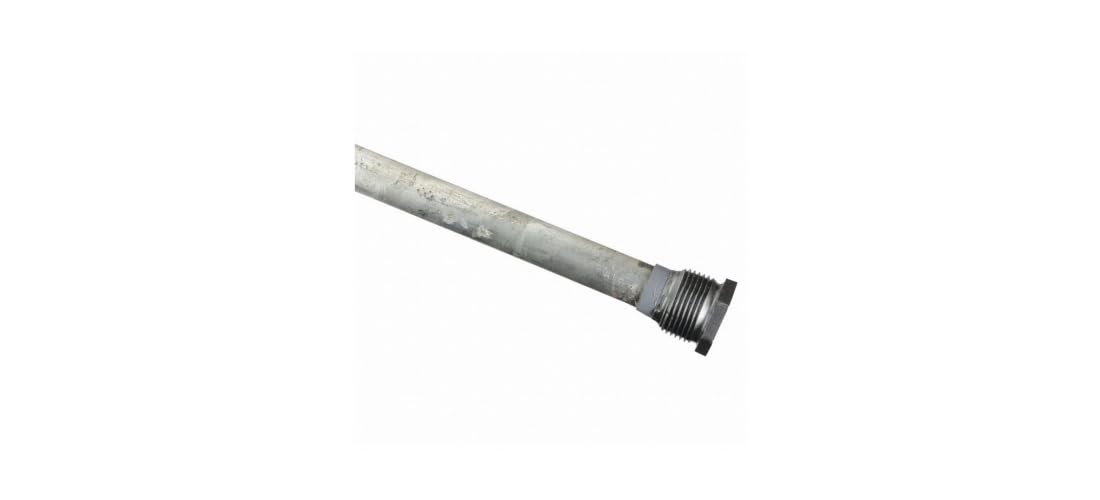
The Reliance 100108260 is the entry-level solid aluminum rod that has been on the market since 2006, and its longevity speaks to its reliability in basic applications. At 39 inches long with a 3/4″ NPT connection, it fits older AO Smith and Reliance-brand water heaters where the OEM rod is due for replacement. The pure aluminum construction attracts corrosive elements away from the steel tank walls, preventing rust and extending the heater’s life.
Installation can be challenging on older units because the top port is often buried under foam insulation. Several buyers noted they had to dig out significant foam to access the hex head. The rod itself is simple — no alloy enhancements, no flexible design. It’s best suited for homes with good water quality, no sulfur issues, and at least 40 inches of overhead clearance. The included plastic material in the spec sheet refers to the packaging, not the rod itself; the rod is aluminum.
The value proposition is clear: at the budget-friendly end of the market, this rod does exactly what a sacrificial anode should do — corrode slowly over time and keep your tank intact. The main drawback is that it arrived damaged in some deliveries (gouged or slightly bent), though customers confirmed it still functioned after installation. If your water heater has plenty of headroom and you don’t need sulfur odor control, this is a perfectly adequate, no-frills option.
Why it’s great
- Budget-friendly entry point for simple anode replacement
- Works perfectly for AO Smith and Reliance water heaters
- 39-inch length covers most standard residential tanks
Good to know
- Pure aluminum only — does not eliminate sulfur odors
- Some units arrive with minor cosmetic damage from shipping
- Requires digging through foam insulation for installation on many models
6. Suburban 232768 Water Heater Aluminum Anode Rod

The Suburban 232768 is the OEM rod for Suburban RV water heaters, specifically models like the SW10DE and SW6DE. At only 9 inches long with a 3/4″ NPT thread, it’s much shorter than residential rods because RV tanks are far smaller. This is a pure aluminum rod — it does not use the aluminum-zinc alloy for sulfur control — but Suburban water heaters typically experience less odor issues than residential units if drained properly between camping trips.
Installation requires a 1-1/16″ socket and a long ratchet with at least a 6-inch extension to reach the port on many RV models. Suburban engineers recommend replacing the rod when it shows 50% deterioration, which typically occurs every 2–4 years depending on water chemistry. The rod does not come with an O-ring, so you must use Teflon tape or potable water pipe dope on the threads to prevent the rod from fusing to the tank — a common issue that makes future removal difficult.
The Suburban rod is made in the United States, which is a differentiator from many budget import rods. Some customers noted that the included spec sheet had slightly outdated fitment information, but the manufacturer’s website provides the current compatibility list. The 3/4″ NPT thread is the standard for Suburban heaters, while Atwood RV heaters use 1/2″ NPT — double-check your model before purchasing. Overall, this is the correct, reliable choice for Suburban RV owners who want the exact factory-specified part.
Why it’s great
- OEM factory part for Suburban RV water heaters (SW10DE, SW6DE)
- Made in the USA with consistent quality
- Compact 9″ length designed specifically for RV tank dimensions
Good to know
- Pure aluminum, not aluminum-zinc — no sulfur odor elimination
- Requires separate purchase of Teflon tape or pipe dope (no O-ring included)
- Does not fit Atwood RV heaters, which use 1/2″ NPT threads
7. Jixsloft 5-Pack RV Water Heater Anode Rod & Flush Wand Kit
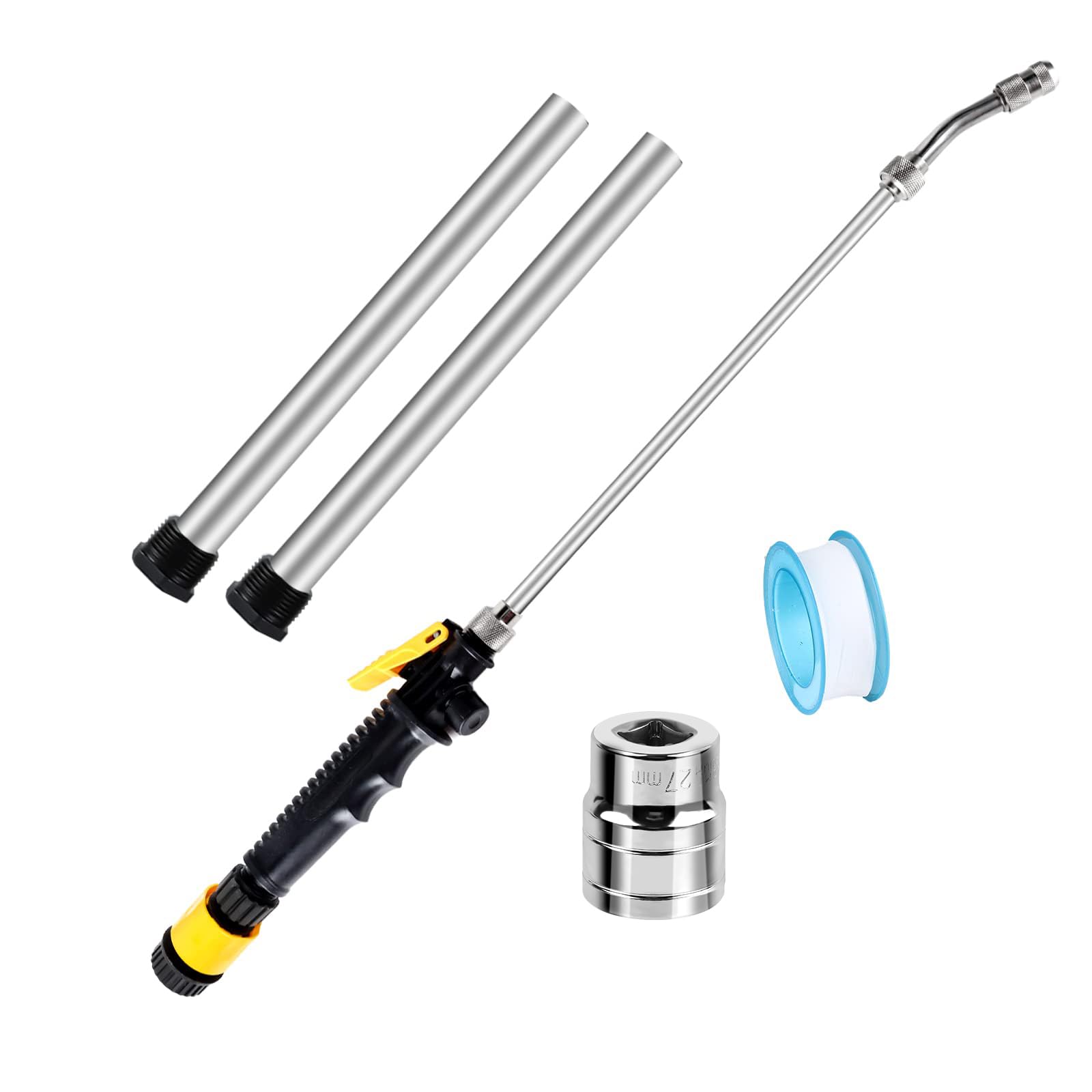
The Jixsloft 5-pack bundle is an all-in-one maintenance kit for RV owners who want to replace their anode rod and flush their tank in a single session. You get two 9.25-inch aluminum anode rods (3/4″ NPT), a stainless steel flush wand with a curved tip, a double-hex wrench socket, and a roll of Teflon tape. The kit is designed for Suburban and Mor-Flo RV water heaters, covering the vast majority of travel trailers and campers on the road today.
The flush wand is a standout feature — its adjustable nozzle can switch from a powerful jet to a wide spray pattern, helping dislodge sediment and scale that accumulates at the bottom of the tank. The wand includes a 1/2-inch quick-connect adapter and a 3/4-inch garden hose adapter, making it compatible with standard RV hookups. The curved stainless steel tip reaches into corners that a straight wand would miss, improving the thoroughness of your tank flush.
The anode rods themselves are standard aluminum, not aluminum-zinc alloy, so they’ll protect against corrosion but won’t actively combat sulfur smells. The included hex wrench socket is functional but some users found it too short to provide enough leverage in tight RV compartments — a longer breaker bar or torque wrench with an extension may be necessary for removal. Despite this, the kit’s value is undeniable: you get two spare rods, a useful cleaning tool, and the necessary hardware for a fraction of what individual components would cost.
Why it’s great
- Complete maintenance kit with two spare rods, flush wand, socket, and tape
- Flush wand with adjustable nozzle and curved tip for thorough tank cleaning
- Budget-friendly price for RV owners who want everything in one box
Good to know
- Standard aluminum rods — no aluminum-zinc alloy for sulfur odor control
- Included hex socket may be too short for leverage in tight RV compartments
FAQ
How often should I replace my aluminum zinc anode rod?
Can I cut a flexible anode rod to make it shorter?
Will an aluminum zinc rod fit my AO Smith or Rheem water heater?
Why does my RV water heater need a different anode rod than my home heater?
Final Thoughts: The Verdict
For most users, the best aluminum zinc anode rod winner is the Eau 44″ Aluminum Zinc Anode Rod because it combines the sulfur-neutralizing aluminum-zinc alloy with a flexible 4-segment design that fits nearly any tight installation space, and it includes the socket and tape you need for the job. If you want a pure corrosion protector for an open-headroom water heater without sulfur issues, grab the Camco 42″ Aluminum Anode Rod (11582). And for the frequent RV traveler performing annual maintenance, nothing beats the value of the Jixsloft 5-Pack RV Anode Rod Kit with its flush wand and spare rods.