
That crackling static cutting through your favorite morning show or the way a NOAA weather alert fades in and out just when you need it most—weak radio reception makes a simple pleasure feel like a chore. The problem usually isn’t your receiver; it’s the tiny wire or rubber whip that came in the box, which was never engineered for real-world signal pulling.
I’m Min — the co-founder and writer behind Gadgets Feed. I’ve spent hundreds of hours cross-referencing impedance ratings, cable types, mounting hardware, and customer reception reports across dozens of antenna models so you don’t have to guess which one will actually lock in those distant stations.
Whether you’re equipping a classic car, a semi truck, a home theater, or a rural cabin, this guide zeroes in on the best am/fm antenna for your specific signal environment and mounting constraints.
How To Choose The Best AM/FM Antenna
The right antenna for you depends entirely on where you place it, what receiver you connect it to, and how far you are from broadcast towers. Understanding these three variables prevents a frustrating purchase.
Mounting Environment: Windshield, Mirror, Roof, or Attic
A magnetic base whip works great on a steel surface like a vehicle roof or a metal shelf bracket indoors. Glass-mount amplified antennas are ideal for marine or vehicle use when drilling isn’t an option. Outdoor directional antennas require a mast or tripod and clear line-of-sight to the transmitter for maximum range. Attic installations avoid weather and permit omnidirectional loops that pull stations from every direction.
Impedance: 75 Ohms vs 50 Ohms
Nearly every modern home stereo receiver, AV tuner, and tabletop radio uses a 75-ohm antenna input. Antennas rated at 50 ohms—common in older car audio and some CB-derived designs—can still work but may introduce a slight impedance mismatch. Always check your receiver’s spec and match the antenna’s impedance accordingly for clean signal transfer.
Passive vs Amplified Designs
Passive antennas (dipoles, loops, whips) simply capture whatever signal reaches the element. Amplified antennas add a powered preamp that boosts weak signals but also amplifies noise and can overload the receiver’s front end if you live close to a strong transmitter. Amplified models are best for fringe reception; passive designs are quieter in dense urban areas with strong local stations.
Quick Comparison
On smaller screens, swipe sideways to see the full table.
| Model | Category | Best For | Key Spec | Amazon |
|---|---|---|---|---|
| Stellar Labs 30-2460 | Directional Outdoor | Long-range rural FM | 7 dB forward gain, 75 ohm F connector | Amazon |
| Britta FM-10A Loop | Omnidirectional Loop | Attic/home omnidirectional FM | 21.5″ diameter loop, 75 ohm balun | Amazon |
| Sangean ANT-100 | Indoor Magnetic Whip | Weather radio and tabletop boost | 6.5′ coax, 3.5 mm RCA connector | Amazon |
| Jensen AN150SR | Amplified Glass Mount | Marine and vehicle glass mounting | Amplified, 12V DC, 7′ cable | Amazon |
| CHHLIUT Magnetic Base | Indoor Magnetic Whip | Home stereo receiver FM | 16′ coaxial cable, retractable whip | Amazon |
| RoadPro RP-557 | Mirror Mount Whip | Trucks, tractors, and off-road vehicles | 28″ stainless whip, 2″ shock spring | Amazon |
| Jensen AN110 | Top Mount Pull-Up | Classic car and vintage restoration | 50 ohm, pull-up mast design | Amazon |
In‑Depth Reviews
1. Stellar Labs 30-2460 Four Element Directional Outdoor FM Antenna

For anyone living 60 miles or more from the nearest FM towers, this four-element directional yagi from Stellar Labs is the class of the field. With a maximum forward gain of 7 dB and a front-to-back ratio of 15 dB, it locks onto a specific transmitter while rejecting interference from the sides and rear—critical for pulling in weak stations without multipath distortion.
The polished aluminum elements and waterproof housing hold up well outdoors, though the included mounting hardware uses plastic thumb screws that feel flimsy. Assembly is straightforward if you ignore the vague instructions and mount the boom at the true balance point. Several users improved reception further by adding a short length of metal tubing to prevent the boom from drooping in high wind.
Performance at 25 to 30 feet of height is exceptional, with multiple reports of pulling stations at 160 miles under ideal conditions. This antenna demands a rotor to change direction, but if your only goal is snagging a single faraway signal on a consistent basis, this is the most cost-effective direction finder you can mount.
Why it’s great
- 7 dB forward gain locks distant FM signals
- Aluminum construction with weatherproof housing
- Excellent value per dollar of range delivered
Good to know
- Plastic thumb screws on element mounts are fragile
- Poor directionality pattern—needs a rotor for best use
- Packaging often results in damage during shipping
2. Britta Products FM-10A FM Loop Antenna

When you want to pull in stations from all directions without rotating an antenna, this 21.5-inch diameter loop from Britta is the most effective omnidirectional FM antenna on the market for home use. Its large loop diameter captures more signal than a dipole or small whip, and the integrated 75-ohm balun delivers a clean match for virtually any modern stereo receiver.
Assembly takes under three minutes—attach the loop to the standoffs and connect your coax—though the hardware quality is a mixed bag. Several users reported missing nuts or bolts, and the included zinc-plated fasteners are not ideal for long-term outdoor exposure. The protective boot for the coax connection also feels cheap compared to the rest of the build.
Performance in an attic installation is where this antenna truly shines. One user doubled their channel count with zero blackouts or signal fade. It’s not a miracle worker for extreme fringe reception—you’ll still need a directional yagi for that—but for anyone within 40 miles of a city’s broadcast cluster, this loop eliminates the hunt for the perfect dipole orientation.
Why it’s great
- True omnidirectional pickup pattern
- 21.5″ loop captures more signal than small whips
- Easy assembly in under 3 minutes
Good to know
- Hardware quality is inconsistent—bolts may be missing
- Zinc fasteners not ideal for outdoor weather exposure
- Coax protective boot is poorly designed
3. Sangean ANT-100 External Antenna

The Sangean ANT-100 is a specialized solution for upgrading NOAA weather radios and tabletop tuners that use a 3.5 mm RCA antenna input. Its magnetic base allows placement on any steel surface—fridge, filing cabinet, or a metal shelf—to get the whip away from the receiver’s internal noise floor. The 6.5-foot coaxial cable provides enough slack to reach a window or a better signal spot.
Reception improvement is dramatic for users with Sangean, Midland, and other weather alert radios. One reviewer reported the difference between returning a Midland WR-400 and finally getting clear broadcasts from a station that was previously unlistenable. However, the connector’s fit can be inconsistent—some radios have a recessed RCA jack that doesn’t maintain solid contact, causing the plug to fall out with vibration.
This is not an all-purpose antenna for every receiver. If your stereo uses a standard 75-ohm F-type or screw-terminal connection, you’ll need an adapter. But for its intended audience—anyone frustrated by a weather radio that fades out during severe warnings—the ANT-100 is a compact, targeted fix that works.
Why it’s great
- Dramatically improves NOAA weather radio reception
- Magnetic mount is secure and repositionable
- Compact design keeps desk clutter minimal
Good to know
- RCA connector may not make firm contact on some radios
- Only 6.5′ cable limits placement options
- Not compatible with F-type or 300-ohm inputs without adapter
4. Jensen AN150SR AM/FM Antenna, Amplified Glass Mount

For marine, RV, and off-road vehicle applications where drilling a hole is out of the question, the Jensen AN150SR uses adhesive foam strips to mount directly to glass. The built-in amplifier draws a modest 6 milliamps at 12V DC and significantly boosts weak signals in fringe areas—one Polaris SXS owner went from one local station to pulling every available signal after installation.
The 7-foot power and antenna cable is generous for most dash or console installations, though hiding the extra wire length requires planning. Proper grounding and a constant 12V source activated by the radio are essential for consistent performance. Users who skipped the ground connection or wired power to an accessory circuit that turns off reported intermittent signal loss.
Reception quality under way is a noticeable step up from a standard whip, with reduced static even in wooded areas. However, a small subset of buyers found that the amplified circuit introduced noise in very strong signal areas, and the adhesive mount can fail in direct sun or humid marine environments over time. It’s a solid choice for its niche, but not an upgrade for indoor home use.
Why it’s great
- No-drill glass mount ideal for marine/RV use
- Amplified circuit pulls stations in fringe areas
- Long 7′ cable simplifies routing in vehicles
Good to know
- Adhesive foam may weaken in heat/humidity
- Requires proper 12V and ground to perform
- Amplifier can overload in strong signal zones
5. CHHLIUT Magnetic Base FM Antenna for Stereo Receiver
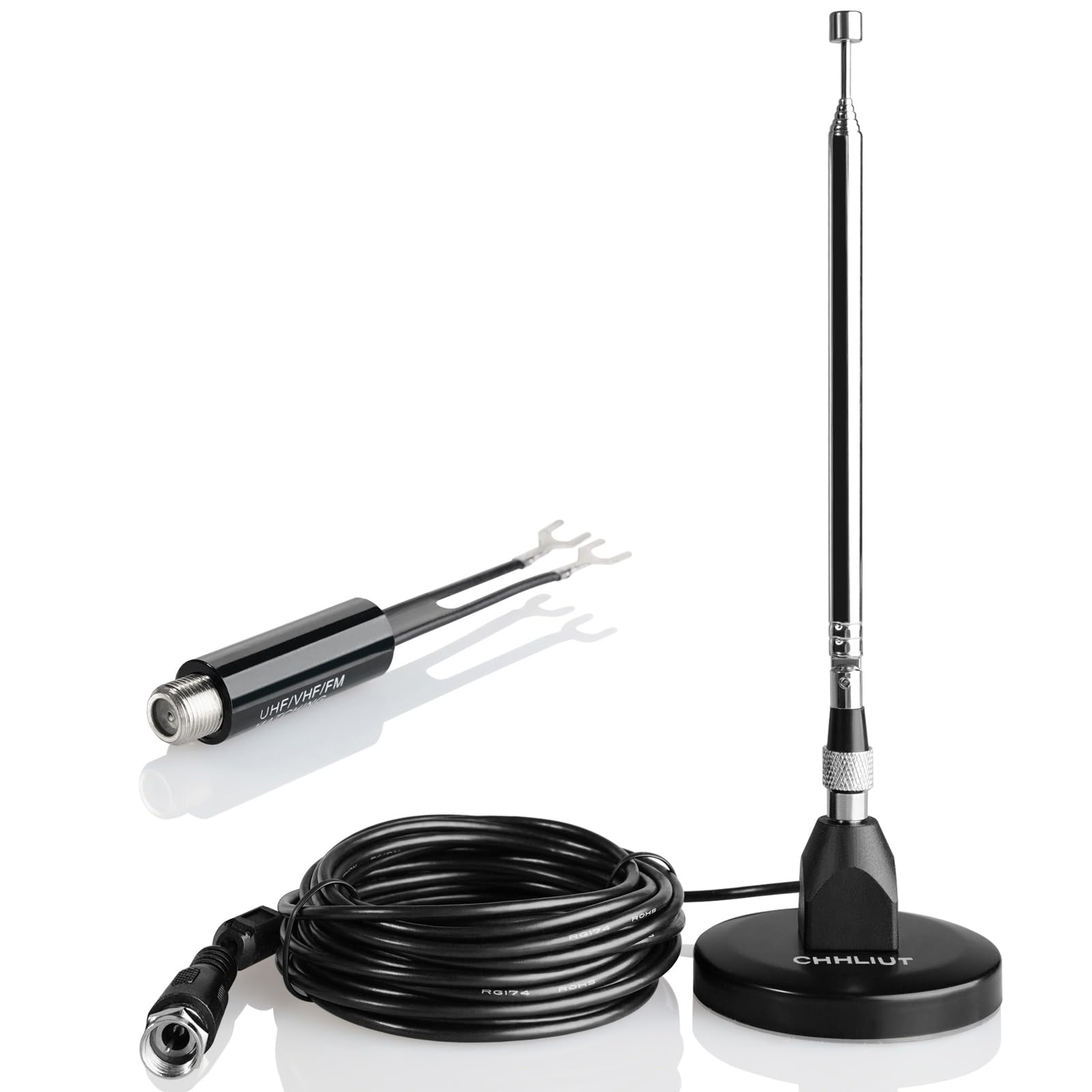
The CHHLIUT magnetic base antenna is a direct, affordable upgrade for any home stereo receiver that came with a bare wire dipole. The 16-foot coaxial cable is a standout feature—it gives you the freedom to snake the antenna across a room, behind furniture, and up to a window where reception is strongest without being tethered to the receiver’s immediate vicinity.
The retractable whip element collapses when not in use, and the magnetic base holds firmly to any steel surface. For music enthusiasts in suburban or urban areas, this antenna typically pulls in a solid selection of local FM stations without any additional power or complexity. A garage installation with the magnet fixed to a steel shelf bracket delivered clean, static-free reception throughout the workday.
Where this antenna falls short is fringe reception. One reviewer noted that a simple 300-ohm dipole picked up a weak college radio station that the CHHLIUT whip couldn’t lock onto. The whip design is inherently less efficient than a full-size dipole or loop for capturing distant signals. It’s the best option for the vast majority of listeners who just want better FM than the stock wire, but pure DX chasers will want something larger.
Why it’s great
- 16′ coax allows placement far from the receiver
- Magnetic base sticks to any steel surface
- Very affordable upgrade from stock dipole wire
Good to know
- Whip design underperforms a dipole for distant weak signals
- May need an adapter for some receiver inputs
- Retractable mechanism adds a potential failure point
6. RoadPro RP-557 28″ Mirror Mount Stainless Steel Antenna Kit

The RoadPro RP-557 is built for the harshest environments: semi trucks, tractors, golf carts, and off-road rigs. The 28-inch stainless steel whip with an integrated 2-inch shock spring absorbs punishment from low-hanging branches and car washes while maintaining its shape. The mirror mount bracket is machined from 1/4-inch aluminum and can be clamped or bolted to any round or rectangular tube.
Reception quality is excellent even in challenging locations. A user at a coastal beach reported that the RoadPro suppressed interference from nearby LED lights and microwave transmitters that had rendered previous antennas useless. The supplied coax cable with PL-259 to Motorola connector covers most vehicle radio inputs, though some receivers will need an adapter.
The single consistent complaint is that the flats on the antenna’s spring assembly are too small for a standard wrench, forcing users to grip with vice grips during installation—not ideal for a product that otherwise feels well-engineered. The bolts also are not stainless steel, so a dab of anti-seize is wise before mounting. For the working vehicle owner who needs radio reception that survives the job site, this is the toughest option available.
Why it’s great
- Rugged stainless whip with shock spring for rough use
- Excellent interference rejection from LED/Microwave sources
- Aluminum mount fits round and square tubing
Good to know
- Spring flats are too small for a standard wrench
- Mount bolts are not stainless—use anti-seize
- May require an adapter for some radio inputs
7. Jensen ASA Electronics AN110 AM & FM Top Mount Pull-Up Antenna
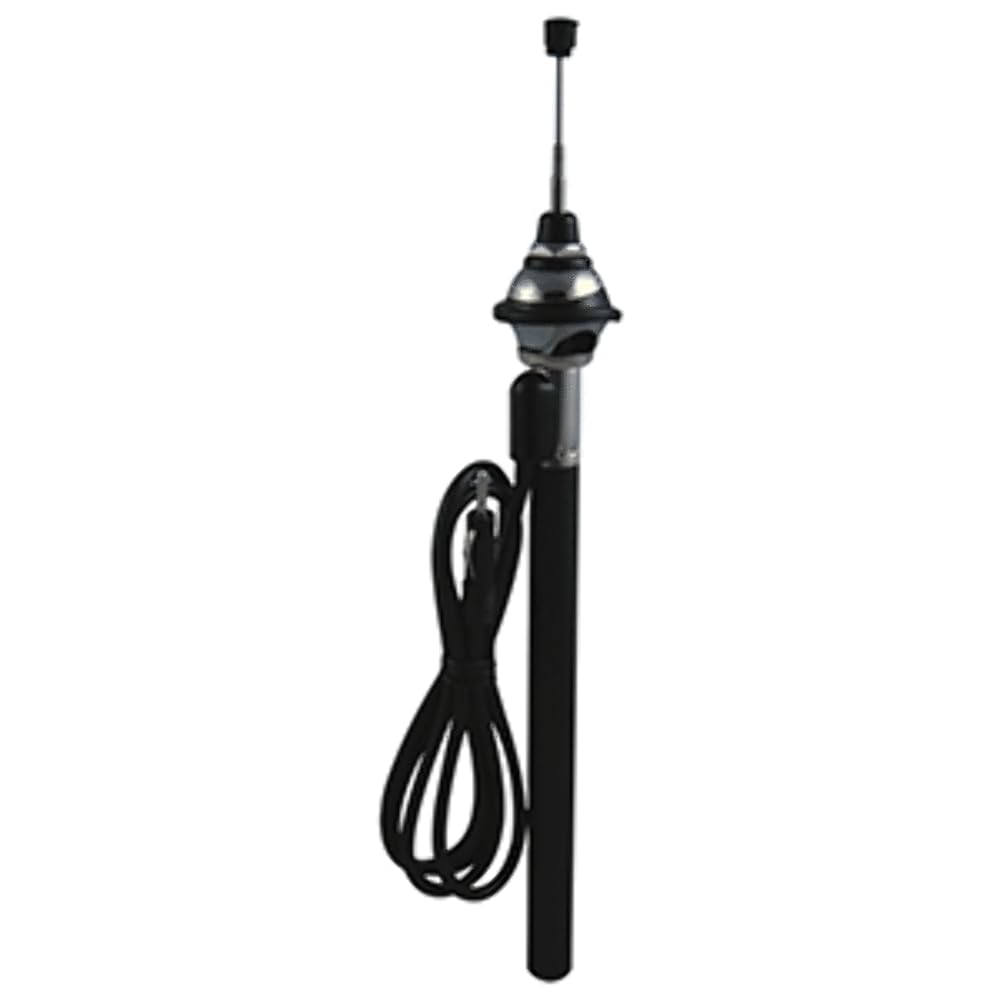
Restoring a 1968 Mustang or any classic car with a dead power antenna? The Jensen AN110 is a direct-fit manual pull-up replacement that restores AM/FM reception without the complexity of modern motorized units. The chrome mast telescopes up for use and pushes down flush when parked, preserving the period-correct look of the vehicle.
Installation is straightforward for anyone comfortable with basic wiring—three wires: power, ground, and antenna. The 50-ohm impedance matches older car radios and modern aftermarket head units alike. One classic car restorer reported that this single antenna saved a full restoration, pulling in stations clearly even inside a metal shop where flexible rubber antennas had completely failed.
The design is heavy-duty and built for road conditions, though the plastic base mount can feel less substantial than the original OEM part it replaces. At under 4 inches collapsed, it fits virtually any standard top-mount hole without modification. If your project car needs functional radio reception and you want to avoid drilling new holes or wiring a power antenna, this is the most reliable off-the-shelf solution.
Why it’s great
- Perfect fit for classic car restoration projects
- Telescopes up for use, collapses for parking
- Pulls stations where flexible antennas fail completely
Good to know
- Plastic base feels less robust than OEM metal parts
- 50 ohm impedance may require adapter for some radios
- Manufactured in China with some quality variance
FAQ
Can I use a 75-ohm antenna with a 50-ohm car radio?
Does an amplified antenna always give better reception?
What is the difference between a directional and omnidirectional FM antenna?
How high should I mount an outdoor FM antenna?
Final Thoughts: The Verdict
For most users, the best am/fm antenna overall is the Britta FM-10A Loop Antenna because it provides outstanding omnidirectional reception in an attic, requires no aiming, and cleans up FM signals across the entire band for any home stereo receiver. If you need extreme long-range reception for a distant rural station, grab the Stellar Labs 30-2460 directional yagi. And for a simple, affordable upgrade from a stock dipole wire, nothing beats the CHHLIUT magnetic base whip with its generous 16-foot cable.