
Our readers keep the lights on and my morning glass full of iced black tea. As an Amazon Associate, I earn from qualifying purchases.
Specs are compiled from manufacturer listings and verified buyer reviews and can change over time — please confirm the key details on the product page before buying.
Picking your first real camera can feel like every option speaks a different language of megapixels, sensors, and apertures. The real question is not which one has the highest number — it is which one makes you want to take it everywhere and actually use it. This guide strips away the jargon to help you find the amateur camera that fits your real life, your budget, and the kind of pictures you actually want to shoot.
I’m Min — the founder and writer behind Gadgets Feed. This guide is built by comparing the manufacturers’ published specifications and the patterns across verified customer reviews, so you get each pick’s real strengths and trade-offs instead of marketing spin.
The best amateur camera for you balances image quality with ease of use so you spend less time fiddling with settings and more time capturing the moment.
Quick Picks
- Sony ZV-1F Vlog Camera for Content Creators — Best Overall
- Panasonic LUMIX FZ80D Point — Wildlife Champ
- Canon EOS R100 Mirrorless Camera RF-S18-45mm — Versatile Starter
- Canon PowerShot ELPH 360 HS A Silver — Pocket Companion
- Nikon D3200 24.2 MP CMOS Digital SLR — Grow-Into DSLR
- Canon 5169B003 18.1 MEGAPIXEL EOS Digital Rebel — Classic Learner
How To Choose The Best Amateur Camera
The right camera for a beginner is the one you will actually carry and use consistently. Before you compare specs, decide what you mainly want to shoot: everyday moments and travel, action and wildlife, or vlogging and video. That use-case will point you to the right category.
Sensor Size and Megapixels
A larger sensor physically captures more light, which directly gives you cleaner images in dim conditions and that blurred-background look (called bokeh). Higher megapixels let you crop deeper into a photo without losing detail, but beyond about 20 megapixels, most beginners will not see a difference unless they print very large. Focus on sensor size first.
Zoom Range and Lens Versatility
Optical zoom is what brings distant subjects closer without losing picture quality — digital zoom just crops the image and hurts clarity. For wildlife or sports, a long optical zoom like 60X is critical. For everyday shooting, a shorter zoom range like 12X is lighter and easier to handle. A camera with an interchangeable lens system (DSLR or mirrorless) lets you swap lenses later as your skills grow.
Autofocus Performance
Autofocus points measure how many zones the camera can lock onto across the frame. More points (like 425 on the Sony ZV-1F) mean the camera can track moving subjects smoothly. Fewer points (like 9 on older DSLRs) mean you will need to center your subject more carefully. For beginners, a camera with face or eye detection makes a huge difference in getting sharp portraits instantly.
Quick Comparison
| Model | Best For | Sensor / Megapixels | Optical Zoom | Autofocus Points | Amazon |
|---|---|---|---|---|---|
| Sony ZV-1F | Vlogging and content creation | 1-inch / 20.1 MP | — | 425 | Amazon |
| Panasonic LUMIX FZ80D | Wildlife and travel superzoom | 1/2.3-inch / 18.1 MP | 60X | 39 | Amazon |
| Canon EOS R100 | Entry-level mirrorless versatility | APS-C / 24.1 MP | Interchangeable lens | 143 | Amazon |
| Canon PowerShot ELPH 360 HS | Pocket-friendly everyday carry | 1/2.3-inch / 20.2 MP | 12X | Contrast Detection | Amazon |
| Nikon D3200 (Renewed) | Budget DSLR with room to grow | APS-C / 24.2 MP | Interchangeable lens | 11 | Amazon |
| Canon T3i | Classic DSLR for learning manual | APS-C / 18.1 MP | Interchangeable lens | 9 | Amazon |
In‑Depth Reviews
1. Sony ZV-1F Vlog Camera for Content Creators and Vloggers Black

The vlogging powerhouse that thinks like you do, so you stay in the moment.
The Sony ZV-1F earns its top spot because its large 1-inch sensor and F2 lens (a wide aperture that lets in a lot of light) create that creamy defocused background in low light that phone cameras cannot match. The ultra-wide 20mm lens keeps everything in frame when you hold the camera at arm’s length for a selfie — no more cut-off faces. Its 425 autofocus points (a huge number of focus zones across the frame) track your eyes and face with Eye-AF, so you stay tack-sharp even if you move around. That is a 47.2x gap in autofocus points versus the Canon T3i’s 9, which makes a real difference when you film yourself without a second person to adjust focus.
A side-articulating touchscreen LCD flips out so you can compose selfie shots easily, and the directional 3-capsule microphone with a windscreen accessory captures clear voice audio outdoors. Compared to the Canon EOS R100, the ZV-1F skips interchangeable lenses but packs a bigger sensor in a body that is purpose-built for video-first creators. Buyers report that the lack of a built-in flash means you rely on that F2 aperture and good light, but the low-light performance from the 1-inch sensor handles most indoor scenes well.
Content Creator’s Dream
- Large 1-inch sensor and F2 lens for low-light quality and blurred backgrounds
- 425-point autofocus with Eye-AF keeps you sharp while moving
- Side-articulating touchscreen and directional mic make solo vlogging easy
Trade-Offs to Know
- No built-in flash and no optical zoom — you are fixed at a 20mm wide angle
- Not designed for far-away subjects like wildlife
Your ideal match if: your priority is vlogging, selfie video, or content creation and you want professional-looking autofocus and audio straight from the start.
Look elsewhere if: you need optical zoom for distance shots or want the flexibility of changing lenses.
2. Panasonic LUMIX FZ80D Point and Shoot Digital Camera

A 60X reach that brings distant birds and mountain peaks right into your viewfinder.
The Panasonic LUMIX FZ80D stands out with a 60X optical zoom lens (equivalent to 20-1200mm on a full-frame camera), which is 60X optical zoom compared to the 12X on the Canon PowerShot ELPH 360 HS. That level of zoom lets you fill the frame with a deer across a field or a singer on a far stage, all without moving a step. The POWER O.I.S. (Optical Image Stabilizer) actively fights hand-shake vibration at the telephoto end, so those long shots stay steady even without a tripod. The 2,360K-dot Large LVF (Live View Finder) at 0.74x magnification stays clear even in bright sunlight when phone screens wash out.
You also get 4K video and a 4K Photo mode that lets you pull an 8-megapixel still from a video clip — handy for capturing that perfect split-second expression. The Post Focus feature lets you tap a different area of a shot to refocus after you have already pressed the shutter, a rare trick at this price. One reviewer noted it is a “lightweight budget camera with great zoom for wildlife; ideal for hiking, captures distant subjects safely,” though they also warned the battery drains quickly under heavy zoom use and performance drops in low light — so keep an extra battery handy for long shoots.
Zoom Champion
- 60X optical zoom (20-1200mm) — massive reach for wildlife and travel
- Power O.I.S. keeps telephoto shots blur-free
- Post Focus and 4K Photo modes add creative flexibility
Limitations
- Small 1/2.3-inch sensor struggles in low light, producing grainier images
- Battery life diminishes quickly with heavy zoom use
- Non-intuitive interface and no built-in Wi-Fi
Reach for this if: you shoot wildlife, nature, or distant subjects and want the longest zoom range available in a single-lens camera.
skip it if: most of your photography happens indoors or in low light, or you prefer a more point-and-shoot interface with Wi-Fi sharing.
3. Canon EOS R100 Mirrorless Camera RF-S18-45mm F4.5-6.3 IS STM Lens Kit

The lightest EOS R-series body that hands you a grown-up interchangeable lens system.
The Canon EOS R100 packs a 24.1-megapixel APS-C CMOS sensor (the larger sensor size found in enthusiast cameras) into the smallest and lightest body in Canon’s mirrorless EOS R series. That 24.1 megapixels—compared to the 18.1-megapixel Canon T3i—gives you more room to crop and still print large. The DIGIC 8 image processor handles 4K video at up to 24 fps and Full HD at up to 60 fps, plus high-speed shooting at 6.5 frames per second in One-Shot AF. The Dual Pixel CMOS AF system covers up to 143 autofocus zones with human face and eye detection, and it can also detect animals and vehicles — a modern autofocus system that the older Nikon D3200, with its 11 autofocus points, simply cannot match.
The included RF-S18-45mm F4.5-6.3 IS STM lens gives you a versatile everyday zoom range with Optical Image Stabilization that corrects up to 4 stops of shake (so you can shoot handheld in dimmer light without blur). As a mirrorless camera, it is more compact than a DSLR like the T3i or D3200, but it still accepts the full range of Canon RF lenses when you are ready to upgrade. The R100’s autofocus holds a decisive edge over older models on the list, but its 4K video is capped at 24 fps, so action videographers may want a faster frame rate option.
Modern Mirrorless Advantage
- 24.1 MP APS-C sensor delivers sharp, detailed images with natural bokeh
- 143-zone Dual Pixel CMOS AF with face, eye, animal, and vehicle detection
- Compact, lightweight body (smallest in EOS R series) with room to grow lenses
Keeper Considerations
- 4K video limited to 24 fps — not ideal for fast-paced action video
- Kit lens has a slower aperture (F4.5-6.3), so low-light performance improves with a faster lens
A great starting point if: you want a modern mirrorless camera with superb autofocus and the flexibility to change lenses as you learn, all in a compact package.
Better options exist if: you need 4K video at 60 fps or prefer a fixed-zoom camera to avoid lens swapping.
4. Canon PowerShot ELPH 360 HS A Silver
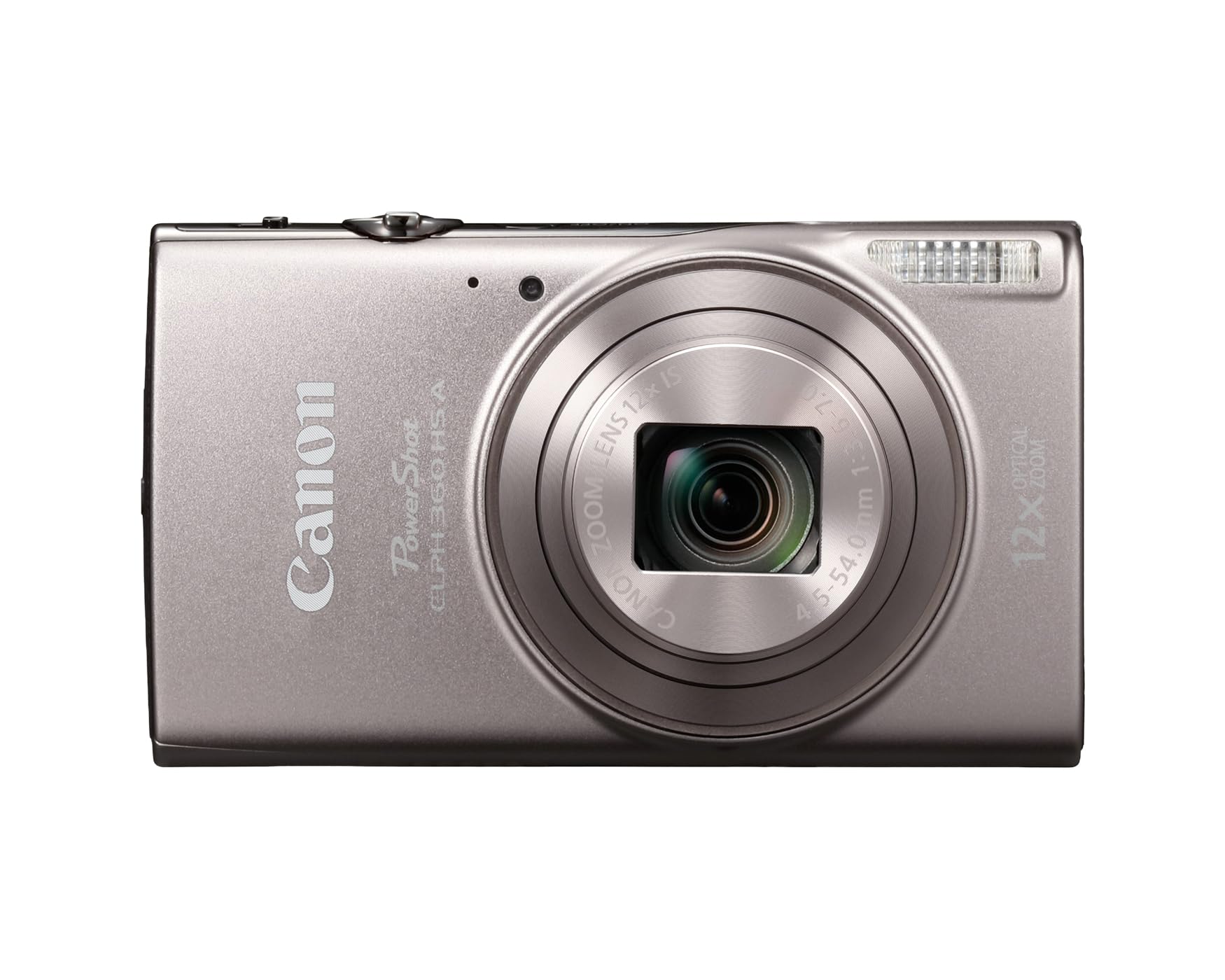
A slim silver companion that slides into a jeans pocket and still delivers 12X zoom.
The Canon PowerShot ELPH 360 HS proves a compact camera can still give you real optical zoom. Its 12X optical zoom with Optical Image Stabilizer lets you pull in distant subjects without the quality loss of digital zoom — a clear advantage over any phone. The 20.2-megapixel CMOS sensor pairs with the DIGIC 4+ Image Processor to capture clean shots even in dim lighting, which is exactly what you want for indoor gatherings or evening strolls. Built-in Wi-Fi and NFC (Near-Field Communication) let you beam photos straight to your smartphone for quick sharing, so you are not tethered to a computer to post your favorites.
The Hybrid Auto mode is a clever touch: it records up to four seconds of video before each still you take, then automatically stitches everything into a short video recap of your day. Reviewers consistently praise the experience: one buyer mentioned “the battery lasts for a really long time” and another called it a “baddie camera” that is “portable, small, chic black” with “great zoom (concert stage from far).” The camera does require a microSD card (not included), and some users note it works best with a USB cable for fast file transfers despite being Bluetooth-capable. It is quieter than larger DSLRs, making it discreet for events.
Why It Works
- 12X optical zoom with stabilization in a truly pocketable body
- Wi-Fi and NFC for instant photo sharing to your phone
- Hybrid Auto creates fun daily recap videos automatically
Small Compromises
- Small 1/2.3-inch sensor cannot match larger-sensor cameras in low light
- Requires microSD card (not included) and Bluetooth transfer is slower than USB
Stick this in your bag if: you want the simplest, most portable way to get real optical zoom and Wi-Fi sharing without learning any complex menus.
Pass on this if: you plan to shoot in very low light regularly or want the creative control of interchangeable lenses.
5. Nikon D3200 24.2 MP CMOS Digital SLR with 18-55mm Lens (Renewed)
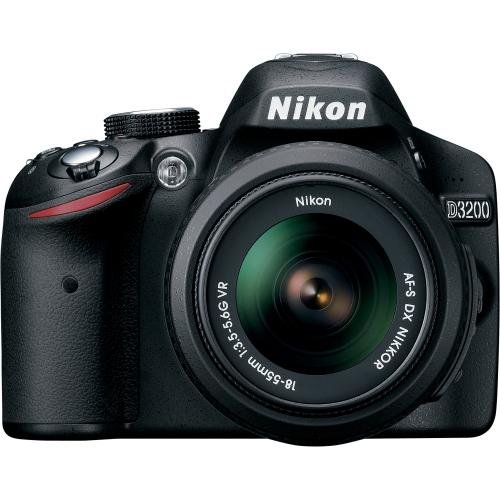
A budget-friendly DSLR with a 24.2 MP sensor that still holds its own today.
The Nikon D3200 is a certified refurbished DSLR that gives you a 24.2-megapixel DX-format CMOS sensor — the same resolution as the newer Canon EOS R100, but in a traditional DSLR body with an optical viewfinder. The EXPEED III image processor handles a wide ISO sensitivity range (the camera’s ability to shoot in low light without grain), and the 18-55mm f/3.5-5.6 AF-S DX NIKKOR zoom lens included in the kit covers standard everyday focal lengths from wide-angle to portrait. With 11 autofocus points using Contrast Detection, it is workable for still subjects but behind mirrorless cameras for tracking action. One-touch Full HD 1080p movie recording is on board, and the 3.0-inch rear LCD screen with 921,000 dots provides a sharp live view.
As a refurbished unit, it comes with a 90-day warranty and shows limited or no wear, making it an affordable entry into the Nikon lens system. Where it falls short compared to the Canon EOS R100 is autofocus: 11 points versus 143 zones means you will need to compose your shots more carefully, especially with moving subjects. Still, the 24.2 MP sensor matches the best resolution on this list, and the optical viewfinder gives you a direct, lag-free view that some beginners prefer over an electronic display.
Solid Foundation
- 24.2 MP DX sensor delivers sharp, high-resolution images
- Interchangeable lens system lets you upgrade lenses over time
- Refurbished price makes it a low-cost entry into Nikon’s ecosystem
Aging Tech
- 11 autofocus points feel limited compared to modern mirrorless cameras
- No Wi-Fi or Bluetooth for easy photo sharing
Choose this if: you want a traditional DSLR experience with an optical viewfinder and plan to learn photography on a budget, with room to grow into better lenses.
Avoid it if: you need fast, wide-coverage autofocus for moving subjects or want the convenience of wireless photo transfer.
6. Canon 5169B003 18.1 MEGAPIXEL EOS Digital Rebel T3I Digital Camera (Includes 18-55 II Lens)

A legendary entry-level DSLR that taught a generation of photographers how to shoot manually.
The Canon T3i is a classic from early 2011, yet it remains a capable teacher for anyone wanting to understand exposure fundamentals. Its 18.1-megapixel APS-C CMOS sensor captures images that owners mention are “clean up to ISO 1600, usable at 6400,” meaning you can push the sensitivity for indoor or evening shots without excessive grain. The 9-point autofocus system is basic by today’s standards, but the cross-type center point is accurate for static subjects. A fully articulating 3.0-inch LCD flips out and rotates — a feature still rare at this price point — making it excellent for overhead shots or waist-level compositions.
It records 1080p HD video with manual controls, so you can adjust shutter speed and aperture while filming, and it shoots at 3.7 frames per second for continuous stills. One long-time Canon user downsized from pro models to the T3i for portability, calling it a camera that “takes it everywhere.” The honest limit, as customers note, is that the kit lens autofocus can be slow and may even fail after extended use — one owner reported the lens stopped autofocusing just after the one-year warranty. Compared to the Sony ZV-1F with its 425 autofocus points, the T3i’s 9 points feel very basic, but for the price of learning photography from scratch, this classic still has plenty to offer.
Why It Still Matters
- 18.1 MP APS-C sensor with clean images up to ISO 1600 and usable results at 6400
- Articulating 3.0-inch LCD is great for creative angles
- 1080p video with full manual controls for learning videography
What Shows Its Age
- 9 autofocus points are slow and struggle in low light
- Kit lens reliability issues reported, including autofocus failure after warranty
- 3.7 fps burst rate is too slow for fast action
Best for the patient learner: someone who wants to understand aperture, shutter speed, and ISO from the ground up with a camera that rewards manual skill and still delivers great image quality.
Not for you if: you want fast, reliable autofocus from the start or plan to shoot sports, kids, or pets in motion.
Understanding the Specs
Sensor Size and Megapixels
The sensor is the part of the camera that captures light to create an image. A larger sensor, like APS-C (found in the Nikon D3200, Canon EOS R100, and Canon T3i) or the 1-inch type (found in the Sony ZV-1F), collects more light than a smaller 1/2.3-inch sensor (used in the Panasonic FZ80D and Canon ELPH 360 HS). This directly translates to cleaner, less-grainy photos in dimmer conditions and gives you that professional-looking blurred background. Megapixels determine how much you can enlarge or crop a photo before detail breaks down, but beyond about 20 megapixels, the sensor size matters far more for overall image quality.
Optical Zoom and Stabilization
Optical zoom physically moves lens elements to magnify a scene, keeping the full sensor resolution intact — unlike digital zoom, which just crops the image. The Panasonic FZ80D’s 60X optical zoom (20-1200mm equivalent) is what makes distant wildlife or stadium performers fill the frame, while the Canon ELPH’s 12X zoom is plenty for casual concert shots or travel landmarks. At higher zoom lengths, camera shake becomes very noticeable, which is why Optical Image Stabilization (O.I.S.) is essential: it uses tiny gyroscopes inside the lens or body to counteract your hand movements, keeping the image steady without a tripod.
Autofocus Points and Modes
Autofocus points are the specific zones across the camera’s frame where it can lock focus. More points (like the Sony’s 425 or the Canon R100’s 143) let the camera follow a moving subject smoothly across the entire scene. Fewer points (like the T3i’s 9 or the D3200’s 11) mean you need to keep your subject centered or reframe after focusing. Face and Eye Detection AF, available on the Sony ZV-1F and Canon EOS R100, automatically finds a person’s face or eye and keeps it sharp — a huge convenience for portraits and vlogging that older cameras lack entirely.
Video Capabilities
Video resolution and frame rate determine how smooth and detailed your footage looks. 4K (3840×2160 pixels) offers four times the detail of Full HD (1920×1080), giving you sharper video and the ability to crop in without losing quality. Frame rate (fps) affects motion smoothness: 24 fps gives a cinematic look, 60 fps looks smoother for action, and 120 fps or higher lets you create slow-motion effects. The Canon EOS R100 shoots 4K at 24 fps, while the Sony ZV-1F records 4K at up to 30 fps, and the Panasonic FZ80D also shoots 4K with a dedicated 4K Photo mode to extract stills from video.
FAQ
Is a DSLR or mirrorless camera better for a beginner?
How many megapixels do I really need as an amateur?
Will a point-and-shoot camera take better photos than my smartphone?
What does optical zoom mean, and why is it better than digital zoom?
Can I use a vlogging camera like the Sony ZV-1F for still photography too?
How long should an amateur camera last before I need to upgrade?
Is a refurbished camera like the Nikon D3200 a safe buy?
Do I need extra lenses as a beginner, or is the kit lens enough?
Final Thoughts: The Verdict
For the majority of shoppers, the best amateur camera winner is the Sony ZV-1F because it combines a large 1-inch sensor with 425-point autofocus and a built-in directional mic, making it the most forgiving and capable option for beginners who shoot both stills and video. If you want a long zoom lens to capture wildlife and travel without changing lenses, grab the Panasonic LUMIX FZ80D with its 60X optical zoom. And for the ultimate compact everyday carry that slips into a pocket and still has 12X optical zoom, the standout is the Canon PowerShot ELPH 360 HS.
How We Picked
We do not accept paid placement. Every pick is matched to a real buyer and a real use-case; we do not hands-on test units.
Sources & Methodology
Specifications: manufacturer listings and product documentation. Review insights: verified customer reviews, as of July 2026. Pricing: not shown on this page (it changes often); check the current price via the retailer link.
As an Amazon Associate, Gadgets Feed earns from qualifying purchases. This does not affect which products we feature.