
Our readers keep the lights on and my morning glass full of iced black tea. As an Amazon Associate, I earn from qualifying purchases.
Specs are compiled from manufacturer listings and verified buyer reviews and can change over time — please confirm the key details on the product page before buying.
You want to hear your music and still catch the doorbell, the bike bell, or a colleague calling your name. That is what ambient sound headphones do, and the Sennheiser HD 599 is the pair most people should buy first. They let outside noise in on purpose, either through an open-back design (grilles that let air and sound pass both ways) or a transparency mode (a setting that pipes the mic feed into your ears). That one trait changes how you wear them: no more pulling a cup off your head to hear what is going on.
I’m Min — the founder and writer behind Gadgets Feed. This guide is built by comparing the manufacturers’ published specifications and the patterns across verified customer reviews, so you get each pick’s real strengths and trade-offs instead of marketing spin.
Some picks here are wired open-back studio models and others are wireless earbuds with ambient modes. So the choice depends on a cable or a battery. This guide sorts through the best ambient sound headphones so you can pick the right pair for your desk, your commute, or your run.
Our Picks at a Glance

How To Choose The Best Ambient Sound Headphones
Buying here means accepting one trade-off up front: the more sound you let in, the less isolation you get. Every pick below is built around that trade-off on purpose. So the real question is how much outside world you want back. Start by deciding if you want a cable or a battery, then match the specs to where you actually listen.
Open-back grilles versus transparency mode
An open-back headphone has a grille on the outside of each cup instead of a sealed shell. Air moves freely, so ambient noise reaches your ears naturally and the sound stage (how wide and separated the instruments feel) usually opens up. A transparency mode does the same job electronically: tiny microphones pick up the room and play it back through the drivers, so you can tune how much you let in. Neither is “better” — open-back is a permanent trait, while transparency mode is a switch you can turn off.
Impedance and if you need an amp
Impedance is the electrical resistance of the headphones, written in ohms. Low-impedance models drive fine straight from a phone or laptop headphone jack, while high-impedance studio pairs often want a dedicated amp (a small box that boosts the signal) to reach full volume. If you plan to plug into whatever you already own, a low-ohm pair saves you a purchase. If you already own a desktop amp, higher impedance is not a problem.
Wired or wireless — what changes day to day
Wired open-back pairs never need charging and never cut out. Wireless models with an ambient mode give you freedom to move and a case to pocket, but you are trading a charging routine for that convenience. Think about your longest single session, then check the quoted battery life against it.
Quick Comparison
| Model | Best For | Design | Connection | Battery / Cable | Amazon |
|---|---|---|---|---|---|
| Sennheiser HD 599★ Best Overall | All-day desk listening with awareness | Open-back, over-ear | Wired | 3 m + 1.2 m detachable cables | Amazon |
| JBL Tune 770NCBest Battery Life | Flights and long wireless sessions | Closed-back with Smart Ambient | Bluetooth 5.3 | Up to 70 hours | Amazon |
| Audio-Technica ATH-R30XBudget Champion | Home studio mixing on a budget | Open-back, over-ear | Wired | Non-detachable cable | Amazon |
| SHOKZ OpenRun | Running and cycling with full awareness | Bone conduction, open-ear | Bluetooth 5.1 | 8 hours, 10-min quick charge | Amazon |
| Audio-Technica ATH-R50X | Studio work and gaming detail | Open-back, over-ear | Wired | Detachable 3.0 m + 1.2 m cables | Amazon |
| SHOKZ OpenFit Pro | Calls and workouts, no band | Open-ear, noise reduction | Bluetooth 6.1 | Up to 50 hours with case | Amazon |
| Sony MDR-MV1 | Spatial audio mixing at home | Open-back, over-ear | Wired | Detachable cable | Amazon |
| Sennheiser HD 490 PRO | Long mixing sessions, two tunings | Open-back, over-ear | Wired | 1.8 m detachable cable | Amazon |
| beyerdynamic DT 1990 Pro MKII | Critical listening and rich gaming | Open-back, over-ear | Wired | Detachable cable | Amazon |
In‑Depth Reviews
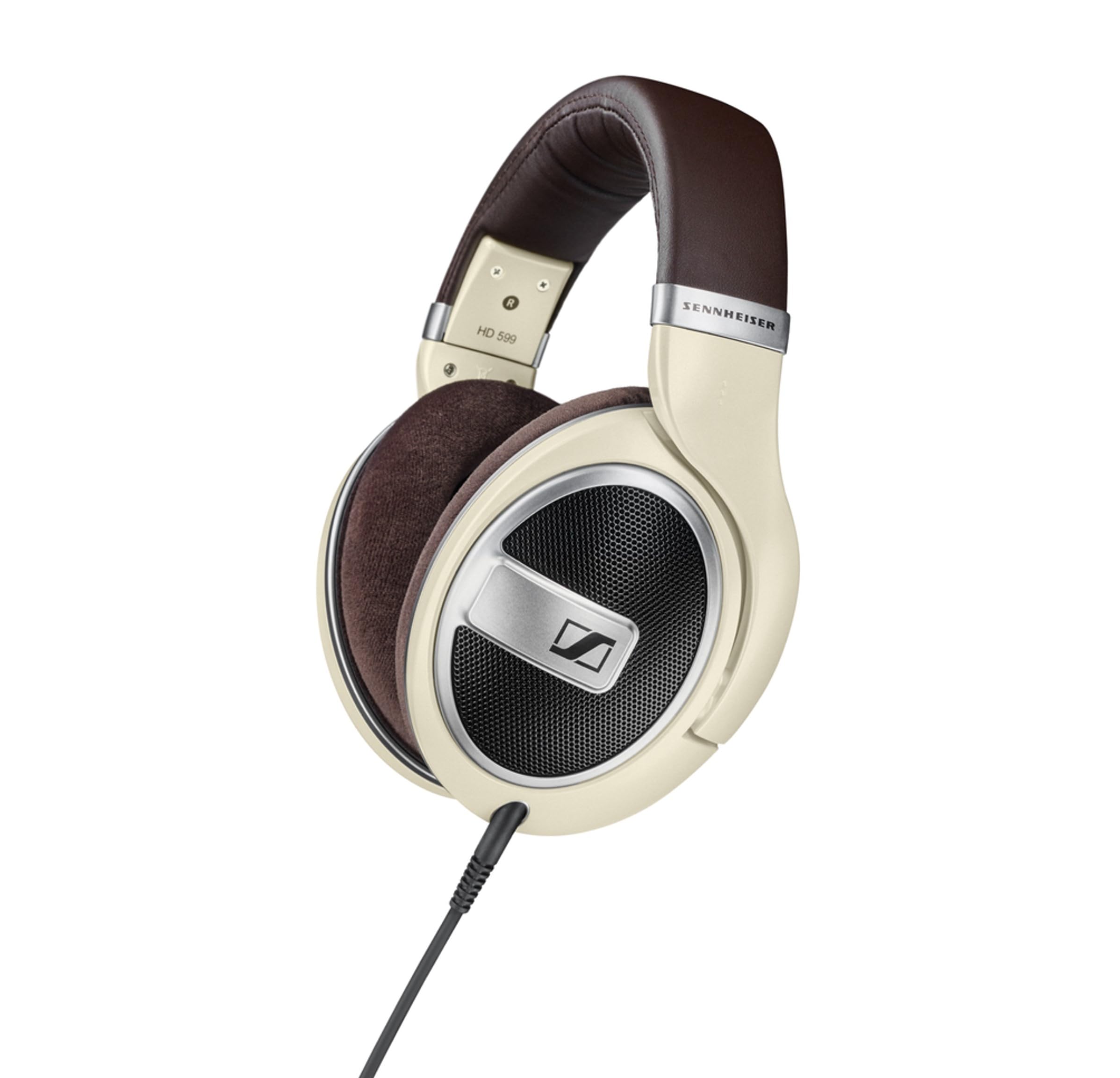
1. Sennheiser HD 599 Open-Back Wired Audiophile Headphones, Ivory
Our pick — over 4.5★ from 6,000+ verified ratings; the strongest balance of quality and price.
The velour-padded open-back that lets the room in and still sounds warm all day
This is the pick for someone who wears headphones for hours at a desk but hates feeling sealed off from the house. Sennheiser’s open-back grille lets air move through the cups, so you hear conversations and doorbells while the music keeps playing — the awareness comes from the design, not a setting. The padded headband and velour-covered ear pads are built for long sessions without pressure on the ears, and reviewers on glasses and with piercings describe zero fatigue even through six-hour streaming marathons.
You get two detachable cables in the box: a 3-meter run with a 6.3 mm jack and a 1.2-meter cable with a 3.5 mm jack. That means it works with a studio interface and a laptop or phone without buying an adapter. The Sennheiser-engineered transducers use aluminum voice coils (a lighter, more efficient wire material) to deliver high efficiency and extremely low distortion at low volume. Buyers report: “Extremely comfortable for 6hr streams, over-ear pads, good clamp, glasses-friendly.”
The honest catch is leakage. Open-back cups let your music escape as easily as they let the room in, so anyone sitting nearby will hear your playlist. The ear pads and cable are replaceable, which keeps the pair going for years, but if you need a sealed fit for an office cubicle or a train, this is not the one for you. The HD 490 PRO below is the move if you want the same open-air feel with two different tuning pads, and it plays noticeably brighter than the HD 599’s warmer tone.
What wears well over time
- Velour ear pads and a padded headband keep pressure off your ears for long sessions
- Two detachable cables included — 3 m with a 6.3 mm jack and 1.2 m with a 3.5 mm jack
- Aluminum voice coils in the drivers give high efficiency with extremely low distortion
- Open-back awareness helps you stay tuned in to your surroundings without pulling a cup off
Where the design asks for patience
- Sound leaks out of the open cups, so nearby people will hear your audio
- Swapping the cable takes some fiddling, and the long 3 m run is a lot of slack at a desk
- The headband foam creates a pressure point for some wearers over very long stretches
Reach for this if: you want an open, airy sound and constant awareness of the room during long desk sessions.
Look elsewhere if: you need your music kept private — the open grille lets it escape to everyone nearby.
2. JBL Tune 770NC – Adaptive Noise Cancelling with Smart Ambient Wireless Over-Ear Headphones, Bluetooth 5.3, Up to 70H Battery Life with Speed Charge, Lightweight (Black) (Renewed)
A budget wireless pair that runs an entire nine-hour flight on one charge
For a commuter or traveler who wants to leave the cable at home, the JBL Tune 770NC is the practical choice. Battery life is the headline number: up to 70 hours of wireless playtime per charge, with a 2-hour full charge. One buyer used it across a trip to England and reported being able to listen to music the whole entire nine-hour flight — that is real-world proof the number holds up. It also folds for travel and weighs 78 grams, so it lives in a bag without argument.
The ambient piece comes from Smart Ambient in the JBL Headphones app: flip on Ambient Aware to hear what is around you, or TalkThru to hear a conversation without taking the headphones off. You can also switch between Audio mode for sound quality and Video mode to keep sound matched to the picture during a movie or game. Bluetooth 5.3 with LE Audio (the newer low-energy audio version of the wireless standard) handles the connection, and there is multipoint pairing so you can stay joined to two devices at once, like a phone and laptop.
The catch is the microphone. The sound quality drops noticeably when the mic is live on a call, which is a Bluetooth limitation rather than a fault of these particular cups. If your day is mostly music and podcasts, that barely matters. If you take a lot of calls in noisy places, a headset with a dedicated boom mic may serve you better. The ATH-R30X below leans the opposite way: it is wired-only, with a non-detachable cable, and its ambient awareness comes from open-back cups rather than an app setting.
Where the value sits: 70 hours of playtime, foldable over-ear cups, multipoint pairing, and app-controlled ambient modes combine into an entry-level wireless package that leans hard on battery.
The one trade to know: voice calls lower the audio quality when the microphone engages, so plan around the mic if calls are most of your day.
You get the most out of it if: long flights, long shifts, and rare charging sessions are the norm for you.
It is the wrong pick if: clear voice calls through the onboard mic are your priority.
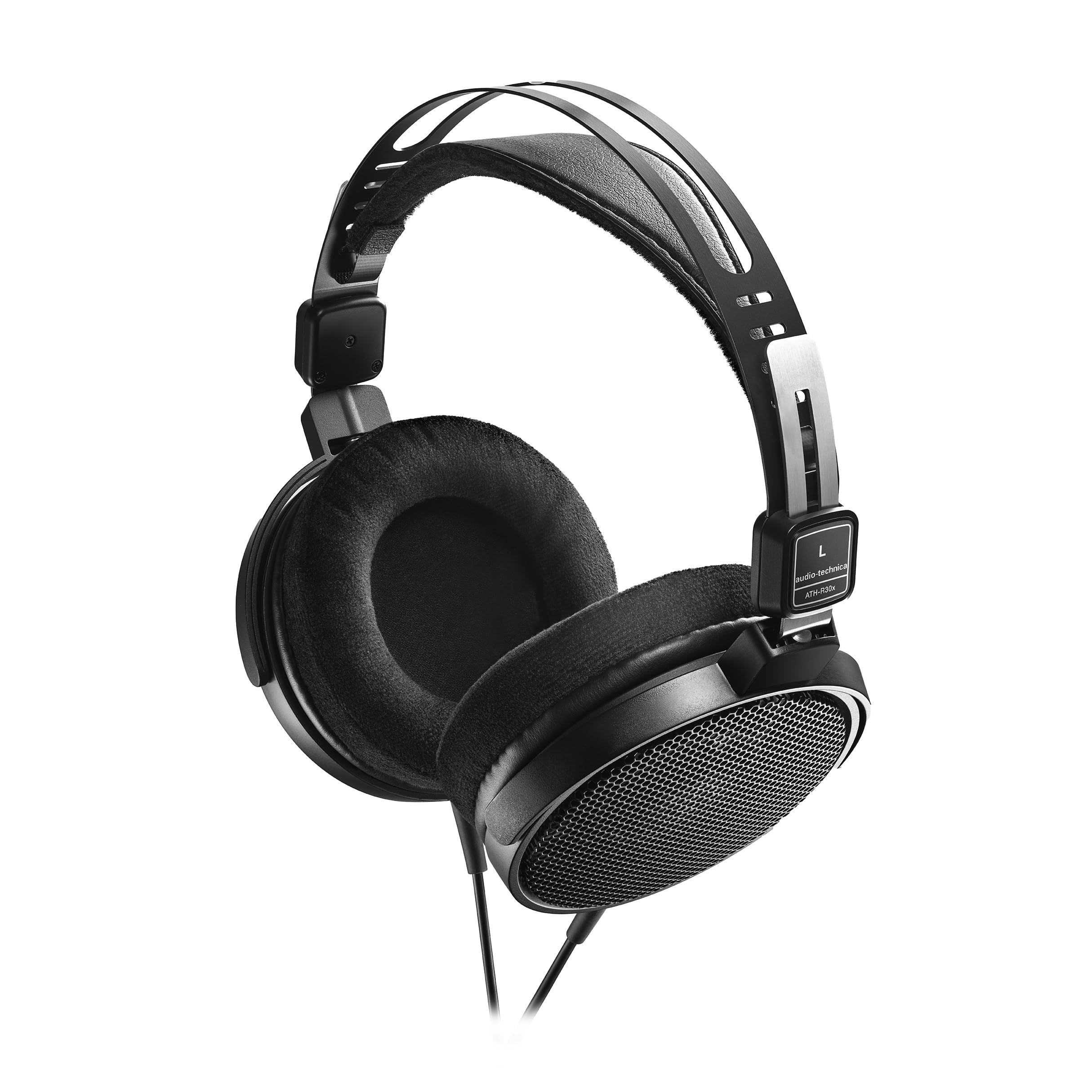
3. Audio-Technica ATH-R30X Open-Back Headphones
The entry-level open-back that lets you hear the room without spending much at all
If the idea of a wired open-back pair sounds expensive, the ATH-R30X is the reminder that it does not have to be. Audio-Technica’s 40 mm drivers (the round speakers inside each cup) reproduce audio with clarity and balance — well-defined lows, transparent mids, and smooth, extended highs. The fully open-back design allows unrestricted driver movement, which is what gives it that natural, spacious sound similar to listening through a pair of speakers instead of a sealed shell. Buyers consistently describe the sound-stage and separation as the standout for this price tier, and many use a ModMic to turn them into a gaming headset.
Comfort is the other strong suit. A repeat sentiment across reviews is that these are “super light” enough to wear all day, and the build quality holds up to casual handling. The 40 mm driver count keeps the whole package low-fatigue for long listening, which is why it serves well for movies, online talks, and everyday music, not just studio work.
Two things to know before buying. First, the cable is non-detachable and quite long — you cannot replace it if it wears out, and it will drag across a desk if you sit close. Second, the ear cups run on the smaller side, so buyers with larger heads or ears may find the fit tight over long sessions. The ATH-R50X below solves the cable issue with detachable 3.0 m and 1.2 m runs, and adds more bass if you want a fuller low end.
What earns its keep
- 40 mm drivers handle lows, mids, and highs with clarity for the price tier
- Open-back cups create a natural, spacious sound-stage with clear instrument separation
- Light enough to keep on for full workdays without pressure
- Let you hear people around you while you listen
What to weigh before you buy
- Non-detachable cable cannot be swapped out if it wears or breaks
- The long cable run is unwieldy for a close-up desk setup
- Ear cups are on the smaller side, which can bother larger ears over time
This is the pick for you when: your budget is tight but you want the open, airy sound of a true open-back design.
Consider stepping up if: you need swappable cables or more room inside the ear cups.
4. SHOKZ OpenRun Bone Conduction Open-Ear Bluetooth Sport Headphones, Black

A wraparound band that sends sound through your cheekbones and leaves your ears open
Here is what makes this different from every other pick: it does not sit in or over your ear at all. SHOKZ uses 8th generation bone conduction technology, which sends vibrations through your cheekbone straight to your inner ear. Your ear canal stays completely open, so you hear traffic, bike bells, and other runners without relying on a transparency setting. The wraparound frame sits outside the ear, which many owners mention disappears into place behind the hair. The brand’s own customers find the sound great and the fit secure — no ear pain, no shifting during movement.
For anything sweaty, the spec sheet is on your side: IP67 waterproof rated, which means it survives sweat, rain, and splashes. The 8-hour battery covers a full workout window, and a 10-minute quick charge adds up to 1.5 hours of playback. It pairs over Bluetooth 5.1 across Android, iOS, Windows, and other Bluetooth devices, and the package includes a magnetic induction charging cable, headband, and protective case.
The thing the market flags as the weak point is battery behavior over time. Some customers note degraded battery life after a year or so, and the magnetic charger itself is awkward enough that several buy third-party USB-C adapters to avoid the proprietary cable. The audio experience also has a ceiling: on a noisy train, audiobooks can be hard to follow because the design intentionally lets the environment in. The OpenFit Pro below adds noise reduction for that exact reason — it is the pick if you want awareness without the ambient audio taking over.
What everyone raves about: the fit and the awareness. Owners across running, cycling, and even steel fabrication say the band stays put and lets them hear what is around them in noisy environments.
The honest catch: the magnetic charger is fussy, and battery life degrades faster than a standard sealed pair.
Buy it for: running, cycling, and any activity where hearing traffic matters more than hearing every bass note.
Skip it when: you mainly listen in quiet places and want isolation — the open-ear fit loses that fight against background noise.
5. Audio-Technica ATH-R50X Open-Back Headphones
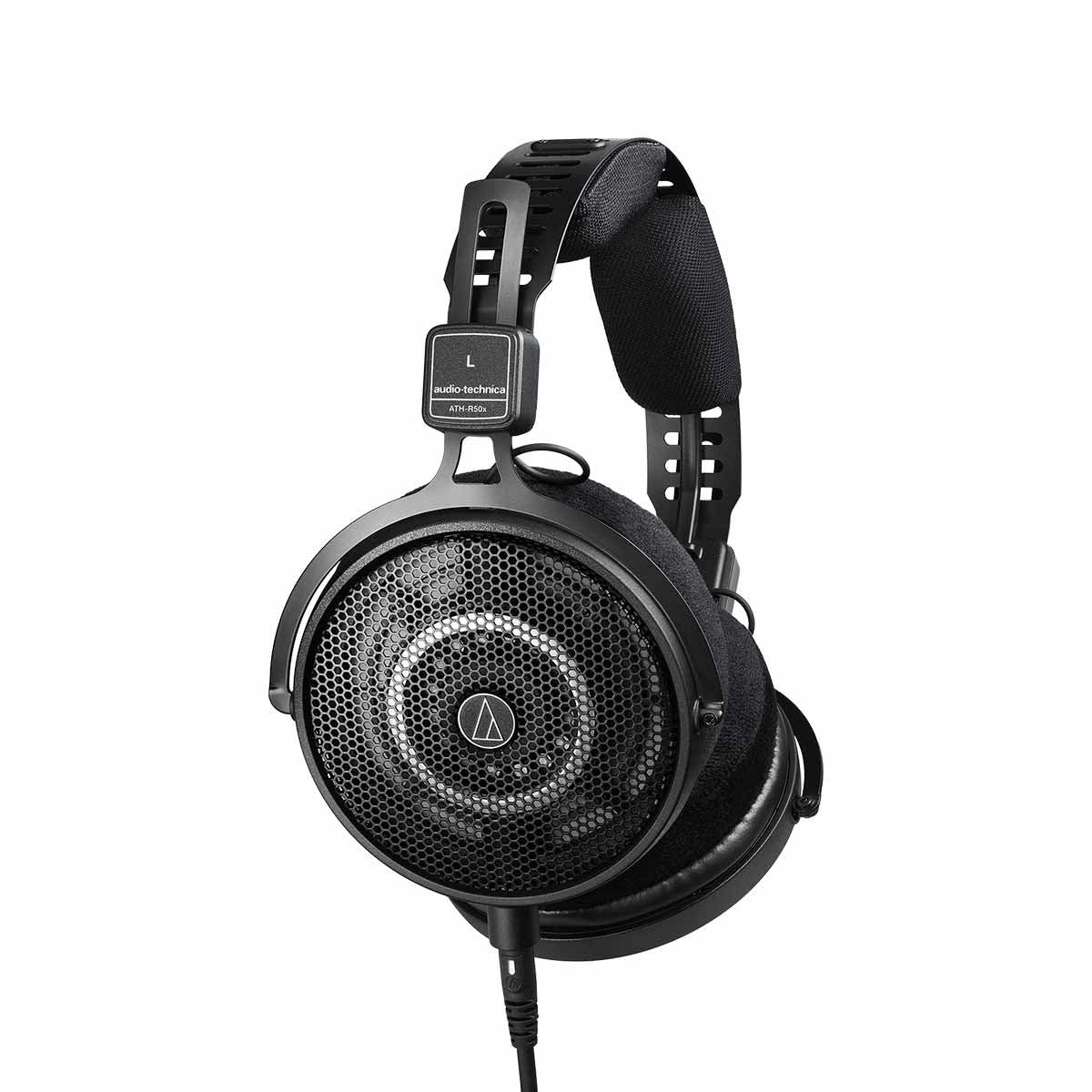
The 207 g studio open-back that turns a gaming session into a surround mix
Serious gamers and studio users want open-back here for the same reason: footstep direction. The ATH-R50X uses a fully open-back design that allows unrestricted airflow, eliminating internal resonance and giving an extremely quick transient response — meaning individual sounds arrive faster and cleaner. That is why reviewers point out they can pinpoint game footsteps and hear the room around them at the same time. Audio-Technica calls it a professional reference headphone with extended bass and accurate midrange, and the 207 g build (about the weight of a full soda can) keeps it on your head for hours.
You get two detachable cables in the box, a 3.0 m run and a 1.2 m run, each with a 2.5 mm twist-lock connector at the left ear cup. That twist-lock keeps the cable from yanking loose during play, and the short cable is right for a controller or desktop hub while the long one reaches across a room. The kit also includes a gold-plated 3.5 mm plug with a 6.3 mm adapter and a carrying pouch.
Two honest notes. First, bass. This pair has a lean low end compared to the warmer HD 599 — buyers describe it as accurate and analytical rather than thumpy, so if you expect heavy bass from the start, plan to EQ. Second, leakage is a feature, not a bug, on an open-back. Everything you hear, the room hears. The R30X below is the lighter-budget route with the same open-back feel; the R50X is the pick when the detachable cables and cleaner staging are worth the jump.
What the studio and gaming crowd likes
- Fully open-back airflow delivers extremely quick transient response for pinpointing footsteps
- 207 g weight with a new headband design keeps clamping force gentle
- Two detachable cables — 3.0 m and 1.2 m — both with a 2.5 mm twist-lock connector
- Includes a 6.3 mm adapter and a carrying pouch
What to know going in
- Bass runs lean, so expect to EQ for a fuller low end
- Sound bleeds both directions — the room hears your mix just as you hear the room
- The shorter cable measures only about 3 ft, which some will find limiting away from a desk
The right match for: gamers and home-studio users who want accurate directional cues and hours-long comfort.
Look past it if: you want big bass or you need a cable that reaches past a coffee table.
6. SHOKZ OpenFit Pro Open-Ear Earbuds with Noise Reduction, Dolby Atmos, Black
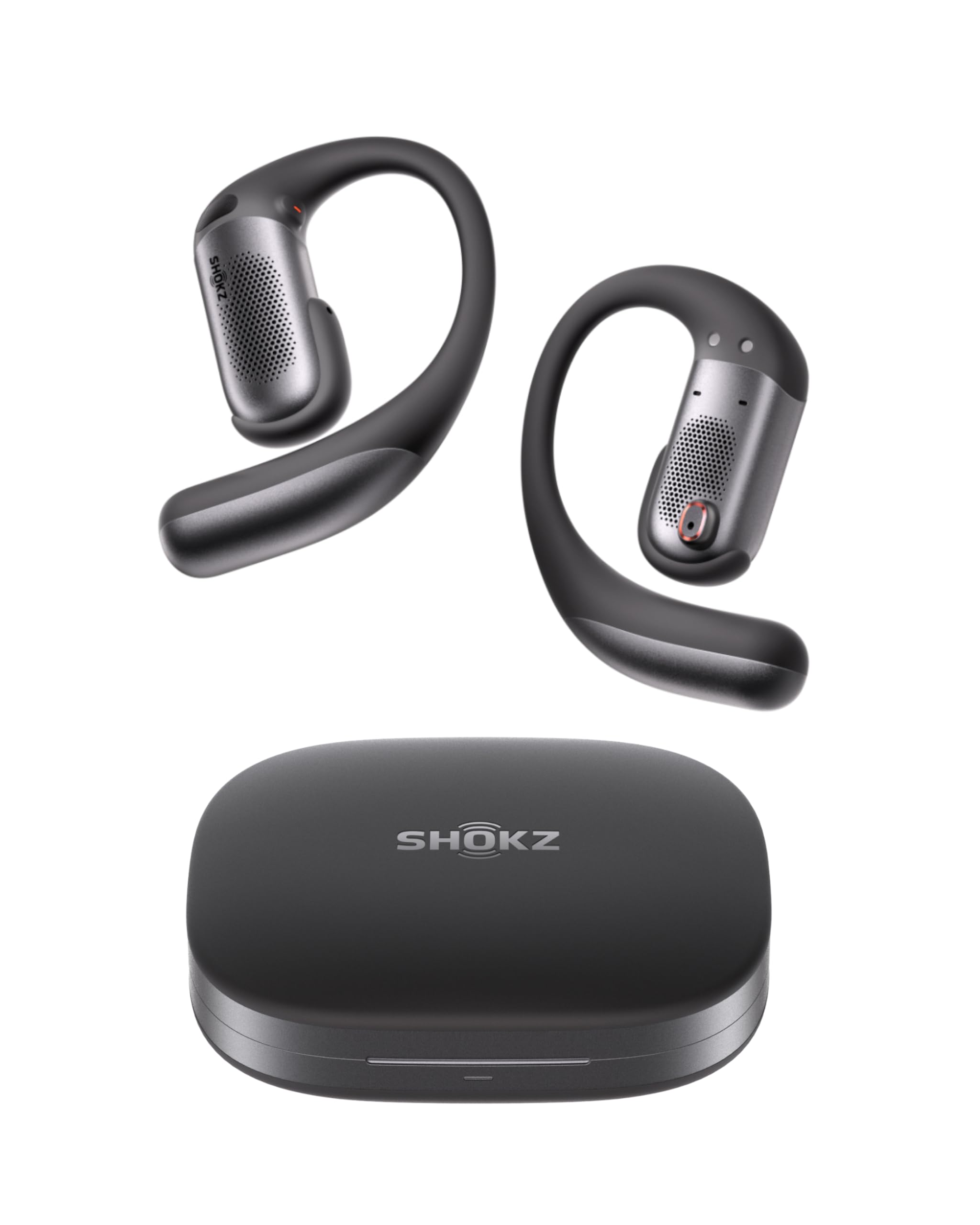
Open-ear buds that add real noise reduction without sealing you off from the world
If you live on calls and want an open-ear fit that also handles a noisy street, this is the pick. Shokz calls it the first earbud in the family with Open-Ear Noise Reduction: an ear-adaptive algorithm analyzes the noise around you every few seconds and tunes itself down. Owners say that sounds different from the deep silence of sealed active noise canceling. It runs Bluetooth 6.1 (a wireless standard) with multipoint pairing, so you can jump between laptop and phone mid-call. Six microphones feed an AI voice system that The adjustable nickel-titanium alloy hooks bend to your ear shape to keep the fit secure during movement.
Battery is generous if you are away from a charger. You get up to 50 hours total with the case, 12 hours per charge with noise reduction off, and 6 hours with it on. A 10-minute top-up delivers up to 4 hours of playback, and the case charges wirelessly. The IP55 rating covers sweat, splashes, and dust, and physical buttons work reliably even with wet hands. An 11 × 20 mm dual-diaphragm driver (two layered speaker surfaces tuned to different frequencies) is tuned for Dolby Atmos with head tracking, so movies feel anchored in front of you as your head turns.
The value math is where buyers split. At the premium end of this list, some say the price is high for what they get, and a handful report disconnects when their head is at odd angles. The fit is also personal — wearers with larger ears note a couple weeks of adjustment before the comfort settles in. The OpenRun above skips the battery case and noise reduction entirely, which is why it is the simpler, more durable call for pure sport use.
What wins people over: the sound quality earns the most praise by a wide margin, with the noise reduction capability close behind — those are the two things owners highlight most.
What plays out honestly: comfort and value draw mixed feedback. Many find the buds barely noticeable, but some report ear fatigue after three-plus hours.
This earns its place if: you want open-ear awareness plus noise reduction, wireless charging, and multi-device switching in one pair.
It may be overkill if: you just need clear audio for workouts — the lower-tier OpenFit does that for a fraction of the cost.
7. Sony MDR-MV1 Open Back Reference Monitor Headphones

A mixing headphone with a 5Hz–80 kHz range that keeps your ears cool for hours
If you mix spatial audio or Dolby Atmos (a surround-sound format) at a home desk, Sony built this specifically for you. A 5Hz–80 kHz frequency response (a range far wider than standard consumer audio) pairs with newly developed HD driver units and a wide, airy sound stage that mimics a set of nearfield studio monitors. The design philosophy is accuracy over character, so stereo and rich mixes translate predictably. Sony also built it for long hours with a strong, lightweight aluminum alloy frame, soft suede ear pads, and a secure fit that reviewers describe as making the headphone disappear within minutes.
Compared with the ATH-R50X below, this pair leans higher in detail and clarity, and both run over open-back grilles so your surroundings always come through. A detachable cable (made of machined aluminum, with a mini-jack adapter included) means the whole package is repairable. And the 40 mm driver is tuned specifically for the open-back structure, so bass still has weight even without a sealed shell.
The recurring gripe here is the stock cable. Shoppers say it tangles, holds memory of its coil, transmits microphonics (that thumping sound when it drags against clothing), and ends in a 1/4-inch connector that needs an adapter for phones. It is the sort of thing a buyer budgets to upgrade on day one. Beyond that, the neutral tuning reads as bass-emphasized to some ears from the start, so if you want extra low-end punch you may still reach for an EQ. The HD 490 PRO below swaps in two sets of ear pads for producing or mixing, which is the pick for someone who wants to change the tuning without software.
Where it pays off
- 5Hz–80 kHz frequency response delivers accurate, well-balanced detail across the spectrum
- Aluminum alloy frame and suede pads stay comfortable through long mixing sessions
- Detachable machined-aluminum cable with a mini-jack adapter keeps the pair serviceable
- Wide, airy sound stage aimed at translating both stereo and rich mixes
Where it stumbles
- The stock cable tangles, holds memory, and picks up microphonics
- Its 1/4-inch termination needs an adapter for phones and laptops
- Neutral tuning can read as bass-emphasized to some listeners
Pick this one if: you are mixing spatial or rich audio and need a transparent monitor that stays comfortable for hours.
Think twice if: you want a plush cable and warm, colored sound from the start.
8. HD 490 PRO Open-Back Professional Headphone

Two pairs of ear pads, two tunings, and the open-back staging of a much pricier pair
The HD 490 PRO is the pick for someone who wants to switch between a producing and a mixing sound without buying a second headphone. Sennheiser includes two unique sets of ear pads: velour pads add warmth and richness, while fabric pads push the highs forward for more detail with less bass. Swapping pads changes the sound character on the same pair, which is a feature no other pick here offers. On the spec side, the uncolored 5–36,000 Hz frequency response keeps the reproduction honest, and a low-frequency cylinder system fills in clearly defined low end.
For open-back users, staging is the technical talking point. The open-frame architecture reduces total harmonic distortion (a measure of how much the sound smears) and minimizes resonance, and buyers describe a wider sound stage than the HD 6-series. Comfort holds up over long sessions, too — the twistable cups and adjustable headband reportedly make the headphone forgettable during eight-hour spreads. The cable is detachable, 1.8 m of it, with a 3.5 mm to 6.5 mm jack adapter included so it works with both consumer jacks and studio interfaces. The pads and headband are replaceable, so the pair is designed to be kept rather than replaced.
What buyers flag is the price and one detail: the raised left/right driver inlays can rub against larger ears over time, and one reviewer solved it with a strip of cloth. Pad replacement is proprietary, meaning no aftermarket substitutes exist. If you want the same family sound for less, the HD 599 above holds the warmer, more relaxed tuning — the 490 PRO is the sharper, more technical take with more bass extension.
The case for it: two ear-pad sets in one box means you buy once and swap tunings by feel, plus a washable-pad design that keeps the pair alive for years.
The reality check: priced higher than most options here, and any replacement pads need to come from Sennheiser.
Best suited to: long-session producers and mixers who want two tunings and a repairable build in one purchase.
Not the one for: a buyer who wants a single sound and does not want to swap pads to get it.
9. beyerdynamic DT 1990 Pro MKII (30 Ohm), Open-Back Studio Headphones

The mastering-grade open-back that runs straight off a laptop without an amp
Most high-end studio headphones ask you to buy an amplifier first. Not this one. The MKII drive in this version runs at 30 ohms — low enough that it pulls full quality straight from interfaces, amps, laptops, and even a phone. That single number is why it sits at the top of this list for critical listeners who do not own a headphone amp. Beyerdynamic uses a second-generation TESLA.45 driver (the company’s newer transducer design) tuned for outstanding resolution and low distortion, and buyers describe the experience as revealing new details in familiar songs. One owner put it flatly: “These are an insanely good pair of headphones. Once you get these you won’t ever need anything better.”
For open-back awareness, this pair is fully open: the 20 Hz–20,000 Hz response and open grilles put you in a reference-class monitoring environment. Buyers report they can wear them comfortably for hours, which makes them well-suited to long mixing and mastering sessions. The detachable cable swaps out if it wears, the velour pads breathe through a long day, and the included case makes the pair portable for studio work. Comfort is a frequent mention for large ears in particular, and the lightweight headband is called out as feeling lighter than the DT 990 Pro.
The trade-offs matter here. Bass is tuned for mastering work, not for thump, and owners describe an rich soundstage rather than a bass-heavy tone. The plastic slider plates on this family of headphones are a known durability gripe — a buyer who wore theirs for years reports the sliders cracking. That is a maintenance consideration but not a daily-use problem for most. And like any open-back, the grilles do not block outside noise, so this is a desk-and-dark-room headphone, not a commute pair. The HD 490 PRO below runs the same tune thought at a lower price with two interchangeable tuning pads.
What stands out: mastering-grade detail from a 30-ohm drive means it works straight out of a laptop — no dedicated amp purchase needed.
What to accept: open grilles mean no isolation, and the chassis is plastic in places where buyers wish it were metal.
The enthusiast pick: for critical listening and rich gaming when you want the highest-resolution open-back here and own no amp.
Not the value pick: look at the HD 490 PRO above if you want nearly the same open-back staging for less and prefer swappable pads.
Understanding the Specs
Open-Back vs. Transparency Mode
An open-back headphone uses grilles instead of sealed cups. Air moves both ways, so the room reaches your ears naturally and the sound stage often opens up. A transparency mode does that job with software: microphones capture the room and play it through the drivers, so you can dial the amount you let in and switch it off. Open-back is a permanent trait; transparency is a choice. Pick open-back when you mostly sit at a desk and want consistent awareness, and transparency mode when you move between quiet and noisy places.
Impedance and Amplification
Impedance, written in ohms, tells you how hard the headphones are to drive. Low-impedance pairs like the 30-ohm DT 1990 Pro MKII run fine straight from a laptop or phone, so you save the cost of an amp. High-impedance studio models often want more voltage to reach their full dynamic range, and a dedicated amp feeds them properly. If the spec sheet lists ohms below roughly 50, you can usually skip the amp; above that, check whether your source has the headroom to drive them.
Battery vs. Cable
Wired open-back pairs never charge and never cut out, but they tie you to your desk or interface. Wireless models with an ambient setting let you move around and pocket a case — at the cost of a charging routine and the ever-present risk of a degraded battery down the road. Match your longest single session against the quoted playtime. If you regularly go more than 30 hours between charges, a wireless pair’s battery spec becomes the deciding factor.
IP Ratings and Durability
An IP rating has two digits: the first is dust, the second is water. IP67 means the product is sealed against dust and can survive immersion in water for a limited time. IP55 means dust-protected and resistant to splashes from any direction. Open-back headphones do not carry IP ratings because the grilles cannot be sealed — so if you need sweat and rain coverage, look for a bone-conduction sports model or a sealed open-ear bud with an IP rating instead.
FAQ
What is the difference between open-back headphones and transparency mode?
Do ambient sound headphones leak audio to people nearby?
Can I use open-back headphones for gaming and hear footsteps?
Do I need a headphone amp for open-back studio headphones?
How long does the Shokz OpenRun battery actually last on one charge?
Is bone conduction better than open-ear earbuds for running?
What does 5Hz–80 kHz frequency response mean for mixing?
Can I wear open-back headphones on a plane or in a noisy office?
How do I know if open-ear earbuds will fit my ears?
Will I need to replace the ear pads and cables over time?
Final Thoughts: The Verdict
The safest starting point for most people is the Sennheiser HD 599 — warm sound, velour-padded comfort for six-hour stretches, and open-back awareness that comes from the grille itself rather than anything you have to remember to switch on. If long-battery wireless is what you need, the JBL Tune 770NC and its 70-hour runtime keeps the music going on the longest trips you take. And if you want real noise reduction without sealing your ears, the SHOKZ OpenFit Pro is the pick that gives you awareness of the street and a clear voice on the other end of the call.
How We Picked
We do not accept paid placement. Every pick is matched to a real buyer and a real use-case; we do not hands-on test units.
Sources & Methodology
Specifications: manufacturer listings and product documentation. Review insights: verified customer reviews, as of September 2026. Pricing: not shown on this page (it changes often); check the current price via the retailer link.
As an Amazon Associate, Gadgets Feed earns from qualifying purchases. This does not affect which products we feature.