
American chestnut wood is an almost mythical material among woodworkers, prized for its straight, open grain, light-to-medium brown color that darkens beautifully with age, and a workability that rivals black walnut. Once the dominant hardwood of Eastern forests, the species was nearly wiped out by blight, making its lumber exceedingly rare and highly sought after for fine furniture, musical instruments, and restoration work. The wood is moderately lightweight yet strong, with a natural resistance to rot and decay that made it a historical favorite for barns, fencing, and cabinetry.
I’m Min — the co-founder and writer behind Gadgets Feed. I’ve spent countless hours analyzing lumber grading standards, customer feedback on dimensional accuracy, and the subtle differences in grain patterns that separate a true heritage-quality board from a modern substitute. This guide focuses on the specific attributes serious buyers of chestnut and comparable hardwoods should prioritize.
Whether you are restoring a period home or building a custom table with character, finding genuine best american chestnut wood requires understanding its unique grain, color evolution, and workability compared to modern alternatives like walnut or oak.
How To Choose The Best American Chestnut Wood
The scarcity of genuine American chestnut means most purchases require you to evaluate modern hardwoods that share its characteristics. Whether you are buying true chestnut fragments or a substitute like walnut or cherry, the criteria remain rooted in dimensional stability, grain clarity, and moisture content. Skipping these checks can lead to cracked boards, wasted labor, and a project that never quite feels right.
Grading and Dimensional Accuracy
Look for lumber described as “kiln dried” to ensure moisture is controlled, reducing the risk of twisting or checking after you bring it home. Commercial-grade or “clear” lumber with no knots, end checks, or defects is ideal for furniture and visible joinery. For replacement pieces, pay close attention to the stated dimensions — premium suppliers guarantee that surfaced boards will clean up to within 1/16-inch of the advertised width and thickness, which is essential for tight-fitting mortise and tenon joints.
Quick Comparison
On smaller screens, swipe sideways to see the full table.
| Model | Category | Best For | Key Spec | Amazon |
|---|---|---|---|---|
| Woodchucks Wood Combo Pack | Premium | Cutting board blanks | 18 boards, 6 each Walnut/Cherry/Maple | Amazon |
| Barrington Black Walnut Turning Squares | Mid-Range | Lathe turning & carving | Four 2″ x 2″ x 8″ pieces | Amazon |
| White’s Woods Purpleheart | Mid-Range | Small accent projects | Two pieces 3/4″ x 4″ x 12″ | Amazon |
| Discount Lumber Mixed Hardwood Box | Budget-Friendly | Hobby projects & practice | Mixed species, at least 3 types | Amazon |
| Barrington Purpleheart Board | Premium | Inlay & accent strips | Four 3/4″ x 2″ x 24″ boards | Amazon |
| BABILONIA Black Walnut Cutting Board | Premium | Kitchen & charcuterie | End-grain, 1.7″ thickness | Amazon |
| WoodForChef Walnut Cutting Board | Premium | Heavy daily use | FSC Certified, edge-grain, 1.5″ thick | Amazon |
In‑Depth Reviews
1. Woodchucks Wood Maple, Walnut, Cherry Boards Combo Pack
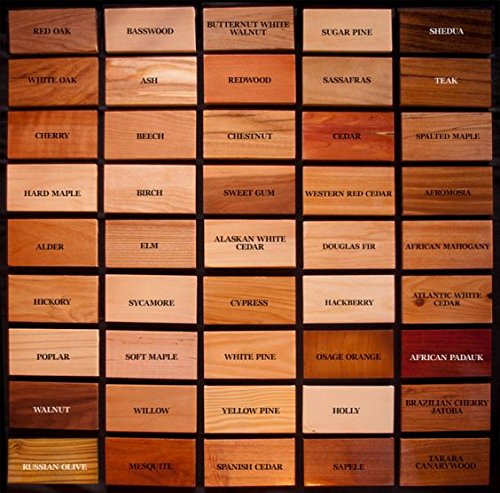
This combo pack delivers 18 individually milled boards — six each of cherry, walnut, and hard maple — all kiln dried and harvested by Amish craftsmen. Every board is surfaced four sides (S4S) at a consistent 3/4″ thickness by 2″ width and 16″ length, which means minimal milling is required before glue-up. The three distinct species allow you to create the classic chessboard or striped cutting board aesthetic that mimics the warm contrast of American chestnut against lighter woods.
Repeat buyers consistently report that the lumber arrives straight, free of knots or cracks, with enough color variation between the cherry and walnut to produce striking visual patterns. A few users noted that roughly 90 percent of the boards are ready for immediate glue-up, while the remaining may need a light pass through a jointer to correct a slight bow. The maple in particular is not all bright white, which can affect a checkered board’s contrast.
For the weekend woodworker who wants to build a large end-grain or edge-grain cutting board without sourcing three separate species, this pack removes all the legwork. The Amish origin and consistent kiln drying ensure the material stays stable through the sawing and sanding process, making it a reliable foundation for projects where dimensional accuracy is non-negotiable.
Why it’s great
- Ready-to-use S4S boards cut prep time significantly
- Three species in one box for contrasting grain patterns
- Consistent thickness across all 18 pieces ensures flat glue-ups
Good to know
- Around one in ten boards may have slight length variation
- Maple color is not uniformly white, reducing contrast options
2. Barrington Hardwoods Black Walnut Lumber Turning Squares
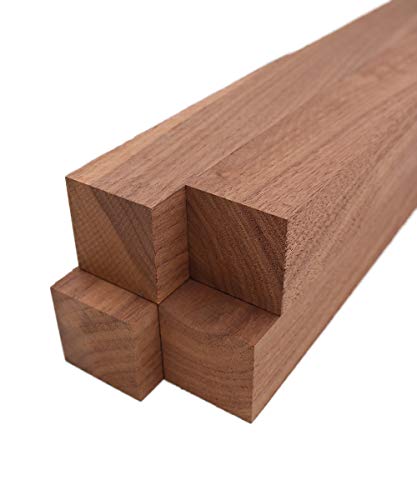
Barrington’s offering of four black walnut turning squares measures a full 2 inches by 2 inches by 8 inches, with the manufacturer guaranteeing each piece will clean up to 1-3/4 inches after final surfacing. This is critical for lathe work, where concentricity depends on starting with square, defect-free stock. The walnut itself showcases a straight grain and deep chocolate color that is the closest modern analogue to American chestnut’s visual warmth.
Customers consistently praise the lack of knots and checks, with several woodturners using these squares for custom handles, pens, and ring boxes. The kiln-dried nature means the blanks are stable and unlikely to warp during turning. One reviewer specifically noted that the walnut held up well to both drill press and router operations for box-making, with no signs of splitting or tear-out.
It is worth noting that black walnut contains juglone oils that can cause allergic reactions in sensitive individuals, so proper dust collection and ventilation are advised. The 2-inch profile is ideal for small spindles and boxes, but not suitable for larger bowls or platters. If you are restoring a piece of chestnut furniture and need a close color match, these turning squares provide an excellent walnut substitute.
Why it’s great
- Guaranteed defect-free with beautiful straight grain
- Kiln dried for immediate use and dimensional stability
- Cleans up to precise 1-3/4″ after surfacing
Good to know
- Walnut juglone may cause skin irritation during sanding
- Limited to small projects at 8-inch length
3. White’s Woods Purpleheart Lumber 3/4″ x 4″ x 12″

Purpleheart is an exotic hardwood whose deep violet color, which oxidizes to a rich burgundy-brown over time, can serve as a striking accent next to a chestnut or walnut primary piece. White’s Woods delivers two boards measuring a full 3/4-inch by 4-inch by 12-inch, each surfaced on four sides with minimal warping. The wood is incredibly dense — much harder than chestnut — so it resists dents well but can be prone to tear-out if you rush the routing or planing stage.
Buyers consistently note that the color is immediate and vibrant, though several report that the boards arrived in a bubble mailer that caused light corner damage. The wood also has a distinctive, somewhat unpleasant smell during cutting that is characteristic of purpleheart. For cutting boards, users recommend pairing it between maple or walnut strips to keep the violet accent from overwhelming the piece.
The 12-inch length is suited for small boxes, knife scales, and segmented turning blanks rather than large panels. If your project demands a dynamic color contrast against the warm brown of chestnut, purpleheart delivers a visual pop that few domestic hardwoods can match, but you should factor in some material waste from the packaging sensitivity.
Why it’s great
- Vibrant purple color that darkens gracefully over time
- S4S finish with tight dimensional tolerance
- Excellent hardness for high-wear accent applications
Good to know
- Fragile packaging may cause corner splintering during shipping
- Strong odor when cut; use proper ventilation
4. Discount Lumber Outlet Hardwood Lumber Assortment

This mixed-species box from Discount Lumber Outlet is the perfect entry point for hobbyists who want to experiment with different hardwoods without committing to a full bundle of a single species. The assortment typically includes walnut, red oak, white oak, poplar, cherry, birch, soft maple, hard maple, hickory, and red grandis — you are guaranteed at least three different species in the box. Each piece is intended to be clear of knots and end checks, making them suitable for small furniture details, inlay strips, and practice joinery.
Customer feedback is overwhelmingly positive, with many buyers noting that the variety alone is worth the cost — especially for woodworkers who live far from a specialty lumber yard. The boards are mostly 3/4-inch thick and come in useful sizes for box making and glue-up panels. A few reviewers did report receiving pieces with minor defects like snipe at the ends or a few knots, which contradicts the “no defects” marketing line, but the majority found the quality-to-price ratio very favorable.
If you are drilling down on what American chestnut feels like to work, this assortment gives you a hands-on way to compare the density and grain of oak, cherry, and walnut side by side. It is not lumber for a fine furniture showpiece, but as a learning bundle or a way to prototype a chestnut-inspired design, the value is hard to beat.
Why it’s great
- Multiple species in one box for comparative testing
- Mostly clear stock with minimal defects
- Ideal price for hobbyists and small project practice
Good to know
- Occasional knots or snipe on some boards
- Species mix is a surprise, not selectable
5. Barrington Hardwoods Purpleheart Lumber Board 3/4″ x 2″ x 24″
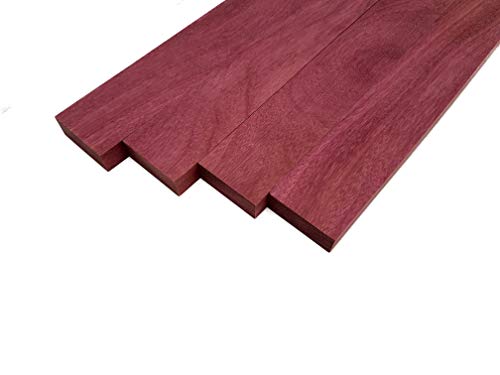
Barrington’s purpleheart boards offer a longer 24-inch format that opens up more project possibilities than the typical 12-inch accent piece. The four boards are kiln dried, smooth on all four sides, and feature the deep purple coloration that Barrington is known for. Each piece measures a consistent 3/4-inch by 2-inch, making them particularly well-suited for cutting board accent stripes, knife scales, and small furniture stringing.
Boatbuilders and woodturners have praised this lumber for its uniformity. One buyer used it to craft sea-rails on a yacht cabinet, noting that thinning epoxy and a mirror coat created a three-dimensional depth that ordinary hardwoods cannot produce. The wood is extremely dense and hard — users report it as “hard as concrete” — which means routing requires sharp carbide bits and slow feed rates to avoid burn marks.
The 24-inch length is a major differentiator here. It allows you to create full-length accent lines across a standard 20-inch cutting board or furniture panel without the need to piece shorter segments together, preserving a clean, uninterrupted grain line. If you are looking to add purpleheart accents to a warm walnut or chestnut-toned project, this is the superior length option.
Why it’s great
- Full 24-inch length for unbroken accent runs
- Consistent kiln drying and S4S finish
- Vibrant color that reacts beautifully with epoxy finishes
Good to know
- Extreme density causes burn marks if routing speed is too slow
- May require sharp carbide tooling for clean cuts
6. BABILONIA American Black Walnut Cutting Board
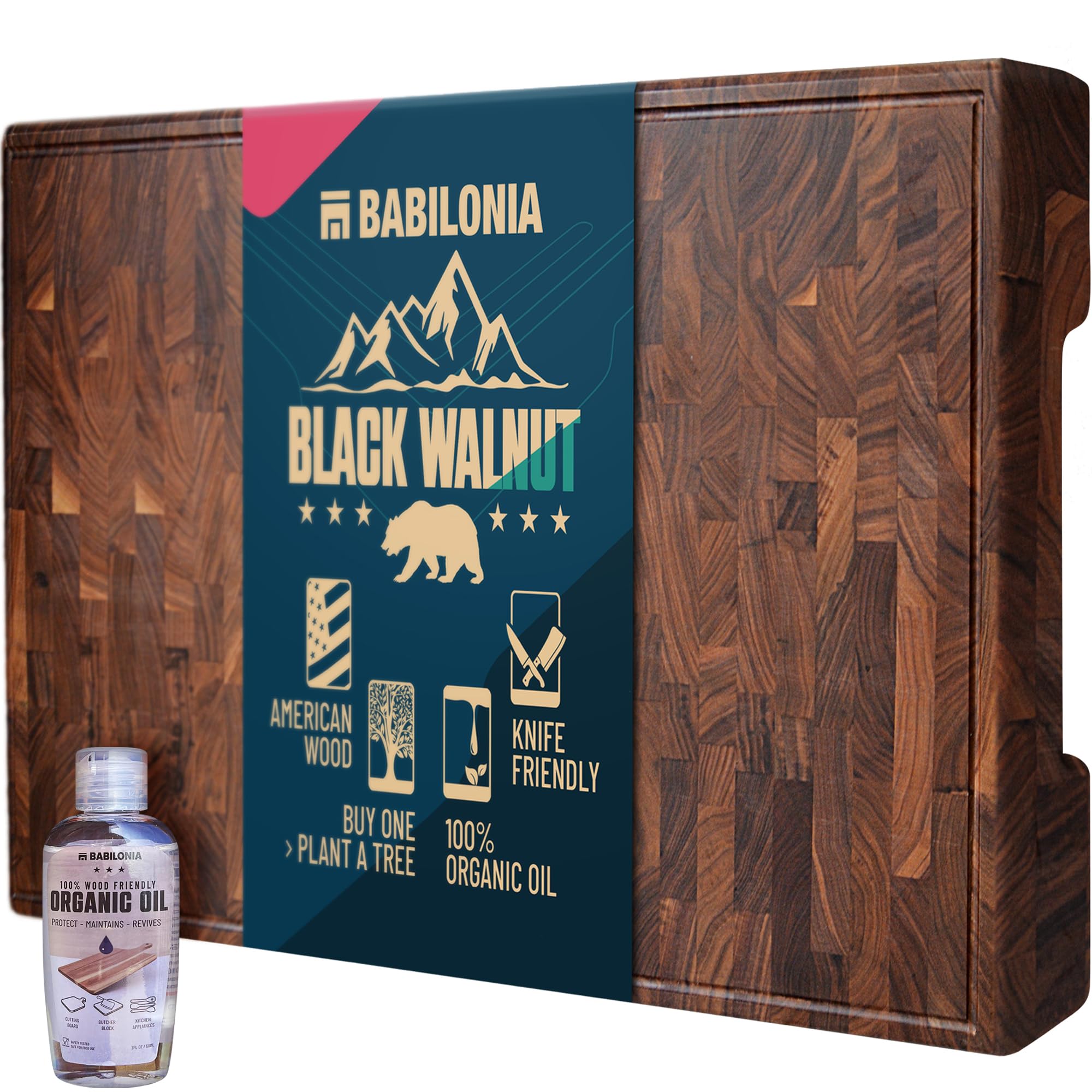
This BABILONIA board is constructed from 100% American black walnut using end-grain construction, meaning the wood fibers run vertically to absorb knife cuts rather than showing scratches. At 1.7 inches thick, it is unusually substantial, providing stability for heavy chopping tasks like breaking down squash or portioning large roasts. The board includes a built-in juice groove, non-slip rubber feet, and a hidden handle that allows it to double as a serving tray.
Customers consistently praise the pre-oiled finish that allows immediate use straight from the box. The included organic mineral oil and small plate for sliding chopped ingredients are genuine value-adds that eliminate the need to purchase conditioners separately. The end-grain surface has been described as “knife-friendly,” meaning your edge stays sharp longer compared to plastic or edge-grain wood boards.
It is important to note that one user reported a split developing after two months of hand washing, though the vendor quickly replaced the board under warranty with excellent customer service. The board is not dishwasher safe, and care instructions should be followed closely. As a showcase of American black walnut’s warm brown tones — the closest living species to chestnut in both color and workability — this board is a fine functional piece of lumber.
Why it’s great
- Thick end-grain construction protects knife edges
- Includes oil and slide plate for immediate use
- Large surface with juice groove and non-slip feet
Good to know
- Not dishwasher safe; hand wash only
- Isolated reports of splitting; vendor warranty covers replacement
7. WoodForChef Large Cutting Board from American Walnut

WoodForChef’s large walnut board is FSC Certified, ensuring the lumber was responsibly harvested from North American forests. The edge-grain construction — where the long sides of the wood strips are glued together — strikes a balance between durability and lower maintenance compared to end-grain boards. At 20 inches by 16 inches by 1.5 inches, this is a generously sized work surface that accommodates whole roasts, multiple vegetables, and charcuterie spreads without crowding.
The board arrives dry and unseasoned, requiring the user to apply several coats of mineral oil and beeswax before first use. This is a design choice that allows you to control the exact finish, but it means you cannot use it immediately out of the box. Once oiled, the walnut’s deep brown grain really pops, and the dense edge-grain surface is reported to be extremely scratch-resistant with minimal knife marking.
Heavy users report that the board stays flat on the counter with no rocking, which is essential for safe chopping. The deep juice groove effectively channels liquids away from the work area. While the lack of a pre-seasoning is an extra step, the board’s FSC certification and generous dimensions make it a premium canvas for anyone who wants a large walnut work surface that mirrors the dimensional stability and beauty of classic chestnut boards.
Why it’s great
- FSC Certified for environmentally responsible sourcing
- Large 20″ x 16″ surface handles big prep tasks
- Scratch-resistant edge-grain with minimal knife dulling
Good to know
- Requires multiple oil coats before first use
- Does not include a stand or oil in the box
FAQ
How can I tell if a piece of wood is genuine American chestnut versus walnut?
Is walnut a good substitute for American chestnut in furniture restoration?
Final Thoughts: The Verdict
For most users, the best american chestnut wood winner is the Woodchucks Wood Combo Pack because it delivers three premium species in kiln-dried, S4S boards that are ready for fine furniture and cutting board projects without additional milling. If you want a single-species turning stock with guaranteed defect-free grain, grab the Barrington Black Walnut Turning Squares. And for a finished kitchen piece that showcases walnut’s rich character, nothing beats the BABILONIA end-grain cutting board.