
A felling axe is a single-purpose tool: put a sharp, heavy bit of steel through a tree’s hinge wood as fast as possible. The difference between a good swing and a great one comes down to head weight, handle grain orientation, and the quality of the high-carbon steel behind the edge. Too many axes sold today arrive with soft steel, crooked handles, and cheeks thick enough to bounce off the wood. That is not a tool — it is a workout machine.
I’m Min — the co-founder and writer behind Gadgets Feed. I’ve spent hundreds of hours cross-referencing head weights, handle lengths, steel hardness ratings, and real-user edge-retention data from loggers and homesteaders to find the axes that actually earn their place in your hands.
Whether you are clearing a trail or heating your home all winter, the right american felling axe is the difference between a satisfying day of work and a frustrating battle with dull steel and loose handles.
How To Choose The Best American Felling Axe
A felling axe is not a hatchet, and it is not a splitting maul. It is a long-handled, relatively thin-bladed tool designed to sever wood fibers across the grain. Choosing the wrong one means either exhausting yourself with an overly heavy head or failing to cut deep enough with a light one. Focus on three things: the head pattern and weight, the steel composition and heat treat, and the handle’s grain quality and hang.
Head Pattern and Weight
The Dayton pattern has a square poll and a straight or slightly curved bit, with minimal cheek mass — it drives deep with less resistance. The Jersey pattern adds prominent lugs that increase the contact area between head and handle, improving shock transfer and reducing the chance of the head loosening over time. For general felling of softwoods and hardwoods up to 18 inches in diameter, a 3.5-pound head on a 36-inch handle offers the best power-to-control ratio. Step up to 4.5 or 4.8 pounds only if you regularly fell timber over 20 inches across and have the technique to manage the heavier swing.
Steel Hardness and Edge Geometry
The edge must hold up to repeated impact with wood grain without rolling or chipping. Look for drop-forged high-carbon steel heat-treated to 53-58 HRC — soft enough to sharpen with a file, hard enough to survive a season of work. The bit should be ground with a convex geometry, not a flat bevel, because a convex edge sheds wood fiber more efficiently and resists sticking. Avoid axes with a thick secondary bevel or a “wedge” grind, which are optimized for splitting, not felling.
Handle Grain and Hang Quality
A straight-grained hickory handle with grain running vertically through the eye and minimum runout is the only durable choice. The handle should be hung with a metal or hardwood wedge driven into the kerf of the eye, securing the head against the shoulder. Check that the head sits flush against the shoulder, with no gap, and that the handle’s fawn’s foot (the bottom curve) is free of checks or cracks. A handle that is not properly dried — below 10% moisture content — will shrink and loosen the head within weeks.
Quick Comparison
On smaller screens, swipe sideways to see the full table.
| Model | Category | Best For | Key Spec | Amazon |
|---|---|---|---|---|
| Council Tool Dayton 35DR36C | Mid-Range | Affordable felling with classic Dayton pattern | 3.5 lb head, 36″ hickory | Amazon |
| Council Tool Jersey SU35J36C | Mid-Range | Secure lug-fitted head for heavy work | 3.5 lb head, tool steel | Amazon |
| Fiskars Super Splitting Axe | Mid-Range | Splitting medium logs with shock absorption | 6 lb total, convex blade | Amazon |
| Husqvarna Carpenter Axe 596271201 | Mid-Range | Carpentry and bushcraft precision | 2 lb head, 20″ hickory | Amazon |
| Helko Werk Expedition HNA10497 | Premium | Heavy-duty felling of large hardwoods | 4.5 lb head, C50 steel 53-56 HRC | Amazon |
| Gränsfors Bruks Scandinavian Forest Axe | Premium | All-day limbing and small-tree felling | 2.6 lb head, 25″ handle | Amazon |
| Gränsfors Bruks American Felling Axe | Premium | Maximum felling power for experienced users | 4.8 lb head, 35.5″ curved handle | Amazon |
In‑Depth Reviews
1. Gränsfors Bruks American Felling Axe
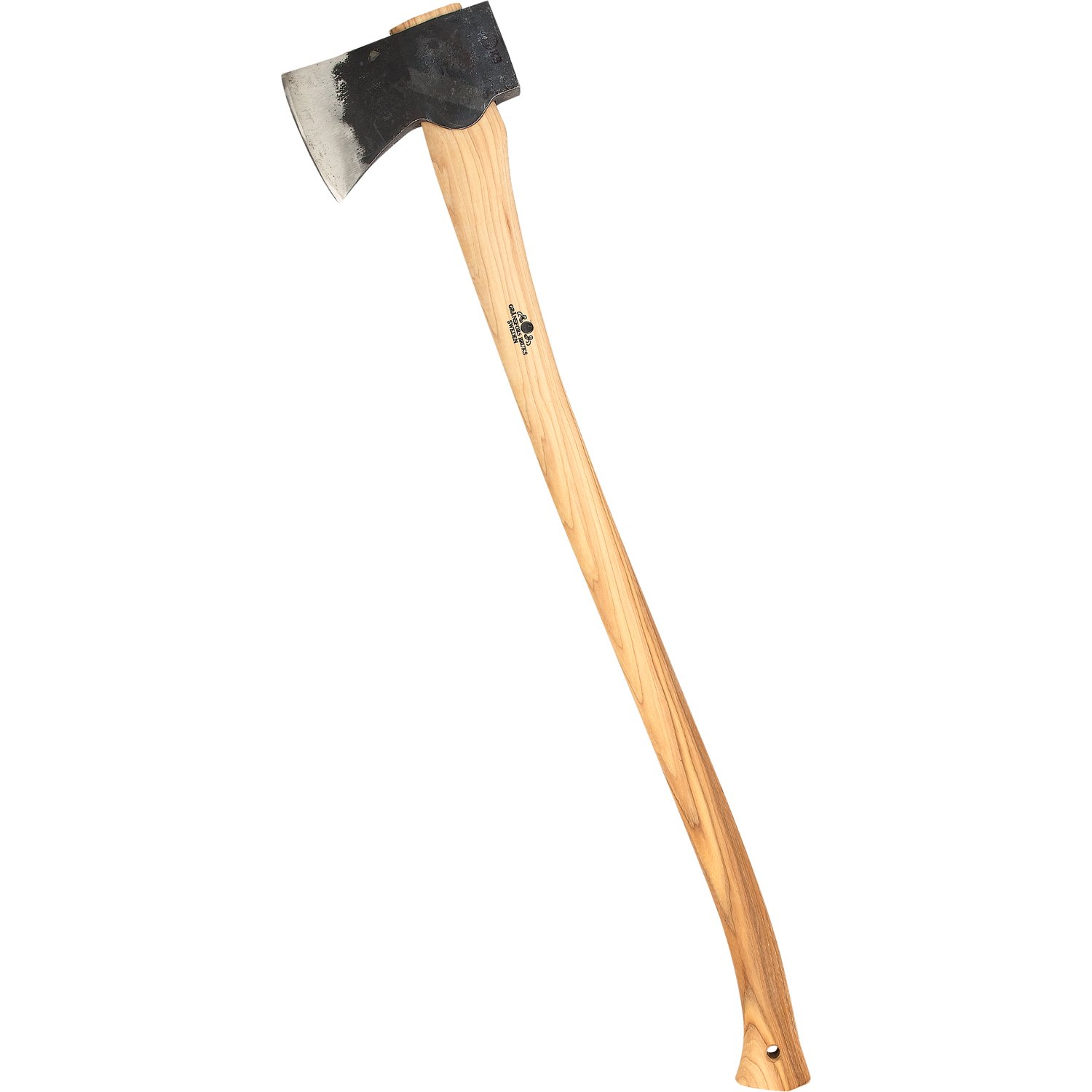
This is the definitive American felling axe from the Swedish maker that defines the premium tier. The 4.8-pound head on a 35.5-inch curved hickory handle delivers crushing momentum on every swing, and the hand-forged high-carbon steel is heat-treated to hold a hair-popping edge. Real users report felling multiple trees without needing to touch up the edge, though the handle may require a light sanding and oiling out of the box to smooth natural splintering.
The head is initialed by the individual smith who forged it, and the vegetable-tanned leather sheath is built to last decades. At this weight, it is not a tool for novices — the swing radius demands proper body mechanics to avoid overextending. But for an experienced feller who wants the closest thing to a production custom axe, this is the benchmark.
The steel checks in around 57 HRC, which means a standard mill file will still reshape it, but the edge wears far longer than the softer steel found on budget axes. The hang uses a traditional wooden wedge and a metal wedge for secondary expansion, so if the handle dries and loosens, a simple Swel-loc treatment restores the fit.
Why it’s great
- Hand-forged by a single smith, exceptional edge retention
- 4.8 lb head produces unmatched cutting force
- Includes premium leather sheath and Axebook
Good to know
- Handle may arrive with rough spots needing oil and sanding
- Heavy head requires good technique to control
2. Helko Werk Germany Classic Expedition 4.5lb Felling Axe

The Helko Werk Expedition is a German-made heavyweight designed for the most punishing felling tasks. Its 4.5-pound head is drop-forged from C50 high-carbon steel hardened to 53-56 HRC, offering a good balance of edge-holding ability and ease of sharpening with a file. The polished Classic finish reduces friction when the bit sinks into green wood, and the 35-inch Grade A American hickory handle is sanded to 150 grit with a boiled linseed oil finish.
Real buyers note that the factory edge is razor sharp but often benefits from a secondary convex profiling to improve wood-shedding performance. The head is hung with a double conical wedge system, which resists loosening better than a single wedge alone. At 6.5 pounds total, this is an axe for users with the stamina to swing it all day.
The included full-grain leather sheath and a 1-ounce bottle of Axe Guard protective oil add immediate value, especially for users who store tools in humid environments. The anti-rust coating on the head requires acetone or WD-40 to fully remove before use, but that is a minor upfront step for a tool that should outlive its owner with proper care.
Why it’s great
- German C50 carbon steel at 53-56 HRC holds an excellent working edge
- Double conical wedge system keeps the head tight
- Includes premium leather sheath and protective oil
Good to know
- Anti-rust coating must be removed before use
- 4.5 lb head is too heavy for beginners
3. Gränsfors Bruks Scandinavian Forest Axe 25 Inch

The Scandinavian Forest Axe is Gränsfors Bruks’ do-everything mid-size tool. The 2.6-pound head on a 25-inch handle makes it light enough to carry all day and fast enough to limb pine branches up to six inches thick with one swing. The hand-forged Swedish steel arrives shaving sharp out of the box, and the straight-grain hickory handle is selected for minimal runout. Real users in Alaska report using this for both clearing trails and processing firewood without fatigue.
This is not a primary felling axe for large timber — the short handle limits leverage, and the relatively thin bit is optimized for cutting, not splitting. But for the user who needs one axe that can handle limbing, bucking small trees, and camp chores, it is nearly perfect. The vegetable-tanned leather sheath and the Axebook (included) reflect the brand’s commitment to education as much as craftsmanship.
One detail that sets this apart from cheaper mid-size axes is the poll — it is forged with a slight rounding, which prevents mushrooming when driving wooden wedges. The 20-year guarantee from Gränsfors Bruks is a signal of confidence in the steel.
Why it’s great
- Shaving sharp out of the box with excellent edge geometry
- Perfectly balanced for all-day limbing and small-tree felling
- Includes premium sheath and detailed Axebook
Good to know
- 25-inch handle limits leverage for felling large timber
- Thin bit is not designed for heavy splitting
4. Council Tool Jersey Axe 3.5 lb SU35J36C
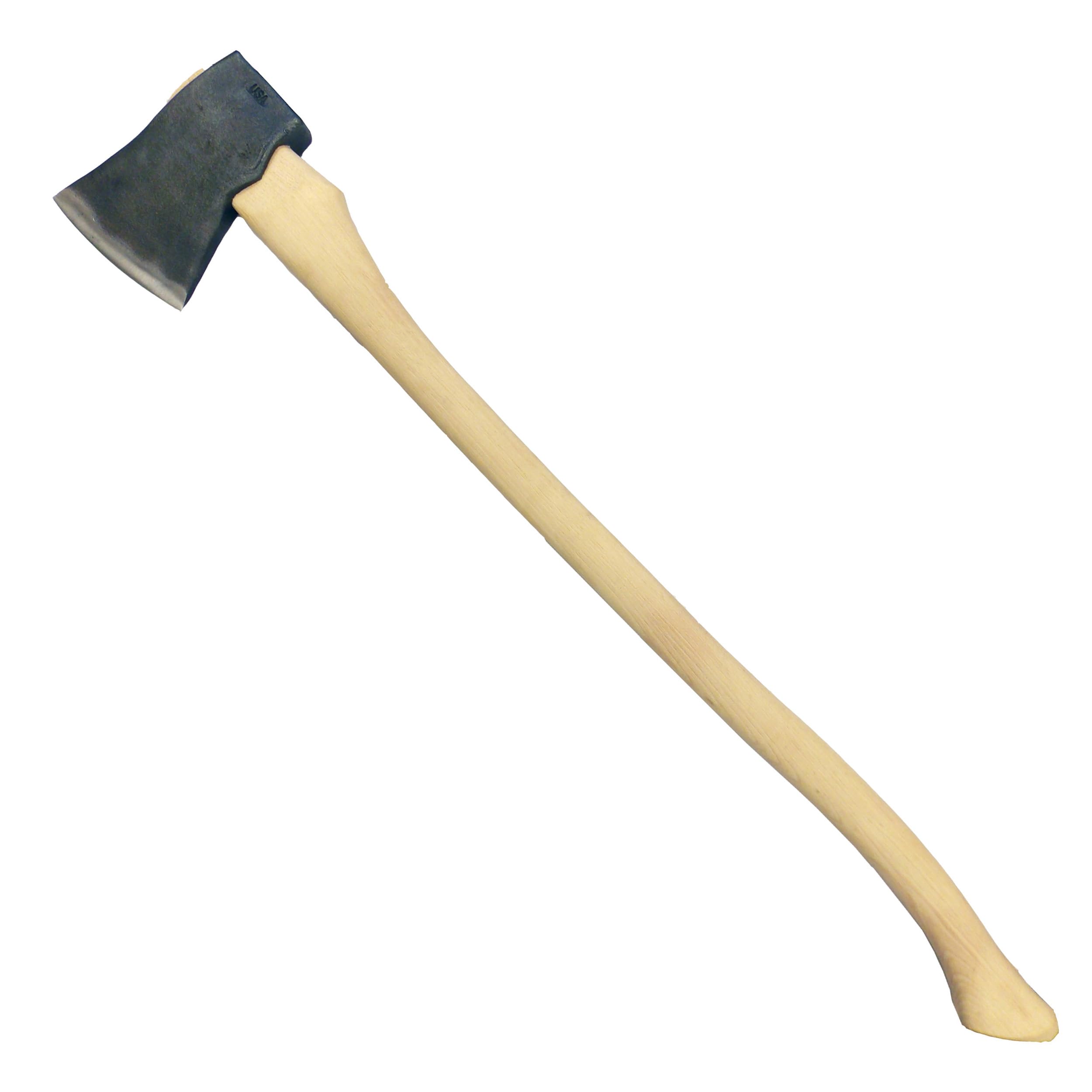
The Council Tool Jersey pattern is the most affordable American-made felling axe that still delivers professional-grade steel and handle quality. The 3.5-pound head is drop-forged from premium tool steel and heat-treated to Council’s internal standard, which real users have confirmed holds an edge through seasoned ash after a simple file-sharpening to 23 degrees with a convex bit. The prominent Jersey lugs increase the eye-to-handle contact area, making this a particularly durable choice for high-impact work.
The 36-inch curved handle is kiln-dried below 10% moisture content to prevent shrinkage, and the traditional double-wedge system keeps the head firmly seated. Real buyers note that the handle’s grain orientation is often excellent for the price point, with some specimens showing near-perfect straight grain and minimal runout — something typically found only on axes costing twice as much.
One area where this axe demands attention is the factory edge. Users consistently report that it arrives usable but quickly dulls on dense wood until the edge is thinned and convexed with a file. Once that is done, the steel performs at a level comparable to axes in the mid-premium range. This is a project axe for the buyer who knows how to sharpen.
Why it’s great
- American-made tool steel with excellent edge potential after sharpening
- Jersey lugs provide superior handle-to-head security
- Handle grain orientation often punches above its price class
Good to know
- Factory edge dulls quickly and needs reprofiling
- Handle may require sanding and oiling for smooth finish
5. Council Tool Single Bit Axe Dayton 35DR36C
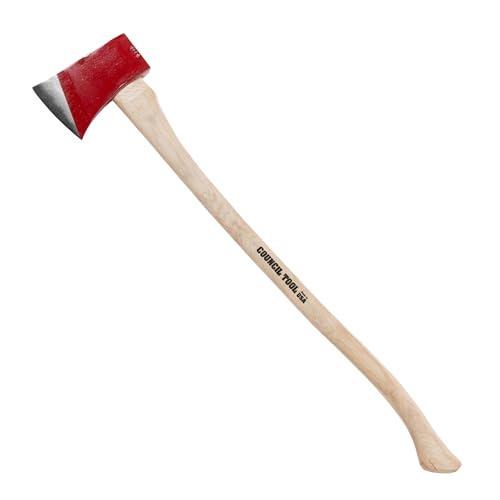
The Council Tool Dayton is the entry-level benchmark for American-made felling axes. At 3.5 pounds with a 4.75-inch cutting edge on a 36-inch handle, it mirrors the geometry of classic felling axes used by generations of loggers. The high-carbon steel head is hand-sharpened at the factory, and real user reports confirm the edge holds up through multiple trees with minimal degradation — in one documented case, the user felled five trees and reported “little edge degradation,” with performance nearly identical to a Gränsfors Bruks.
The red enamel-coated head offers basic rust protection, and the kiln-dried American hickory handle is wax-coated from the factory. The milled curvature on the handle reduces hand fatigue during extended use, a detail usually reserved for more expensive tools. The hang is solid, with several users noting excellent grain orientation and almost no runout on their specimens.
This axe is not recommended for splitting — the thin Dayton bit is optimized for cutting, not wedging fibers apart. But as a dedicated felling tool for softwoods and hardwoods up to 14-16 inches in diameter, it is a legitimate contender against axes costing three times as much.
Why it’s great
- Classic Dayton pattern delivers deep, efficient cuts
- High-carbon steel holds an edge comparable to premium axes
- Milled handle curvature reduces fatigue during extended use
Good to know
- Not designed for splitting — thin bit will stick
- Factory edge may need thinning for optimal performance
6. Fiskars 36″ Super Splitting Axe
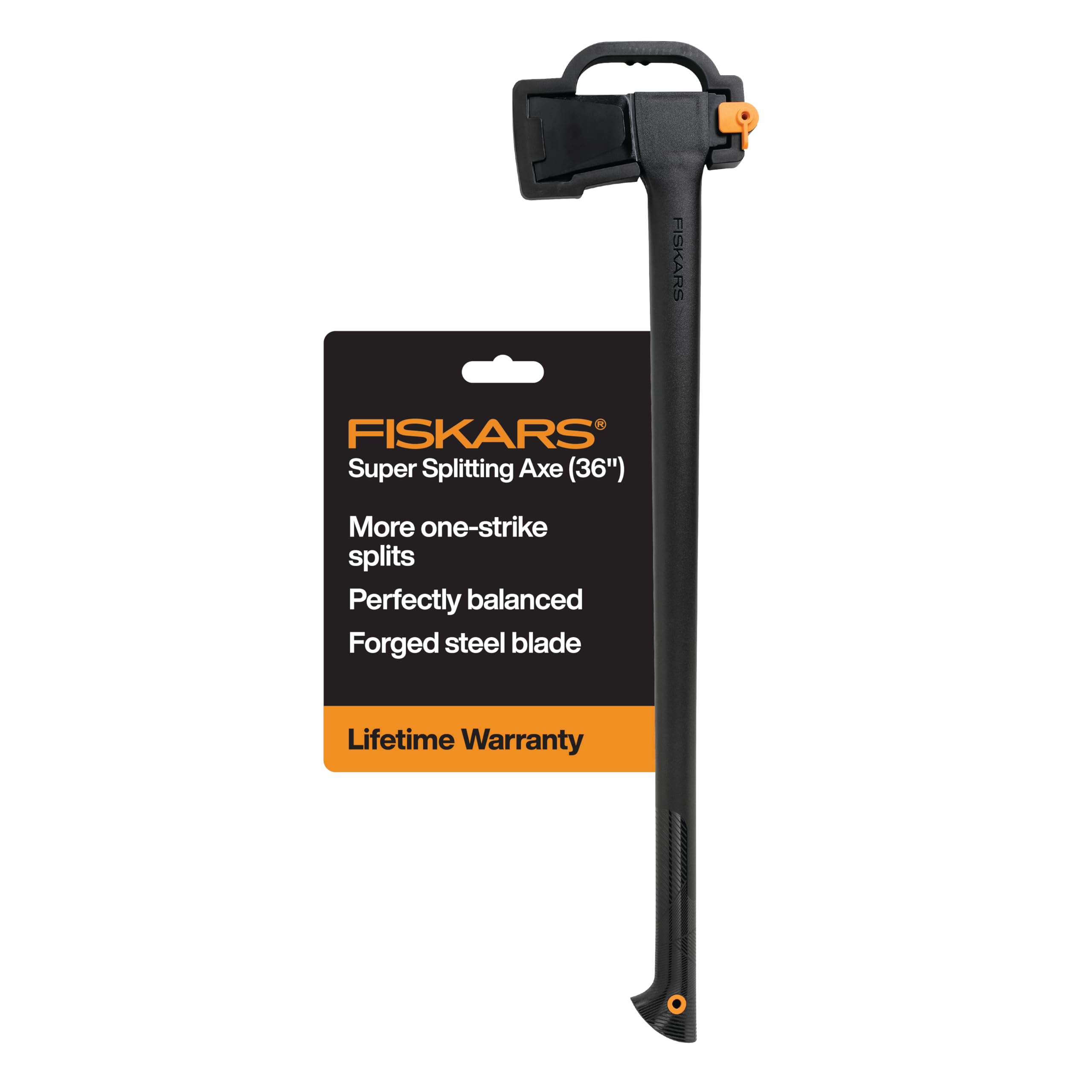
The Fiskars Super Splitting Axe is a purpose-built splitter, not a feller, but it earns a place on this list because many buyers use it for both tasks on smaller timber. The 36-inch FiberComp handle is virtually unbreakable and absorbs shock far better than hickory, reducing fatigue during extended splitting sessions. The convex forged steel blade is hardened to retain its edge longer than budget-grade axe steel, and the bevel geometry is designed to bite deep and then release cleanly from the wood.
Real users consistently praise the balance and weight distribution: the head mass is concentrated to generate amplified force with less effort. At 6 pounds total, it is heavier than a dedicated felling axe, but the shock-absorbing handle makes it feel lighter in the hands. The blade comes ultra-sharp out of the box, and several reports confirm it handles felling of small trees (up to 8-10 inches) without issue.
The trade-off is that the FiberComp handle cannot be rehung — if it breaks, the entire tool is replaced. And the wedge-shaped head geometry that makes it great for splitting also makes it less efficient at severing wood fibers compared to a thin Dayton or Jersey bit. Use this for firewood processing, not for felling your primary timber.
Why it’s great
- Shock-absorbing FiberComp handle reduces fatigue dramatically
- Convex blade bites deep and releases cleanly
- Edge retention is excellent for the price tier
Good to know
- Non-replaceable handle — breakage means full replacement
- Wedge geometry is optimized for splitting, not felling
7. Husqvarna 596271201 20 in. Wooden Curved Carpenter Axe
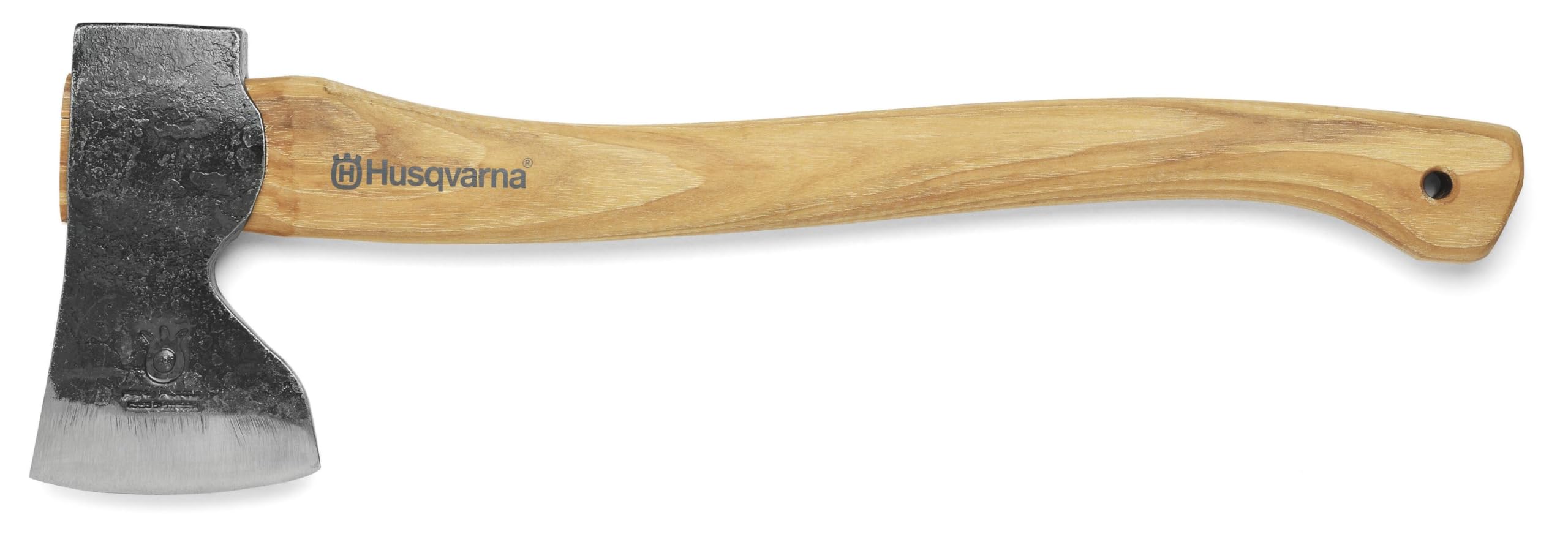
The Husqvarna Carpenter Axe is a Swedish-made tool designed for fine control — shaping beams, notching logs, and limbing with precision. The head is forged by Hultafors/Hults Bruk (a historic Swedish forge) and mated to an American hickory handle. At 20 inches with a 2-pound head, it is compact and fast, making it ideal for detail work where a full-length felling axe would be awkward.
Real users who have owned this axe for six years report it excels at pounding wedges, limbing, carving, and splitting kindling — but it is not meant for chopping large logs or felling significant timber. The thin bit and short handle simply do not generate enough mass or leverage. The steel holds an edge well, and users in wet Pacific Northwest conditions report minimal rust with no maintenance beyond wiping dry.
The factory finish is rough: the handle often arrives with natural grit that must be sanded and oiled, and the edge typically has a burr that needs filing. For the buyer willing to invest an hour of tuning, this axe offers Swedish steel quality at a mid-range price point. It includes a leather edge cover that is nicer than most budget-axis provide.
Why it’s great
- Swedish steel from Hultafors/Hults Bruk holds an excellent edge
- Compact 20-inch handle offers precise control for carpentry
- Includes a decent leather edge cover
Good to know
- Not suitable for felling — too short and light
- Handle and edge require significant tuning out of the box
FAQ
What is the difference between the Dayton and Jersey head patterns for felling?
Why is handle grain orientation important for a felling axe?
How often should I sharpen my felling axe during a work session?
Final Thoughts: The Verdict
For most users, the american felling axe winner is the Gränsfors Bruks American Felling Axe because its 4.8-pound hand-forged head and 35.5-inch curved handle deliver the most efficient cutting power per swing in this class. If you want premium German craftsmanship at a more accessible price point, grab the Helko Werk Expedition. And for a budget-friendly American-made feller that responds well to sharpening, nothing beats the Council Tool Dayton 35DR36C.