
Domestic manufacturing of hand tools is increasingly rare, and pruning shears are no exception. Most garden cutters sold today are stamped overseas, built down to a price, and designed to be replaced after a season or two. The category of American made pruning shears is a direct rejection of that disposable model, prioritizing heat-treated alloy steel blades, forged aluminum handles, and fully replaceable parts.
I’m Min — the co-founder and writer behind Gadgets Feed. My research for this guide involved cross-referencing blade metallurgy data, handle ergonomics, and customer longevity reports across dozens of models to isolate shears built as lifetime tools.
After filtering for domestic blade steel, heat-treat quality, and user-reported lifespan, I settled on the definitive list of the best american made pruning shears that prove you don’t have to settle for stamped imports.
How To Choose The Best American Made Pruning Shears
Picking a truly American made pruning shear means looking past the packaging and into the steel chemistry, the handle forging process, and the manufacturer’s commitment to replaceable parts. The global market is flooded with imports that share the same silhouette but differ dramatically in internal metallurgy. Here is exactly what separates a domestic-built heirloom tool from a cheap lookalike.
Blade Material and Heat Treatment
The blade is the heart of any pruning shear. Premium American and European manufacturers use high-carbon steel (often 1070, 1095, or SK5 equivalents) that is heat-treated to a hardness of 58-62 HRC. This hardness allows the edge to hold its geometry through hundreds of cuts without micro-chipping. Cheaper imports use softer stainless or unlabeled steel that dulls after a dozen branches. Look for terms like “forged” or “hardened carbon steel” in the spec sheet, not just “stainless” or “steel.”
Bypass vs. Anvil Blade Geometry
Bypass blades use a curved, scissor-like action where the sharp blade glides past a thicker counter-blade. This produces the cleanest cut for live wood, reducing bark tearing and promoting faster plant healing. Anvil blades feature a single straight blade that slices down onto a flat metal anvil, applying more crushing force ideal for dead or dry wood. For general garden work and live stems, bypass is almost always the correct choice. For heavy deadwood removal, an anvil has the mechanical advantage.
Handle Construction and Ergonomics
Forged aluminum handles deliver the best strength-to-weight ratio in a pruning shear. Cast zinc or pot-metal handles save pennies in production but snap under lateral stress when cutting dense branches. Look for handles cut from billet or hot-forged aluminum, paired with a corrosion-resistant coating. The grip material matters too — rubberized elastomer or phalate coatings offer better wet-weather traction than bare metal, and they reduce vibration transfer to the wrist during repetitive cuts.
Replaceable Parts and Repairability
A truly domestic-grade pruning shear is designed to be serviced, not thrown away. The manufacturer should offer replacement blades, springs, pivot bolts, and even handle parts individually. If the shear uses a riveted or welded pivot that cannot be disassembled, it is a consumable tool, not a lifetime one. Brands that openly sell spare parts and publish maintenance guides demonstrate the durability engineering that justifies the higher upfront investment.
Quick Comparison
On smaller screens, swipe sideways to see the full table.
| Model | Category | Best For | Key Spec | Amazon |
|---|---|---|---|---|
| Felco F5 | Mid-Range | Everyday garden pruning | Alloy steel blade, forged steel handles | Amazon |
| Bahco BAHPX-M2 | Mid-Range | Precision slicing cuts | High-carbon steel #2 blade | Amazon |
| Bahco BAHPX-L2 | Mid-Range | Large hands, long sessions | Bypass blade, elastomer-coated handle | Amazon |
| Ironwood Tool Ratchet | Mid-Range | Arthritis / weak hands | Ratchet mechanism, 1-inch capacity | Amazon |
| LÖWE Professional Anvil | Premium | Dead wood / dry branches | Carbon steel blade, anvil design | Amazon |
| WOLF Garten RR5000 | Premium | Professional bypass pruning | Replaceable non-stick blade, 10yr guarantee | Amazon |
| ARS HS-KR1000 | Premium | Hedge shaping / fine trimming | Alloy steel blade, magnesium-aluminum handles | Amazon |
In‑Depth Reviews
1. Felco F5 Pruning Shears
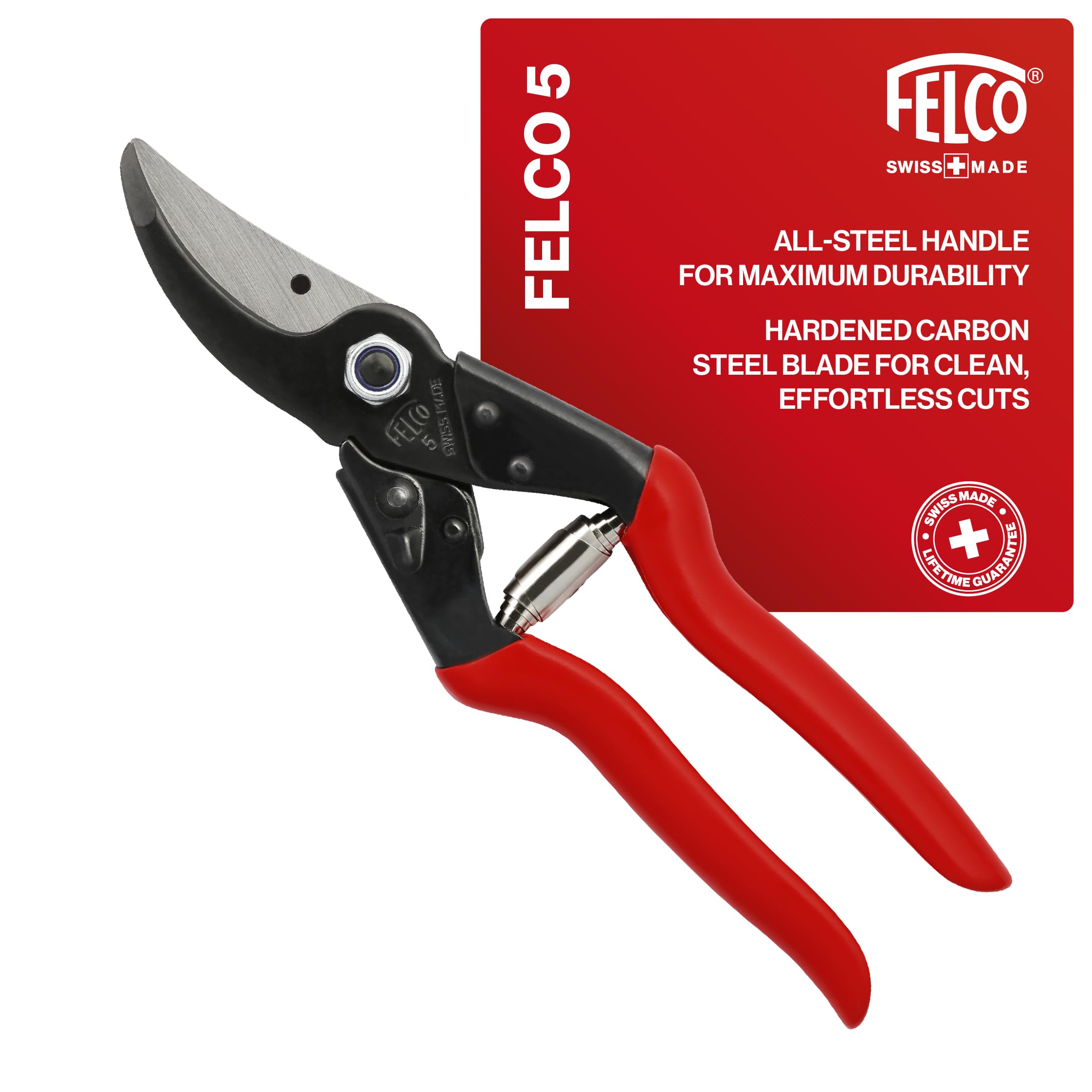
The Felco F5 is the reference standard for mid-range pruning shears, built around forged steel handles that distribute cutting force evenly across the palm. The 8.9-inch length gives substantial leverage, while the 2.25-inch alloy steel blade uses a bypass design that slices rather than crushes live stems up to 1 inch thick. The rubberized phalate grip is a specific compound that does not degrade from UV exposure or sap contact like cheaper PVC coatings do.
What makes the F5 a true long-term purchase is the full-service architecture. Every component — blade, spring, pivot bolt, anvil plate — is sold separately by Felco, and the pivot can be disassembled with a standard Allen key for cleaning and lubrication. Users consistently report five-plus years of heavy pruning with only blade sharpenings and occasional spring swaps.
The serrated edge option on this model is a trade-off. It helps the blade grip slippery bark, but the serrations require a diamond paddle to resharpen properly compared to a straight edge that can be honed with a standard stone. If you prune mostly soft green growth, the non-serrated Felco 2 is a slightly better match.
Why it’s great
- Fully repairable with available spare parts from the manufacturer.
- Forged steel handles provide exceptional leverage and lateral rigidity.
- Ergonomic rubber grip reduces hand fatigue during extended trimming sessions.
Good to know
- Serrated blade requires a diamond sharpener rather than a standard stone.
- Heavier than aluminum-handled competitors at roughly 8 ounces.
2. Bahco BAHPX-M2 Pruner PX Medium
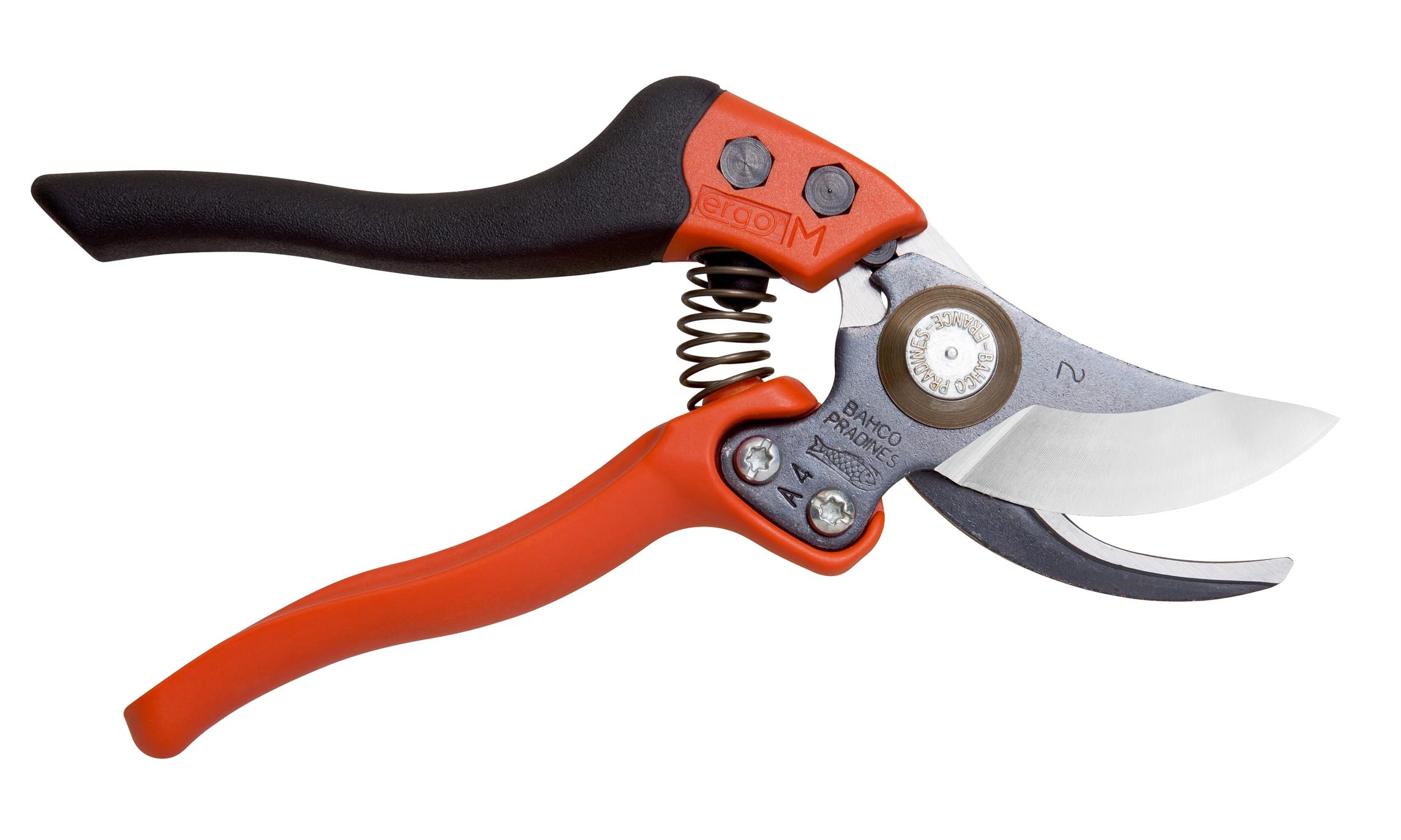
The Bahco BAHPX-M2 is engineered around a slicing cut blade geometry that channels cutting energy into a clean, scissor-like action — the #2 blade uses a specific grind angle that requires less hand force than standard bypass designs. The 7.5-inch length makes it compact for detailed work among dense foliage, while the 20-millimeter cutting capacity handles most garden branches and rose canes in a single squeeze.
The ERGO handle shape is the standout feature. It promotes a neutral wrist angle that aligns the forearm with the blade plane, which directly reduces tendon strain during high-volume pruning. Users with medium-to-large hands report that the M2 size fits securely without pinch points, and the ambidextrous design works equally well for left-handed cutters.
The trade-off is maintenance frequency. The precision-ground edge is thinner than a standard anvil blade, so it dulls faster when cutting dirty or gritty branches. The recommended cleaning routine — wash, dry, and lubricate the pivot with silicone after each session — is non-negotiable for preserving the slicing action. Neglect leads to blade sticking and rough cuts.
Why it’s great
- Slicing cut blade requires notably less hand strength than conventional bypass shears.
- Ergonomic handle design reduces wrist fatigue during extended pruning work.
- Replaceable parts extend the usable lifespan significantly.
Good to know
- Slicing edge dulls faster than standard blades if used on dirty branches.
- Requires consistent cleaning and pivot lubrication for reliable operation.
3. Bahco BAHPX-L2 ERGO Large Bypass Secateurs
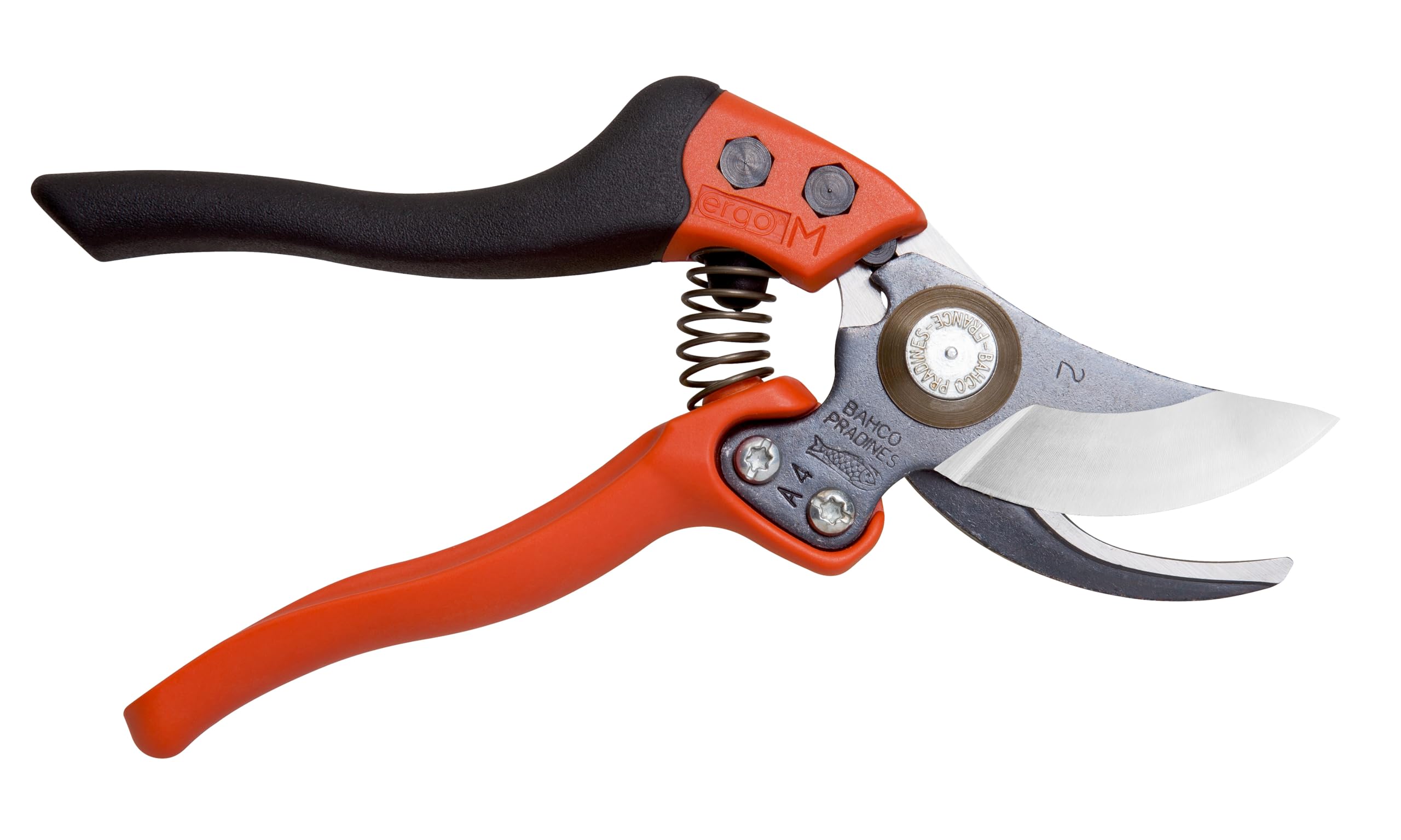
The Bahco BAHPX-L2 is the large-handle variant of the PX series, designed specifically to accommodate bigger palms and longer fingers without compromising grip security. The handle is coated with a soft elastomer layer that provides a higher friction surface than bare plastic or metal, which is critical when pruning during damp morning conditions when sap and moisture reduce grip traction.
The bypass cutting head is angled both vertically and laterally relative to the handle — this double-angle design keeps the wrist straight while the blade meets the branch at an optimal cutting plane. The practical result is that cuts on horizontal branches require no wrist rotation, which accumulates as significant fatigue savings over a 200-cut session. The 0.75-inch cutting capacity handles standard shrub work and rose bushes easily.
Construction is lightweight at 0.64 pounds, achieved through a composite handle core rather than full metal. This reduces hand fatigue but means the handles are less impact-resistant than forged aluminum if dropped on concrete. The blade steel is labeled as high-carbon, but the exact Rockwell hardness is not published. Users report edge retention comparable to the Felco F5 with similar cleaning discipline.
Why it’s great
- Angled head eliminates wrist rotation for straight-line cutting on horizontal branches.
- Elastomer-coated handle prevents slipping in wet or sap-covered conditions.
- Lightweight composite construction reduces fatigue for all-day pruning.
Good to know
- Composite handles are less impact-resistant than forged metal if dropped.
- Exact blade steel hardness is not published for comparison.
4. Ironwood Tool Company Ratchet Pruning Shears H107

The Ironwood Tool Ratchet Pruning Shears solve the specific problem of insufficient hand strength. The ratchet mechanism works by engaging in stages: each squeeze clicks through a gear that progressively closes the blade, so a thick 5/8‑inch branch can be cut with two or three light squeezes instead of one powerful crush. This makes it the only shears on this list designed explicitly for arthritic hands, carpal tunnel conditions, or general grip weakness.
The construction is lightweight at just 0.3 pounds thanks to aluminum handles, and the non-stick coating on the high-carbon steel blade reduces friction so the ratchet doesn’t have to fight sap adhesion. The cutting capacity reaches a full 1 inch, which is exceptional for this weight class, though it is achieved through the ratchet’s compound leverage rather than raw blade force.
Users report excellent durability beyond eight years of regular use, with the ratchet mechanism maintaining its click engagement without skipping. The 5-year warranty covers mechanical defects, and the manufacturer offers a lifetime half-price replacement policy. The bypass blade is replaceable, though the ratchet gear assembly is riveted and not user-serviceable, so it is the single non-replaceable wear point.
Why it’s great
- Ratchet mechanism cuts thick branches with minimal hand strength required.
- Ultra-lightweight aluminum frame at just 0.3 pounds.
- Excellent warranty support including half-price lifetime replacement.
Good to know
- Ratchet gear assembly is not user-serviceable if it eventually wears out.
- Cutting action is slower than standard shears due to multi-squeeze mechanism.
5. Original LÖWE Professional Anvil Pruner 1.104

The Original LÖWE Professional Anvil Pruner is built for dead, dry, and woody material where a bypass blade would chip or bind. The anvil design uses a single carbon steel blade that slices down onto a flat brass or steel anvil plate, concentrating maximum force into a 22-millimeter cutting width. This makes it the correct tool for cutting hard old wood, dead rose canes, and thick twigs that would dull a bypass edge quickly.
The blade is coated with a sliding lacquer that reduces friction during the cut and provides corrosion resistance when stored. The plastic handle is ergonomically shaped for medium-to-large hands, and the one-hand safety lock requires a deliberate thumb push to engage — it won’t accidentally unlock in a tool bag. All parts, including the blade and anvil plate, are replaceable, and the tool carries a German manufacturing stamp.
At 290 grams, it is heavier than the Ironwood ratchet shears, but that mass contributes to cutting momentum — users report that the weight of the tool itself helps the blade drive through tough material without needing extra hand force. The trade-off is that the anvil design crushes rather than slices through live wood, so it is not ideal for green, growing stems where a bypass cut promotes faster healing.
Why it’s great
- Anvil design handles dead and dry wood without blade damage.
- Sliding lacquer coating reduces friction and resists rust.
- Heavy build contributes cutting momentum for reduced hand effort.
Good to know
- Anvil cut is crushing, not slicing — slower plant healing on live stems.
- Heavier than bypass alternatives at 290 grams.
6. WOLF Garten RR5000 Professional Bypass Pruner

The WOLF Garten RR5000 positions itself as a professional-grade bypass pruner with a 30-degree blade angle that protects the joint during cutting. The engineering detail here is that the cutting head is offset to one side, so the branch passes through the blades in a straight line rather than being torqued sideways — this reduces blade binding and produces consistently clean cuts on branches up to 3/4 inch thick.
The non-stick coating on the replaceable blade is a genuine advantage for resinous plants like pines and firs, where sap would normally gum up an uncoated edge within a few cuts. The aluminum body keeps weight low, and the quick locking device is ambidextrous, which is rare among German-designed tools. The included wrist strap is a practical addition for ladder work where dropping the pruner means climbing back down.
The 10-year guarantee is longer than any other tool in this comparison, which reflects WOLF Garten’s confidence in the blade steel and pivot assembly. However, some users report that the spring tension on this model is initially too weak, requiring manual blade opening after each cut. The pivot can be adjusted to increase tension, but it is a fiddly process that involves disassembling the central bolt and applying thread-locking compound.
Why it’s great
- 30-degree cutting angle reduces blade binding and joint stress.
- Non-stick coated blade resists sap buildup from resinous plants.
- 10-year manufacturer guarantee exceeds industry standard.
Good to know
- Spring tension may need manual adjustment for reliable self-opening.
- Blade tension adjustment requires pivot disassembly and thread-locking compound.
7. ARS HS-KR1000 Professional Hedge Shears

The ARS HS-KR1000 is a hedge shear rather than a hand pruner, but it belongs in this guide because it represents the pinnacle of lightweight cutting precision for shaping and trimming. The blades are forged from alloy steel with a proprietary heat treatment that achieves an edge geometry thin enough for precision placement on individual leaves, yet durable enough for hedge-wide passes through soft growth.
The handle material is a magnesium-aluminum alloy that brings the total weight down dramatically — users describe the balance as feeling half the weight of conventional hedge shears. The pivot bolt is adjustable for blade tension, and the blades themselves are replaceable when they eventually wear out. The ergonomic handle shape reduces vibration transmission during sustained trimming sessions.
This is a tool designed for moderate trimming and fine shaping rather than heavy-duty branch cutting. The manufacturer recommends it for stems under 1/8 inch, and heavier use will accelerate blade dulling. The brushed steel finish looks clean but requires attention — cleaning with alcohol and oiling after each use is necessary to prevent sap from staining the blade surface. The included sheath is a welcome addition for storage protection.
Why it’s great
- Magnesium-aluminum alloy handles create exceptionally light feel and balance.
- Precision-ground alloy steel blades excel at fine hedge shaping.
- Replaceable blades and adjustable pivot for long-term serviceability.
Good to know
- Not designed for heavy branch cutting — limited to stems under 1/8 inch.
- Requires thorough cleaning and oiling after each use to prevent sap staining.
FAQ
What makes a pruning shear actually American made versus just assembled in the USA?
How often should I sharpen my pruning shear blade to maintain performance?
Can I use anvil pruning shears on live green branches without harming the plant?
What is the correct way to lubricate a pruning shear pivot without gumming up the mechanism?
Final Thoughts: The Verdict
For most users, the best american made pruning shears winner is the Felco F5 because it combines forged steel handles, a fully repairable architecture, and an alloy steel blade that holds its edge through hundreds of cuts without breaking the budget. If you need a ratchet mechanism for arthritic hands, grab the Ironwood Tool Ratchet Shears. And for professional hedge shaping and fine trimming, nothing beats the lightweight balance and precision of the ARS HS-KR1000.