
Our readers keep the lights on and my morning glass full of iced black tea. As an Amazon Associate, I earn from qualifying purchases.
Specs are compiled from manufacturer listings and verified buyer reviews and can change over time — please confirm the key details on the product page before buying.
If you are tired of parts that snap, warp, or give out under heat, you are ready to move past standard PETG. PCTG (a tougher, glycol-modified cousin of PETG) keeps the easy printing you like but adds real impact strength, chemical resistance, and the ability to hold its shape at higher temperatures. This guide sorts through the top American PCTG filament options so you can pick the spool that matches how you actually print, not just what the box promises.
I’m Min — the founder and writer behind Gadgets Feed. This guide is built by comparing the manufacturers’ published specifications and the patterns across verified customer reviews, so you get each pick’s real strengths and trade-offs instead of marketing spin.
You will see exactly which American PCTG filament handles tough parts, which dials in fastest, and which fights moisture best. The best American PCTG filament balances toughness with reliable printing.
Our Picks at a Glance
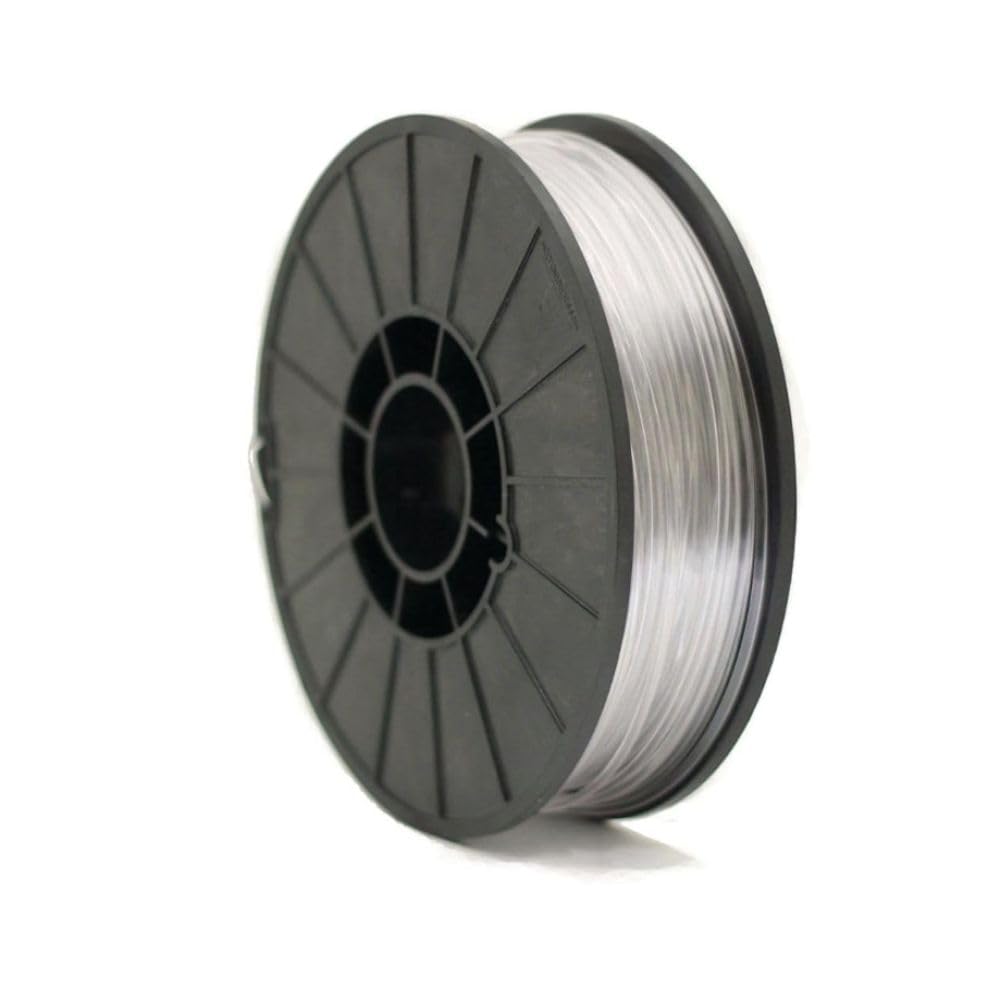
How To Choose The Best American PCTG Filament
Choosing the right spool means matching the material’s behavior to the parts you make. Not every PCTG prints the same, so you need to know what to check before you commit.
Match the Toughness to the Job
PCTG is prized for being far less brittle than standard PETG, which makes it great for functional parts like gears, mounts, and snap-fit pieces. If your parts take a beating, look for a material that emphasizes impact resistance and layer adhesion. If you are printing display pieces or prototypes, almost any quality PCTG will deliver that glossy, professional finish you are after.
Know Your Printer’s Hotend
PCTG needs higher heat than PLA, and some formulations demand an all-metal hotend to hit the required temperatures. Check your printer’s maximum hotend temperature. If a spool needs 260-270°C and your printer tops out at 240°C, that filament simply will not melt properly, so match the spec to your machine before you buy.
Consider the Print Environment
Some PCTG blends print fine on an open printer, while others are far more forgiving with an enclosure. Warping and first-layer adhesion are the two biggest challenges. If your printer sits in a drafty room, look for a filament with low warp and minimal shrink, or be prepared to tweak your bed temperature.
Quick Comparison
| Model | Best For | Hotend Temp | Bed Temp | Dimensional Tolerance | Amazon |
|---|---|---|---|---|---|
| 3D-Fuel Tough Pro PCTG★ Best Overall | High-impact, USA-made reliability | 250-270°C | 70-85°C | +/- 0.02mm | Amazon |
| 3D BEST-Q PCTG | Hardness and 100°C heat resistance | 260-270°C | 90-100°C | +/- 0.03mm | Amazon |
| SpoolHaus PCTG MAX | Water-tight parts and optical clarity | — | — | — | Amazon |
In‑Depth Reviews
1. 3D-Fuel Tough Pro PCTG Filament
Our pick — over 4★ from 350+ verified ratings; the strongest balance of quality and price.
The USA-made spool that survives impacts without the warping headaches.
When a part needs to handle real abuse, this is the filament that owners come back to. 3D-Fuel’s Pro PCTG is made in the USA and claims a toughness rating up to 20x stronger than PETG. — so gears, heavy-duty holders, and printed fasteners hold up where standard materials give out. Each 35.27-ounce spool arrives vacuum-sealed with a desiccant pack, so you start with dry, reliable material.
It is not a set-it-and-forget spool. Printing needs an all-metal hotend at 250-270°C and a heated bed at 70-85°C, which is beyond what some beginner machines can deliver. Owners who tune a PETG profile find it prints smoothly and cleanly, with minimal stringing and accurate dimensions at a diameter tolerance of +/- 0.02mm. As buyers report, “Strong, prints like mold; bed 80C, 245/230C temps” is the winning formula.
The trade-off is patience with cooling. Reviews consistently note it needs slow printing and low cooling, and one practical tip is to drop the bed to 50°C after the print finishes to stop warping. The glossy finish looks professional, and the material resists both moisture and chemicals — but you have to respect its preferred settings to see that quality.
What wins people over
- Impact-resistant and elastic — great for gears and snap-fit parts
- Tight +/- 0.02mm diameter tolerance for smooth extrusion
- Low odor and clean first layers on textured plates
Where you make concessions
- Demands an all-metal hotend and high 250-270°C temps
- Prints best when slow, with low cooling
- Bed should drop to 50°C after printing to avoid warping
Choose it for: long-lasting mechanical parts and anyone willing to tune a profile for a tougher, USA-made spool.
Think twice if: your printer tops out below 250°C or you want a filament that prints fast with zero calibration.
2. 3D BEST-Q PCTG 1.75MM Filament

A clear filament built for parts that must hold up to real heat.
If your prints live near a hot engine bay, a sunny window, or a warm appliance, the 3D BEST-Q spool is made for those spots. This PCTG offers higher hardness than PETG and withstands 100°C., which is a meaningful jump for functional parts. The clear color also gives a frosted-glass look that owners genuinely like, with one describing a monitor riser mount that has held up for months without issue.
This is the pick that rewards careful setup. The recommended settings are a hotend at 260-270°C, a bed at 90-100°C, and a slow 40mm/s to 60mm/s print speed — high numbers that suit an enclosed printer. The 35.2-ounce spool holds a 1kg net weight with a diameter tolerance of +/- 0.03mm, so dimensional accuracy is solid once your profile is right. As owners put it: “so long as your print height isn’t too high or you have an enclosure, it results in amazing prints that are more durable than almost any pla out there.”
The honest catch is that dialing it in takes work. Reviews describe the settings as “an absolute pain to get dialed in,” and one buyer had the spool fail to stick to an unglued build plate at all. It is flexible, tough, and absorbs moisture if left out, so dry storage matters. This is a capable filament, but it asks for your patience.
Best for: heat-exposed parts and prints where that glass-like clarity is the whole point.
Fair warning: plan on an enclosure and some trial-and-error before the first layer behaves.
3. SpoolHaus PCTG MAX Filament
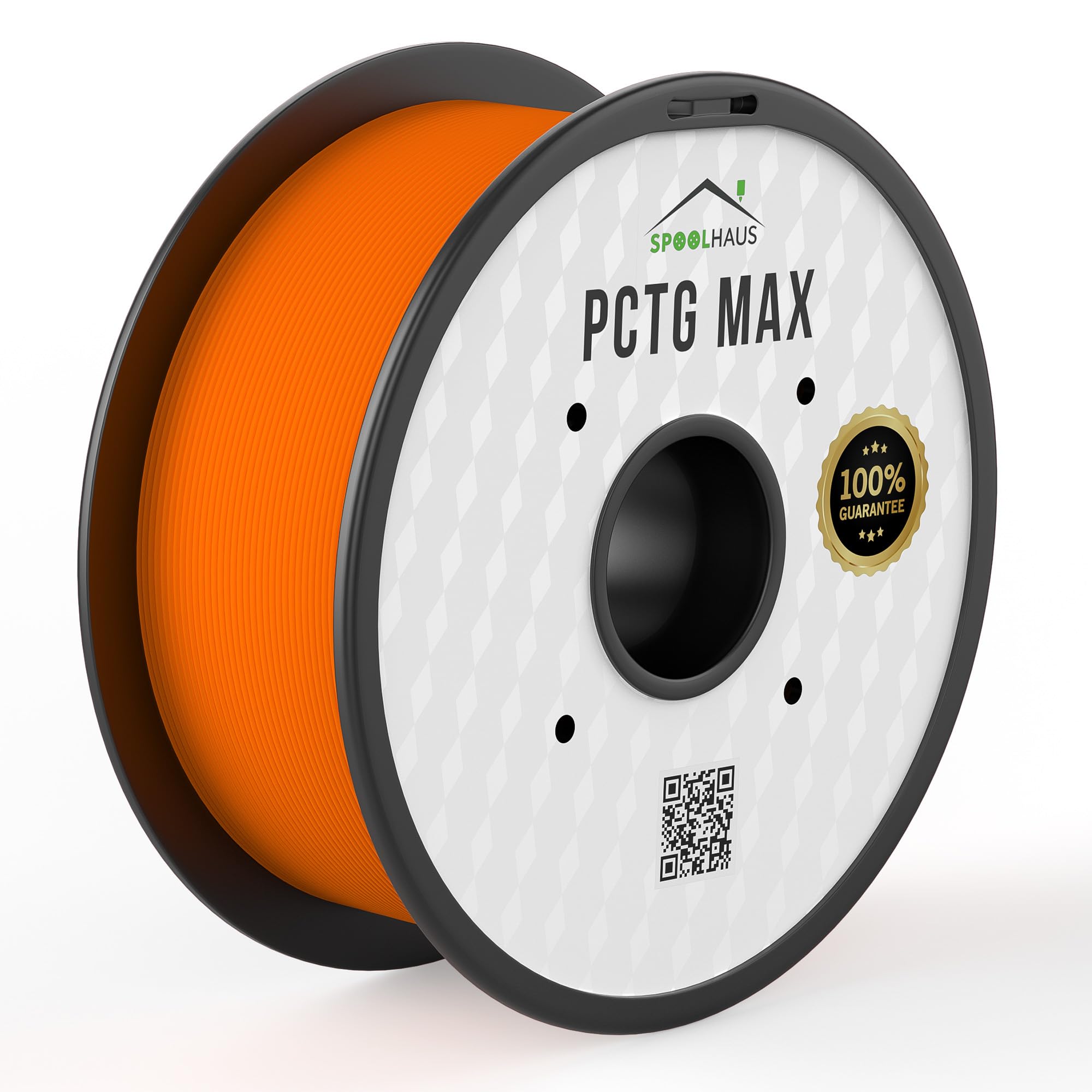
The engineering-grade spool that prints water-tight and keeps its clarity.
SpoolHaus positions PCTG MAX as a bridge between the easy printing of PETG and the tough performance of polycarbonate and nylon — and the specs back that up. Its layer adhesion is strong enough for water-tight 3D prints, which is a rare promise in this category, and Its heat distortion temperature is 100°C / 212°F.. The material also resists oils, solvents, detergents, alcohols, moderate acids, and strong bases, making it a fit for demanding environments.
The 1kg spool stands out for its optical clarity and high light transmission, so it suits lenses, diffusers, and window-like panels. Owners who made the switch from PETG report it is “much tougher than normal PETG and not brittle like some brands are,” with clean, strong prints that turned PCTG into their new go-to for functional pieces. It also absorbs less water than PETG, so it performs better when wet, though SpoolHaus still recommends drying and proper storage.
The drawback is consistency. SpoolHaus itself admits the filament is “far less forgiving” than some brands, and one buyer had a run of clogged nozzles and failed first layers despite trying different settings. It can print on an open machine without an enclosure, but you may need to dial your profile in carefully before the parts come out clean.
Reach for it if: you need water-tight, chemical-resistant parts with crystal clarity and don’t mind tuning your slicer.
Look elsewhere if: you want a spool that prints perfectly on the first try with no fuss.
Understanding the Specs
Hotend Temperature
This is the heat your printer’s nozzle must reach to melt the filament. PCTG typically needs 250-270°C, which is far hotter than PLA and often requires an all-metal hotend. If your machine tops out lower, the filament will not melt evenly, so always match this spec to your printer’s limit before buying.
Dimensional Tolerance
This tells you how consistent the filament’s 1.75mm diameter is along the whole spool. A tighter tolerance, like +/- 0.02mm, means smoother extrusion and fewer clogs or under-extrusion spots. A looser tolerance, like +/- 0.03mm, can still print well but may need more calibration to get clean results.
FAQ
What makes PCTG different from PETG?
Do I need an enclosure to print PCTG?
What bed temperature should I use for PCTG?
Does PCTG absorb moisture like PETG does?
Can PCTG handle hot environments?
Is PCTG food-safe?
Will PCTG work on a Bambu Lab printer with an AMS?
Is PCTG harder to print than PLA?
Can PCTG make water-tight prints?
Final Thoughts: The Verdict
If you want one dependable pick, the american pctg filament winner is the 3D-Fuel Tough Pro because it pairs the highest toughness rating with tight dimensional tolerance and a USA-made pedigree. If you need parts that resist heat up to 100°C, grab the 3D BEST-Q. And for water-tight, chemically resistant prints with clear optics, the SpoolHaus PCTG MAX is the one to reach for.
How We Picked
We do not accept paid placement. Every pick is matched to a real buyer and a real use-case; we do not hands-on test units.
Sources & Methodology
Specifications: manufacturer listings and product documentation. Review insights: verified customer reviews, as of August 2026. Pricing: not shown on this page (it changes often); check the current price via the retailer link.
As an Amazon Associate, Gadgets Feed earns from qualifying purchases. This does not affect which products we feature.