
You want a living bug trap that looks stunning on your windowsill or porch, but the real question is which one actually thrives without a botany degree. American pitcher plants (Sarracenia) are surprisingly tough native perennials that lure, trap, and digest insects through their signature tubular leaves — but not all starter plants are created equal. Some arrive as tiny bare-root rhizomes (a short, thick underground stem) that need months to show off, while others land on your doorstep already potted with full-sized pitchers ready to catch flies from day one.
I’m Min — the co-founder and writer behind Gadgets Feed. This guide is built by comparing the manufacturers’ published specifications and the patterns across verified customer reviews, so you get each pick’s real strengths and trade-offs instead of marketing spin.
Whether you are a first-time grower or a seasoned collector, finding the right starter plant makes all the difference. Here is the honest breakdown of the best american pitcher plant options available right now, from budget bare-roots to mature potted specimens.
How To Choose The Best American Pitcher Plant
Picking your first pitcher plant is simpler than you think once you know what matters. The three biggest decisions are how the plant ships (bare-root vs potted), how much light you can give it, and what size plant fits your patience level.
Bare-root vs Potted — which starter is right for you
A bare-root rhizome arrives as a dormant underground stem wrapped in damp moss, which means you need to pot it yourself and wait for new growth. A potted plant lands ready to sit on your windowsill with active pitchers already catching bugs. Bare-roots cost less upfront but demand more patience — some buyers report receiving a 1.5-inch rhizome that takes weeks to show any leaves. Potted plants give you instant gratification but cost more to ship.
Light and water — the two things you absolutely cannot get wrong
Every Sarracenia needs full sun (at least 6 hours of direct sunlight daily) and constant moisture from distilled, rainwater, or reverse-osmosis water only — tap water contains dissolved salts and minerals that will slowly kill your plant. Sandy or peat-based soil that stays wet is ideal. If you cannot provide either full sun or proper water, this genus is not for you.
Size and maturity — what you see is not always what you get
Some listings promise a “flowering sized” specimen but ship a tiny division with minimal color and stunted pitchers. Check customer photos and reviews for real-world size reports. A mature plant with 3–4 healthy pitchers and visible roots is a safer bet than a bargain bare-root that could be an immature cutting. Reviews note that some sellers ship plants as small as 0.5 inches, which is essentially a seedling that may not survive.
Quick Comparison
On smaller screens, swipe sideways to see the full table.
| Model | Category | Best For | Key Spec | Amazon |
|---|---|---|---|---|
| Joel’s Carnivorous Plants Catesbaei | Potted | Instant healthy starter | 3.75-inch net pot | Amazon |
| Savage Gardeners Sarracenia 2.5″ Pot | Potted | Beginner-friendly flowering sized | 2.5-inch pot | Amazon |
| Carolina Purple Pitcher Plant | Living Plant | Classic purpurea cultivar | 8 oz living plant | Amazon |
| TruBlu Supply Scarlet Belle | Bare-root | Massive mature growth potential | 2+ year bare-root rhizome | Amazon |
| TruBlu Supply Purpurea Venosa | Bare-root | Hardy cold-tolerant variety | Bare-root rhizome | Amazon |
| Savage Gardeners Huge Sarracenia 3.5″ Pot | Potted | Immediate large specimen | 3.5-inch pot, ~18″ pitchers | Amazon |
In‑Depth Reviews
1. Carnivorous American Pitcher Plant (Sarracenia Catesbaei) 3.75 inch Pot

3.75-inch net pot with pre-installed sphagnum moss makes this the top pick for anyone who wants a healthy pitcher plant with zero guesswork. Unlike bare-root options that make you pot and hope, this Sarracenia Catesbaei ships in a 3.75-inch net pot with loose sphagnum moss (a spongy material that holds moisture without getting soggy) already inside — so you just unwrap it and set it on a sunny tray of distilled water.
Buyers consistently report the plant arriving in “pristine condition with easy to understand instructions.” Multiple owners mention the plant survived shipping delays, including days in darkness, and still grew new stalks after transplant — a sign of a well-established root system rather than a fragile cutting. The included care sheet, written by the seller, gives you specific watering and sunlight guidelines for this variety, which beats the generic “keep moist” note that comes with many plants.
If you are new to carnivorous plants, this is the one to start with — its reliable health and immediate payoff build confidence fast. The honest limit is this hybrid stays more compact than the massive 4-foot scarlet belle varieties. You will not get towering pitchers here, but you get a guaranteed healthy plant with immediate visual payoff. For a stress-free start with a carnivorous plant, this is the one to beat.
Why it’s great
- Arrives fully potted in a 3.75-inch net pot with proper sphagnum moss
- Detailed care sheet from an experienced carnivorous plant seller
- Multiple verified reports of healthy, intact plants even after shipping delays
Good to know
- Stay compact variety — does not reach the towering 4+ foot height of some hybrids
- Shipped bare-root inside the pot; requires immediate setup in a water tray
2. Huge Carnivorous Pitcher Plant Sarracenia – Mature Flowering Sized, Beginner-Friendly, Comes Potted in 3.5″ Pot
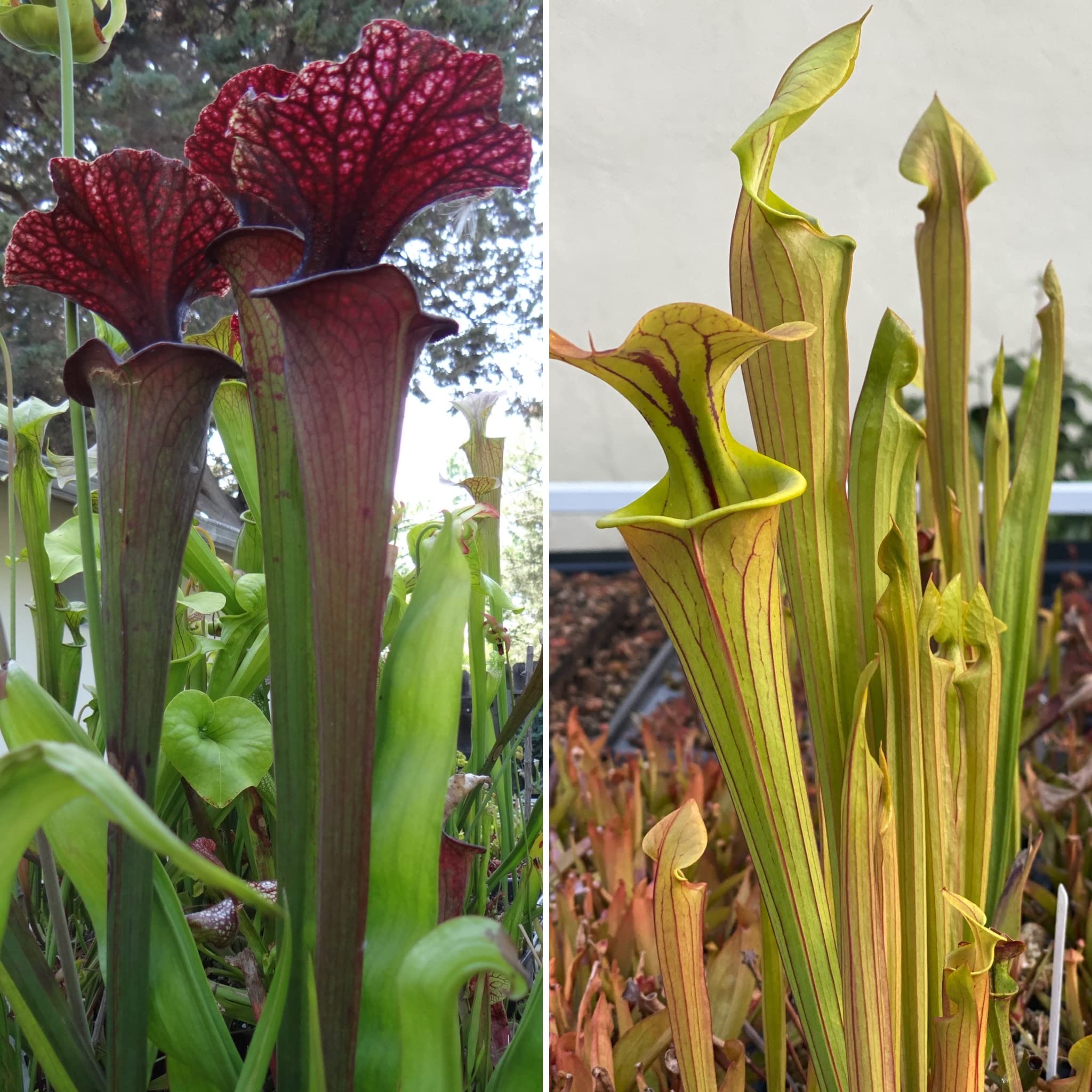
Immediate visual impact matters most to you, and this is the only pick that claims 18-inch pitchers right out of the box — 14.5 inches taller than the 2.5-inch potted beginner plant from Savage Gardeners. This mature flowering-sized Sarracenia ships potted in a 3.5-inch container, ready for your porch or sunroom the day it arrives. It delivers the tallest, most dramatic specimen you can buy without waiting a season.
Buyers praise the winter hardiness — one reviewer in East Tennessee (USDA Zone 7) reports it survived an outdoor winter and came back strong the next spring, which is unusual for a plant that ships with active pitchers already grown. The seller (Savage Gardeners) includes a detailed grower’s guide specific to this variety, and a review notes that when one customer received an unhealthy plant, owner Roy replaced it with a healthy one — showing real customer service.
If you are willing to accept some size inconsistency for the chance at those tall tubes, this is your pick. The catch is that a few reviewers received plants with only a single 15-inch tube or with cut-off stubs where other tubes were removed — the photo shows a dense cluster, but what arrives can look underwhelming by comparison. Choose this over the top pick if you prioritize immediate height and drama over guaranteed fullness.
Where it shines
- Pitchers reported at around 18 inches tall — the most immediate impact of any pick
- Shows surprising winter hardiness; survived outdoor winter in Zone 7
- Seller replaced unhealthy plants for dissatisfied buyers
Worth noting
- Inconsistent size — some buyers received only a single tube instead of a multi-pitcher cluster
- Photo may be aspirational; several reviewers received smaller plants than pictured
3. Purple Pitcher Plant (Sarracenia Purpurea), Living
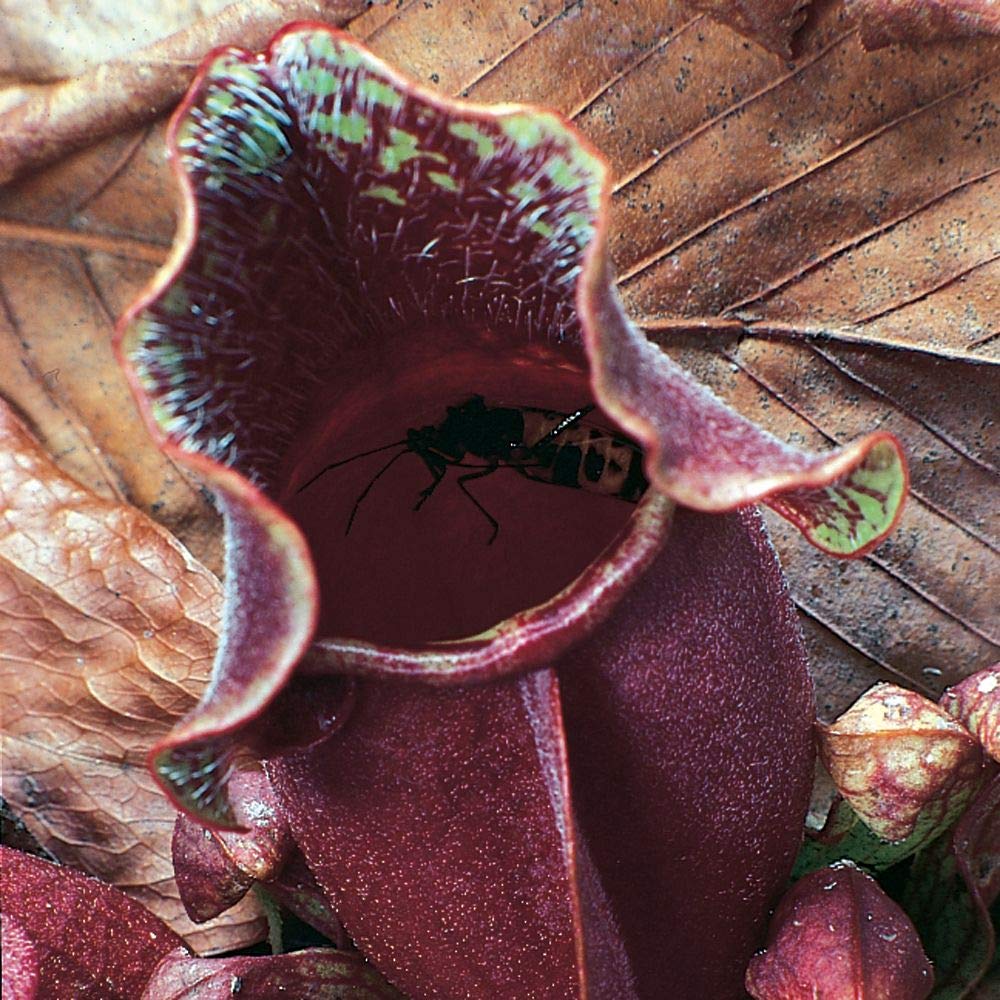
Your goal is the classic American pitcher plant species — the one with short, fat, purple-veined pitchers that sit low to the ground rather than shooting up like trumpets. This Sarracenia purpurea from Carolina Biological Supply is the exact species that grows wild in bogs from Georgia to Canada. It is not a hybrid or a fancy cultivar; it is the real deal used in science classrooms for decades.
The plant arrives at 8 ounces with bright red and green coloration — reviewers report seeing “bright red colors and good pitchers” right out of the box. A few caution that aphid hitchhikers can tag along, so quarantining it from your other plants for a few days is wise. The pitchers are hollow and work as passive traps: insects crawl in, get confused by downward-pointing hairs, and drown in the rainwater that collects at the bottom.
The standout spec here is the company behind it — Carolina Biological Supply Company has been around since 1927 and guarantees 100% satisfaction. If your plant arrives dead or dies quickly, you get a replacement or refund with zero hassle, which is rare among the small nursery sellers in this category. This is the plant for a collector who wants the authentic species, but skip it if you need the towering height of the hybrid picks.
What stands out
- True Sarracenia purpurea species — not a hybrid, great for collectors who want the classic
- 100% satisfaction guarantee from a company founded in 1927
- Compact, colorful pitchers with bright red and green veins
The trade-offs
- Some plants arrived with aphids — recommend isolating and treating before introducing to collection
- Requires more experience than hybrid varieties; some experienced growers reported it dying on them
4. Live Carnivorous Pitcher Plant Sarracenia – Flowering Sized, Beginner-Friendly, Comes Potted in 2.5” Pot

The single number that matters most for a beginner pitcher plant is “does it arrive potted and ready?” — and this one scores a perfect 1: it arrives potted in a compact 2.5-inch pot that you can set on a sunny saucer of distilled water within 60 seconds of unboxing. That is smaller than the 3.75-inch pot of the top pick, but it is still a fully established plant with active pitchers, not a bare-root rhizome needing weeks of recovery.
The downside you accept is root space — at 2.5 inches, the pot is small, so you will need to repot into a larger container within a few months to let the plant reach its full size. Customers note the plant arrives with “3 healthy, tall pitchers” and is well-packaged for shipping. A few reviewers had plants die despite following the acclimation instructions, but the majority report a happy, thriving specimen.
At its price point you get a flowering-sized plant already producing pitchers, which is better value than a bare-root of similar cost that might be a tiny 1.5-inch rhizome. If the top pick is out of stock, this is the closest alternative in terms of instant usability and the one to grab for a tight budget.
The upsides
- Arrives potted and flowering-sized with active pitchers already grown
- Designed as beginner-friendly with a detailed grower’s guide included
- Good alternative if the larger potted options are out of stock
Keep in mind
- Small 2.5-inch pot means you will need to repot within a few months
- Inconsistent survival — a few buyers reported plants dying despite following care instructions
5. Live Carnivorous Pitcher Plant Sarracenia x ‘Scarlet Belle’ – Bare Root Rhizome

For the entry-level price you get a 2+ year old bare-root rhizome of the Sarracenia x ‘Scarlet Belle’ hybrid — a variety the seller says can reach 4 feet or more at maturity with massive red pitchers. It is advertised as “insanely easy and vigorous,” so the long-term potential is real if you have the patience. This is the lowest-cost way to get into the category, but you pay with uncertainty.
What you give up is immediate size and consistency. Multiple reviewers point out receiving a rhizome only 1.5 inches tall — one reviewer wrote “don’t waste your money; plant I received was only 1-1/2 inches tall” and felt it was overpriced for the size. The listing itself warns that size may vary since it sells multiple items in one listing. You are gambling on getting a good division from the mother plant rather than a predictable product.
This pick is for an experienced grower who can nurse a small rhizome into a giant and who is willing to wait a full growing season. pass on it if you want to see pitchers on day one — go with a potted plant like the top pick instead. The low upfront cost makes it worth the risk if you already have the setup and the patience for the gamble.
Why we’d pick it
- Mature hybrid with potential to reach 4+ feet at full size
- Lowest-cost entry point into the category
- Vigorous growth once established, according to the seller
A few caveats
- Size varies significantly — some buyers received a tiny 1.5-inch rhizome
- Requires potting and a full season of growth before showing impressive size
6. Carnivorous Purple Pitcher Plant (Sarracenia Purpurea Venosa) – Bare Root Rhizome

This is the cold-hardiest option on the list — USDA Hardiness Zone 3 means it can survive winter temperatures as low as -40°F (a temperature rating set by the USDA, where Zone 3 is the coldest zone most plants ever need). If you live in a northern climate and want a pitcher plant outdoors year-round, this Sarracenia purpurea venosa is built for your weather. It is a bare-root rhizome, so you pay less upfront than a potted plant, but you supply your own pot and soil.
What that money actually gets you is a beautiful purple-veined variety that buyers describe as “gorgeous” and “living their best life” once established. One reviewer in Texas with direct sunlight reported that 3 out of 4 pitchers arrived with burned tips, but within a week new healthy pitchers emerged — showing the plant’s resilience. The key catch is you need sphagnum moss ready because it ships bare-root wrapped in damp moss, not in a pot with soil.
The reason to choose this over the potted options is clear: you want a plant that can live outside all winter without being brought indoors. If your goal is a permanent outdoor bog garden in a cold climate, this one survives the snow. The weakness is inconsistent sizing — one disappointed buyer received multiple tiny rhizomes as small as 0.5 inches.
Strong points
- Hardy down to USDA Zone 3 — survives -40°F winters outdoors
- Beautiful purple-veined coloration that deepens in full sun
- Resilient — regrows new pitchers even after shipping damage
Before you buy
- Ships bare-root — you need to supply your own pot and sphagnum moss
- Inconsistent rhizome sizes; some buyers received very small divisions
Understanding the Specs
Bare-root vs Potted
A bare-root rhizome is a dormant underground stem shipped without soil. You must pot it yourself in sandy or peat-based soil, keep it constantly moist with distilled water, and wait weeks for new pitchers to emerge. A potted plant arrives already growing in soil inside a nursery pot — you just set it in a tray of water and put it in full sun. Potted plants cost a bit more but give you instant visible pitchers.
USDA Hardiness Zone
This number tells you the coldest temperature a plant can survive outdoors in winter. Zone 3 means it tolerates -40°F, while Zone 7 handles only 0°F to 10°F. If you want to keep your pitcher plant outside year-round, match the zone to your local climate. Most Sarracenia are hardy to at least Zone 6 (around -10°F), but the purpurea venosa variety is the standout cold-champion at Zone 3.
Full Sun Requirement
“Full sun” means at least 6 hours of direct, unfiltered sunlight every day — not bright indirect light. Without this, the plant will produce weak, floppy pitchers and may stop trapping insects entirely. A south-facing window or an unshaded porch is ideal. If you only have a north-facing windowsill, this is not the plant for you.
Distilled Water Only
Tap water contains dissolved minerals (salts, calcium, chlorine) that build up in the soil and burn the roots of carnivorous plants. You must use distilled water, rainwater, or reverse-osmosis water — never tap, filtered tap, or spring water. Keep the pot sitting in a tray of about 1 inch of distilled water at all times, never letting the soil dry out completely.
FAQ
Can I grow an American Pitcher Plant indoors?
How often do I need to water my pitcher plant?
Do I need to feed my pitcher plant insects?
Why are my plant’s pitchers turning brown and dying?
Final Thoughts: The Verdict
For most people, the best american pitcher plant winner is the Carnivorous American Pitcher Plant from Joel’s Carnivorous Plants because it arrives fully potted, healthy, and backed by consistently perfect reviews from real buyers. If you want immediate towering size and the tallest possible pitchers on day one, grab the Savage Gardeners Huge Sarracenia in a 3.5-inch pot. And for a cold-hardy variety that survives outdoor winters down to -40°F, the Carnivorous Purple Pitcher Plant (Sarracenia Purpurea Venosa) bare-root rhizome is the one that can handle the snow.