
The difference between a belt that sags after six months and one that only gets better with age is the leather it’s cut from. These belts skip the bonded-filler shortcut and start with a single, thick hide cut by hand, stitched with nylon thread that won’t rot, and fitted with a buckle that doesn’t rely on stamped pot metal. That’s the standard here — no shortcuts, no pressed leather dust.
I’m Min — the co-founder and writer behind Gadgets Feed. I’ve spent considerable hours digging through the specific tannage methods, thread gauge specs, and buckle hardware differences that separate a true heirloom-grade belt from a fast-fashion imitation.
Understanding what separates full-grain from corrected-grain leather is the first step toward owning a belt that outlasts your favorite pair of boots. This guide breaks down everything you need to find the best amish leather belts that will serve you for decades, not just a season.
How To Choose The Best Amish Leather Belts
Not all leather belts are created equal, and the term “genuine leather” on a label tells you almost nothing. Amish-made belts adhere to a different standard — single-piece construction, full-grain or bridle leather, and hardware that can actually be repaired. Here’s what to look for.
Leather Grade and Tannage
The highest quality belts start with full-grain leather, the outermost layer of the hide that retains the natural fiber density. Vegetable-tanned and bark-tanned leathers age gracefully, developing a patina over years of use. Chromium-tanned leather is softer but doesn’t hold up as well under heavy load or moisture. Bridle leather is a vegetable-tanned leather that’s been oiled and waxed multiple times, giving it exceptional stiffness and water resistance — the gold standard for Amish work belts.
Width and Thickness
Standard dress belts measure 1.25 to 1.5 inches wide, while work and gun belts run 1.5 to 1.75 inches. Thickness is measured in ounces of leather — one ounce equals roughly 1/64 of an inch. A 10-ounce belt (about 5/32 inch) is heavy enough to support a holster or tool pouch without curling. A 7-ounce belt is better suited for business casual and won’t fight against your belt loops.
Buckle Construction
Look for a buckle that attaches through the leather with a Chicago screw or a stitched leather keeper, not a folded-over section of the belt itself. Folded ends create a weak point where the leather eventually cracks. A removable buckle also lets you swap hardware between belts or replace a worn buckle without trashing the entire belt.
Quick Comparison
On smaller screens, swipe sideways to see the full table.
| Model | Category | Best For | Key Spec | Amazon |
|---|---|---|---|---|
| Yoder Italian Leather Dress Belt | Premium | Dress & Business Casual | 1.25 in wide, Italian leather | Amazon |
| Yoder Oil Tanned Belt (Scalloped) | Mid-Range | Everyday Wear | Oil-tanned, scalloped tabs | Amazon |
| Amish Western Tool Belt | Mid-Range | Work & EDC | Roller buckle, waxed brown | Amazon |
| Handmade Double Hole Bridle Belt | Value | Heavy Daily Use | Bridle leather, 1.5 in wide | Amazon |
| Workhorse Heavy Duty Gun Belt | Value | Concealed Carry & Work | Full-grain, 15 oz weight | Amazon |
| 1 3/4″ Heavy Duty Gun Belt | Premium | Heavy Duty & Tool Carry | 1.75 in wide, saddle leather | Amazon |
In‑Depth Reviews
1. Yoder Leather Company Handmade Italian Leather Dress Belt – 1.25 inch Wide
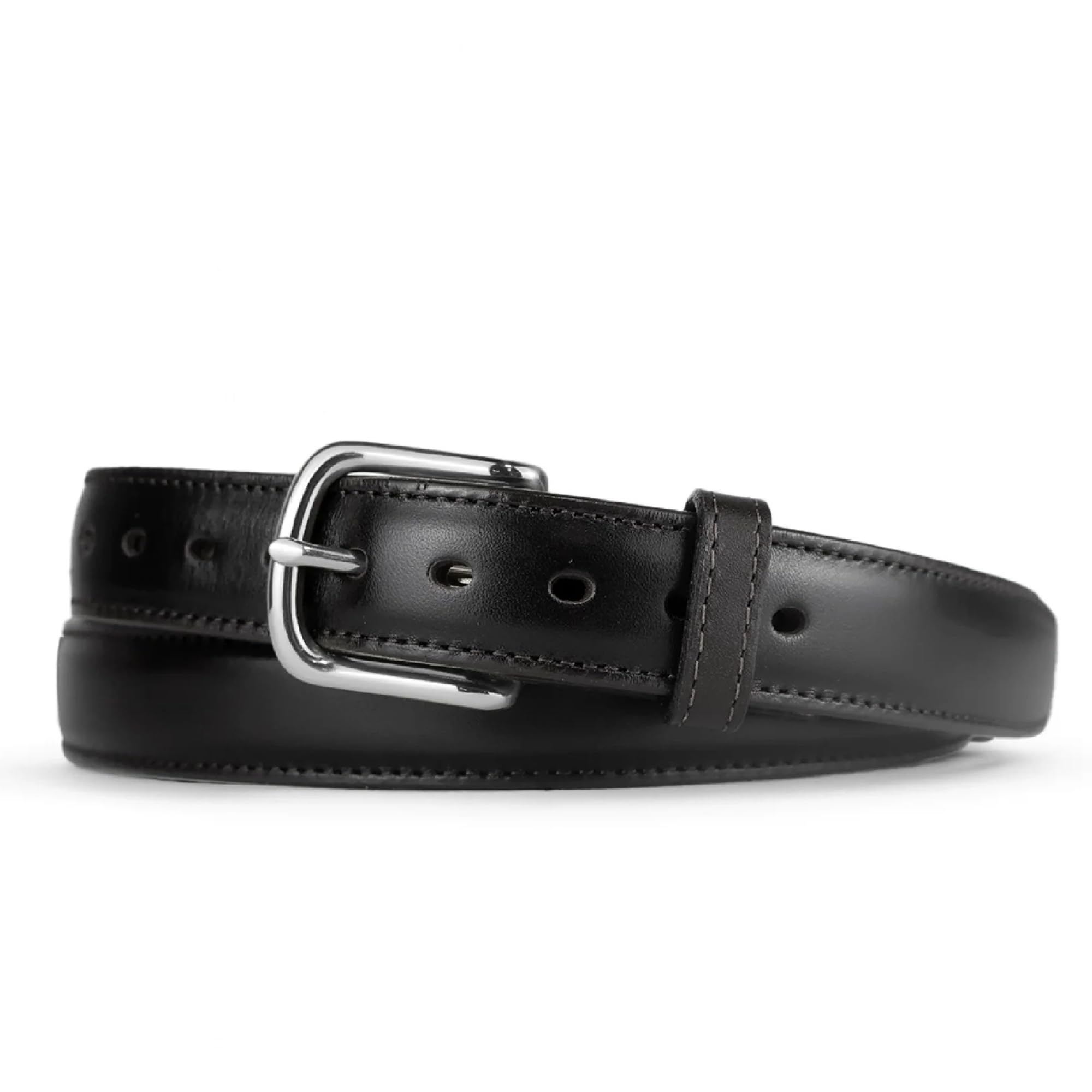
The Italian leather used here is sourced from a different tannery tradition than the domestic bridle leathers, resulting in a slightly tighter grain and a more uniform finish that works well under a suit jacket. At 1.25 inches wide, it slips through most dress trouser belt loops without catching, and the buckle features a solid brass construction instead of a plated alloy that flakes over time. The leather weight lands around 8 to 9 ounces, thick enough to feel substantial but flexible enough to conform to your waist rather than fighting it.
Multiple reviews confirm that the hole spacing doesn’t stretch or oval out, a common failure point on belts with bonded leather cores. The stitching is a lock-stitch nylon thread that resists UV degradation and moisture wicking, so it won’t rot from the inside out like cotton thread can. The Chicago screw attachment allows the buckle to be swapped or removed for cleaning, a detail that signals the maker expects this belt to last longer than most of the clothes you’ll wear with it.
A few buyers noted the sizing runs slightly small, so ordering one size up from your usual pant waist is recommended. The finish leans more toward a traditional dress sheen rather than a matte work-leather look, so if you prefer a duller, oiled appearance, the scalloped Yoder belt below might be a better match.
Why it’s great
- High-density Italian full-grain leather resists stretching and hole elongation
- Removable Chicago screw buckle lets you swap hardware or service the belt
- Nylon lock-stitch thread won’t rot from sweat or moisture exposure
Good to know
- Sizing runs slightly small; order one size up from your pant waist
- Finish leans glossier than matte oil-tanned belts
2. Yoder Leather Company Amish Made Oil Tanned Belt with Scalloped Tabs
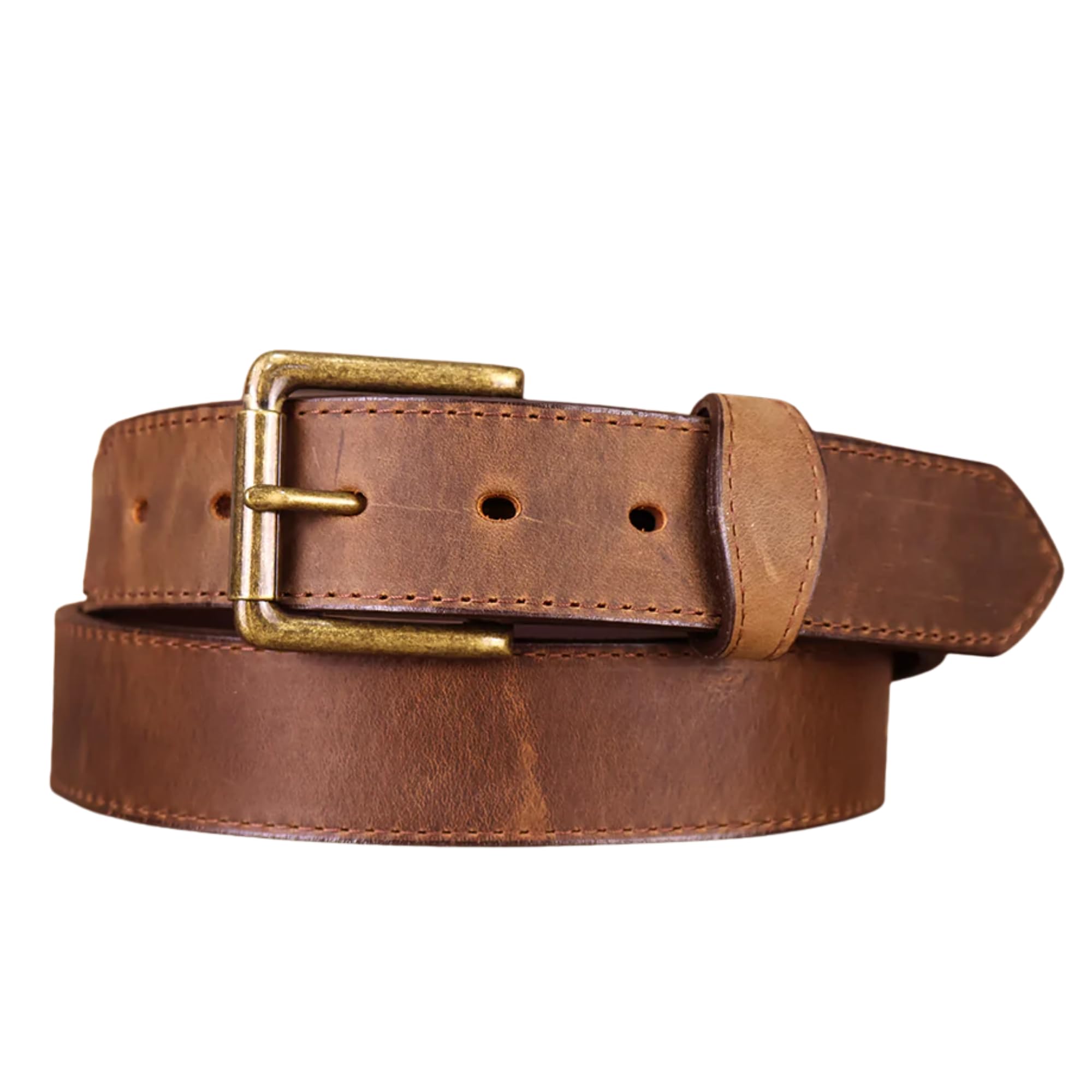
Oil-tanned leather takes a heavy dose of oils and waxes during the tanning process, making this belt naturally water-resistant and less prone to drying out in arid conditions. The scalloped tabs at the buckle end are a subtle detail that reduces bulk at the front of the waist, a feature that matters if you wear the belt tucked into jeans or work pants. The leather thickness sits comfortably in the 8-ounce range, giving it enough rigidity to hold shape without causing discomfort when you sit for extended periods.
The color comes through as a warm medium-brown with noticeable pull-up — that’s the lighter shade that appears when the leather stretches or bends, a characteristic unique to oil-tanned hides. The buckle is a solid brass roller design with a matte steel finish, which means it won’t develop the green oxidation common on copper-alloy buckles. It’s also true to size according to buyer feedback, a rare consistency in the handmade belt space where hand-cutting can introduce half-inch variations.
Reviewers consistently describe the belt as “nice enough for dress slacks” while holding up to daily jeans wear, which is exactly the versatility an oil-tanned belt delivers. The leather does darken slightly compared to product photos, but that’s typical of oil-tanned leather as it absorbs more oil from handling and climate. If you want a belt that crosses between casual Friday and Sunday service, this is the sweet spot.
Why it’s great
- Oil-tanned leather resists moisture and dries slowly without cracking
- Scalloped buckle tab reduces front bulk for tucked-in shirts
- True-to-size fit with no guesswork on sizing
Good to know
- Color runs slightly darker than product photos show
- Not rigid enough for heavy concealed carry without a stiffener
3. Amish Made Western Leather Tool Belt
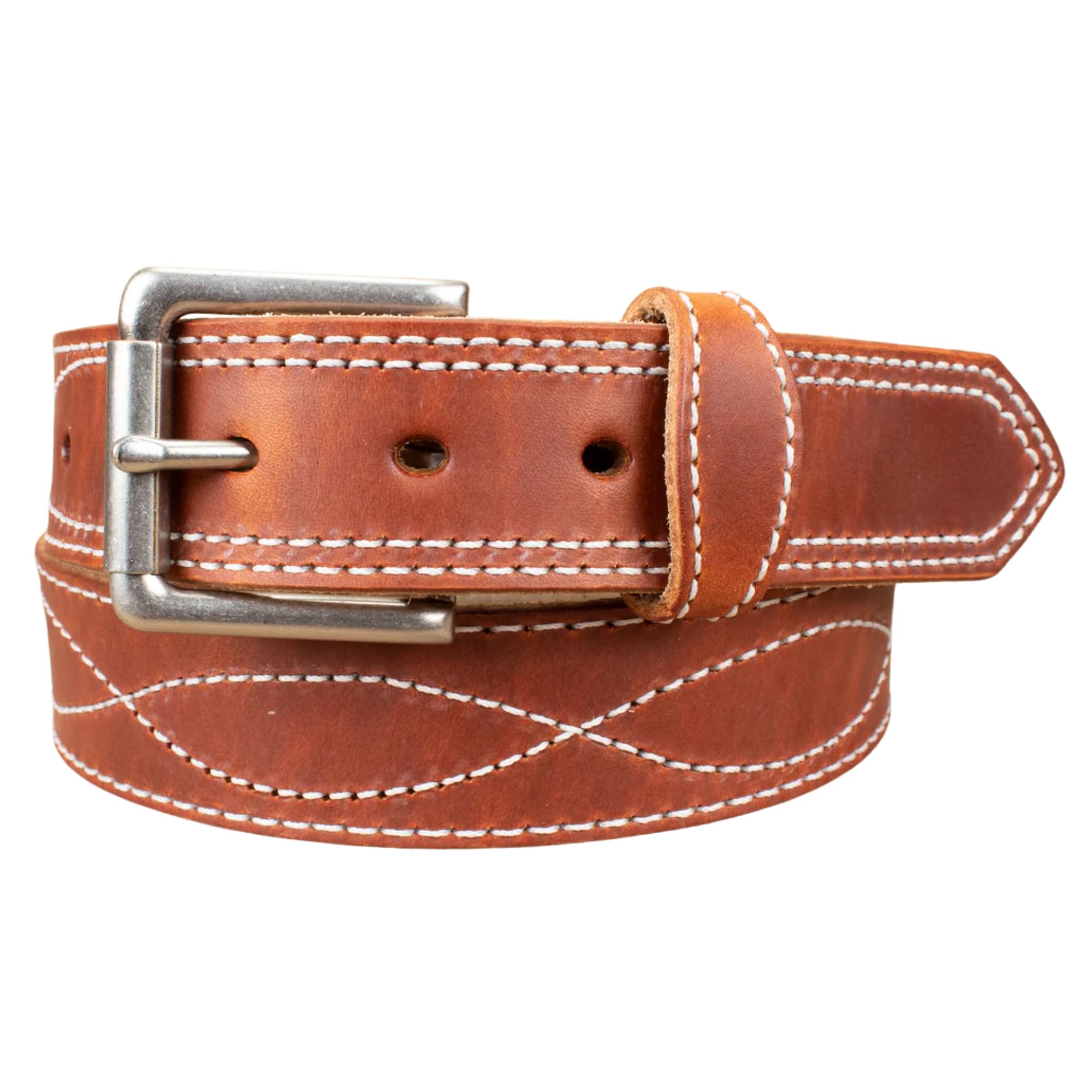
This belt arrives with a waxed finish that gives the leather a stiff, almost rigid feel out of the box — that’s intentional, because a western-style tool belt needs to support heavy holsters and tool pouches without sagging. The roller buckle design uses a center bar that moves freely, distributing tension evenly across the leather and preventing the single-point stress that causes buckle ears to wear unevenly. The leather is cut thick, likely in the 11- to 12-ounce range, which makes it a legitimate choice for everyday carry of a full-size pistol and spare magazines.
Buyers report that the belt remains intact after two years of daily use with the stitching holding tight and no visible fraying at the edges. The finish is a waxed brown that develops a deep shine in high-friction areas as the wax polishes from contact with clothing. The only recurring maintenance note involves the screws holding the buckle in place — some users found they backed out over time and applied a drop of Loctite to secure them permanently.
The natural edge is left unfinished, giving it a hand-cut look that matches the Amish aesthetic but can feel slightly rough against bare skin in the first few days. A round of saddle soap followed by a beeswax conditioner softens those edges significantly. If you need a belt that looks right with heavy denim and can double as a range belt without switching, this is the most capable all-around option in the list.
Why it’s great
- Thick 11- to 12-ounce leather supports heavy holster and tool loads without bending
- Roller buckle distributes tension evenly to prevent leather distortion
- Waxed finish polishes to a deep shine with wear
Good to know
- Unfinished edges can feel rough for the first few wears
- Buckle screws may require Loctite to prevent backing out over time
4. Handmade Double Hole Belt Genuine Bridle Leather 1.5 Inches Wide
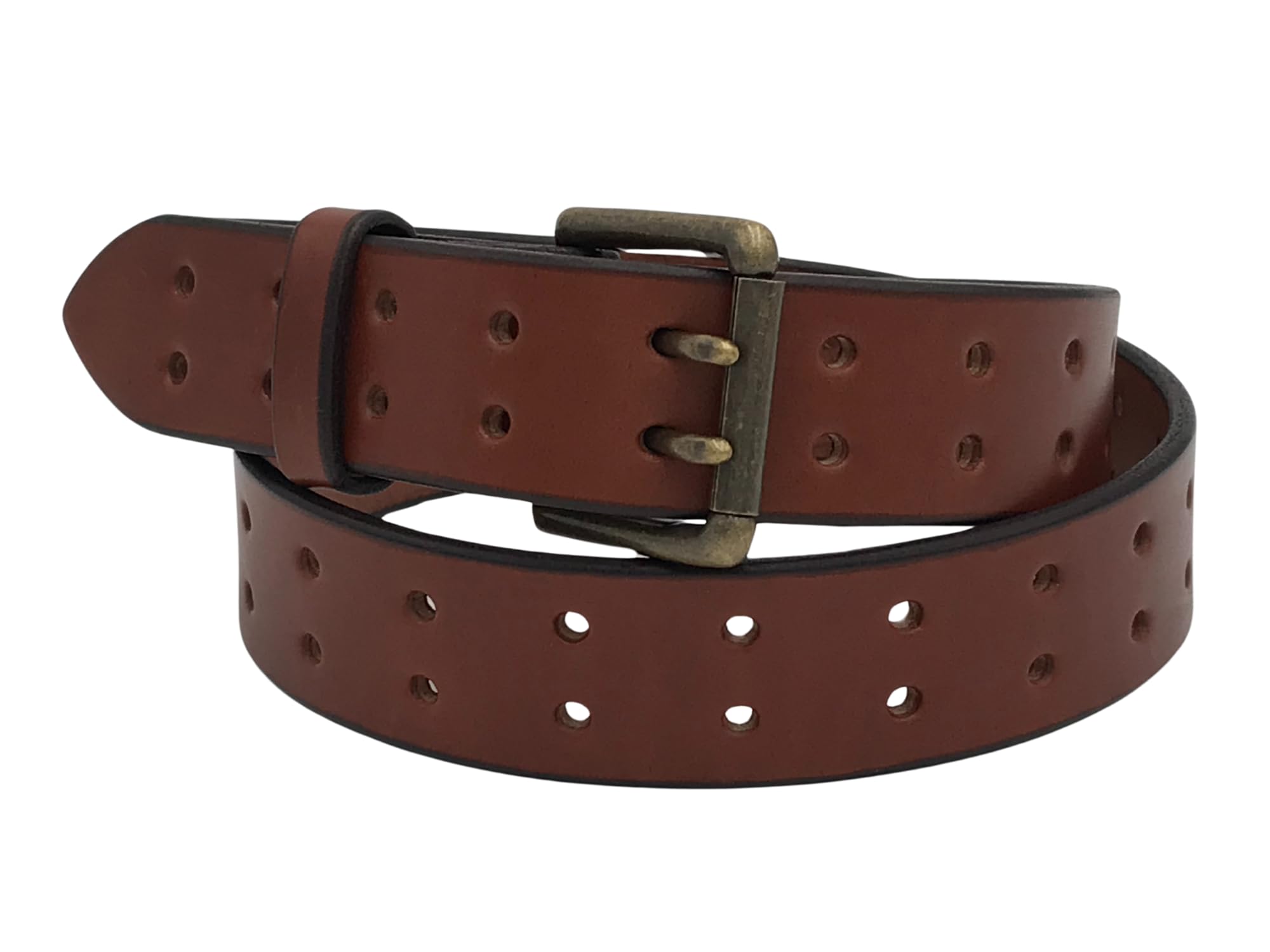
Bridle leather is vegetable-tanned and then stuffed with oils and waxes in a hot vat process that drives the compounds deep into the fiber structure. The result is a belt that starts stiff but breaks in over weeks rather than years, reaching a comfortable but supportive flex that maintains its shape under load. At 1.5 inches wide, it sits right at the boundary between dress belt territory and work belt territory, making it a genuine multi-purpose option that won’t look out of place with chinos or carpenter jeans.
The double-hole design allows for micro-adjustment — instead of jumping from one hole to the next with a half-inch gap, you get finer increments that help dial in the perfect fit. That’s a practical feature for anyone who fluctuates in weight or wears different thicknesses of base layers. Customer feedback from a buyer who has owned the belt since September 2021 confirms the leather hasn’t stretched and the stitching hasn’t frayed, even after years of regular rotation with holsters.
The seller also demonstrated exceptional service by replacing a belt lost by USPS, which speaks to the kind of small-batch customer support that matters when you’re buying from a maker rather than a mass distributor. The buckle is a standard solid brass roller design with a slightly narrower keeper slot, so if you have an oversized buckle from another belt, check the slot width before swapping. For the price, this belt delivers bridle leather quality that undercuts most bench-made options by a noticeable margin.
Why it’s great
- Genuine bridle leather with hot-stuffed oils and waxes for long-term durability
- Double-hole design enables precise micro-fine fit adjustment
- Seller offers excellent post-purchase support and replacement service
Good to know
- Buckle keeper slot is narrower than some standard buckles
- Leather may be too stiff for dress trouser loops initially
5. The Workhorse Heavy Duty Full Grain Leather Work Gun Belt – Made in USA
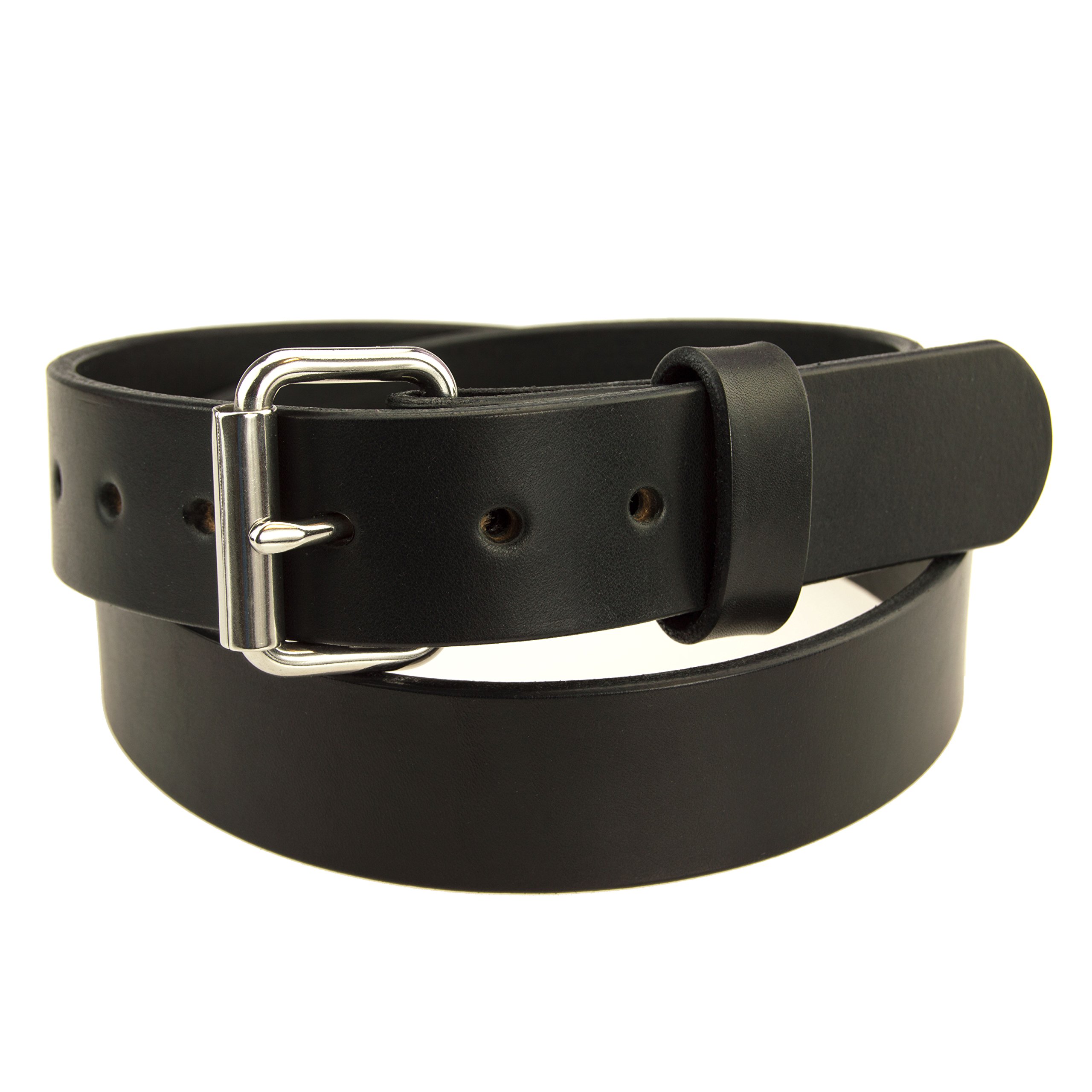
This belt weighs 15 ounces, which translates to a leather thickness of roughly 14 to 15 ounces — one of the heaviest single-piece belts you can buy without going custom. The weight is necessary for its intended purpose: supporting a holstered firearm and spare magazines without the belt rolling over or collapsing under load. The full-grain leather is left with a natural , matte finish that picks up scuffs and marks quickly, but those marks blend into the patina within days, giving the belt a broken-in look that many enthusiasts prefer over a pristine finish.
Buyers carrying a Sig P365XL in an OWB holster report zero belt roll, and even a Glock G45 with spare mags doesn’t cause the belt to buckle. That level of rigidity comes from the thickness, but it also means the belt doesn’t cinch down as neatly on smaller waists — some owners with 36-inch waists had to cut off several inches from the tongue and punch new holes. The edges come unfinished and can be sharp against bare skin, though a round of conditioning and edge burnishing with a wooden spoon solves that in 10 minutes.
The brown color runs lighter and more tan than expected, which is a common characteristic of un-dyed or lightly dyed full-grain leather. If you want a dark brown belt that looks formal, this isn’t it.
Why it’s great
- Extremely thick 15-ounce full-grain leather supports heavy firearm loads with zero belt roll
- Un-dyed finish develops a natural patina quickly rather than looking scuffed
- Budget-friendly price for a belt that matches premium gun-belt rigidity
Good to know
- Edges arrive rough and may need manual burnishing for comfort
- Color runs lighter / more tan than typical brown belts
6. 1 3/4″ Heavy Duty Leather Gun Holster Work Tool Belt, Amish Handmade
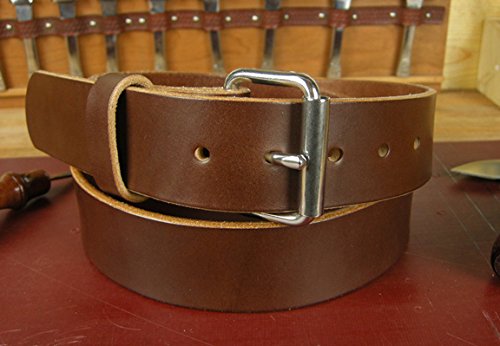
At 1.75 inches wide, this belt pushes past standard belt-loop capacity on most dress trousers and even some jeans, but that extra quarter-inch over the 1.5-inch standard creates noticeably more surface area for weight distribution. The leather is saddle-grade, meaning it was vegetable-tanned and then hot-stuffed with tallow and beeswax until it reaches a near-rigid consistency. This is the belt you reach for when you’re carrying a full-frame 1911 or a double-stack iron that would fold a standard department store belt in half.
One buyer bought this belt in 2016 and reports wearing it every single day since then with no signs of imminent failure — the stitching is intact, the leather hasn’t deformed, and the buckle remains tight. The buckle itself is a heavy-duty brass roller that matches the 1.75-inch width, so there’s no overhang or exposed leather at the points. The leather does come slightly long, but because it’s a straight-cut tongue design, trimming the tip with a sharp knife and re-drilling a hole is straightforward.
The appearance is unmistakably saddle leather — a rich brown that smells of beeswax and has a slightly glossy surface from the hot-stuffing process. It’s not a belt that blends into the background; it announces itself visually and physically. If you need a belt that can handle daily abuse from tools, guns, or heavy gear and you plan to hand it down to a son or daughter in 20 years, this is the one that will still be functional when they get it.
Why it’s great
- 1.75-inch saddle leather distributes heavy tool or firearm loads across a wider surface area
- Hot-stuffed with tallow and beeswax for near-rigid stiffness that lasts decades
- Proven to hold up after 8+ years of daily wear with no structural failures
Good to know
- Width is too large for most standard dress trouser belt loops
- Tongue runs slightly long and may need trimming for smaller waists
FAQ
How should I size an Amish leather belt when I usually wear a size 36?
Can I use a bridle leather belt for concealed carry right out of the box?
What maintenance does an oil-tanned leather belt need?
Why does my Amish belt have rough edges that cut my skin?
Final Thoughts: The Verdict
For most users, the best amish leather belts winner is the Yoder Leather Company Oil Tanned Belt with Scalloped Tabs because it bridges the gap between work-ready thickness and office-appropriate appearance without sacrificing the oil-tanned water resistance that extends the belt’s lifespan. If you need a dedicated carry belt capable of supporting a heavy pistol and spare magazines all day, grab the 1 3/4″ Heavy Duty Leather Gun Holster Belt. And for dress and business casual settings where a slim profile matters, nothing beats the precision and grain of the Yoder Italian Leather Dress Belt.