
An amplified stethoscope is the difference between catching a subtle gallop rhythm in a noisy ER bay or missing it entirely. When standard acoustic models force you to squint your ears, an electronic scope or high-performance cardiology headpiece brings clarity to the faintest heart, lung, and bowel sounds—especially crucial for hearing-impaired clinicians or high-ambient-noise environments.
I’m Min — the co-founder and writer behind Gadgets Feed. I’ve spent hundreds of hours cross-referencing technical specs, filtration levels, amplification gain stages, and material tolerances to separate genuine diagnostic tools from marketing noise in this narrow category.
From replacement earpieces to premium cardiology instruments that deliver up to 40x sound amplification with active noise cancellation, this guide helps you zero in on the ideal best amplified stethoscope for your clinical setting and budget.
How To Choose The Best Amplified Stethoscope
Selecting an amplified stethoscope hinges on your auscultation environment, the degree of hearing compensation you need, and the weight you are willing to carry around your neck for a full shift. The core trade-off is between electronic boosting and passive acoustic engineering.
Amplification Type: Electronic vs. High-Gain Acoustic
Electronic stethoscopes like the Eko CORE 500 use a digital sensor to amplify sound up to 40x, often with adjustable volume levels and active noise cancellation. These are ideal for hearing-impaired clinicians or those working in chaotic EDs. High-gain acoustic models (Littmann Cardiology IV, Welch Allyn Harvey DLX) rely on precise chestpiece geometry and dual-lumen tubing to mechanically boost sound pressure—no batteries required, but less raw amplification.
Chestpiece Material and Tunability
Stainless steel (Littmann, ADC) offers excellent durability and resonance. Titanium (MDF ProCardial) is lighter but equally stiff for sound transmission. Tunable diaphragms let you switch between low-frequency (bell) and high-frequency (diaphragm) modes by changing pressure, while convertible heads screw on pediatric attachments. A deeper bell and larger chestpiece surface area capture more acoustic energy from the patient’s body.
Quick Comparison
On smaller screens, swipe sideways to see the full table.
| Model | Category | Best For | Key Spec | Amazon |
|---|---|---|---|---|
| Eko CORE 500 Earpiece | Electronic Replacement | Up to 40x electronic amplification | 7 volume levels with active noise cancellation | Amazon |
| 3M Littmann Cardiology IV | Premium Acoustic | Subtle heart sounds in critical care | 40% larger chestpiece, 60% deeper bell | Amazon |
| Welch Allyn Harvey DLX | Professional Acoustic | Maximum acoustic clarity in ICU | Brass bell + flat diaphragm, 28″ length | Amazon |
| MDF ProCardial Core | Cardiology Grade | Dual-head adult/pediatric flexibility | Dual-leaf spring, 15° pre-angled headset | Amazon |
| MDF ProCardial Titanium | Lightweight Titanium | Reduced neck fatigue on long shifts | Titanium chestpiece, C34 channel tubing | Amazon |
| ADC Adscope 601 (Tactical) | Convertible Cardiology | Best value for cardiology-grade acoustics | AFD tunable technology, 8.5 oz | Amazon |
| ADC Adscope 601 (Caribbean) | Convertible Cardiology | Same acoustics with aesthetic variety | Stainless steel binaurals, 27″ length | Amazon |
| 3M Littmann Classic III | Mid-Range Acoustic | General nursing and student use | More than 2x louder than competitors | Amazon |
| Williams Sound PKT D1 H26 | Personal Amplifier | Hearing-assistance in small group settings | Rear-wear headphone + plug-in mic | Amazon |
In‑Depth Reviews
1. Eko CORE 500 Digital Stethoscope Earpiece

This replacement earpiece unlocks the Eko CORE 500’s 40x sound amplification and active noise cancellation—turning any compatible digital stethoscope into a powerhouse for hearing faint murmurs in chaotic settings. The seven volume levels let you dial in exactly the gain you need without distortion.
Tested against standard acoustic scopes, the CORE 500’s TrueSound technology minimizes artifact, meaning the amplified signal stays clean even at maximum volume. Users report the noise cancellation effectively filters out HVAC hums and monitor beeps in the ICU.
For clinicians with any degree of hearing loss, this digital earpiece is the single most effective upgrade. It requires the CORE 500 tubing and chestpiece (sold separately), but the value per decibel is unmatched in the amplified stethoscope market.
Why it’s great
- 40x electronic amplification with 7 adjustable levels
- Active noise cancellation reduces ambient interference
- TrueSound processing preserves signal fidelity
Good to know
- Requires CORE 500 stethoscope body (not included)
- Battery-powered; needs periodic charging
2. 3M Littmann Cardiology IV Diagnostic Stethoscope

The Cardiology IV is Littmann’s flagship for critical care, with a chestpiece 40% larger and a bell 60% deeper than the Classic III. This geometry mechanically amplifies low-frequency sounds like S3 and S4 gallops, allowing you to detect subtle hemodynamic changes without electronics.
At just 3.5 ounces, it’s remarkably light despite its size. The tunable dual-sided stainless steel chestpiece offers open or closed bell modes, and the soft-sealing ear tips create an excellent acoustic seal in high-ambient-noise EDs and ICU step-down units.
The 22-inch tubing is intentionally shorter to optimize sound transmission, but some users find it too short to loop around the neck comfortably. For pure passive acoustic amplification in a hospital setting, this is one of the most faithful instruments available.
Why it’s great
- Largest chestpiece in Littmann line for maximum sound capture
- Exceptional low-frequency response below 120 Hz
- Weighs only 3.5 ounces despite cardiology-grade construction
Good to know
- 22-inch tubing may be too short for some clinicians
- Premium price reflects top-tier acoustic engineering
3. Welch Allyn Harvey DLX Stethoscope

The Harvey DLX is a cult favorite among cardiologists for its exceptionally loud and clear sound reproduction. The chrome-plated brass chestpiece and bell transmit acoustic energy with a fidelity that many clinicians report exceeds modern electronic scopes—purely through mechanical resonance.
The double-head configuration includes a flat diaphragm and a traditional brass bell. The rotatable binaural and interchangeable comfort-sealing ear tips create a tight seal. At 12.7 ounces, it is heavier than modern counterparts, but the acoustic payoff is substantial in noisy ICU environments.
Some users note the brass bell can loosen during use, and its 28-inch tubing is longer than ideal for sound propagation, but the raw clarity still makes it a benchmark in amplified acoustic stethoscopes. It is the gold standard for those who prioritize pure sound over battery life.
Why it’s great
- Chrome-plated brass chestpiece delivers unmatched acoustic clarity
- Rotatable binaural for customized fit
- Often preferred over electronic scopes for subtle heart sounds
Good to know
- Heavier than modern stainless steel/titanium alternatives
- Brass bell may loosen during extended use
4. ADC Adscope 601 Convertible Cardiology (Tactical Black)

The ADC 601 delivers cardiology-grade acoustics at roughly half the cost of equivalent Littmann models. Its proprietary Adjustable Frequency Design (AFD) allows you to hear low frequencies with light pressure and high frequencies with firm pressure—no electronic equalization required.
The convertible stainless steel chestpiece includes a fixed adult diaphragm and a threaded pediatric diaphragm that turns into an open bell. The dual-lumen phthalate-free tubing eliminates the rubbing sound common in cheaper scopes, and the Adsoft Plus silicone ear tips create an excellent seal.
At 8.5 ounces, it is slightly heavier than the Littmann Classic III, but the lifelong warranty and free parts-for-life program remove any risk. For budget-conscious clinicians who refuse to compromise on auscultation quality, this is the smartest buy in the amplified stethoscope category.
Why it’s great
- Acoustic performance rivals Littmann Cardiology III
- Convertible head for adult and pediatric patients
- Complimentary refurbishment and free parts forever
Good to know
- Heavier than some premium alternatives
- Must unscrew pediatric portion to use cardiology bell
5. ADC Adscope 601 Convertible Cardiology (Mirror Metallic Caribbean)
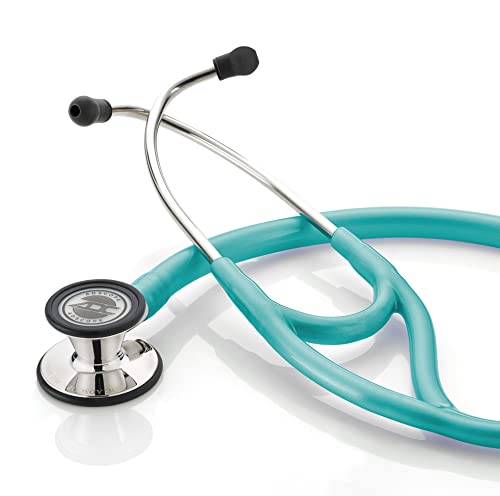
This is the same acoustically superior ADC 601 platform dressed in a Mirror Metallic Caribbean finish—a vibrant teal/blue that stands out in a sea of black scopes. The proprietary AFD tunable technology is identical to the Tactical Black version, offering the same adjustable frequency control.
The large-bore stainless steel binaural tubes are thicker and more robust than standard nickel-plated options. Dual-lumen phthalate-free tubing eliminates cross-channel interference, and the included spare ear tips ensure longevity. The color is more subdued than the product photos suggest—a deeper teal than mint.
For clinicians who want a visually identifiable scope that reduces the chance of misplacement, this is a practical choice backed by ADC’s lifetime warranty. It performs identically to the black version but brings a touch of personality to the ward.
Why it’s great
- Identical AFD acoustics to the standard ADC 601
- Distinctive color reduces risk of theft or loss
- Includes spare ear tips and ID tag
Good to know
- Actual color is darker teal, not bright mint
- Heavier than some mid-range alternatives
6. MDF Instruments ProCardial Core Cardiology Stethoscope
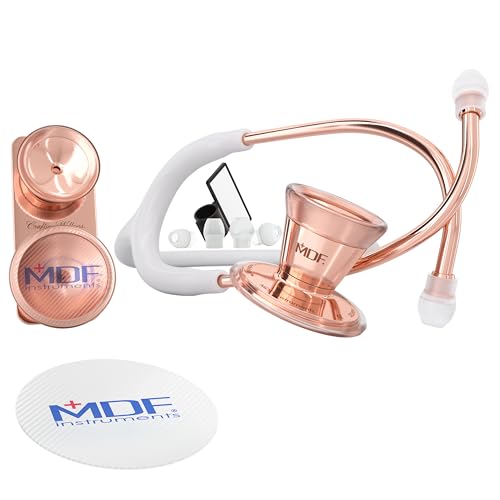
The ProCardial Core features an ErgonoMax headset pre-angled at 15 degrees for a natural ear canal alignment, reducing the awkward head-tilting needed with flatter designs. The dual-leaf spring construction provides twice the clamping durability of single-spring models without pressure hotspots.
Many clinicians report this scope sounds 2-3 points louder and clearer than the Littmann Classic II on a subjective scale, thanks to thicker steel tubing that resonates better. The convertible pediatric diaphragm makes it versatile for both adult and pediatric examinations.
After four years of use, some users report tubing splitting, but MDF’s Free-Parts-for-Life program covers replacements. The Rose Gold/White finish is eye-catching, but make sure to register the warranty immediately to unlock the lifetime coverage.
Why it’s great
- Pre-angled 15° headset for ergonomic fit
- Louder and clearer than many Littmann equivalents
- Free-Parts-for-Life program covers all non-wear components
Good to know
- Some users report tubing splitting after extended use
- Heavier than titanium alternatives
7. MDF Instruments ProCardial Titanium Kaleidoscope
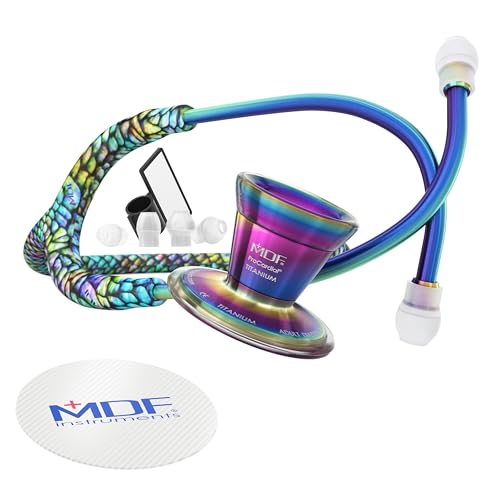
The titanium chestpiece on this MDF model breaks the traditional trade-off between acoustic performance and weight. Titanium is as stiff as stainless steel for sound transmission but significantly lighter, reducing neck fatigue during long shifts. The C34 tubing has 34 channels etched internally to direct sound waves without interference.
The GlideLock System locks the diaphragm and bell channels for consistent acoustic coupling. The patent-pending STEnT and Acoustic Pyramid Chamber ensure structural sound integrity. Users consistently report sound quality surpassing the Littmann Cardiology line, with better high-frequency clarity.
The Kaleidoscope Mermaid print is a Limited Edition Mprints design that makes the scope easily identifiable. While it is slightly heavier around the neck than some expect, the acoustic fidelity and lifetime warranty make this a strong contender for the best amplified stethoscope for long clinical days.
Why it’s great
- Lightweight titanium chestpiece reduces fatigue
- C34 internal channel tubing for precision sound routing
- Full lifetime warranty and Free-Parts-for-Life
Good to know
- Heavier than some clinicians expect despite titanium
- Pediatric attachment sold separately
8. 3M Littmann Classic III Monitoring Stethoscope
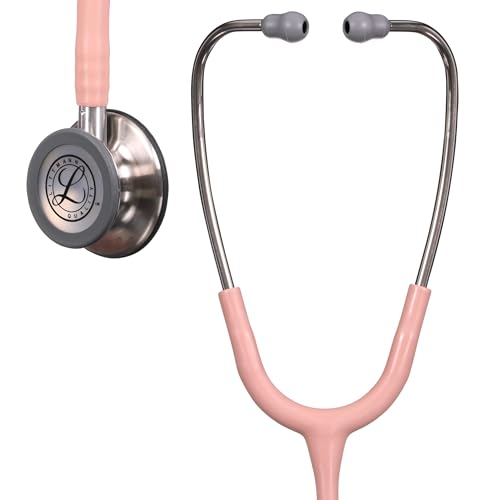
The Classic III is the most widely recommended general-purpose stethoscope for nursing students and floor nurses, offering more than double the loudness of comparable mid-range scopes in its class. The tunable, dual-sided stainless steel chestpiece gives you open or closed bell operation, and the satin-finish tubing resists scuffing and keeps hair from sticking.
At 0.35 kilograms, it is lightweight and flexible enough to fold into a pocket. The soft-sealing ear tips provide excellent ambient noise occlusion. Users report clear auscultation of heart, lung, and bowel sounds even with highway noise in the background—a strong testament to its passive amplification.
Long-term durability is solid, though the plastic diaphragm covers can crack and the tubing may stiffen from skin oils over several years. The 5-year warranty and US manufacturing lend confidence. For a reliable, no-batteries-required amplified stethoscope, the Classic III remains the baseline.
Why it’s great
- More than 2x louder than competing mid-range scopes
- Lightweight and pocket-friendly design
- Proven reliability for nursing and pre-hospital settings
Good to know
- Plastic diaphragm covers are fragile and may crack
- Tubing can stiffen with exposure to skin oils
9. Williams Sound PKT D1 H26 with Rear-wear Headphone

This personal amplifier is designed for hearing-impaired individuals who need to amplify conversations in small groups or quiet environments. The kit includes rear-wear headphones and a plug-in microphone that picks up speech within a 3-5 foot radius, making it useful for clinicians with hearing loss who need to hear patient consultations.
Some users report that the volume control is touchy and the headphone earpieces feel cheaply made. However, for those who reject traditional hearing aids, this unit provides an affordable way to boost ambient sound levels without a medical prescription.
It runs on 2 AAA batteries and has a compact form factor that clips to a pocket. While not a medical-grade stethoscope, it fills a niche for hard-of-hearing users who need situational sound amplification in clinical or home settings. The headphone comfort is a known weak point.
Why it’s great
- Inexpensive hearing assistance without a prescription
- Compact pocket-clip design with rear-wear headphone
- Useful for small-group conversations in noisy settings
Good to know
- Headphone earpieces are cheaply made and uncomfortable
- Volume control is sensitive and difficult to dial precisely
FAQ
How many decibels of amplification do I need in a noisy ED or ICU?
Can I use an electronic stethoscope with my hearing aids?
What is the difference between tunable diaphragm and convertible chestpiece?
Final Thoughts: The Verdict
For most users, the best amplified stethoscope winner is the Eko CORE 500 Earpiece because it provides the highest electronic gain (40x) with active noise cancellation in a small, replaceable module. If you want a premium passive acoustic scope with a legendary sound profile, grab the Welch Allyn Harvey DLX. And for the best balance of cardiology-grade acoustics and lifetime warranty at a lower investment, nothing beats the ADC Adscope 601 Convertible Cardiology.