
Nothing kills the joy of cord-cutting faster than a pixelated picture or a channel that cuts out mid-scene. If your digital TV antenna struggles to lock in signals, the culprit is almost always a weak or unbalanced RF feed that a dedicated amplifier can fix. The challenge is that not all boosters work the same way—choosing the wrong type leaves you with the same frustrating dropouts.
I’m Min — the co-founder and writer behind Gadgets Feed. I study market trends and dive deep into the technical specifications of antenna amplifiers to separate real signal gains from marketing noise.
Whether you are splitting the signal to four TVs or battling interference miles from the tower, this guide focuses on finding the right amplifier for digital tv antenna to stabilize your reception once and for all.
How To Choose The Best Amplifier For Digital TV Antenna
Selecting the right amplifier starts with diagnosing your specific problem. If you have a single TV and weak signals due to long cable runs or distance from broadcast towers, you need a preamplifier mounted near the antenna. If you are distributing the signal to multiple rooms, a distribution amplifier compensates for the signal loss caused by splitters. The most common mistake is buying a distribution amp when a preamp is actually needed—or vice versa.
Preamplifier vs. Distribution Amplifier
A preamplifier (preamp) installs right at the antenna mast or in the attic. Its job is to boost the raw signal before it travels down the coaxial cable, overcoming line loss before the signal reaches your TV. A distribution amplifier sits after the cable enters the house and strengthens the signal so it can be split cleanly to multiple TVs without degrading. If you are only powering one TV, a preamp alone is the better choice.
Gain, Noise Figure, and Filtering
Gain, measured in dB, tells you how much the amplifier boosts the signal. A preamp with 17–30 dB of gain covers most residential scenarios, while a distribution amp typically offers 7–10 dB. More important than raw gain is the noise figure—a lower noise figure (under 3 dB) means the amplifier introduces less static. Built-in LTE and 5G filters are non-negotiable if cell towers are nearby, as unfiltered interference can overload the amplifier and wipe out channels entirely.
Quick Comparison
On smaller screens, swipe sideways to see the full table.
| Model | Category | Best For | Key Spec | Amazon |
|---|---|---|---|---|
| Channel Master PreAmp 1 | Preamplifier | Weak signal, long cable runs | 17–30 dB adjustable gain | Amazon |
| Televes TForce Mast Preamp | Preamplifier / Combiner | Combining two antennas | Dual input, automatic gain control | Amazon |
| Winegard Boost XT Pro | Preamplifier | Integrated channel finder | Smart gain, LTE/5G filter | Amazon |
| Antennas Direct Juice Plus | Preamplifier | All-weather outdoor performance | Weatherproof housing, 5G filter | Amazon |
| Antennas Direct ClearStream JUICE4 | Distribution Amplifier | Four TV splits | 1.2 GHz bandwidth, zinc housing | Amazon |
| Channel Master CM-3424 | Distribution Amplifier | Four-room distribution | 7.5 dB gain, LTE filter | Amazon |
| 1byone Outdoor Antenna | All-in-One Antenna + Amp | Entry-level whole kit | 360° omni-directional | Amazon |
In‑Depth Reviews
1. Channel Master TV Antenna PreAmp 1 (CM-7779HD)

The Channel Master PreAmp 1 is the gold standard for a reason—it delivers a robust 17–30 dB of adjustable gain that transforms a barely-detectable signal into a stable stream. Users in rural northeast Ohio reported jumping from 3 channels to 72 on a Tablo recorder, and others in heavily wooded areas went from roughly 40 pixelated broadcasts to over 150 crystal-clear ones. The built-in LTE filter blocks interference from 3G, 4G, and 5G transmitters without requiring an extra purchase.
Installation is straightforward: mount the weather-sealed preamp near the antenna, and the power inserter sends DC voltage over the coaxial cable so no outdoor outlet is needed. It is designed exclusively for passive, non-amplified antennas, and Channel Master recommends pairing it with high-quality cables to maintain signal integrity. The adjustable gain switch lets you dial in the minimum boost needed, avoiding over-amplification that can amplify noise along with the signal.
For whole-home distribution, this preamp works with Channel Master power-passing splitters to feed multiple TVs without signal collapse. While the improvement may not always show on a TV’s built-in signal meter, the real-world channel count increase is undeniable. A small number of users experienced less dramatic gains, which typically indicates physical obstructions rather than amplifier limitations.
Why it’s great
- Adjustable 17–30 dB gain handles weak and medium signal areas
- LTE/5G filter blocks cell phone interference without extra gear
- Power-over-coax design eliminates outdoor outlet need
Good to know
- Does not work with antennas that already have a built-in amplifier
- Gain improvement may not reflect on in-TV signal meters
2. Televes 560483 TForce Mast Preamplifier
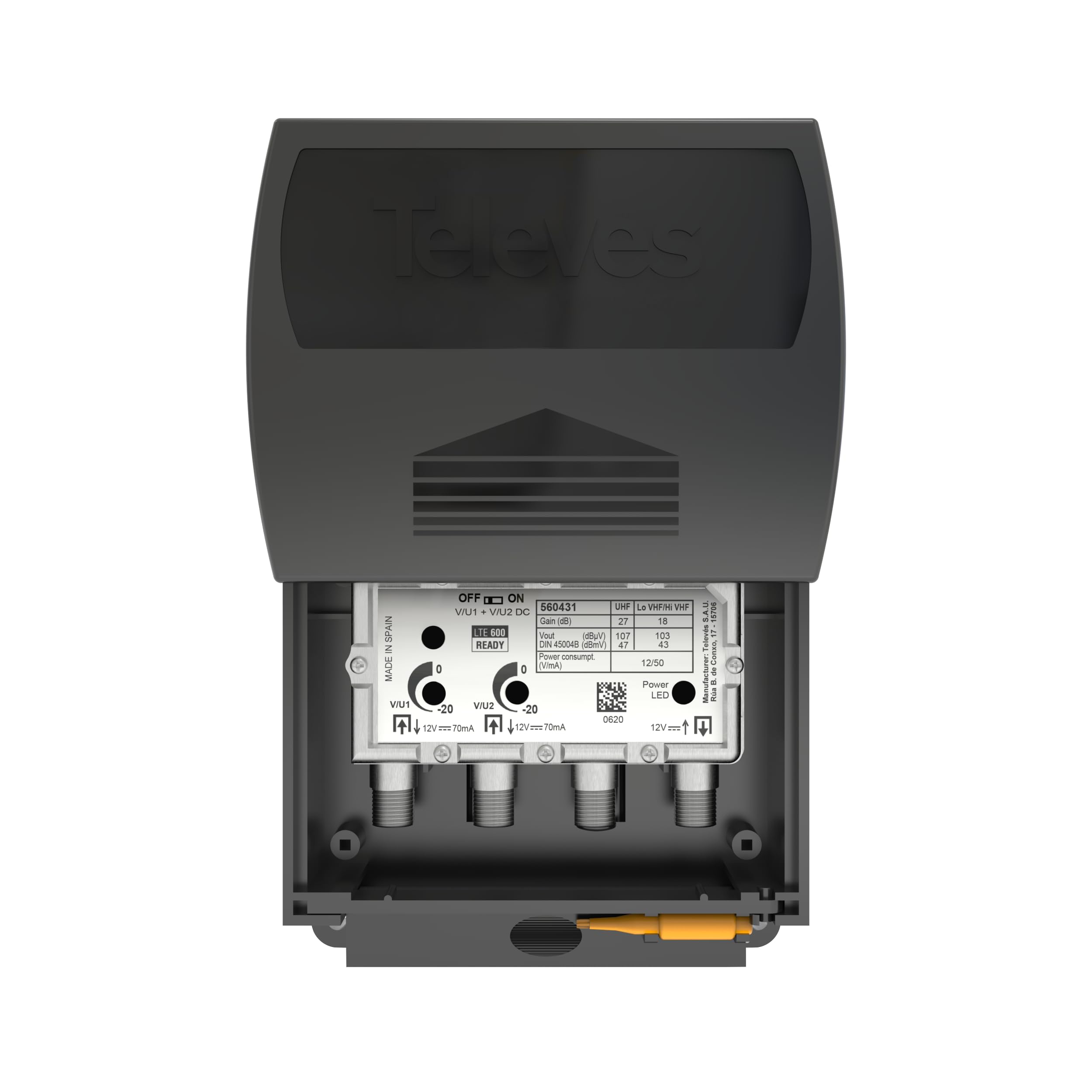
The Televes TForce is the only unit on this list that lets you combine two independent antennas into a single feed. Its two broadband inputs cover Low VHF, High VHF, and UHF, enabling configurations like a dedicated VHF Yagi for channel 6 plus a UHF panel for the high band. The proprietary TForce technology continuously monitors and self-adjusts amplification separately across each band, preventing one antenna from overpowering the other.
Built-in precision filters block FM radio, LTE, and 5G signals above 608 MHz at the source, so you do not need to buy an external filter. The housing is mast-mountable with an IP23 rating, though some users note that the plastic case does not close fully when large coaxial connectors are used. Manual input-level regulation of 0–20 dB per input gives you fine-grained control, and a DC pass switch on each input can power active antennas upstream.
Users pulling signals from multiple markets—such as South Bend and Chicago—report that the Televes locked in previously unstable channels and eliminated the need for a rotator. It is fully compatible with ATSC 3.0 NextGen TV and supports frequencies after the broadcast spectrum repack. The 19 dB gain may require an additional distribution amp for very long cable runs with four or more splits.
Why it’s great
- Combines two antennas without signal fighting
- Automatic gain control balances VHF and UHF independently
- Integrated 5G/LTE and FM filtering at the mast
Good to know
- Plastic housing may not seal fully with oversized connectors
- 19 dB gain may need a distribution amp for long multi-TV runs
3. Winegard Boost XT Pro (BT-1000)
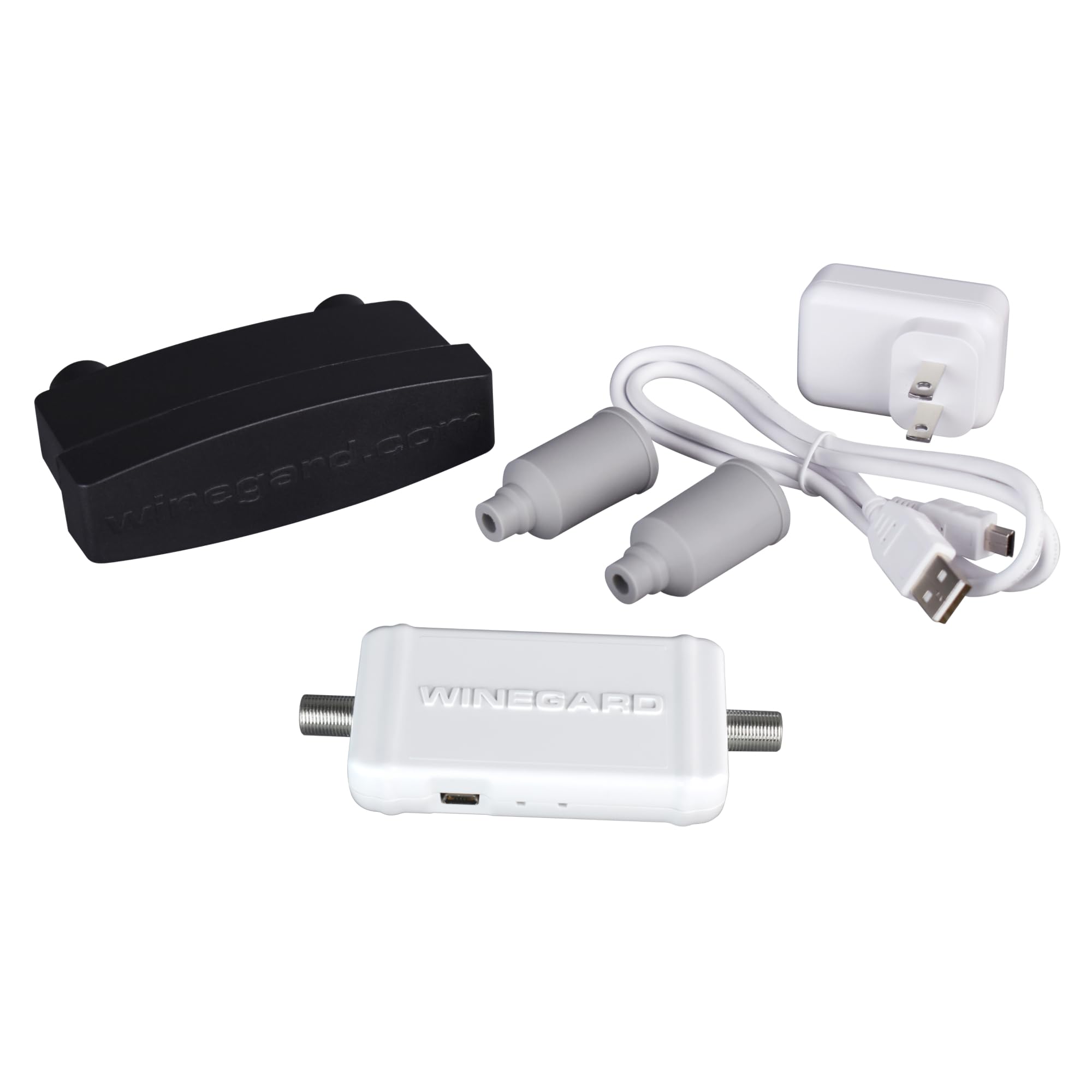
The Winegard Boost XT Pro stands apart because it integrates a Bluetooth channel finder into the preamplifier package. The accompanying app shows real-time signal strength and helps you aim your antenna for the best reception without running back and forth to the TV. The smart gain technology reduces noise while amplifying, delivering a cleaner picture with less static.
This preamp is built for outdoor installation with a rugged weather-sealed housing that withstands rain, wind, and snow. The LTE and 5G filter prevents cellular interference from ruining your reception, which is critical for homes near towers. Users with hilly terrain about 50 miles from transmitters gained an average of 11 additional channels after installing the Boost XT Pro.
On the downside, some users reported that the unit required occasional reboots before each viewing session, and the app has known compatibility issues with iPhones. The top cover on some units felt loose enough that owners added their own silicone seal. Despite these production quality concerns, when working correctly, the Boost XT Pro delivers a dramatic improvement in signal reliability and channel count.
Why it’s great
- Bluetooth channel finder simplifies antenna aiming
- Smart gain circuit reduces noise for cleaner picture
- Rugged weather-sealed design for outdoor mounting
Good to know
- Bluetooth app incompatible with iPhones
- Some units require periodic reboots to function
4. Antennas Direct ClearStream Juice Plus
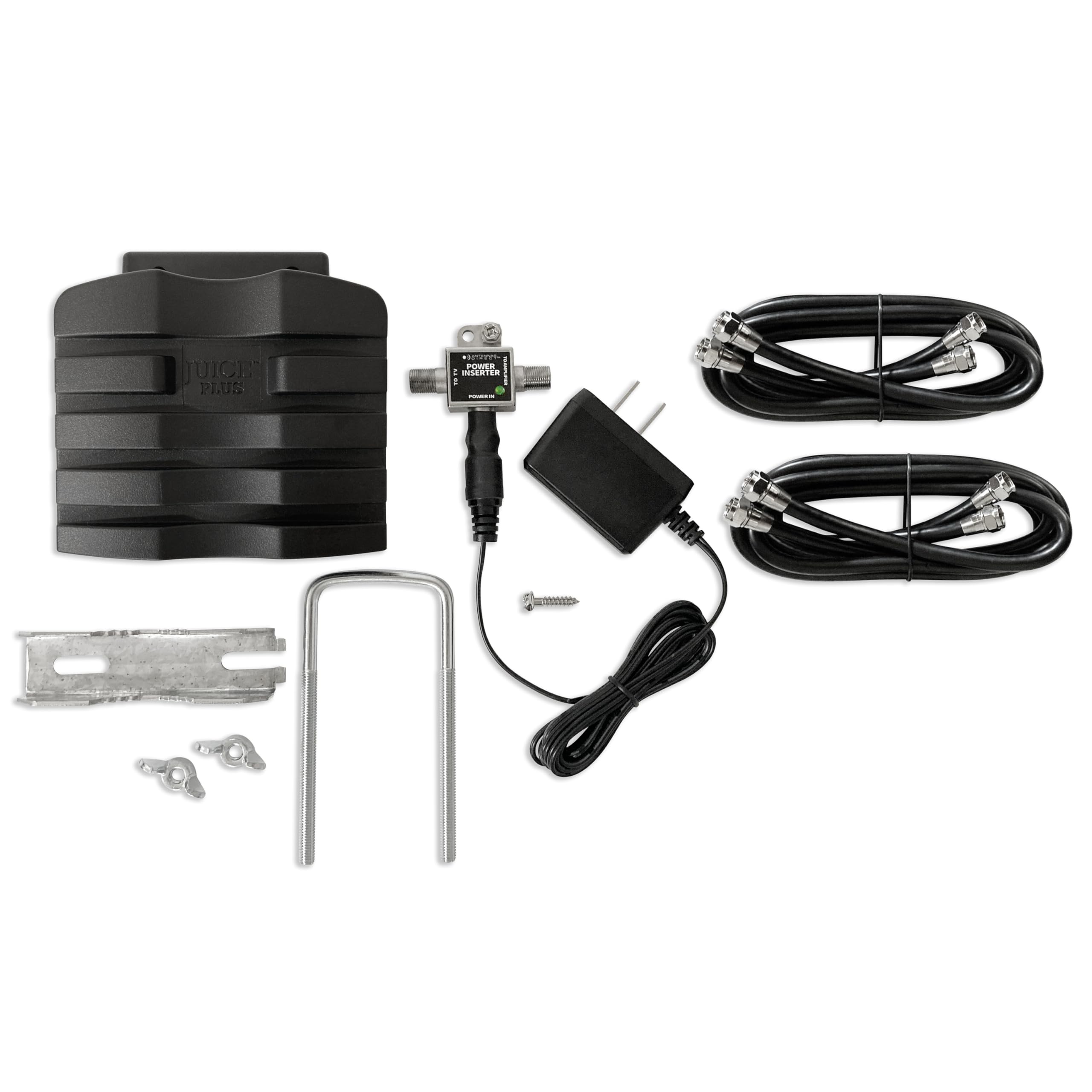
The Antennas Direct Juice Plus positions its preamplifier inside an innovative weatherproof housing that tilts open for easy cable connections and then closes securely. This design keeps the coaxial connections protected from rain and dust, making it a strong choice for mast or rooftop installations. The unit supports UHF, VHF, and FM frequency bands and is ready for ATSC 3.0 NextGen TV and 4K/8K UHD broadcasts.
A true 5G filter is placed before the amplification circuit, which prevents overloading from LTE and 5G signals before they can saturate the amplifier. Users 35 miles from broadcast towers saw channel counts jump from 35 to over 80, and a reviewer with a 12-foot exterior antenna mounted 15 feet high reported excellent reception in snow, rain, and high winds. The kit includes two 3-foot coaxial cables, a low-loss power inserter, and all-weather mounting hardware.
At 4.25 inches on each side, it is compact enough for tight attic spaces. The 90-day warranty is shorter than some competitors, and there were isolated reports of units arriving dead on arrival or failing to power up after professional installation. For most users, however, the Juice Plus delivers reliable, interference-free signal boosting that handles rough weather without complaint.
Why it’s great
- Weatherproof housing with tilting access for easy cable work
- True 5G filter positioned before amplification circuit
- Excellent reception in snow, rain, and high winds
Good to know
- Short 90-day manufacturer warranty
- Occasional DOA units reported
5. Antennas Direct ClearStream JUICE4 Distribution Amplifier
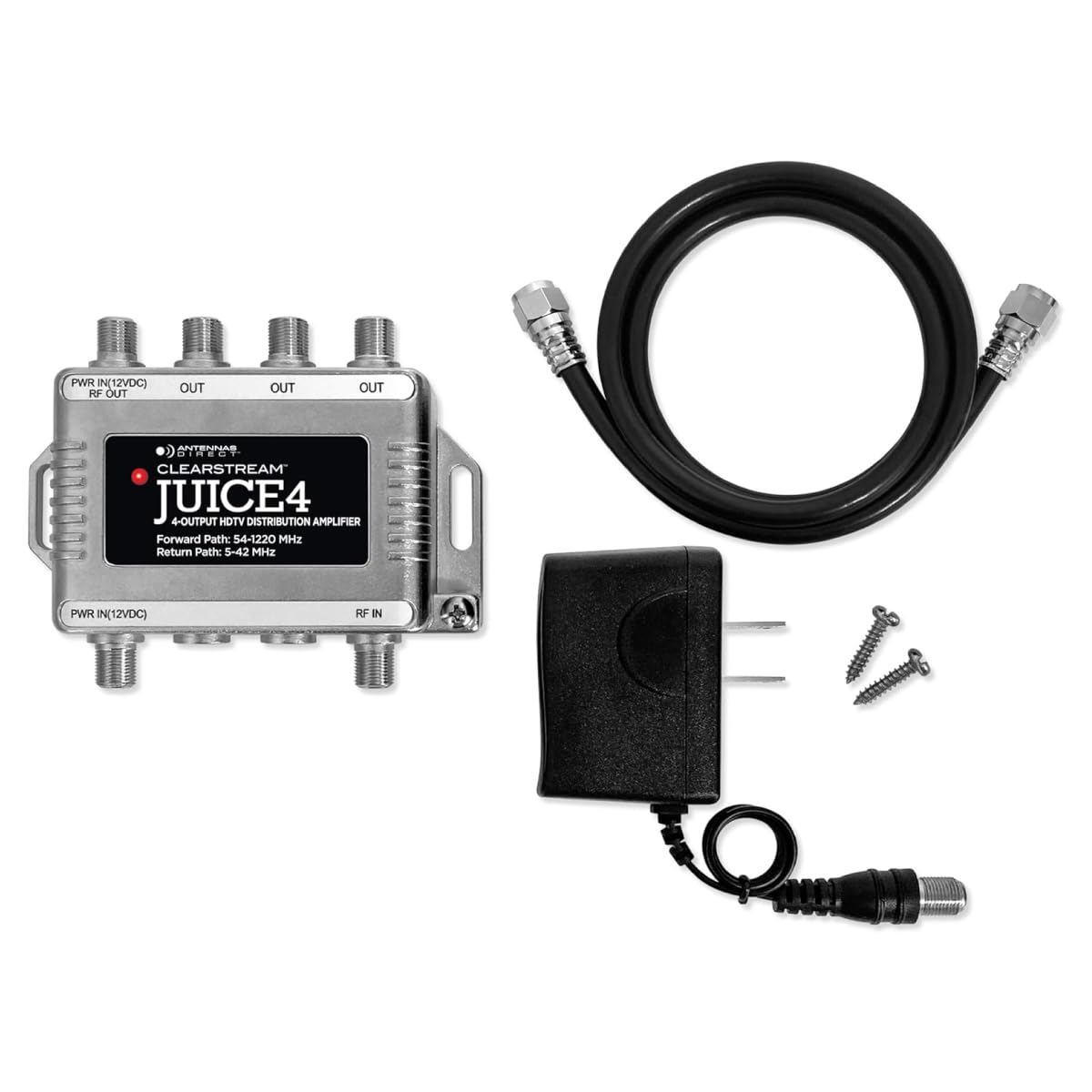
When you need to send a clean signal to four TVs without quality loss, the ClearStream JUICE4 is the distribution amplifier to beat. Its precise machine-sealed zinc diecast housing provides excellent EMI shielding and surge protection, while the compact 3.8 x 3.5 x 1-inch footprint fits almost anywhere. The operating frequency extends to 1.2 GHz, which covers CATV and cable broadband applications as well as OTA TV.
The JUICE4 supports ATSC 3.0 NextGen TV and 4K/8K UHD, future-proofing your setup for broadcast upgrades. It can be used indoors or outdoors with termination caps, watertight F-connectors, and weather boots included. Users typically see channel counts stabilize across all connected TVs—one reviewer reported a jump from unreliable reception to 61 channels on every television in the house.
A small number of units failed after about five days of use, which suggests occasional quality control issues. The power supply requires an indoor 12V plug, which limits placement options if you want to mount it in an unconditioned attic. Overall, the JUICE4 solves the signal degradation that plagues passive splitters and delivers consistent results for multi-room setups.
Why it’s great
- Zinc diecast housing provides excellent EMI shielding
- 1.2 GHz bandwidth supports CATV and OTA
- 4 outputs send strong signal to multiple TVs
Good to know
- Some units have early failure rates
- Requires indoor 12V power adapter
6. Channel Master TV Antenna Booster 4 (CM-3424)

The Channel Master CM-3424 is a 4-port distribution amplifier that replaces a standard splitter and compensates for the signal loss that comes with splitting. Its 7.5 dB gain is modest compared to a preamp, but it is exactly what you need when your antenna signal is already strong and you just want to feed multiple rooms without degradation. The heavy-duty weatherproof housing allows installation indoors, outdoors, or in the attic.
A built-in LTE filter removes interference from cellular signals, and the unit is optimized exclusively for TV antennas—it will not work with cable or satellite feeds. Users in rural areas paired this with the Channel Master PreAmp 1 and saw channel counts double, while others replacing old powered splitters immediately noticed sharper picture quality. The compact design is less than 6 inches long and mounts easily near your existing splitter location.
This distribution amp is not designed as a preamplifier for weak signal areas—if your reception is poor even on a single TV, you need a preamp like the CM-7779HD first. For its intended role of maintaining signal strength across four outputs, the CM-3424 performs reliably and is backed by Channel Master’s long reputation in the antenna market.
Why it’s great
- Replaces standard 4-way splitters with active boosting
- Weatherproof housing for indoor or outdoor use
- Built-in LTE filter prevents cell interference
Good to know
- 7.5 dB gain inadequate for weak signal areas
- Not compatible with amplified antennas
7. 1byone Outdoor TV Antenna with Amplifier

The 1byone Outdoor Antenna is an all-in-one solution that bundles an omni-directional antenna with a built-in preamplifier, making it a solid entry point for cord-cutters who want to test OTA TV without buying separate components. Its 360-degree design picks up signals from all directions, eliminating the need to aim the antenna—just mount it and scan. The 39-foot RG6 coaxial cable gives you flexibility in placement away from the TV.
The built-in Smart Pass amplifier technology boosts reception on windy or rainy days when signals tend to weaken, and the 4G LTE filter reduces mobile signal interference. Users in Manhattan brownstones reported pulling in 60 channels in 15 minutes, while suburban users saw 58 channels after initial setup. The preamp is integrated into the antenna, so there is no separate box to mount or power injector to configure.
Long-term reports suggest that the outdoor housing is not fully waterproof—some units filled with water after two years, corroding the preamp and RF connector. Channel count also varies dramatically with placement; a window-facing installation can yield 120 channels while a north-facing roof mount may only grab foreign language broadcasts. For the price, this is a functional starter kit, but durability and consistency trail the dedicated amplifier-and-antenna combos.
Why it’s great
- All-in-one antenna and preamp simplifies installation
- 360-degree reception eliminates aiming
- 39-foot cable gives flexibility in antenna placement
Good to know
- Outdoor housing not reliably waterproof over time
- Channel count heavily dependent on placement direction
FAQ
Should I get a preamplifier or a distribution amplifier?
Can an amplifier make my antenna signal too strong?
Do I need an LTE or 5G filter on my antenna amplifier?
Final Thoughts: The Verdict
For most users, the amplifier for digital tv antenna winner is the Channel Master PreAmp 1 because its adjustable 17–30 dB gain and built-in LTE filter handle weak signals reliably without over-amplifying. If you need to combine two antennas for multi-market reception, grab the Televes TForce Mast Preamp. And for distributing a strong signal to four TVs with minimal hassle, nothing beats the Antennas Direct ClearStream JUICE4.