
A weak mic signal forces you to crank your recording software, which also amplifies the hum from your computer, the buzz from your lights, and that faint hiss you never noticed. The right amplifier for your microphone solves this by raising your input level before the noise floor becomes audible, giving you a clean, present, and professional sound from the very first take.
I’m Min — the co-founder and writer behind Gadgets Feed. My research for this guide involved a deep technical analysis of preamp gain staging, noise floor specs, phantom power delivery, and the feature sets of dozens of audio interfaces and channel strips to identify the models that deliver genuinely useful amplification without introducing coloration or artifacts.
Whether you’re a podcaster, vocalist, or live streamer, this guide will walk you through the key specs and the top contenders on the market today for the best amplifier for mic.
How To Choose The Best Amplifier For Mic
Choosing a mic preamp isn’t just about buying the box with the most knobs. The core job is cleanly boosting a low-voltage signal, and three factors separate a decent unit from a genuinely useful one.
Understand Your Microphone’s Output Level
Dynamic mics like the Shure SM58 output around 1-2 mV, while condenser mics (with phantom power active) can output 10-20 mV. A preamp must provide enough gain (typically 40-60 dB for dynamics, 20-40 dB for condensers) without hitting its own noise floor. If you are using a low-output ribbon or dynamic mic, look for a preamp with at least 60 dB of gain.
Noise Floor: The EIN Rating
The Equivalent Input Noise (EIN) rating tells you how much noise the preamp itself adds. A good preamp will have an EIN of -127 dBu or lower. Higher numbers (closer to -120 dBu) mean more hiss, which becomes audible when amplifying quiet sources. A preamp with a low EIN is essential for critical voice work or recording quiet instruments.
Additional Processing vs. Pure Gain
A simple preamp just adds gain. A channel strip adds compression, EQ, and a gate, which can solve problems before they hit your recorder. A mixer adds routing and multiple inputs. Decide whether you need sound shaping (compression for consistent vocal levels, de-essing for sibilance) or just a clean boost. Overcomplicating your signal chain adds unnecessary cost and complexity.
Quick Comparison
On smaller screens, swipe sideways to see the full table.
| Model | Category | Best For | Key Spec | Amazon |
|---|---|---|---|---|
| dbx 286s | Channel Strip | Studio vocal processing | Compressor, De-Esser, Enhancer | Amazon |
| Yamaha MG10XU | Analog Mixer | Live band & multi-source | 4 mic preamps, 24 FX | Amazon |
| Mackie ProFX6v3+ | Analog Mixer | Streaming & podcasting | 2×4 USB-C, Bluetooth | Amazon |
| Behringer X1622USB | Analog Mixer | Large mix with FX | 16 inputs, 4 compressors | Amazon |
| Focusrite Scarlett Solo | Audio Interface | Simple home recording | Up to 192 kHz, Air mode | Amazon |
| Mackie 402VLZ4 | Analog Mixer | Ultra-compact utility mixer | 2 Onyx preamps, RF rejection | Amazon |
| MAONO AME2 | Podcast Mixer | All-in-one podcasting | 10 channels, 11 sound pads | Amazon |
| ART Tube MP Studio V3 | Tube Preamp | Warm tube coloration | Variable valve voicing | Amazon |
| Pyle PMXU46BT | Analog Mixer | Budget multi-channel mixing | 4 channels, Bluetooth | Amazon |
In‑Depth Reviews
1. dbx 286s Microphone Preamp & Channel Strip Processor

The dbx 286s is the definitive choice for anyone who wants to shape their mic signal with professional processing before it reaches the recorder. It combines a high-headroom preamp with a compressor, de-esser, enhancer, and expander/gate, all in a single rack unit. The compressor is classic dbx, capable of taming dynamic vocal peaks, while the de-esser is invaluable for reducing sibilance from close-miked vocals without dulling the overall sound.
Its floating balanced XLR mic input accepts both balanced and unbalanced signals, and the preamp provides ample clean gain for lower-output dynamic mics. The enhancer is not a simple EQ — it intelligently adds high-frequency detail and low-frequency punch, bringing life to dull sources. The expander/gate effectively silences background noise between phrases, making it ideal for home studios and office-based podcasters.
For streamers and voice-over artists, the dbx 286s eliminates the need for software plugins that increase CPU load and introduce latency. The hardware processing is immediate and zero-latency, letting you hear your processed vocal in real time. The lack of a power switch is a minor irritation, but the build quality and audio performance justify its place as a top-tier preamp processor for serious vocal work.
Why it’s great
- Integrated compressor, de-esser, enhancer, and gate in one unit
- High-headroom preamp with clean gain for dynamic mics
- Low noise floor with excellent RF rejection
Good to know
- Requires a 19-inch rack or desktop mounting (1U)
- No physical on/off power switch
2. Yamaha MG10XU 10-Channel Analog Mixer

The Yamaha MG10XU is a benchmark in the mid-range mixer category, primarily because of its D-PRE mic preamps. These discrete Class-A preamps deliver a clean, transparent, and natural sound with a deep, well-defined low end — a quality normally found in standalone preamps costing far more. The 3-band EQ on each mono channel allows for immediate and musical tone shaping without sounding harsh.
Its built-in SPX digital effects processor includes 24 high-quality effects, such as reverbs, delays, and choruses, which are usable for live performance and recording. The 1-knob compressors on the mono channels provide simple, effective dynamics control for vocals, taking the harsh edge off loud peaks with a single adjustment. The class-compliant USB 2.0 interface lets you record and playback directly to a computer without driver installation.
For a small band, a studio with multiple mics, or a podcaster who needs to manage several sources, the MG10XU offers an unbeatable combination of preamp quality and features at its price point. The USB connectivity is not multi-track — it sends the stereo mix to your computer — but the sound quality you get from those D-PRE preamps makes this a serious contention for the best all-rounder if you need multiple channels.
Why it’s great
- High-quality D-PRE Class-A mic preamps for clean, open sound
- 24 editable digital effects for vocal and instrument processing
- Class-compliant USB for easy recording to PC/tablet
Good to know
- USB only sends the main stereo mix (no multi-track)
- No built-in Bluetooth or wireless connectivity
3. Mackie ProFX6v3+ 6-Channel Professional Analog Mixer
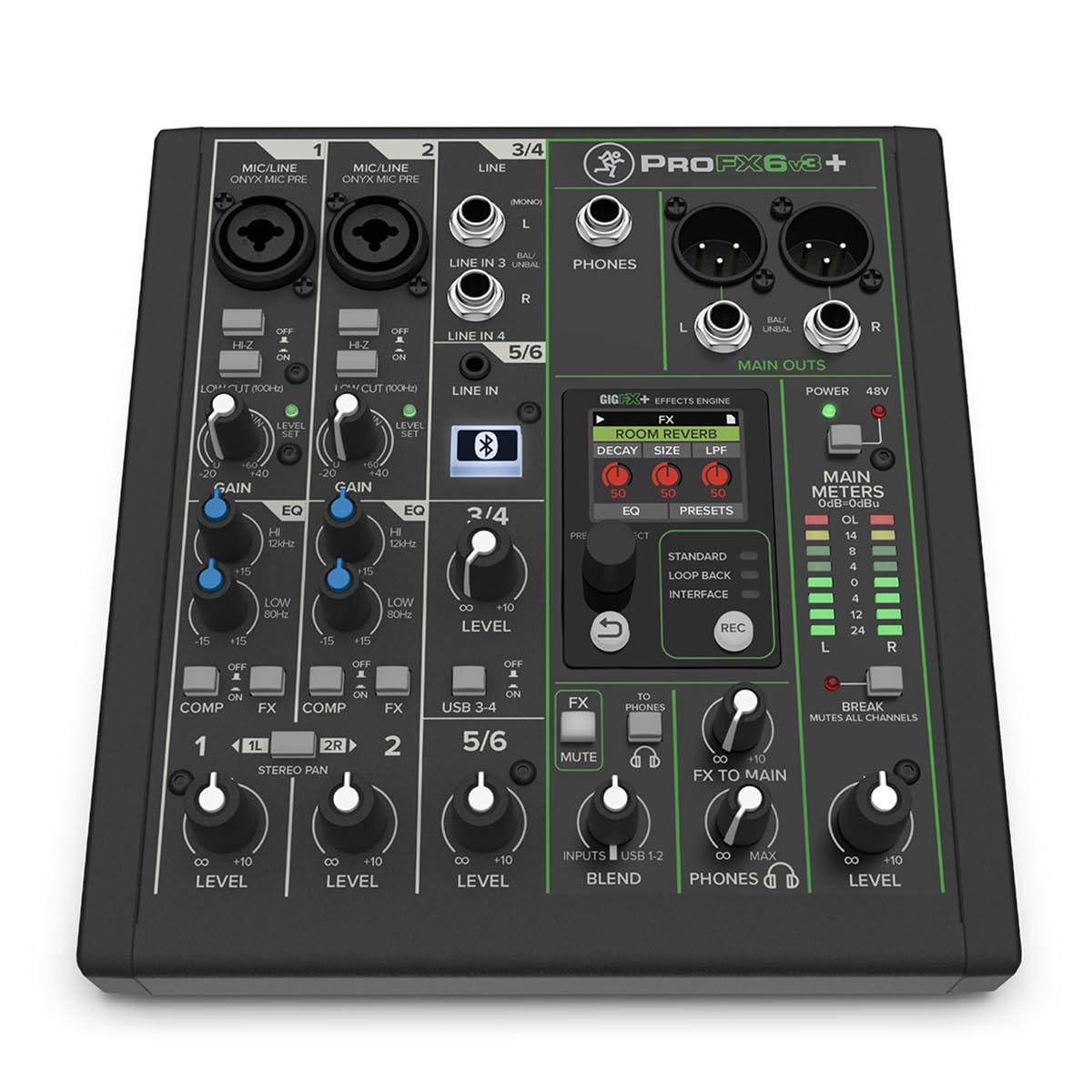
The Mackie ProFX6v3+ is a modern hybrid mixer designed explicitly for the streamer and content creator. It pairs Mackie’s renowned Onyx mic preamps with a high-resolution 2×4 USB-C audio interface, capable of 24-bit/192 kHz recording. The star feature is the upgraded GigFX+ effects engine, which offers 12 editable presets displayed on a full-color LCD screen, allowing you to dial in reverb, delay, or chorus without needing a computer.
Its bidirectional Bluetooth channel with Mix Minus is a killer feature for podcasts and interviews. You can connect a smartphone for calls or guest audio, and the mixer automatically removes the mixer’s own signal from the Bluetooth return to prevent echo. The three USB recording modes — Standard, Loopback (for streaming), and Interface (for recording channels 1-2 dry) — make routing simple for any scenario.
For streamers who want to move away from software-based effects and gain flexibility in their signal routing, the ProFX6v3+ is an outstanding choice. The one-button compression, low-cut filters, and Hi-Z switches on the inputs give you professional control. The only drawback for larger setups is the lack of a second output bus for independent monitor mixes, but for its intended use as a compact, powerful hub, it is exceptionally well designed.
Why it’s great
- GigFX+ effects engine with 12 editable presets and LCD screen
- Bidirectional Bluetooth with Mix Minus for phone calls
- High-resolution 24-bit/192 kHz USB-C audio interface
Good to know
- Only 6 channels — limited for larger band setups
- No secondary output bus for separate monitor mixes
4. Behringer Xenyx X1622USB Premium 16-Input Mixer

The Behringer X1622USB is a workhorse mixer that packs four XENYX mic preamps, four studio-grade compressors, and a 16-input architecture into a single unit. The XENYX preamps are known for their high headroom and low noise, rivaling standalone boutique preamps at a fraction of the cost. The one-knob compressors on the mic channels are simple to use, providing instant dynamic control for vocals without complex threshold and ratio settings.
The built-in 24-bit stereo effects processor offers 16 editable presets, including reverb, chorus, flanger, delay, and pitch shifting, all adjustable via the Tap function. The Neo-classic “British” 3-band EQs with a semi-parametric mid band deliver a warm, musical EQ curve that is forgiving and pleasing on most sources. The flexible routing includes two subgroups, main L/R outputs, and multiple aux sends.
For a small church, a working band, or a podcast that manages four or more microphones, the X1622USB delivers exceptional value. The USB interface only sends the main mix, which is a limitation for multi-track recording, but for live sound reinforcement or a simple stereo recording of a multi-mic setup, this mixer is a robust and affordable solution that punches well above its price point.
Why it’s great
- Four XENYX preamps with phantom power and high headroom
- One-knob compressors on all mic channels for easy vocal control
- 16-input architecture with flexible subgroup and aux routing
Good to know
- USB interface only sends the main stereo mix
- Built-in effects can be confusing to program for some users
5. Focusrite Scarlett Solo 3rd Gen USB Audio Interface

The Focusrite Scarlett Solo is one of the most popular audio interfaces in the world for a reason — its microphone preamp delivers clean, usable gain for the vast majority of home recording scenarios. The preamp’s spec sheet claims 60 dB of gain, which is enough to drive most dynamic mics to a decent level without excessive noise, though a cloudlifter may still be needed for extremely quiet sources like a Shure SM7B.
The hallmark feature is the Switchable Air mode, which applies a high-pass filter and a 4 dB shelf boost at 10 kHz. This brightens the signal from typical dynamic mics and adds clarity to acoustic instruments recorded via XLR. The 24-bit/192 kHz converters ensure that your recordings retain their full sonic quality, and the all-metal construction has proven to be very durable over years of use.
For the solo podcaster or bedroom musician who just needs one high-quality mic input and one instrument input to get started, the Scarlett Solo is the obvious entry-level professional choice. It is bus-powered via USB-C, incredibly compact, and comes with a suite of included software (Pro Tools Intro, Ableton Live Lite, etc.). If you only need a single channel of clean, reliable gain and a simple path into your DAW, this is it.
Why it’s great
- High-quality mic preamp with switchable Air mode for clarity
- Up to 24-bit/192 kHz recording with low latency
- Compact, durable metal chassis, bus-powered via USB-C
Good to know
- Single mic input limits multi-source setups
- May need an external booster for very low-output dynamic mics
6. Mackie 402VLZ4 4-Channel Ultra Compact Mixer

The Mackie 402VLZ4 is a testament to the principle that sometimes less is more. This ultra-compact 4-channel mixer packs two of Mackie’s signature Onyx mic preamps, which are notably quiet and provide high headroom, into a footprint that fits in a small bag. It is a pure analog signal path — no digital effects, no USB interface — just clean amplification and basic level control.
Its improved RF rejection makes it particularly suitable for broadcast applications or environments with wireless sources. The phantom power switches on for both channels simultaneously, powering condenser mics for interviews or live sound. The EQ section offers low and high shelving filters, with low-cut filters on each mic channel to reduce rumble and handling noise.
For someone who needs a simple, high-quality preamp for just one or two microphones in a fixed setup, and values an all-analog approach, the 402VLZ4 is a perfect tool. Its lack of internal power supply (uses an external wall wart) keeps the chassis small. It is a no-frills utility mixer that excels at its singular purpose: taking a mic signal and making it louder and cleaner with zero superfluous noise.
Why it’s great
- Ultra-compact footprint ideal for tight spaces or mobile use
- High-headroom, low-noise Onyx mic preamps
- Excellent RF rejection for broadcast environments
Good to know
- No USB interface — cannot record directly to computer
- Uses an external power supply (not bus-powered)
7. MAONO MaonoCaster AME2 10-Channel Podcast Mixer

The MAONO AME2 is an all-in-one podcasting solution that goes far beyond simple amplification. It combines a 10-channel mixer with a preamp that offers up to 60 dB of ultra-low noise gain and 48V phantom power, making it compatible with both dynamic and condenser mics. The built-in DENOISE function and adjustable reverb modes give you control over the final sound without any post-production.
Its standout feature is the 11 customizable sound pads, three of which can record up to 60 seconds of audio each and support one-key looping. This is invaluable for podcasters who want jingles, intros, or sound effects at their fingertips. The mixer also includes 12-step auto-tune, adjustable treble/mid/bass, pitch changer, and sidechain, loopback, and music-only switches — features typically found on DJ gear.
For the live streamer or podcaster who wants a single, dedicated control surface that handles all audio routing, effects, and sound effects without a computer, the AME2 is a compelling package. Its ease of use and feature density is impressive. The main concern from long-term users is reliability — reports of USB-C and lighting issues after a year of use suggest that while the feature set is excellent, the build quality may not match the premium-feeling feature list.
Why it’s great
- 11 customizable sound pads with looping for live effects
- Comprehensive processing: auto-tune, reverb, EQ, denoise
- Multiple independent outputs for streaming and monitoring
Good to know
- Some units have reported reliability issues after extended use
- Does not support USB microphones
8. ART Tube MP Studio V3

The ART Tube MP Studio V3 is not about transparent gain — it is about adding desirable harmonic coloration. Its single-channel vacuum tube preamp delivers the classic warmth, richness, and slight compression often associated with vintage analog gear. The Variable Valve Voicing control lets you dial in the amount of tube character, from subtle warmth to a more saturated, overdriven tone.
The unit includes an output protection limiter (OPL), which acts as a safety net to prevent hot signals from clipping your recording chain. It accepts both XLR and 1/4″ inputs, making it versatile for both microphones and instruments. Many users report that it transforms the sound of a standard dynamic mic like the Shure Beta 58A into something that resembles a far more expensive tube microphone — a testament to the preamp’s effectiveness at coloration.
For the recording artist or vocalist who wants that analog, “recorded through a tube” sound without a rack of vintage gear, the ART Tube MP Studio V3 is the most affordable way into that sonic world. The lack of a power switch and the need for its external power supply are minor inconveniences. If you are seeking warmth and character rather than transparent gain, this unit has no equal in its range.
Why it’s great
- True vacuum tube preamp for warm, analog coloration
- Variable Voicing control for dialing in tube character
- Output Protection Limiter prevents clipping
Good to know
- No power switch — must be plugged/unplugged
- Single-channel output, limiting for multi-mic setups
9. Pyle PMXU46BT 4-Channel Bluetooth Studio Audio Mixer

The Pyle PMXU46BT is a budget-conscious 4-channel mixer that brings Bluetooth streaming and a USB audio interface to the table. It provides +48V phantom power for condenser microphones, making it functional for home studios and small events. The preamps are adequate for spoken word and basic music recording, performing well enough for the price if you are not expecting studio-grade transparency.
The mixer features LED indicator lights on each channel for quick visual level monitoring, and a 12-segment stereo output level meter. Two XLR/1/4″ combo inputs and two additional 1/4″ line inputs give you flexibility for mics and line-level instruments. The inclusion of 2-band EQ on the mic channels allows for basic tone shaping, and the USB soundcard lets you record directly to a Mac or PC.
For the absolute beginner or someone on the tightest budget who needs a mixer with multiple input formats and Bluetooth compatibility, the Pyle PMXU46BT delivers the core function of amplifying and mixing microphones. The build quality is not on par with Mackie or Yamaha, and the preamps are noisier at higher gain levels. However, it is a functional entry point into analog mixing that won’t break the bank.
Why it’s great
- Integrated Bluetooth for wireless playback and mixing
- USB interface for direct PC recording without additional gear
- Phantom power and 4-channel flexibility at a very low cost
Good to know
- Preamp noise floor is higher than pricier competitors
- Build quality is typical for the budget category — simple plastic chassis
FAQ
What is the difference between a mic preamp and a mixer?
Do I need a preamp if my interface has one built-in?
What does phantom power do for a condenser mic?
Final Thoughts: The Verdict
For most users, the best amplifier for mic winner is the dbx 286s because it combines a high-headroom preamp with essential processing (compression, de-esser, gate) that solves real-world vocal problems in hardware, without CPU overhead or plugin lag. If you want pristine analog gain with routing flexibility for multiple sources, grab the Yamaha MG10XU. And for all-in-one podcasting with sound pads and effects, nothing beats the MAONO AME2.