
Our readers keep the lights on and my morning glass full of iced black tea. As an Amazon Associate, I earn from qualifying purchases.
Specs are compiled from manufacturer listings and verified buyer reviews and can change over time — please confirm the key details on the product page before buying.
You want that chest-thumping, movie-theater rumble from your subwoofer, but picking the right amplifier to drive it can turn into a confusing mess of watts, ohms, and filter knobs. The whole point is simple: you want deep, clean bass that feels like it’s shaking the room, not a muddy thud or a humming annoyance. This guide cuts through the spec-sheet noise to match you with the amplifier that will actually wake up your subwoofer and make your home theater roar.
I’m Min — the founder and writer behind Gadgets Feed. This guide is built by comparing the manufacturers’ published specifications and the patterns across verified customer reviews, so you get each pick’s real strengths and trade-offs instead of marketing spin.
Whether you are building from scratch or reviving a broken sub, these are the best contenders for any amplifier for subwoofer home theater system on the market today.
Our Picks at a Glance


How To Choose The Best Amplifier For Subwoofer Home Theater
Buying an amplifier for your subwoofer is different from picking a regular stereo amp. You are not looking for full-range power; you are looking for controlled, low-frequency muscle. A well-matched amp delivers tight, room-shaking bass for movies and music alike. A poor match causes distortion or weak output that fails to energize your room.
Passive vs. Active Subwoofers
The first fork in the road is knowing what you own. A passive subwoofer has no built-in amplifier and needs an external amp to drive it. A powered (active) subwoofer has an amp built in. This guide focuses on external amplifiers, but you will see options that work as replacements for broken internal amps in powered subs, or as dedicated drivers for passive subwoofers.
Wattage: RMS Over Peak
Ignore the flashy “peak power” number. You care about RMS (continuous power). This is the real muscle your subwoofer can use without distortion over time. Match the amplifier’s RMS output to your subwoofer’s RMS rating. Oversizing a bit is fine — it gives you headroom without clipping, which is safer for your sub.
Crossover and Phase Control
A low-pass filter (crossover) lets you dial in the highest frequency the subwoofer will play, usually between 50Hz and 150Hz. This prevents the sub from clashing with your main speakers. A phase switch (0°/180°) helps align the sub’s sound waves with the rest of your speakers for smooth bass that doesn’t cancel itself out in your room.
Quick Comparison
| Model | Best For | Power (RMS) | Driver Size | Input Type | Amazon |
|---|---|---|---|---|---|
| Edifier T5s★ Best Overall | Compact bookshelf systems | 70W | 8″ | RCA | Amazon |
| BESTISAN Powered SubBest Value | Budget-friendly rooms | — | 8″ | RCA, LFE, Speaker | Amazon |
| S.M.S.L A50 PROMost Versatile | 2.1 desktop systems | 100W | Passive sub | HDMI, BT, USB, Optical | Amazon |
| Fosi Audio BT30D Pro | High-power 2.1 setups | 165W x2 + 350W | Passive sub | Bluetooth, RCA | Amazon |
| Acoustic Audio WS1005 | In-wall/in-ceiling subs | 200W | Passive sub | LFE, RCA | Amazon |
| AIYIMA A20 | Audiophile 2.1 systems | 300W x2 | Passive sub | XLR, RCA | Amazon |
| WAudio SUA-350 | DIY subwoofer builds | 350W | — | RCA, XLR | Amazon |
| Dayton Audio SPA300-D | Replacing dead amps | 300W | — | RCA | Amazon |
| Soundavo PSB-400DSP | Custom DSP tuning | 400W | — | RCA, Speaker, LFE | Amazon |
In‑Depth Reviews
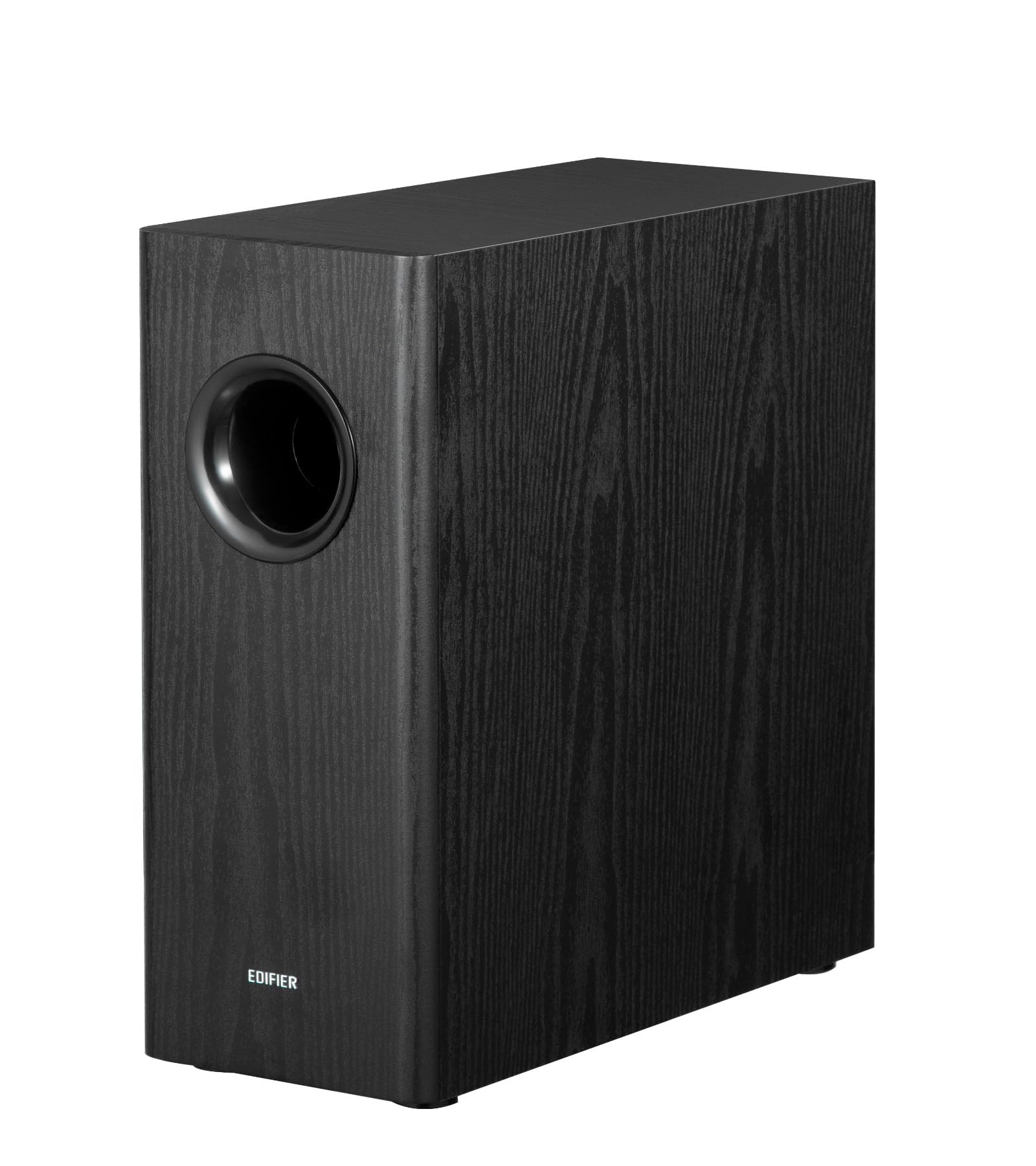
1. Edifier T5s Powered Active Subwoofer
Our pick — over 4.5★ from 350+ verified ratings; the strongest balance of quality and price.
The compact powerhouse that fills a room without taking it over.
The crowd has spoken — this is the single most beloved subwoofer amp combo for small to medium rooms. The reason is simple: it pairs a 70W RMS Class-D amplifier with an 8-inch long-throw woofer to deliver deep, defined bass down to 35Hz. That means you feel the low-end rumble in movies without it turning into a muddy mess. The 18mm MDF cabinet keeps distortion low so the sound stays clean.
It is designed to work smoothly with Edifier speakers like the R1280DBs or R1700BTs, but it also connects to other powered speakers or AV amps via its RCA inputs. A phase selector (0°/180°) and an adjustable low-pass filter (30Hz–160Hz) let you dial in the perfect blend so the sub disappears into the room and just sounds like a bigger, better system. The thing that wins people over is the sound quality itself — owners consistently call it “incredible,” with one noting “it thumps” and delivers deep, rich bass even at half volume. It is so compact that a vertical design (15.71 x 6.69 x 16.14 inches) lets it slip under a console or beside a desk.
For a sensible trade-off, this is not meant to pressurize a large home theater space. If your room is big and you crave earth-shattering SPL, you will want more RMS wattage. But for the vast majority of living rooms, bedrooms, and desktop setups, it is the bass anchor your system needs.
Why it wins
- Deep bass to 35Hz in a compact package that fits tight spaces.
- Adjustable crossover and phase switch for smooth integration.
- Works with many standard powered speakers via RCA.
The honest limit
- 70W RMS is plenty for small to medium rooms but not enough for a large dedicated theater.
Grab it if: you want clean, surprising bass from a small box that doesn’t dominate your living space.
Look elsewhere if: you have a massive open-concept room needing 300+ watts.
2. BESTISAN Powered Subwoofer
The budget-friendly sub that punches far above its weight.
Do not let the compact size fool you. This down-firing 8-inch subwoofer pushes deep, effective bass across your floor to create an rich surround experience for a surprisingly low entry point. With flexible wired connectivity through RCA, LFE, AUX, and high-level speaker inputs, it works with just about anything — a soundbar, bookshelf speakers, or a full home theater receiver. It even includes a coaxial cable to get you started fast.
Buyers consistently rave about the sound quality, often calling it “great sound at a great price!” Many owners note it outperforms other subs twice its size in small to medium rooms. It is designed specifically to pair with line-level signals (output signal ≤ 850mV) and works best with BESTISAN soundbars or bookshelf speakers for a balanced distortion-free experience. The top positive aspect by a wide margin is sound quality, with value for money coming in second — a clear sign that this sub delivers where it counts.
One honest caveat is that volume performance is a mixed bag. Some owners find it struggles at low volumes, so it is best suited for systems where you listen at moderate to high levels. It also comes with a note to avoid pairing it directly with high-power amplifiers.
Who it serves best: the budget-conscious builder looking for the biggest bass bang per dollar.
Reach for this if: your budget is tight but you still want real, room-filling bass.
Think twice if: you need precise low-volume performance for late-night listening.
3. S.M.S.L A50 PRO HiFi Power Amplifier
The all-in-one 2.1 hub that turns a TV into a proper system.
This is not just a subwoofer amp — it is a full 2.1-channel amplifier that lets you build a real stereo plus subwoofer system. It delivers 100 watts of passive subwoofer power, and its built-in crossover gives you ten adjustable frequency points for both the high-pass filter (protecting your main speakers) and the low-pass filter (for the sub). You can also set the subwoofer volume independently from S00 to S99, which is a massive convenience over simpler amps.
The connectivity is what sets the A50 PRO apart. It features HDMI ARC (compatible with most TVs), USB-C for a driver-free DAC, optical input, and AUX, plus Bluetooth 5.0. This makes it incredibly easy to replace a soundbar. The build quality is a standout positive aspect, with owners praising its solid feel and the convenience of the remote control. However, sound quality is the aspect with the most mentions, and Amazon rates it as “MIXED” — meaning while many find it good, a significant number found it lacking in output for more demanding speakers.
A key compatibility note: the subwoofer output is meant for a passive subwoofer, not a powered one with an RCA input. A few owners discovered this the hard way, so double-check what type of sub you have before buying.
Standout features
- HDMI ARC and Bluetooth make it a perfect TV soundbar replacement.
- Adjustable high-pass filter protects small speakers from bass distortion.
Things to know
- Only works with passive subwoofers — not powered ones with RCA input.
- Sound quality is considered good but not exceptional by critical listeners.
Best for: building a compact 2.1 system around your TV with a passive subwoofer.
Not for: audiophiles seeking high-current power for demanding speakers.
4. Fosi Audio BT30D Pro Subwoofer Amplifier

The 2.1 amp that shakes the room without shaking your wallet.
If you need serious power for a 2.1 home theater system, the BT30D Pro delivers in a way that few compact amps can match. Using two Texas Instruments TPA3255 Class-D amplifier chips, it pushes 165W x 2 for your main speakers and a whopping 350W for your passive subwoofer. That is enough grunt to drive a large 12-inch sub and still have clean headroom for action movie explosions. The separate SUB FREQ knob lets you set the crossover from 0 to 300 Hz, and the SUB VOL knob handles the sub’s level independently from the mains.
The sound quality is the most praised aspect — 189 owners single it out. They describe the sound as “clear with perfect bass and treble control.” The Bluetooth 5.0 connectivity is also a huge hit, offering stable streaming over a range of up to 15 meters, making it perfect for patios or garages. Despite all that power, it fits in a compact all-metal chassis that measures just 1.5 pounds and runs cool.
The one recurring frustration is that Bluetooth is the primary input and it auto-switches from RCA, which can be annoying if you prefer wired sources. There is also no manual input selection, but for the price and power, these are minor trade-offs.
The power play: if your system needs real wattage for a passive sub and speakers, this is the most affordable way to get there without sacrificing sound quality.
Ideal for: gamers, movie fans, and music lovers who want tight, customizable bass control.
Skip if: you only use an active subwoofer and don’t need the main speaker channels.
5. Acoustic Audio WS1005 Passive Subwoofer Amp

The straight-ahead workhorse for passive subs in walls or ceiling.
This is a focused tool for a specific job. The WS1005 is a 200-watt passive subwoofer amplifier designed for in-wall, in-ceiling, or standard home theater applications. It outputs 200W into a 4-8 ohm load with a frequency response of 50 to 200 Hz (+/- 3dB). It has LFE and RCA inputs to pull a signal from your home theater receiver, and raw wire outputs to connect your passive sub. The front panel gives you sub volume and crossover control knobs.
Value for money is the strongest positive aspect here — it is a proven solution for powering a basic passive sub, including car audio subs in a home setting. One owner successfully used it to drive a 300W RMS car sub, reporting it “shakes the floor.” However, reliability is a noted concern in the reviews, with several reports of units failing after extended use. This means it is best suited for a budget-conscious secondary system where the stakes are low.
Functionality is the most-mentioned aspect, but Amazon labels it “MIXED,” meaning it works for some and disappoints others. The recurring gripe is that the LFE mode is weak for some users. Consider this a temporary or entry-level fix, not a permanent anchor for a high-end system.
The upside
- Works with a wide range of passive subs, including in-wall and car audio models.
- Simple LFE and RCA connectivity for easy integration.
The downside
- Reliability is a concern; not recommended for a critical primary system.
Perfect for: a garage, family room, or as a budget-friendly fix for a passive sub.
Not for: long-term daily use in a main living room theater.
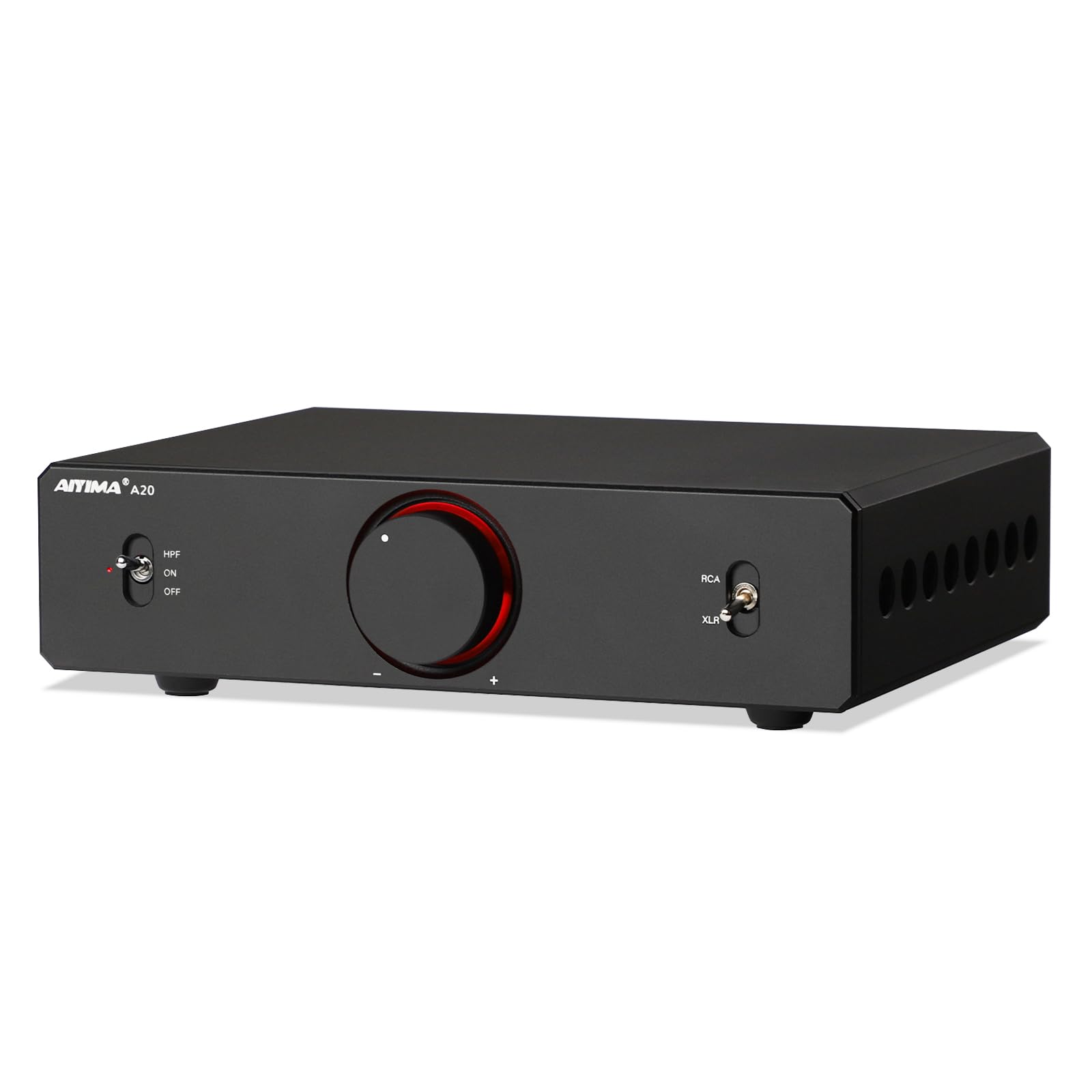
6. AIYIMA A20 2.1 Channel Power Amplifier
The balanced powerhouse that silences hiss and unleashes clarity.
This is for the serious listener who wants studio-grade performance. The AIYIMA A20 uses a fully balanced design with TPA3255 chips and PFFB (Post Filter Feedback) to achieve an exceptional 116dB signal-to-noise ratio and an ultra-low 0.002% THD+N. What does that mean for your ears? A perfectly black background — no hiss, no hum, just the music or movie audio with absolute clarity. It’s so quiet that owners specifically mention the “dead quiet” operation as a major highlight.
The killer feature here is the adjustable high-pass filter (HPF) from 60 to 200Hz. This is usually missing on cheaper 2.1 amps. It protects your main speakers from deep bass they cannot handle, which dramatically cleans up the mid-range. This perfectly complements the dedicated subwoofer output. Connectivity is equally premium, with XLR and RCA inputs, a BYPASS mode for an external preamp, a +3dB gain switch, and a 12V trigger for automated systems. It uses high-end German WIMA and Japanese Rubycon capacitors.
Sound quality is the top positive aspect, with owners noting it “sounds better than amps costing hundreds.” However, one review flagged it as “under powered,” suggesting the 48V/5A power supply limits the 300W x 2 rating for very demanding speakers. Some owners recommend a 48V/10A GaN supply for full potential. It also lacks a built-in DAC, so you need a separate DAC or use a source with RCA outputs.
Why it stands out
- Refreshingly low noise floor and high fidelity for critical listening.
- Adjustable HPF protects main speakers and cleans up mid-range.
What it needs
- May require an upgraded 48V/10A power supply for full rated power.
- No onboard DAC, so you need a separate one for USB/Optical sources.
Best for: audiophiles building a high-fidelity 2.1 system who want clean power and adjustable crossovers.
Consider something else if: you just want a simple powered subwoofer and don’t need main speaker channels.
7. WAudio 350W Class-D Subwoofer Plate Amplifier

The plate amp that gives you pro-level control for a custom sub build.
If you are building your own subwoofer enclosure or replacing a dead internal amp, the WAudio SUA-350 is a compelling option. It delivers 350W RMS at 4 ohms with less than 1% THD, using efficient Class-D amplification that minimizes heat. Despite its power, it measures just 205mm x 235mm x 65mm, making it easy to fit into a custom enclosure. It includes both RCA (unbalanced) and XLR (balanced) inputs for noise-free connections from pro audio gear.
The control set is excellent for fine-tuning. A variable low-pass filter ranges from 25Hz to 180Hz, a phase switch (0°/180°) helps with room integration, and there is a built-in bass boost at 45Hz (+6dB) for extra punch. The auto power on/off function is energy-saving, and standby mode consumes less than 0.5W. Performance is the most praised aspect, with owners noting it “drives subwoofers effectively” and offers good value for the power level.
A significant number of reports, however, mention issues with noise. An audible low-frequency hum and popping sounds have been reported by some owners, with one noting a popping noise that occurred even with no input signal. This is not a universal problem, but it is a risk to consider. The plastic back plate and heat dissipation are also noted as weak points.
Great features
- Powerful 350W RMS with balanced XLR and unbalanced RCA inputs.
- Bass boost at 45Hz (+6dB) for cinematic low-end punch.
Potential issues
- Some units have noise problems (hum, popping) that impact performance.
- Plastic back plate and heat dissipation design are not the best.
Ideal for: DIY builders who need a powerful, controllable plate amp with both RCA and pro-grade XLR inputs.
Proceed with caution if: you have zero patience for potential noise floor issues.
8. Dayton Audio SPA300-D 300 Watt Subwoofer Plate Amplifier

The go-to fix that brings your dead powered subwoofer back to life.
This is the most well-known and trusted solution for reviving a subwoofer whose internal amplifier has died. The Dayton Audio SPA300-D delivers 300W RMS (600W peak) at 4 ohms using a Class-D topology that keeps it efficient and compact. It works on a range of voltages from 115V to 240V, making it globally usable. It is a common replacement for failed amps in popular subwoofers like the Klipsch series and Polk PSW505. As one owner put it, “The internal amplifier on my Klipsch subwoofer died. I replaced it with this and it works like new.”
It offers variable gain and a switchable low-pass crossover with a bass boost for dialing in the sound. The auto on/off function is a nice convenience for energy savings. Functionality and sound quality are the most praised aspects, with owners appreciating that it sounds “clear” and offers plenty of power for 12-inch subwoofers.
While it is a popular fix, durability is a mixed aspect. Several buyers report units failing after about two months of use, which is a risk when chasing a budget repair. An occasional unit also arrives with a bent plate due to less-than-ideal packaging, so buying from a source with easy returns is wise. Some also find it slightly underpowered compared to their original amp, needing more volume dialed in to achieve the same effect.
Why it’s popular
- A near-perfect drop-in replacement for many popular subwoofer brands.
- Clear, powerful sound that brings dead subs back to life.
The trade-off
- Some reports of units failing after only a couple of months of use.
- Packaging can be fragile, risking a bent plate in transit.
Who it saves: anyone with a dead powered sub looking for a proven, cost-effective replacement amplifier.
Who should skip: those who want a bulletproof, long-term solution without a chance of early failure.
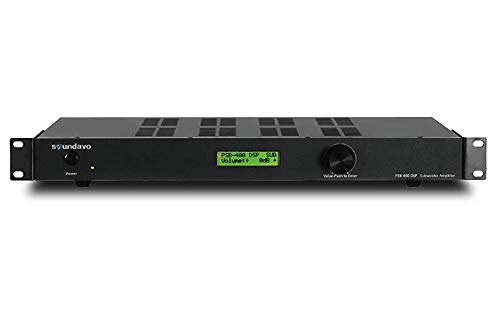
9. Soundavo PSB-400DSP Subwoofer Amplifier
The DSP-powered amp that lets you dial in your bass with surgical precision.
This is the feature-packed flagship of the list. The Soundavo PSB-400DSP delivers a hefty 400W RMS of Class-D power, but the real story is the built-in Digital Signal Processor (DSP) and the LCD screen. You can program and save up to 3 custom presets for movies, music, or late-night listening. The DSP menu lets you adjust the master volume, crossover frequency, 4 different crossover slopes, phase, and 4 different low-cut filters. It even has presets tune for 8-inch, 10-inch, and 12-inch subs.
Connectivity is extremely flexible. It features stereo/mono line-level RCA inputs, a dedicated LFE input for modern AV receivers, and even speaker-level inputs and outputs for older receivers without sub outs. The three-way power switch lets you choose between 12V trigger mode, auto on/off by signal detection, or always-on mode, with adjustable auto-off timers. At 6.9 pounds and a 17.4 x 9.6 x 1.8-inch profile, it is built to be the centerpiece of a serious system.
Owners who love it call it “powerful” and “great value” for the feature set, noting it outperforms failed internal amps in brands like Klipsch. However, the menu navigation requires sequential scrolling with no random access, which is clunky. A few owners reported humming issues when the gain was maxed out, and an occasional dud unit leaves a bad taste. It is also the most premium option on this list, reserved for those who truly want to tune their bass.
Why it’s the best
- Full DSP control with LCD screen for precise tuning and memory presets.
- Powerful 400W RMS with speaker-level and line-level inputs for maximum compatibility.
What to consider
- Menu navigation is slow and requires scrolling through every option.
- Higher price point and potential for quality control issues on some units.
Best for: the enthusiast who loves to tweak and save custom EQ curves for different content.
skip it if: you just want a simple, reliable amp without the complexity or price of DSP.
Understanding the Specs
RMS Power vs. Peak Power
RMS (Root Mean Square) is the only number that matters for clean, continuous bass. It tells you the power the amplifier can deliver consistently without melting or distorting. Peak power is a marketing number that represents a brief burst — ignore it. Always match the amp’s RMS to your subwoofer’s RMS rating for a safe, balanced setup.
Crossover and Phase Control
A low-pass crossover lets you set the frequency limit for the subwoofer, typically between 50Hz and 150Hz. This prevents the sub from trying to play mid-range frequencies that belong to your main speakers. The phase control (0°/180°) adjusts the timing of the sub’s sound waves to align with your main speakers, eliminating bass cancellation that makes your system sound thin.
FAQ
Can I use a regular stereo amplifier to power a subwoofer?
What is the difference between a plate amplifier and a standalone amp?
How do I know if my subwoofer is passive or active?
What does a low-pass filter do for my home theater?
Can I use a subwoofer amplifier with a soundbar?
Why does my subwoofer amplifier hum or buzz?
What is the difference between LFE and standard RCA input?
How much power (watts) do I really need for a home theater sub?
Can I use a car subwoofer with a home amplifier?
Final Thoughts: The Verdict
The best amplifier for subwoofer home theater systems is the amplifier for subwoofer home theater winner is the Edifier T5s because it delivers the cleanest, deepest bass for its size and price, with the control you need to integrate it smoothly. If you need a powerhouse for a 2.1 setup with a passive sub, grab the Fosi Audio BT30D Pro. And for the DIY builder or audiophile who wants surgical precision, the AIYIMA A20 is the quiet, clean, and highly tunable choice you should reach for.
How We Picked
We do not accept paid placement. Every pick is matched to a real buyer and a real use-case; we do not hands-on test units.
Sources & Methodology
Specifications: manufacturer listings and product documentation. Review insights: verified customer reviews, as of July 2026. Pricing: not shown on this page (it changes often); check the current price via the retailer link.
As an Amazon Associate, Gadgets Feed earns from qualifying purchases. This does not affect which products we feature.