
Our readers keep the lights on and my morning glass full of iced black tea. As an Amazon Associate, I earn from qualifying purchases.
A landline phone that is hard to hear, hard to read, or hard to use defeats its entire purpose. Whether you are equipping a home office, a senior’s bedside table, or the family kitchen, the core job of an analog landline phone is to deliver reliable two-way audio without confusion. The wrong model introduces low handset volume, dim caller ID screens, or fiddly buttons that turn a simple call into a daily frustration.
I’m Min — the co-founder and writer behind Gadgets Feed. I’ve spent dozens of hours cross-referencing user-reported audio quality scores, button tactile feedback, and display readability across popular corded phone models to isolate the units that truly deliver clear communication without gimmicks.
After examining wall-mount compatibility, ringer decibel levels, one-touch dialing setups, and power-outage reliability, I’ve separated the functional tools from the frustrating duds in this guide dedicated to the analog landline phone.
How To Choose The Best Analog Landline Phone
Finding the right corded phone means looking past the superficial design and evaluating four critical pillars: audio performance, display clarity, ease of dialing, and physical mounting flexibility. Each factor directly impacts how comfortably and reliably you can place and receive calls every day.
Ringer Volume & Handset Clarity
The loudest ringer in this category reaches approximately 110 dB, which is essential for seniors with hearing loss or for noisy environments like kitchens and workshops. Handset volume should offer at least two adjustable levels — many premium models now include an “Audio Assist” button that temporarily boosts earpiece gain during a conversation without altering the handset’s baseline setting.
Display Readability & Backlighting
A caller ID display that is too dim or non-backlit becomes useless in a dark hallway or bedroom. Look for displays that are tiltable to reduce glare and have adjustable backlighting. The AT&T CD4930, for example, uses an extra-large tiltable LCD that is significantly more readable at a glance than the fixed, non-lit screens found on budget wall phones.
Button Size & Tactile Feedback
Standard keypads typically measure around 10-12 mm per button, while “big button” models push past 18 mm. For users with arthritis, reduced fine motor control, or vision impairment, oversized high-contrast keys with positive tactile click reduce mis-dials dramatically. Photo memory buttons that accept a printed picture are a game-changer for dementia patients, allowing them to call a family member by pressing a familiar face rather than remembering a number sequence.
Quick Comparison
On smaller screens, swipe sideways to see the full table.
| Model | Category | Best For | Key Spec | Amazon |
|---|---|---|---|---|
| AT&T CD4930 | Premium | Seniors & vision needs | Extra-large tilt backlit LCD, 25-min answering system | Amazon |
| AT&T CL4940 | Premium | Home office & answering machine | Large tilt display, built-in digital answering | Amazon |
| Panasonic KX-TSC11B | Mid-Range | Reliable everyday desk use | 50-number caller ID memory, one-touch dialer | Amazon |
| Excelltel EX-LD-858HF | Mid-Range | Dementia & photo speed dial | 9 one-touch photo keys, hands-free speaker, SOS | Amazon |
| HTMengt Retro Red | Mid-Range | Aesthetic retro & emergency backup | Metal base, visible ringing indicator, 15-ft total cord length | Amazon |
| Uvital Corded Phone | Budget | Loud ringer & basic features | 110 dB ringer, 61-call log, LED visual indicator | Amazon |
| MCHEETA Wall Phone | Budget | Wall-mount durability | Shatterproof ABS, oversized lighted buttons, no AC needed | Amazon |
In‑Depth Reviews
1. AT&T CD4930 Black Corded Phone

The AT&T CD4930 leads this list because it combines the two hardest things to find in one device: a genuinely readable display and truly oversized buttons. The extra-large tiltable backlit LCD shows caller ID name and number at a glance from a desk or nightstand, and the big high-contrast keys reduce dialing errors significantly for users with arthritis or low vision. An integrated 25-minute digital answering system saves you from buying a separate machine.
Audio Assist temporarily boosts earpiece volume during a call, and the extra-loud ringer comes with a visual flashing indicator — a thoughtful combination for households where hearing varies between users. The phone works during power outages for basic dialing, though the answering system and display backlight require four AA batteries. Setup remains straightforward: plug in the RJ11 line cord and the phone is operational within seconds.
User reports consistently highlight the tilt mechanism and button size as the differentiators. Reviewers with macular degeneration specifically call out the panel’s ability to swivel to the perfect viewing angle, something fixed-screen models like the Panasonic KX-TSC11B cannot match. The phone does weigh 2.4 pounds, which gives it a planted feel on the desk but makes wall mounting less practical than lighter units.
Why it’s great
- Extra-large tiltable backlit display reduces glare and improves readability
- Dedicated Audio Assist button boosts call volume in real time without menus
- Built-in answering machine with 25-minute recording capacity
Good to know
- Display and answering system require AA batteries, not line-powered
- Heavier plastic construction makes it less ideal for wall mounting
2. AT&T CL4940 Corded Phone

The AT&T CL4940 shares many DNA markers with the CD4930 but lands at a more accessible price point while keeping the core usability features intact. You still get a large tiltable backlit display, a built-in answering machine, and a hands-free speakerphone. The display shows caller ID with a 50-name call log, and the adjustable screen angle lets you eliminate reflection issues on a bright desk or dark nightstand.
Sound quality receives consistent praise across user reviews for its clarity and lack of distortion at high volume levels. The phone includes a last-number redial, volume control on the base, and a wall-mountable design that the heavier CD4930 handles less gracefully. Ringer volume options cover off/low/high, and the handset is hearing-aid compatible — an important check for senior users wearing hearing devices.
The most frequent user complaint is that the mute button produces no audible confirmation, which can cause brief confusion during calls. Some users also note that the display, while tiltable, is not as large as the CD4930’s panel, so users with significant vision loss may still prefer the bigger sibling. The phone remains line-powered for basic calling, keeping it operational during outages as long as you don’t need the screen or answering machine.
Why it’s great
- Tiltable backlit LCD with 50-name caller ID log for easy call screening
- Integrated answering system with remote access eliminates separate hardware
- Lighter build works well as both a desktop unit and a wall-mounted phone
Good to know
- Mute button has no audible beep, causing occasional call confusion
- Display is not as large as the CD4930’s extra-wide LCD
3. Panasonic KX-TSC11B

Panasonic’s KX-TSC11B represents the no-nonsense middle ground: a straightforward corded phone with caller ID and a one-touch memory dialer, built on Panasonic’s reliable Japanese engineering. The single-line unit supports both desk and wall mounting, and the multi-function LCD displays caller ID data clearly enough for most users. Three one-touch memory buttons give quick access to frequently dialed numbers without scrolling through a directory list.
The phone integrates a 50-number caller ID memory and call log, which is competitive with pricier models. Users praise the durable build quality and clear handset audio. The ringer volume includes off/low/high settings with a visual ringer indicator, and the phone draws power directly from the phone line — no AC adapter needed, so it keeps working when the power goes out.
However, the display is not backlit or tiltable, which creates readability issues in dim rooms. Some reviewers describe the LCD as “very faint even with fresh batteries” and note that the handset cradle may not hold the receiver securely, causing it to fall off if the base is bumped. The buttons are standard-size rather than oversized, so users with significant vision or dexterity challenges should look toward the AT&T CD4930 or the Excelltel EX-LD-858HF instead.
Why it’s great
- Line-powered operation ensures full functionality during power outages
- 50-number caller ID memory and call log for efficient call management
- Compact footprint with one-touch memory keys for frequent contacts
Good to know
- LCD screen lacks backlighting and tilt adjustment
- Handset can disconnect from the base if bumped or jarred
4. Excelltel EX-LD-858HF Big Button Phone

The Excelltel EX-LD-858HF earns its place through a design philosophy tailored specifically for dementia and Alzheimer’s care: photo one-touch dialing with nine memory keys that accept printed pictures. A caregiver can place a small photo of a family member under the key’s clear cover, allowing the user to dial that person simply by pressing the image. This eliminates the need to remember phone numbers or navigate a menu, reducing confusion during anxious moments.
An emergency SOS button provides an additional safety layer, and the adjustable handset volume together with the flashing LED incoming-call indicator ensures that calls are not missed even in noisy environments or by users with reduced hearing. The phone requires no batteries — power comes strictly from the phone line — which means no dead-battery emergencies. A 3-way conference call capability is present, though most users in this category will not need it.
Multiple verified reviews from caregivers confirm that the photo buttons work as intended, with one noting: “You can put pictures under the speed dial buttons to make it easier for them to call out.” However, the setup process requires cutting and inserting photos under the key covers, which takes some manual dexterity. A minority of users reported that the phone did not power on when connected through a VoIP modem, so verify PSTN compatibility before purchasing.
Why it’s great
- Photo-insert speed dial buttons enable dementia patients to call family by sight
- Emergency SOS button adds peace of mind for caregivers
- Fully line-powered with no batteries or AC adapter required
Good to know
- Photo setup requires cutting and fitting pictures under the key covers
- May not function correctly when plugged into some VoIP modem ports
5. HTMengt Traditional Red Landline Phone

The HTMengt retro red phone channels the iconic 2500-series desk phone design from the 1980s, but updates the build with a metal base and ABS plastic body that feels substantial without being overly heavy. The key selling point is the visible ringing indicator — a red lamp that flashes when a call arrives — making it useful both as a nostalgic decoration and as a functional alert for users who may not hear a standard ringer. Twice-injected large buttons provide tactile feedback that is noticeably more positive than cheaper injection-molded keypads.
The phone ships with an exceptionally long handset cord measuring 144 inches and a 180-inch straight telephone line, giving you generous placement flexibility across a room. It requires no external power source — just plug the RJ11 line cord into a wall jack and it works instantly. This makes the unit a practical emergency backup telephone since it remains fully functional during a power outage without any battery dependency.
User reviews consistently note that the ringer volume is on the quieter side, and the red indicator light is somewhat dim when connected through a cell2jack adapter (as the adapter supplies less voltage than a traditional PSTN line). The phone also does not include caller ID, so users who want to see incoming numbers before answering should pair this unit with a separate caller ID box or stick with a modern model like the AT&T CL4940. For pure retro aesthetics functional as a daily driver, this delivers.
Why it’s great
- Authentic retro 2500 styling with metal base for desk stability
- Long 15-foot total cable length for flexible room placement
- Zero power requirement makes it an ideal emergency backup phone
Good to know
- No caller ID display — incoming calls appear as any number
- Ringer is quieter than modern phones; dim indicator on VoIP adapters
6. Uvital Corded Phone for Landline
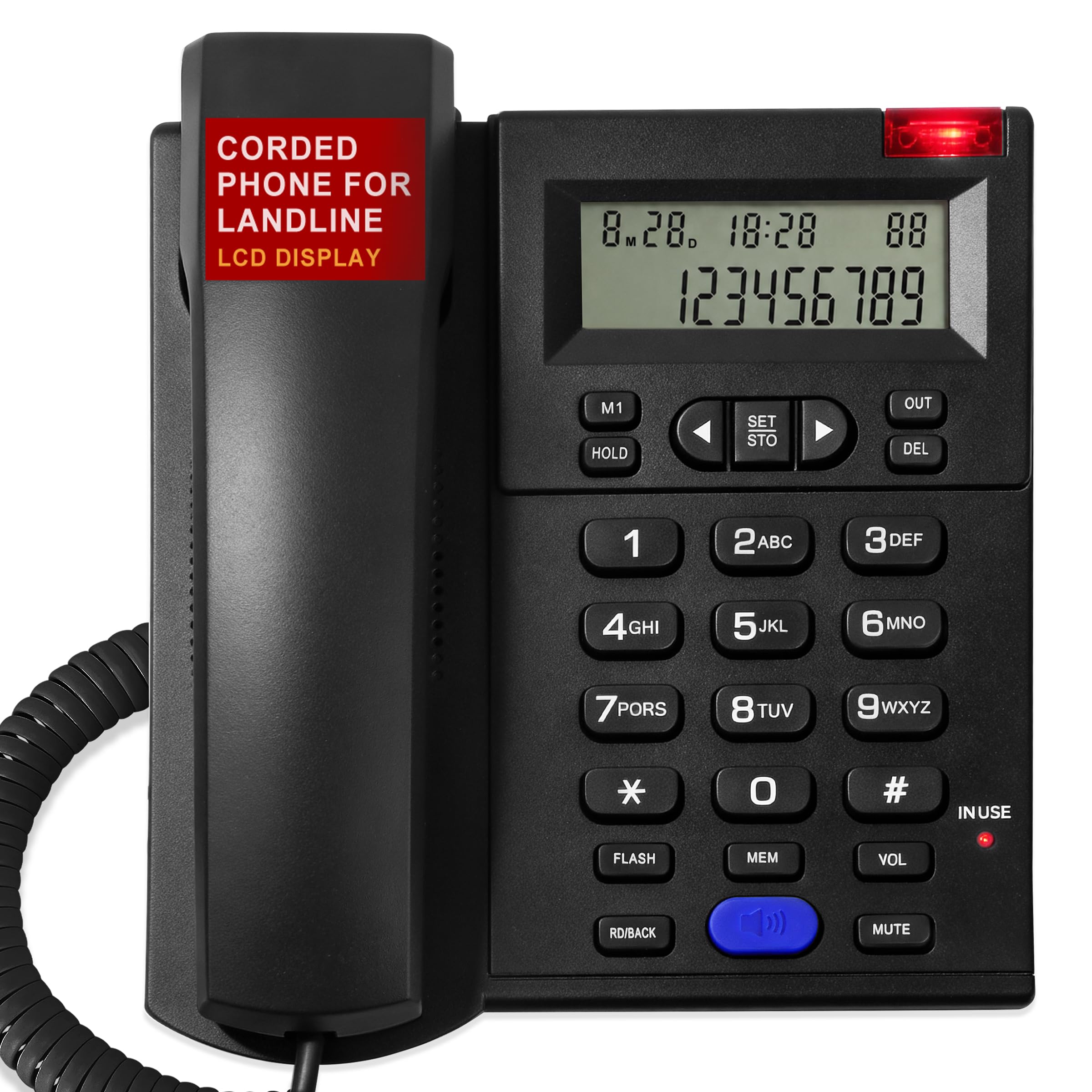
The Uvital corded phone punches well above its price bracket by delivering a 110 dB ringer — one of the loudest in this roundup — alongside a red LED visual indicator that flashes on incoming calls. The LCD caller ID display shows up to 61 incoming calls and 16 outgoing calls in its log, and the large, easy-to-read numbers on the keypad help users with moderate vision issues dial accurately without hunting for keys.
Hands-free speakerphone support reaches 90 dB with two-level adjustable volume, which is handy for multitasking in the kitchen or a small office. The phone includes dedicated FLASH, MUTE, and REDIAL buttons, and three speed-dial memory slots on the base let you assign frequently called numbers without coding a directory. As a line-powered unit, it requires no batteries or AC adapter — simply connect the RJ11 cord and it’s ready to use.
User feedback reveals a split experience on the senior-friendliness front: some praise the large buttons and easy setup, while others report that the ringer, despite 110 dB spec, sounds insufficiently loud for users with moderate hearing loss. A few isolated units arrived with inconsistent volume levels, so testing the unit immediately after delivery is advisable. The phone lacks an answering machine, and the caller ID screen does not display caller names — only numbers appear.
Why it’s great
- 110 dB ringer plus a flashing LED indicator for missed-call awareness
- Hands-free speakerphone with two volume levels allows multitasking
- Line-powered with zero battery requirement for worry-free operation
Good to know
- Caller ID shows numbers only, not names
- Some units have inconsistent ringer volume that may disappoint hearing-impaired users
7. MCHEETA Corded Wall Phone
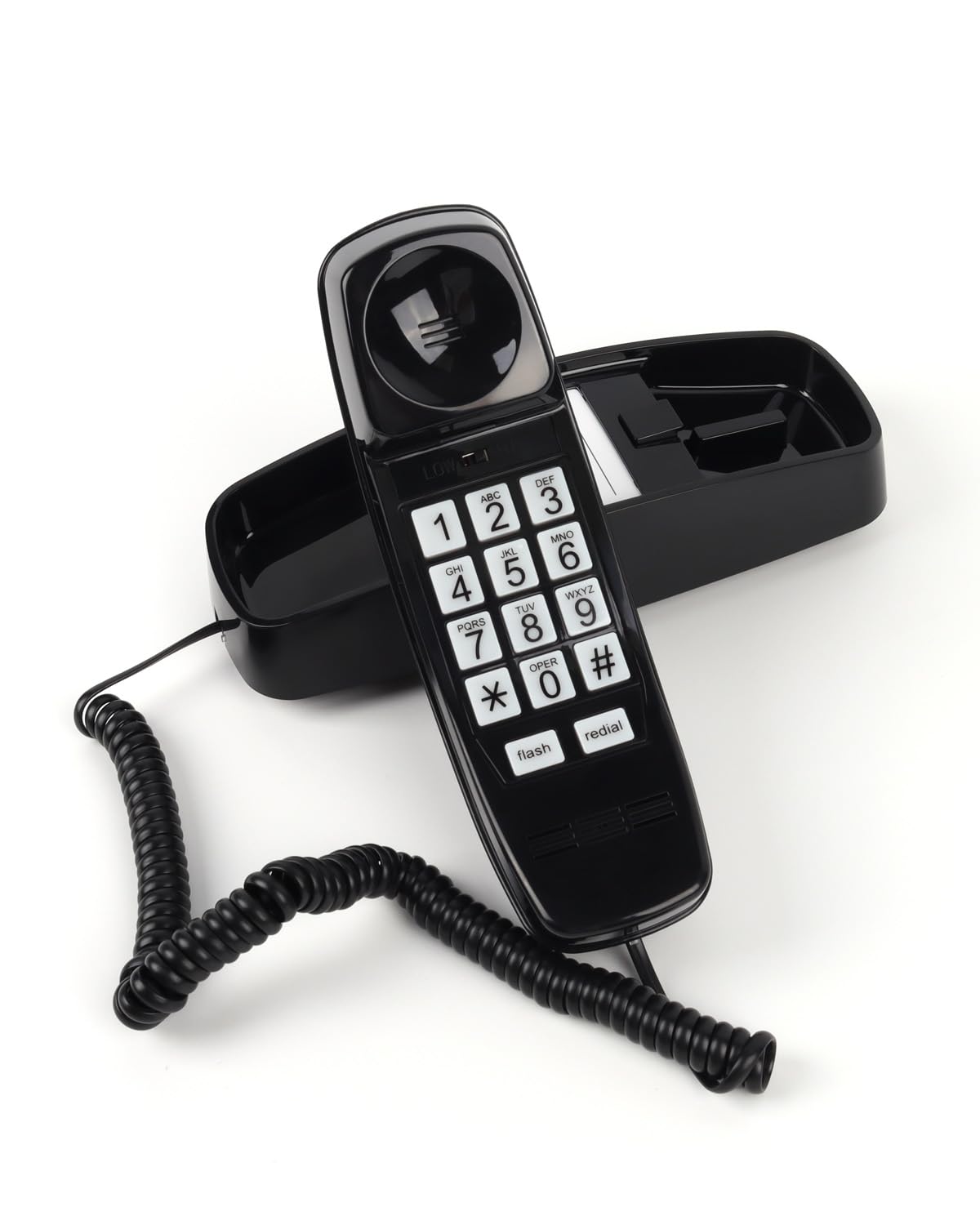
The MCHEETA Corded Wall Phone prioritizes two things first: durability and easy mounting. The shatterproof ABS plastic body is lightweight enough for secure wall mounting in kitchens, hallways, or nursing home rooms, yet tough enough to withstand years of daily handling. Oversized buttons with high-contrast numbering and lighting make dialing accurate in total darkness — a critical feature for bedside use where turning on a lamp is disruptive.
Setup is straightforward: the phone draws all power from the phone line, so no batteries or AC adapter clutter the installation. A one-key flash button instantly ends calls, while one-key redial and adjustable call/ringtone volume give the user basic but effective control. The phone measures only 10 inches wide, making it a compact fit in tight spaces like dorm rooms or reception desks.
User reviews highlight the very high-pitched ringtone tone as the primary annoyance — several buyers describe it as “annoying” and “high-pitched,” which may be especially grating in quiet home environments. A few users found the wall jack connector difficult to access due to cramped base design, requiring patience during installation. The phone supports caller ID displayed on a small LCD, but the screen is not backlit and is more challenging to read than dedicated desktop models with larger displays.
Why it’s great
- Extremely rugged ABS construction built for high-traffic commercial or care settings
- Lighted oversized keypad ensures accurate dialing in pitch-black rooms
- Fully line-powered and lightweight for wobble-free wall mounting
Good to know
- Ringtone is notably high-pitched and may be annoying in quiet homes
- Limited display readability at night due to no backlit screen
FAQ
Can an analog landline phone work with a VoIP or cable modem service?
What does hearing aid compatibility (HAC) mean for a landline phone?
How do I know if a corded phone will survive a power outage?
Final Thoughts: The Verdict
For most users, the analog landline phone winner is the AT&T CD4930 because it combines the extra-large tiltable backlit display and oversized buttons that elderly and vision-impaired users genuinely need, plus a built-in answering system and Audio Assist for volume flexibility. If you want a reliable desk phone with a built-in answering machine at a slightly lower cost, grab the AT&T CL4940. And for a caregiver supporting a person with dementia, nothing beats the Excelltel EX-LD-858HF with its nine photo speed-dial keys that allow calling a family member by simply pressing a familiar face.