
Our readers keep the lights on and my morning glass full of iced black tea. As an Amazon Associate, I earn from qualifying purchases.
Specs are compiled from manufacturer listings and verified buyer reviews and can change over time — please confirm the key details on the product page before buying.
If you live off-grid, travel in an RV, or just want to cut your power bill, the search for a machine that cleans clothes without an outlet ends here. These manual washers run purely on your arm power, using a handle, plunger, or agitator to force soapy water through fabric. This guide compares four non-electric washers, from a compact spinner to a 15-gallon agitator tub.
I’m Min — the founder and writer behind Gadgets Feed. This guide is built by comparing the manufacturers’ published specifications and the patterns across verified customer reviews, so you get each pick’s real strengths and trade-offs instead of marketing spin.
The real question is which design fits your daily routine, so here is my breakdown of the best analog washing machine options, ranked by real-world performance and durability for every kind of buyer.
Our Picks at a Glance
How To Choose The Best Analog Washing Machine
All four washers run on muscle power, but their agitation methods and drying aids change the daily effort. Match the agitation method and capacity to your weekly laundry volume and physical comfort.
Match the agitation method to your laundry volume
The biggest difference between these washers is how they move water through your clothes. A rotating handle spins a drum, a plunger pushes water up and down, and an agitator rolls clothes against each other. For small daily loads like delicates or a weekender’s worth of socks, a compact spinner works fine. For towels, jeans, and real everyday laundry, you want a larger chamber with stronger agitation — otherwise you’ll be running multiple cycles just to get one load clean.
Check the spin-dry and stability features
Wringing water out of clothes is the most tiring step, so prioritize built-in spin or wringer features. Some designs include a built-in spin basket that uses centrifugal force to extract water, which makes air-drying much faster. Stability is just as important. Machines with suction-cup feet hold firm on smooth countertops, while freestanding tubs need a sturdy table to sit on. A washer that slides around while you crank the handle turns a 10-minute chore into a frustrating fight.
Quick Comparison
| Model | Best For | Capacity | Dimensions | Agitation | Amazon |
|---|---|---|---|---|---|
| WonderWash Portable★ Best Overall | Apartment & small loads | 5 pounds | 12″D x 12″H | Rotating handle | Amazon |
| VPABES 2-in-1 Mini | Travel & spin-drying | 4.4 load | 14″D x 14″W x 13″H | Rotating handle + spin | Amazon |
| Dezitrek Large Wash Bag | Camping & off-grid | 4.4 pounds | 17″D x 17″W x 17″H | Plunger | Amazon |
| Lehman’s Agitator Tub | Off-grid homesteading | 15 gallons | 16.25″D x 22.25″W x 13.25″H | Triangle agitator | Amazon |
In‑Depth Reviews
1. WonderWash Portable Washing Machine
Our pick — over 4★ from 5,500+ verified ratings; the strongest balance of quality and price.
The tiny retro drum that handles real laundry loads without a single watt of electricity.
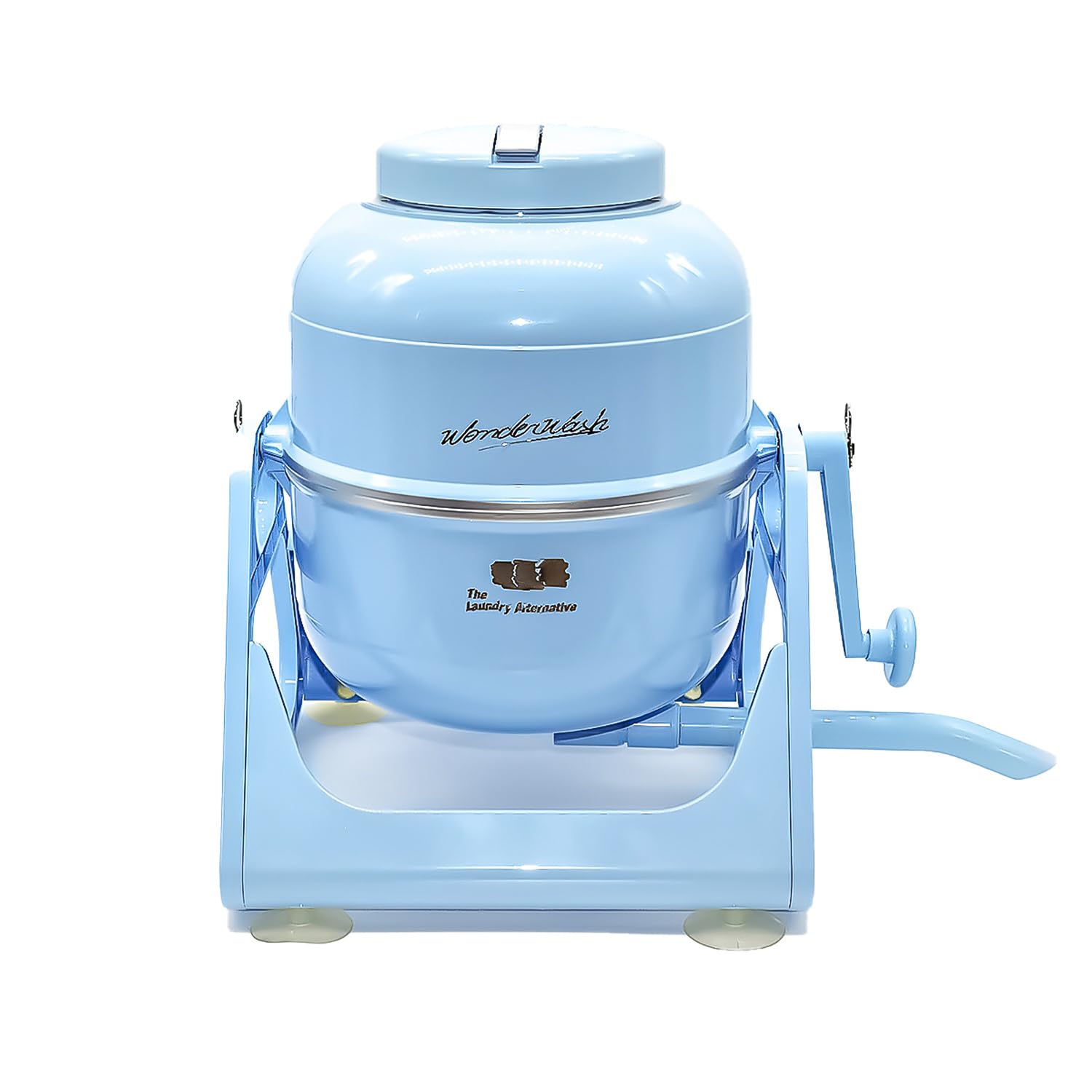
This countertop washer from The Laundry Alternative is the rare manual machine that genuinely replaces a laundromat run. It holds up to 5 pounds of clothes — enough for a pair of jeans, a towel, or a daily outfit — and its rotating handle drives water through fabric in about 10 to 20 minutes of hands-on work. Owners who have used it for years report it cleans work clothes “nearly as well as conventional” washers, which is about the highest compliment a non-electric washer can earn.
The build quality is the reason it wins the top spot. It’s made of durable, wear-resistant ABS plastic at a compact 12 x 16 x 12 inches, and it weighs just 5 pounds so you can lift it onto a counter or into a camper van easily. The patent-pending E-Z lid lever is easier to use than older screw lids, and the handle insert is designed not to fall out over time. Backing it up is a three-year warranty — a genuine safety net for a product that will see heavy use. The cleaning performance earns the most consistent praise from owners, with quality being the single most-discussed positive trait.
The main drawback is stability: buyers report flimsy plastic and sliding on smooth surfaces. Multiple owners mention the plastic can feel flimsy and the machine becomes unstable during use, especially on smooth surfaces. The suction cups help, but they aren’t a miracle fix. It also leaks with hot water if you don’t screw the lid on tightly, and some owners note the plastic creaks under pressure. One long-time user had the frame break after 3.25 years — but the company sent a free replacement, which speaks volumes about the warranty support. This is built for small, frequent loads, not a household of five.
What Wins Owners Over
- Genuine 5-pound capacity for real clothes, not just delicates
- Three-year warranty with a track record of honoring it
- Lightweight at 5 pounds and compact at 12 inches deep
- Nearly matches conventional washers on cleaning per owners
What To Watch For
- Plastic can feel flimsy and unstable during vigorous use
- Hot water can cause leaks if the lid isn’t sealed tight
- Frame stress is the usual wear point after years of use
Reach for it if: you want the most proven, best-supported manual washer for apartments, dorms, RVs, and daily small loads.
Think twice if: you need heavy-duty stability for a big family’s laundry — the plastic drum demands a gentle touch.
2. VPABES 2-in-1 Mini Washer & Spin Dryer
A handle-powered washer that also spins your clothes nearly dry — perfect for hotel sinks.
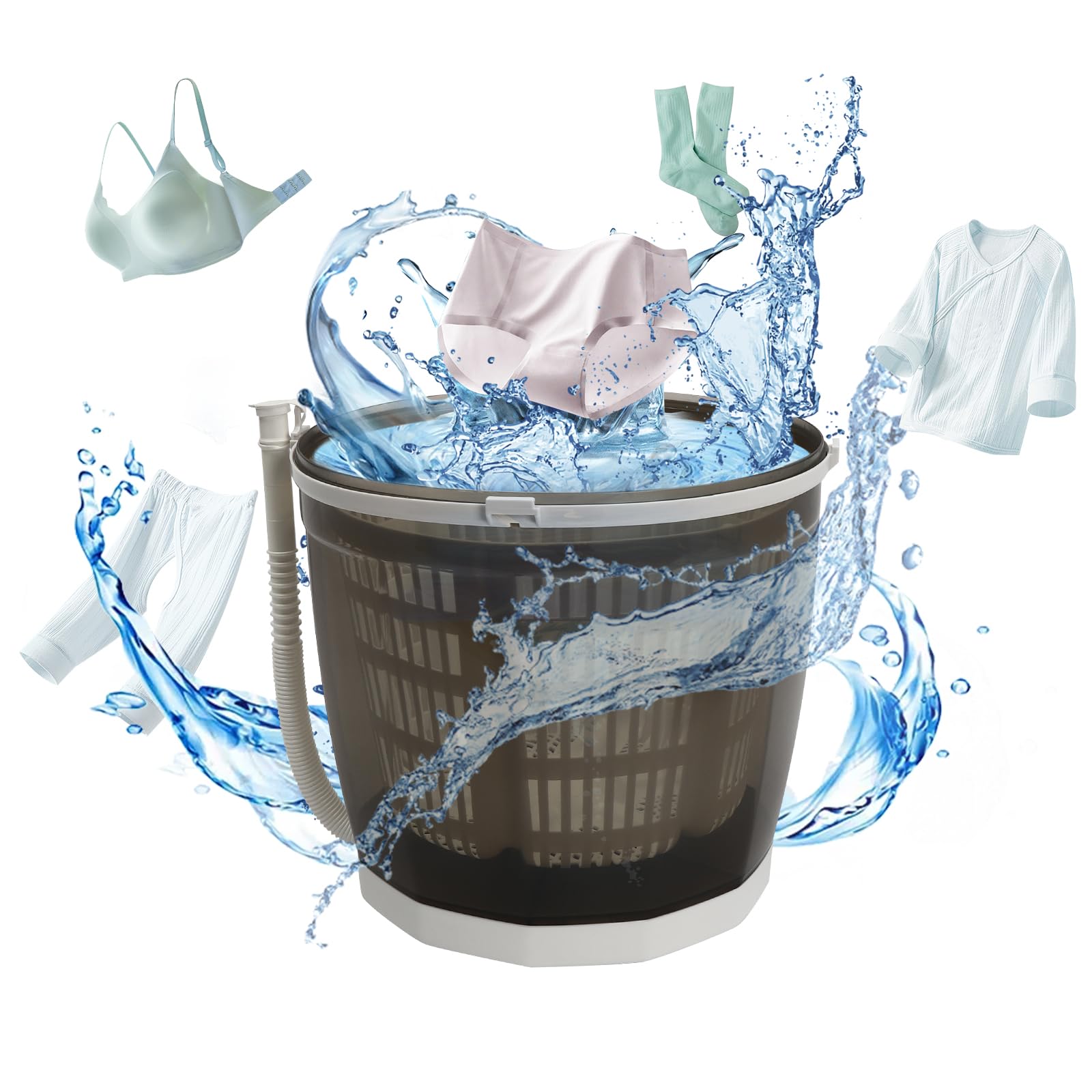
This compact 2-in-1 from VPABES does double duty that no other pick here matches: it washes your clothes AND spins the water out of them. By simply turning the handle manually, you get a 40-50% spin rate on the dehydration side — meaning your clothes come out damp, not soaking, and air-dry much faster. That’s a huge win for travelers and RV owners who have to hang clothes to dry. The whole unit sits at a compact 14 x 14 x 13 inches, making it the smallest footprint of the group.
The cleverest feature is the removable inner drum, which doubles as a storage box or water bucket when you’re not washing. The parts are all removable for easy cleaning and maintenance, which keeps mold and soap scum from building up on a machine that lives in a damp bathroom. It’s built from environmentally friendly, wear-resistant PP and ABS material. Four suction-cup feet are meant to hold it stable on smooth surfaces, and the manufacturer says that makes the rotating handle more labor-saving.
The main drawbacks are weak suction cups and a handle that can break early. The most common complaint is that the suction cups don’t stay stuck — customers note the whole unit “slides around” when you go to spin the handle, and the lid doesn’t stay in its locked position. There are also reports of the handle breaking early on, with one frank review saying “Handel broke the first few times we used it.” The spin feature itself wins genuine praise, with owners calling it “the best manual spinner,” but the finer build details need care. It gives you a workout, which is honest for any manual washer, and the hose can fall off its hook from time to time.
Smart Design, Soft Spots: The 2-in-1 wash-and-spin concept is genuinely clever and saves hours of drying time. The suction feet and handle durability are the recurring weak points, so treat the moving parts gently and you’ll get the benefit of a real spin dryer on the road.
Grab it for: solo travelers and RV users who want a compact washer that also cuts drying time dramatically.
skip it if: you crank hard or plan heavy daily use — the handle and suction cups are the fragile links.
3. Dezitrek Large Wash Bag
A fold-flat bag and plunger that lets you wash real towels anywhere without power.
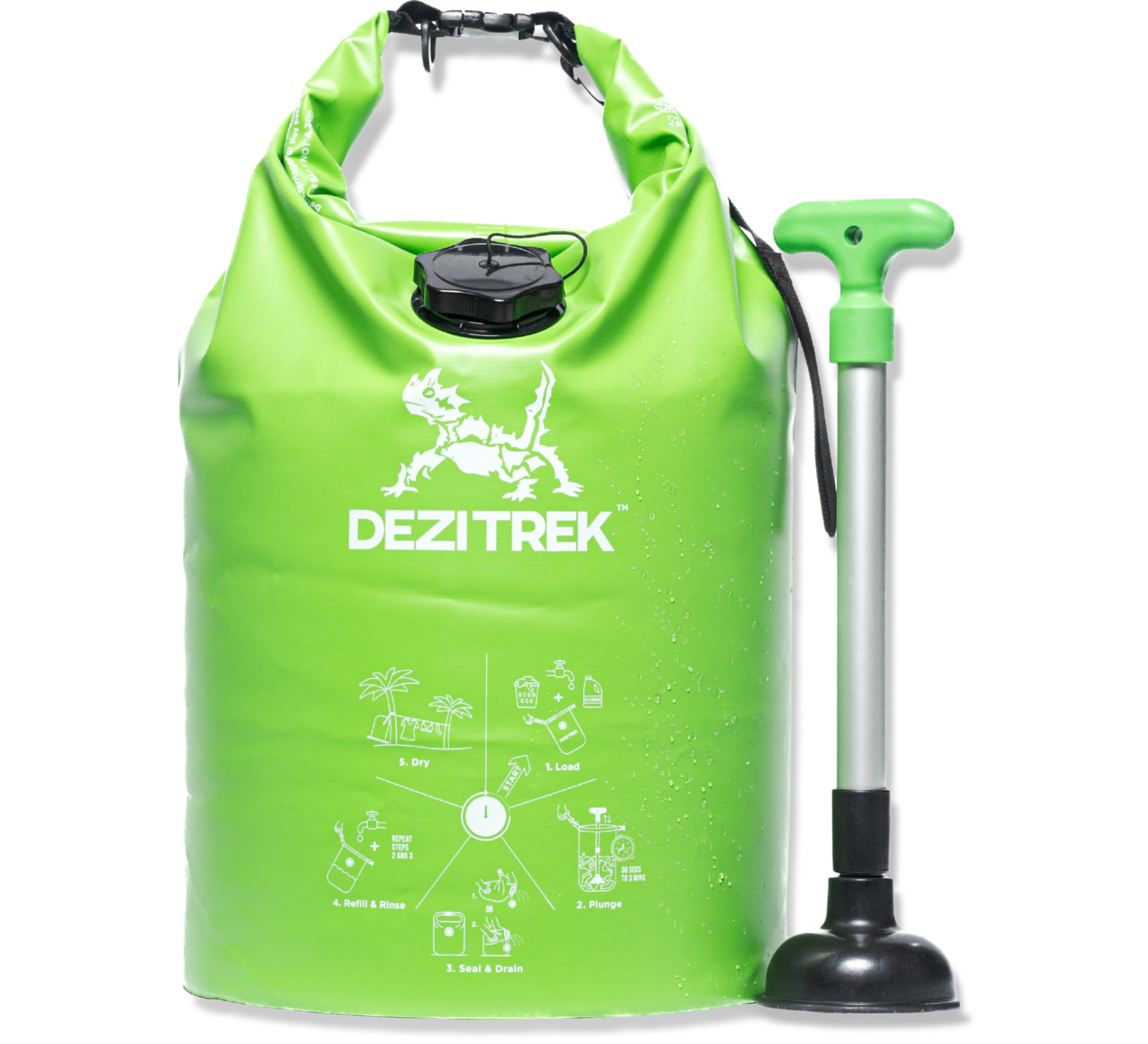
This is the one that throws out the traditional washer shape and replaces it with a waterproof bag and a separate plunger. At 17 x 17 x 17 inches, it’s actually the largest of the picks in pure volume — a deliberate choice that lets it handle clothing, towels, and larger everyday loads, not just a few travel items. The plunger creates powerful agitation that forces water through fabric, which the maker says lifts dirt and grime more effectively than ordinary hand washing. It cleans delicates and camping clothes well, and the design is thoroughly leak-proof in practice.
The genius of this design is how it disappears when empty. Unlike rigid machines, this bag folds down compact enough to slip into a carry-on or a backpack — a huge advantage for campers and overlanders. Even kids get involved in plunging, which several owners note as a bonus on family trips. It’s part of the Dezitrek off-grid laundry system and pairs with their manual clothes wringer to squeeze out excess water. The quality of the PVC construction is the most-praised aspect, with ease of use close behind.
The main drawbacks are physical effort and the lack of a built-in drying aid. Owners consistently say it requires real physical effort, thorough rinsing, and careful air-drying to avoid mildew. Getting clothes dry enough to hang is the biggest friction point — squeezing water out by hand is hard, and the maker’s own wringer accessory is strongly recommended. There are also smaller quibbles: the plunger can stick to the bottom of a bucket, the handle can collapse under pressure, and the instructions are minimal. The recurring gripe is durability, with some owners reporting the bag wears over time, so handle it with care and it’ll serve you well.
Built for the Trail: If your laundry needs live in a tent or a van, the standout is the packability of this bag-and-plunger system. The physical work and wringing are the real costs — pair it with the Dezitrek wringer for a complete kit.
Pick it for: campers, overlanders, and anyone who needs a washer that fits in a backpack instead of on a shelf.
Look elsewhere if: you want a fixed, durable machine for daily home use — this is a travel tool, not a permanent appliance.
4. Lehman’s Laundry Agitator Tub & Wringer

A stainless-steel agitator tub with wooden legs and a wringer — the homestead-grade heirloom.
This is the polar opposite of the fold-flat bags: a heavy, permanent, 15-gallon stainless-steel tub designed to sit on a floor and handle serious laundry. The triangle-shaped agitator keeps clothes fully submerged — never floating on the surface or lodged in corners — and forces water and detergent through your clothes as they gently roll and turn. At 46 pounds, this is not a travel machine. It’s a statement piece for off-grid homesteaders, solar-powered homes, or anyone who wants a real washer that will outlive plastic alternatives. It comes with a wringer, so you can squeeze water out of each piece before line-drying, which owners say makes quick work of the hardest part of manual laundry.
The durability and service are the headline features. The stainless-steel construction and solid wooden legs give it a heft and permanence no plastic washer can match. When one unit arrived with a dented tub from shipping, the company replaced it promptly — even beyond Amazon’s return window — which shows the kind of customer support that justifies a premium purchase. It’s built for indoor or outdoor use, so it can live on a covered porch for warmer months. The wringer extracts water well for fast line drying, and the agitator is genuinely easy to operate for daily use.
The wringer struggles with heavy fabrics, and the premium price limits its appeal. Multiple reviewers point out the wringer “cannot handle heavyweight fabric” — things like flannel-lined jeans, padded pillow shams, or even cotton underwear in some cases — even when loosened all the way. Thick items need to go through a laundromat or be hand-squeezed. There’s also a real durability concern: one owner had the unit fail after three months of use following winter storage, and noted it was non-returnable at that point. For some buyers this is “life-changing” and the best purchase of the year; for others it’s an expensive experiment. It’s a niche product for a specific lifestyle, not a universal recommendation.
Homestead Workhorse With Limits: For off-grid solar and rainwater households, this tub genuinely replaces a trip to the laundromat for most loads. The wringer chokes on heavy fabrics and the premium price demands confidence in your commitment to manual laundry.
Choose it for: serious off-grid living where a 15-gallon, 46-pound stainless tub can earn its keep for years.
Pass it by if: you wash heavy jeans or blankets regularly, or you want a portable washer — this handles neither gracefully.
Understanding the Specs
Manual washers share a few key specs that determine how useful they’ll be for you. Here’s what actually matters when comparing them.
Capacity in Pounds vs. Gallons
You’ll see two different units for how much laundry a manual washer holds. Compact drums like the WonderWash measure capacity in pounds of dry clothes — 5 pounds is roughly one full outfit plus a towel. Large tubs like the Lehman’s measure in gallons of water volume; 15 gallons is a serious household-sized wash. A bag-style washer like the Dezitrek sits in between, using its 17-inch dimensions to fit bigger loads despite a modest pound rating.
Agitation Type
This is the heart of any manual washer. A rotating handle spins a drum or basket to tumble clothes through soapy water — the WonderWash and VPABES use this. A plunger pushes a column of water up and down through fabric — the Dezitrek uses this, and it’s very effective but tiring. An agitator is a paddle that rolls clothes against each other — the Lehman’s uses a triangle-shaped one to keep items submerged. Each feels different in daily use, so match it to your physical comfort and laundry volume.
Spin-Dry Capability
Few manual washers do this, and it’s a huge time-saver when present. The VPABES 2-in-1 uses a rotating basket to spin water out of clothes at a 40-50% spin rate, leaving them damp rather than soaking. The Lehman’s takes a different route with a wringer — two rollers that squeeze water out as you feed each garment through. Both cut drying time dramatically, which matters when you’re line-drying off-grid.
Stability and Build
The biggest complaint across ALL manual washers is stability. A washer that slides around while you crank is exhausting to use. Suction-cup feet help on smooth surfaces, but reviews show they don’t always hold. Freestanding tubs like the Lehman’s rely on sheer weight — 46 pounds of stainless steel — to stay put. Material matters too: ABS and PP plastic keep things light but can crack or creak under stress, while stainless steel and aluminum promise longevity at a heavy cost.
FAQ
How much laundry can a manual washing machine actually handle?
Do analog washing machines really get clothes clean?
How long does it take to wash a load by hand?
Will a manual washer damage delicate fabrics?
How do you dry clothes after a manual wash?
Are manual washing machines worth the money compared to electric ones?
Why do some manual washers leak, and how do you prevent it?
How hard is it to use a manual washer with limited hand strength?
Can you use these washers for cloth diapers or baby clothes?
What’s the difference between ABS and PVC construction in a manual washer?
Final Thoughts: The Verdict
If you want one dependable pick, the analog washing machine winner is the WonderWash Portable because it pairs the best real-world cleaning record with a genuine three-year warranty and a price that makes it an easy experiment. If you travel constantly and hate waiting for clothes to dry, grab the VPABES 2-in-1 for its spin-dry basket. For campers and overlanders who need to pack light, the fold-flat Dezitrek Wash Bag is the one to reach for. And if you’ve committed to off-grid living and want a permanent, heavy-duty tub, the Lehman’s Agitator is a serious investment in the lifestyle. The crowd favorite is the WonderWash — a 4.2-star rating earned across thousands of owners who simply want clean clothes without the power bill.
How We Picked
We do not accept paid placement. Every pick is matched to a real buyer and a real use-case; we do not hands-on test units.
Sources & Methodology
Specifications: manufacturer listings and product documentation. Review insights: verified customer reviews, as of September 2026. Pricing: not shown on this page (it changes often); check the current price via the retailer link.
As an Amazon Associate, Gadgets Feed earns from qualifying purchases. This does not affect which products we feature.