
Our readers keep the lights on and my morning glass full of iced black tea. As an Amazon Associate, I earn from qualifying purchases.
Specs are compiled from manufacturer listings and verified buyer reviews and can change over time — please confirm the key details on the product page before buying.
You need to picture how the deltoid wraps over the shoulder or explain exactly which muscle a patient strained, but most anatomical muscle models on Amazon are too small to read, too fragile to handle, or leave out the details you actually need to learn. This guide pairs each model’s published specs with what real buyers found after unboxing, so you know which figure belongs on your desk.
I’m Min — the founder and writer behind Gadgets Feed. This guide is built by comparing the manufacturers’ published specifications and the patterns across verified customer reviews, so you get each pick’s real strengths and trade-offs instead of marketing spin.
Here are the most reliable anatomical muscle model picks that actually hold up under daily use, from budget-friendly study aids to display-ready professional showpieces.
Our Picks at a Glance

How To Choose The Best Anatomical Muscle Model
A model that looks good in product photos can be frustratingly small, wobbly, or poorly painted in person. Here is what to check before you click add to cart — the three specs that separate a useful study tool from a dust collector.
Scale and Readability
Size is the single biggest factor in how useful a model will be. A 10-inch figure is portable and cheap, but the muscles are small — you will struggle to read any numbers or labels at that size, and the detail on individual muscles (like the sartorius or the deltoid) is compressed. A 20-inch model, on the other hand, lets you see the separation between adjacent muscle groups clearly, which matters whether you are studying origins and insertions or trying to visualize how the pec major sits under the deltoid. If the model is for a desk or a clinic, go bigger. If you need to toss it in a bag for a study group, a compact figure works — just know you are trading detail for portability.
Material and Build Quality
The two common materials are cast resin and injection-molded PVC. Resin is heavier and feels more like a sculpture — it has a satisfying heft and takes paint well, but it is brittle. Drop a resin model and it can snap at the ankle or wrist, as several buyers found. PVC is lighter and more impact-resistant, but cheap PVC models often have visible mold lines or a glossy plastic sheen that looks, well, cheap. For a model that gets handled daily (passing around a classroom or clinic), PVC with a textured or matte finish is the practical choice. For a display piece that sits on a shelf, resin gives you a more premium look and feel.
Detachable Parts vs. Fixed Figure
Some models have every major muscle as a separate piece that you assemble — this can be a fantastic learning tool for understanding how muscles layer over each other (the pectoralis major sits on top of the ribs, the deltoid wraps over the shoulder joint). But the trade-off is that these models are notorious for popping apart when you touch them. If you want a study tool that stays assembled on a desk, a fixed figure is less frustrating. If you want a puzzle that helps you memorize relationships layer by layer, a detachable model works — but expect to spend time snapping pieces back together and possibly gluing the ones that refuse to stay.
Quick Comparison
| Model | Best For | Height | Weight | Material | Amazon |
|---|---|---|---|---|---|
| BoNew-Oral 30cm Skull Head Model★ Best Overall | Artist half-skin study | 30 cm (12 inches) | 800 g | Resin | Amazon |
| Ultrassist 20″ Muscle ModelTop Performer | Professional clinic & teaching | 20 inches | — | PVC | Amazon |
| Axis Scientific 20″ Muscular Figure | Desk display & patient education | 20 inches | 3.09 lbs | PVC | Amazon |
| EVOTECH SCIENTIFIC 20″ Muscle Model | In-depth A&P study | 20 inches | 3.69 lbs | Non-toxic PVC | Amazon |
| Male&Female 2-Figure Set | Artist reference pair | 1/6 life-size | 3.25 lbs | Resin | Amazon |
| Famemaster 4D-Vision 10″ Model | Budget puzzle learning | 9.5 inches | 7.84 oz | Plastic | Amazon |
In‑Depth Reviews
1. BoNew-Oral 30CM Human Anatomical Anatomy Skull Head Body Muscle Bone Resin Model
Our pick — over 4★ from 80+ verified ratings; the strongest balance of quality and price.
A 30cm resin figure where one side shows the muscles and the other shows the skin — a compact artist classic.
This is the affordable workhorse of the list: a 30-centimeter (roughly 12-inch) male figure made from solid cast resin, with the entire right side showing the superficial muscle layer and the left side covered in skin. The half-skin / half-muscle format is the gold standard for artists because you can see how the surface forms (like the bicep and deltoid) relate to the external shape of the body. Shoppers say it is “heavy, internal metal frame” with “clear muscle carving, smooth skin half,” and that it is “balanced on base” with “no smell” and “secure packaging” — all signs of a well-made resin casting.
At 800 grams (1.76 pounds) it is lighter than the full PVC 20-inch models but still feels solid in the hand. The leg muscle definition is a little soft, as one owner reported, which is the trade-off at this scale — 12 inches does not give you the real estate to show every fiber detail. It stands on a free-standing base with metal pins, so it is stable enough for a desk. The gray painted finish is subdued, which works well for a studio reference because it does not reflect harsh light the way glossy plastic does.
Unlike the Male&Female pair above, this is a single figure, so you get the classic half-skin / half-muscle comparison but only one body type to study.
Why Artists Like It
- Half muscle / half skin format shows exactly how muscles affect surface form
- Cast resin with internal metal frame and metal pins for stability
- No chemical smell — safe for indoor studio use
- Secure packaging and smooth base for immediate display
The Limits
- Leg muscle definition is a little soft compared to larger models
- At 30 cm, the scale is small — individual muscle detail is compressed
- Resin is heavy for its size but still brittle on thin parts
Best for: an artist or hobbyist who wants a solid, affordable half-skin reference figure that stays put on a desk without taking over the workspace.
pass on it if: you need high leg-muscle definition or a larger scale for classroom teaching.
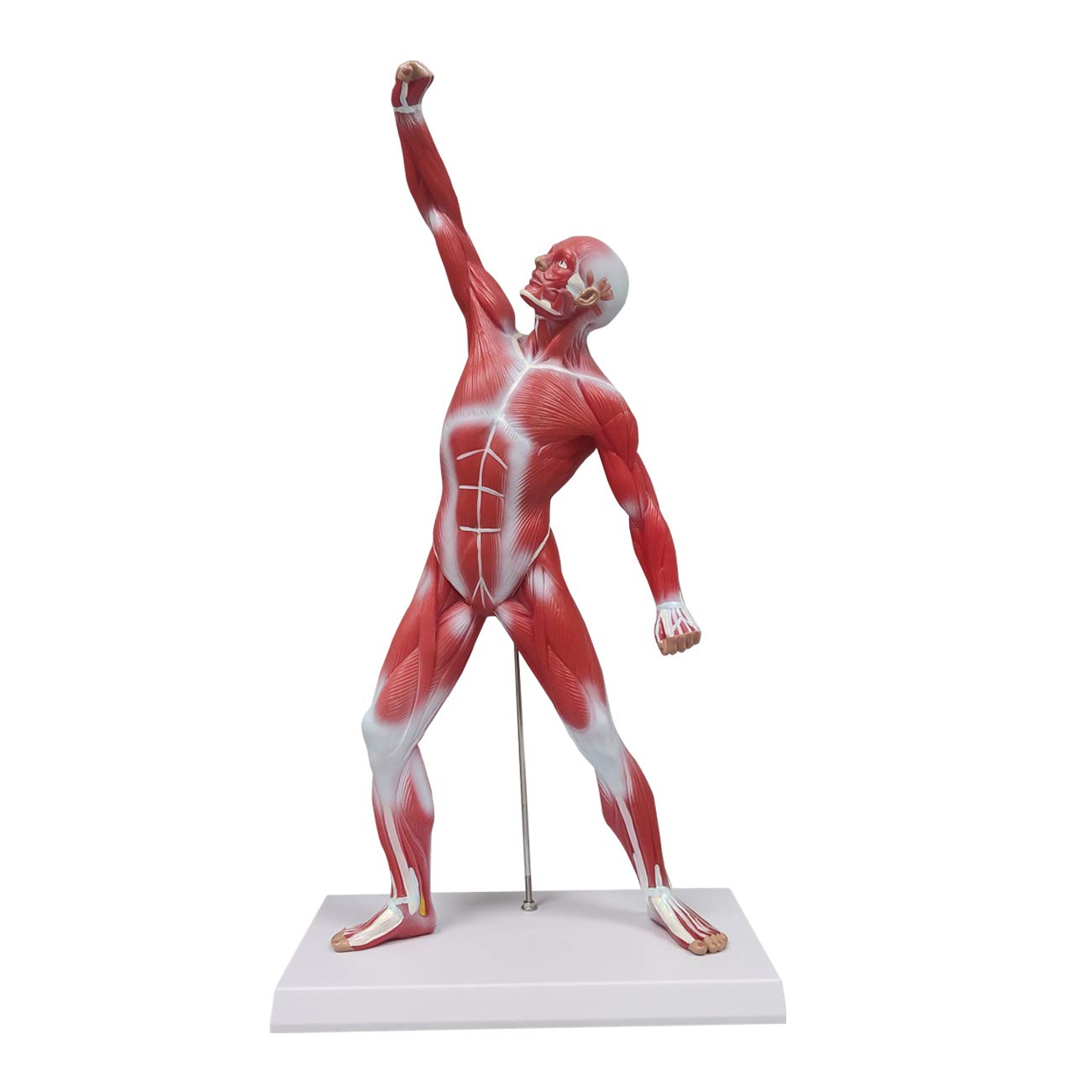
2. Ultrassist Human Anatomy Muscle Model, 20” Muscular System Figure
The 20-inch PVC figure that balances pro-grade detail with enough durability to survive a classroom.
This model gives you a clear view of the major muscle groups — chest, abdominals, back, and limbs — with each one painted in a different bright color so you can tell them apart at a glance. The 20 x 19.6 x 19.6 inch footprint is large enough to show the separation between muscles like the deltoid and the pectoralis major without crowding, which is what you want in a teaching model for clinical demonstration. It comes fully assembled and ready to display, with a smooth PVC surface that wipes clean easily.
Buyers report it is “bigger than what I was expecting but happy about it,” which is the typical reaction — the 20-inch height is full enough to feel substantial on a desk. The main trade-off some owners noted is the painting quality on small details like the white lines and fingertips, which look a little rough up close. If you need a model for medical training or patient communication and you want something that can take a little handling without breaking, this is the most practical option here.
Unlike the Axis Scientific model below, the Ultrassist uses brightly colored muscle groups with detailed markings for quicker identification, making it a stronger choice for professional clinical environments where you need to point and name fast.
Why It Works
- High-precision 3D modeling technology used for the muscle structure
- Environmentally friendly PVC material is impact-resistant and won’t fade
- Bright color coding helps you identify muscle groups quickly
- No assembly required — display-ready from the start
The Fine Print
- Some buyers found the fine paint lines and fingertips rough up close
- Not designed as a toy — intended for adult professional use only
Reach for this if: you are a medical professional, nursing student, or educator who needs a big, durable, assembled model for daily teaching and demonstration.
Look elsewhere if: you need museum-grade paint finish — the hand-painting on small details is not perfect.
3. Axis Scientific 20″ Miniature Human Muscular Figure

A compact 20-inch desktop figure that comes with a solid warranty and real buyer confidence.
The Axis Scientific model is the most popular mid-range pick on this list, with a 4.4-star rating from 77 reviews and a 3-year no-hassle replacement warranty from the manufacturer. That is unusual for a model at this price level — most figures come with no warranty at all. The hand-painted surface shows major groups like the deltoid, biceps, quadriceps, and gastrocnemius clearly, making it useful for patient education in a clinic or quick reference during a study session. At 3.09 pounds, it is similar in weight to the EVOTECH model (3.69 lbs) but noticeably lighter than the resin figures below, meaning it is easier to move from desk to desk.
Owners mention it is “a sharp looking model for a good price” and that they use it in their studio for visualizing muscle actions. The trade-off is the same pain point noted on several models here — the paint detail on tendons and small markings can be inconsistent, and one reviewer noted the numbers on the guide did not match numbers on the model, which made studying frustrating. The fixed base keeps the figure stable for display, so it will not topple over the way a puzzle model might.
At 20 inches, it matches the Ultrassist in scale but comes with a full-color manual, which the Ultrassist does not include — a useful bonus if you are using it to study on your own.
Standout Features
- 3-year no-hassle replacement warranty by Axis Scientific
- Includes full-color product manual with real model photographs
- Hand-painted to distinguish individual muscles from surrounding structures
- Removable base keeps it stable for display
Watch For
- Numbers on the study guide may not match numbers on the model
- Some buyers found the plastic quality and paint job “low end”
Best suited for: a student, clinic, or artist who wants a 20-inch figure with a safety net — the 3-year warranty removes the risk.
skip it if: you need perfect label-number matching for a formal anatomy class exam.
4. EVOTECH SCIENTIFIC Human Muscle Model-20″ Miniature
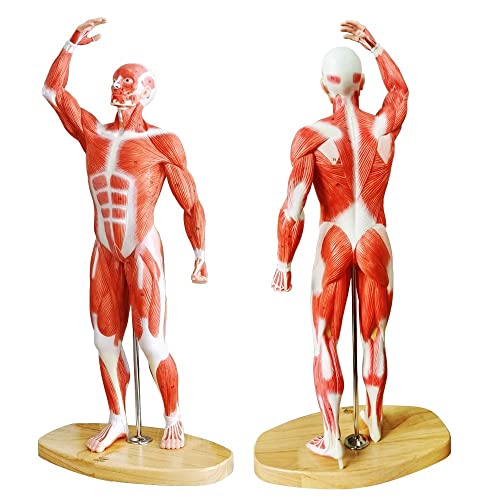
A hand-painted 1/4 life-size figure with numbered muscles and an Oak-wooden base for serious study.
This is the highest-rated model in the lineup at 4.8 out of 5 stars, and the reason becomes clear when you look at what it includes. The EVOTECH is a 1/4 life-size figure (20 inches tall) made from non-toxic PVC, with each muscle and tendon hand-painted and numbered — and those numbers correspond to the colorful educational brochure that comes in the box. That makes it a proper study tool rather than just a display piece: you can cover the key, test yourself on the muscle names, and check your answer. The model mounts on a finished Oak-wooden base, which looks more premium than the standard black plastic stands on most figures here.
Reviewers in anatomy study groups say it is “great for A&P study groups” and that it gives accurate origins, insertions, and palpable muscles — exactly the level of detail you need for a physiology class. One buyer mentioned it is “a little too small for my liking” given the price, which is a fair point: at 20 inches you get good detail, but it is still a miniature, not a life-size torso. It is 3.69 pounds, the heaviest of the three PVC 20-inch models here, which gives it a substantial feel on that Oak base.
Unlike the Axis Scientific model, the EVOTECH includes a matching numbered guide, so you avoid the “numbers don’t match” problem that some buyers hit with the Axis figure.
Key Strengths
- Numbered muscles with matching educational brochure for self-testing
- Oak-wooden base looks more premium than standard plastic stands
- High detail on origins, insertions, and palpable muscles
- Non-toxic PVC is easy to clean and odor-free
Downsides
- At 20 inches, some buyers find it a bit small for the investment
- Only 18 ratings so far — less buyer consensus than the Axis model
Buy it for: a self-paced A&P student who wants a numbered, bro-chure-matched study aid that looks good on a desk.
Consider another if: you prefer a larger, life-size model; 20 inches is still a miniature figure.
5. Male&Female Human Anatomy Figure Ecorche and Skin Model Lab Supplies
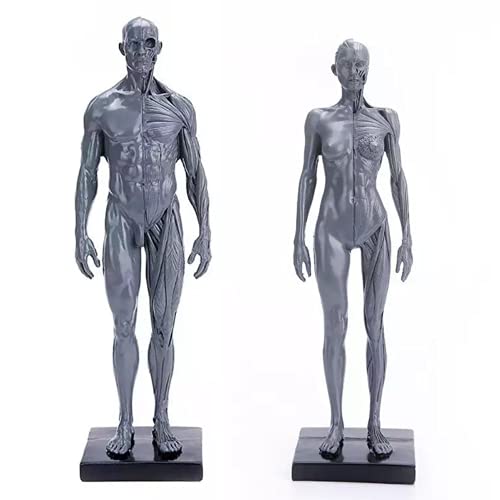
Two anatomically detailed resin figures — male and female — built for artists who need both ecorché and skin surface.
This set gives you two 1/6 life-size figures in one box: a male model and a female model, each cast in heavy resin. The male is an ecorché (muscles exposed) on one half and normal skin on the other, which is the classic reference format for understanding how muscles sit under the surface. The female is an ecorché only, and customers note she is “tall/slender (8+ heads)” — a stylized proportion that is more fashion-illustration than true anatomy, so be aware of that if you need a medically accurate female figure. At 3.25 pounds for the pair, these are dense, high-quality castings with a satisfying heft.
Reviewers point out the figures are “heavy, anatomical figures” that are good for visualizing the pec/deltoid/bicep relationship, and they come with a secure base. The catch is that resin is brittle — one owner reported that the model “broke into 3 pieces when tipped over” and required glue to repair. The chart included is in Chinese only, which is a genuine hassle if you need English labels, though you can use Google Translate as one buyer suggested. This is the only pick on the list that gives you both male and female anatomy in one purchase, which makes it a unique value for artists who draw both body types.
Compared to the single-figure resin model below (BoNew-Oral), this set gives you two full figures rather than a half-skin half-muscle one, offering more reference variety for the same general budget tier.
What You Get
- Two figures (male + female) for comparative anatomy reference
- Heavy, high-quality resin castings with good surface detail
- Secure base keeps each figure standing upright
- Subdued color tone suitable for studio environment
Be Aware
- Resin is brittle — fragile if tipped over or dropped
- Female proportions are stylized (tall/slender, 8+ heads), not medically standard
- Included chart is Chinese-only; no English labels on the diagram
Ideal for: an artist who needs both male and female ecorché reference models and values weighty, sculptural castings over light plastic.
Not for: a medical student who needs purely accurate female proportions and English-labeled diagrams.
6. Famemaster 4D-Vision Human Muscle And Skeleton Anatomy Model Multi-colored, 10″

A tiny 10-inch puzzle with 46 detachable parts that teaches relationships — if you can keep it assembled.
This is the smallest and lightest model on the list at 9.5 inches tall and just 7.84 ounces, and it is the only one designed as a 4D puzzle: you build the muscle system layer by layer, with 46 detachable, hand-painted parts. That hands-on assembly is genuinely useful for understanding how one muscle sits on top of another — one medical student reviewer noted “the sartorius muscle being attached after you put all of the other leg muscles in place” as a fine detail that helped them learn. The same buyer pointed out that “it actually has the fibula and tibia being separate bones which I was not expecting in such a cheap model,” which shows the level of detail the manufacturer crammed into a small budget figure.
The problem is that these tiny plastic parts do not stay put. Multiple reviewers report the model “pops loose” and “falls apart immediately” when handled, even by a careful student. One owner ended up gluing each section one at a time to create a solid assembled piece for display. At this price point, it is genuinely the best way to see muscle layering for under, but you have to accept that it is a fragile learning tool rather than a durable display piece.
Unlike the 20-inch PVC models above, the Famemaster includes both the skeleton and the muscular system in one figure, showing you how muscles attach to bones — a structural view that the larger fixed figures do not provide.
Educational Edge
- 46 detachable parts for hands-on study of muscle layers
- Includes both skeleton and muscular system for origin/insertion learning
- Fibula and tibia are separate bones — impressive detail for the price
- Includes illustrated assembly guide and anatomy Q&A
Frustration Points
- Does not stay assembled — parts pop off with light handling
- At 9.5 inches, it is quite small and detail is limited
- Some buyers found it useless as a study aid due to constant reassembly
Grab this for: a student who learns best by assembling and disassembling — the layer-by-layer puzzle approach clarifies muscle relationships.
Avoid it if: you want a model that stays assembled on a shelf — this one needs patience and possibly glue.
Understanding the Specs
Ecorché vs. Skin Model
An “ecorché” (French for “flayed”) is a figure with the skin removed to show the underlying muscles. Some models show ecorché on one half and normal skin on the other (called a “half-skin / half-muscle” model), which lets you compare the surface form to the muscle underneath. If you are an artist, this is the most useful format — you can see exactly how the bicep bulge creates the shape of the upper arm. If you are a medical student, a full ecorché with numbered muscles is typically more useful for identification and memorization.
Resin vs. PVC vs. Plastic
Resin is the heaviest and most sculptural material — it takes paint beautifully and feels premium in the hand, but it is brittle and can snap if dropped. PVC (polyvinyl chloride) is lighter and more impact-resistant, making it better for models that get handled regularly, but cheap PVC can look glossy and cheap. The plastic used in puzzle models (like the Famemaster) is the lightest and most prone to breakage, but it allows for the detachable parts that make the puzzle format work. For a desk model that will sit still, resin wins. For a model that will be passed around a classroom, PVC is the safer bet.
FAQ
What is the difference between an anatomical muscle model and a skeleton model?
Will a 10-inch model be useful for a medical student?
Which material is more durable for classroom use?
How do I clean a muscle model without damaging the paint?
Can I use a muscle model for patient education in a clinic?
What does “1/6 life-size” mean on a figure?
Why do some models have a half-skin / half-muscle design?
How many detachable parts should a good puzzle model have?
Is a model with a warranty worth paying extra for?
Can I use these models for fitness or personal training education?
Final Thoughts: The Verdict
For most buyers, the best anatomical muscle model is the Ultrassist 20″ Muscle Model because it gives you professional-level muscle detail in a durable PVC build that is display-ready and easy to clean — no assembly frustration. If you want a numbered study aid with a matching guide for self-testing, grab the EVOTECH SCIENTIFIC 20″ Muscle Model. And for artists who need both male and female reference figures in one purchase, the Male&Female 2-Figure Set is the only option that delivers that pair at a fair price.
How We Picked
We do not accept paid placement. Every pick is matched to a real buyer and a real use-case; we do not hands-on test units.
Sources & Methodology
Specifications: manufacturer listings and product documentation. Review insights: verified customer reviews, as of July 2026. Pricing: not shown on this page (it changes often); check the current price via the retailer link.
As an Amazon Associate, Gadgets Feed earns from qualifying purchases. This does not affect which products we feature.