
A trampoline flipping or sliding across the yard during a gust is a nightmare scenario — dangerous for kids, destructive for property, and expensive to replace. The right ground anchors eliminate that risk by locking the frame into the earth with enough pullout resistance to withstand sustained high winds. This isn’t about flimsy stakes; it’s about spiral blades, galvanized steel, and smart strap systems that convert your trampoline from a giant sail into a fixture.
I’m Min — the co-founder and writer behind Gadgets Feed. I’ve analyzed dozens of anchor sets, cross-referencing soil-type compatibility, strap tensile strength, and real-world wind survivability claims to separate the hardware that actually holds from the designs that pop loose on the first breeze.
This guide ranks the seven best anchor kits available now, from budget-friendly U-stake packs to premium spiral anchors with drill-ready installation, so you can find the right anchor for trampoline that matches your yard’s soil and your local weather.
How To Choose The Best Anchor For Trampoline
The wrong anchor either strips out of soft ground on the first windy day or refuses to penetrate hard-packed clay. Three factors determine whether a kit solves your problem or creates a new one: the anchor’s blade geometry, its length, and how the strap connects to your trampoline’s frame.
Blade Type: Spiral vs. U-Stake vs. Screw-in
Spiral-blade anchors (like the Jump Tastic or Phopich designs) offer the highest pullout resistance because the helix threads into the soil like a screw into wood. Straight U-stakes (like the VVOKGO 8-pack) rely on friction along the shaft and are best for compacted clay or rocky ground where a spiral cannot bite. Screw-in anchors with a tapered lead thread offer a middle ground — easier to install with a drill than a spiral, but with less surface area to resist upward lift. For most trampoline owners, the spiral design wins because trampoline frames create upward lift in wind, the exact force a helix counteracts.
Length and Soil Depth
Twelve-inch anchors reach deep enough for most lawns, but if you have fluffy topsoil or sandy soil, a 14- or 15-inch anchor (like the Payivsve 15-inch or Phopich 15-inch) buries the blade below the loose layer where the soil has more compaction and grip. Shorter anchors work well in dense clay where the soil itself provides resistance. Always install anchors at a slight angle away from the trampoline — this changes the pull direction from upward to diagonal, dramatically increasing holding force.
Strap and Attachment Design
The strap that connects anchor to trampoline frame is the weak link in many kits. Look for straps at least 1 inch wide with a tensile rating above 500 lbs — thinner straps cut on sharp frame edges under load. Some kits (like the MightyPhine) use a hook-and-strap system that anchors the frame from its lowest point, pulling it downward rather than sideways, which stops the trampoline from lifting entirely. Detachable ring buckles (found on the Pamofuper set) make it easy to remove straps for mowing without unscrewing the anchor.
Quick Comparison
On smaller screens, swipe sideways to see the full table.
| Model | Category | Best For | Key Spec | Amazon |
|---|---|---|---|---|
| Jump Tastic Spiral | Spiral Anchor | All-around wind resistance | 8 Spiral Anchors + 8 Straps | Amazon |
| Phopich Spiral 4-Pack | Spiral Blade | Drill-in speed & grip | 15-inch Full Spiral Blade | Amazon |
| MightyPhine 4-Pack | Screw Anchor | Low-profile frame hook | 12-inch with Strap + Drill Bit | Amazon |
| VVOKGO U-Stake 8-Pack | U-Shaped Stake | Rocky or hard clay soil | 12-inch Chisel Point Ends | Amazon |
| Payivsve 4-Pack 15-inch | Screw Anchor | Deep soil penetration | 15-inch Length + 4 Straps | Amazon |
| Payivsve Screw-in 4-Pack | Screw Anchor | Drill or manual install | 15.75-inch Removable Eyebolt | Amazon |
| Pamofuper 4×14-inch | Screw Anchor | Versatile outdoor anchoring | 14.2-inch with Detachable Ring | Amazon |
In‑Depth Reviews
1. Jump Tastic Trampoline Anchors 8-Pack
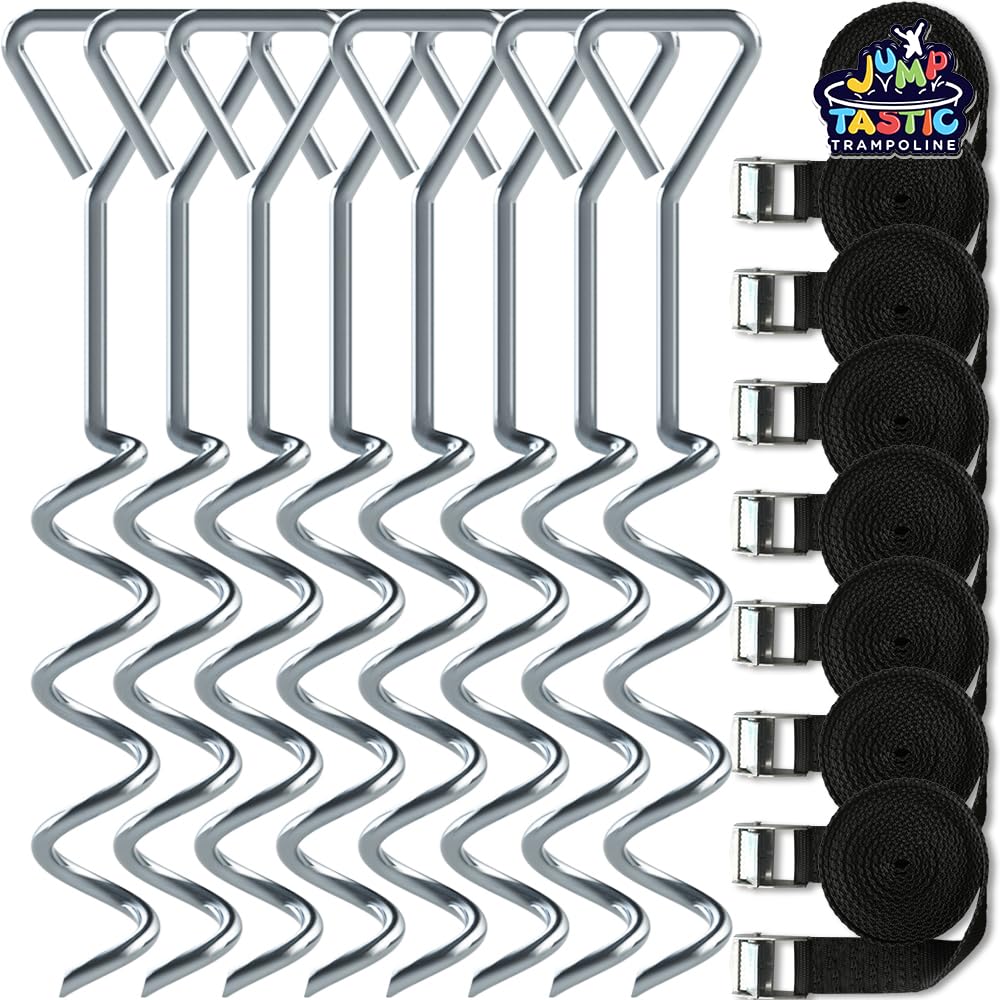
The Jump Tastic kit delivers the highest pullout resistance in this roundup thanks to its full spiral-blade geometry. Each of the eight galvanized steel anchors twists into the ground like a corkscrew, creating a broad surface area that resists upward lift far better than any straight stake. Real-world reports confirm these anchors held a trampoline in place during a tornado event, with only one stake pulling loose — and the strap kept the frame contained.
The 90-inch tie-down straps are generous enough to wrap around any trampoline frame from 12-foot to 15-foot models, and the strap material is thick, woven webbing with a 1.5 safety-factor rating. Installation requires only manual twisting using a stick through the top loop, or you can use a drill adapter (sold separately). The spiral design works best in moderately soft ground; if your soil is rock-hard, soaking the spot overnight softens it sufficiently.
One minor trade-off: the spiral shape makes removal slightly more difficult than a straight stake because you must reverse-twist it out. But given the wind protection it provides — surviving storms that sent neighbors’ trampolines airborne — that minor hassle is easily forgiven.
Why it’s great
- Spiral blade design provides exceptional hold in wind storms
- Eight anchors cover all legs of any trampoline size
- 90-inch straps eliminate the need for extension webbing
Good to know
- Requires manual twisting or separate drill adapter
- Spiral removal is more work than pulling a straight stake
2. Phopich Ground Anchor Screw In 4-Pack

Phopich upgrades the spiral concept with a full-length blade that runs the entire 15-inch shaft rather than stopping a few inches from the tip. This extra threading gives the anchor substantially more bite, especially in loose soil where shorter spirals can spin without advancing. The blade itself is 2.21mm thick and 40mm wide, meaning it won’t bend or snap when you hit a root.
Installation is the fastest in the category: the included nut driver bit attaches to any standard drill, and reviewers report driving the anchor fully into firm ground in under 10 seconds. A T-handle hex wrench is also included for manual installation when you don’t have power tools nearby. The bright orange powder coating is both rust-resistant and highly visible, so you won’t accidentally run over an anchor with the lawnmower.
The detachable top ring uses a hex-bolt system that lets you thread two 1-inch ratchet-strap hooks simultaneously. This is a thoughtful detail for securing larger structures like a trampoline plus a canopy side-by-side. The only catch is that the included nut driver is slightly shallow — some users recommend swapping in a deep socket for a more secure fit during high-torque drilling.
Why it’s great
- Full-length spiral blade maximizes grip in loose soil
- Drill installation takes under 10 seconds per anchor
- Hex-bolt ring accepts two strap hooks simultaneously
Good to know
- Included nut driver is shallow; deep socket works better
- Thick eyelets may not fit smaller carabiner clips
3. MightyPhine Trampoline Anchors 4-Pack

MightyPhine rethinks the strap-attachment problem with a design that grabs the trampoline frame at its lowest point — the bottom rail — and pulls it directly into the ground. This downward vector prevents the anchor from loosening as wind pushes upward, a failure mode common with strap systems that attach to the top rail or leg midpoint. The included straps are wide, heavy-duty webbing that lies flat against the frame, eliminating the flapping noise metal hooks produce in strong wind.
The 12-inch alloy-steel anchors use a screw-like thread pattern that penetrates hard soil without pre-soaking, though a powerful drill is recommended for the initial twist. A 18mm hex bit is included, and the entire kit arrives with exactly four anchors and four straps — no fumbling with tangled hardware or unclear diagrams. American customer support is a bonus: one reviewer had a missing washer replaced via phone within 24 hours.
Because the anchors are only 12 inches long, they work best in soil that has some compaction at that depth. In very fluffy topsoil, you may want to angle the anchor away from the trampoline to increase effective depth. The strap system also requires the frame to have a clear bottom rail — some trampolines with enclosed netting at ground level may need a different attachment point.
Why it’s great
- Unique low-frame hook creates downward pull instead of sideways
- Wide straps eliminate flapping and stay secure in high wind
- Excellent customer support with fast parts replacement
Good to know
- 12-inch length may be short for very loose topsoil
- Requires accessible bottom rail for proper attachment
4. VVOKGO Trampoline Stakes 8-Pack U-Shaped
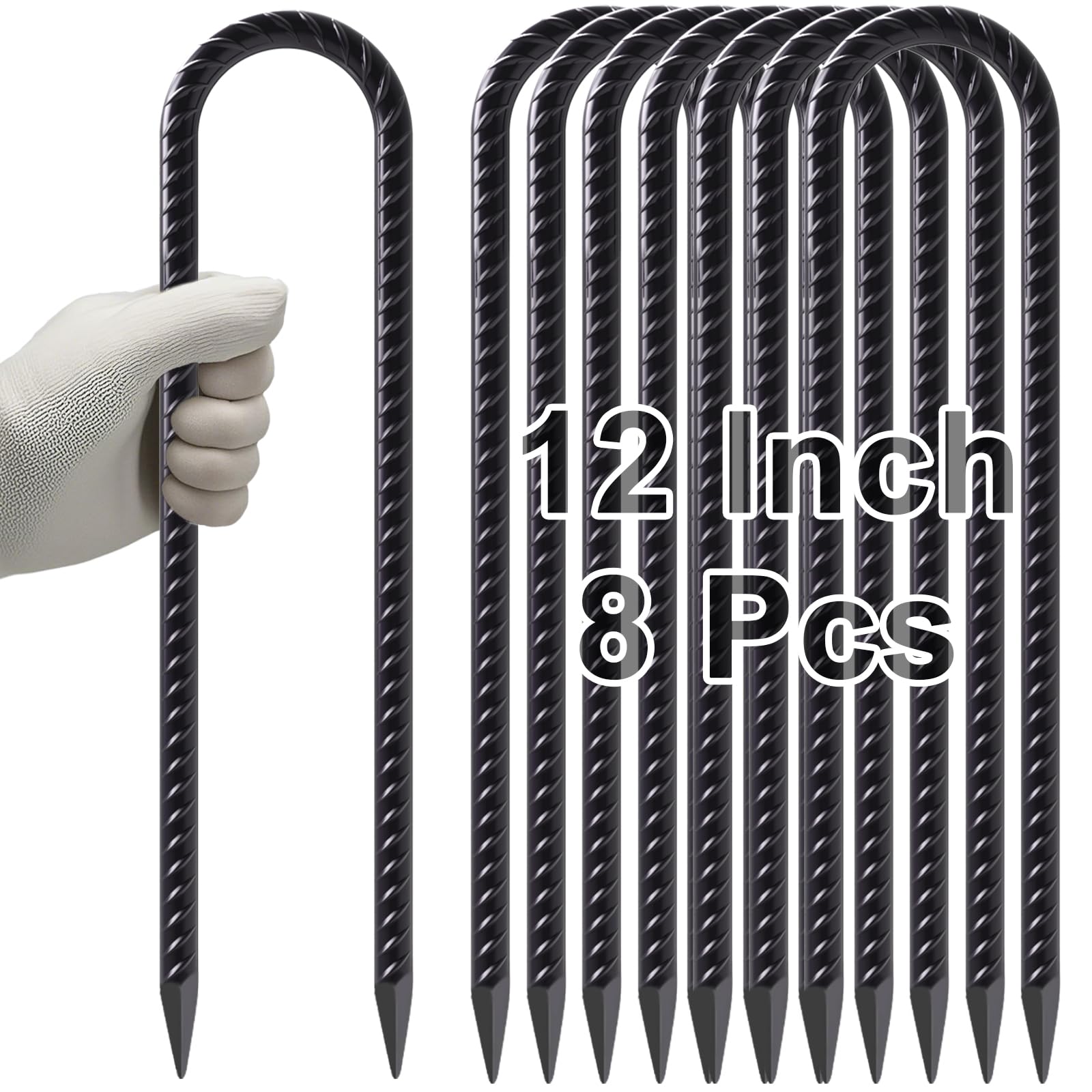
When your soil is packed with rocks or hard clay, a spiral anchor won’t thread in — it will simply spin. The VVOKGO U-stakes solve that with a chisel-point tip that you drive straight down using a sledgehammer, bypassing rocks rather than trying to screw through them. Each stake is made from 5/16-inch steel rebar with a hot-dip galvanized coating that resists rust far longer than painted alternatives.
The U-shape creates a 2-inch spacing that fits perfectly over trampoline frame legs, and the raised edges on the inside of the U grip the leg to prevent sliding. Eight stakes in the pack give you two per leg for a 14-foot trampoline, or you can double up on the windward side for extra insurance. Reviewers report these stakes held a shade canopy through 50-mph gusts without bending, and they are equally effective for securing fence posts, solar panel racks, and Christmas inflatables.
Unlike screw-in anchors, these stakes do not include straps — you must pass your own tie-down rope or bungee through the U to secure the frame. The chisel-point design also means removal requires pulling straight up rather than unscrewing, which can be difficult if the stake has been driven deep into compacted soil. A 5-pound sledge is recommended for installation; a regular hammer won’t generate enough force.
Why it’s great
- Chisel-point tip drives through rocks and roots
- Hot-dip galvanized coating provides lasting rust protection
- 8-pack covers all trampoline legs with spares
Good to know
- No straps included; requires separate tie-downs
- Removal requires pulling rather than unscrewing
5. Payivsve Ground Anchors 4-Pack 15-inch
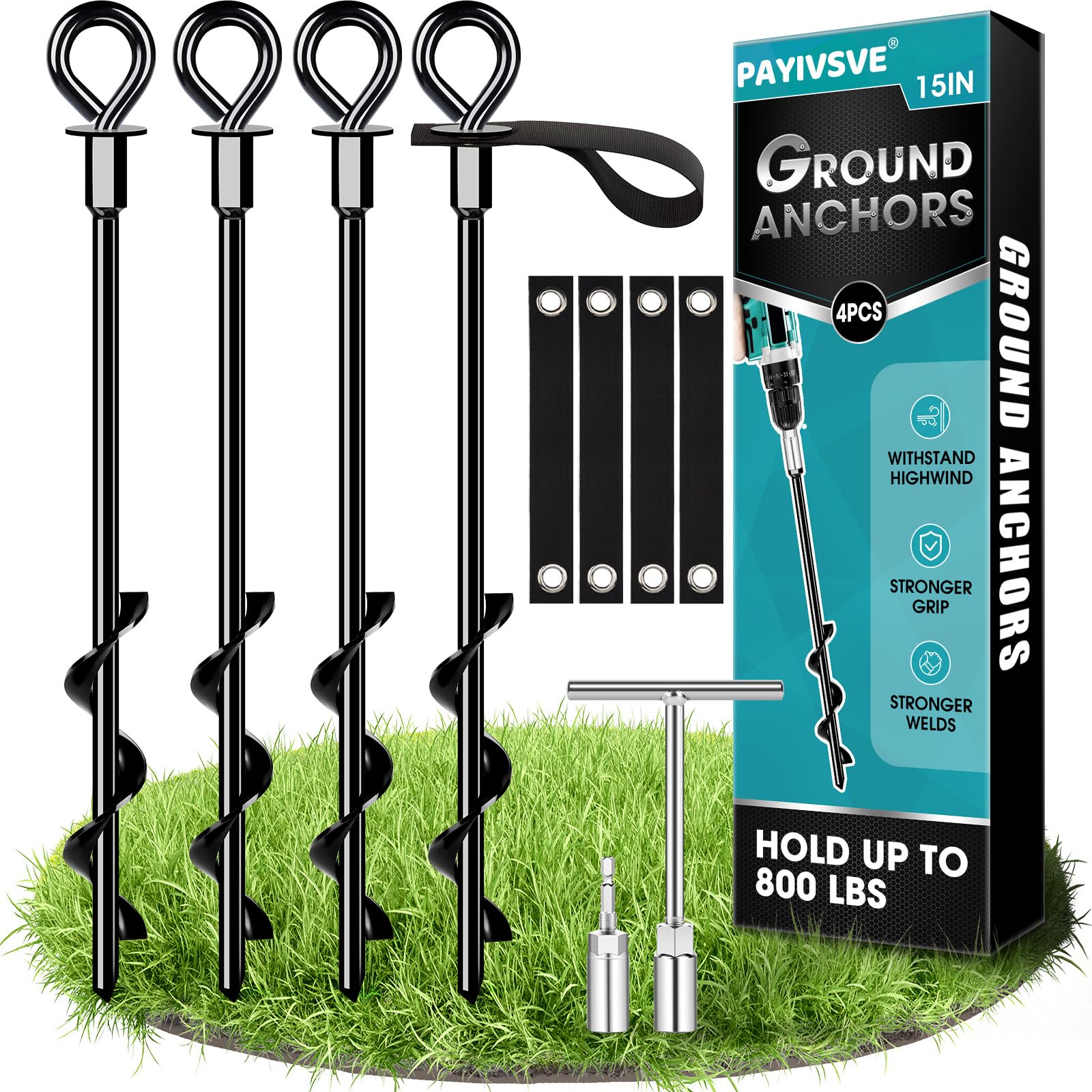
This Payivsve set prioritizes depth. At 15 inches, the anchor shaft pushes the helix blade well below the organic topsoil layer where most soil compaction occurs, giving the threads a denser medium to bite into. The anchor is designed for both drill and manual installation, with a T-wrench and 14mm adapter included. The anti-rust coating is a matte black spray that holds up well against moisture, though it is less durable than galvanizing over many seasons.
The accompanying four straps are made from thick woven fabric with a claimed safety factor of 1.5, meaning they can handle temporary overload without snapping. The combination has survived real-world 75-mph wind storms according to reviewer reports — a feat that puts this kit on par with the spiral designs despite using a simpler screw-in geometry. The strap length is generous enough for 12- to 15-foot trampolines without requiring extensions.
Installation tips from the manufacturer advise watering hard ground and waiting two minutes before drilling — this softens the soil just enough for the threads to catch. The anchors are unsuitable for rocky soil because the screw tip cannot cut through stone. The 1.18-inch shaft width also makes these anchors lighter than the Phopich or Jump Tastic options, which some users prefer for portability but others see as a trade-off in long-term rigidity.
Why it’s great
- 15-inch depth reaches compacted subsoil for firm hold
- Tested by users in 75-mph wind storms
- Includes T-wrench, drill adapter, and four heavy straps
Good to know
- Not suitable for rocky soil
- Black paint coating less durable than galvanized
6. Payivsve Screw-in Anchors 4-Pack

The defining feature of this Payivsve set is the removable eyebolt. Instead of a fixed loop on the anchor head, the eyebolt screws out, converting the anchor into a flush stub that disappears below the grass line when not in use. This is a smart solution for homeowners who want to leave anchors in the ground year-round without tripping hazards or mower interference. When you need to secure the trampoline, the eyebolt threads back in and the strap attaches in seconds.
The 15.75-inch shaft is the longest in this review, giving the spiral threads maximum reach into compacted subsoil. The included T-hook and adapter allow drill or hand-rotation installation, and reviewers consistently praise how easy the system is to set up. The black anti-rust paint coating covers the entire metal surface, though like the other Payivsve set, it is not as rugged as hot-dip galvanizing over extended outdoor exposure.
One trade-off is that the removable eyebolt adds one extra step to both installation and removal — you have to unscrew/screw the eyebolt each time — but for users who prioritize a clean lawn, this feature is worth the minor convenience cost. The kit includes four straps, an adapter, and a T-hook, making it a complete solution out of the box.
Why it’s great
- Removable eyebolt lets anchors sit flush with ground when unused
- 15.75-inch length is longest in the roundup
- Complete kit with straps, adapter, and T-hook
Good to know
- Removable eyebolt adds an extra assembly step
- Paint coating less durable than galvanized alternatives
7. Pamofuper Ground Anchors 4×14-Inch
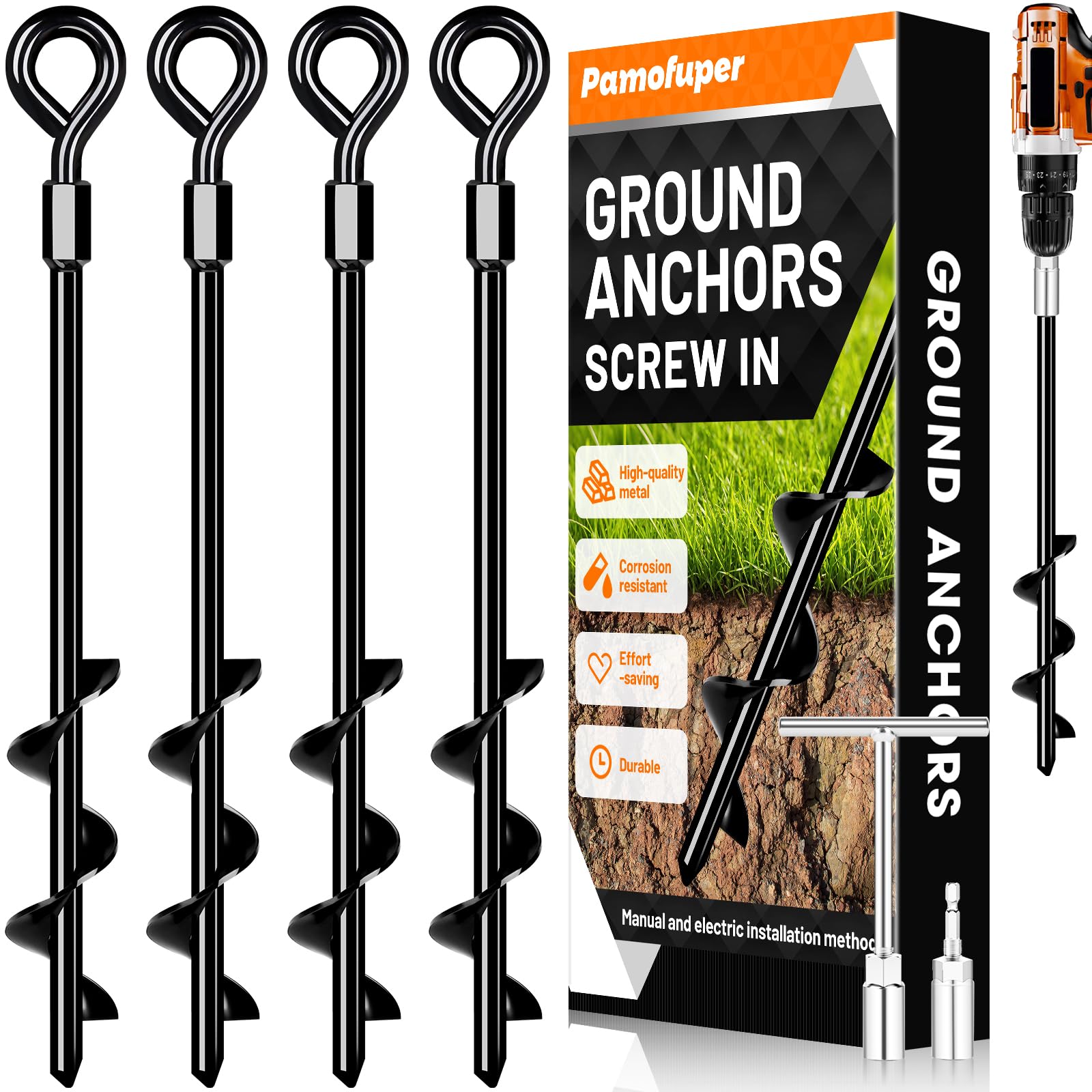
The Pamofuper anchors hit a sweet spot between cost and capability. At a 14.2-inch length with a detachable ring buckle, they offer the same core functionality as pricier models — screw-in installation via drill or T-wrench, anti-rust coating, and compatibility with multiple soil types including rocky and frozen ground — at a lower entry point. The T-type wrench and 14mm electric drill socket are included, so there are no hidden tool costs.
The detachable ring buckle is a standout convenience: you can thread rope or strap through the open ring before attaching it to the anchor head, rather than wrestling the strap through a fixed loop. This makes setup and strap swapping noticeably faster, especially if you use the anchors for multiple purposes like securing a greenhouse in one season and a trampoline in another. The spiral blade is 14 inches long, which provides enough thread engagement for most residential lawns.
Reviewers report successful use in a variety of settings — temporary storage tents, swing sets, and even a 100-foot high tunnel greenhouse — which speaks to the anchor’s versatility. The metal construction is solid but the spiral blade width is narrower than the Phopich or Jump Tastic spirals, so the pullout resistance is slightly lower in loose sand. For typical backyard soil with some compaction, however, these anchors hold exceptionally well.
Why it’s great
- Detachable ring buckle simplifies strap threading
- Compatible with rocky, frozen, and sandy soil types
- Includes all tools for drill or manual installation
Good to know
- Narrower spiral blade offers less pullout in pure sand
- Ring buckle may loosen over time if not fully tightened
FAQ
How many anchors do I need for my trampoline?
Can I use tent stakes as trampoline anchors?
How deep should trampoline anchors be installed?
Do trampoline anchors work on concrete or asphalt?
Final Thoughts: The Verdict
For most users, the right anchor for trampoline is the Jump Tastic 8-Pack because the spiral-blade design offers the best balance of wind resistance, coverage, and ease of installation in standard backyard soil. If you want drill-in speed with a full-length helix that grips loose soil aggressively, grab the Phopich 4-Pack. And for rocky ground where screws can’t thread, nothing beats the hammer-driven VVOKGO U-Stake 8-Pack.