
Our readers keep the lights on and my morning glass full of iced black tea. As an Amazon Associate, I earn from qualifying purchases.
Specs are compiled from manufacturer listings and verified buyer reviews and can change over time — please confirm the key details on the product page before buying.
Choosing an Android 11 TV Box can feel risky, especially when you just want to stream shows and movies without issues. The real challenge is finding a box that’s certified for your apps and easy to set up. This guide focuses on the specs that matter for a low-maintenance streaming experience.
I’m Min — the founder and writer behind Gadgets Feed. This guide is built by comparing the manufacturers’ published specifications and the patterns across verified customer reviews, so you get each pick’s real strengths and trade-offs instead of marketing spin.
Whether you are replacing an old streamer or building a new entertainment setup, this article helps you pick the right android 11 tv box for your needs.
Our Picks at a Glance
How To Choose The Best Android 11 TV Box
Before you hit buy, you need to decide between a certified streamer and a powerful but unregulated box. Certification means the box carries Google’s official stamp, which typically guarantees smoother access to services like Netflix and Disney+ in full quality. A generic box might offer more raw power and storage for a lower price, but you trade that against potential app compatibility headaches and sideloading quirks.
RAM and Storage: The Real-World Impact
RAM is the box’s short-term memory; storage is its long-term hard drive. More RAM means less waiting when you hop between apps, while more storage means holding onto games and downloaded content without constant cleanup. For most families, a 4GB RAM and 64GB ROM configuration offers a comfortable cushion. A 2GB/32GB setup is fine for basic streaming, but you will feel the limits if you multitask heavily.
Connectivity and Wireless Standards
Your Wi-Fi network and internet speed are as critical as the box’s hardware. Look for dual-band Wi-Fi that supports both 2.4GHz and 5GHz bands so you can choose the best channel in your home. For the cleanest signal, a Gigabit Ethernet port is your best friend, providing a stable wired connection that bypasses any household Wi-Fi interference.
Quick Comparison
| Model | Best For | Memory | Storage | Connectivity | Amazon |
|---|---|---|---|---|---|
| KP1 Certified Box★ Best Overall | Google-certified reliability | 2 GB | 32 GB | Ethernet, Wi-Fi | Amazon |
| HK1 Box X4Tinkerer’s Choice | Raw specs for tinkerers | 4 GB | 64 GB | Dual-WiFi, Ethernet | Amazon |
| X96 Max Plus UltraPower-User Pick | High-speed storage and RAM | 4 GB | 64 GB | Dual WiFi, 100M | Amazon |
| BuzzTV E5 | Dependable IPTV streaming | 2 GB | 32 GB | Wi-Fi, Ethernet | Amazon |
| Formuler Z11 Pro | Global channel seekers | 2 GB | 16 GB | Gigabit LAN, 5G | Amazon |
| RockTek G2 | Fast Wi-Fi and modern codecs | 4 GB | 32 GB | Wi-Fi 6, 1000M | Amazon |
| MINIX U8K-Ultra | High-end local file playing | 8 GB | 128 GB | Wi-Fi 6, Gigabit | Amazon |
| zidoo Z9X 8K | Mastering Blu-ray and audio | 6 GB | 64 GB | Gigabit, Wi-Fi 6 | Amazon |
In‑Depth Reviews
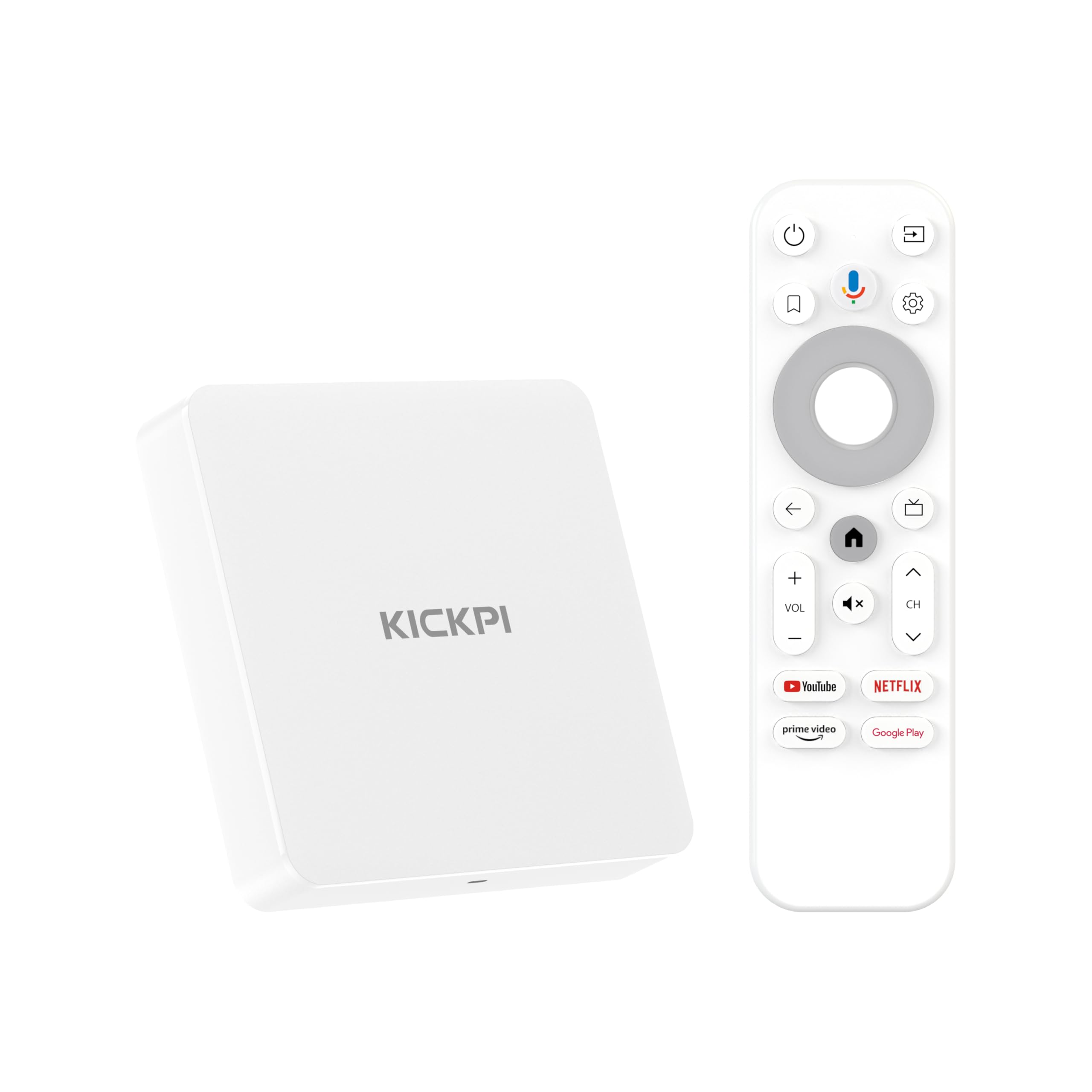
1. KP1 Google Certified TV Box (4K)
Our pick — over 4★ from 150+ verified ratings; the strongest balance of quality and price.
You get a streamer that plays your rentals and favorite apps without the guesswork, because it is Google Certified.
This box earns its spot with the one thing that often goes wrong on cheaper streamers: it is Google Certified. That seal means you can watch Netflix, Amazon Video, Apple TV+, Disney+, and YouTube in 4K HDR (high dynamic range, for brighter highlights and deeper blacks) without the annoying “device not supported” messages. It even brings Dolby Vision HDR (a premium HDR format) into the mix, so your home theater gets ultra-vivid picture quality and rich audio right from the start.
Setup is refreshingly simple. The HDMI cable is built into the unit, so you just plug it into your TV’s HDMI port, connect to Wi-Fi, and start playing. Buyers report it handles movie rentals from Amazon Prime and YouTube Movies without a hiccup, and that it plays nicely with side-loaded productivity apps like Keep, Photos, Gmail, and Termux via a custom launcher. The voice remote (a tool that lets you speak commands instead of typing) has dedicated YouTube and Prime buttons, which make one-tap watching natural.
With 2GB of RAM and 32GB of storage, it’s not the most powerful box on this list, and 1080p is the practical output for some apps. But for the vast majority of buyers, the combination of easy setup, a happy stream of “real good box nice and fast” feedback, and that all-important Google certification makes it the most reassuring choice. Its 3.78-inch square body is 9% more compact than the X96 Max Plus, fitting neatly beside any TV.
What owners cheer
- Strong compatibility with most streaming apps is the thing people praise most.
- Voice search and Chromecast built-in make control smooth.
- Very easy plug-and-play with the attached HDMI cable.
Keep in mind
- Speed can occasionally feel slow in certain applications.
- Practical output for some apps is 1080p, not 4K.
Reach for this if: you want a certified, low-hassle streamer for your whole family.
Look elsewhere if: you need maximum RAM for heavy gaming or multitasking power users.
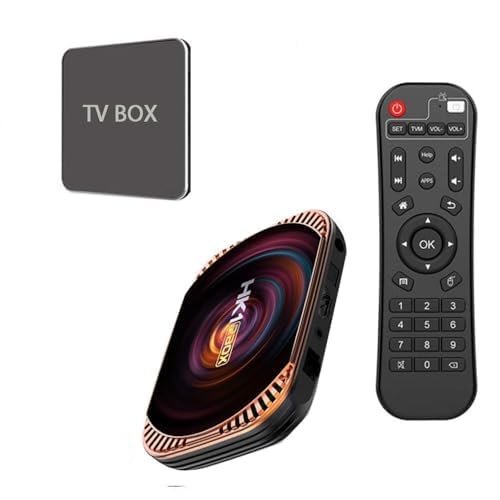
2. Amlogic S905X4 HK1 Box X4
A spec-heavy box whose true fans open up its potential with custom software.
This is the box for people who like to tweak. It packs a beefy 4GB of RAM and 64GB of ROM — exactly double the memory and storage of the KP1 certified box above — powered by the Amlogic S905X4 64-bit quad-core ARM Cortex A55 CPU. On paper, that headroom means you can run more apps at once and keep more games and files stored without cleanup.
Owners who use it daily find it “much more responsive and sturdy” than pricier Rockchip alternatives (chips from Rockchip, a common Android TV processor maker), and many consider it an excellent IPTV box (for streaming live TV over the internet). The catch, and it’s a real one, is that the default software is just “adequate.” The people who truly love this box are the ones who “flash it with newer custom OS,” turning it into what they call a high class machine. If you’re not ready to tinker with custom firmware, you might find the experience less polished than a certified box.
There’s also a split in the owner community: some say it “works great” daily, while others hit freezes that need a hard reboot. The honest read is that this box rewards effort. If you want a project with serious potential, this is a playground; if you want a set-and-forget streamer, the stability gamble isn’t worth it.
High ceiling, hobbyist floor: The hardware is genuinely strong, but the stock experience is a starting point for customization, not the finish line.
Who it’s not for: Anyone who just wants to plug in and watch — stability is a coin flip from the start.
3. X96 Max Plus Ultra
A rooted streamer that runs fast and lets you install whatever you want.
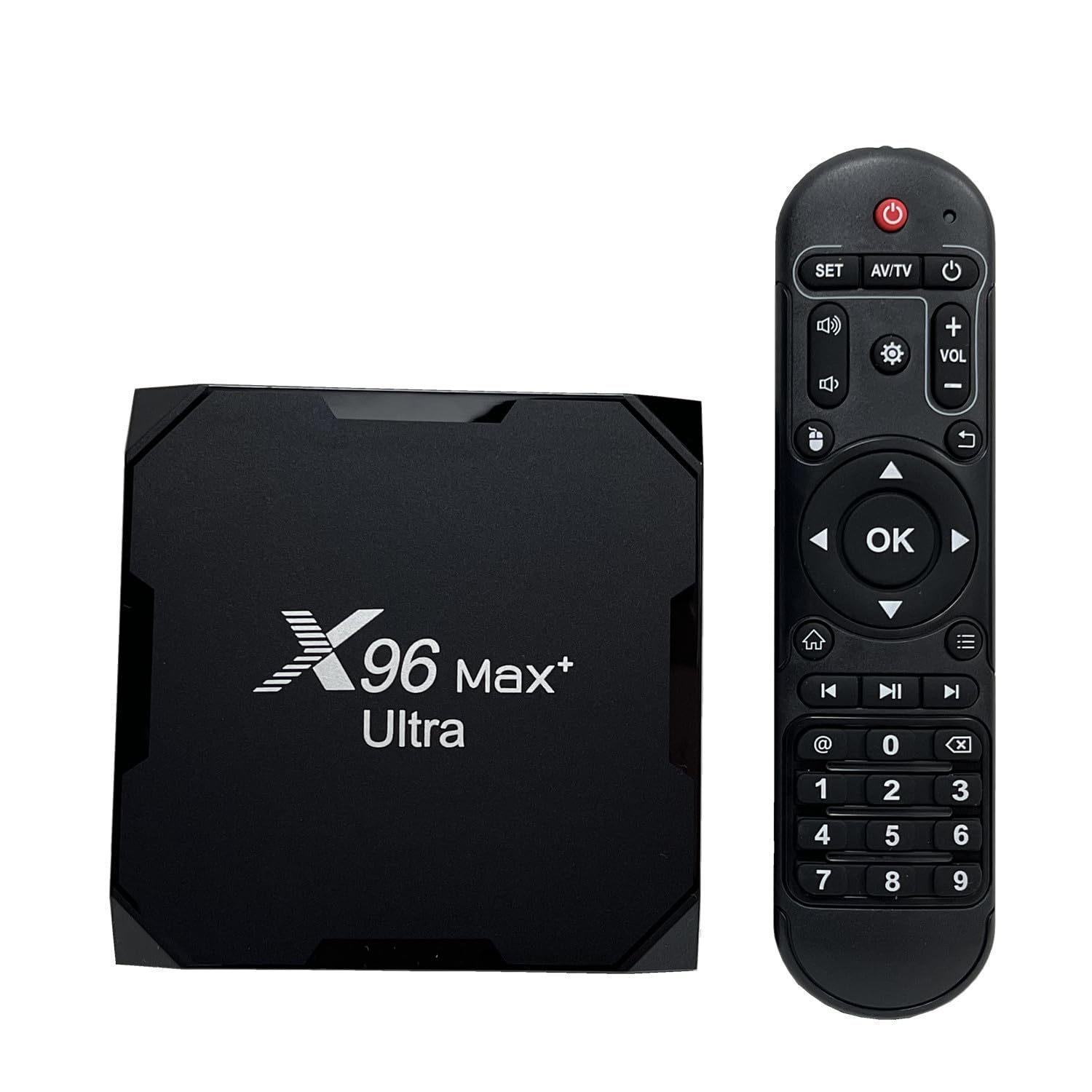
This box matches the HK1’s hefty 4GB RAM and 64GB ROM, but adds one unique advantage: it arrives rooted. For the uninitiated, a rooted box means you have administrative control over the Android system, which owners use to install any app they want. The feedback reflects that freedom, with owners noting “the box is rooted you could install any app it works very fast it has good storage.”
Beyond the software freedom, it supports modern video standards like AV1 and H.265, along with 4K HDR through a new generation image quality engine. The 2.4G/5G dual-band Wi-Fi keeps your stream stable, and there’s a 100M Ethernet port for a wired connection. You can even expand the storage further with a micro SD card, adding up to 64GB more space on top of the built-in storage.
That said, the experience is not uniform. The box supports AV1 and new codecs, but buyers have mixed feelings about its overall value. Some call it a “very good Media Player that delivers a fantastic picture,” while others landed a dead unit or found the Google restrictions annoying for sideloading. The hardware is capable, but the risk of a dud unit means it’s a calculated gamble.
Why it stands out
- Rooted for maximum app installation freedom.
- Fast performance with strong storage for downloads.
- Promising 4K HDR and AV1 video support.
Why to be cautious
- Some buyers dispute the true value for the money.
- A few units have arrived dead or damaged on delivery.
- Sideloading can still be blocked for some paid apps.
Best for: the tech-savvy user who relishes installing apps without limits.
Think twice if: you want a straightforward, low-maintenance experience from the start, because the default software may feel unfinished until you customize it.
4. BuzzTV E5

The dependable workhorse that IPTV lovers buy again and again.
Some boxes chase specs, the BuzzTV E5 instead builds a reputation on reliability. Owners who use it say it “functions perfectly” and consider it “top of the line in streaming,” with one going as far as calling it the best in Android TV. That trust is echoed in the loyalty, as several owners have built their whole home setup around it and recommended it to a large circle of friends without a single complaint.
It runs Android 11 with 2GB of RAM and 32GB of storage, which is a modest but capable foundation for smooth application usage and essential apps. The compact, space-saving design fits neatly into any entertainment center, and the HDMI output makes connecting to your TV straightforward. Wi-Fi support keeps you online for streaming and browsing.
The honest caveat is that this box is not for the Google Play purist. One owner called it “awful” specifically because it has no access to Google apps. This is a device aimed squarely at IPTV subscribers who bring their own service and just need a solid vessel to run it. For that crowd, it’s a proven, dependable choice.
Built for stability: Performance and reliability are the two things owners praise most, making it a safe bet for daily IPTV use.
Not for app hoarders: The lack of direct Google app access makes it a poor fit for anyone dependent on the Play Store ecosystem.
5. Formuler Z11 Pro 4K
Quietly streams thousands of global channels for the entertainment hungry.
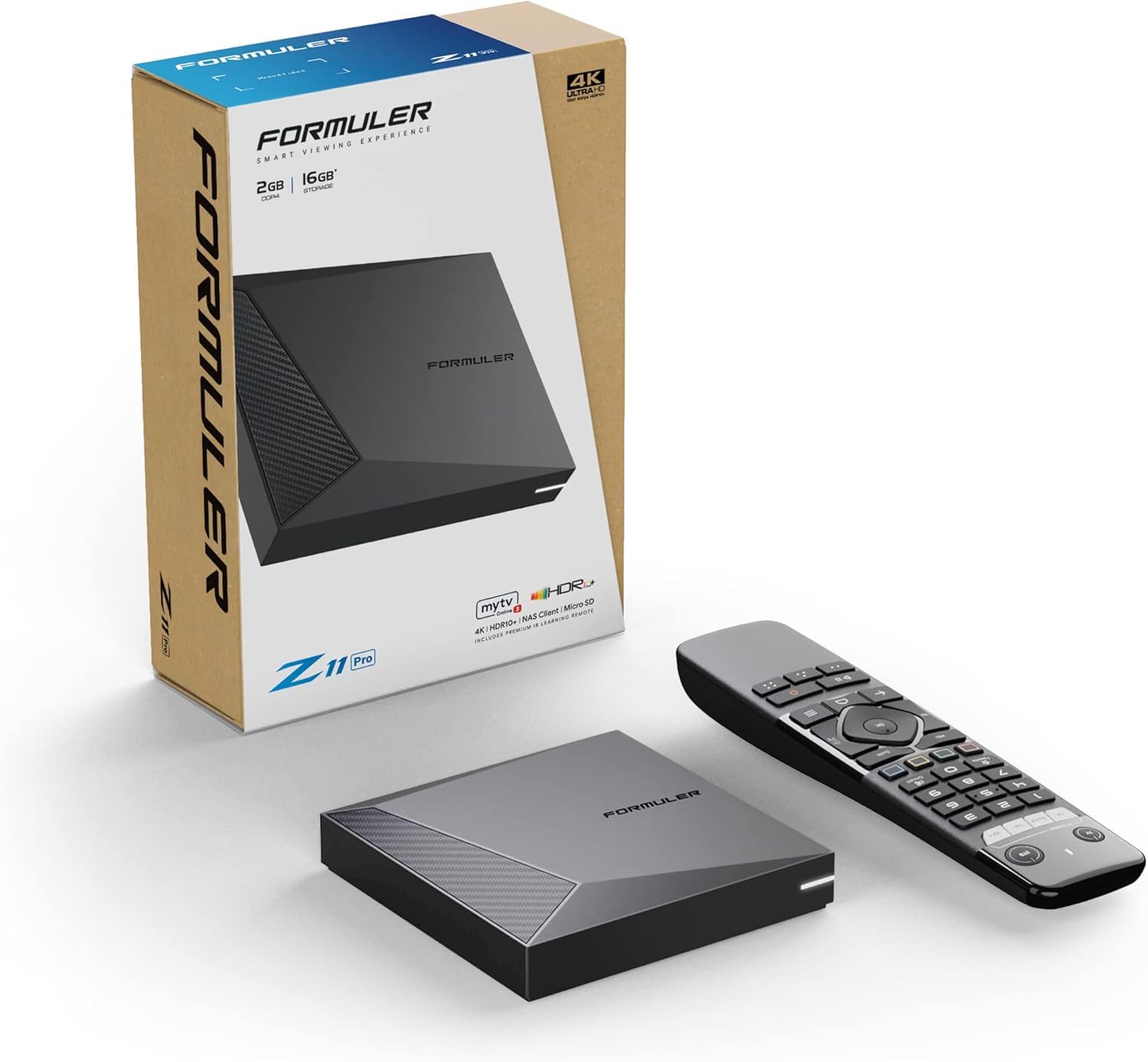
This premium box trades raw storage for something many cord-cutters actually want: world-class connectivity. It comes with Gigabit LAN (a super-fast wired internet connection) and dual-band 5G wireless, ensuring your stream has the bandwidth it needs. Owners have used it to access “thousands of channels all over the world in any language,” as long as their internet speed is up to the task.
With 2GB of RAM and 16GB of storage, the Z11 Pro is more modest on paper than the HK1 Box. But owners highlight the real-world experience: a “fast processor” and “no fan sound,” meaning it stays silent and responsive during movie marathons. The included Premium IR1 Remote Control is praised as a standout, and the 4K output keeps everything looking crisp.
The packaging also shares a small warning that the box has no built-in fan, but the feedback shows this hasn’t been an issue. It’s a great choice for someone who values a smooth, silent stream of international content over a sprawling app library.
What stands out
- Silent operation with a fast, responsive processor.
- Excellent global channel access with strong connectivity.
- Great included remote control.
Consider this
- Storage is limited to 16GB, less than others here.
- Requires higher-speed internet to open up its full channel potential.
Choose this if: you’re chasing international channels and want a silent, fast box.
skip it if: you need tons of local storage for games and heavy apps.
6. RockTek G2 4K Streaming Media Player

A cutting-edge streamer blending cloud gaming with cinematic Dolby Atmos sound.
This is among the most feature-dense boxes on the list. Beyond streaming Netflix and Prime Video, it supports NVIDIA GeForce Now cloud gaming (a service that streams games from remote servers), letting you play AAA games without a console or PC. The RockTek G2 uses the latest Amlogic S905X4-K Quad-core Cortex-A55 CPU (a processor designed for 4K streaming) and packs 4GB of DDR4 RAM (memory for smooth multitasking) along with 32GB of eMMC 5.0 storage (built-in flash memory for apps), which owners say makes it “fast” and smooth.
Connectivity is a headline feature. Its Broadcom Wi-Fi 6 chip delivers up to 450Mbps wireless speeds, verified by a 5G test laboratory in Taiwan. Wired Ethernet connections reach up to 1000Mbps for buffer-free 4K streaming. This is a box that can handle high-bitrate 4K HDR content without buffering.
However, this power comes with a split personality. While performance gets the most praise, picture quality and playback issues have drawn mixed feedback, with some owners experiencing judder or HDR quirks. Stick with this if you want cutting-edge specs like Wi-Fi 6 and cloud gaming; just be prepared for the learning curve that comes with it.
Why it impresses
- Fast Wi-Fi 6 and gigabit Ethernet for smooth streaming.
- Plays well with GeForce Now for cloud gaming.
- Full support for Dolby Vision and Dolby Atmos.
Honest trade-offs
- Some owners mention occasional playback stoutters.
- Picture quality settings can be finicky and cable-sensitive.
Reach for this if: you want the fastest wireless performance and cloud gaming in one box.
Look elsewhere if: you want a perfectly polished, bug-free interface from day one.
7. MINIX U8K-Ultra 8K Android Media Player

The local-file king that turns any screen into an 8K home cinema.
This is the box for the movie collector with a massive local library. The MINIX U8K-Ultra is powered by the Amlogic S928X-K big.LITTLE processor (a chip that combines high-performance and efficient cores), boasting a massive 8GB of RAM and 128GB of eMMC storage — the highest capacity on this list. It excels at smooth 4K/8K UHD video playback and supports a vast array of formats including AV1, VP9, H.265-10, AVS3, and AVS2 (modern video codecs that compress files without losing quality). Note that 8K playback requires an HDMI 2.1a cable (a high-bandwidth connection) and an 8K-compatible display.
What makes this a standout for enthusiasts is its AI-powered upscaling. The AI-SR upscaler boosts 1080p to 2X, 720p to 3X, and 480p to 4X detail, making older content look dramatically sharper. Combined with AI-PQ, which analyzes scenes in real-time to tune picture quality, you get an “extraordinary image quality” that owners rave about, especially on Dolby Vision devices.
The catch is the interface. It runs on AOSP 11 (a generic version of Android, not the TV-friendly Android TV OS) and has a “convoluted Metro UI” (a tile-based layout) that several owners find “not user-friendly.” It shines for playing local files via Kodi or CoreELEC (media center apps), but struggles with retro gaming or as an easy Android steambox. The touchpad on the remote can also occasionally stop working, though a restart fixes it.
Enthusiast allure
- Monster 8GB RAM and 128GB storage for heavy libraries.
- Stunning AI upscaling that dramatically improves SD content.
- Handles high-end local formats with ease.
Home-user hurdle
- Steep learning curve with a clunky, non-TV interface.
- Not suitable for retro gaming or easy app sideloading.
- Some units arrive with quality control issues.
Best for: home theater buffs who live in Kodi and want the absolute best local file playback.
Not for: casual streamers who want a simple Android TV interface with one-click app access.
8. zidoo Z9X 8K HDR Media Player
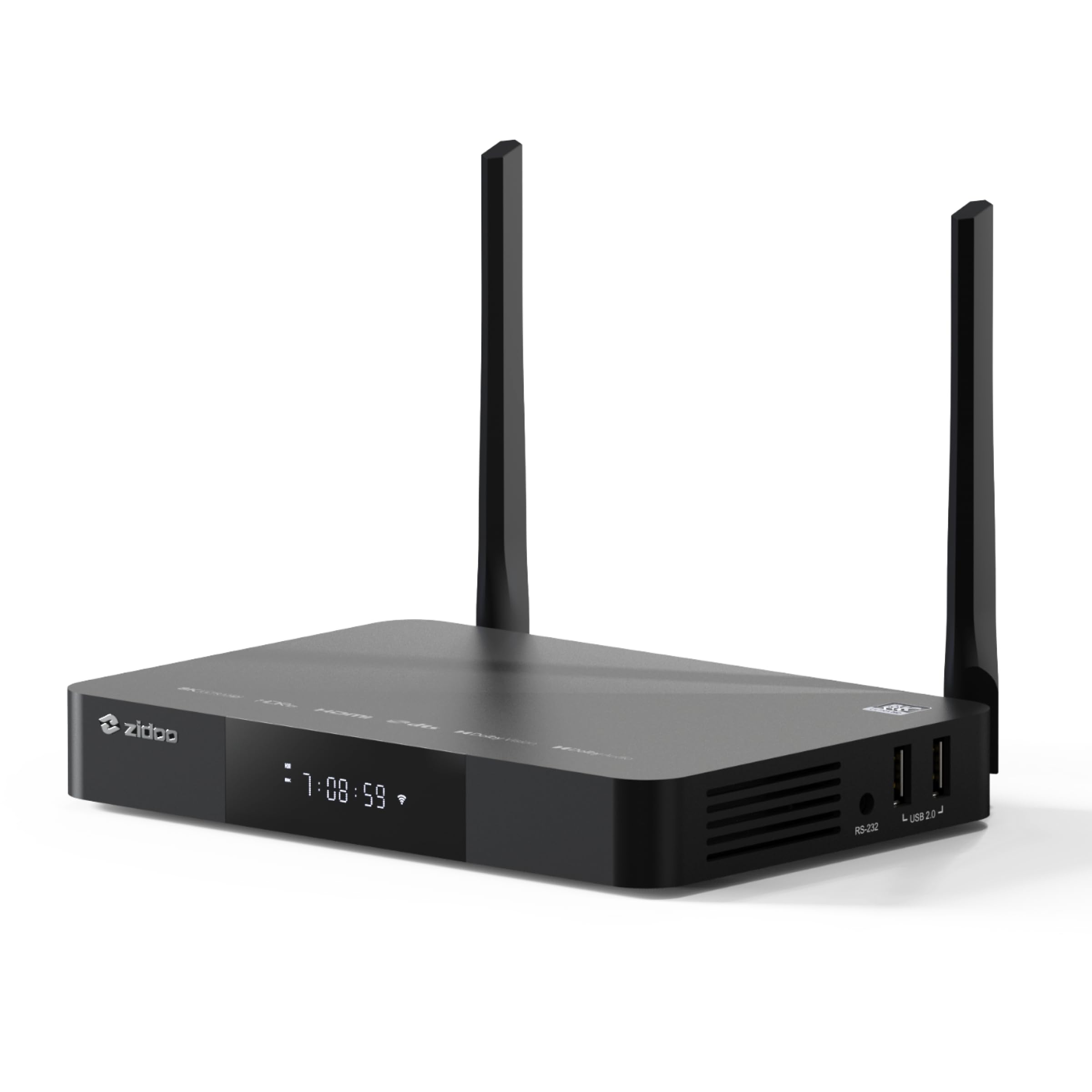
The ultimate fusion of 8K Blu-ray playback and Hi-Fi master audio.
At the top of the range sits the zidoo Z9X 8K, a device built for the serious video and audio enthusiast. It’s not just a streamer; it’s a media playback machine that handles full 8K@60Hz, 12Bit output and a shocking array of formats including AV1, VP9, H.265, AVS3, and AVS2. Crucially, it supports BD/UHD BDMV/ISO files, meaning it can play full Blu-ray disc images with menu navigation, something very few boxes can do.
For audio lovers, this is a revelation. It supports master-level DSD audio formats (high-resolution audio files) like SACD ISO, DFF, and DSF, along with lossless CD formats including WAV, APE, and FLAC, up to DSD512/PCM 192KHZ sampling rates (very high audio quality). Owners confirm it plays “multichannel FLAC, DSD64, SACD ISO gaplessly,” delivering “rich Dolby Atmos and Aura 3D sound capabilities.” This is the choice for anyone with a serious home theater receiver.
The imaging engine here is key. The VPU video engine supports almost all Dolby Vision formats with direct metadata output, and the VS10 image engine delivers low-latency, high-quality DV (LLDV). With 6GB of RAM and 64GB of storage, plus USB 3.0 ports supporting hard drives up to a colossal 24TB, it’s a fully-fledged media hub. The only real complaint is the clunky Android OS, which can have audio dropouts on streaming apps until restarted — a minor sin for a device that otherwise excels at its core local-playback mission.
Why it’s the crown jewel
- class-leading Hi-Fi audio support up to DSD512.
- Flawless playback of 8K and 4K Blu-ray ISO formats.
- Expansive connectivity including SATA and USB 3.0.
The honest catch
- The Android interface feels clunky compared to its media prowess.
- Audio dropouts on streaming apps can occur until a reboot.
Perfect for: the collector with a huge local library and a high-end sound system.
Overkill if: you just want Netflix in a tidy package — this is a specialist tool, not a simple streamer.
Understanding the Specs
RAM and ROM
RAM (Random Access Memory) is your box’s short-term memory. More RAM (like 4GB or 8GB) means apps stay open and you can switch between them quickly without lag. ROM (Read-Only Memory) is your storage capacity. A 64GB or 128GB ROM gives you plenty of space for apps, games, and downloaded media, while 16GB is tight and requires frequent management.
Codec and HDR Support
Codecs are the formats your video files come in. Modern codecs like AV1 and H.265 offer better compression for high-quality streams, meaning you get 4K or 8K video without needing insane internet speeds. HDR (High Dynamic Range) formats like Dolby Vision and HDR10+ enhance contrast and color, making highlights brighter and shadows deeper for a more realistic picture.
FAQ
What does Google Certified mean for an Android TV Box?
How much RAM and storage do I actually need?
What is the difference between Android TV OS and a generic Android box?
Can I use a VPN with an Android TV Box?
How does Wi-Fi 5 compare to the newer Wi-Fi 6?
Is a gigabit Ethernet port worth having?
Can I play my own movie files like MKV or BDMV files?
Why is Dolby Vision and Dolby Atmos important?
What is the HDMI version and why does it matter?
How do I connect my Android phone to a TV Box?
Final Thoughts: The Verdict
For the majority of shoppers, the android 11 tv box winner is the KP1 Certified Box because its Google certification delivers a frustration-free streaming experience with apps you know and trust. If you want more raw power for sideloading and customization, the X96 Max Plus Ultra is a fast, rooted alternative. And for those chasing the pinnacle of local playback with lossless audio, the zidoo Z9X 8K is the specialist choice that won’t disappoint.
How We Picked
We do not accept paid placement. Every pick is matched to a real buyer and a real use-case; we do not hands-on test units.
Sources & Methodology
Specifications: manufacturer listings and product documentation. Review insights: verified customer reviews, as of September 2026. Pricing: not shown on this page (it changes often); check the current price via the retailer link.
As an Amazon Associate, Gadgets Feed earns from qualifying purchases. This does not affect which products we feature.