
The biggest frustration with an Android-compatible fitness watch is the constant anxiety of a dead battery mid-run, compounded by a dim screen you can barely read outdoors. Finding a wearable that combines accurate health tracking with a vibrant display and multi-day endurance without breaking the bank is the core challenge for any active Android user.
I’m Min — the co-founder and writer behind Gadgets Feed. I’ve spent hundreds of hours dissecting the technical specifications, battery capacities (measured in mAh), screen resolutions (measured in PPI), and GPS architectures across every major Android-compatible fitness watch on the market to bring you this definitive comparison.
Whether you need a rugged companion for trail running or a sleek daily driver, this guide cuts through the noise to help you find the best android fit watch that matches your lifestyle and budget.
How To Choose The Best Android Fit Watch
Selecting the right Android fit watch is a balancing act between battery endurance, display quality, GPS precision, and health sensor accuracy. Understanding how these specs interact with your daily routine will prevent buyer’s remorse and ensure the device serves you for years.
Battery Capacity vs. Real-World Endurance
Ignore the marketing claims and look at the milliampere-hour (mAh) rating. A 300mAh battery might deliver a week of basic use, while a 700mAh cell can last 25 days even with constant heart rate monitoring and GPS sessions. Your usage pattern — always-on display vs. raise-to-wake, nightly sleep tracking, daily GPS workouts — drastically impacts actual run time. A premium watch with a larger battery (590mAh or more) frees you from the charger, but be prepared for a heavier case.
Display Tech: Brightness and Readability
For outdoor use, peak brightness measured in nits (typically 1000 to 3000) determines whether you can read your stats in direct sunlight. Pair that with a high pixel-per-inch (PPI) count — a 1.5-inch AMOLED at 454 PPI provides crisp text and map details. Budget models often use lower-resolution LCD panels that wash out in glare, while premium options with AMOLED and high nits ensure clarity during midday trail runs or swim sessions at the beach.
GPS Precision and Satellite Systems
If you run, hike, or cycle off-grid, the GPS architecture is non-negotiable. Basic single-band GPS is fine for open roads but can drift under heavy tree canopy or between skyscrapers. Dual-band GPS (L1+L5) locks onto multiple satellite systems — GPS, GLONASS, Galileo, QZSS — for meter-level accuracy. Offline map support adds another layer, allowing you to download topographical maps and navigate without cell service. For serious athletes, the Garmin multi-band system with a barometric altimeter provides elevation data that mirrors professional-grade devices.
Quick Comparison
On smaller screens, swipe sideways to see the full table.
| Model | Category | Best For | Key Spec | Amazon |
|---|---|---|---|---|
| Garmin Forerunner 970 | Premium Running Watch | Serious runners & triathletes | 28 days smartwatch, 560mAh battery | Amazon |
| Amazfit T-Rex 3 Pro | Outdoor Adventure | Off-grid explorers & hikers | 700mAh battery, 25 days endurance | Amazon |
| Samsung Galaxy Watch Ultra (2024) | Premium Smartwatch | Deep ecosystem integration | 590mAh, titanium case, LTE option | Amazon |
| Amazfit Active Max | Mid-Range Fitness | Daily training & gym users | 4GB storage, 25-day battery, 200mAh | Amazon |
| Bvlrksc GPS Smart Watch | Budget GPS Tracker | Budget-conscious hikers | 550mAh battery, offline maps | Amazon |
| Samsung Galaxy Watch Ultra (2024) White | Premium Smartwatch | Style-focused sports users | 590mAh, 60 hours battery life | Amazon |
| Motorola Moto Watch 120 | Budget AMOLED | Entry-level style & health tracking | 300mAh, 10-day battery, AMOLED | Amazon |
In‑Depth Reviews
1. Garmin Forerunner 970

The Garmin Forerunner 970 is the gold standard for Android-compatible running and triathlon watches, pairing a brilliant 1.5-inch AMOLED display with a scratch-resistant sapphire lens and a lightweight titanium bezel. Its 560mAh battery delivers up to 15 days in smartwatch mode or 26 hours in full GPS mode, which is exceptional for a device with always-on color maps and multi-band GPS support. Advanced metrics like running economy, step speed loss, and training readiness (derived from HRV status and sleep quality) give serious athletes insights previously reserved for dedicated chest-strap monitors.
The built-in LED flashlight is a practical touch for early-morning or late-night runs, and the Garmin Coach feature adapts training plans for 5K to full marathons based on your recovery data. For triathletes, the auto-transition detection seamlessly records swim-to-bike-to-run splits without manual intervention. The ECG app (where available) provides clinical-grade atrial fibrillation screening, which is rare even among premium fitness watches.
On the software side, the Forerunner 970 uses Garmin’s Connect IQ platform which syncs effortlessly with Android phones, though the initial learning curve is steeper than most smartwatches. The companion app offers deep data visualization, but some users note the navigation menu can feel dense compared to Samsung’s Wear OS or Amazfit’s Zepp app. Still, for pure training depth and GPS accuracy, no Android watch matches the Forerunner 970’s package.
Why it’s great
- Exceptional 28-day battery life with multi-band GPS accuracy
- Professional-grade running dynamics and training plans
- Bright AMOLED with sapphire glass, scratch-proof
Good to know
- Steep learning curve for Garmin’s menu system
- Lacks smartwatch features like app store and LTE
2. Amazfit T-Rex 3 Pro
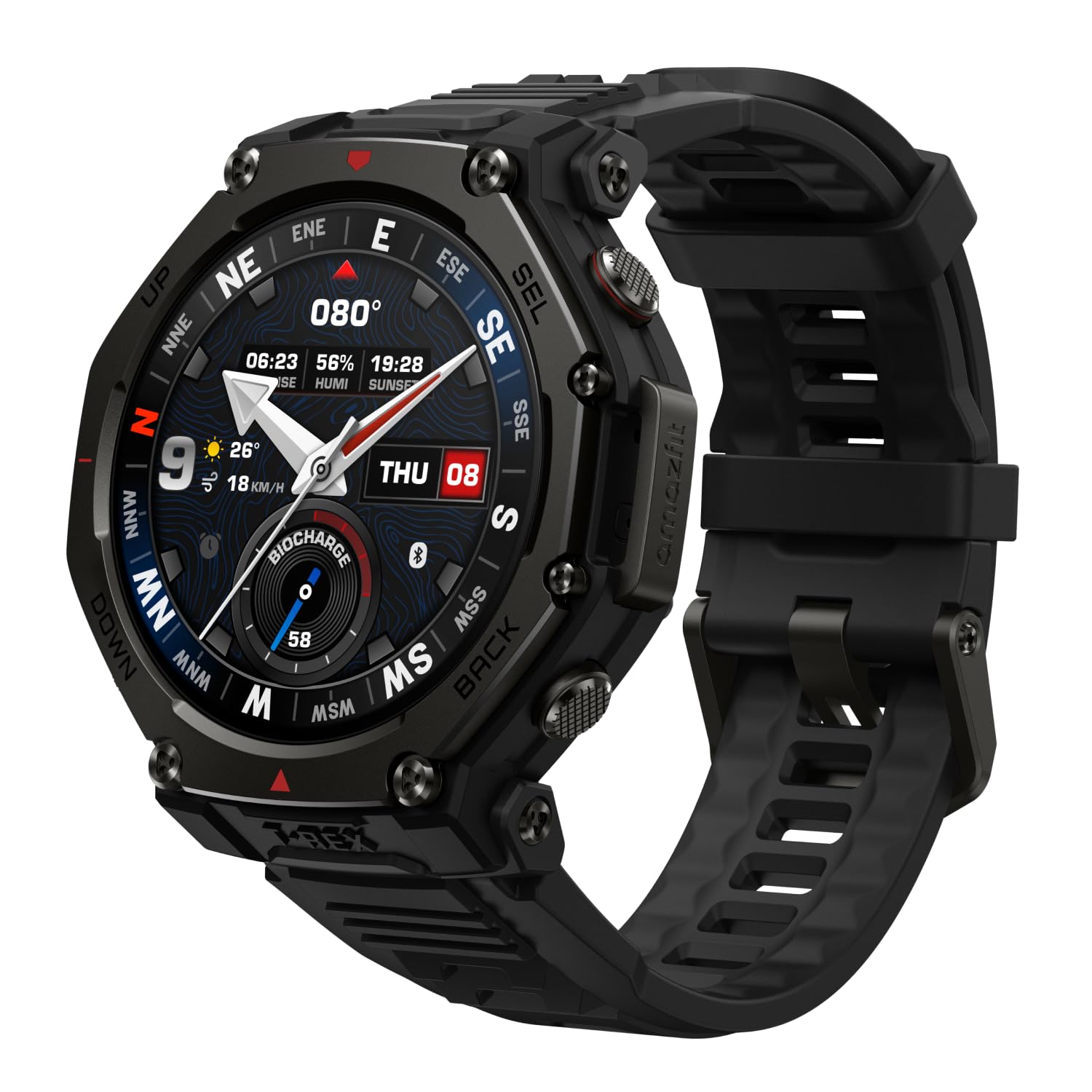
The Amazfit T-Rex 3 Pro is the quintessential outdoor adventure watch, built to survive military-grade temperature extremes and 10 ATM water resistance (dive-rated to 45 meters). Its 700mAh battery is the largest in this comparison, enabling up to 25 days of normal use or 27 hours of continuous GPS tracking, making it ideal for multi-day trekking expeditions. The 3000-nit AMOLED display with sapphire glass and a titanium alloy bezel ensures readability at high altitude or underwater without compromising durability.
Offline maps with POI search, auto rerouting, and ski trail overlays set the T-Rex 3 Pro apart from competitors in its tier. The dual-band GPS locks onto six satellite systems (GPS + GLONASS + Galileo + QZSS + BeiDou + NavIC), providing consistent track recording even in dense forests or urban canyons. The built-in flashlight with red-light mode and SOS signal adds a layer of safety that hikers and campers will appreciate.
The Zepp OS provides a smooth, responsive interface with 180+ sport modes, but the software ecosystem is less mature than Garmin’s. Users report occasional routing recalculation delays during off-trail deviations, and the companion app’s data analysis is less granular than Garmin Connect. That said, at roughly a third of the price of a Garmin Fenix 8, the T-Rex 3 Pro offers 90% of the functionality for the specific niche of rugged outdoor exploration.
Why it’s great
- 700mAh battery delivers 25 days of real-world use
- Sapphire glass and titanium bezel are nearly indestructible
- Offline maps with route planning and POI search
Good to know
- Software lacks advanced training metrics compared to Garmin
- Large 48mm case may feel bulky on smaller wrists
3. Samsung Galaxy Watch Ultra (2024) Titanium Silver
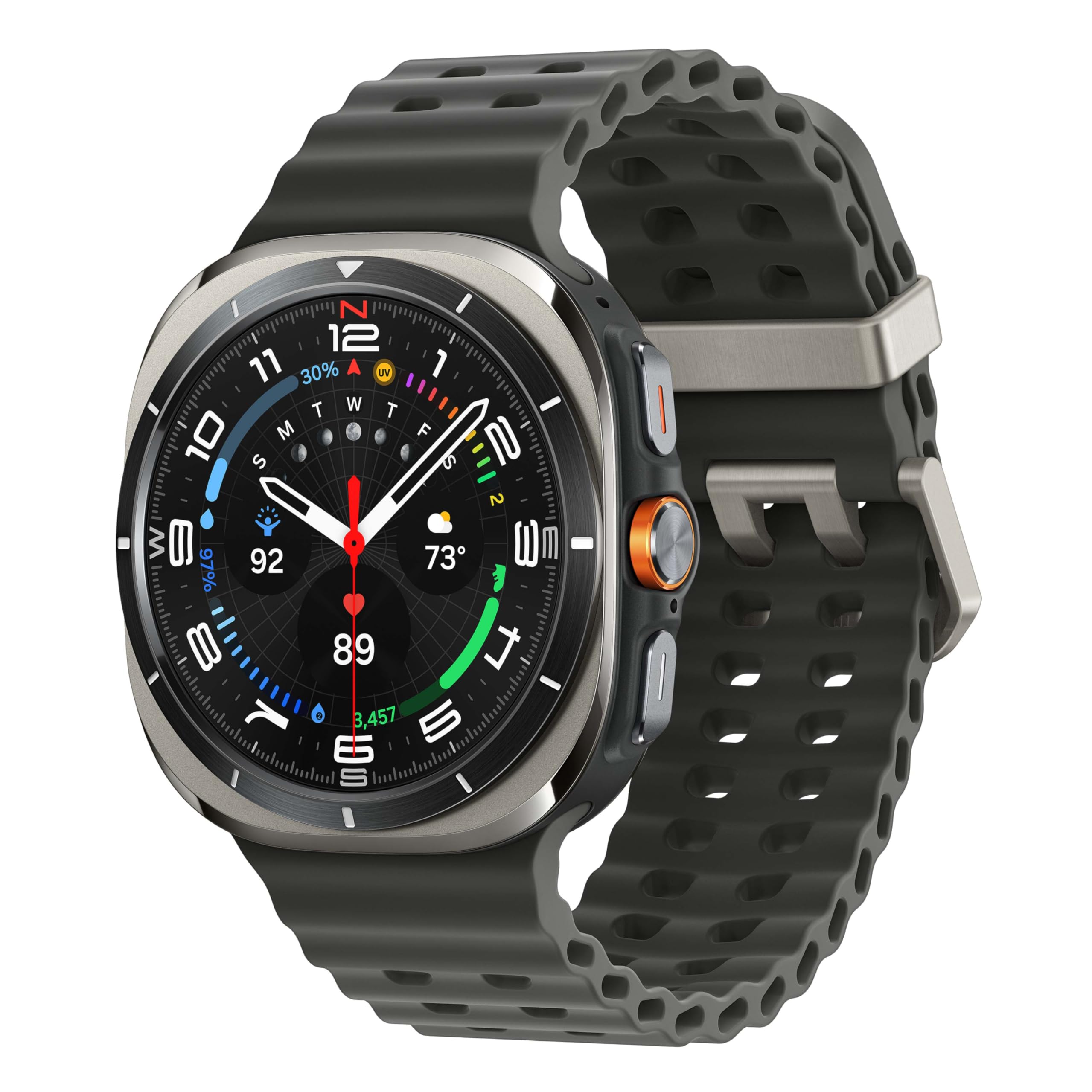
The Samsung Galaxy Watch Ultra 2024 in Titanium Silver is a premium smartwatch-first device with deep integration into the Android ecosystem, particularly for Samsung phone users. Its 590mAh battery delivers roughly 3 days of mixed use with the always-on display off, and a solid 60 hours of continuous GPS tracking — not the class leader, but competitive for a full-fledged Wear OS watch. The titanium case and 10 ATM water resistance mean it can handle ocean swimming and high-pressure water sports without a second thought.
Galaxy AI powers the Energy Score feature, which synthesizes overnight sleep data, heart rate variability, and step counts into a single readiness metric each morning. The dual-band GPS is accurate and fast to lock, and the LTE variant allows for standalone calls, texts, and music streaming without needing your phone nearby. The programmable Quick Button is a thoughtful addition for launching workouts or the built-in flashlight.
Where the Galaxy Watch Ultra truly shines is its interface fluidity and app ecosystem through Wear OS. You get Google Maps navigation, Google Wallet payments, and full notification reply capability (including voice-to-text) with zero compromises. The health tracking is solid — ECG, blood pressure monitoring (calibrated), and heart rate tracking that filters out motion artifacts — but it falls short of Garmin’s training load analysis for serious athletes. The watch is also noticeably heavy at 60.5 grams, which some users find fatiguing during sleep tracking.
Why it’s great
- Full Wear OS app support with Google services
- LTE connectivity for standalone phone-free use
- Titanium build with sapphire crystal, ocean-ready
Good to know
- Battery life limited to ~3 days with typical use
- Heavier than most dedicated fitness watches
4. Amazfit Active Max
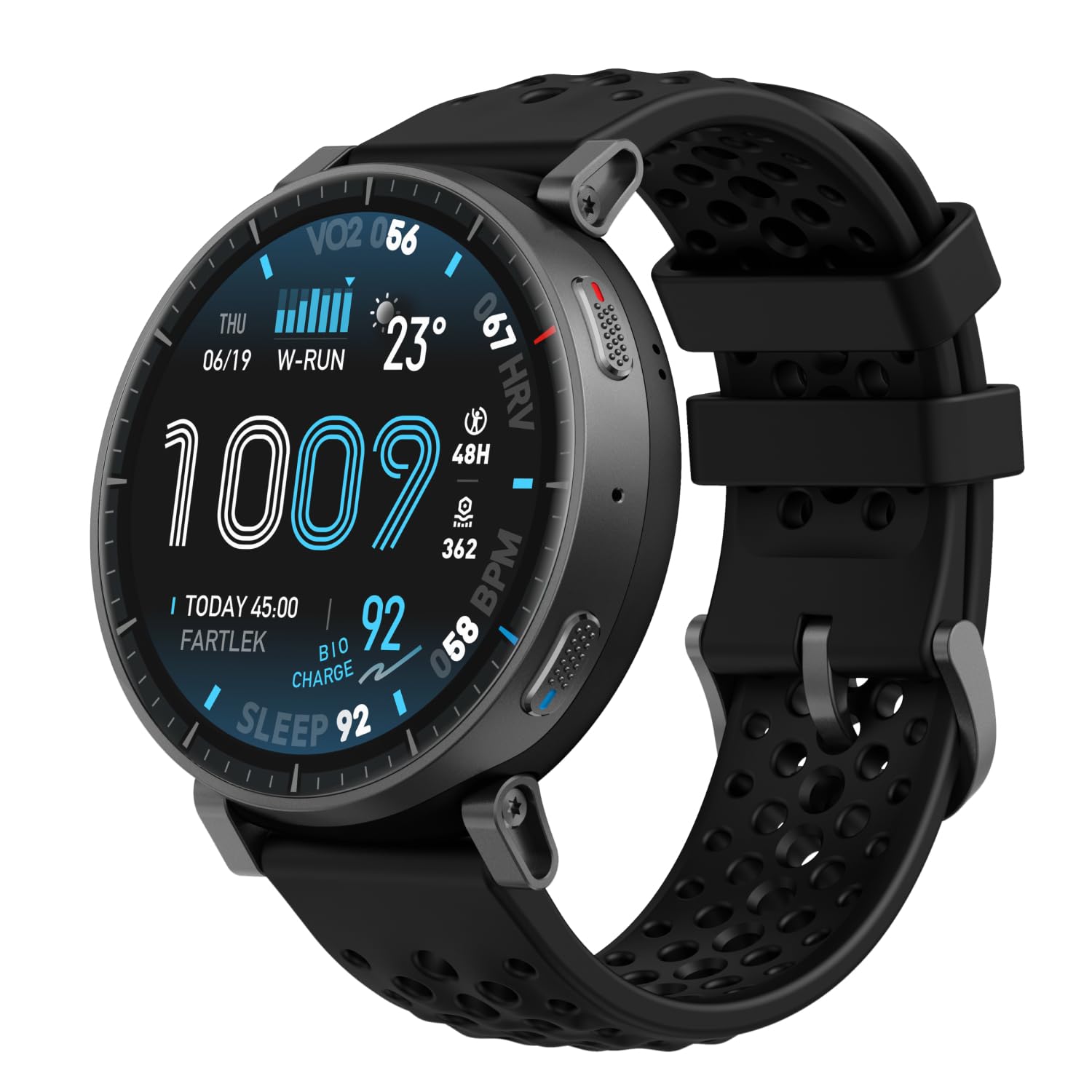
The Amazfit Active Max delivers a punchy 1.5-inch AMOLED display with 3000 nits peak brightness — tied with the T-Rex 3 Pro for the brightest panel in this group — making it exceptionally legible under direct sunlight. The 4GB of onboard storage is a standout feature in the mid-range tier, allowing you to store up to 500 songs or download offline maps for turn-by-turn navigation without a phone. The BioCharge energy monitoring system gives you a daily readiness score, while Zepp Coach provides AI-driven training plans for everything from 5K to marathon distances.
The 200mAh battery might seem small, but Amazfit’s Zepp OS is aggressively optimized; real-world endurance averages 14-16 days with normal usage and up to 25 days in power-saving mode. That’s a remarkable efficiency for a watch with a full-color AMOLED and always-on GPS. The Active Max also supports 170+ sport modes, including niche activities like snow shoveling and indoor climbing, with accurate calorie and pace metrics.
The main limitations are the absence of dedicated running dynamics (cadence, ground contact time) and the lack of a barometric altimeter, which affects elevation gain accuracy on hikes. The Zepp app is clean and user-friendly, but it doesn’t integrate with third-party platforms like MyFitnessPal or Strava as smoothly as Garmin Connect. For the price, however, the blend of display quality, storage, and battery endurance makes the Active Max a compelling option for gym-goers and casual runners.
Why it’s great
- 3000-nit AMOLED with 4GB onboard storage
- AI-powered Zepp Coach adapts training to your recovery
- Excellent 14-25 day battery for an AMOLED watch
Good to know
- No built-in altimeter for elevation tracking
- Limited third-party app integration
5. Bvlrksc GPS Smart Watch
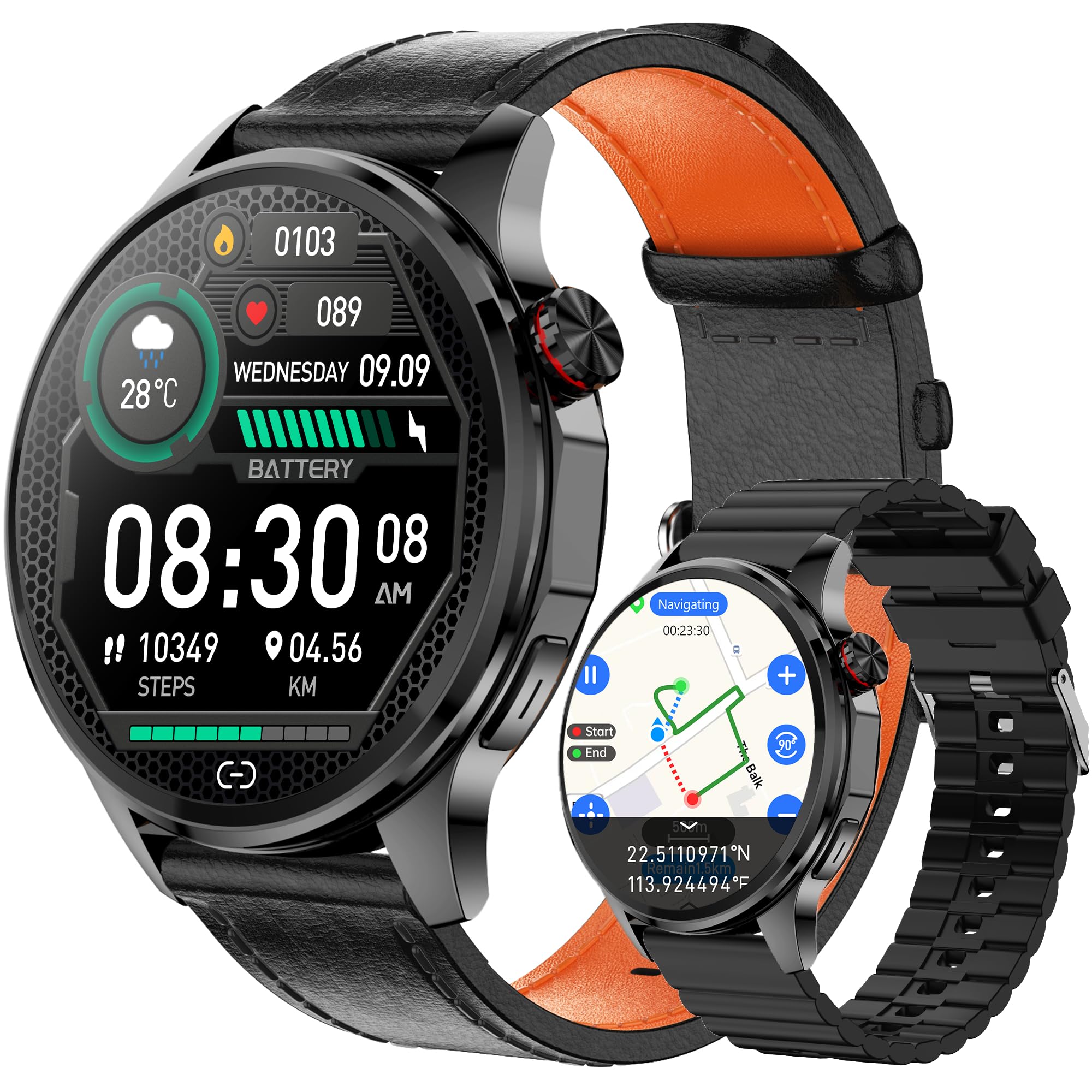
The Bvlrksc GPS Smart Watch punches well above its price point by offering offline map support and GPS connectivity across four satellite systems (GPS, GLONASS, Galileo, QZSS) — a feature typically reserved for devices costing four times as much. The 550mAh battery provides 3-5 days of real-world use with heavy GPS activity and health monitoring, which is competitive with mid-range alternatives. The 1.46-inch HD touchscreen is bright enough for moderate outdoor use, and the included genuine leather band plus a spare silicone strap gives you two distinct looks for the office and the trail.
AI-powered features are the headline here: you can generate custom watch faces by describing a style (“a dark blue cyberpunk theme”), use the built-in AI translator for foreign languages, and ask the AI assistant for weather or calculations. While these features are fun and functional, they don’t match the polish of a Garmin or Samsung offering. The watch also adds all-day sleep monitoring, stress level tracking, and PAI vitality index scoring, offering a health suite that rivals more expensive trackers.
The downsides are clear — the app ecosystem is limited, text replies on Android are restricted to canned responses, and the Bluetooth range is only about 10 feet before disconnecting. The fitness tracking is reliable for basic metrics (steps, heart rate, sleep), but lacks the advanced running dynamics or training load analysis found in premium devices. For the budget-conscious user who needs offline navigation and solid day-to-day health tracking, however, this watch delivers exceptional value.
Why it’s great
- Offline GPS maps at a fraction of the cost of competitors
- 550mAh battery gives 3-5 days heavy use
- Two bands included: leather & silicone
Good to know
- Limited Bluetooth range (~10 feet)
- Text reply only supports canned responses on Android
6. Samsung Galaxy Watch Ultra (2024) Titanium White

The Samsung Galaxy Watch Ultra 2024 in Titanium White is nearly identical to its silver sibling, but the white band and silver case offer a brighter, more summery aesthetic that pairs well with lighter outfits. The core specs remain the same: a 590mAh battery, dual-band GPS, 10 ATM water resistance, and the full suite of Samsung Health features with Galaxy AI integration. The Energy Score remains a standout — combining sleep data, HRV, and step counts into a single morning readiness number that guides workout intensity.
The most compelling selling point of the Galaxy Watch Ultra over the competition is its Wear OS platform. You get full Google Maps navigation, Google Wallet for contactless payments, and the ability to install third-party apps like Spotify, Strava, and YouTube Music directly on the watch. The LTE variant allows you to leave your phone at home during runs and still receive calls, texts, and streaming. The rotating bezel is replaced here by a digital bezel with haptic feedback, which works well but lacks the tactile satisfaction of the Galaxy Watch 6 Classic’s physical ring.
Health tracking depth is respectable — ECG, blood pressure monitoring (with calibration), and sleep stages — but power users will find the data less actionable than Garmin’s training load and recovery metrics. The battery, at roughly 2-3 days with AOD off and LTE active, requires near-daily charging, which is a significant compromise for long-distance runners or multi-day hikers. The watch also demands a Samsung phone for full ECG setup and blood pressure calibration, which narrows its compatibility slightly.
Why it’s great
- Full Wear OS app ecosystem with Google services
- Titanium build and sapphire crystal are ocean-rated
- Galaxy AI provides personalized energy scoring
Good to know
- Battery life ~2-3 days with LTE and health tracking on
- ECG and blood pressure features require Samsung phone
7. Motorola Moto Watch 120

The Motorola Moto Watch 120 is a surprisingly capable entry-level smartwatch that brings a premium AMOLED display and 10-day battery life to the mid-range price point. The 300mAh battery paired with a power-efficient processor delivers a full week of mixed use (including raise-to-wake and heart rate monitoring) — far outperforming most sub- watches that typically last 2-3 days. The 1.43-inch AMOLED panel offers deep blacks and vibrant colors, which is a rarity in this price tier where most competitors use dull LCD screens.
Health tracking covers the basics — heart rate, SpO2, stress monitoring, and sleep tracking — with reasonable accuracy compared to more expensive devices. The Motorola companion app is clean and straightforward, displaying step counts, sleep phases, and heart rate trends without overwhelming the user with jargon. The stainless steel case and silicone band feel more premium than the price suggests, and the watch is lightweight enough to wear during sleep without discomfort.
The limitations are evident for active users: there is no built-in GPS, so exercise tracking relies on a connected phone’s GPS, which drains the phone’s battery during outdoor runs. Workout detection is basic, with auto-detection for walking and running but no support for specialized sports like swimming or cycling with cadence metrics. The magnetic charger is also known to disconnect easily if bumped — a minor annoyance that can be mitigated with careful placement. For someone who wants an affordable, stylish smartwatch with good battery life and basic health tracking, the Moto Watch 120 is a solid entry point.
Why it’s great
- AMOLED display at an entry-level price
- 10-day battery life outpaces most budget smartwatches
- Lightweight stainless steel case feels premium
Good to know
- No built-in GPS — requires phone for tracking
- Magnetic charger can disconnect accidentally
FAQ
Can I reply to text messages on an Android fit watch without a Samsung phone?
What is the difference between 5 ATM and 10 ATM water resistance in a fit watch?
Why does my Android fit watch need a barometric altimeter?
Final Thoughts: The Verdict
For most users, the best android fit watch winner is the Garmin Forerunner 970 because its best-in-class GPS accuracy, deep training analytics, and two-week battery life leave no compromise for serious runners and triathletes. If you need a rugged off-grid companion with offline maps and a built-in flashlight, grab the Amazfit T-Rex 3 Pro. And for a seamless smartwatch experience with full Wear OS and LTE connectivity, nothing beats the Samsung Galaxy Watch Ultra.