
Our readers keep the lights on and my morning glass full of iced black tea. As an Amazon Associate, I earn from qualifying purchases.
Specs are compiled from manufacturer listings and verified buyer reviews and can change over time — please confirm the key details on the product page before buying.
Finding a phone under 50,000 usually means choosing between a great camera that dies by dinner or a huge screen that stutters on your main game. This guide matches nine real, open up smartphones to the specific jobs they do best — zooming into a concert stage, surviving a full workday on one charge, or handling heavy games without overheating.
I’m Min — the founder and writer behind Gadgets Feed. This guide is built by comparing the manufacturers’ published specifications and the patterns across verified customer reviews, so you get each pick’s real strengths and trade-offs instead of marketing spin.
Below, every phone is judged on the specs that actually change your daily experience — battery capacity, display size, and camera hardware — so you can find the best android phone under 50000 that fits how you really use it.
Our Picks at a Glance

How To Choose The Best Android Phone Under 50000
Before you dive into the reviews, you need to know that most phones in this range are a mix of a few flagship-grade parts and several mid-range ones. Your job is to decide which of those parts matter most to you, because you usually cannot get everything at this price.
Battery capacity is your real-world freedom
Battery capacity is measured in milliamp-hours (mAh) — the higher the number, the more energy it holds. A 5000mAh cell is the balance for getting through a full day, while anything above that, like a 5520mAh, gives you serious headroom for heavy gaming or long trips without hunting for a charger.
Display quality changes how you see everything
Two specs matter on the screen: the refresh rate (how many times the image updates per second, with 120Hz feeling smoother than 60Hz when scrolling) and the peak brightness (measured in nits, which tells you how visible the screen is in direct sunlight). If you watch a lot of video outdoors, a brighter panel is worth chasing.
Carrier compatibility is the hidden dealbreaker
An “open up” phone still has to support the specific network bands your carrier uses. Many international models work flawlessly on T-Mobile and its prepaid brands like Mint and Tello, but they can be a gamble on Verizon or AT&T. Always check the review notes about which carrier people actually use it on before you commit.
Quick Comparison
| Model | Best For | Battery | Display | Main Camera | Amazon |
|---|---|---|---|---|---|
| Google Pixel 10★ Best Overall | Camera & AI features | 4970 mAh | 6.3″ Actua | Triple w/ 20x zoom | Amazon |
| Motorola Moto G86Best Value | Budget value | 5100 mAh | 6.35″ | 32MP front | Amazon |
| XIAOMI Redmi Note 15 5GScreen King | Large screen & gaming | 5520 mAh | 6.77″ 120Hz | 108MP | Amazon |
| SAMSUNG Galaxy A36 | Reliable all-rounder | 5000 mAh | 6.7″ 120Hz | 50MP | Amazon |
| XIAOMI Redmi Note 15 Pro+ | Max battery & zoom | 6500 mAh | 6.83″ 120Hz | 200MP | Amazon |
| Samsung Galaxy S23 | Compact flagship | 3900 mAh | Adaptive | 50MP | Amazon |
| Motorola Edge 2025 | Fast charging | 5200 mAh | 6.7″ 1220p | 50MP | Amazon |
| Nothing Phone (4a) Pro | Long zoom range | 5080 mAh | 6.83″ 144Hz | 50MP + 50MP telephoto | Amazon |
| Nothing Phone (3) | Premium design | 5150 mAh | 6.67″ 120Hz | 50MP Quad | Amazon |
In‑Depth Reviews
1. Google Pixel 10
Our pick — 4.5★ from 750+ verified ratings; the strongest balance of quality and price.
The Pixel 10’s 20x Super Res Zoom and Tensor G5 AI features deliver flagship camera quality at a mid-range price.
The Pixel 10 leads this list because it delivers the most complete package for the money, starting with a camera system that punches far above its weight. You get a new 5x telephoto lens that reaches up to 20x Super Res Zoom, so you can pull in distant details that other phones in this range simply blur, and Night Sight keeps those shots crisp when the sun goes down.
Under the hood, the Google Tensor G5 chip handles daily tasks with ease, and the 6.3″ Actua display hits a 3,000-nit peak brightness that stays readable in harsh sunlight. The battery sits at 4970 mAh — not the biggest here — and owners say it comfortably delivers a full day, with the honest caveat that “I wish the battery life was maybe a little bit better, but I can get a full days use out of it.”
The crowd favorite here — with a 4.5-star score across 700+ owners — is built on rock-solid quality and camera performance. A Gorilla Glass Victus 2 front and an IP68 rating (meaning it survives dust and a dip in water) round out a phone that feels premium in hand. The trade-off is the smaller 6.3″ screen compared to the 6.77″ Redmi Note 15, so if you crave maximum display real estate for video, that extra half-inch might win you over instead.
What wins people over
- 20x Super Res Zoom from a 5x telephoto lens
- 3,000-nit Actua display shines in direct sun
- IP68 water and dust resistance
The honest trade-offs
- Battery is a full-day, not a two-day, affair
- Smaller 6.3″ screen than most rivals here
Reach for it if: you want the best all-round camera and a clean, fast Android experience in a compact body.
Look elsewhere if: battery life and a huge screen for media are your absolute top priorities.
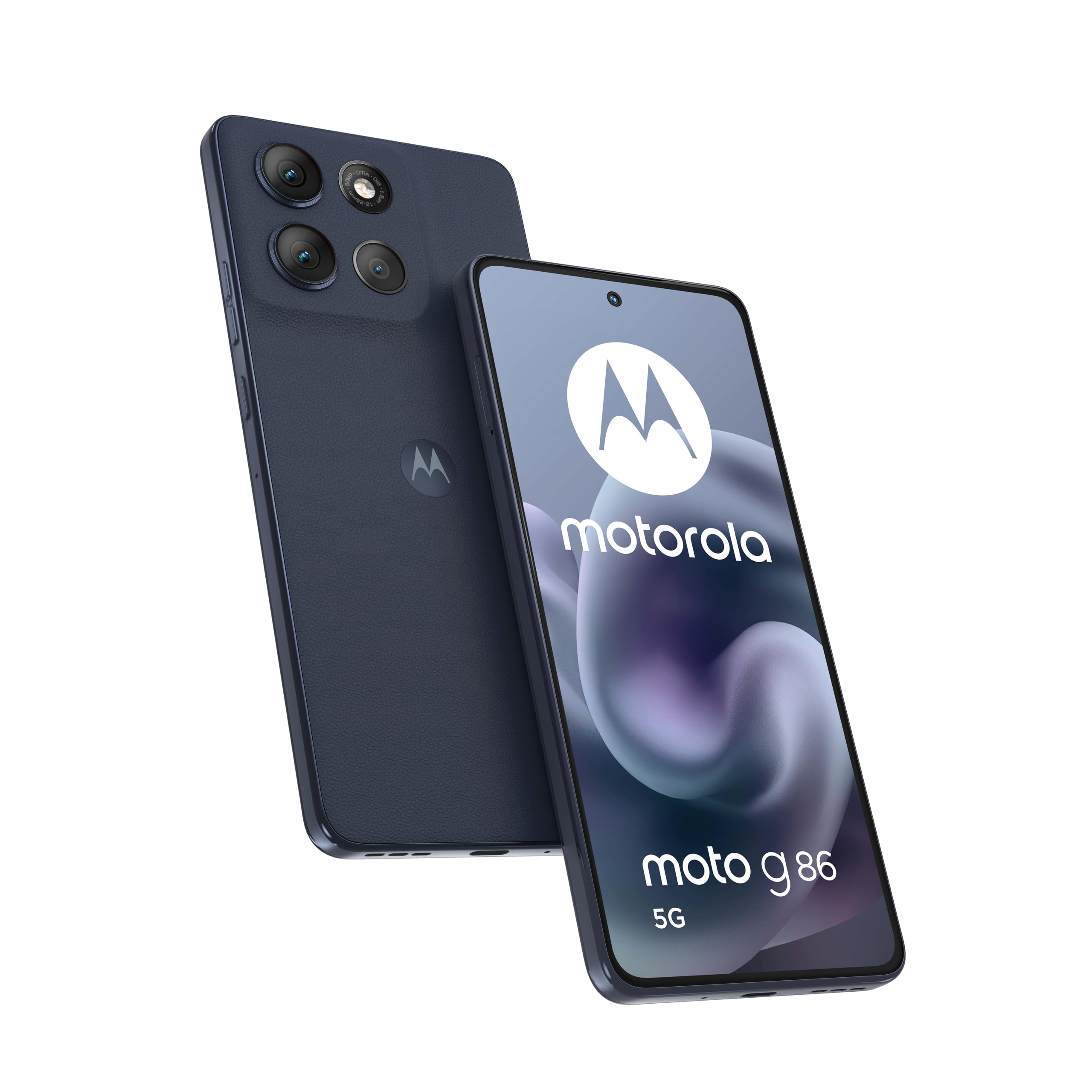
2. Motorola Moto G86
The Moto G86’s 5100 mAh battery and 256GB storage make it the budget pick that lasts all day.
The Moto G86 is the pick for anyone who just needs a phone that works, holds a charge, and doesn’t drain the wallet. It packs a 5100 mAh battery that easily stretches a full day on light use, and buyers report around 14 hours of heavy use even with an 80% charge cap turned on.
Storage is generous at 256GB with 8GB of RAM, so you have plenty of room for apps, photos, and media without worrying about running out. Its 185g weight keeps it light in the pocket, and the 32MP front camera delivers solid selfies and a scan mode that owners call excellent in good lighting.
The recurring gripe is the speaker — owners call it “terrible” — so if you listen to a lot of music without headphones, you’ll want a Bluetooth pair. But for calls, texts, social media, and a reliable data connection that reaches even the far north, this phone delivers everything essential for a fraction of the price.
Straightforward strengths: a huge 5100 mAh battery, 256GB storage, and dependable 5G connectivity make this the sensible budget buy.
The catch: the loudspeaker quality is the weakest point, so plan on using earbuds.
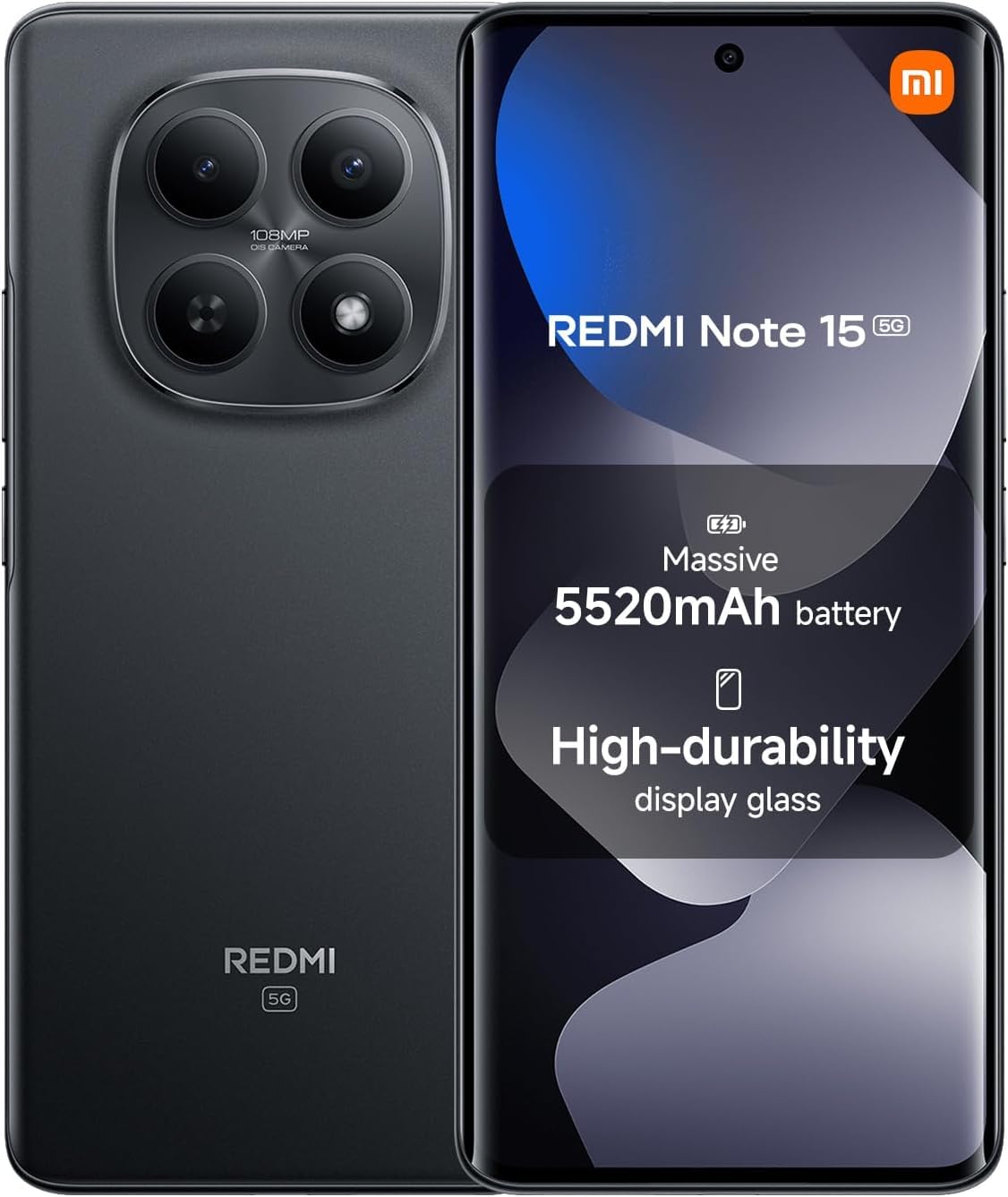
3. XIAOMI Redmi Note 15 5G Ai
The Redmi Note 15 5G’s 6.77″ 120Hz AMOLED and 5520 mAh battery deliver flagship-level gaming and screen time on a budget.
The Redmi Note 15 5G is the one to pick if you live on your phone — literally, because its 5520 mAh battery is a solid 8% larger than the Moto G86’s 5100 mAh, giving you extra hours of screen time. That power feeds a stunning 6.77″ AMOLED display with a 120Hz refresh rate and a 3200-nit peak brightness.
Gamers will appreciate the Snapdragon 6 Gen 3 processor, which handles Honkai: Star Rail at about 50fps on Medium settings with only minor stutter. The 108MP main camera captures detailed shots, and the in-screen fingerprint sensor plus AI face open up keep things secure and quick.
Owners are blown away by the value, with one saying it “feels like an phone.” The main trade-offs are a speaker that’s treble-heavy and lacks bass, plus a thin included case that doesn’t support pop-sockets. Also, check carrier compatibility carefully — this model is built for T-Mobile and its prepaid networks like Mint and Tello.
Choose this for: the biggest, brightest screen and a battery that outlasts nearly everything else here.
Think twice if: you need a speaker with real bass depth or you’re on Verizon.
4. SAMSUNG Galaxy A36 5G
The Galaxy A36’s 50MP camera and 120Hz AMOLED offer reliable Samsung quality with six years of software updates.
The Galaxy A36 is the safe, sensible choice for anyone who wants a familiar Samsung experience without flagship pricing. Its 6.7″ FHD+ Super AMOLED screen runs at a smooth 120Hz, and the 50MP main camera delivers the sharp, vibrant shots Samsung is known for — owners call the camera “amazing.”
Battery life sits at 5000 mAh, with some owners praising a quick 60-minute charging time to top back up. It runs Android 15 from the start with the promise of up to 6 major Android upgrades, and the Snapdragon 6 Gen 3 chip keeps everyday apps and switching between them feeling fast and lag-free.
The biggest watch-out is carrier compatibility: this international model works smoothly on T-Mobile and its prepaid brands, and owners confirm it works on AT&T with an active SIM, but it does not support eSIM and can struggle with some US MVNOs like Spectrum or Cricket. It’s a phone for the confident setup user who knows their network works.
Solid fundamentals: a brilliant 6.7″ 120Hz AMOLED screen and a 50MP camera make this the reliable daily driver.
Know before you buy: no eSIM support and carrier compatibility varies, so verify your network first.
5. XIAOMI Redmi Note 15 Pro+ Plus 5G
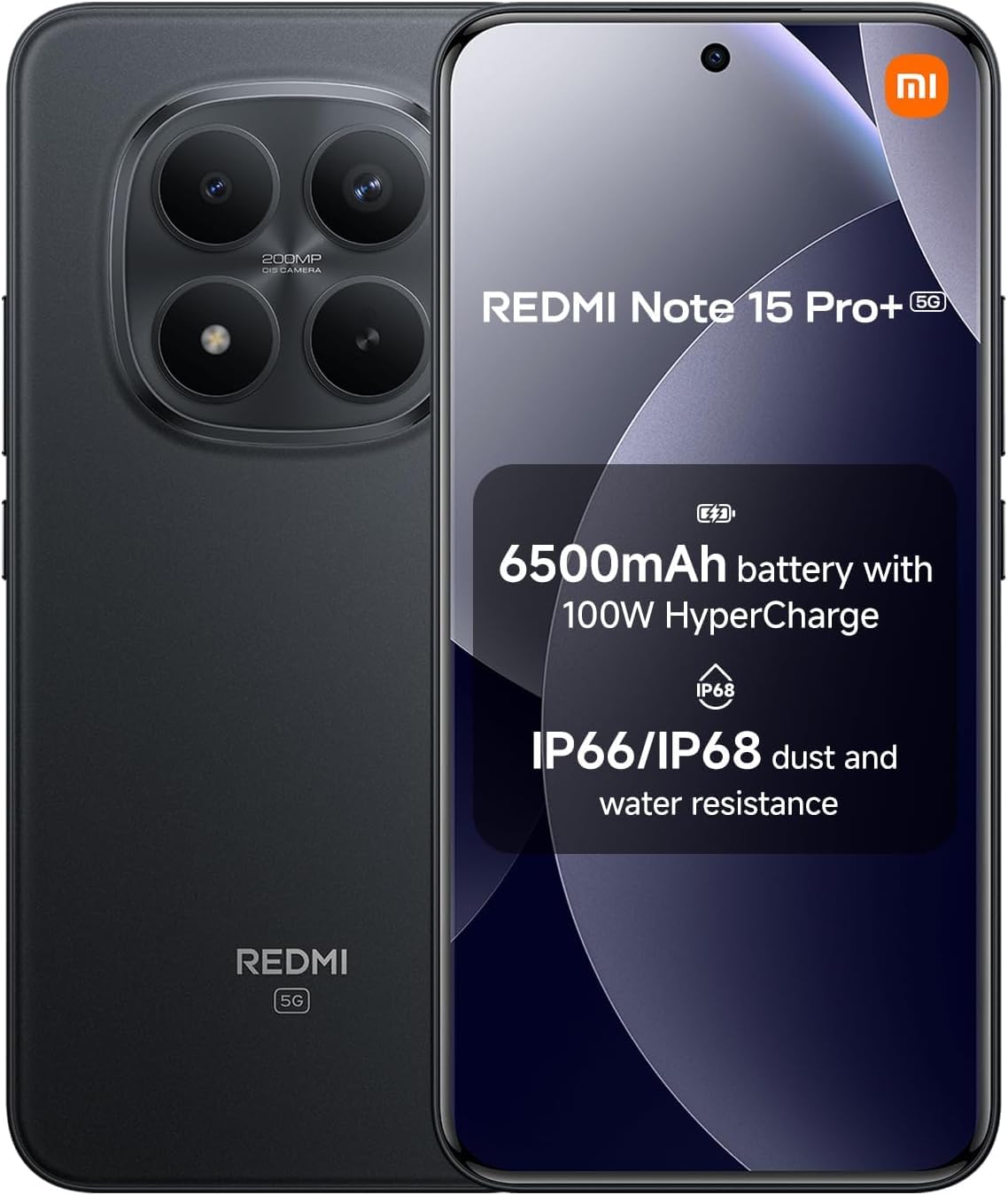
The Redmi Note 15 Pro+’s 6500 mAh battery and 200MP OIS camera set a new standard for mid-range specs.
The Redmi Note 15 Pro+ is the spec-sheet monster of this list, and the first thing you’ll notice is the 6500 mAh battery — the largest here by a wide margin. Owners are genuinely stunned, with one saying “the battery life is wild,” and the included 100W wall adapter means you spend less time tethered to an outlet.
Its 6.83″ CrystalRes AMOLED display pushes a 1.5K resolution at 120Hz with a 3200-nit peak, and the 200MP main camera with Optical Image Stabilization (OIS) captures detail that rivals phones costing far more. It feels premium in the hand, with one owner noting the “quality feel of the materials.”
A feature that delights owners is the IR blaster — a hidden gem for controlling TVs and AC units. The trade-offs are real: there’s no microSD slot, no wireless charging, and the advertising overstates eSIM support which isn’t included. But if you want the biggest battery and the highest-resolution camera in this price band, this is the phone.
The best parts
- 6500 mAh battery dominates the category
- 200MP OIS main camera
- Includes 100W wall adapter
What’s missing
- No microSD expansion slot
- No wireless charging support
Best for: heavy users and photographers who want maximum battery and maximum megapixels.
Skip if: you rely on expandable storage or wireless charging.
6. Samsung Galaxy S23

The Galaxy S23’s compact design and 50MP camera with 8K video make it a true flagship in a small body.
The Galaxy S23 proves that a smaller phone doesn’t mean a lesser one. Its compact size is a blessing for anyone tired of oversized slabs, with owners noting the “narrower design great for small hands” and a sleek, lightweight feel that disappears into a pocket.
Performance is genuinely flagship-grade, with the fastest mobile processor available at launch and a 50MP camera that owners say takes “beautiful pictures” with vibrant colors. It shoots 8K video, and the Adaptive Display adjusts contrast automatically whether you’re in direct sunlight or a dark room.
The honest trade-off is the battery: a 3900 mAh cell that owners consistently say drains fast during heavy use, though it charges back up extremely quickly. The Galaxy AI features add real value — real-time call interpretation, photo editing, and note summarization — and the IP68 rating plus water resistance keep it safe from spills.
Flagship feel, compact size: a 50MP camera, 8K video, and Galaxy AI in a body that’s easy to hold.
One real caveat: the 3900 mAh battery demands frequent top-ups on heavy days.
7. Motorola Edge 2025

The Motorola Edge 2025’s 68W TurboPower delivers 12 hours of use from a six-minute charge.
The Motorola Edge 2025 is built around one killer feature: speed of charging. With a 5200 mAh battery and 68W TurboPower charging, you can get up to 12 hours of battery life from just 6 minutes of charge — a lifesaver for busy mornings when you forgot to plug in overnight.
It’s a universal open up phone that works with all major US carriers, including Verizon, AT&T, and T-Mobile, which removes the compatibility anxiety that comes with some international models. The 6.7″ Super HD display delivers vibrant colors backed by Dolby Atmos sound, and the MediaTek Dimensity 7400 chipset keeps things snappy.
The design is a highlight — a soft-touch finish, eco-leather back, and military-grade protection (tested to MIL-STD-810H standards) plus IP68 water resistance. Owners call the battery life “long lasting” but note the phone only gets 2 OS updates, so if you want years of software support, a Samsung or Pixel will serve you better.
Why it stands out
- 68W TurboPower charges 12 hours of use in 6 minutes
- 5200 mAh battery lasts over 24 hours
- Works with all major US carriers
Consider this
- Only 2 OS updates promised
- No microSD card slot
Grab this if: fast charging and universal carrier compatibility outrank long-term software updates for you.
Look past it if: you want years of OS upgrades.
8. Nothing Phone (4a) Pro
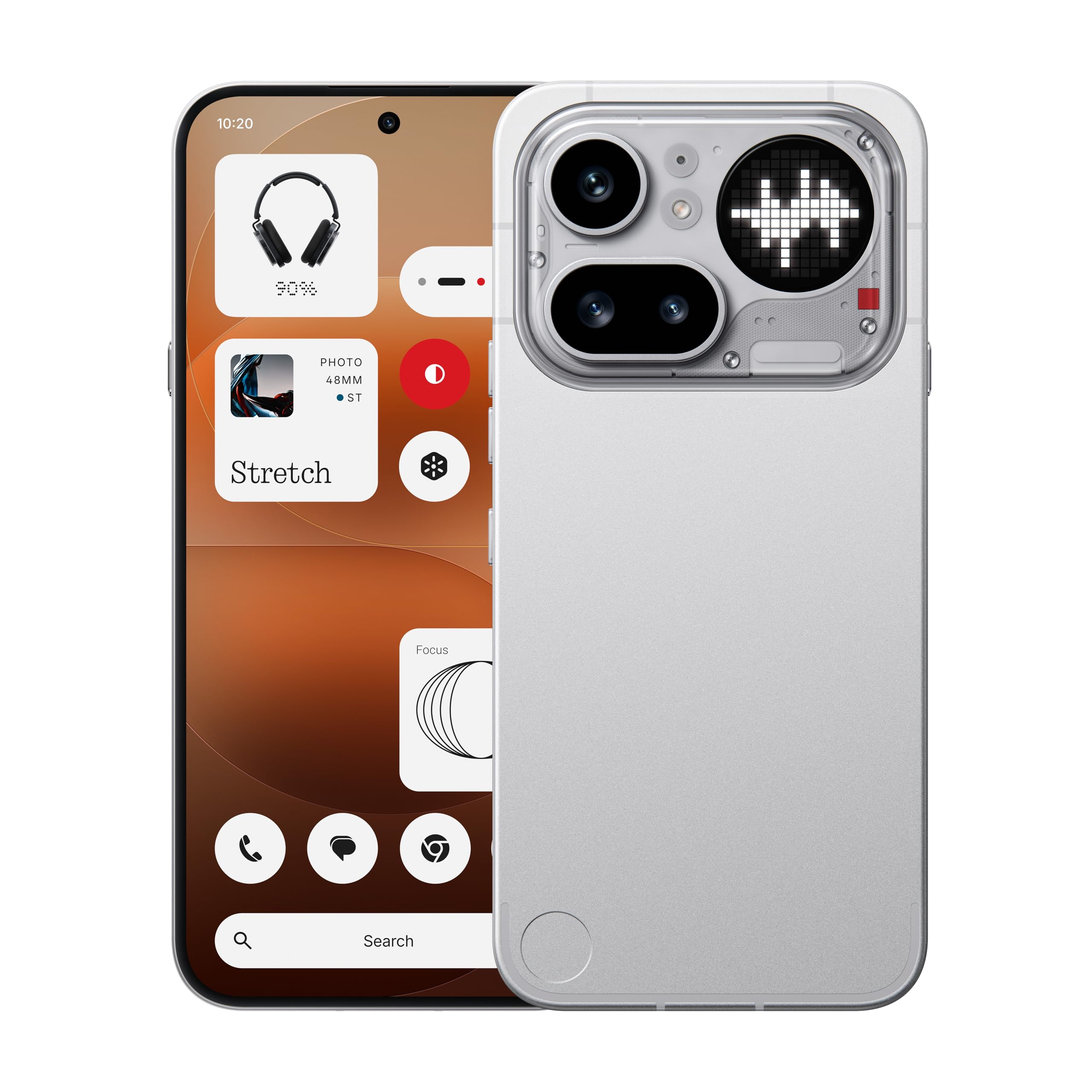
The Nothing Phone (4a) Pro’s 140x periscope zoom and 144Hz display make it the most distinctive camera phone here.
The Nothing Phone (4a) Pro is the one that makes people ask “what phone is that?” — thanks to its iconic Glyph Matrix of 137 individually controllable mini-LEDs on the back. That futuristic design wraps a 6.83″ 144Hz AMOLED display with 5,000-nit peak brightness, making it the smoothest and brightest screen on this list.
The camera is the real a neat extra: a 50MP main sensor with OIS, plus a 50MP periscope telephoto lens that hits 3.5x optical and stretches to an incredible 140x ultra zoom. You can frame far-off landmarks or stage performers with clarity that other phones here can’t touch, and the AI photo editing tools clean up your shots automatically.
It runs a clean, bloatware-free Nothing OS 4.1 based on Android 16, powered by a Snapdragon 7 Gen 4 processor with 12GB of RAM. The 5080 mAh battery charges to 60% in just 30 minutes, and the slim 7.9mm aluminum unibody feels genuinely premium. Be aware that heavy gaming sees the processor slowing down a bit, and you’ll want to double-check your carrier’s bands before buying.
A design and zoom standout: the 140x periscope zoom and 144Hz display make this the most distinctive phone here.
The fine print: gaming performance is mid-tier and carrier support, especially Verizon, needs verification.
9. Nothing Phone (3)

The design-forward flagship with four 50MP cameras and a dazzling Glyph light show.
The Nothing Phone (3) is the premium expression of the brand’s design philosophy, and its design is what wins people over immediately — the Glyph Interface turns notifications into small light animations, and the 6.67″ FHD+ AMOLED display is brighter and sharper than its predecessor, hitting a 460 PPI pixel density.
Performance is genuinely flagship-grade thanks to the Snapdragon 8s Gen 4 chip, and the four 50MP cameras — main, periscope, ultra-wide, and front — produce sharp, detailed images that owners say improved even further after software updates. The 5150 mAh battery comfortably lasts a full day, and the 120Hz adaptive refresh rate keeps scrolling silky smooth.
The Essential Key on the side is a clever addition — press once to capture your screen, long-press to record a voice memo, and double-press to access your organized captures. Owners praise the “amazing sound” and clean, customizable software. The drawbacks are that Verizon compatibility requires manual whitelisting, and some owners have hit connectivity hiccups, so it’s best on AT&T or T-Mobile.
Step up for: a premium all-rounder with a quad-50MP camera system and a design that genuinely stands out.
Be cautious if: you’re on Verizon, where setup needs a customer service call to whitelist the device.
Understanding the Specs
Battery Capacity (mAh)
This number tells you how much energy your phone can store before it needs a charge. Look for at least 5000 mAh for a full day of typical use; anything more, like 6500 mAh, is for heavy gamers and travelers who hate carrying a charger. Fast charging speeds (measured in watts) matter just as much — a 68W charger can refill a phone to a day’s worth of power in minutes.
Display Refresh Rate & Brightness
The refresh rate, measured in Hertz (Hz), tells you how many times the screen redraws each second. A 120Hz screen feels noticeably smoother when scrolling than a standard 60Hz one. Peak brightness, measured in nits, determines how well you can see the screen outdoors — 3000 nits and above stays legible even in harsh sunlight.
FAQ
Will an international open up phone work on my US carrier?
Is a higher megapixel camera always better?
How long will a 5000 mAh battery actually last?
What does the IP68 rating actually mean?
Is a 120Hz display worth it over a standard 60Hz one?
What’s the difference between optical zoom and digital zoom?
Should I buy more storage than I think I need?
How important is the processor for everyday use?
Final Thoughts: The Verdict
If you want one dependable pick, the android phone under 50000 winner is the Google Pixel 10 because it delivers the best all-round package — a 20x zoom camera, a 3000-nit display, and clean, fast software with 4.5-star approval from the crowd. If you want maximum battery life and a huge screen for gaming, grab the XIAOMI Redmi Note 15 Pro+ with its class-leading 6500 mAh cell. And for the fastest charging and universal carrier support, the Motorola Edge 2025 is the one to reach for.
How We Picked
We do not accept paid placement. Every pick is matched to a real buyer and a real use-case; we do not hands-on test units.
Sources & Methodology
Specifications: manufacturer listings and product documentation. Review insights: verified customer reviews, as of August 2026. Pricing: not shown on this page (it changes often); check the current price via the retailer link.
As an Amazon Associate, Gadgets Feed earns from qualifying purchases. This does not affect which products we feature.