
The gap between a smartwatch that just counts steps and one that genuinely supports your long-term health can be measured in the accuracy of its photoplethysmography sensor and the depth of its recovery analytics. For anyone living inside the Android ecosystem, finding a wearable that delivers clinical-grade heart-rate variability tracking, SpO₂ spot-checks, and actionable sleep staging without a subscription feels like navigating a minefield of marketing claims.
I’m Min — the co-founder and writer behind Gadgets Feed. I’ve spent hundreds of hours comparing Biotracker optical arrays, analyzing FDA-cleared ECG algorithms, and stress-testing battery drain patterns under continuous multi-sensor monitoring to separate genuine health wearables from glorified step counters. (And Homer 🐱 batted the charging cables into a tangled mess during every unboxing.)
Whether you need overnight SpO₂ trending for respiratory awareness, AFib detection via an on-wrist ECG, or a training-readiness score that accounts for HRV status, this guide evaluates nine contenders that justify a real spot on your wrist. Read on for the most thorough breakdown of the android smartwatch for health monitoring you will find anywhere.
How To Choose The Best Android Smartwatch For Health Monitoring
Health-focused wearables are only as valuable as the precision of their underlying sensors and the scientific rigor of their algorithms. Before you commit to a wrist-based health partner, you need to understand the key measurements that separate a reliable device from a decorative gadget.
PPG Sensor Generation & Optical Array Design
The photoplethysmography (PPG) sensor is the heart of every optical health watch. Third-generation sensors like the ones in the Amazfit Active Max use multiple LED wavelengths and improved photodiodes to reject motion artifacts during high-intensity intervals. Older single-LED designs often produce erratic heart-rate readings when you sweat or move your arm rapidly. Look for watches that advertise “BioTracker” or “Gen 3 PPG” — that verbal commitment usually correlates with better real-world stability during runs and sleep.
Electrocardiogram (ECG) Capabilities
A watch that can record a single-lead ECG allows you to screen for atrial fibrillation (AFib) on the spot. Watches like the Galaxy Watch 8 and Withings Scanwatch Nova store these waveforms in companion apps that you can share with a physician. Keep in mind that ECG functionality requires regulatory clearance — it is not present in every health smartwatch. If heart-rhythm monitoring is a priority, confirm the device includes an FDA-cleared or CE-marked ECG module.
Battery Capacity vs. Continuous Monitoring Load
Health tracking is power-intensive. Continuous heart rate, SpO₂, and sleep staging can drain a 300mAh battery in under 24 hours. A smartwatch with a 500mAh or larger cell (like the 700mAh unit in the T-Rex 3 Pro) can sustain multi-day tracking without forcing you to skip nightly SpO₂ logging to preserve charge. For consistent longitudinal health data, a battery that lasts at least 48 hours with always-on health monitoring is the practical minimum.
Sleep Staging & Respiratory Disturbance Index
Beyond simple “light vs. deep” sleep labeling, premium health watches now estimate your respiratory disturbance index (RDI) overnight using SpO₂ dipping patterns and movement artifacts. The Garmin Forerunner 970 and Withings line take this further by correlating overnight SpO₂ with heart-rate variability to flag potential breathing interruptions. If sleep apnea screening matters to you, prioritize a watch that charts overnight oxygen saturation continuously, not just by on-demand spot checks.
Quick Comparison
On smaller screens, swipe sideways to see the full table.
| Model | Category | Best For | Key Spec | Amazon |
|---|---|---|---|---|
| Garmin Forerunner 970 | Premium GPS Triathlon | Training readiness & running economy | AMOLED display, 560mAh, sapphire lens | Amazon |
| Samsung Galaxy Watch 8 Classic | Lifestyle & ECG | Rotating bezel & Samsung Health ecosystem | 445mAh, Super AMOLED, sapphire crystal | Amazon |
| Samsung Galaxy Watch Ultra | Rugged Outdoor | Titanium durability & energy score | 590mAh, LTE, 47mm titanium case | Amazon |
| Amazfit T-Rex 3 Pro | Ultimate Adventure | Offline maps & 10 ATM water resistance | 700mAh, 3000-nit AMOLED, sapphire glass | Amazon |
| Google Pixel Watch 3 | AI Running Coach | Fitbit integration & real-time coaching | Actua display, LTE, 24-hr battery | Amazon |
| Withings Scanwatch Nova | Analog Hybrid | Traditional styling & 30-day battery | ECG, SpO₂, TempTech24/7 module | Amazon |
| Amazfit Active Max | Mid-Range All-Rounder | AMOLED clarity & extended battery | 1.5″ 3000-nit AMOLED, 4GB storage | Amazon |
| Spade & Co Health Smartwatch 4 | Budget Fitness | IP68 swim-proof & ease of use | 500mAh, 10-day battery, call support | Amazon |
| SLOKSFil Military Smartwatch | Entry-Level Value | 1000mAh battery & 110 sports modes | 1.52″ HD, IP68, 3rd-gen PPG sensor | Amazon |
In‑Depth Reviews
1. Garmin Forerunner 970

The Forerunner 970 is Garmin’s most complete health-focused wrist computer, pairing a 1.4-inch AMOLED touchscreen with physical buttons for gloved or wet-finger operation. Its 560mAh lithium-ion cell delivers up to 15 days of smartwatch mode under continuous heart-rate and SpO₂ logging — a feat that outlasts most OLED-based competitors by a wide margin. The multi-band GPS locks quickly even under heavy tree cover, making outdoor route tracking reliable during trail runs.
Health monitoring reaches a higher tier here with running economy metrics (step speed loss, ground contact time) that require the optional HRM-Pro chest strap, but even wrist-based data is impressive: the built-in ECG app records a 30-second waveform for AFib screening, and the Training Readiness score factors sleep quality, HRV status, and acute load into a single number. On the wrist, the titanium bezel with sapphire lens resists scratches from daily wear, and the integrated LED flashlight provides 65 lumens for pre-dawn visibility.
Navigation is a strong suit — full-color topo maps with round-trip routing recalculate mid-run if you deviate from the planned path. The Forerunner 970 also supports advanced dynamics like wrist-based running power, expressed in watts, which cyclists and triathletes will appreciate. The trade-off is a steeper learning curve than a Pixel Watch or Galaxy Watch, and the Garmin Connect IQ ecosystem requires some patience to customize fully.
Why it’s great
- 15-day battery with continuous health monitoring
- Multi-band GPS with offline color maps
- On-wrist ECG for AFib screening
- Sapphire crystal and titanium bezel
Good to know
- Learning curve for Garmin Connect IQ
- Running dynamics require chest strap
- No onboard music storage without premium version
2. Samsung Galaxy Watch 8 Classic (2025) 46mm
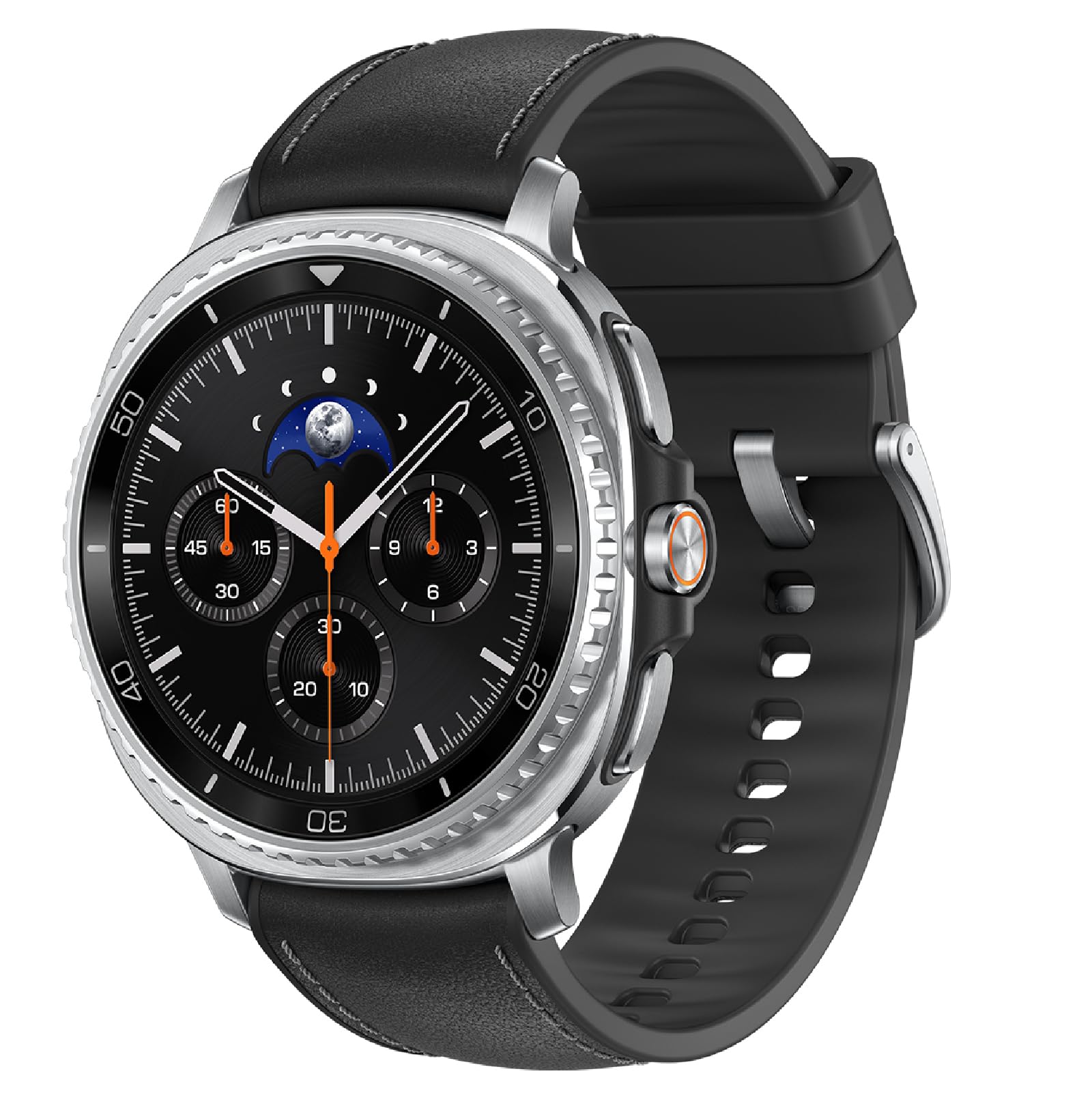
The Galaxy Watch 8 Classic brings back the rotating bezel that enthusiasts have missed — a physical navigation ring that provides satisfying tactile feedback without smearing the display. The 46mm stainless steel case houses Samsung’s 3-in-1 BioActive sensor, which combines optical heart rate, bioelectrical impedance analysis for body composition, and electrical heart signals for ECG recording. The Super AMOLED panel reaches 2,000 nits peak brightness, making the always-on display legible even under direct California sun.
For health monitoring, the watch offers advanced sleep coaching that breaks down sleep stages and provides an Energy Score based on the previous night’s HRV and resting heart rate. A standout feature is blood pressure monitoring — after calibration with a traditional cuff, the watch can estimate systolic and diastolic pressure on demand, though it is not intended as a replacement for medical-grade measurement. The watch also records overnight SpO₂ trending and alerts you if your heart rate strays above or below custom thresholds during rest.
Wear OS runs smoothly on the Exynos W1000 chipset, giving you access to Google Play Store apps like Google Fit, Strava, and MyFitnessPal. Battery life settles at roughly 30 hours with always-on display — enough for a full day and one night of sleep tracking before needing a top-up. The quick-charge feature gets you to 45% in 30 minutes. Note that ECG and blood pressure features require a Samsung Health Monitor app and work best with a Samsung phone, although basic functionality remains intact on other Android devices.
Why it’s great
- Rotating bezel for precise UI navigation
- ECG, body composition, and blood pressure monitoring
- Samsung Health ecosystem with coaching
- Sapphire crystal and stainless steel build
Good to know
- Daily charging needed with AOD enabled
- Blood pressure requires external cuff calibration
- ECG features are Samsung phone-optimized
3. Samsung Galaxy Watch Ultra (2024) 47mm
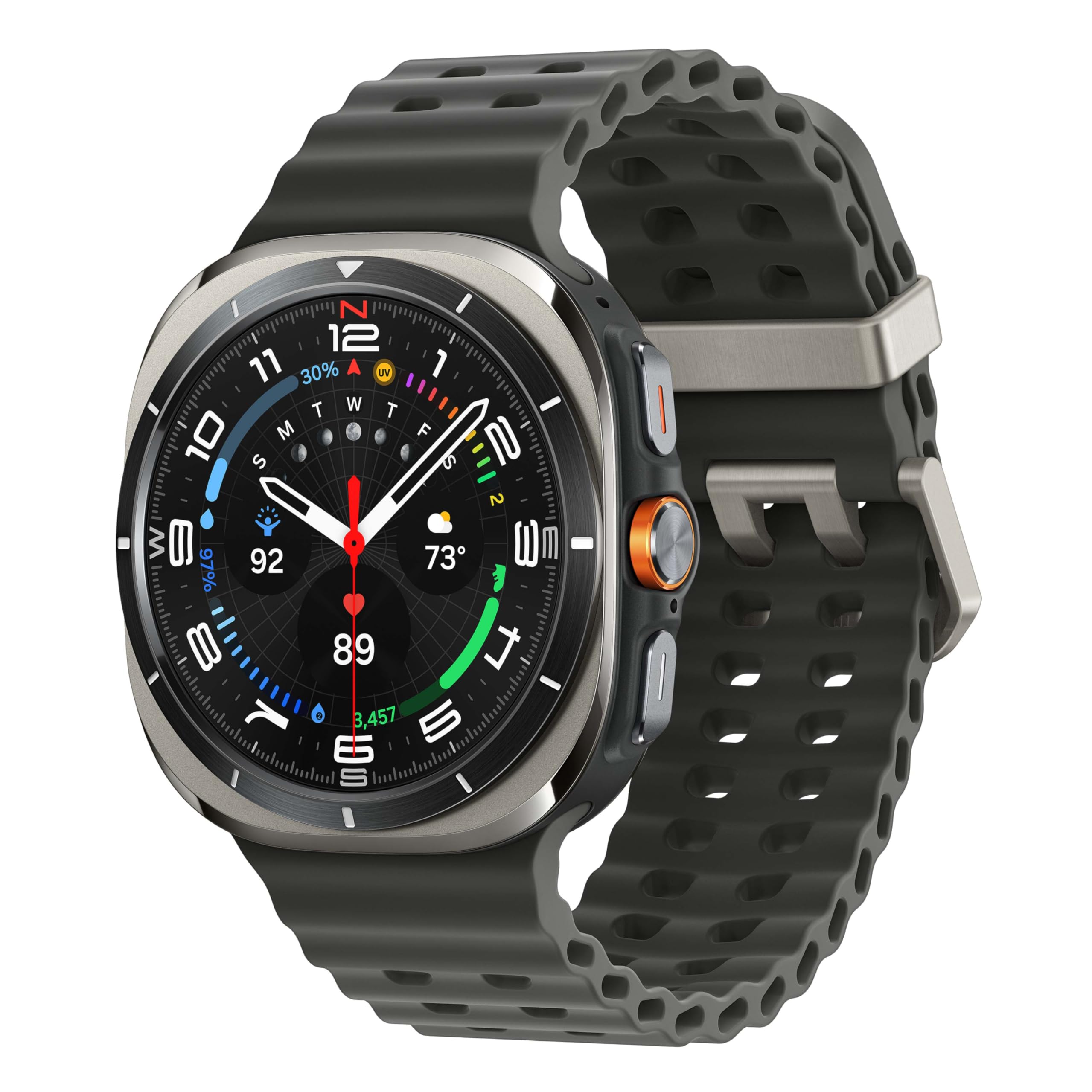
The Galaxy Watch Ultra is Samsung’s answer to rugged outdoor wearables, constructed from grade-4 titanium with a 47mm case that survives 10 ATM water pressure and MIL-STD-810H temperature extremes. Its 590mAh battery delivers up to 60 hours in power-saving mode or roughly three and a half days under mixed health tracking — a meaningful improvement over the standard Galaxy Watch 8. The Super AMOLED display peaks at 3,000 nits, readable under direct glare on a mountain slope.
Health monitoring leans heavily on Galaxy AI: the Energy Score combines previous day’s sleep quality, resting heart rate, and step count into a readiness metric that adjusts training intensity recommendations. Heart rate tracking uses AI to filter motion artifacts during high-exertion workouts, producing more consistent readings during interval sprints. The watch also supports automatic workout detection for swimming, cycling, and running, transitioning between sports modes without manual intervention.
LTE connectivity is built in, allowing calls, texts, and emergency SOS without a phone nearby. The programmable Quick Button can launch a workout or flashlight instantly, and the siren function reaches 86 dB for emergency signaling. The silicone trail band is comfortable for all-day wear and dries quickly after a swim. On the downside, health metrics like body composition require the Samsung Health ecosystem and are less detailed than Garmin’s Firstbeat analytics, but for an adventure companion that doubles as a communicator, this is a capable option.
Why it’s great
- Titanium build with MIL-STD-810H rating
- LTE for phone-free communication
- AI-enhanced heart rate tracking during high exertion
- 3-day battery life with health monitoring
Good to know
- Health analytics less detailed than Garmin
- Bulky 47mm case on smaller wrists
- Samsung Health app required for full metrics
4. Amazfit T-Rex 3 Pro
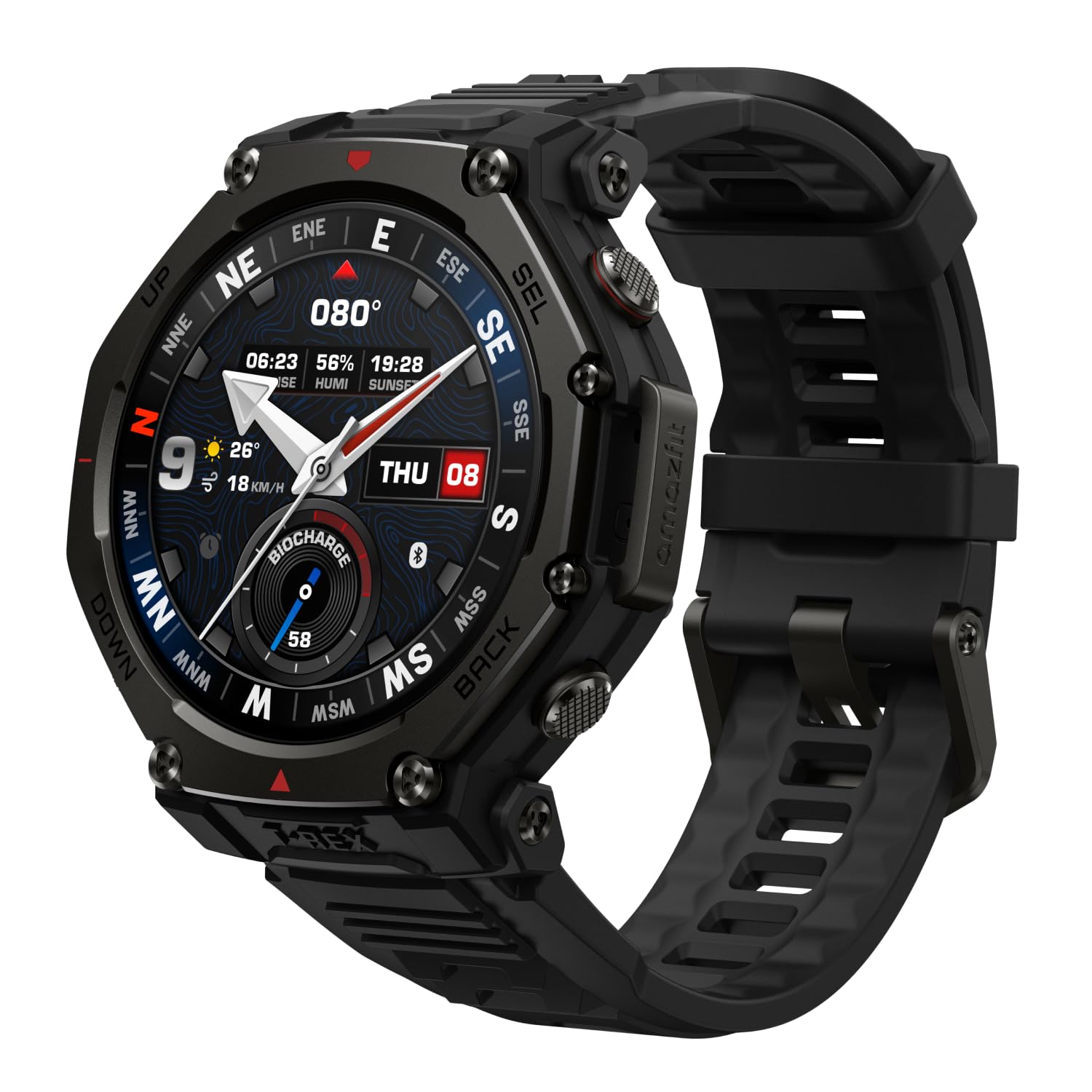
The T-Rex 3 Pro packs a massive 700mAh battery into a 48mm case protected by a titanium alloy bezel and sapphire glass, pushing battery life to 25 days under typical usage and over 10 days even with aggressive health tracking. The 1.5-inch AMOLED display hits 3,000 nits, making it one of the brightest screens on this list — critical for route navigation in full sunlight. Dual-band GPS locks onto six satellite systems simultaneously, and offline maps include point-of-interest search and auto-rerouting for backcountry hikes.
BioTracker sensor generates reliable heart-rate data that reviewers have cross-checked against medical-grade devices and found accurate within a few beats per minute during steady-state cardio. The watch offers 180+ sport modes including HYROX training and dive logging down to 45 meters with 10 ATM water resistance. A built-in two-color flashlight switches between red (low interference, night vision preserving) and white (max visibility) plus an SOS strobe for safety signaling.
The Zepp app ecosystem includes Zepp Coach for adaptive running plans (3K to marathon distances) and BioCharge energy monitoring that adjusts based on daily exertion and stress. The watch also supports Bluetooth calling and Zepp Flow for hands-free message replies when connected to an Android phone. The main compromise is software depth — Zepp lacks the third-party app support of Wear OS and Garmin Connect IQ, but for a rugged adventure watch at a mid-range price point, the hardware and battery performance are hard to surpass.
Why it’s great
- 700mAh battery for 25-day endurance
- Sapphire glass and titanium bezel
- Dual-band GPS with offline maps
- 10 ATM water resistance and dive ready
Good to know
- Zepp app ecosystem less developed than Garmin
- No third-party app store
- Large 48mm case not for small wrists
5. Google Pixel Watch 3 (41 mm)

The Pixel Watch 3 is the tightest integration of Wear OS with Fitbit’s health-tracking algorithms, offering features like Daily Readiness Score, Cardio Load, and Target Load that adjust workout intensity based on your heart rate variability and sleep quality. The Actua display is 10% larger than the Pixel Watch 2 and twice as bright at 2,000 nits, with a smooth 60 Hz refresh rate that makes navigation feel fluid. The 41mm case is compact enough for smaller wrists while still packing LTE for standalone connectivity.
Health monitoring includes continuous heart rate tracking with a multi-path optical sensor that improves accuracy during interval training, plus overnight SpO₂, skin temperature tracking, and sleep stages with Fitbit’s Sleep Score. The Pixel Watch 3 also introduces the Loss of Pulse Detection feature — an AI-driven algorithm that can detect a pulse absence and automatically call emergency services if you are unresponsive. Running form analysis provides metrics like cadence, stride length, and ground contact time without requiring a chest strap.
Battery life reaches 24 hours with the always-on display enabled and up to 36 hours in power-saving mode. The charging speed is 20% faster than the previous generation, reaching 80% in about 45 minutes. The watch pairs seamlessly with Pixel phones and also works with other Android devices, though Fitbit Premium subscription unlocks deeper analytics like the Daily Readiness Score. The 41mm size may feel cramped for reading maps or extended text replies compared to larger competitors.
Why it’s great
- Fitbit health analytics with AI coaching
- Loss of Pulse Detection safety feature
- Smooth Wear OS with LTE
- Compact 41mm size for smaller wrists
Good to know
- 24-hour battery requires daily charging
- Fitbit Premium subscription for full analytics
- Small screen for map navigation
6. Withings Scanwatch Nova

The Scanwatch Nova is the only hybrid analog smartwatch on this list, hiding a comprehensive health sensor array behind a traditional Swiss-designed dial with luminescent hands. Its TempTech24/7 module continuously tracks baseline body temperature and flags deviations that could indicate the onset of illness, while the on-demand ECG captures 30-second waveforms for AFib screening and stores them in the Withings Health Mate app. The 30-day battery life is exceptional for a device that logs overnight SpO₂, heart rate, and sleep stages every 10 minutes.
Respiratory health gets serious attention here: overnight SpO₂ monitoring charts breathing disturbances and correlates them with heart rate variability to estimate a respiratory disturbance index (RDI). The watch also provides a Fitness Level score through VO₂ max estimation during a 10-minute walk test. For activity tracking, 40+ exercises are auto-recognized, and connected GPS uses your phone’s signal to map outdoor routes. The stainless steel case with scratch-resistant sapphire glass feels like a premium dress watch at 42mm.
The main trade-off is that this is not a full smartwatch — there is no always-on color display, no app store, and no ability to reply to messages. Notifications appear as text on a small PMOLED dot-matrix screen, and the Health Mate app handles all deep analysis. The watch is also waterproof to 10 ATM, suitable for recreational swimming but not dive logging. For someone who wants medical-grade health tracking without the glowing screen of a typical smartwatch, the Scanwatch Nova delivers an unmatched combination of aesthetics and sensor sophistication.
Why it’s great
- 30-day battery with continuous health monitoring
- TempTech24/7 for illness onset detection
- ECG and overnight SpO₂ trending
- Traditional analog design with sapphire glass
Good to know
- No full smartwatch display
- No onboard GPS — uses phone for tracking
- Health Mate app required for all data analysis
7. Amazfit Active Max
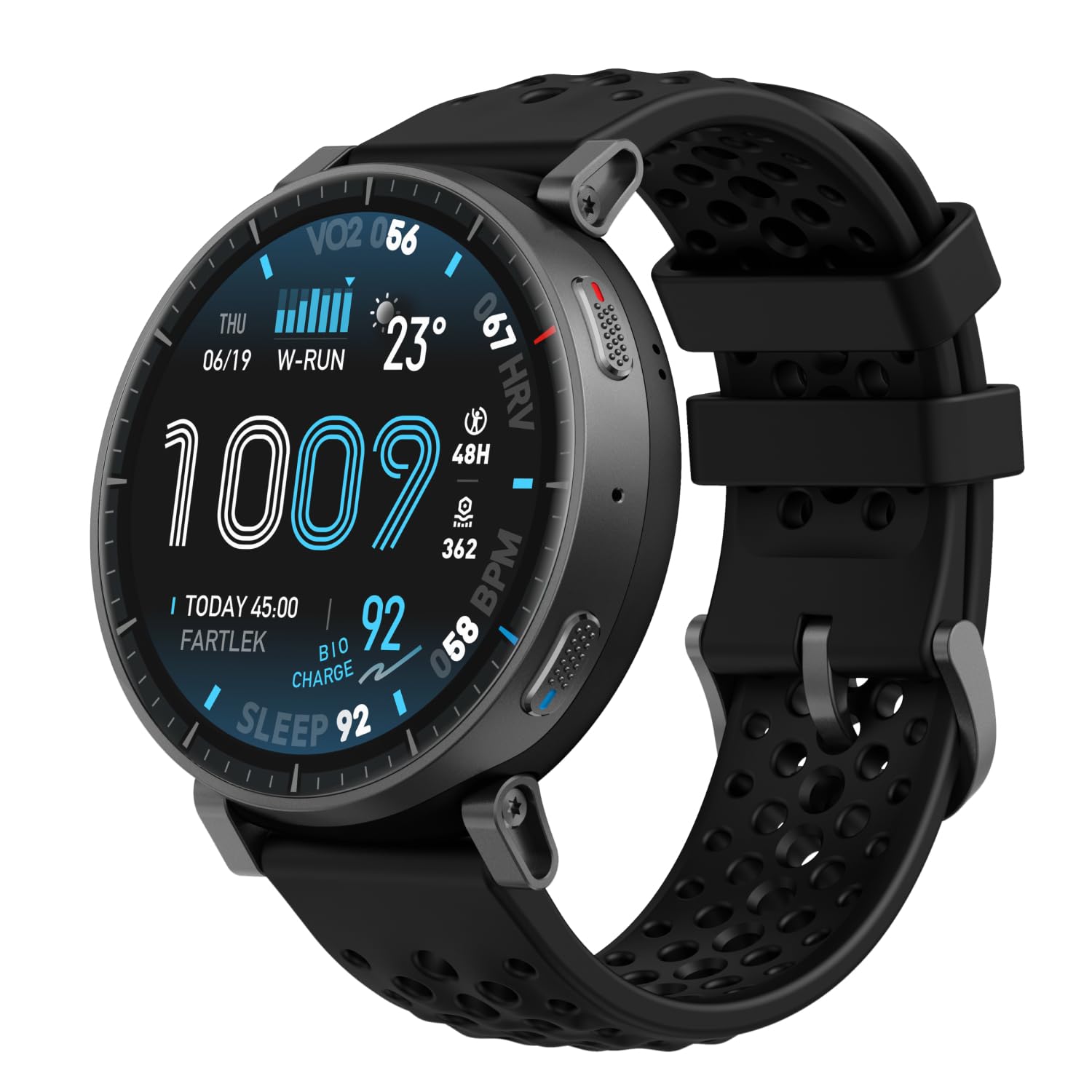
The Amazfit Active Max punches above its price tier with a 1.5-inch AMOLED display that hits 3,000 nits peak brightness — the same peak as the T-Rex 3 Pro and Galaxy Watch Ultra, but in a slimmer 45mm case. The 4GB of onboard storage lets you sync music playlists and download offline maps from Zepp’s mapping service, a feature usually reserved for premium Garmin watches. The 200mAh battery is smaller than the T-Rex 3 Pro, but optimized power management still delivers up to 25 days in typical usage and around 10 days with heavy health tracking.
Health monitoring includes the third-generation BioTracker PPG sensor that reviewers have measured to be within ±3 bpm of medical chest straps during steady-state runs. Sleep staging covers light, deep, REM, and naps, and the BioCharge energy monitoring uses heart rate variability and stress levels to recommend rest or activity. The watch supports 170+ sport modes with automatic rep counting for strength training and personalized Zepp Coach running plans for distances from 3K to full marathon.
Bluetooth calling works through the built-in speaker and microphone, and Zepp Flow allows hands-free message replies when connected to an Android phone. The 5 ATM water resistance covers swimming and showering, though the silicone band may cause minor skin irritation in some users after prolonged wear. The watch integrates with Google Fit and Apple Health, but the Zepp app itself handles all health dashboarding, which is clean and intuitive. For a mid-range price, this watch delivers nearly premium AMOLED clarity and solid sensor accuracy.
Why it’s great
- 3,000-nit AMOLED display
- 4GB storage for music and offline maps
- 25-day battery life
- BioTracker PPG sensor with accurate HR logging
Good to know
- 200mAh battery smaller than competitors
- Zepp app ecosystem less mature than Wear OS
- No ECG feature
8. Spade & Co Health Smartwatch 4

The Spade & Co Health Smartwatch 4 is an entry-level fitness companion that prioritizes battery endurance and water resistance over premium display quality. Its 500mAh battery typically lasts 7 to 10 days even with daily workouts logged, and the IP68 rating allows submersion up to 1.5 meters for 30 minutes — enough for pool laps and rainy runs. The watch supports Bluetooth calling with a built-in speaker and mic, and it syncs notifications from SMS, WhatsApp, and social media apps without delay.
Health sensors track heart rate, SpO₂, and sleep stages, though accuracy is less consistent than the Amazfit or Garmin options — some users report the heart rate sensor reading low during high-exertion intervals and the step counter missing activity during low-arm-motion exercises like elliptical training. Sleep staging provides a breakdown of light, deep, and awake time, but overnight SpO₂ is spot-check based rather than continuous trending. The watch offers a variety of customizable watch faces and interchangeable bands via standard lugs.
For the price, the Spade & Co delivers reliable battery life and basic fitness metrics that are sufficient for casual users tracking daily activity, moderate walks, and sleep duration. The navigation takes some time to learn — the touch interface is not as responsive as higher-tier smartwatches, and text message replies are limited to auto-replies. If your primary needs are call alerts, step counting, and water resistance without breaking the bank, this is a functional starter option. Competing budget watches from Amazfit’s Bip line may offer better sensor accuracy at a similar price.
Why it’s great
- 7-10 day battery life with daily workouts
- IP68 waterproof for pool swimming
- Bluetooth calling and notification sync
- Affordable entry point
Good to know
- Heart rate sensor loses accuracy at high exertion
- Step counter misses low-arm-motion exercise
- Touch response less smooth than competitors
9. SLOKSFil Military Smartwatch
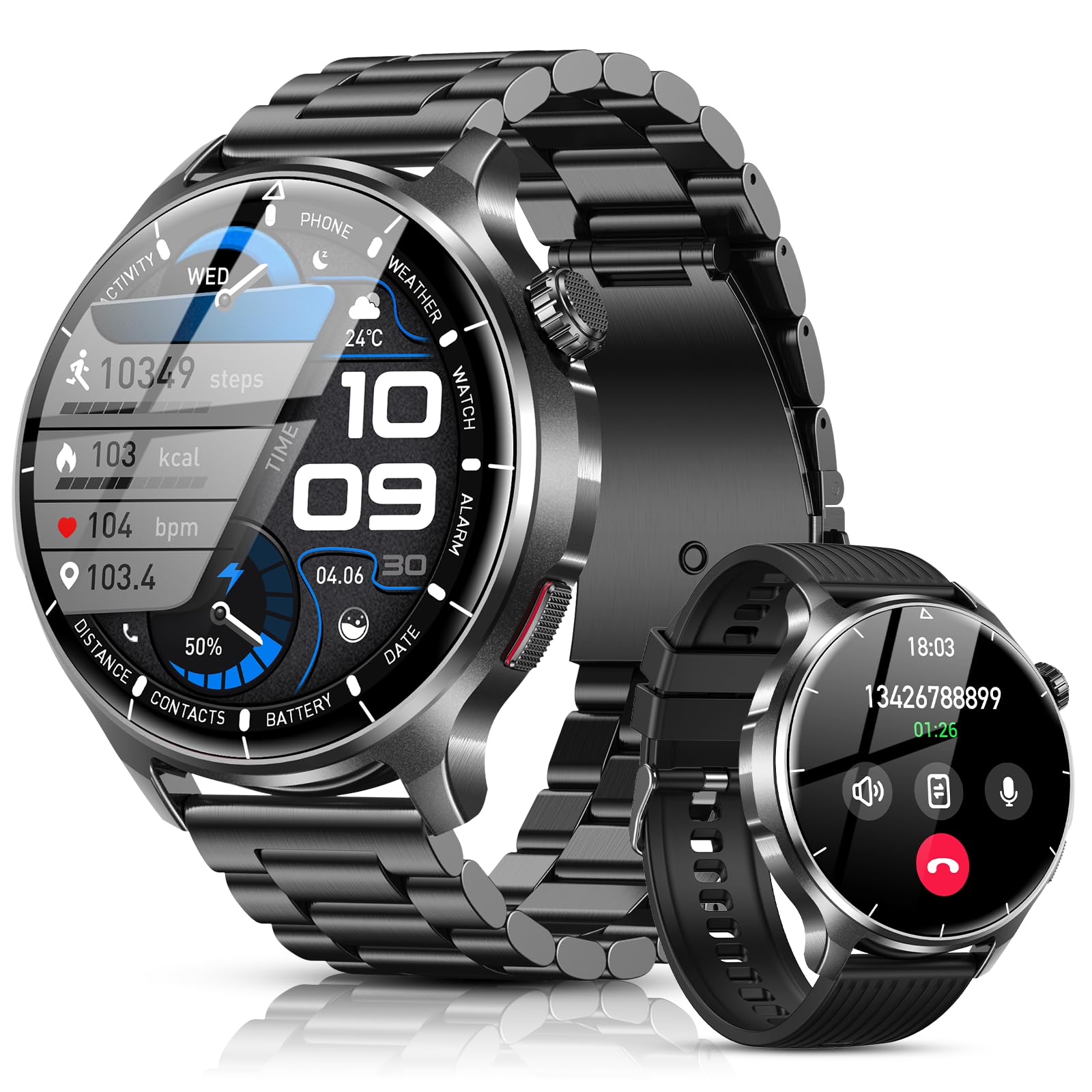
The SLOKSFil Military Smartwatch distinguishes itself with a 1000mAh battery — the largest capacity on this list by a significant margin — delivering 7 to 14 days of continuous use and up to 60 days in standby mode. The 1.52-inch HD TFT display is bright enough for outdoor readability, and the stainless steel bezel gives the watch a durable, tool-watch aesthetic. It supports Bluetooth calling with a HIFI stereo speaker and stores up to 10 contacts directly on the watch for quick dialing without your phone.
Health monitoring uses a third-generation PPG high-precision sensor that automatically measures dynamic and static heart rate, blood oxygen saturation, and sleep quality with light/deep/awake staging. The watch also logs blood pressure trends, though like most wrist-based optical BP estimation, this should not be used for clinical decisions. The IP68 water resistance protects against rain and splashes but is not rated for swimming. With 110 sports modes, the watch tracks steps, calories, and distance for running, cycling, yoga, and skiing.
The FitCloud Pro app manages all data and offers features like sedentary reminders, alarm clock, and remote camera control. The watch comes with both a silicone band for workouts and a stainless steel band for dress occasions, a thoughtful addition at this price tier. The TFT display lacks the vibrancy and contrast of AMOLED panels, and the lack of GPS means route tracking relies entirely on your phone’s connection. For anyone who prioritizes battery endurance above all else and needs a watch that reliably tracks basic health metrics for weeks on end, this is a compelling option.
Why it’s great
- 1000mAh battery for weeks of use
- Third-generation PPG sensor
- Includes silicone and steel bands
- Bluetooth calling with contact storage
Good to know
- TFT display, not AMOLED
- No built-in GPS
- Blood pressure monitoring is optical estimation only
FAQ
Can an Android smartwatch detect atrial fibrillation accurately?
What battery capacity is enough for overnight SpO₂ tracking?
Which health metric is most actionable for daily training?
Do I need a subscription to access full health analytics?
How often should I calibrate optical blood pressure monitoring?
Final Thoughts: The Verdict
For most users, the best android smartwatch for health monitoring is the Samsung Galaxy Watch 8 Classic because it combines ECG, blood pressure trends, body composition analysis, and rotating bezel navigation into a polished Wear OS experience that pairs naturally with Samsung phones and works reliably with other Android devices. If your priority is deep training analytics, recovery metrics, and multi-day battery life, grab the Garmin Forerunner 970 — its running economy data and continuous SpO₂ trending benchmark the category. And for adventure seekers who need sapphire glass, offline maps, and a 700mAh battery that lasts weeks, nothing beats the Amazfit T-Rex 3 Pro.